
The regeneration of Mina Zayed: a historic port at the crossroads of change
The beloved district is in tumult with new businesses arriving, old ones being relocated – and everyone agog at what an uncertain future holds

The regeneration of Mina Zayed: a historic port at the crossroads of change
The beloved district is in tumult with new businesses arriving, old ones being relocated – and everyone agog at what an uncertain future holds

On a cool November morning in 2020, residents gathered on Abu Dhabi’s Corniche and looked towards Mina Zayed. It was just before 8am on a Friday, which was still part of the weekend, and face masks were mandatory outdoors due to the Covid-19 pandemic. Minutes later, plumes of dust shot sideways across four towers that had stood abandoned near the port for more than a decade. In 10 seconds, a combined 144 floors collapsed in a controlled demolition, signalling the start of a major regeneration project in one of Abu Dhabi’s oldest urban areas.
For the dozens of long-established souq vendors nearby, the future became uncertain. Though they were reassured they could continue working during construction, many believed it was only a matter of time before their shops were replaced.
Out of the demolition emerged a new Arabian-style fish market, which opened in July 2022. As plans progressed to rebuild the remaining souqs alongside houses and retail outlets, some fear the area’s character will give way to trend-driven development.

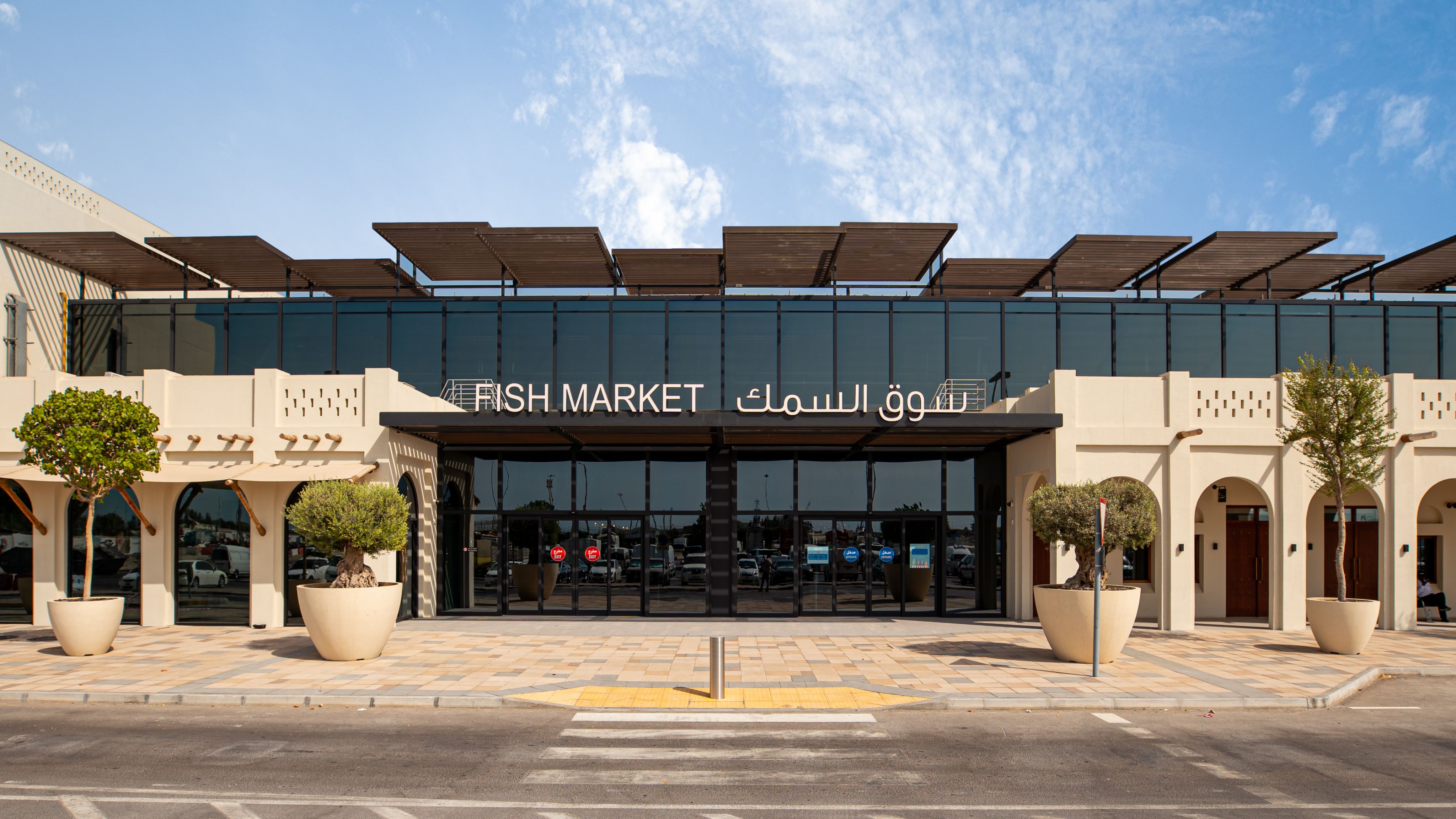
The renovated fish market in Mina Zayed. Photo: DMT Abu Dhabi
The renovated fish market in Mina Zayed. Photo: DMT Abu Dhabi
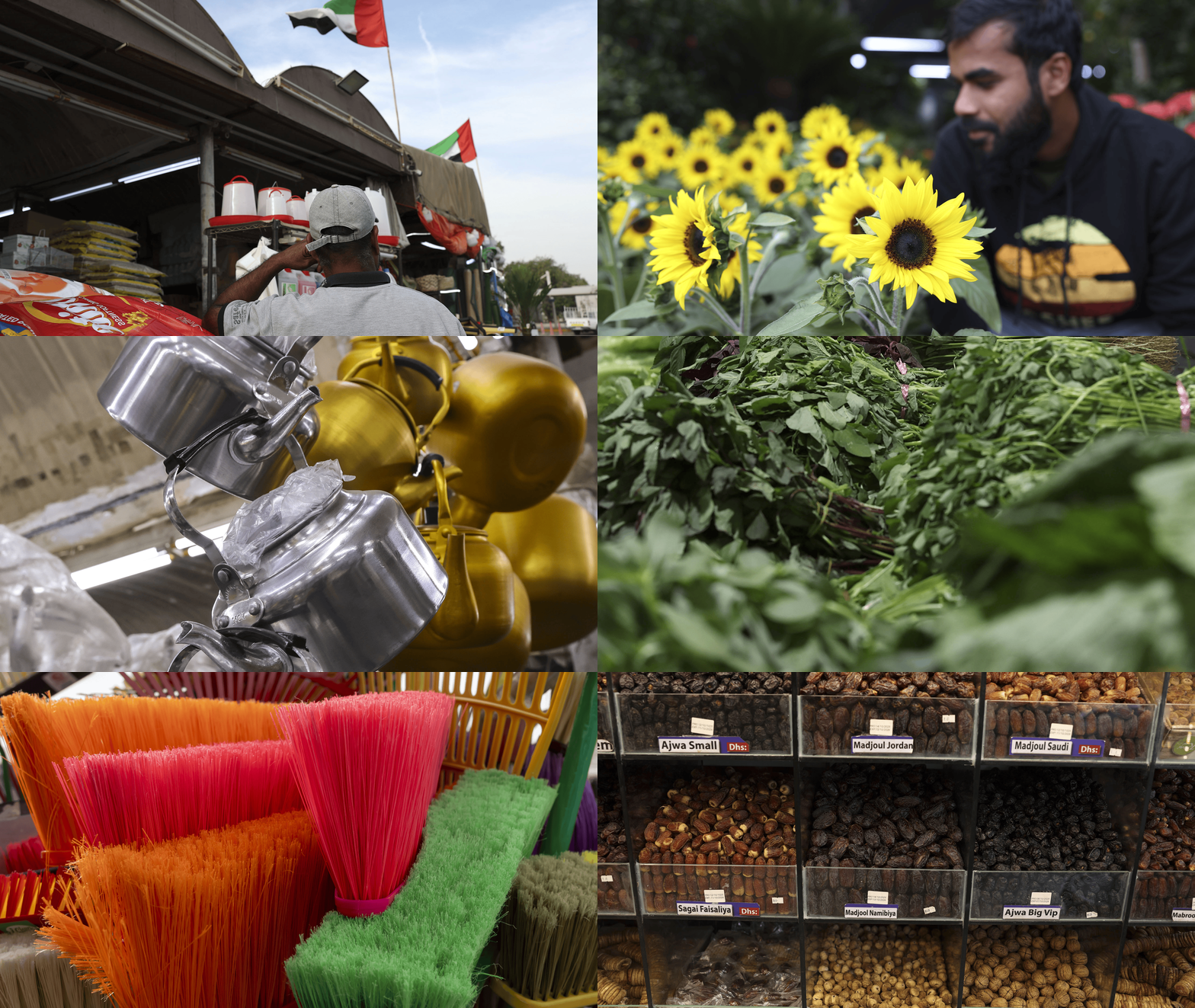
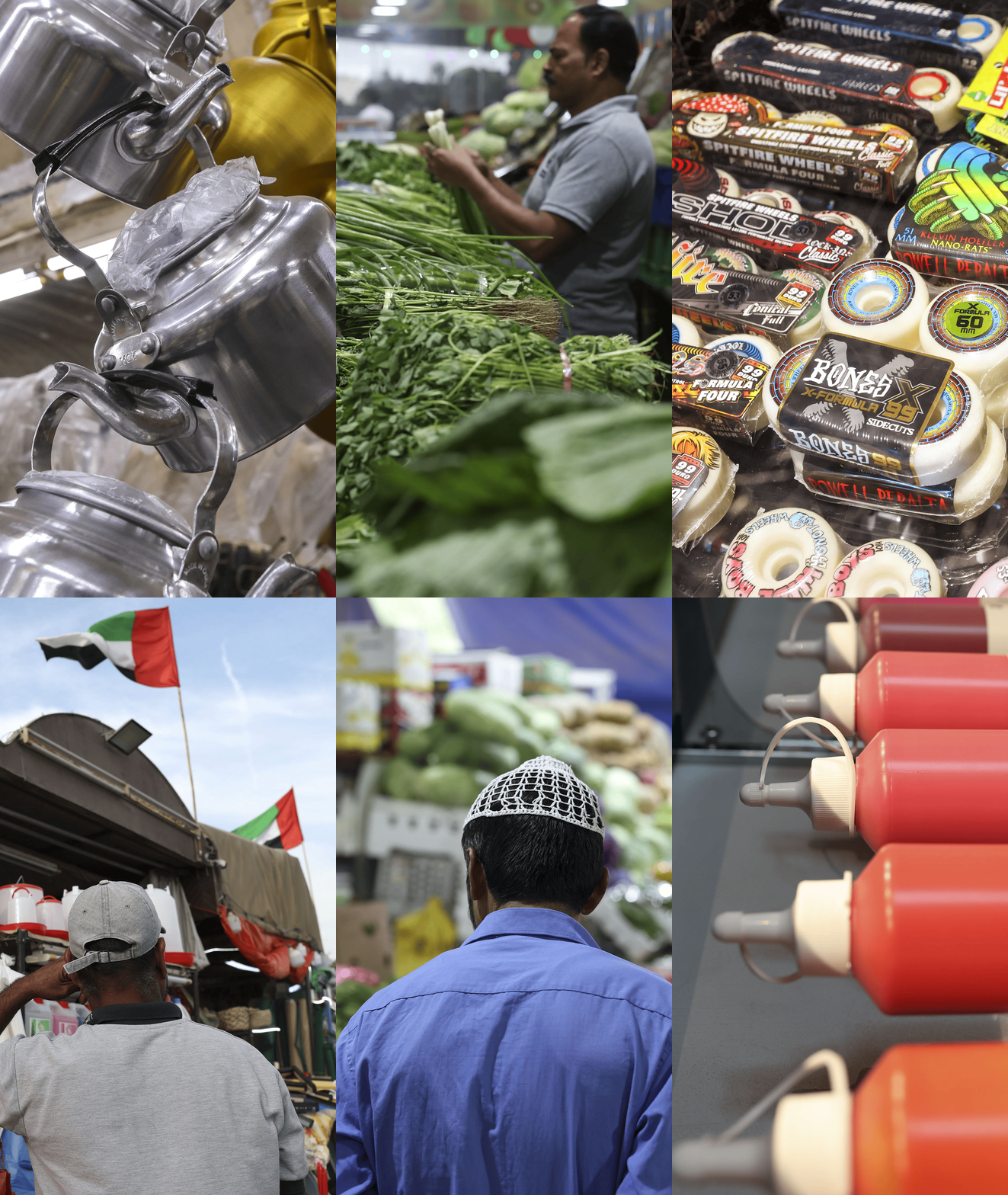
Driving down the main road, Al Lulu-ah Street, many of the warehouses have been knocked down. Others have been revived with a fresh coat of paint, or rebuilt entirely, with neon signs beckoning visitors. On either side, cars circle the fruit and vegetable market seeking the ripest produce, while patrons browse the plant market, selecting brightly coloured flowers to decorate their homes. At the end of the road, a crescent of shops and restaurants offers a glimpse into what the future may hold. What was once a desolate collection of old stationery, pet and fishing shops has been replaced with popular restaurants and boutiques selling artisanal wares.
At the heart of the transformation is MiZa, billed as “an emerging neighbourhood for entrepreneurs and creatives”, alongside Fisherman’s Wharf, home to the new souq and much of the continuing development. Today, long-time traders operate alongside new businesses drawn by the area’s history – and its promise.
New arrivals include an ice cream creamery, a skate shop focused on community and a cafe designed as a space for creative expression and conversation.
Abu Dhabi's first port
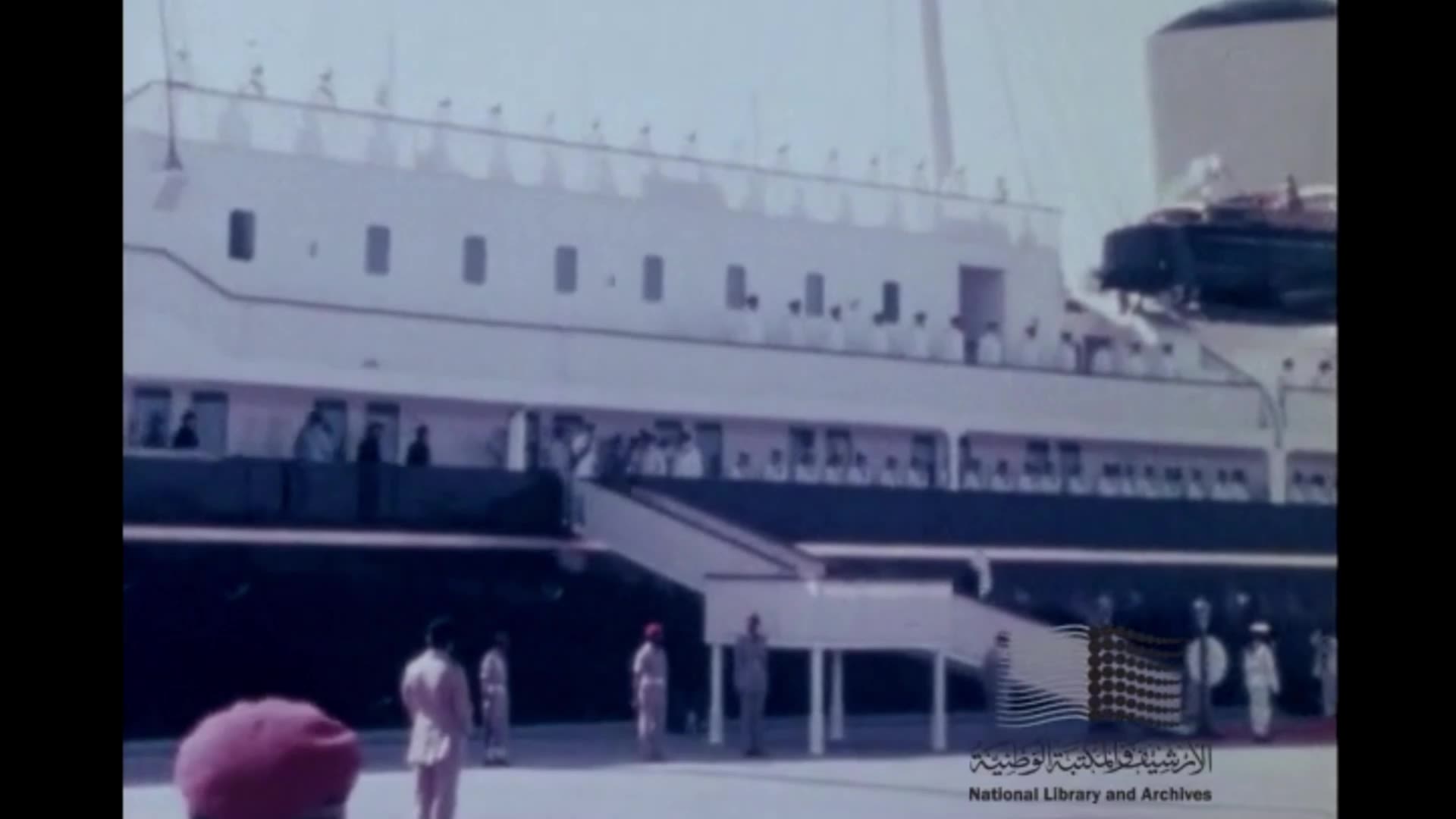

Zayed Port was established in 1968 and inaugurated in 1972. For decades, it served as the capital’s main gateway for global trade, until Khalifa Port opened in 2012. As container traffic shifted, Zayed Port faded into an industrial sprawl, though its markets continued to draw loyal customers. Today, the port handles a limited number of vessels, including cruise ships.

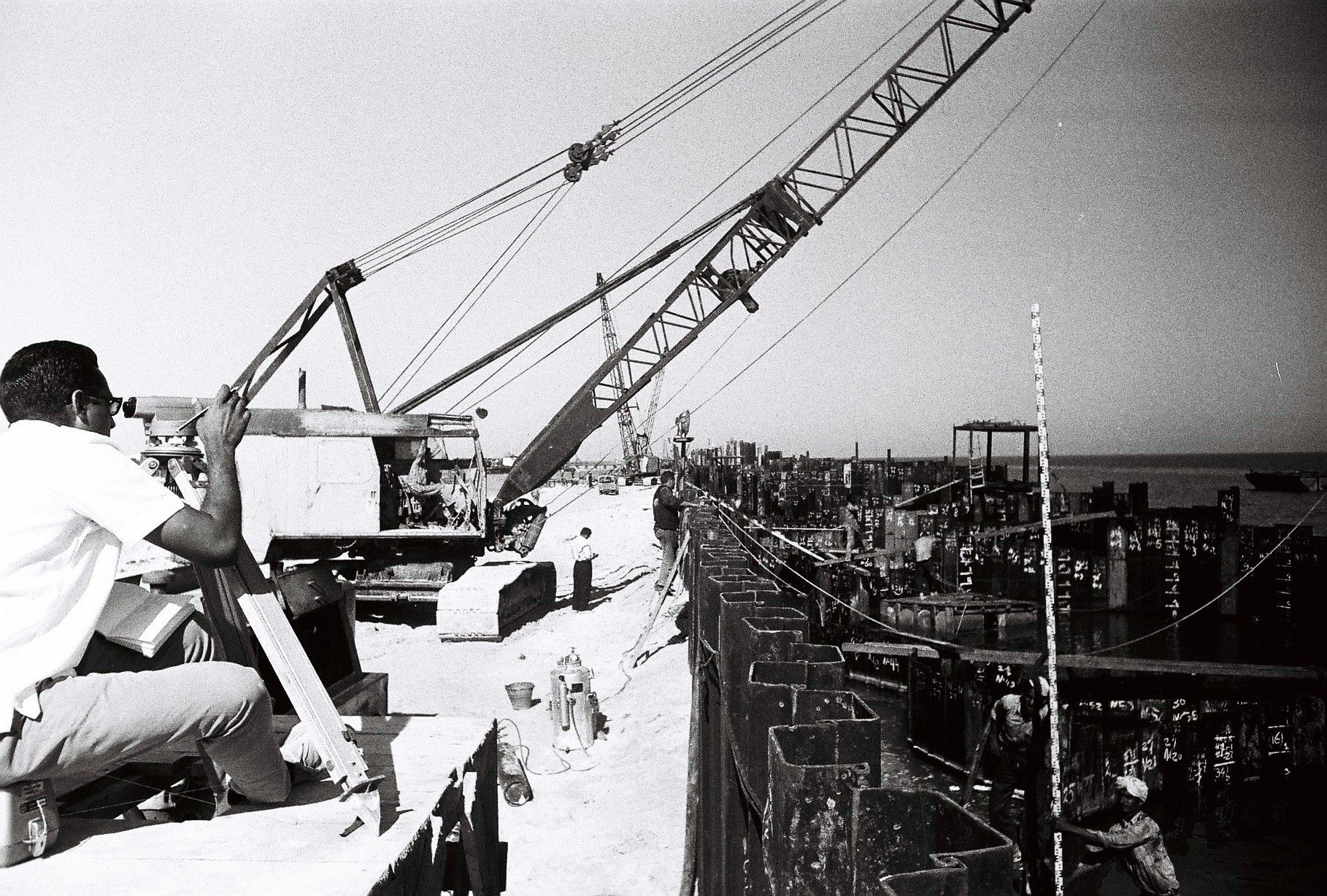
Construction under way at Mina Zayed. The port took four years to build and was inaugurated in 1972
Construction under way at Mina Zayed. The port took four years to build and was inaugurated in 1972
The opening of Warehouse 421 – now known simply as 421 – in 2015 was a turning point, bringing hundreds of residents to the area for its inaugural festival. The gallery space in an old, converted warehouse seems to have inspired the future plans of the greater Mina area.
In 2018, a viral video of an Afghan carpet merchant refusing to sell a rug bearing the image of UAE Founding Father, the late Sheikh Zayed bin Sultan Al Nahyan, caught the attention of President Sheikh Mohamed, then Crown Prince of Abu Dhabi. After visiting the merchant, Sheikh Mohamed issued directives to begin redevelopment of the port area and restructure its traditional souqs. The plans sought to transform Mina Zayed into a mixed-use waterfront destination.
In 2020, developers released renderings of the three-million-square-metre project, much of it prime seafront land.

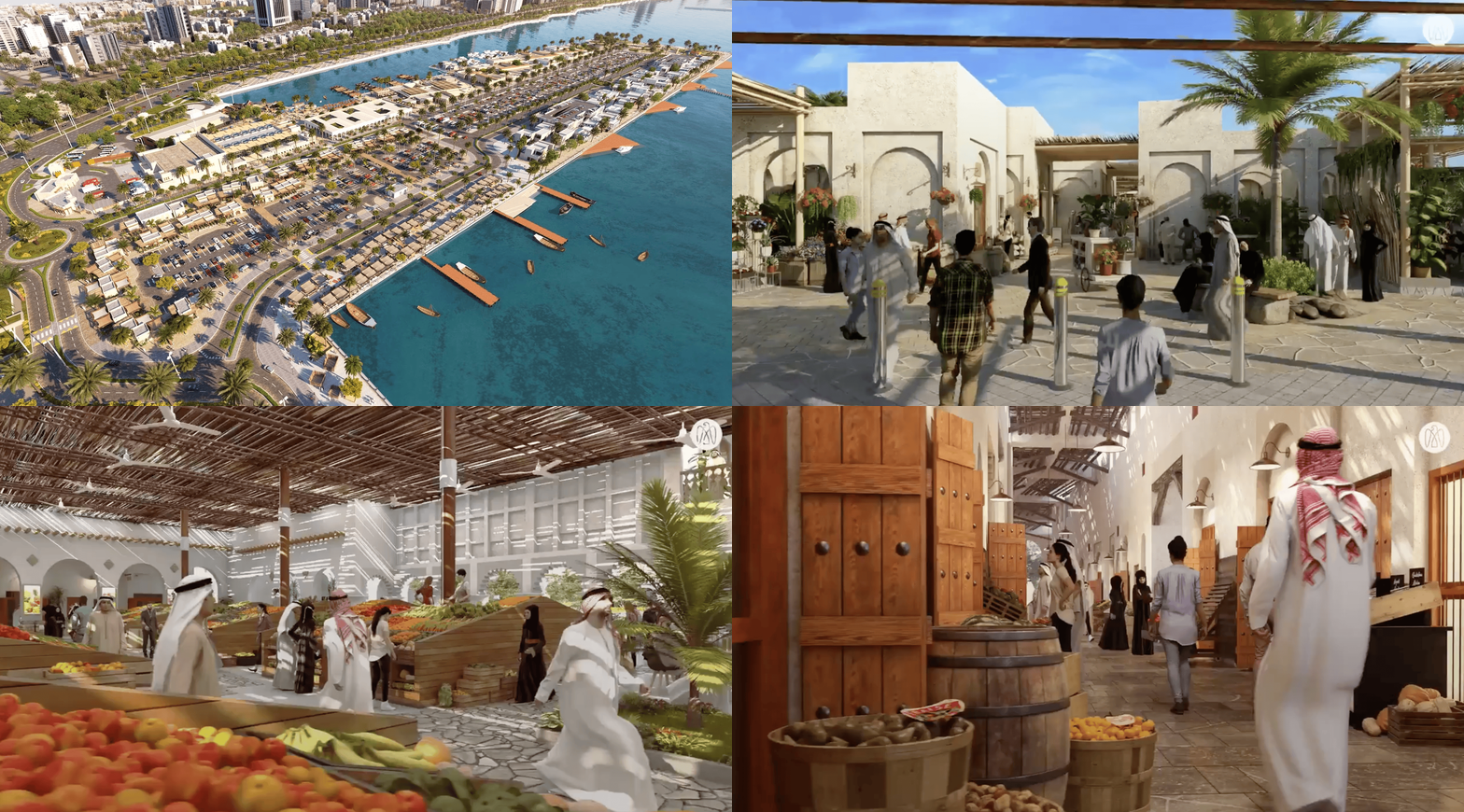
Renderings of the plan to redevelop Mina Zayed into a multi-use destination. Photos: DMT and Modon Properties
Renderings of the plan to redevelop Mina Zayed into a multi-use destination. Photos: DMT and Modon Properties
At the time, Bill O’Regan, now group chief executive of Modon Properties, said the vision was for Mina Zayed to “become a destination where people can spend their day; you will come for fruit and veg but stay for hours”.
He said residents and visitors should not be concerned that “the vibrancy and heritage of Mina Is lost in the new developments".
“It is very important to us, and the leadership of Abu Dhabi and the people, to preserve it,” he said.
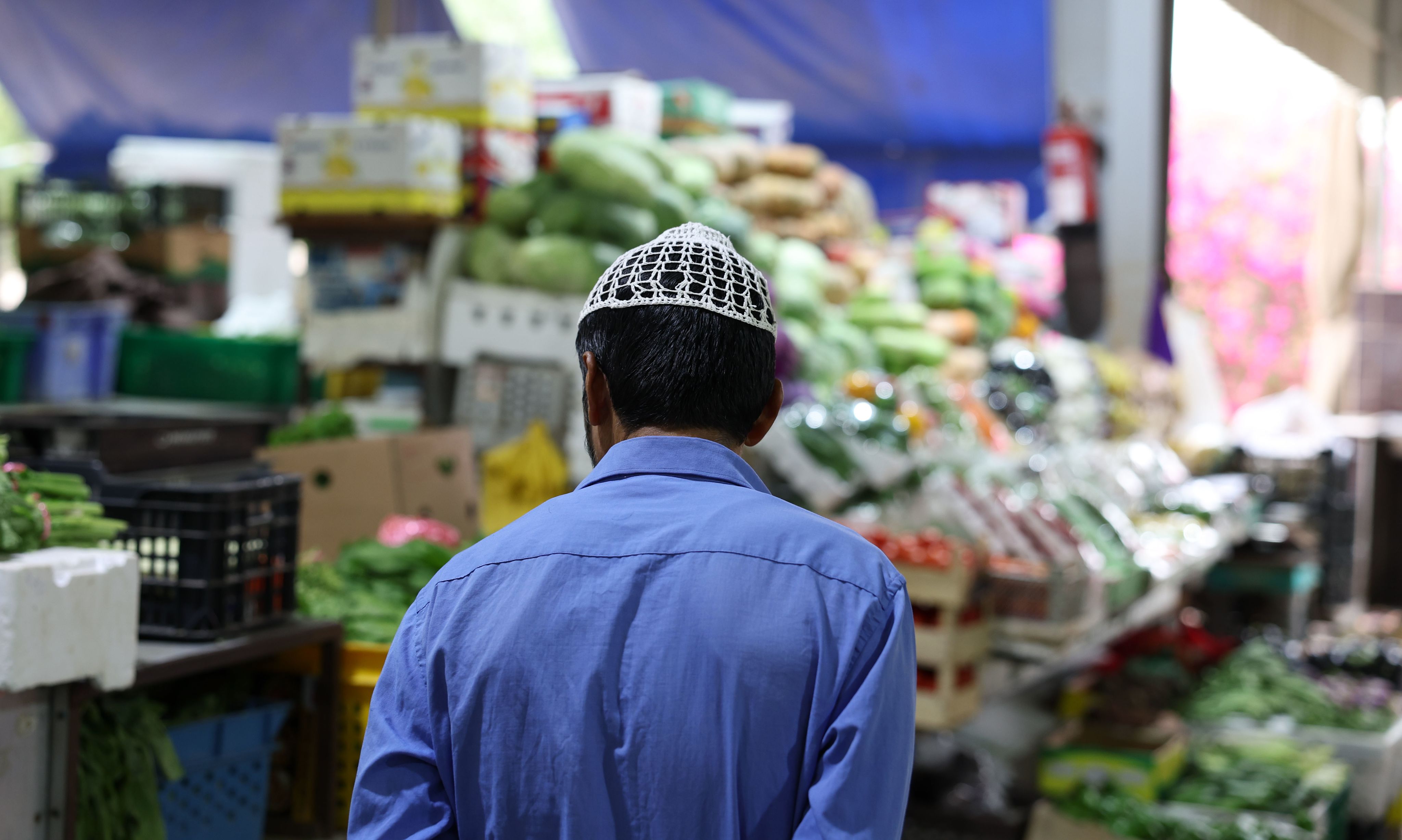
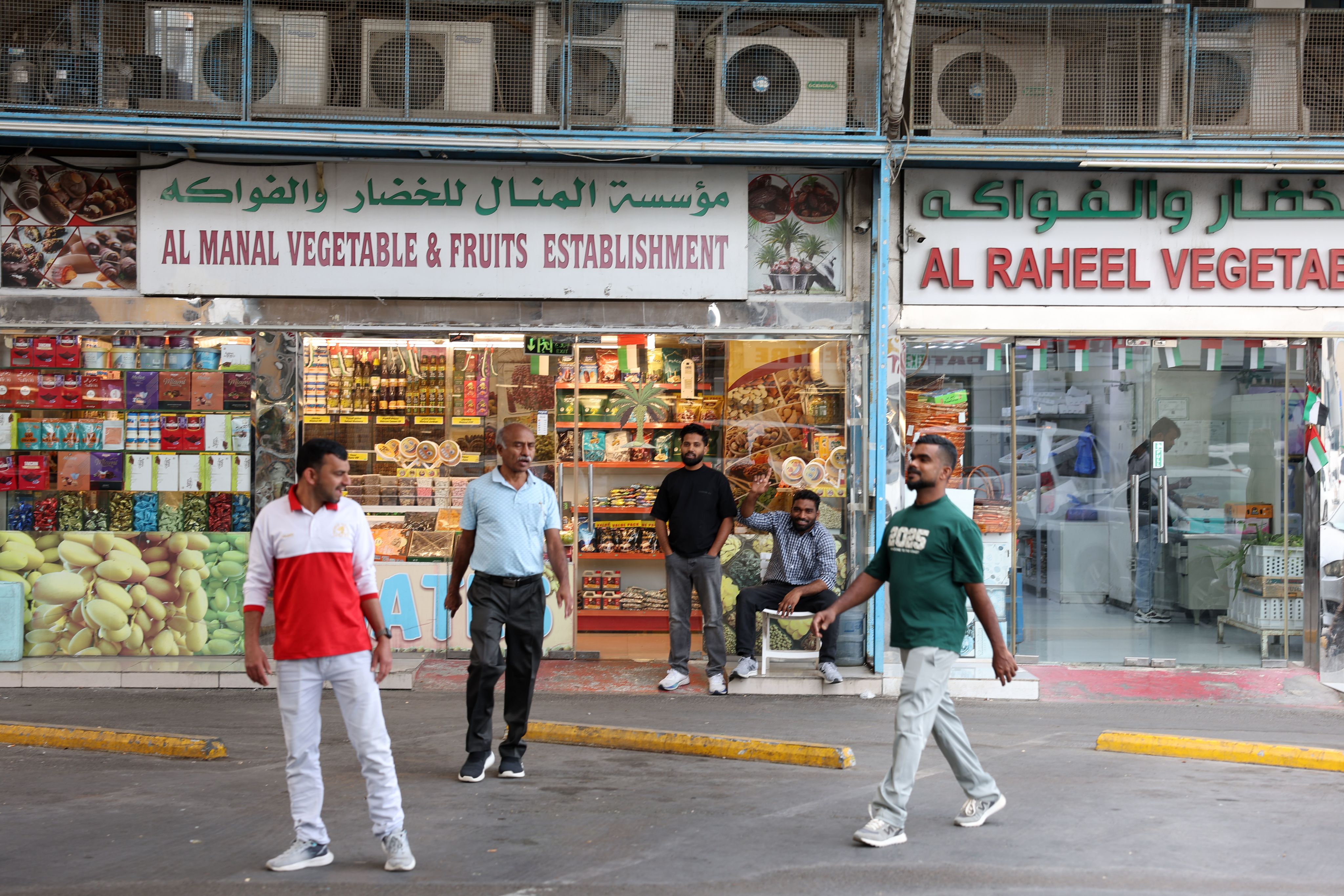
Despite the new construction, daily life in the older markets continues largely unchanged. Workers ride rusty bicycles between errands, shoppers haggle at fruit stalls and long-standing shops such as One to Ten Gifts remain busy. It may be a familiar scene, though its future is uncertain.
The contrast between the Mina Zayed long-time residents know – of the plant souq, karak spots, such as Come and Eat cafeteria, where taxi drivers congregate and rest, and docked dhows – and the version newcomers encounter, with artisanal pizza and gelato, is stark.



The old guard

Mohammad Ali, who has worked in the Iranian market for 27 years, has watched the area evolve and has a positive outlook on the place he has come to call home. Originally from Iran, he says the market has grown from a largely Iranian space into a multicultural one.
"In 27 years working here, there has been no controversy. Work is good, alhamdulillah."

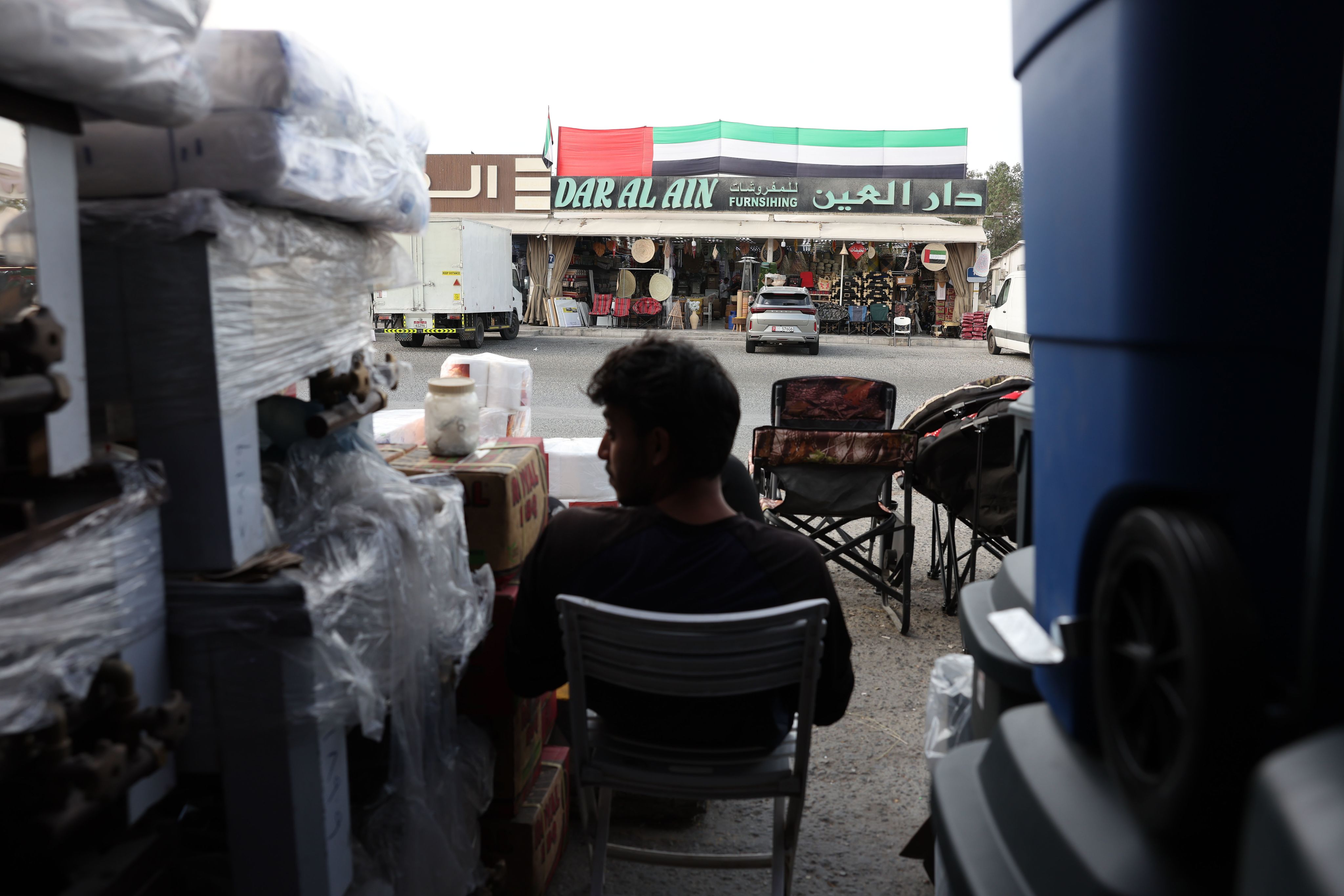
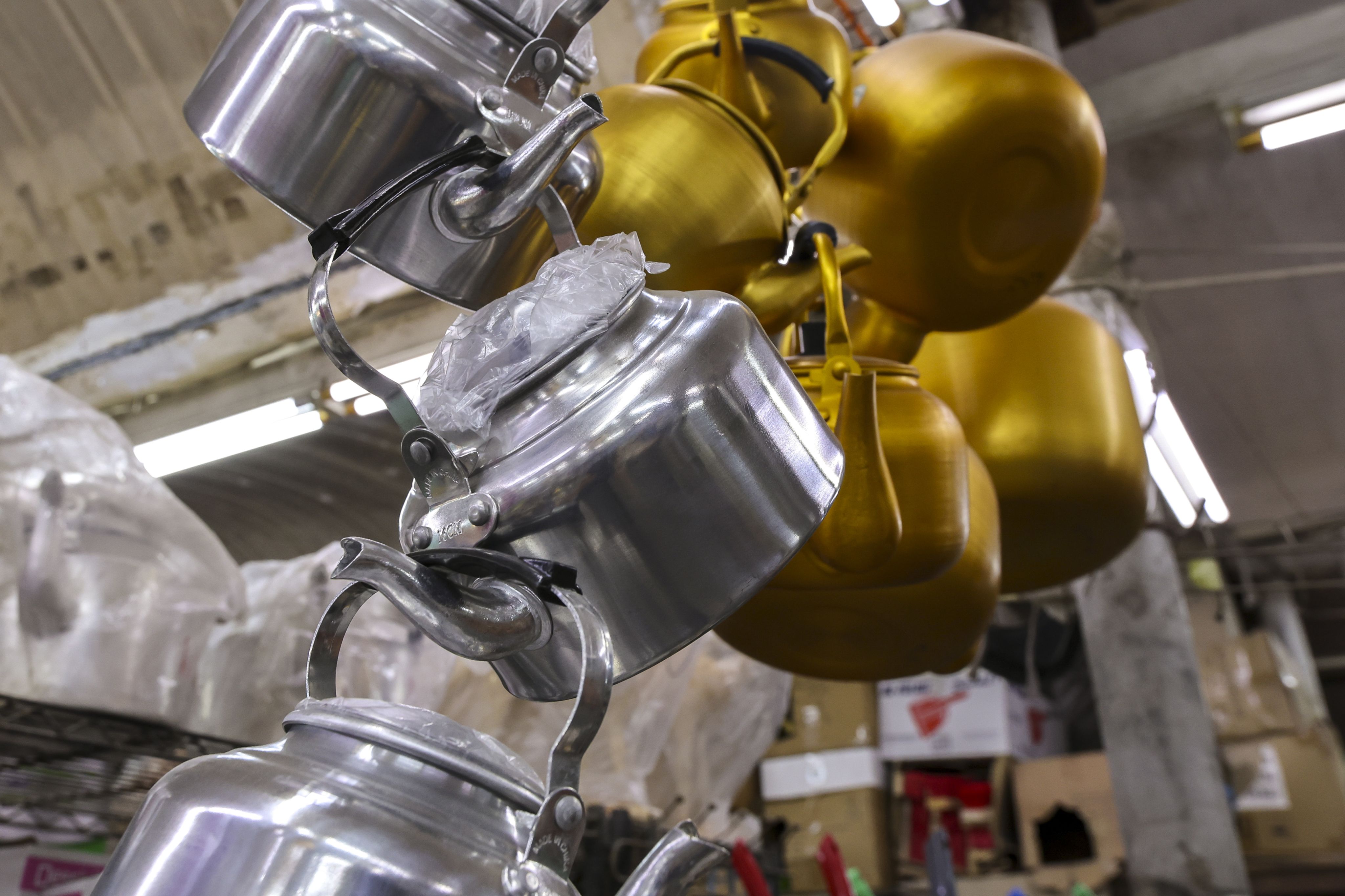
The souq in Mina sells everything from homeware and cooking pots to coal and firewood. Chris Whiteoak / The National
The souq in Mina sells everything from homeware and cooking pots to coal and firewood. Chris Whiteoak / The National
The Iranian market will remain untouched for now. Mr Ali, in his 50s, credits Sheikh Zayed with supporting the market and keeping rent cheap enough.
"Before, it was the best souq, before, [for] 15-20 years, the biggest souq was here. Now, hypermarkets have opened and customers have decreased. Before, all customers would come here, even from Al Ain, from Al Sila, from Liwa, from any area … Baniyas, Musaffah, Shahamah, everyone would come here. Now malls are found everywhere", he said.
Despite declining footfall, he believes customers remain loyal because of long-standing relationships. For now, redevelopment feels distant.

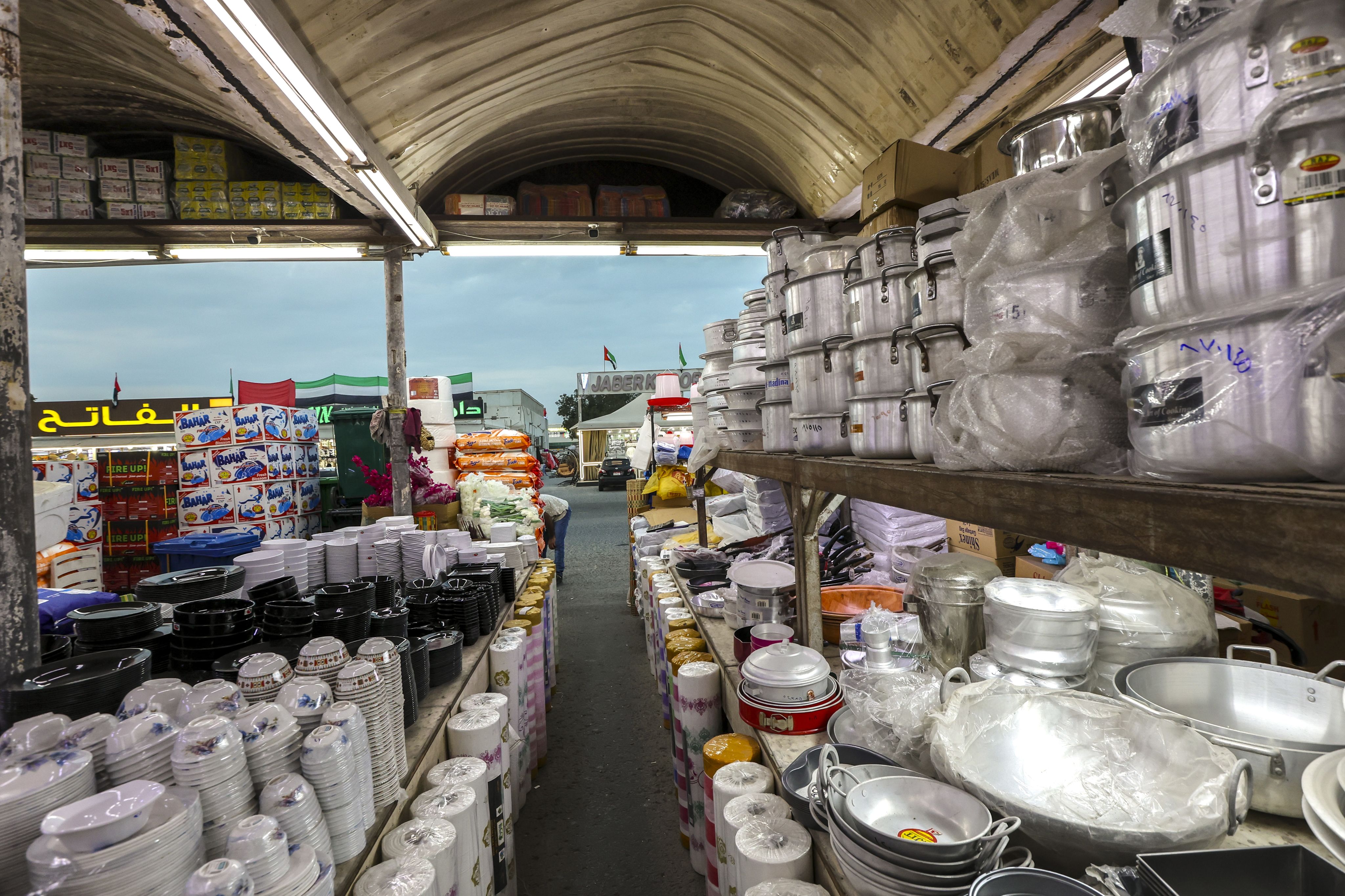
The Iranian souq, where vendors say footfall has steadily declined. Victor Besa / The National
The Iranian souq, where vendors say footfall has steadily declined. Victor Besa / The National
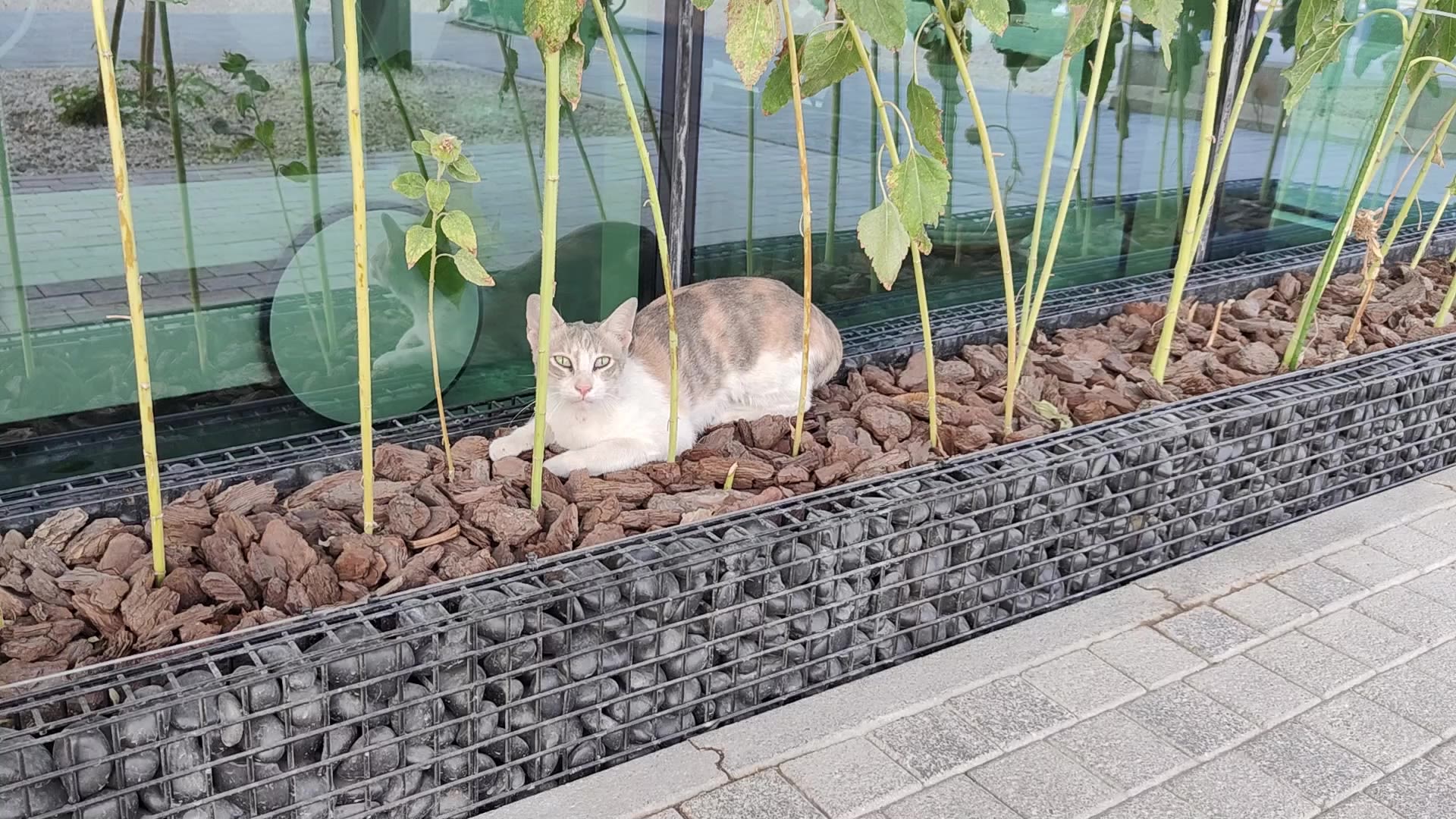
Across the road from the Iranian souq lies the sandy plot where Mina Plaza Towers once stood. Arabian red foxes, native to the area, roam the quiet stretches, sharing space with colonies of cats.
The newcomers

As regeneration gathers pace, new businesses are investing in Mina Zayed’s future.

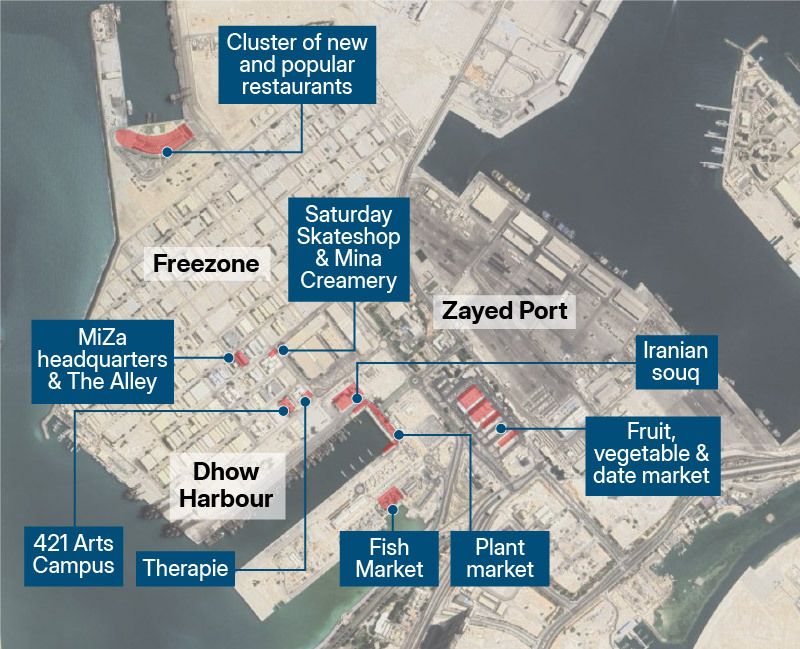
Mina Zayed in December 2025. The area where the new fish market is located will comprise the main redevelopment called Fisherman's Wharf
Mina Zayed in December 2025. The area where the new fish market is located will comprise the main redevelopment called Fisherman's Wharf
Inside Mina Creamery, the scent of sweetened dairy and fruit greets clients seeking cool refreshment. The playlist is nostalgic yet modern. Scrawled on the menu board are this week's flavours: Earl Grey blueberry, carrot halwa, tender coconut. Shelves are lined with colourful patterned fabric from Jaipur, which will be used to package the various flavours.
Anant Singh is one of the brains behind Mina Creamery, which started from his dorm room in New York University Abu Dhabi, and opened its brick and mortar shop in the MiZa area.
“In my senior year, I was really inspired by what was happening with ice cream around the world – especially back home in Mumbai. There are a lot of amazing ice cream brands that do really high-quality natural ice cream, sourcing all of the ingredients locally,” he told The National.
Rihab Al Gurg is the Emirati co-owner, who Anant, her “ice cream soulmate”, found through her blog.
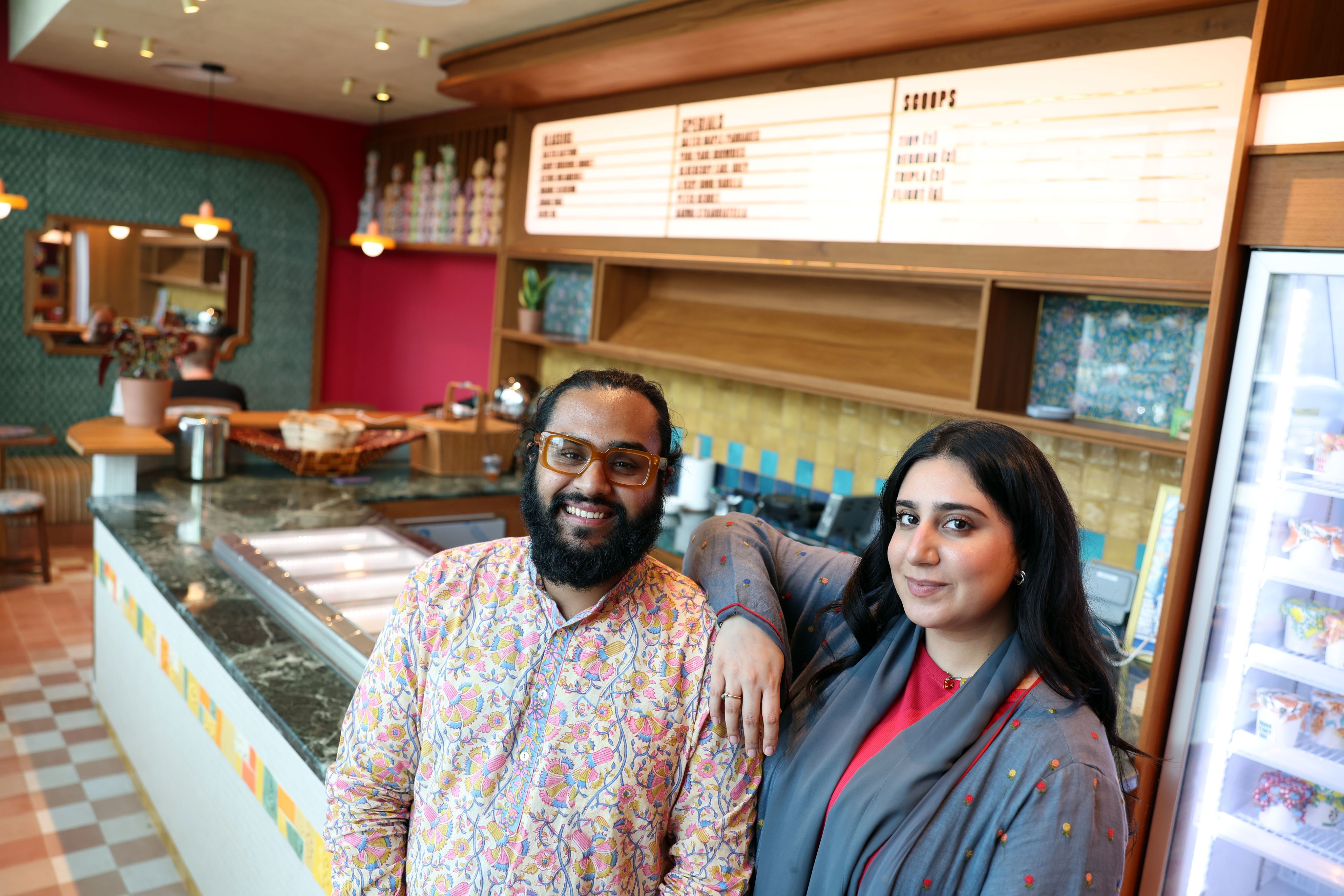
Business partners Anant Singh and Rihab Al Gurg opened Mina Creamery in the new MiZa area. Victor Besa / The National
Business partners Anant Singh and Rihab Al Gurg opened Mina Creamery in the new MiZa area. Victor Besa / The National
“I've always wanted to do this, I knew even when I had an office job,” said Ms Al Gurg. “I'm supposed to be making ice cream and making people happy. Talking to Anant, we clicked right away ... he sees my vision and we understand each other.”
Ms Al Gurg is an ice cream aficionado, while Mr Singh’s interest lies in creating a successful brand that has a connection with its customer base.
“For me, the excitement is how can we create a place where we can be behind the counter as the makers of the ice cream and get to meet the people who eat our ice cream every single week,” he said.
The duo have been serving up new flavours weekly for a couple years, in addition to hosting pop-ups at events in Abu Dhabi and Dubai.
Mina seemed like the natural starting place for the brand, as many of the ingredients are sourced from the markets across the street. When the shop opened, Ms Al Gurg and Mr Singh celebrated by offering free ice cream for a week.
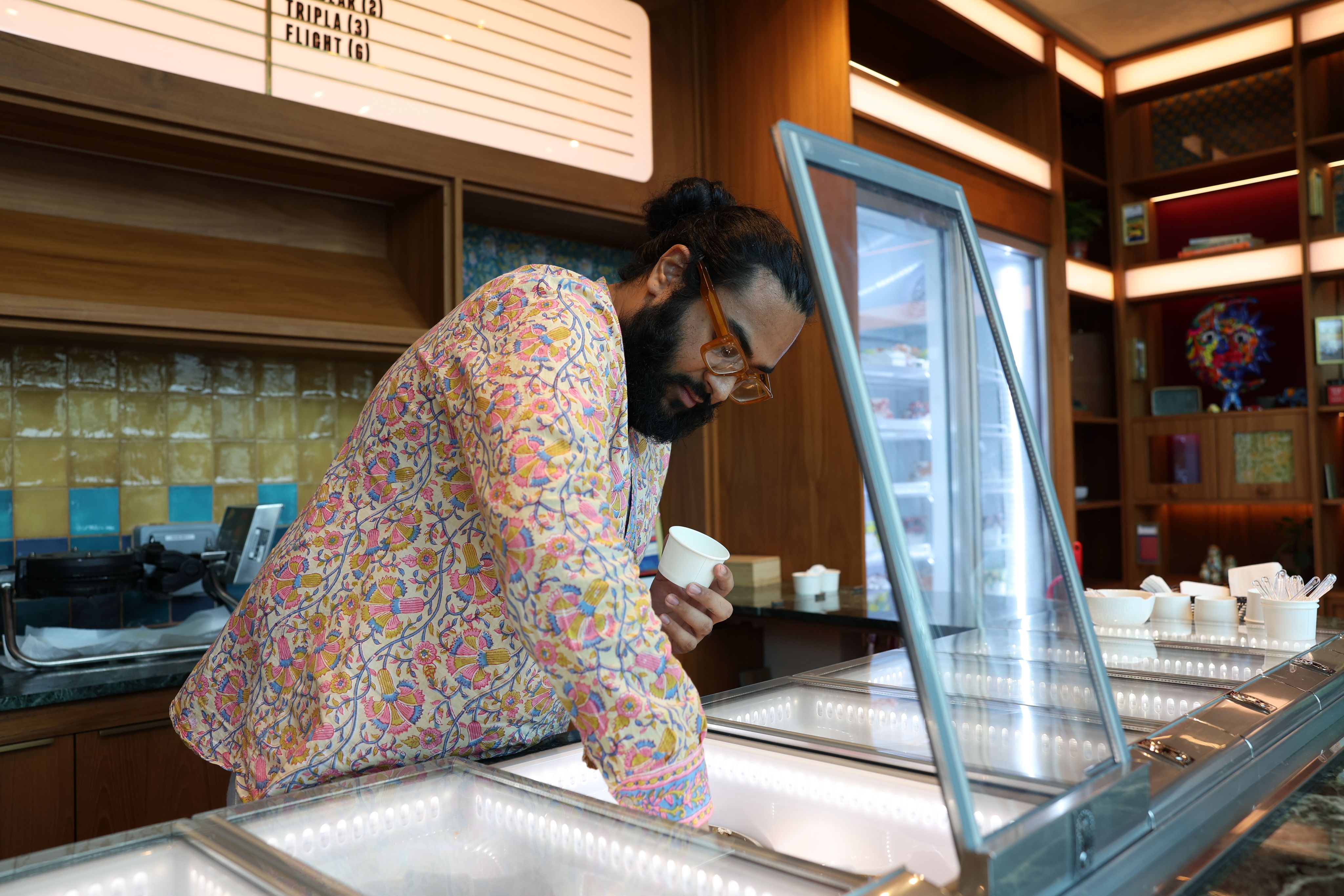
Anant Singh began making and selling ice cream from his dorm at NYU Abu Dhabi. Victor Besa / The National
Anant Singh began making and selling ice cream from his dorm at NYU Abu Dhabi. Victor Besa / The National
“We saw the promise that MiZa had,” Mr Singh said. “We had the opportunity to open in Alserkal Avenue [in Dubai] but it just didn't feel right … our roots have to be in Mina port. It is a historical place. A lot of trade has gone through here.”
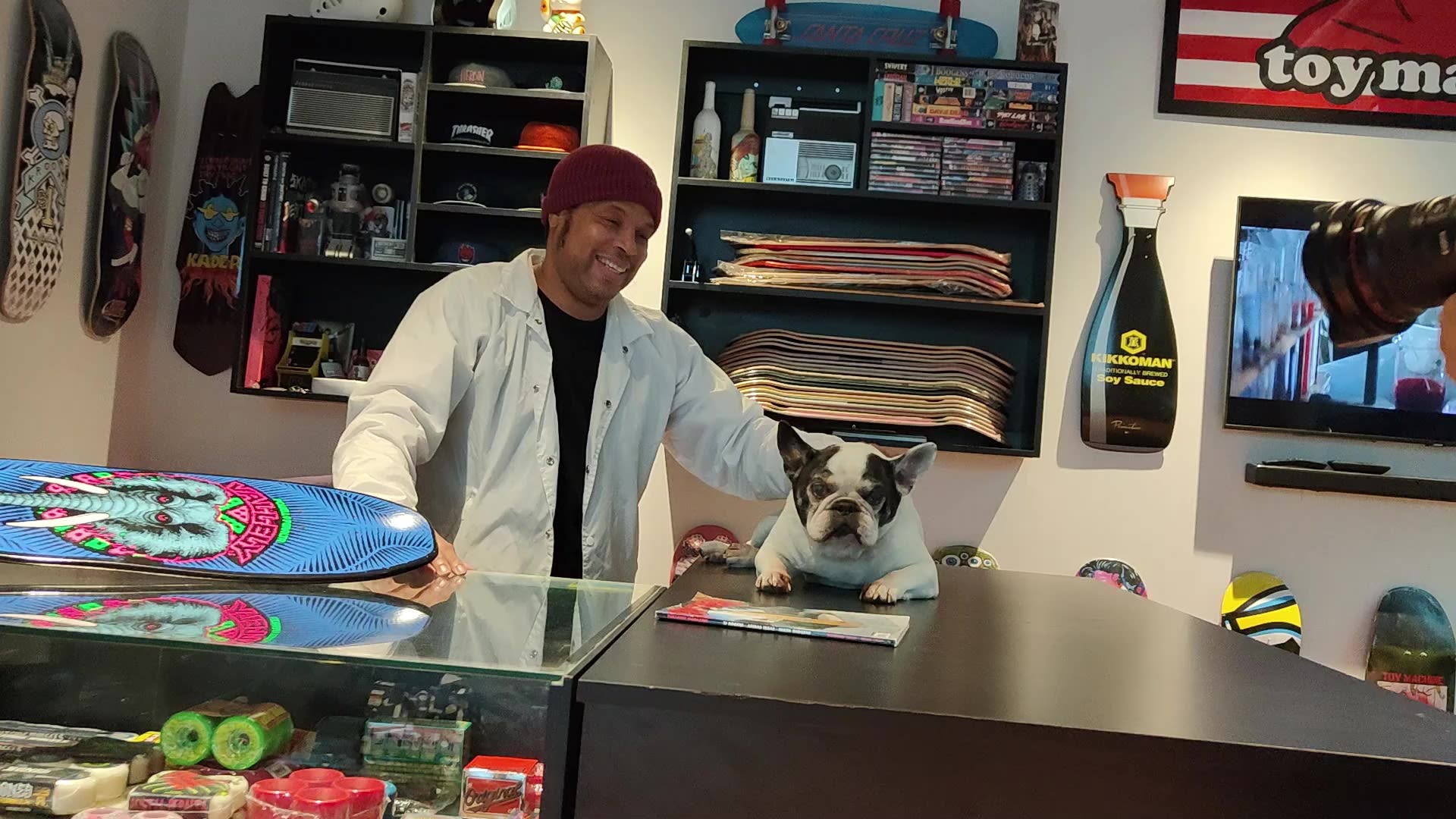
Next door, the well-loved Saturday Skateshop has relocated from Khalidiyah. Owner Jonathan Dixon brought his Charleston, South Carolina-based skate shop to the Emirates after rekindling a friendship with a former classmate.
"I came out here during 2019, just before Covid. I was skating with the community, meeting people and they said how they had never had a core skate shop, a skater-owned skate shop. So I went into Khalidiyah as soon as they started letting us out [after Covid], I found a little spot and then I just started building the brand there," he said.
The idea of moving to the MiZa area was suggested by two friends: Raj Dagstani from Marmellata and Nahla Knott from The Tuckshop. For Mr Dixon, M_39, a co-working space and creative hub at the heart of MiZa, seemed like the perfect place for catering to the skateboard community.
"I asked M_39 one simple question: 'Will the kids be able to skate out there? Can we skate around the area?' And they said 'Sure.' That's always what I was looking for, a space where people could actually skateboard around the area."
Mr Dixon is convinced MiZa is the new "hip" area of Abu Dhabi, with M_39 as the beating heart.
"I hope that it brings sunshine to the area. I do know right now it brings all demographics of people, so it is kind of lively. Sometimes you'll see kids out here who are nine and 10 years old getting their first little skateboards, and they'll test them out front. You'll see teenagers and older people. My goal is to actually bring the youth and older people to the neighbourhood."
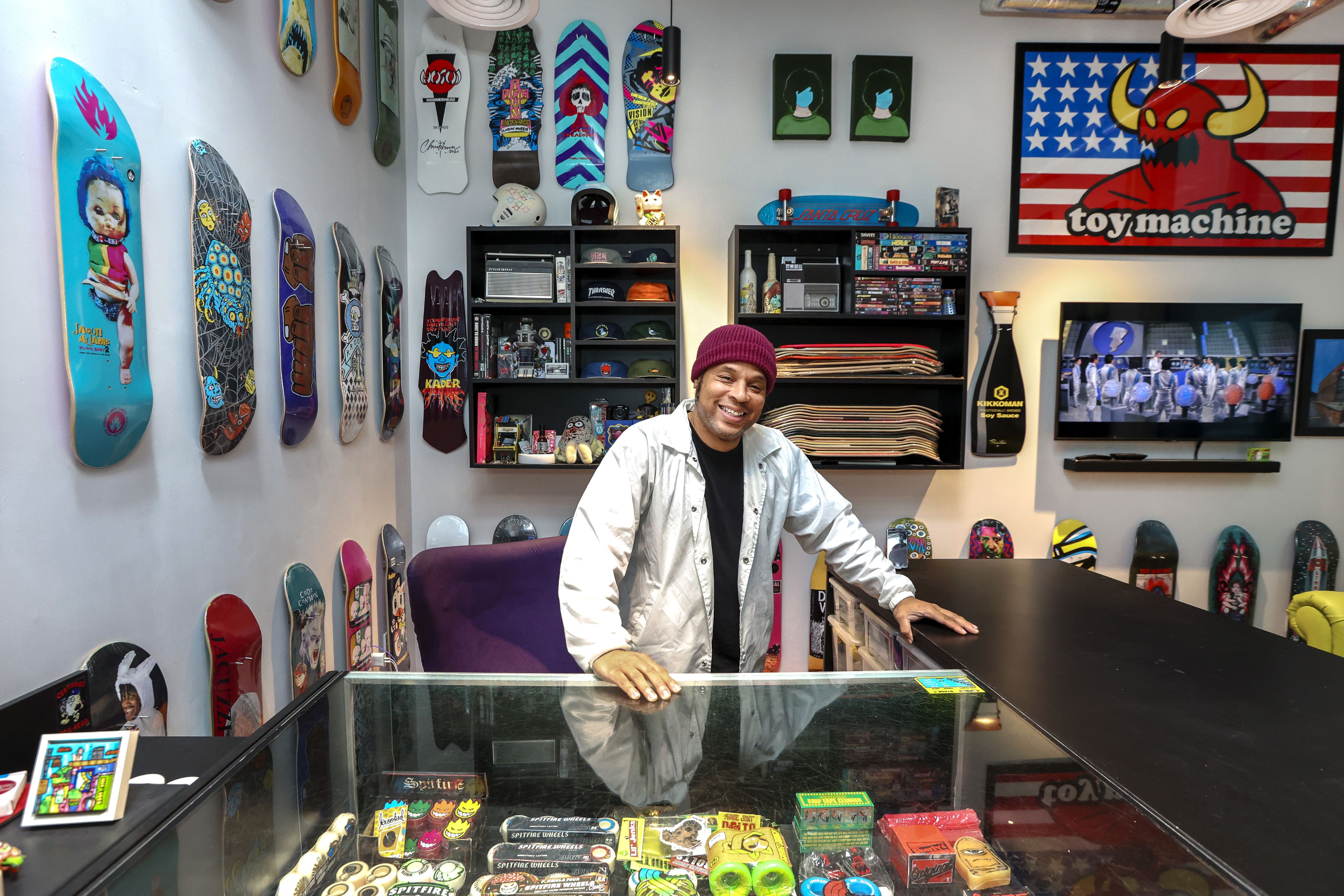
Jonathon Dixon, owner of Saturday Skateshop, hopes to foster a sense of community among skaters in Abu Dhabi. Victor Besa / The National
Jonathon Dixon, owner of Saturday Skateshop, hopes to foster a sense of community among skaters in Abu Dhabi. Victor Besa / The National
To celebrate the opening, Mr Dixon is planning a neighbourhood cookout with his sidekick, Tinky the French bulldog – the shop mascot.
Further south is Therapie, a newly opened community space that emphasises healing. Owner Maissa Al Khafajy, a Dubai entrepreneur, said she was convinced Abu Dhabi was ready for her idea.
“Therapie isn't just a place where you can sit happily and have a matcha and paint,” she said.
“It's a place where you really need to break down barriers, [and talk about] things that you don't want to talk about on a daily basis, but in the intimate circle of people who are there for the same reason.”
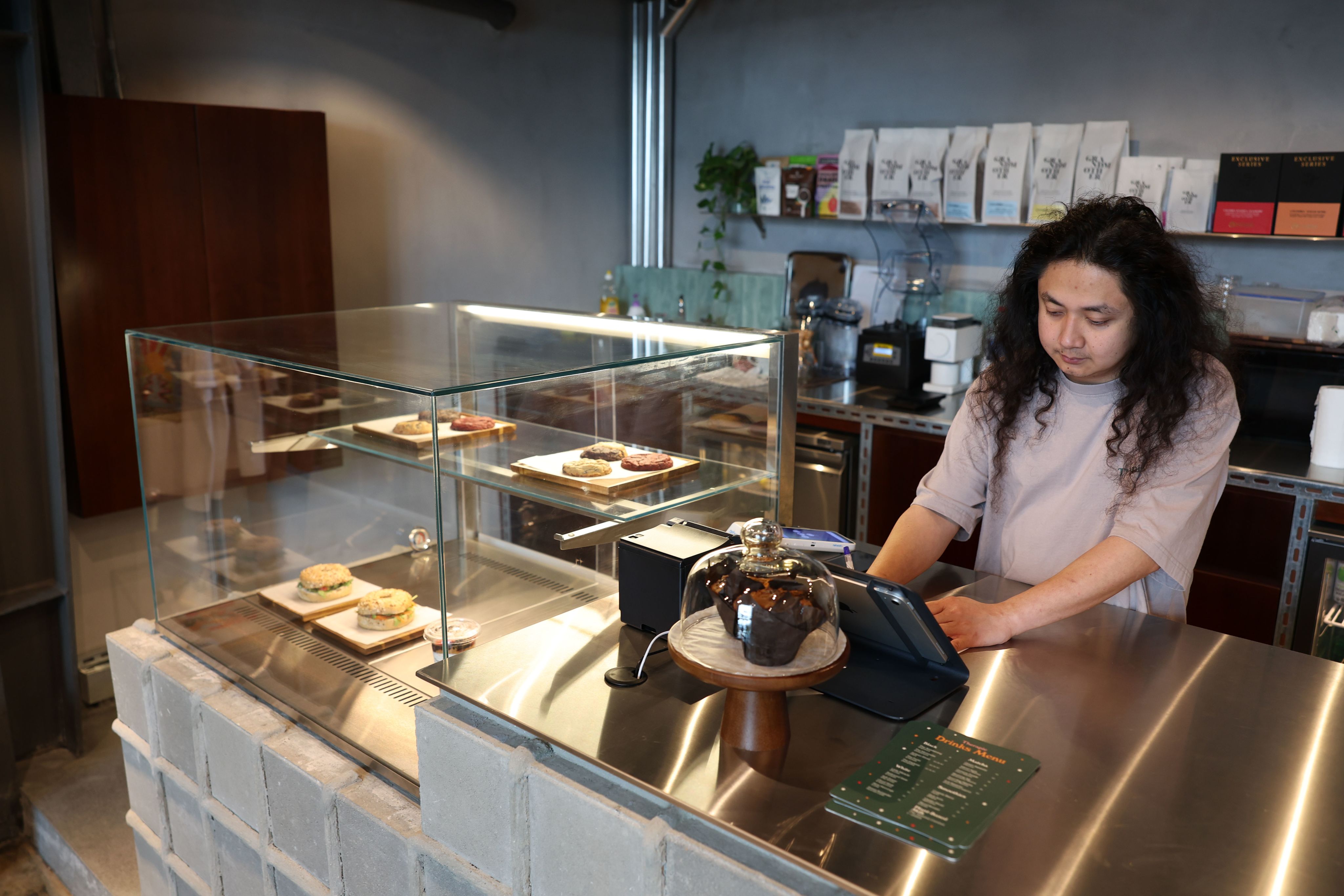
Therapie, a cafe where people can meet to have conversations and create art, recently opened in Mina Zayed. Chris Whiteoak / The National
Therapie, a cafe where people can meet to have conversations and create art, recently opened in Mina Zayed. Chris Whiteoak / The National
Therapie aims to team up with local brands and artists, and promises to be a special space in Abu Dhabi. For Ms Al Khafajy, MiZa was the perfect place to execute this vision.
“That place gives me a lot of peace and it's very nostalgic,” she said of Mina Zayed. “Its ruins, they were very old, dilapidated warehouses that held stories and energy.”
The journey has not been without its challenges. In early 2024, Modon Properties and MiZa Investments was acquired by Q Holding. With these changes, Ms Al Khafajy hopes the MiZa project stays true to its original vision, including support for smaller businesses to gain a foothold in the market and make an impact.

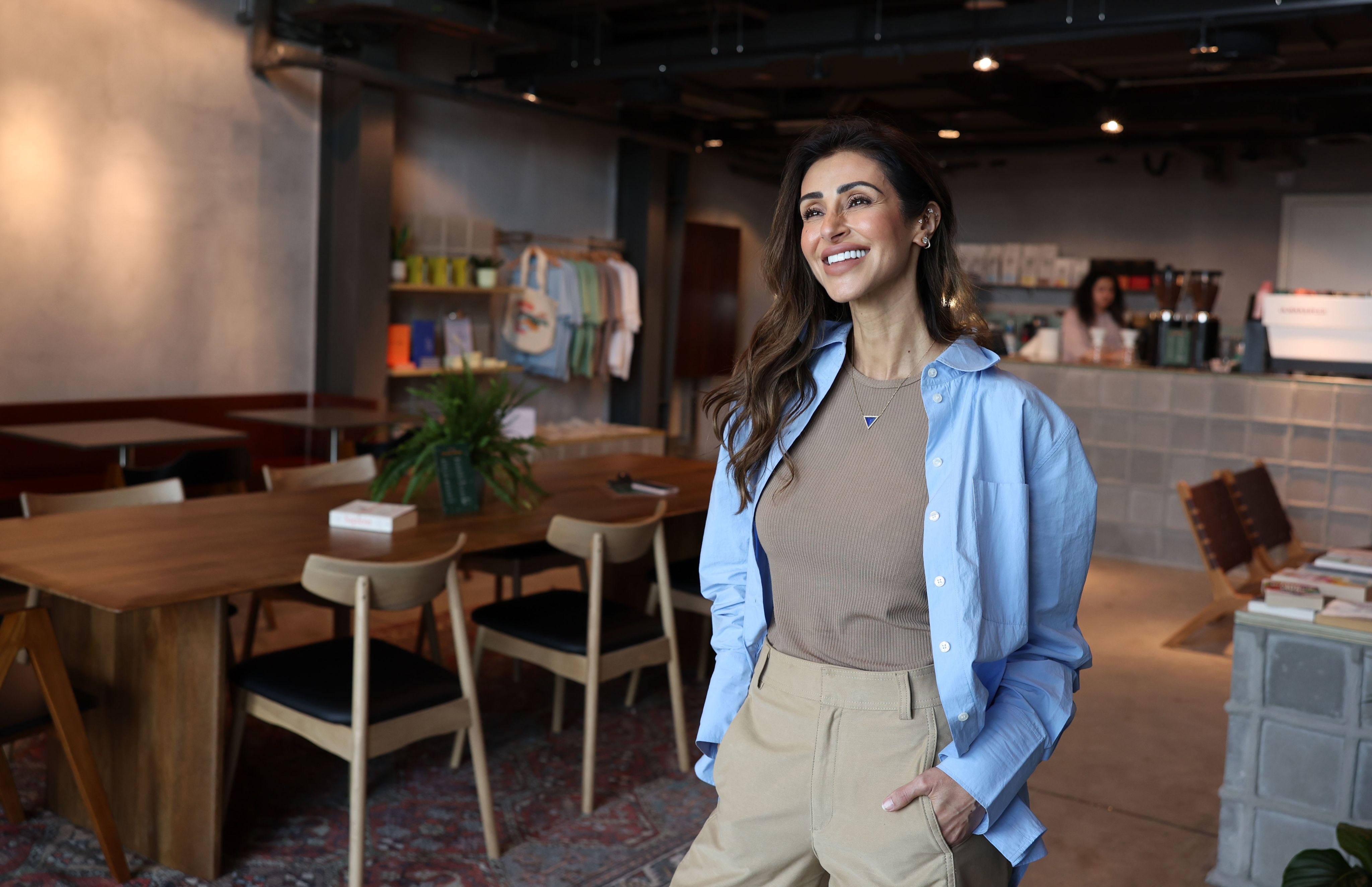
Maissa Al Khafajy, a Dubai entrepreneur, owns Therapie. Chris Whiteoak / The National
Maissa Al Khafajy, a Dubai entrepreneur, owns Therapie. Chris Whiteoak / The National
“As tenants, we really hope that we stick to that vision, that it was going to be a focal point and hub within Abu Dhabi, where there is an intersection of culture and arts," she said.
“It's been a very humbling experience [starting a business] and you definitely learn a lot about yourself."
What the future holds
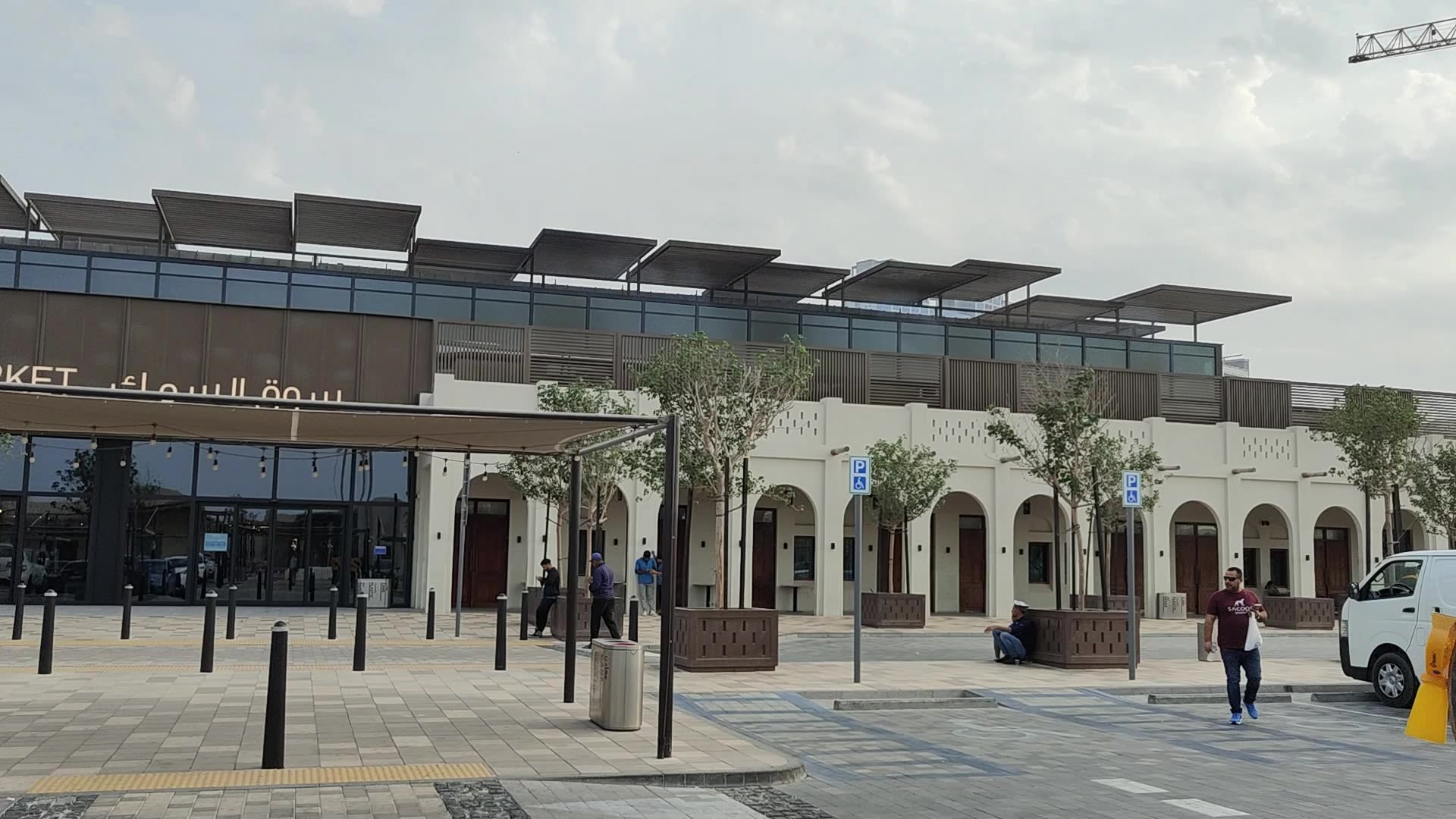

For long-time vendors, the future brings mixed feelings.
Omer Alnaim, who has worked at Al Reef Date Shop for 10 years, is excited by the future. He has been told his shop, along with the others, will likely move to the new market within the next year.
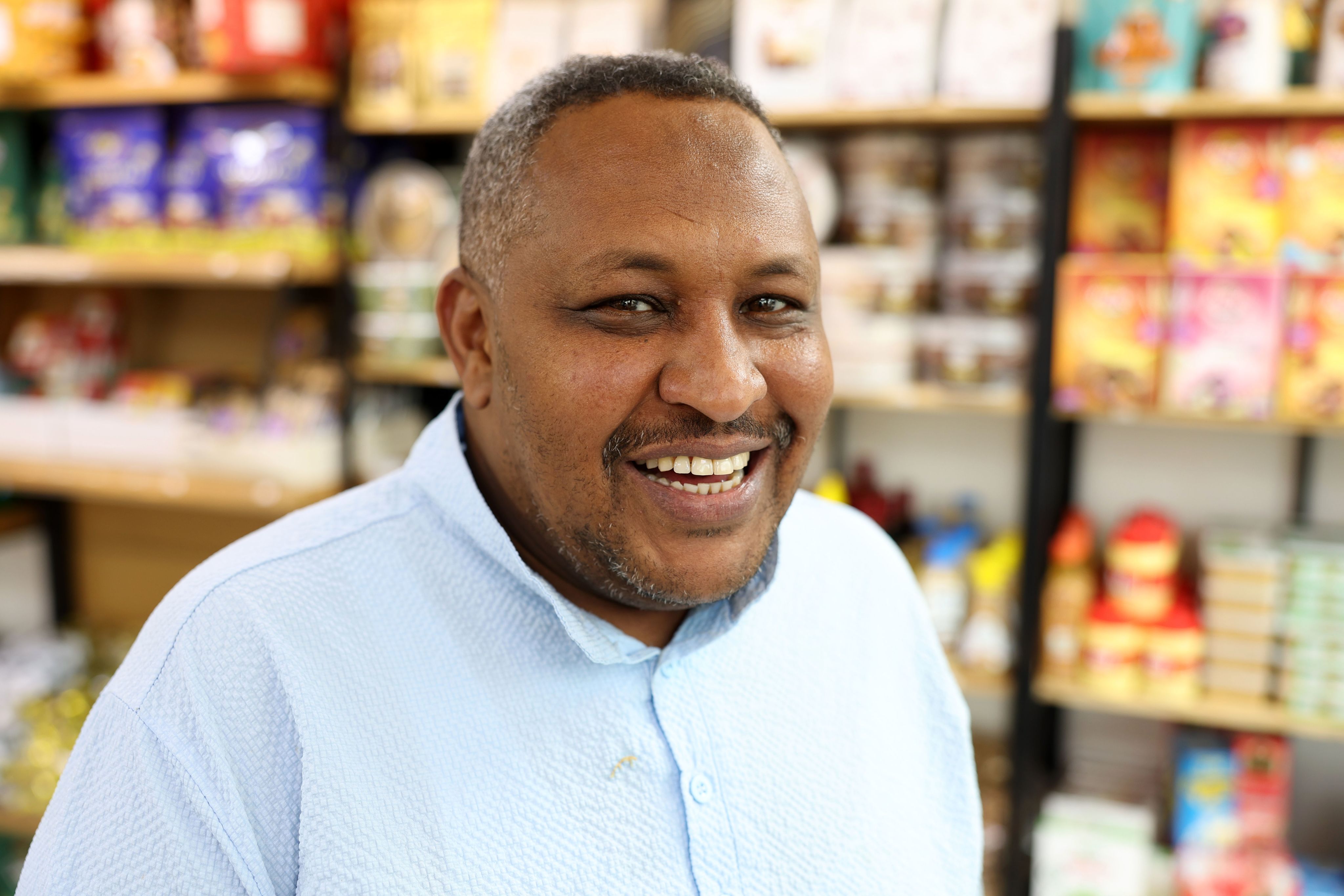
Omer Alnaim, from Sudan, has worked at the date market for 10 years. Chris Whiteoak / The National
Omer Alnaim, from Sudan, has worked at the date market for 10 years. Chris Whiteoak / The National
"I love this area," said Mr Alnaim, from Sudan, but admitted the current date market is old.
He said tourist visits to the market have increased each year and he expects visitor traffic, along with prices, to remain steady even with the move.
"It's a very good thing,” he said about the move. “That market is very nice … we wait for [it].”
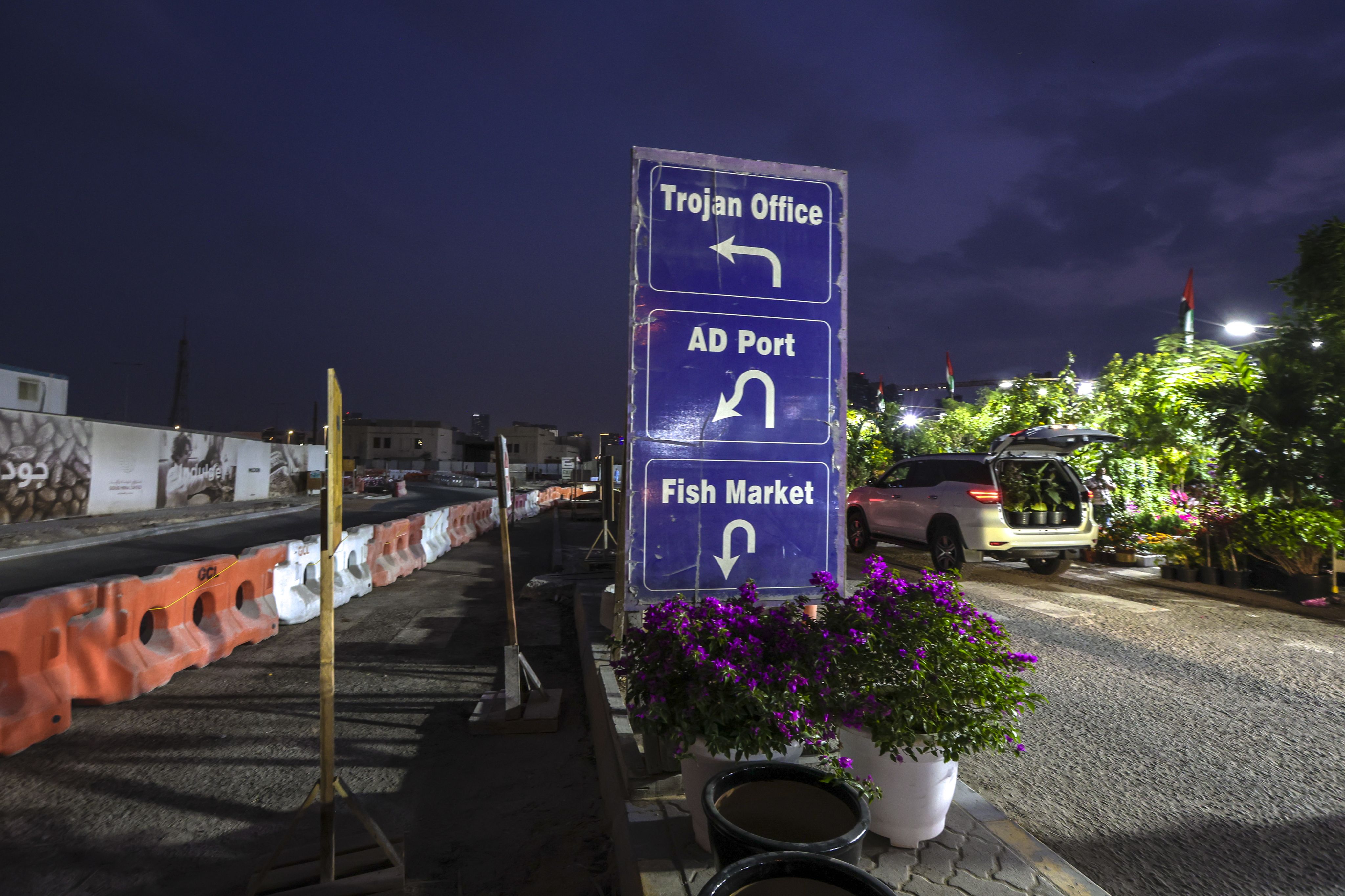
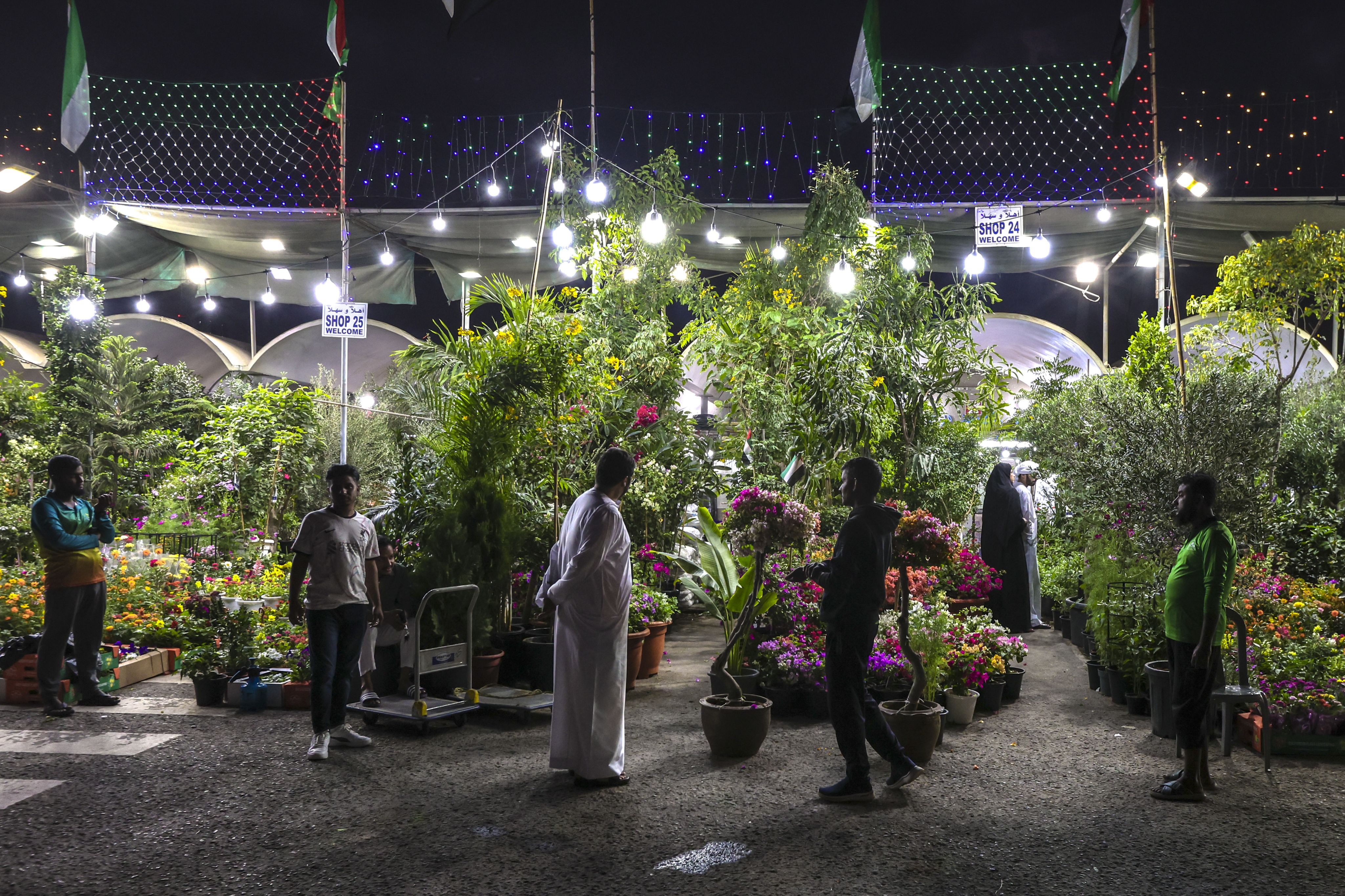
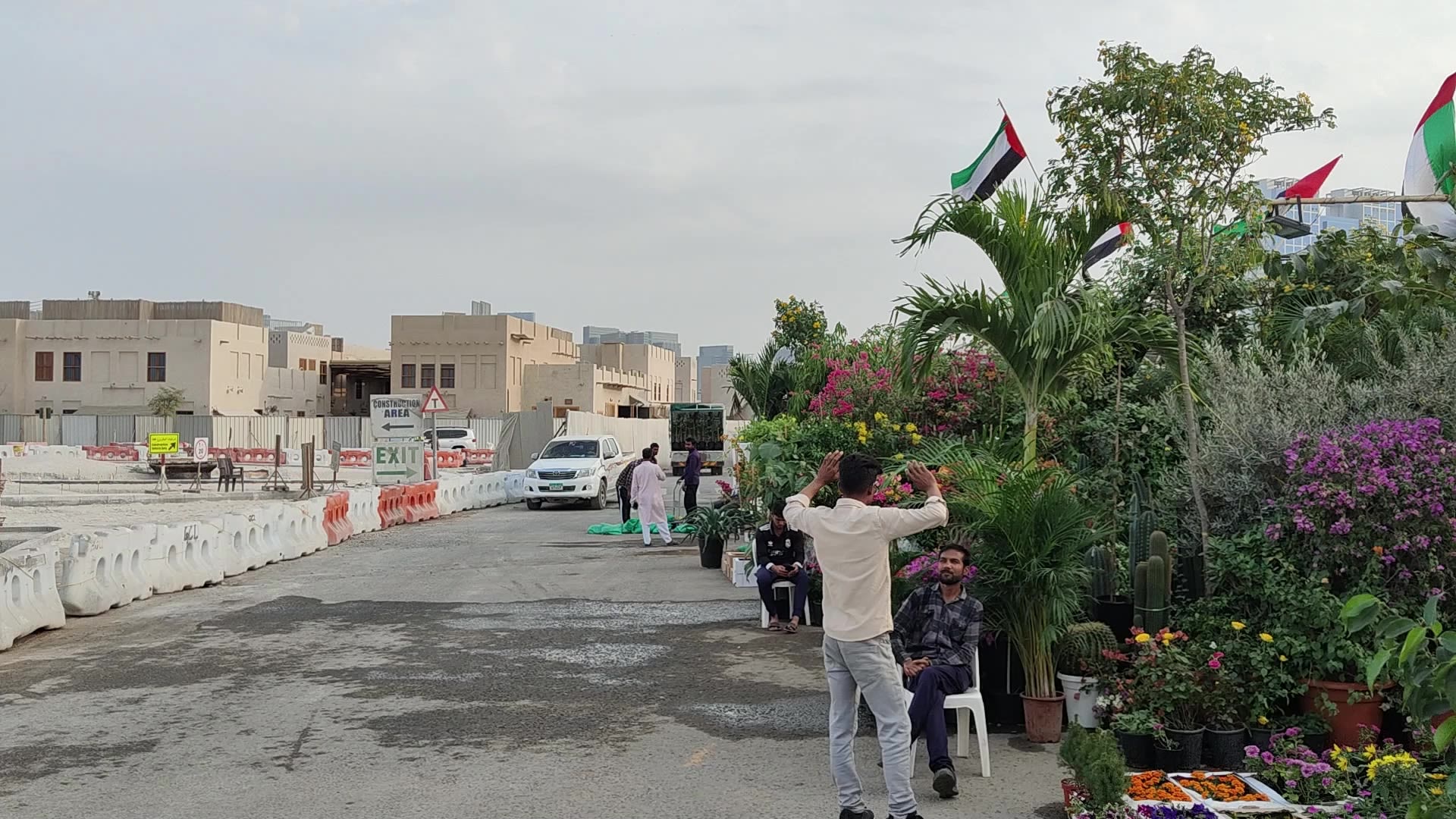
The plant souq is also expected to be relocated, with sources saying the move will likely happen in January. Scaffolding and barriers have come down on the new building and the finishing touches are being applied to new surrounding roads. The new souq has been built beside the old one.
After a quieter summer season, business has picked up in the winter, as usual. While a move is anticipated by shop owners, the adjustment may be tricky for the vendors.
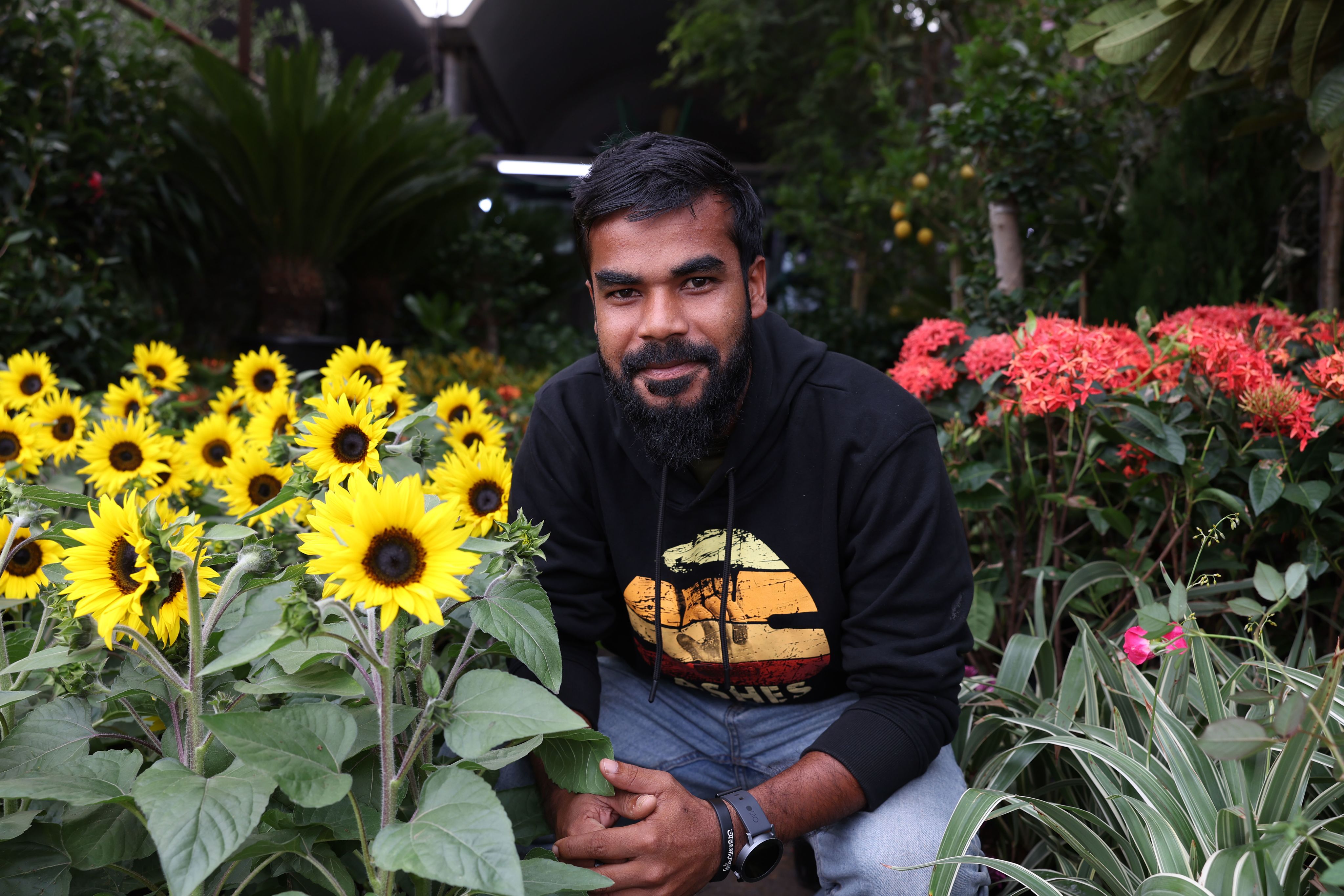
Imran Naeem worries the new plant souq will be too small. Chris Whiteoak / The National
Imran Naeem worries the new plant souq will be too small. Chris Whiteoak / The National
"[In the] new market, our shop is a smaller size. This one is bigger,” said Imran Naeem, who has worked at the plant souq for eight years.
“They are small-sized shops there, maybe customers go and [it will] not be possible to put all [plants] inside the shop. This is a big problem."
Much uncertainty hangs over the future of the area. While construction appears to be wrapping up and word travels by mouth, the shop owners are unsure about what the move means for their businesses.
"I don't know if we'll get a shop outside or inside. We'll go there, then decide [if we are] happy or not. [Municipality] workers came and told us we will move there. We are waiting," said Noushad KP, who has sold produce at the fruit and vegetable market for 18 years.
The souq, known colloquially as the baladiya [municipality] market, has undergone gradual change over the years. It used to be a place where people would visit from all around Abu Dhabi. He said the city, not just Mina, has "totally changed".

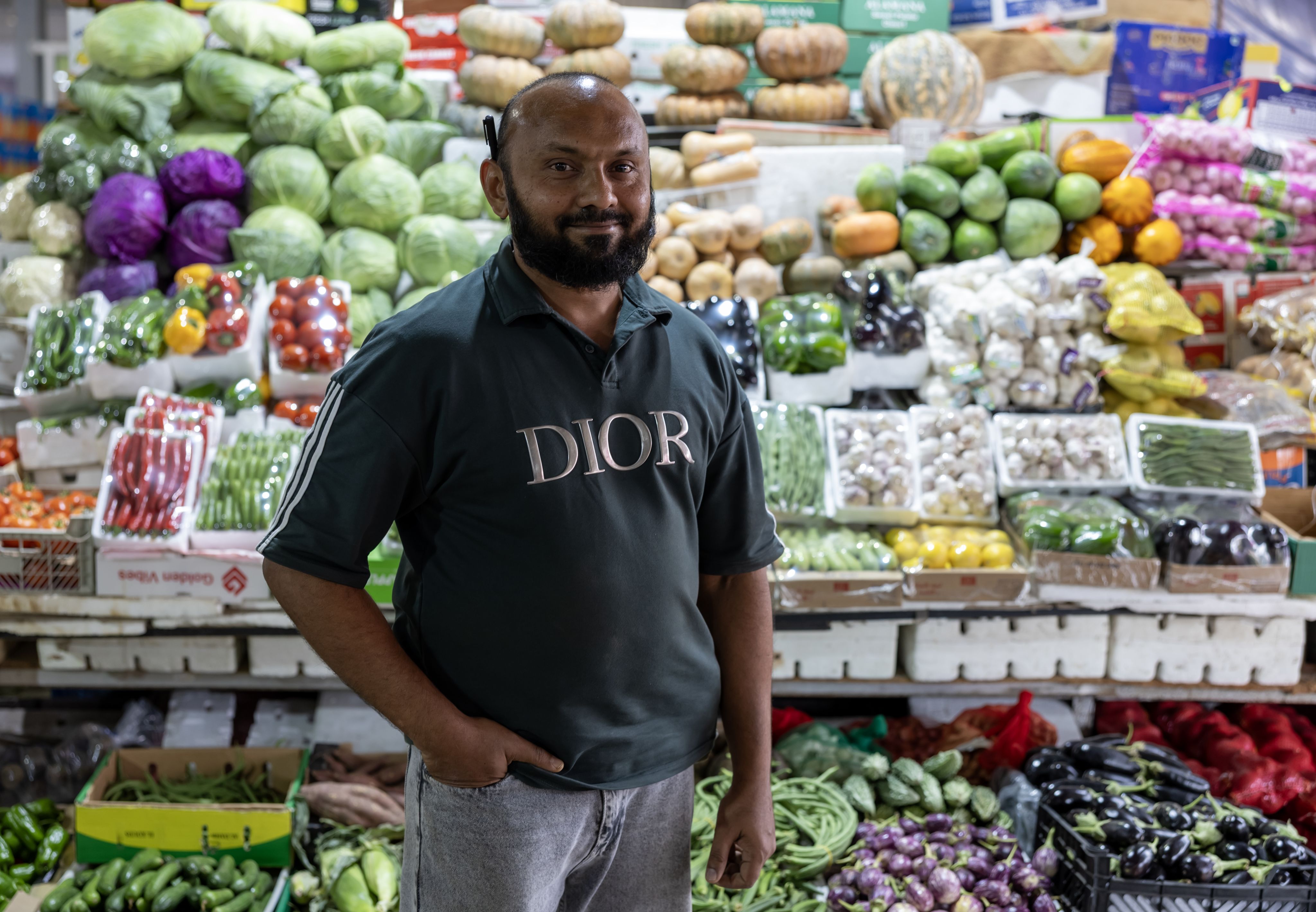
Noushad KP has worked at the fruit and vegetable market in Mina Zayed for almost two decades. Chris Whiteoak / The National
Noushad KP has worked at the fruit and vegetable market in Mina Zayed for almost two decades. Chris Whiteoak / The National
"Before [the market] was too much busy. Now, all the area have a new stall, new market in Khalifa, everywhere, new stall." He said it was no longer busy, with visitor numbers dwindling.
The market is a big part of Noushad's life, and he says the surrounding areas could benefit from better maintenance and upkeep, including better public toilets. But vendors do worry about their future when the new market opens in about six months.
"Maybe you can get a job [at the new market]," he said. "Maybe not the same job. I know that there are very small stalls. Maybe [at each] stall there will be around four people working. I think that's why I'm a little sad."
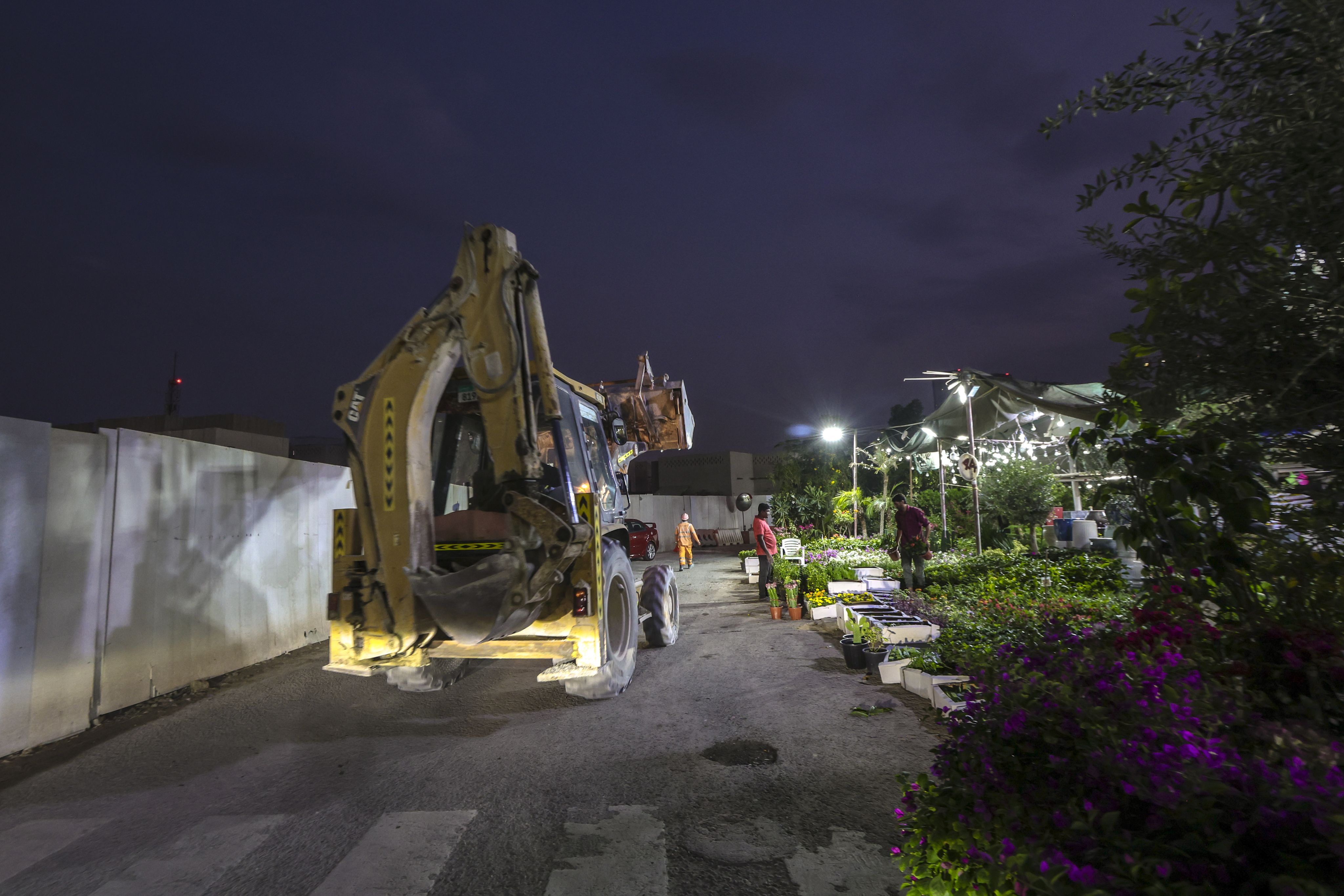
Construction under way near the plant market, which will soon move to the new souq. Victor Besa / The National
Construction under way near the plant market, which will soon move to the new souq. Victor Besa / The National
As Mina Zayed’s markets prepare to move, it remains unclear what will replace the spaces that have shaped daily life for decades. While a new heritage-style souq may attract visitors and provide opportunities for workers, it may not carry the same meaning for those who built their livelihoods there – or for the foxes that have quietly claimed the area as their own.
Words and video Alexander Christou
Editor Juman Jarallah
Photo editor Scott Chasserot
Design Talib Jariwala
Graphics Roy Cooper
Sub editor Neil Macdonald



 Built with Shorthand