
Energy and intelligence converge at Adipec 2025

Adipec to highlight need for integrated AI and human effort to solve global energy dilemma
Man and machine must work together to meet surging power demand while reducing impact on environment, experts believe
The energy sector has led the global economy in using artificial intelligence to drive measurable growth and resilient results, as Adipec 2025 will demonstrate this week. The question now is what the convergence of energy and AI means for our future, and whether digital systems and new capacity can be used to meet two major goals – accommodating the world’s burgeoning energy needs, including rising electricity demand, and reducing emissions to build a sustainable and inclusive future.
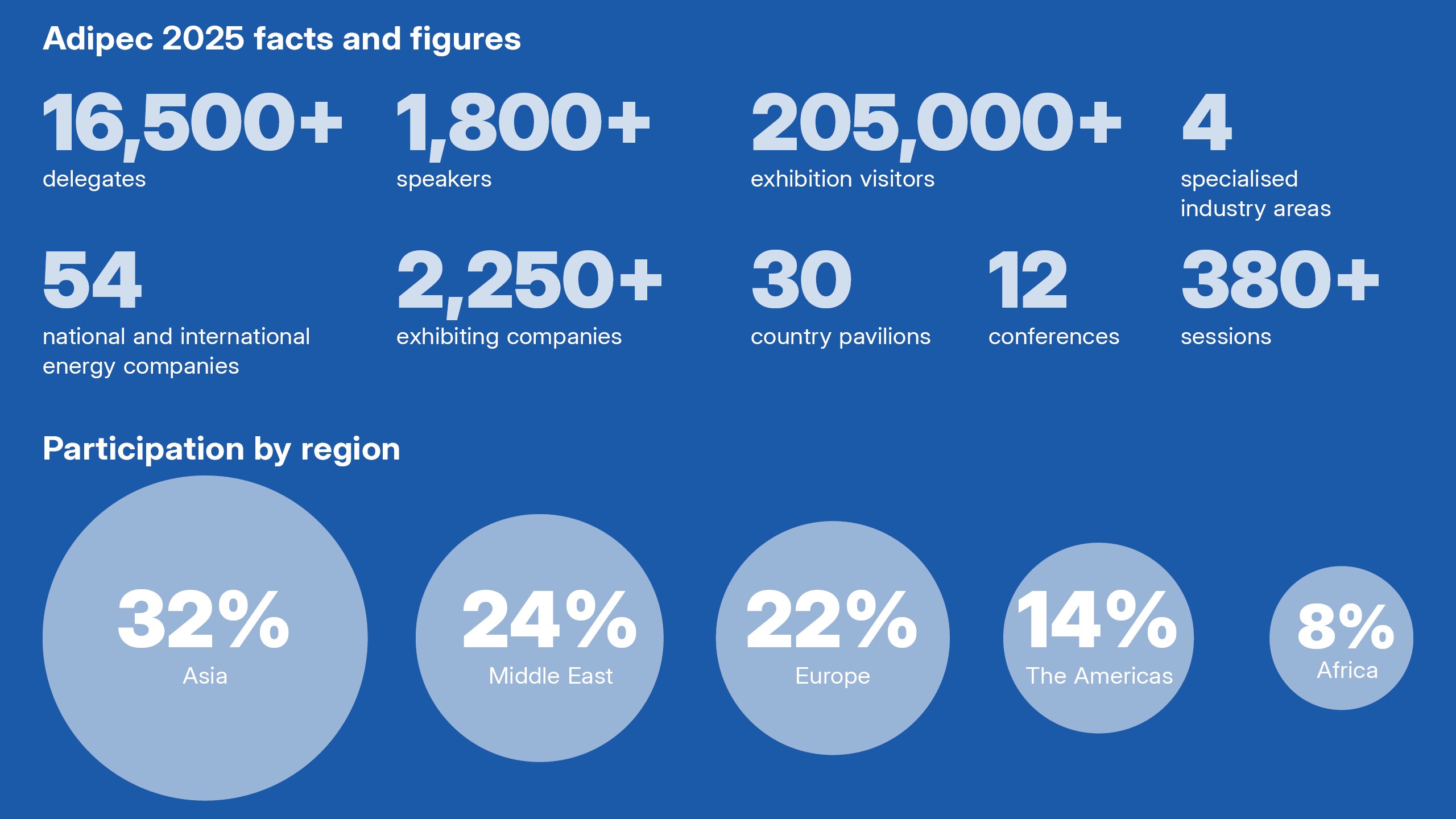
Adipec takes place from November 3-5 under the patronage of President Sheikh Mohamed, and brings together more than 205,000 delegates, 2,250 exhibitors and 1,800 speakers to take part in 12 conference programmes.
This year’s theme, “Energy. Intelligence. Impact”, reflects a powerful truth, said Christopher Hudson, president of DMG Events, organiser of Adipec.

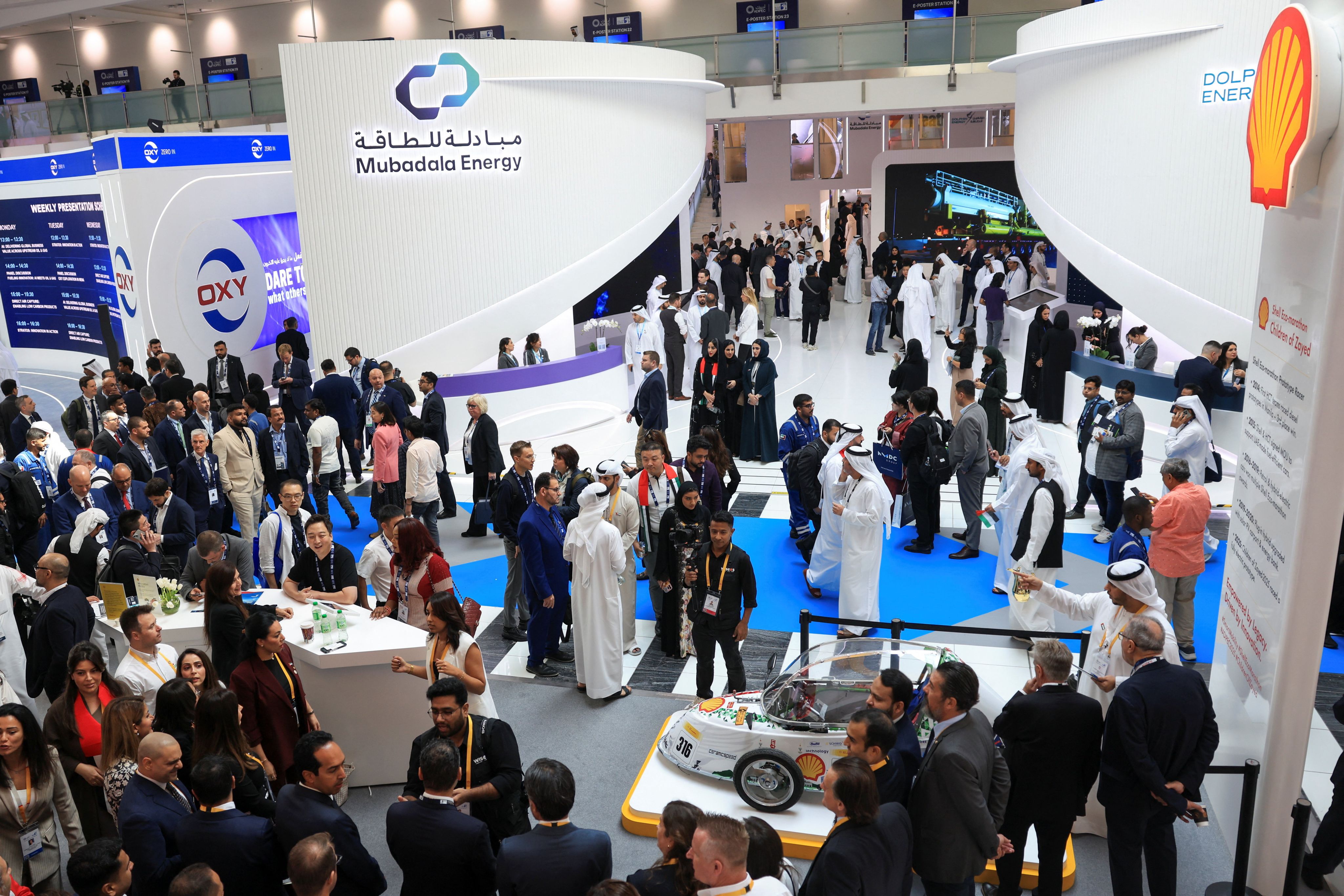
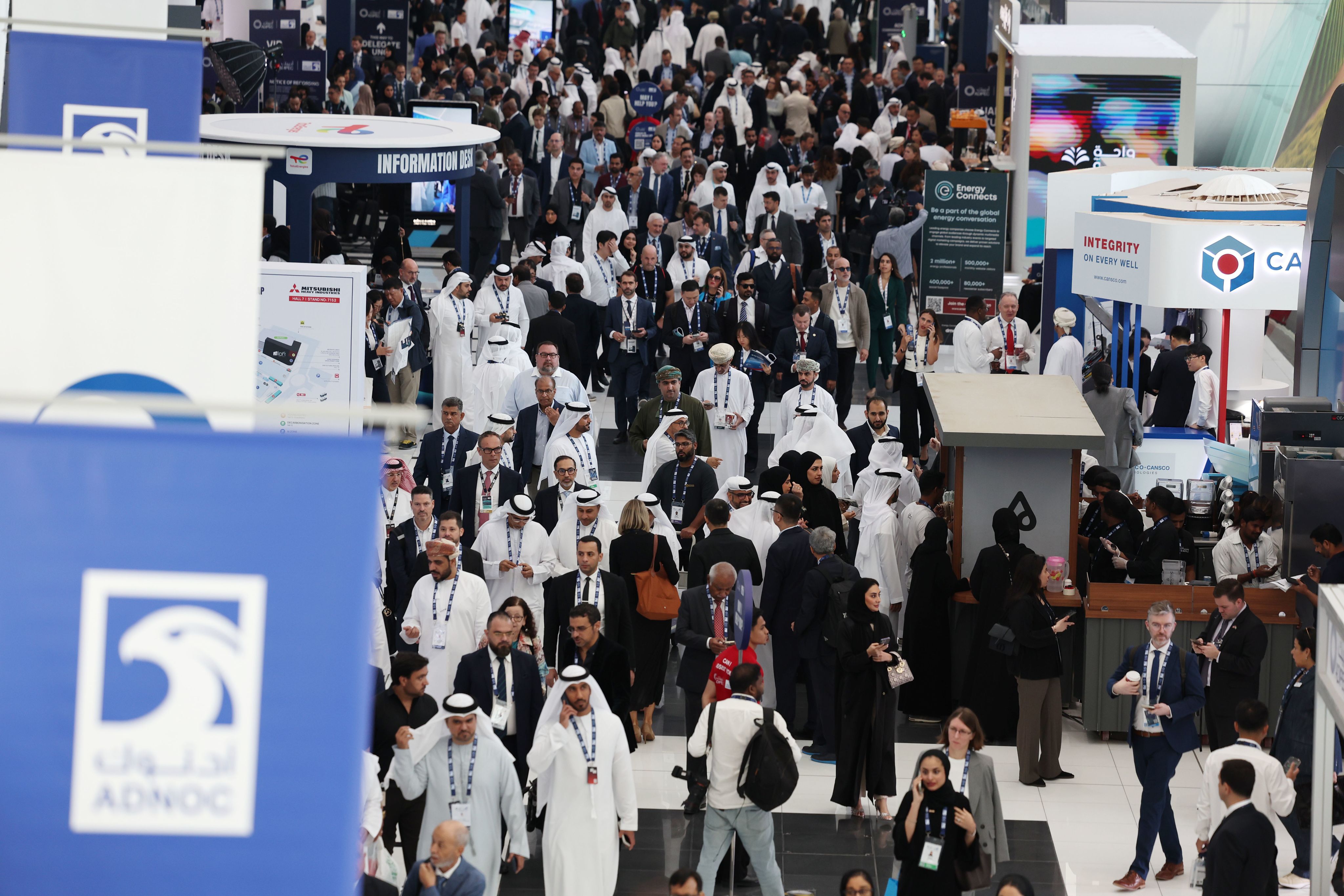
Opening day of Adipec on November 3, 2025. Reuters
Opening day of Adipec on November 3, 2025. Reuters
“Meeting the world’s growing need for secure, affordable and sustainable energy will depend on how intelligently we harness every resource – human, technological and natural – to deliver meaningful results for economies,” he said.
From AI-driven optimisation and digital integration to advances in hydrogen, liquefied natural gas and decarbonisation, intelligent innovation is reshaping the global energy landscape. “Adipec’s role is to bring this transformation to life by connecting the sectors that mobilise finance, advance technology and enable industrial growth,” Mr Hudson said.
The energy sector needs new approaches to meet rising demand and curb climate risks. More than a billion people still lack reliable, affordable power, the World Bank estimates.
At the same time, the effects of climate change are straining existing systems. Global electricity production grew 4.3 per cent last year, up from 2.5 per cent in 2023, driven by record temperatures, electrification and digitalisation, the International Energy Agency says. Demand continues to grow in line with industry and cooling needs, including from the data centre sector.
The US Energy Information Administration projects global energy demand will increase 50 per cent between 2020 and 2050. Much of this growth will come from developing countries, which must add 73 million kilometres of power lines by 2035 – more than the total installed worldwide in the last century, the World Bank says.
“Intelligence is central to balancing the energy trilemma of reliability, sustainability and affordability,” said Charlie Sanchez, president of infrastructure advisory at construction engineering company Black and Veatch, an Adipec exhibitor.


Charlie Sanchez, president of infrastructure advisory at construction engineering company Black and Veatch
Charlie Sanchez, president of infrastructure advisory at construction engineering company Black and Veatch
Smart systems drive reliability by predicting faults, integrating renewables efficiently and cutting waste to lower costs, Mr Sanchez said. “In short, if the physical grid is the body, the intelligence layer is the nervous system and brain, making sure all parts work in concert to deliver the energy the world needs securely, cleanly and cost-effectively.”
UAE companies are demonstrating how intelligent developments can drive value chain gains, in line with the country’s 2050 energy strategy.
Debuting at Adipec is Grid App, a new tool from Abu Dhabi’s Technology Innovation Institute. It uses the UAE’s Falcon generative AI tool to model and optimise energy grids through scenario planning and analysis when prompted by non-technical users, similar to OpenAI’s ChatGPT, said Prof Phil Hart, chief researcher at TII’s renewable and sustainable energy research centre.

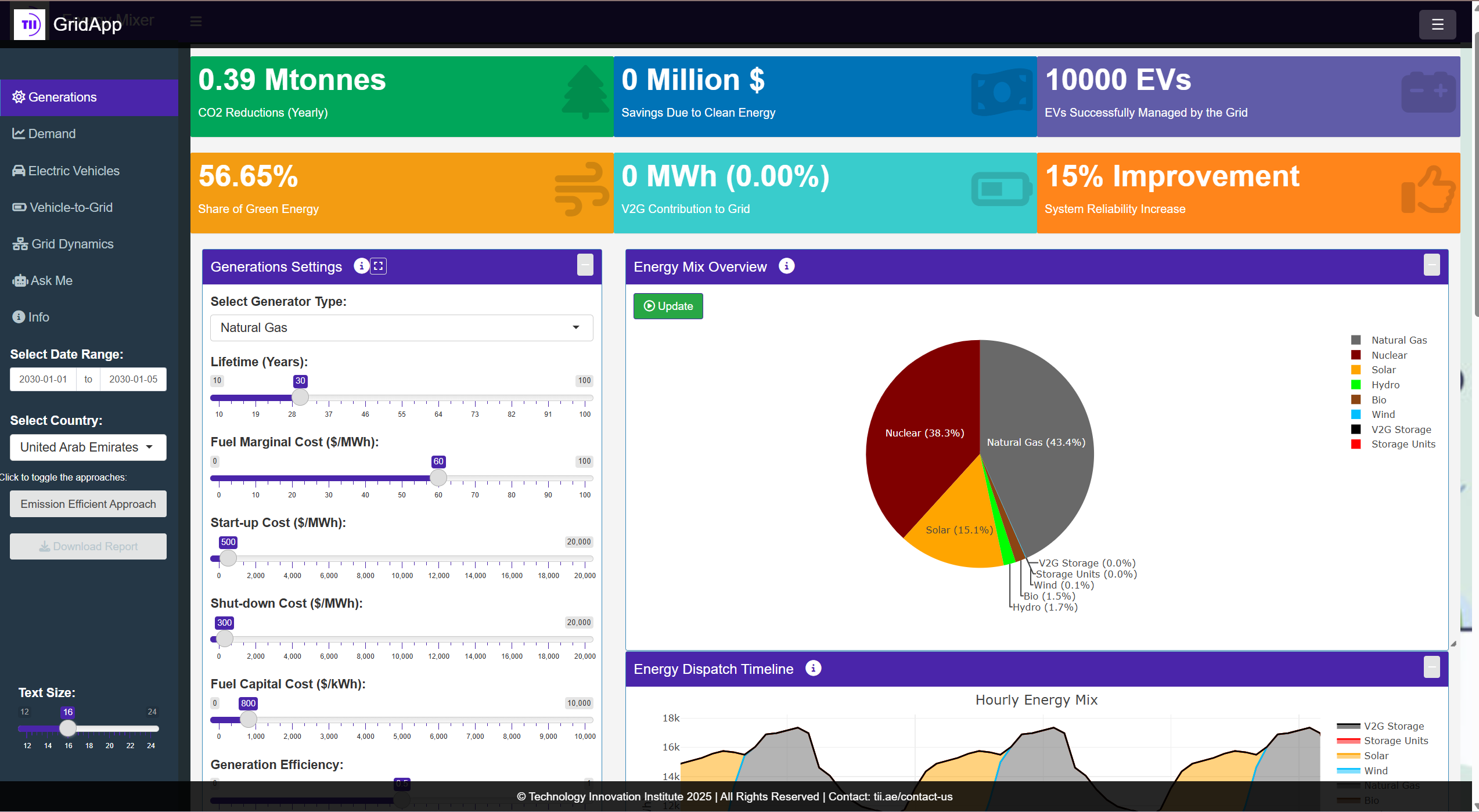
A screenshot of GridApp's energy mixer
A screenshot of GridApp's energy mixer
The tool could save millions of dirhams in investment on renewables by cutting multivariate analysis around location, construction and use from months to seconds. “Teams can then test out different scenarios at a boardroom meeting or optimise plants and infrastructure for the lowest costs and emissions or the strongest infrastructure,” said Prof Hart.
On one hand, standard grid upgrade costs – typically two-thirds of equipment expenditure – can be reduced to maximise return on investment. Another use of the tool is to analyse previous failures to strengthen existing systems. In April, cascading grid failures caused blackouts across Spain and Portugal. With the tool, engineers can model the possibility of similar events elsewhere to reveal weak spots and test preventive solutions.
AI’s role in accelerating the future of energy is also showing up in other ways – through models, digital twins and automation that draw additional value from energy assets, such as by predicting failures, shifting loads or optimising how electrolysers produce hydrogen.
“Machine intelligence is becoming integral to how the energy sector operates, from generation through to distribution. We see it supporting asset reliability, streamlining decision-making and helping teams manage growing complexity,” said Widad Haddad, vice president and general manager for the UAE, Oman, Yemen and Lebanon at Emerson.
AI adoption is already helping reduce downtime, improve energy use, and make operations more resilient,” she added.
For the Middle East alone, widespread AI adoption across sectors could add 8.3 per cent to productivity. Together with decisive climate action, the technology heralds GDP gains in excess of $4.6 trillion by 2035, according to PWC.
Last year, Adnoc and technology company AIQ launched ENERGYai, the first agentic AI for the energy sector, as a practical response to the energy dilemma. It analyses seismic data up to 10 times faster and improves accuracy by 70 per cent, accelerating exploration and development decisions.

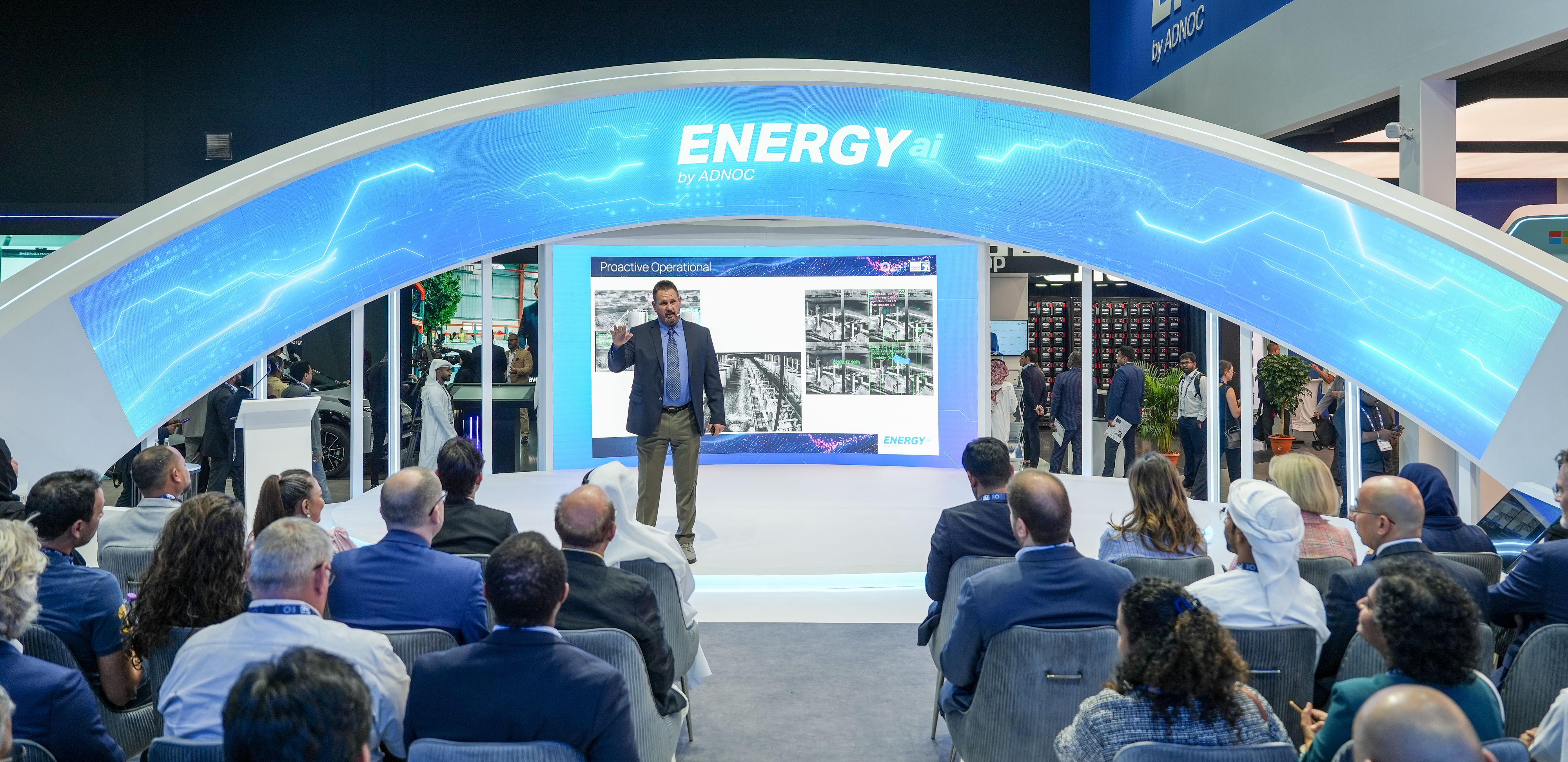
EnergyAI was launched at Adipec in 2024
EnergyAI was launched at Adipec in 2024
“AIQ was born five years ago with the mandate to make energy operations more efficient, safer and more sustainable through the deployment of tailored industrial AI solutions at scale,” said Dennis Jol, chief executive of AIQ.
Since then, AIQ has developed 14 AI-enabled tools that are shaping energy operations. But even the latest technology depends on human intelligence, the third prong of this integrated approach. AI can make recommendations, but it takes engineers and planners to validate them, decide trade-offs and manage safety and security.
“At AIQ, we combine data analytics and machine learning with AI and human ingenuity to drive improvements in the operation of the energy sector, guided by industry subject matter experts,” Mr Jol said. “This integrated approach means we are embedding intelligence across the energy value chain.
“We believe transformative and lasting innovation occurs when different forms of intelligence converge.”





Flexible power generation is required to meet rising demand
By Christopher Hudson, president of DMG Events


In a world increasingly shaped by the accelerating use of AI, economic development, urbanisation and industrialisation, energy demand is rising to unprecedented levels, requiring pragmatic approaches that embrace all viable solutions.
The global population is projected to reach 9.8 billion by 2050. Currently more than 750 million people still lack access to electricity and more than 2.1 billion remain without access to clean cooking. Closing that gap as the global population grows will only further increase electricity demand.


A hydroelectric plant built at the foot of the Rwenzori Mountains in the Democratic Republic of Congo, in November 2020, to power local communities. AFP
A hydroelectric plant built at the foot of the Rwenzori Mountains in the Democratic Republic of Congo, in November 2020, to power local communities. AFP
As the population increases, so too does the reliance on data centres. Today, data centres account for about 1.5 per cent of global electricity and by 2030 that is expected to more than double.
Given these and many other data points, there is no doubt that energy consumption is on an upwards trajectory. According to the International Energy Agency, global energy demand rose by 2.2 per cent last year, outpacing the average annual increase of 1.3 per cent recorded over the last decade.
While renewable energy sources have helped meet a good amount of this increase, their intermittency, supply limitations, and storage and transport issues mean that they are not yet mature enough to meet all energy demand. That is why conventional sources of energy – particularly oil, natural gas and nuclear energy – will remain critical to meeting energy demand while transitioning to a low-carbon future. This means embracing a strategy of energy addition, where our growing need for secure energy supply is met both by hydrocarbon energy and additional lower-carbon energy sources. Intelligently using all available resources in this way can enable the delicate balance between our collective needs for security, development, innovation and sustainability.
To ensure the global energy system has the resilience required to see us through this next phase of development, a collaborative and inclusive approach that spans borders, sectors and disciplines is needed to enable the efficient production, transportation and use of all types of energy. For this, the industry requires greater co-operation between governments, investors and producers. It needs to build an ecosystem where policies, regulations and business interests are all focused on a common goal: to create energy systems that are more resilient and more reliable than ever.

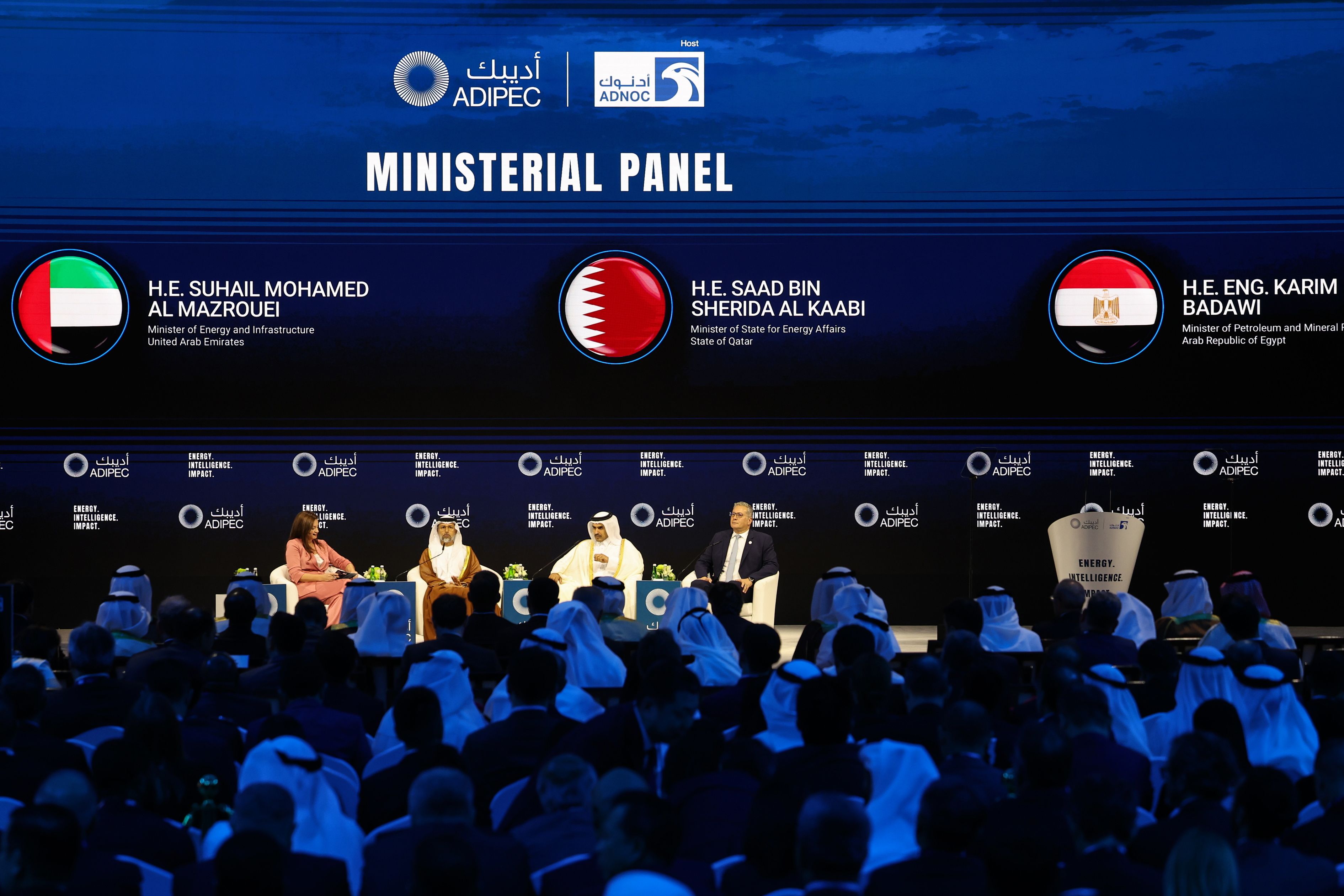
Energy ministers from the UAE, Bahrain and Egypt speak on a panel at Adipec 2025. With more than 30 country pavilions, the event encourages international collaboration. EPA
Energy ministers from the UAE, Bahrain and Egypt speak on a panel at Adipec 2025. With more than 30 country pavilions, the event encourages international collaboration. EPA
With such technical, complex and interconnected requirements for the next phase of energy transformation, the world needs a global energy event that can convene the right players to move the needle forward on sustainable and secure energy diversification. Adipec 2025 aims to be just that, convening the entire energy spectrum under the banner ‘Energy. Intelligence. Impact.’ to build resilience in today’s systems and scale intelligent solutions to transform our energy system to be able to meet our growing energy demands. Further enhancing Adipec’s vital role in advancing energy progress is its unwavering commitment to energy diversity and intelligent systems. Rather than chasing a single solution, Adipec supports a spectrum of viable energy sources – from clean hydrogen and renewables to nuclear and natural gas – all backed by the smartest digital infrastructure available. Whether it is small modular reactors powering data centres or AI-enabled grid resilience, Adipec helps transform bold visions into scalable realities.
Through intelligent systems, adaptive policies and cross-sector collaboration, Adipec will help ensure that no energy source is left behind and no solution is overlooked. In a world that needs more and better energy, Adipec is charting a course where abundance meets efficiency, ensuring the world thrive through every transformation ahead.
Acceleration of AI set to power next revolution in energy sector
Technology’s appetite for energy sets stage for one of the most critical debates in the industry
Artificial intelligence is rapidly emerging as a defining force reshaping global energy systems, enhancing efficiency, driving innovation and transforming how the world powers its economies.
Yet, as AI’s reach expands, so does its appetite for energy, setting the stage for one of the most critical debates in the sector today.
That conversation is to take centre stage this year at Adipec, where 81 AI-focused conference sessions will explore the integration of the technology across the energy industry, from decarbonisation to upstream operations.
“The global energy market is experiencing major shifts, driven in large part by the accelerating integration of AI,” said Christopher Hudson, president of DMG Events. “As AI rises, data centres’ electricity consumption is projected to double by 2030, rising from 415TWh to 945TWh.”


In October last year, Adnoc began using AIQ's Advanced Reservoir 360 solution on more than 30 reservoirs, which uses AI to improve management
In October last year, Adnoc began using AIQ's Advanced Reservoir 360 solution on more than 30 reservoirs, which uses AI to improve management
At the same time, the World Economic Forum has estimated that AI can improve energy efficiency by up to 60 per cent in certain applications, while the International Energy Agency said AI-optimised energy systems could increase production efficiency by up to 20 per cent.
“Adipec is tackling this head-on, bringing together the global energy and technology ecosystems to ensure this transformation happens responsibly, sustainably, and at scale,” said Mr Hudson.
This year’s AI Zone has been expanded by nearly 40 per cent to meet industry interest. Built around five experiential areas, including the exhibition and demo stations, it will show how AI is revolutionising systems, skills and sustainability.
Adipec will host 81 AI-focused sessions to explore the integration of the technology across the industry
Complementing this is the Digitalisation and AI Conference Programme, where international experts including Arthur Mensch, co-founder and chief executive of Mistral AI, Jake Loosararian, co-founder and chief executive of Gecko Robotics, Dr Guy Diedrich, chief innovation officer at Cisco, and Hema Prapoo, worldwide oil and gas industry leader at Microsoft, will explore how intelligent technologies enhance energy security and unlock efficiencies.
For industrial software company Aveva, AI is already delivering measurable change. “Industrial AI is the perfect tool to accelerate decisions via digital twins, optimise predictive maintenance at scale, reduce unplanned outages and orchestrate supply chains strategically,” said Jesus Hernandez, senior vice president of EMEA at Aveva.
The results are tangible. US-based utility company Duke Energy uses AI and IoT analytics to prevent equipment failures, saving about $250 million annually. Saudi Aramco’s Process Simulation Twin identified 13 new profit opportunities, while UK-based hydrogen developer Protium cuts simulation time by 30 per cent and improves reliability by 15 per cent using AI.
Abu Dhabi’s AIQ is another key player translating AI’s potential into operational gains. “By integrating innovations such as agentic AI [systems that can act autonomously to achieve goals], predictive analytics and automation across workflows, decision-making can be accelerated, slashing downtime and driving safer, more efficient and sustainable operations,” said AIQ chief executive Dennis Jol.
At the policy level, Adipec’s AI Leadership Roundtables will see ministers and technologists discuss building digital infrastructure, ensuring data security and establishing governance for responsible AI deployment.

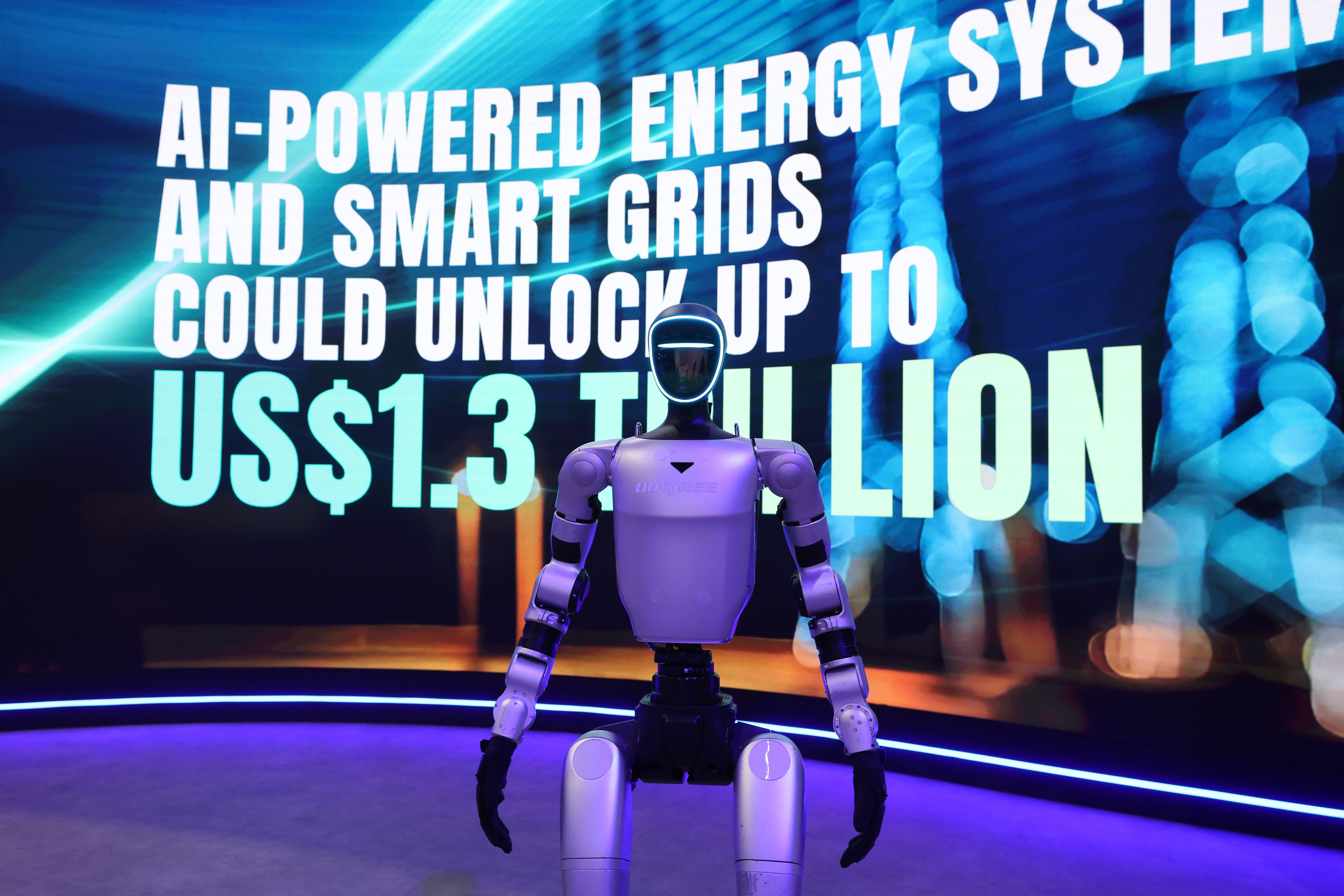
Humanoid Robot unitree G1 on display at Adipec 2025's expanded AI zone. Chris Whiteoak / The National
Humanoid Robot unitree G1 on display at Adipec 2025's expanded AI zone. Chris Whiteoak / The National
As the power consumption of data centres rises, the challenge is to ensure AI adoption accelerates decarbonisation rather than deepening energy intensity. “The industry must invest in energy-efficient infrastructure, prioritise low-impact models and shift workloads to low-emissions data centres,” said Mr Hudson.
For the UAE, positioned as a global hub for energy innovation, this conversation is timely.
From Abu Dhabi’s AI-powered drilling insights to cloud-based digital twins shaping refineries in Europe, the integration of AI into the global energy system is no longer theoretical but operational, measurable and expanding fast.
At Adipec, the message is clear – the energy transition will not be powered by fossil fuels or renewables alone, but by AI.

The grid needs a brain and right now is the time to build it
By Dr Najwa Aaraj, chief executive of Technology Innovation Institute

The energy sector is undergoing a profound transformation. The focus is no longer just on fuels and electrons – intelligence is now a critical layer of infrastructure, and AI is the tech embedding it into the system.
If the last century was built on steel and concrete, the next will be built on silicon and software. AI is already forecasting renewable output, detecting equipment faults before outages, and optimising energy use in buildings and factories. Even EV chargers are evolving into smart systems that align charging with grid needs and renewable availability.
Yet the challenge is growing. Millions of new devices – solar panels, batteries and EVs – are connecting to ageing grids never designed for two-way flows. Climate volatility and rising demand are straining systems. Traditional optimisation methods can’t keep up. What’s needed now is a cognitive layer: intelligence embedded across the energy network to adapt and optimise in real time.

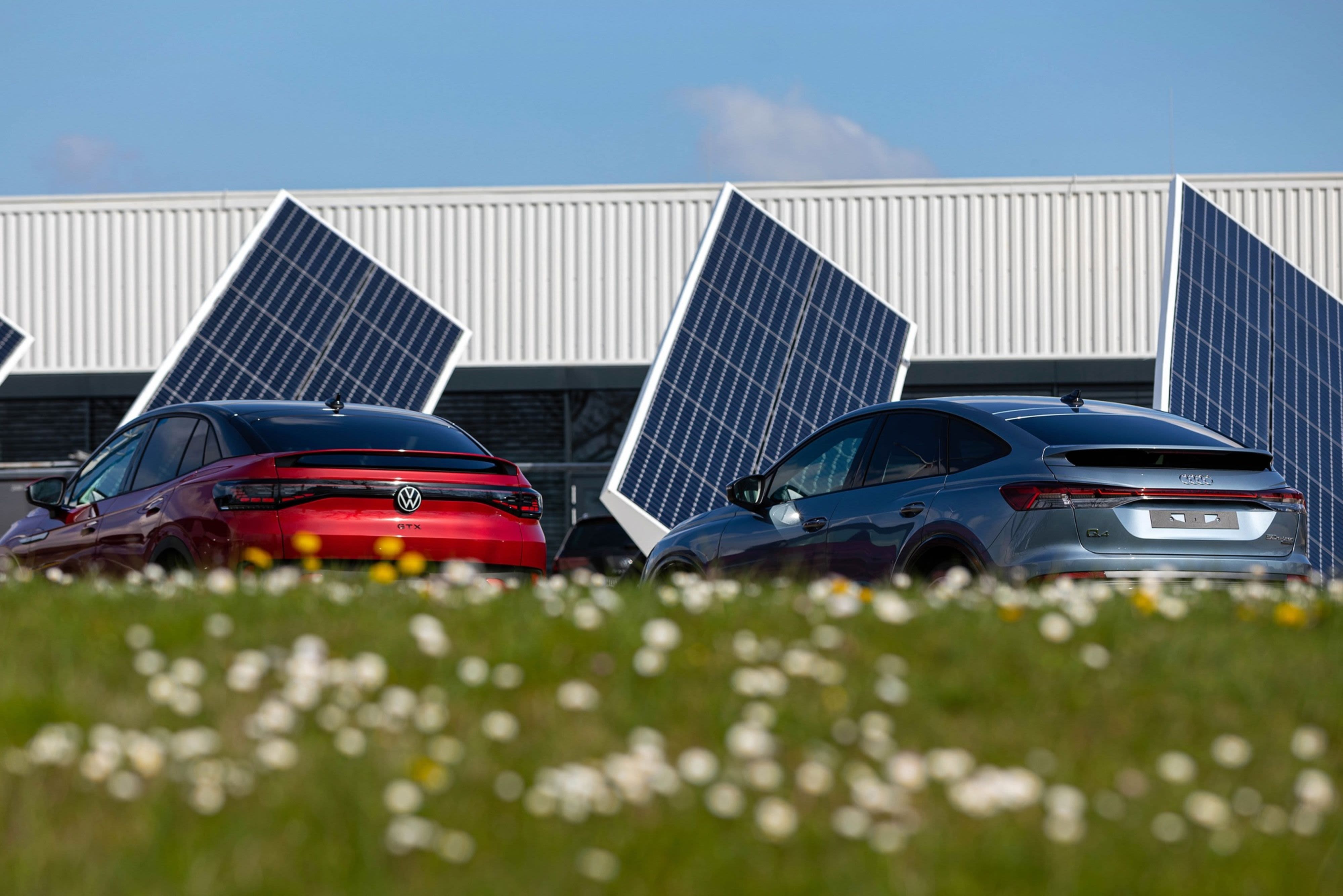
Solar panels at the Volkswagen AG electric vehicle plant in Germany. Demand on being connected to the grid is only growing. Bloomberg
Solar panels at the Volkswagen AG electric vehicle plant in Germany. Demand on being connected to the grid is only growing. Bloomberg
This transformation requires three breakthroughs: edge autonomy, predictive intelligence and system cohesion.
At the grid’s edge – where energy is generated and consumed – decisions must be made in milliseconds. Smart chips in substations, inverters and meters can enable ultra-fast, low-power computing, unlocking true autonomy at the point of use.
Beyond local control, AI must span entire networks. It can model thousands of variables – demand surges, weather, market shifts – and recommend optimal actions. This shift from reactive to predictive operations boosts reliability and integration.
But intelligence only works if systems can communicate. Today’s energy landscape is fragmented. Devices and platforms often operate in isolation. The final layer is cohesion: shared frameworks, secure protocols and interoperable standards that allow the ecosystem to function.
Events like Adipec 2025 are vital to turning ambition into action. The grid needs a brain. Now is the time to build it.
Technical transformation dominates agenda
Use cases for agentic and generative AI are popular with the energy sector as the technology is being adopted at a much larger scale, Adipec’s Technical Conferences show
AI is moving to the energy sector’s operating core, with nearly one in five papers submitted to its technical conferences touching on the subject.
Adipec organisers have reported a 26 per cent increase in the submission of papers on AI and digital technology to a record 1,294. The overall number of submissions increased by seven per cent to more than 7,000. Of these, more than 6,000 were sent to the technical conference organised by the Society of Petroleum Engineers, with 782 for the Downstream Technical Conference organised by DMG events.
The two technical programmes are part of 12 conferences at Adipec. In total, more than 1,800 speakers will present and discuss solutions to ensure the world has the energy it needs in the most cost and carbon-efficient way possible.
“The record number of submissions shows that the industry has moved beyond AI pilots,” said Haitham Al Jenaibi, Adnoc executive vice president of Field Development, and Adipec 2025 technical conference programme chairman.
Dominating submissions are sub-technologies such as generative AI, which produces new insights from large datasets, and agentic AI, which acts autonomously.
The solutions presented show how AI is being used to anticipate issues, optimise equipment performance in real time and support quicker decisions to boost business efficiency and safety while advancing sustainability goals, Mr Al Jenaibi said.
“Personally, I was impressed by submissions on anomaly detection, where AI flags suspicious events for human review – helping to prevent incidents before they escalate,” he added.
AI has been used in oil and gas for several years, but is now being adopted at a much larger scale, moving into company-wide systems.
Jake Loosararian, co-founder and chief executive of Gecko Robotics, said: “AI is thought about through a singular lens of consuming energy, [rather than] creating more of it, faster, cheaper and less harmfully.”
Network of sources a blueprint for powering AI-driven future
Projects such as Masdar’s battery storage plant chart way ahead for sustainably meeting world’s rising demand
As artificial intelligence accelerates across industries, the world is entering an era of surging energy demand, one that traditional systems alone can no longer meet. From data centres to decarbonisation targets, nations are racing to build what experts are calling “additional energy” – a layered mix of renewables, nuclear, hydrogen and chemicals that can deliver round-the-clock, low-carbon power at scale.
This shift was underscored in Abu Dhabi recently, where the UAE broke ground on the world’s largest combined solar and battery storage facility. It is a first-of-its-kind development capable of producing one gigawatt of baseload renewable power. The project, developed by Masdar and Emirates Water and Electricity Company, integrates a 5.2GW solar photovoltaic plant with a 19-gigawatt-hour battery system, providing clean energy day and night.

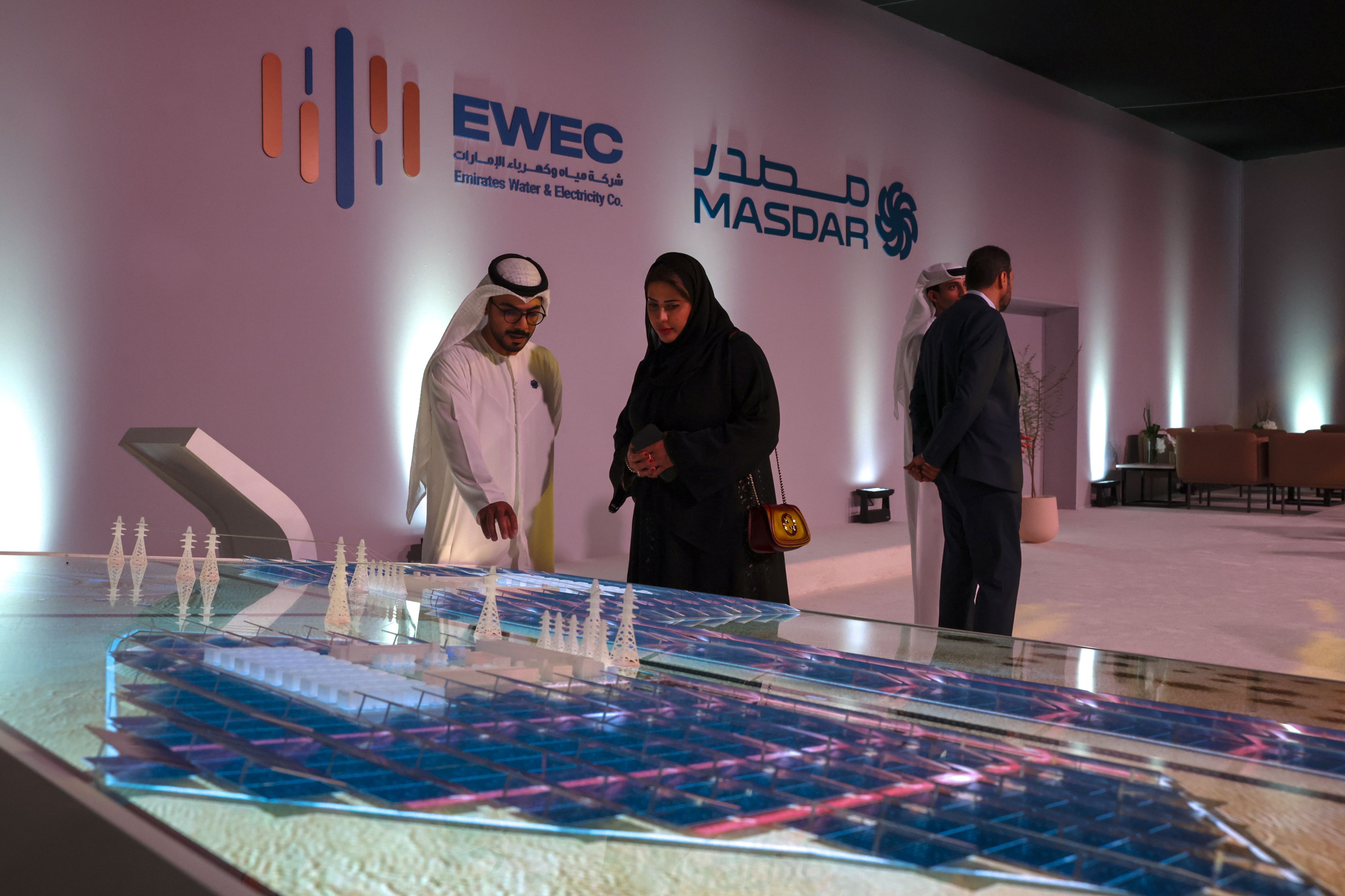
Masdar and Ewec launched the world's first 24/7 Solar PV and Battery Storage gigascale project in Abu Dhabi. Victor Besa / The National
Masdar and Ewec launched the world's first 24/7 Solar PV and Battery Storage gigascale project in Abu Dhabi. Victor Besa / The National
For the UAE, the project is part of a broader strategy to reimagine how renewables fit within the global energy system. Its AI-enhanced design, which incorporates forecasting, predictive analytics and smart dispatch, reflects a future where energy and technology are increasingly intertwined. By producing renewable energy around the clock, “we can provide sustainable power to meet fast-growing demand from advancements in artificial intelligence and other technologies”, said Masdar chief executive Mohamed Al Ramahi.
But the UAE’s project is only one expression of a larger global trend. As nations balance growth and climate goals, hydrogen, nuclear and carbon capture technologies are re-emerging as essential partners to renewables.
In Alberta, Canada, 2.5 million tonnes of hydrogen are produced annually, supported by carbon capture and storage systems that have stored more than 14 million tonnes of carbon dioxide. Such initiatives demonstrate how traditional infrastructure can evolve into low-carbon energy centres.
“The global energy mix is undergoing a dynamic transformation,” said John Gilley, chief executive of energy services company Kent. “We are seeing heightened investment and momentum around renewables and greener solutions. Over the next decade, I expect an even more integrated mix; one that balances energy security with emissions reductions.”
Meanwhile, nuclear energy is also regaining prominence. Nuclear reactors represent a 9 per cent share of global electricity generation, the second largest share of clean electricity behind hydropower, and the largest in OECD countries. “AI systems analysing real-time sensor data can detect anomalies for predictive maintenance and adjust reactor parameters dynamically,” said Henry Preston, spokesman for the World Nuclear Association. “Digital twins and robot inspections also improve both performance and reliability.”

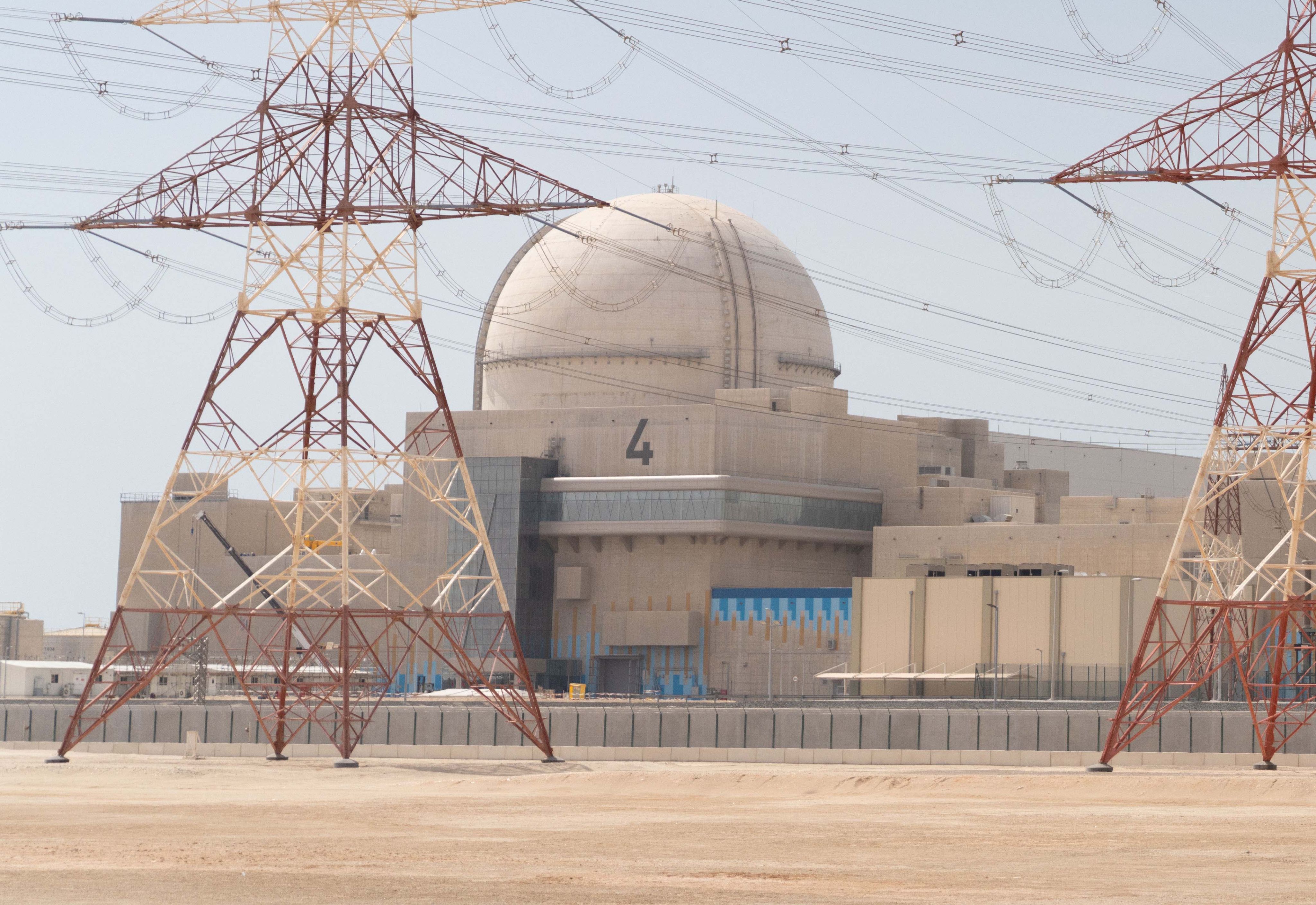
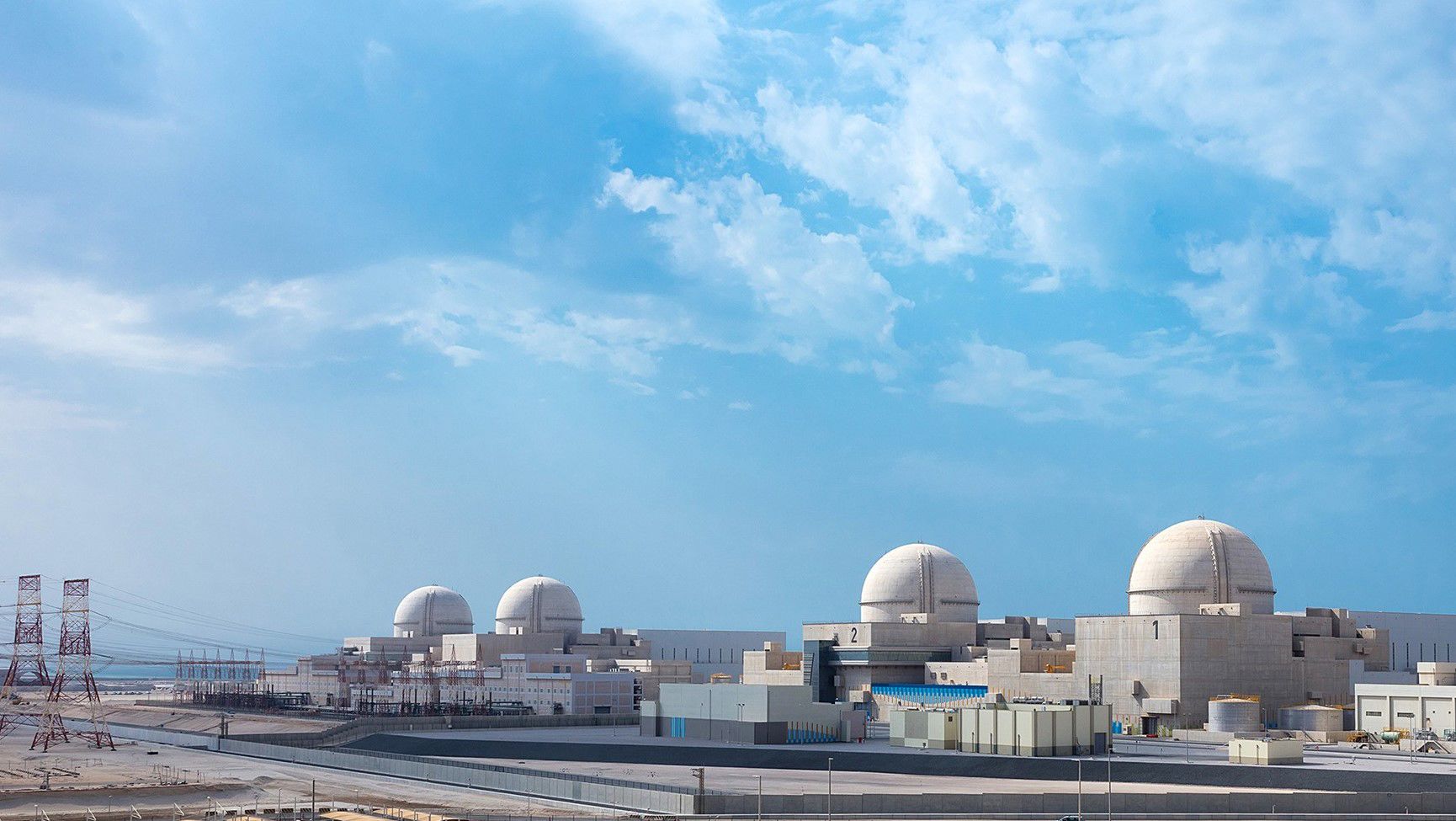
Barakah Nuclear Energy Plant in Abu Dhabi. Nuclear is viewed as a key energy source as part of the network the world will require
Barakah Nuclear Energy Plant in Abu Dhabi. Nuclear is viewed as a key energy source as part of the network the world will require
That digital integration gets results. In the US, Constellation Energy has cut downtime and saved more than $1.6 million per reactor annually through AI tools used at two nuclear plants, while Westinghouse Electric Company’s generative AI platform uses decades of reactor data to accelerate construction and maintenance.
These advances in storage, hydrogen, chemicals, nuclear and AI are converging into a new energy landscape where reliability is achieved not through one source but through intelligent combinations of many. Abu Dhabi’s own approach expresses this principle. While hydrocarbons remain vital to the global economy, the UAE is investing in technologies that can complement them: hydrogen and ammonia for export, clean chemicals for industry and AI-ready infrastructure to power its digital future.
Such themes will dominate this year’s Hydrogen Strategic Conference and Low Carbon and Chemicals Expo at Adipec, where policymakers and industry leaders will explore how technology and collaboration can scale these solutions. As the world faces the dual challenge of sustaining growth and cutting emissions, energy is moving beyond relying on a single source. From renewables and hydrogen to nuclear and AI, a more complex, resilient network of sources is emerging and with it, a blueprint for powering an AI-driven future.

Chemical industry plays central role in energy transition
By Charlie Tan, chief executive of Global Impact Coalition

The global energy system is under chronic stress. Geopolitical shocks, climate extremes and price volatility have made energy security a daily operational risk. While efficiency gains and supplier diversification offer short-term relief, they fall short of closing the resilience gap. True security demands strategic disruption – a shift in how companies design assets, structure markets and define value.
No single company can lead this transformation alone. The Global Impact Coalition unites leading chemical companies – including BASF, Sabic, Covestro and others – representing more than $350 billion in combined revenue. Through shared investment and technical collaboration, GIC accelerates the industry’s low-carbon transition, proving that complex sustainability challenges require collective action.
As the largest industrial energy user, the chemical industry plays a central role in the energy transition. It supplies essential materials – from composites in wind blades to encapsulants in solar modules – that enable clean energy deployment.
Chemicals also support emerging technologies: membranes for hydrogen electrolysis, binders for batteries and lightweight resins for efficient transport.
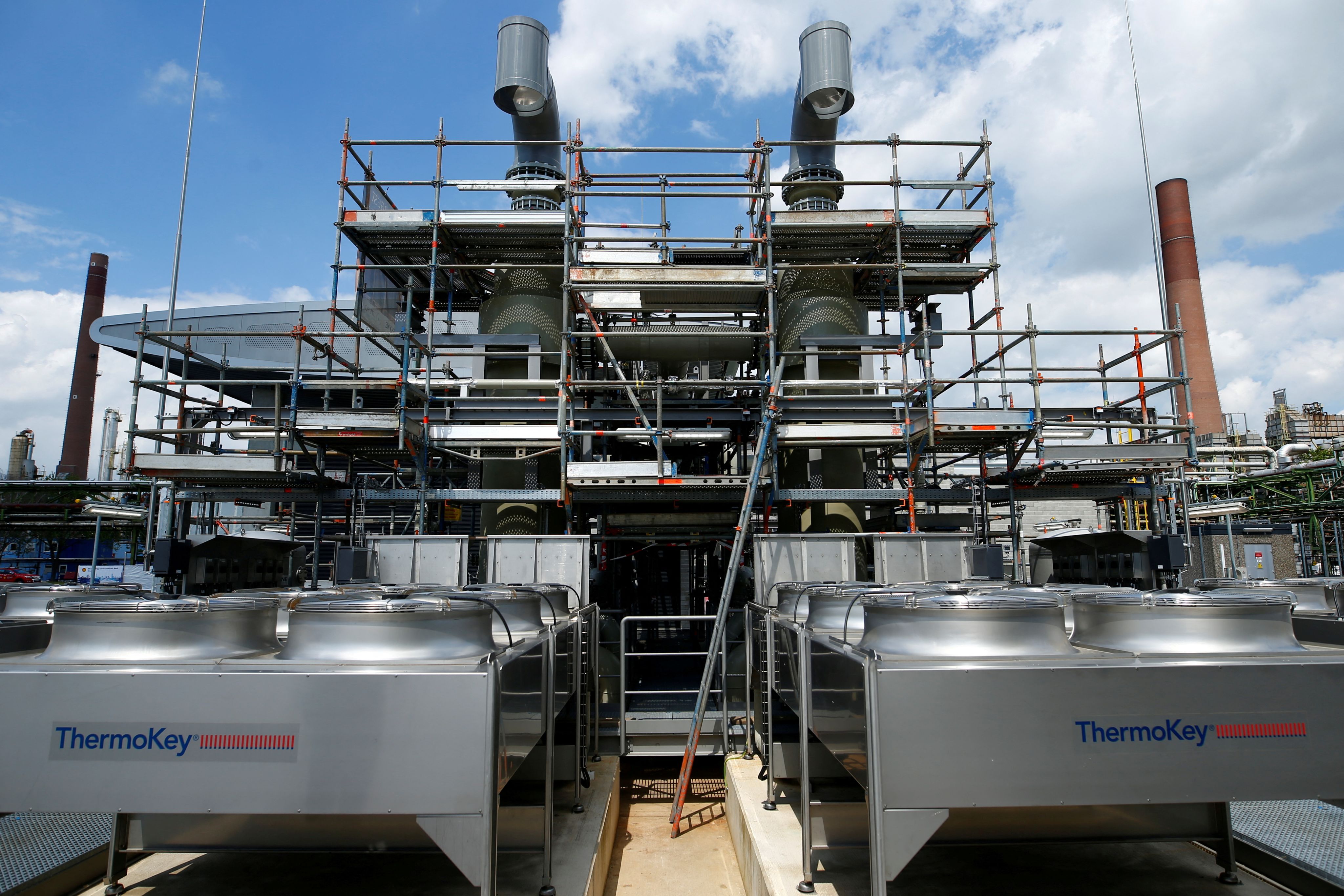
One of the world's first green hydrogen electrolysis plants, in Wesseling, near Cologne, Germany. Reuters
One of the world's first green hydrogen electrolysis plants, in Wesseling, near Cologne, Germany. Reuters
Yet conventional approaches have limits. Supplier diversification and inventory buffers don’t address structural exposure to volatile feedstocks or regulatory shifts. The next phase of resilience will be led by companies willing to disrupt.
First, GIC members are building feedstock and product optionality. Flexible plants that run on natural gas today and evolve towards biomethane, renewable hydrogen or captured carbon tomorrow reduce exposure to any single commodity and unlock access to premium low-carbon markets.
Ammonia and methanol are central to this, moving hydrogen in forms easier to store and transport. When petrol prices surge, producers with feedstock flexibility can pivot output or emphasise lower-carbon product lines, protecting margins and supply relationships.
Second is the shift from tonnes to outcomes. Selling olefins or methanol by the tonne is important, but competitive advantage is moving to performance: verified low carbon-intensity molecules with offtakes for customers.
Strategic disruption is no longer optional. It's how we build systems that bend without breaking
Third, GIC anchors system partnerships. Markets must be co-created by chemical producers, utilities, shipowners, ports, technology firms and financiers, as each impacts its function. The International Maritime Organisation’s 2023 strategy set a new ambition for zero or near-zero GHG energy uptake by 2030, and the EU’s FuelEU Maritime imposes tighter fuel-intensity limits from this year. These strategies accelerate demand for low-carbon fuels like green methanol, rewarding suppliers who deliver certified volumes at bunkering centres.
Finally, GIC members are hardwiring digital and physical resilience. Predictive maintenance, real-time energy optimisation, on-site renewables, waste-heat recovery and storage are no longer optional. Availability and emissions performance are strategic differentiators, core to cost and uptime.
GIC members are translating strategy into scalable business models. The Automotive Plastics Circularity Pilot is reinventing vehicle plastic recycling. Two initiatives are the methanol-to-olefins project for low-carbon fuels, and a partnership with ETH Zurich advancing waste-to-chemicals gasification.
Events like Adipec, with its dedicated Low Carbon and Chemicals Expo, are vital to turning ambition into action. Industry leaders are calling for standards on product carbon intensity, bankable frameworks for new molecules and strong demand signals for green corridors.
Energy security is a proactive strategy. GIC members are pooling resources, forging cross-sector partnerships and embedding resilience. Strategic disruption is no longer optional. It’s how we build systems that bend without breaking – and make the impossible achievable.
Industry can unite to fund global energy targets
Collaboration is key for sector, with Adipec offering unique opportunity for leading players to work together
If each of the 205,000 officials and delegates set to attend Adipec this week could bring in energy investment from their companies, they would need to contribute $171 million each to meet global goals by 2030. The magnitude of the spending required to meet our expanding energy needs, and limit greenhouse gases drastically at the same time, is colossal. Collaboration is the path to achieve this.
Estimates for required spending vary, but all agree that a road towards universal, reliable and low-carbon energy by 2050 needs companies and governments to open their wallets as never before.
Bloomberg New Energy Finance thinks $5.6 trillion of energy transition spending is needed each year until 2030.
The International Renewable Energy Agency, which has its headquarters in Abu Dhabi, estimates cumulative investment of $44 trillion is needed by 2030, of which 80 per cent would be devoted to energy transition.

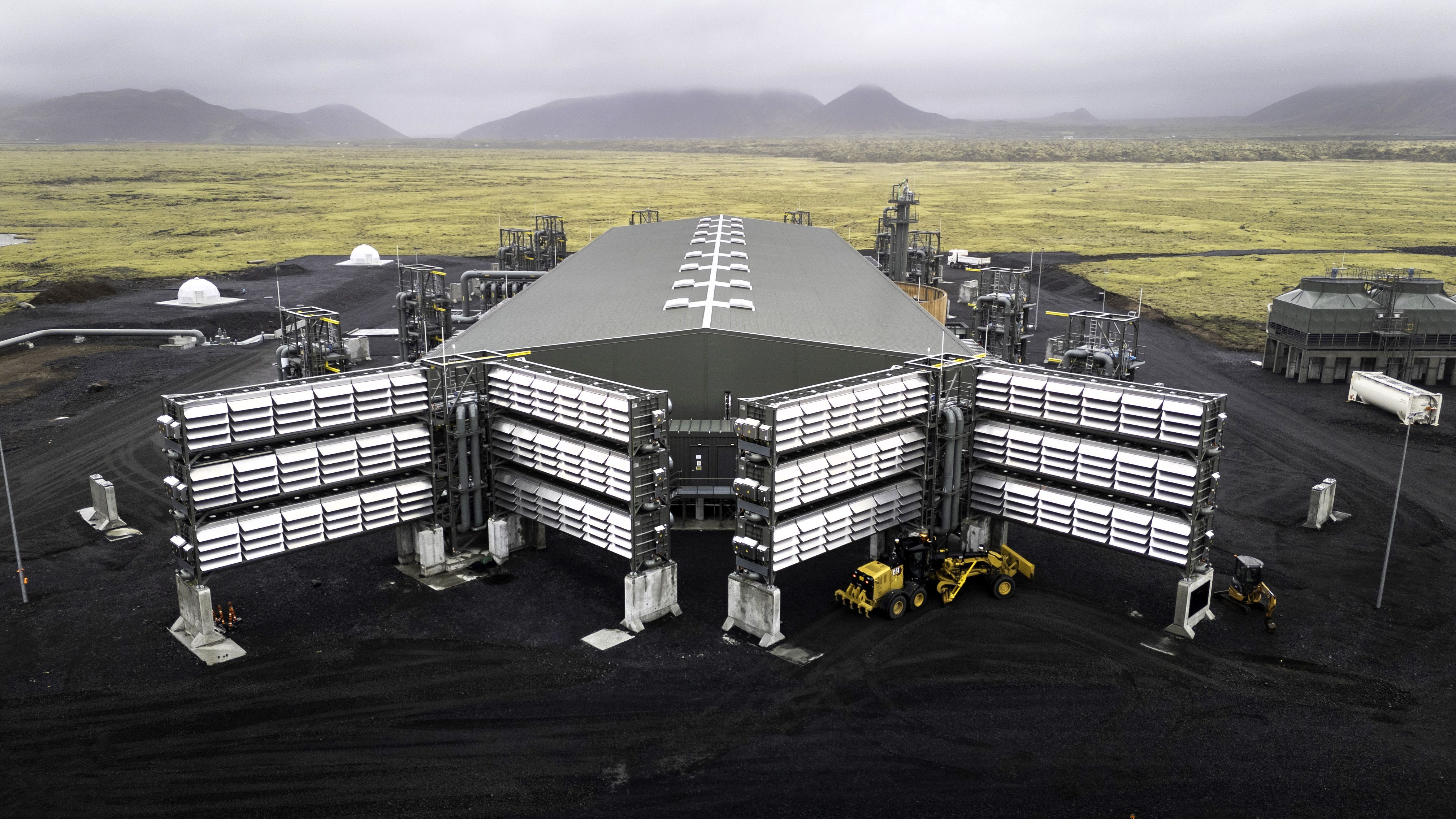
A carbon capture plant in Reykjavik, Iceland. Reports show greater investment needs to be made in sustainable energy if the world is to meet its goals. Getty Images
A carbon capture plant in Reykjavik, Iceland. Reports show greater investment needs to be made in sustainable energy if the world is to meet its goals. Getty Images
About $2.08 trillion was spent last year – an impressive number but far from sufficient when compared with the industry estimates. In a few areas, such as solar photovoltaics, manufacturing capacity and investment is even running ahead of “net-zero” trajectories.
In others, such as nuclear power, energy efficiency and transmission grids, spending is well behind. In the least electrified continent, Africa, investment is increasing, but it remains far short of what is required for universal access to modern energy.
For oil and gas, opinions vary. With the likelihood that energy demand growth in areas such as artificial intelligence and air conditioning will be faster than expected, and the requirement for long-term balancing for renewables and batteries, investment needs are certain to outstrip “net-zero” scenarios.
The International Energy Agency recently examined global decline rates in oil and gas fields, concluding that current spending of $570 billion annually could be sufficient for modest growth, but that margins between expansion and shrinkage are narrow. A period in which many international oil companies shrank, cut back spending on international exploration and focused on high-decline shale assets and liquefied natural gas may need to shift to a focus on more ambitious and varied projects.
Collaboration is essential to unlock the required finance and make sure it is used effectively. Such collaboration comes in different forms – between countries, companies, industries and sectors.

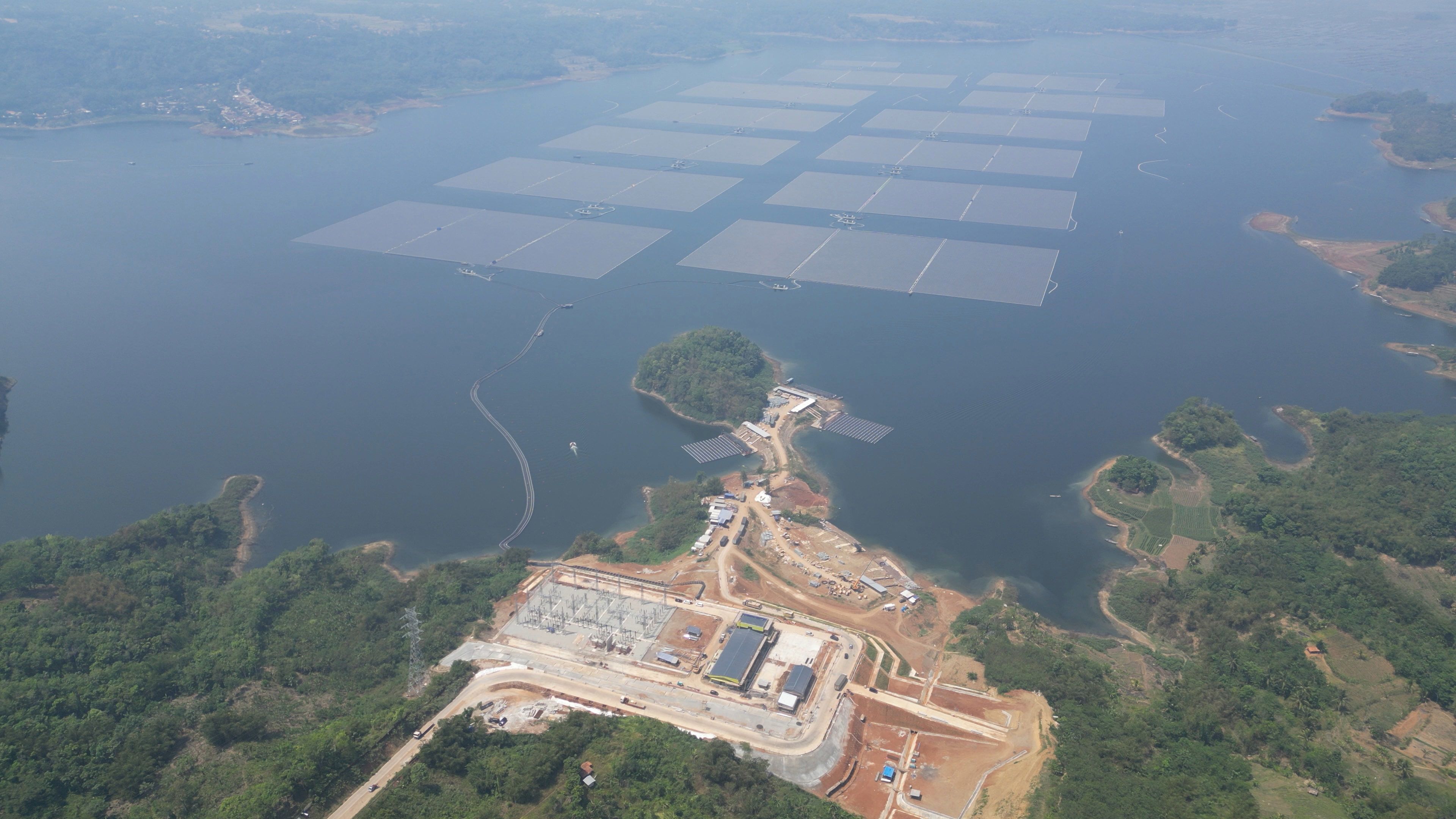
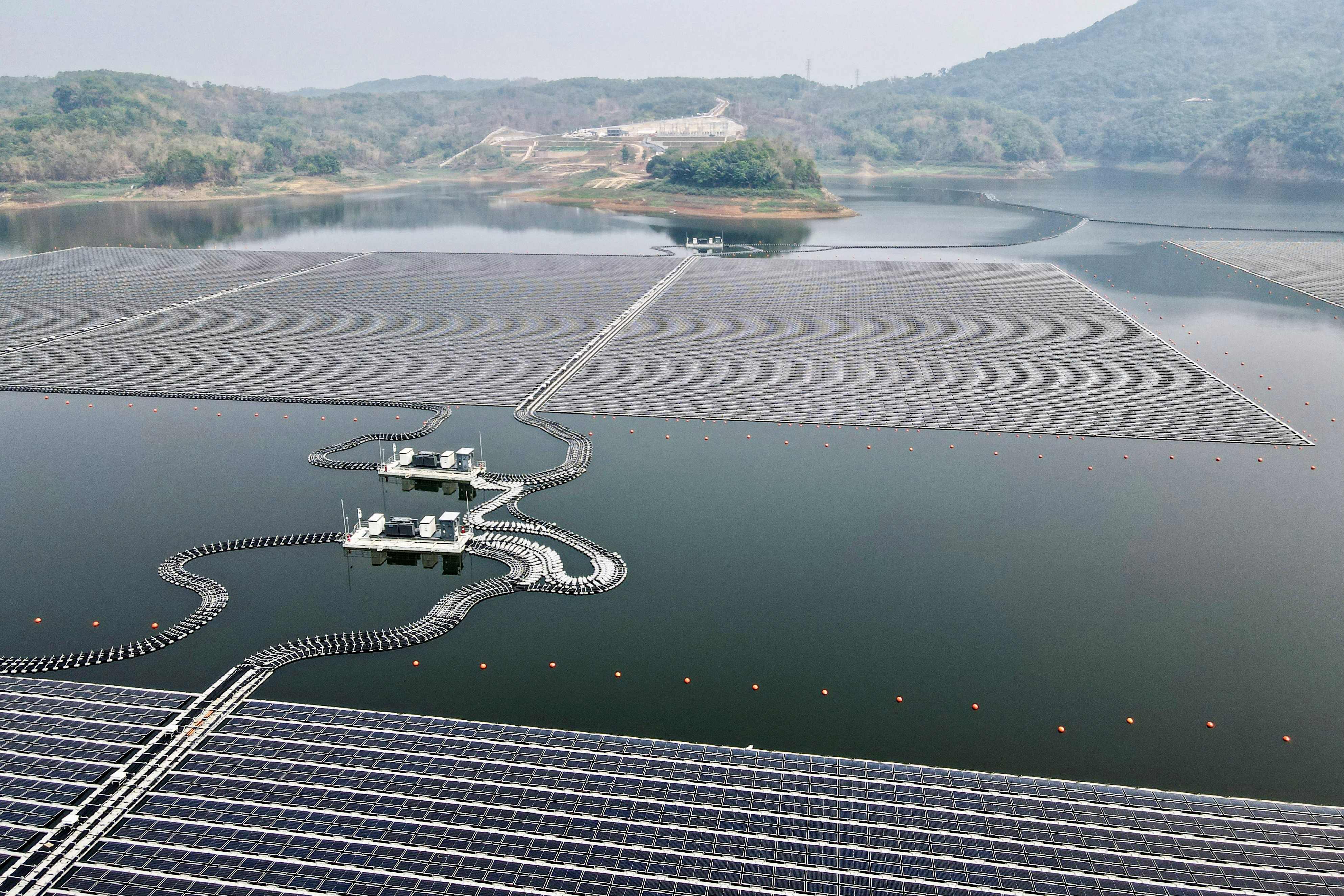
A floating solar power plant in Indonesia shows the success of collaboration between the country and Masdar
A floating solar power plant in Indonesia shows the success of collaboration between the country and Masdar
The Breakthrough Agenda Report, published this year by the IEA, said that “acting together, countries, companies and global initiatives are in the unique position to harmonise standards, aggregate demand, mobilise finance and move markets in ways that are nearly impossible to achieve in isolation”.
Energy has long been one of the most globalised of businesses. Those attending Adipec this year come from 172 countries. Working across borders is second nature to energy professionals, but the sheer scale of Adipec, and its ready accessibility in the UAE to all nationalities, make it a unique opportunity for the industry.
The Finance and Investment Conference, a specific component of Adipec, is precisely designed to enable connectivity and promote partnering and innovation in finance. The conference app connects delegates and encourages collaboration.
Adipec has long since expanded from its roots in the petroleum industry to become a showpiece for all energy technologies. This mirrors the UAE’s own energy journey, from oil to gas, then nuclear and photovoltaics, and now emerging technologies including batteries to provide 24-hour solar power.
“Adipec provides a unique environment where financial leaders, energy innovators and policymakers converge to share insights,” said Tristan Attenborough, managing director and global industry head for natural resources group and head of global advisory at JP Morgan Payments.
Last year brought notable collaborations that cut across borders, companies and industries, including Adnoc’s move to award a contract to Jereh of China to digitalise its wells, the partnership with 44.01 to mineralise carbon dioxide in rock and the agreement with Masdar to power Microsoft data centres with renewable energy.

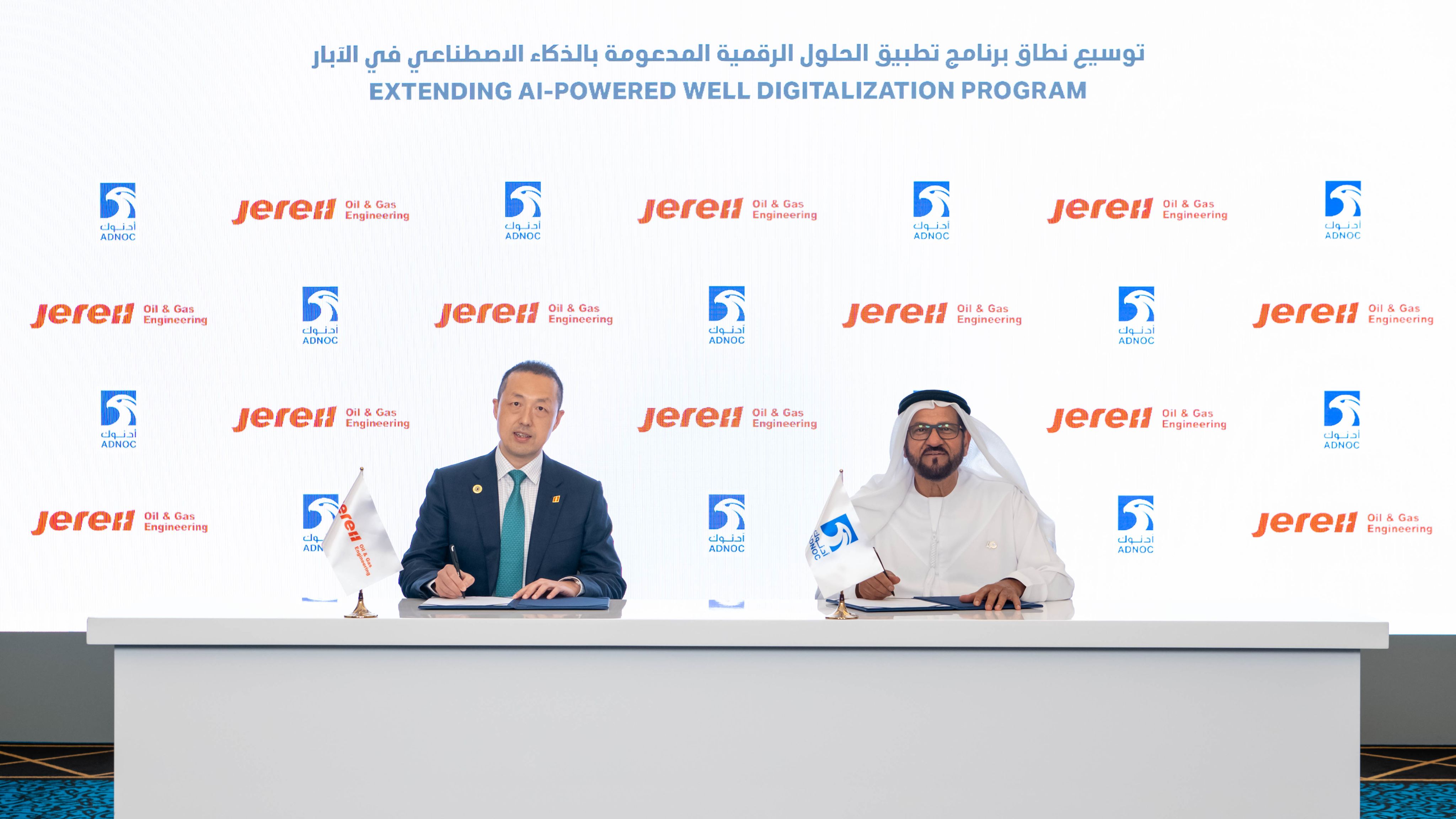
Weibin Li, vice president of Jereh Oil and Gas Engineering Corporation, and Abdulmunim Al Kindy, Adnoc upstream executive director, sign an agreement
Weibin Li, vice president of Jereh Oil and Gas Engineering Corporation, and Abdulmunim Al Kindy, Adnoc upstream executive director, sign an agreement
The ideal co-operation brings together partners who contribute innovation, expertise, opportunity, relationships and finance. For major national and international oil companies, four areas stand out. Firstly, the rise of AI promises business transformation, cutting emissions, reducing costs and maximising hydrocarbon recovery. But using it effectively requires an unfamiliar skill-set and data scientists who can work in sync with engineers and geologists.
Secondly, numerous innovative companies and academic institutions have crucial contributions to climate protection. They need money and the opportunity to test their solutions in full-scale situations.
Thirdly, major energy companies are looking to refresh their portfolios and expand their presence in the UAE and other leading hydrocarbon players where there are opportunities, such as Libya and Iraq.
At the same time, national oil companies, and national energy and renewable companies such as Masdar, have bold new international growth plans.
Lastly, national oil companies are increasingly looking to innovative financial methods to unlock value from their portfolios, including initial public offerings, divestments of noncore assets, sale-and-leasebacks and bringing in investors for minority stakes in subsidiaries.
In today’s volatile time for international trade and collaboration, Adipec stands out as a truly globalising energy event. That $44 trillion is out there for the right projects – when money, capability and opportunity come together.

Global South increasingly committed to clean energy push
Scripting a cleaner future across emerging markets
The proliferation of clean energy in emerging economies could help meet soaring demand and ease the reliance on fossil fuels that contribute to global warming.
Emerging markets are home to an estimated 775 million people who lack access to electricity, and 2.4 billion people without clean cooking fuels, according to a 2023 IFC report, necessitating the building of modern, cost-effective energy systems based on clean technology.

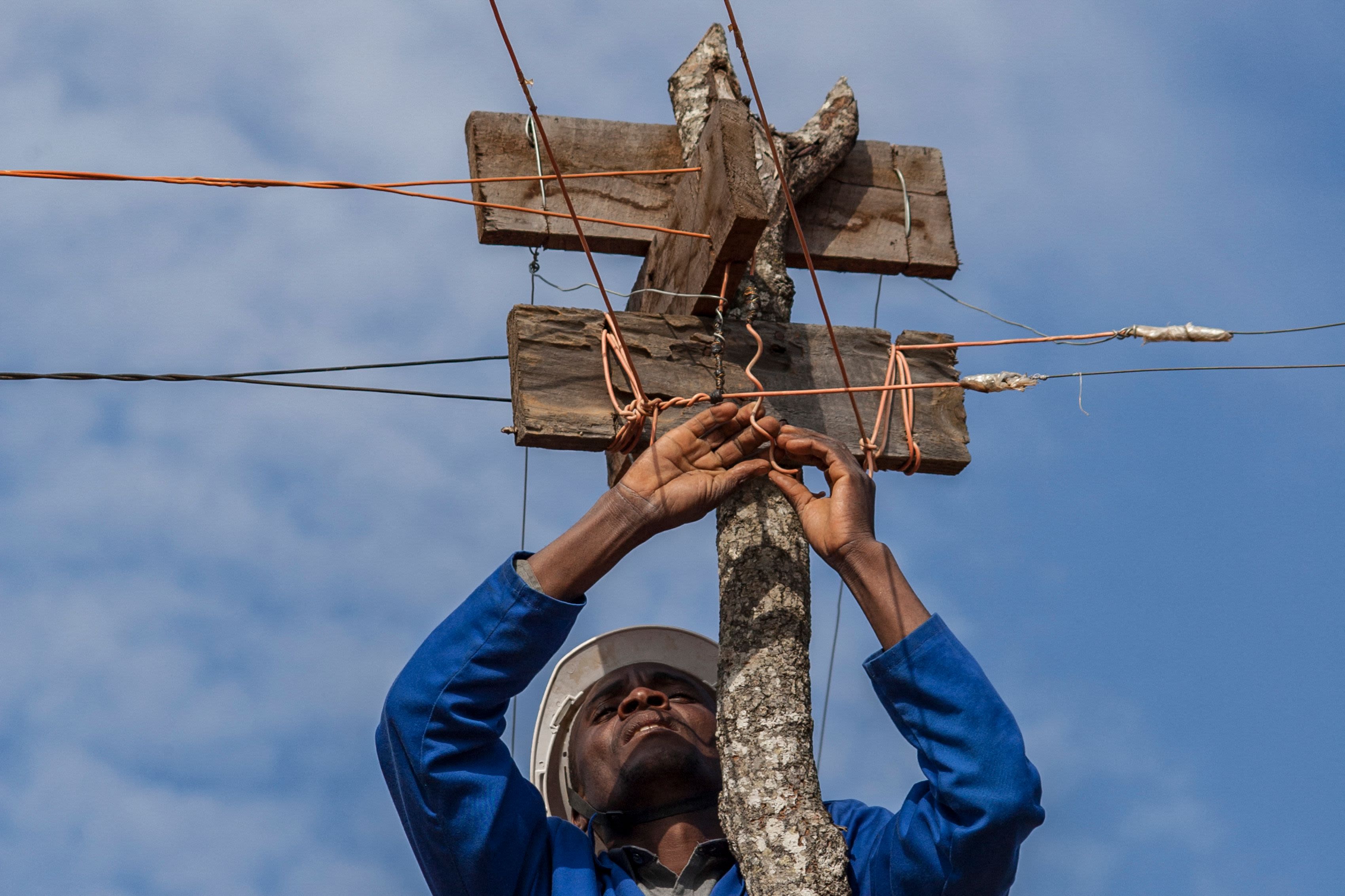
Electricity access in Malawi is low – around 16 per cent in 2023 – forcing some to set up their own connections. AFP
Electricity access in Malawi is low – around 16 per cent in 2023 – forcing some to set up their own connections. AFP
A transition is already under way, as emerging market players join meaningful energy conversations on the global stage.
About 87 per cent of spending on electricity generation across the Global South flowed into clean energy last year, an RMI report found.
Solar and wind generation has grown 23 per cent annually for the past five years, generating 9 per cent of all electricity in the developing world.
“The global economy, including emerging markets, is moving into a new energy security age, including reliance on a broad energy mix inclusive of oil and gas alongside renewables like solar and wind, and ideally nuclear energy,” said Tristan Attenborough, managing director, global head of Natural Resources Group and head of global advisory at JP Morgan Payments.
“As part of this shift, the main driver of energy geopolitics in the coming decades will be defined not by tension between fossil fuels and renewables, but by all countries searching for new ways of being energy independent and less exposed to fossil fuel price volatility.”
Many emerging markets benefit from favourable climates and ample space, providing good conditions to scale renewable energy projects, especially solar.

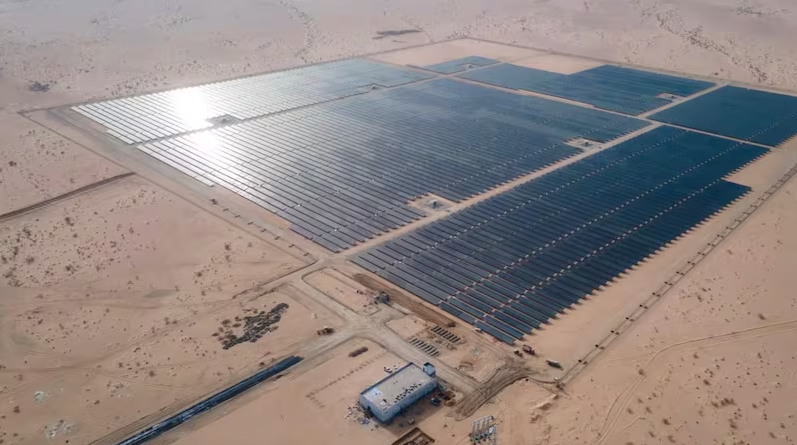
The 53-megawatt solar power project has opened in Ataq City in the Shabwah governorate of Yemen. Photo: Global South Utilities
The 53-megawatt solar power project has opened in Ataq City in the Shabwah governorate of Yemen. Photo: Global South Utilities
“In some countries, this shift is supported by more progressive policies and committed planning, which aim to help overcome challenges around grid infrastructure and transmission needs,” Mr Attenborough said.
Countries such as the UAE have emerged as critical energy partners in regions such as Africa, which houses a theoretical clean energy capacity of 850 terawatts in solar and wind.
At the forefront of the country’s renewable energy drive are companies such as Abu Dhabi’s Masdar and Dubai-based Amea Power. Masdar has committed $10 billion to deliver 10 gigawatts of clean energy capacity in Africa by 2030.
It has also developed the largest wind farm in Central Asia and signed an agreement for a 2 gigawatt solar project in Saudi Arabia.
Amea Power’s portfolio of projects includes Africa’s largest wind power plant – in Egypt – and a 50 megawatt solar project in the Ivory Coast.

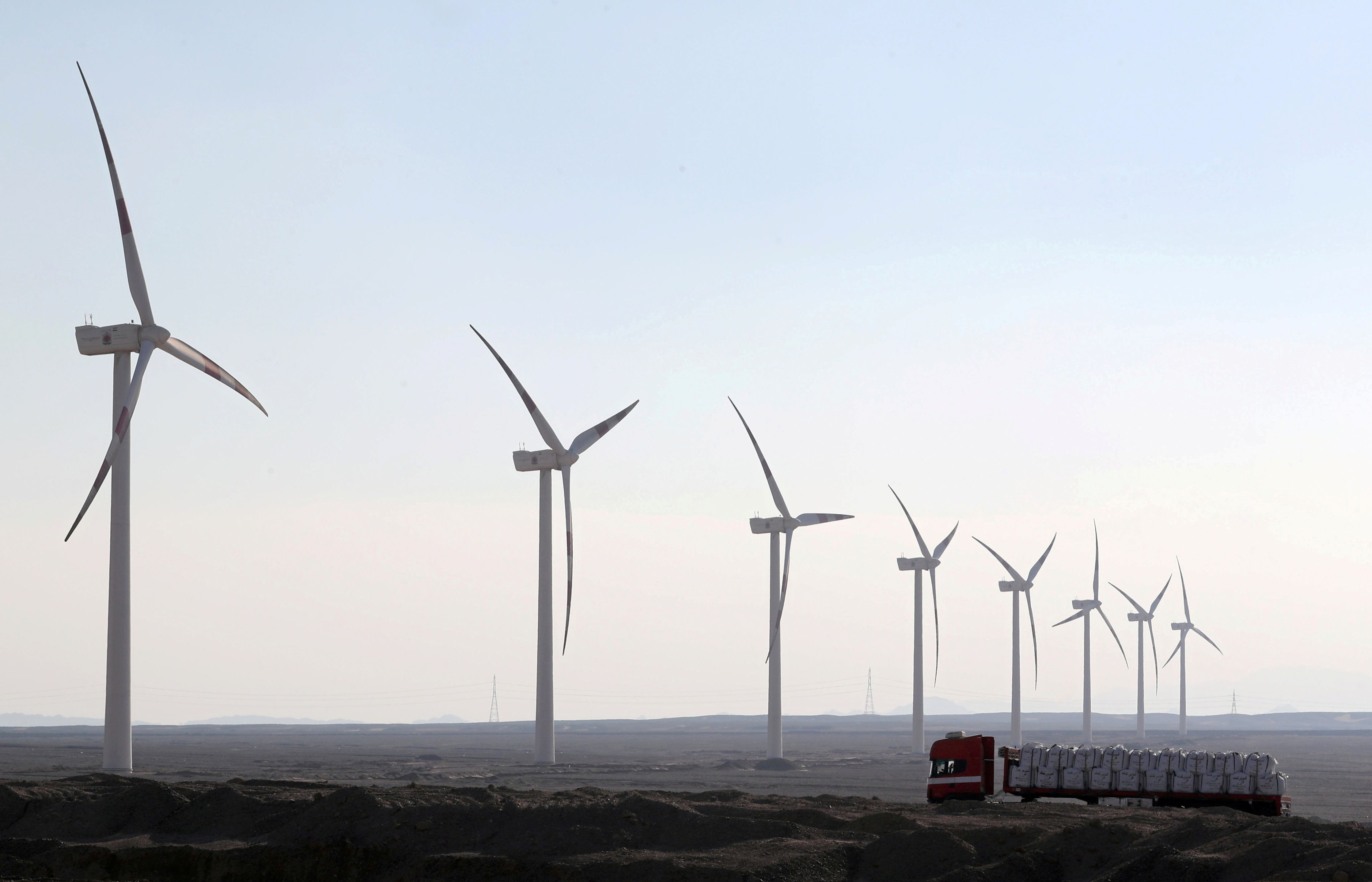
Wind turbines on the outskirts of Cairo. Amea Power has commissioned Africa's largest wind farm in Ras Ghareb, Egypt. Reuters
Wind turbines on the outskirts of Cairo. Amea Power has commissioned Africa's largest wind farm in Ras Ghareb, Egypt. Reuters
“The UAE is indeed proactive through companies like Masdar in building renewable energy capacity across emerging markets,” Mr Attenborough said.
“It’s important to consider that installing renewable energy generation is only one half of the coin. Adequate transmission, transformers and connections to both domestic and cross-border grids are also essential.
Countries like the UAE, with progressive and committed policy and planning that encompasses both aspects of energy production are making most significant progress here.
“When this encompassing approach is taken, emerging markets can become places where the energy-intensive needs of developed markets are located, especially those with increasing numbers of high energy-consuming data centres.”
Adipec is hosting a contingent of dedicated country pavilions this year – more than half from emerging economies – to amplify the crucial role of dialogue and collaboration in advancing inclusive progress.
Sustainable energy industry faces major challenge in filling a growing talent gap
Sector looks to bridge divide with after-school initiatives and reskilling programmes to strengthen staff pipeline
Meeting the world’s growing need for secure, affordable and sustainable energy depends on skilled people. But a shortage of qualified workers could slow future development just when net-zero goals, new fuels and emerging technologies are reshaping how the sector operates.
Nearly three quarters (71 per cent) of energy employers say they struggle to find the talent they need, according to a survey this year by ManpowerGroup. Simultaneously, about 400,000 US energy-sector employees will reach retirement age in the next decade, labour data shows – even as working age populations expand in emerging and lower-income economies, according to the World Economic Forum.
Those three data points define the labour challenge heading into Adipec 2025 this week: rising demand for new hires but a thinning reservoir of experience. Their impact shows up in how the companies respond to the energy transition and how long existing assets can stay online and even what long-term competitiveness looks like.
“Public understanding hasn’t caught up with how much innovation is happening in this industry. Energy is scaling, not shrinking, yet many people still believe otherwise,” said Molly Determan, president of the US-based Energy Workforce and Technology Council, a trade association that represents more than 650,000 jobs in the technology-driven energy value chain.


Molly Determan, president of the Energy Workforce and Technology Council
Molly Determan, president of the Energy Workforce and Technology Council
That means energy workforce profiles are changing, she said.
“Companies are being deliberate about managing this shift by focusing on leadership development, reskilling and building adaptable teams. That’s less about numbers and more about readiness for what’s ahead,” Ms Determan said.
As the industry embraces decarbonisation, climate-change mitigation and the related field of climate-change adaptation are now among the top six transformative trends for the economy, according to WEF’s Future of Jobs survey in January. In both cases, more than 40 per cent of employers polled said they expect a knock-on affect on their businesses over the next five years, growing demand for roles such as renewable energy engineers, environmental engineers and electric and autonomous vehicle specialists, the survey found. All of these are among the 15 fastest-growing jobs in the world, according to the survey.
Energy generation, distribution and storage will open up one million jobs through to 2030, the WEF forecasts, while allied roles in reducing carbon emissions will add another 3.1 million jobs.
“We imagine a future where young people can leverage intelligent tools to design smart renewable energy systems, build AI-powered grids, and pioneer breakthroughs in green hydrogen, carbon-neutral tech and advanced energy storage,” said Thomas Loffler, senior vice president of Adipec. “These won’t just be jobs, they’ll be missions to solve global challenges, cut emissions and build cleaner, smarter and more resilient energy systems.”
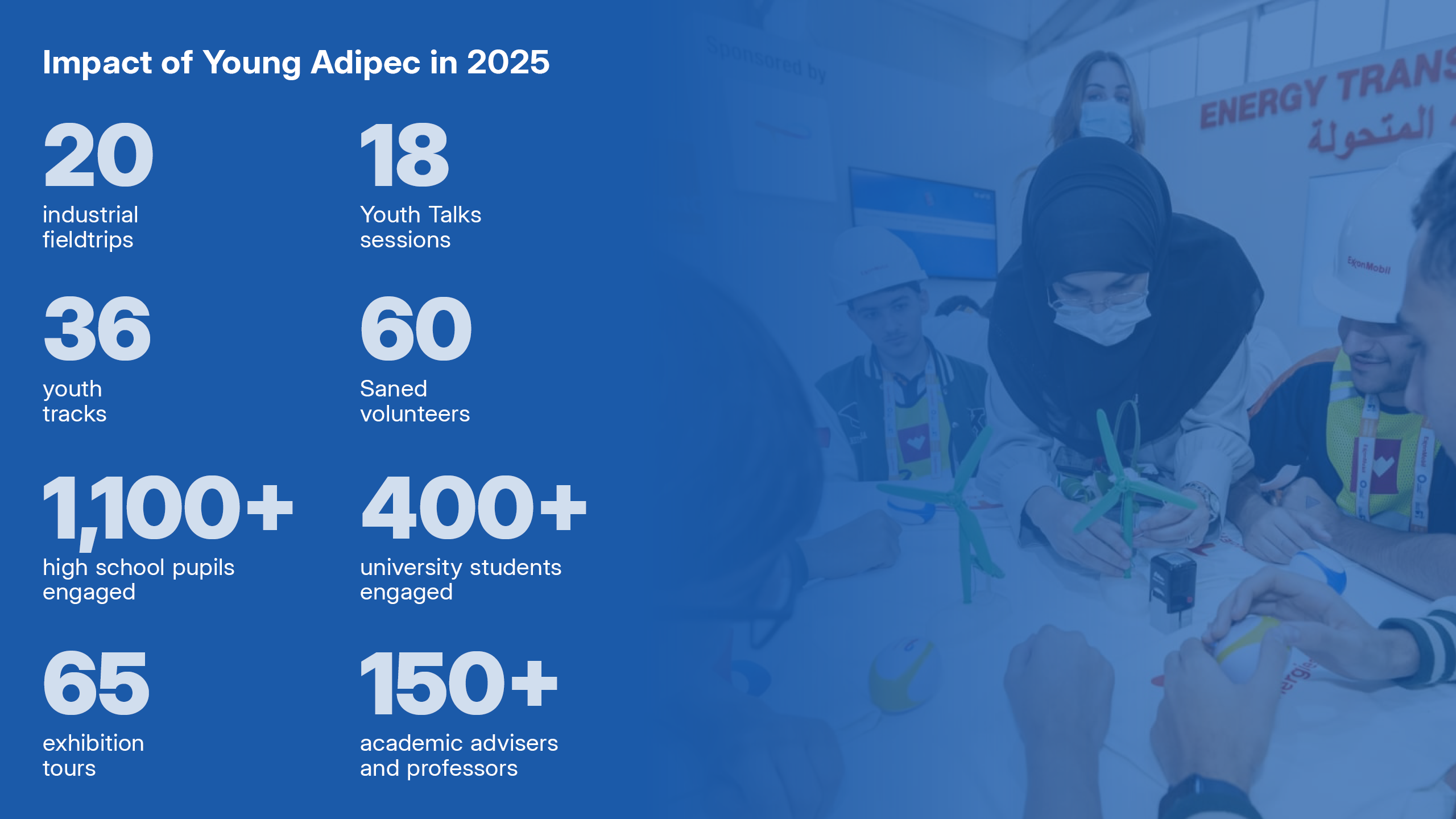
Adipec has become an industrial catalyst for practical talent pipelines, connecting students and early career talent with corporates and training partners. An example is the Adipec Global Youth Council, which aims to attract young professionals to the sector. Likewise, Young Adipec raises awareness of energy industry careers among high school pupils. “The impact [of Young Adipec] speaks for itself: 54 per cent of participants consider pursuing energy-related degrees, and 25 per cent have already enrolled and joined the industry,” he said.

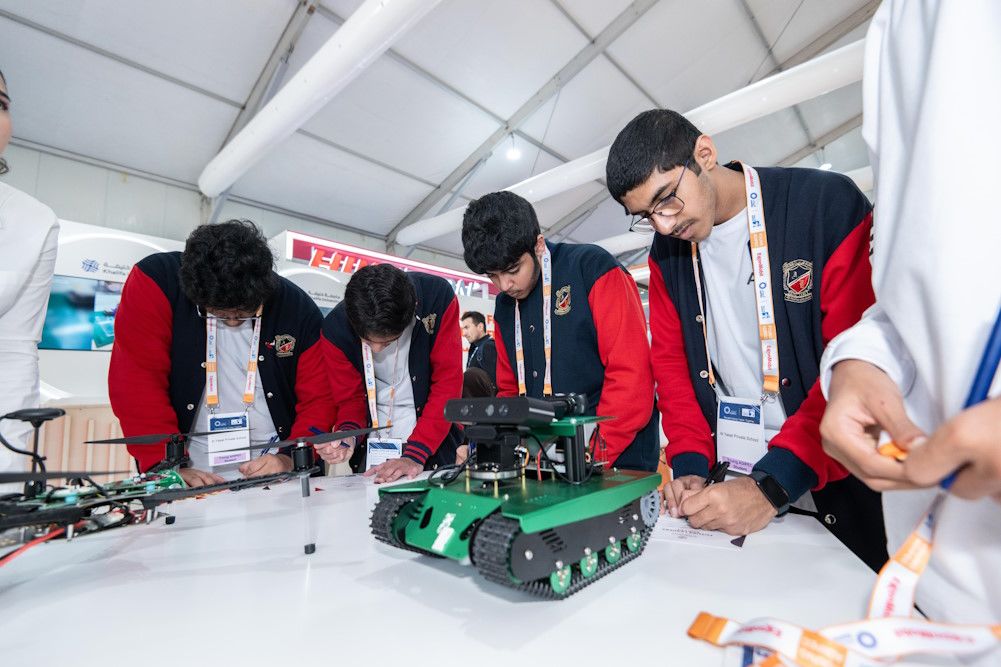
Young Adipec raises awareness of energy industry careers among school pupils and university students
Young Adipec raises awareness of energy industry careers among school pupils and university students
Individual companies – including Adipec exhibitors – are likewise focused on shortening the runway from student to skilled technician by creating a local talent pool for complex projects. Adnoc’s In-Country Value procurement programme, for example, ties contracting to local capacity building and Emirati employment. Last year, it created 5,500 private-sector jobs for Emiratis in collaboration with the Emirati Talent Competitiveness Council (Nafis).
Meanwhile across the border, Saudi Aramco runs several development and education initiatives to bring more women into the workforce in line with its Saudi Vision 2030 development goals. Its STEMania focuses on hands-on science activities for schoolgirls, connecting them to female role models.
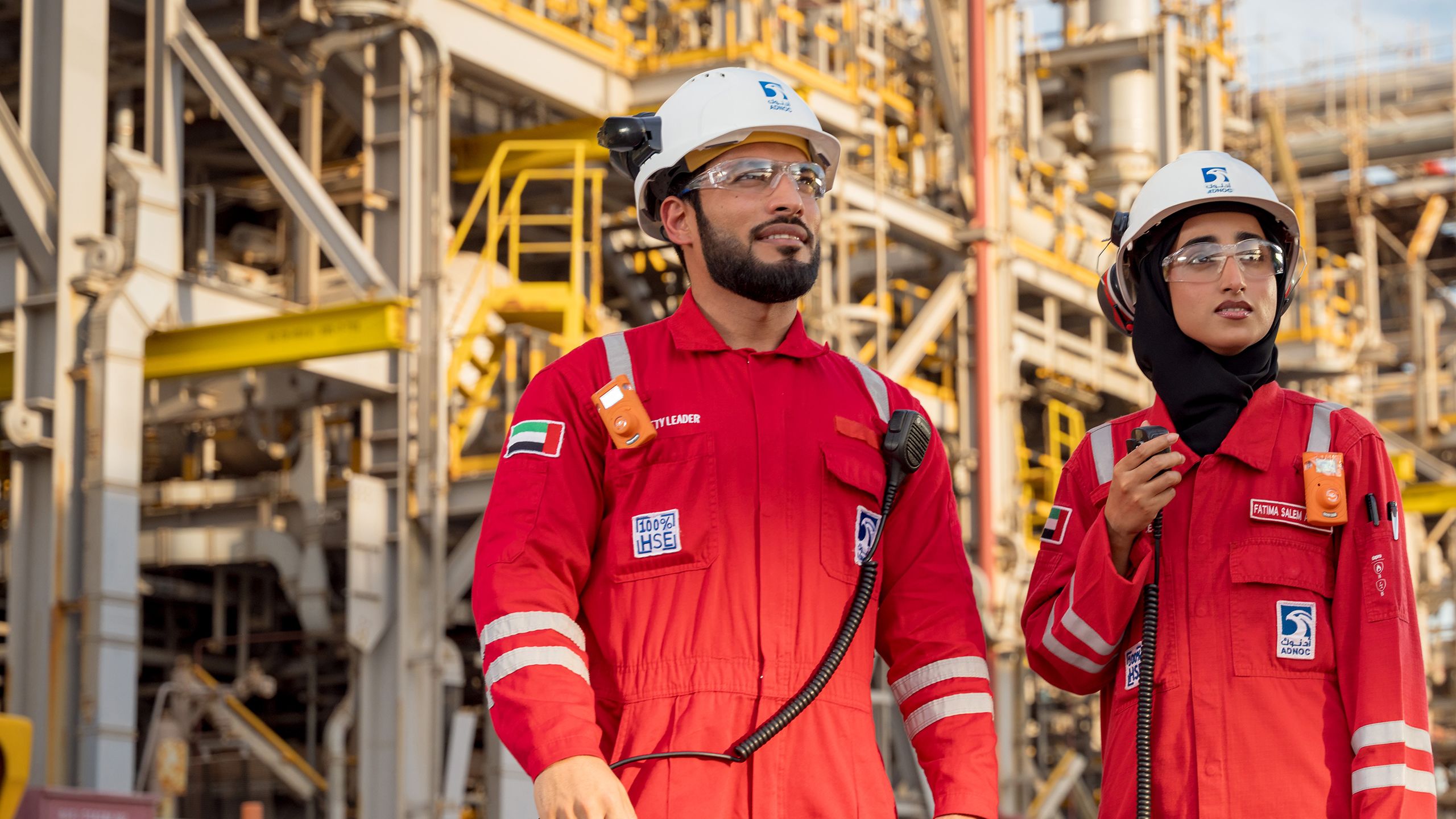
Women are rising stars in modern global energy sector
Inclusivity will bring grit and grace to the energy space
The changing global economic landscape has not only propelled the shift from coal to clean energy, but also ushered in a gender rebalance in the corridors of power. As the world races towards a cleaner, equitable future, it is also undergoing a transition in boardrooms, with women increasingly taking up critical decision-making roles.
“Women are an essential force in the modern energy workforce, not because of quotas or optics, but because their talent delivers results,” said Molly Determan, president of the Energy Workforce and Technology Council.

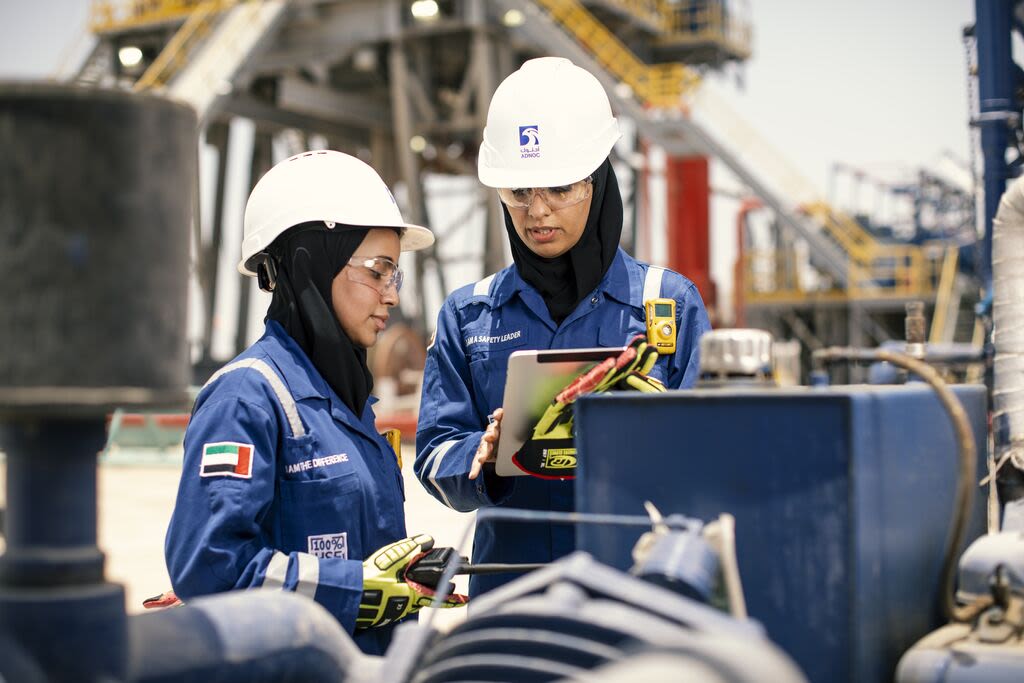
More than 800 women work across Adnoc's operational sites
More than 800 women work across Adnoc's operational sites
“Today, women are leading major projects, advancing technology, driving operational improvements, and shaping strategy at every level of the industry. You’ll find women running assets, directing field operations, innovating in engineering and digital roles, and occupying seats in the C-suite, because they’ve earned them.”
There is still much ground to cover. Women remain underrepresented in the energy sector, with only a 17.3 per cent share of senior leadership positions in 2023, according to the International Energy Agency.
Similarly, women comprise only a quarter of the workforce in energy companies in the EU, meaning 200,000 more women will need to join the sector by 2050 to attain gender balance, according to a report from the bloc last year. The renewable energy sector is comparatively inclusive, with women holding 32 per cent of full-time jobs, according to analysis by the International Renewable Energy Agency (Irena).
However, although women occupy a higher share of the workforce in renewables than in oil and gas (23 per cent) or nuclear energy (25 per cent), the sector still trails the global average of 43.4 per cent.
“Women’s representation in renewable energy is uneven across job categories. Jobs held by women are highly concentrated in administrative roles, which account for 45 per cent of female employment in the sector, and in non-Stem technical positions such as legal roles, where they make up 36 per cent. By contrast, women comprise only 28 per cent of Stem-related roles, and just 22 per cent of medium-skilled jobs such as solar installation and construction,” Irena said.

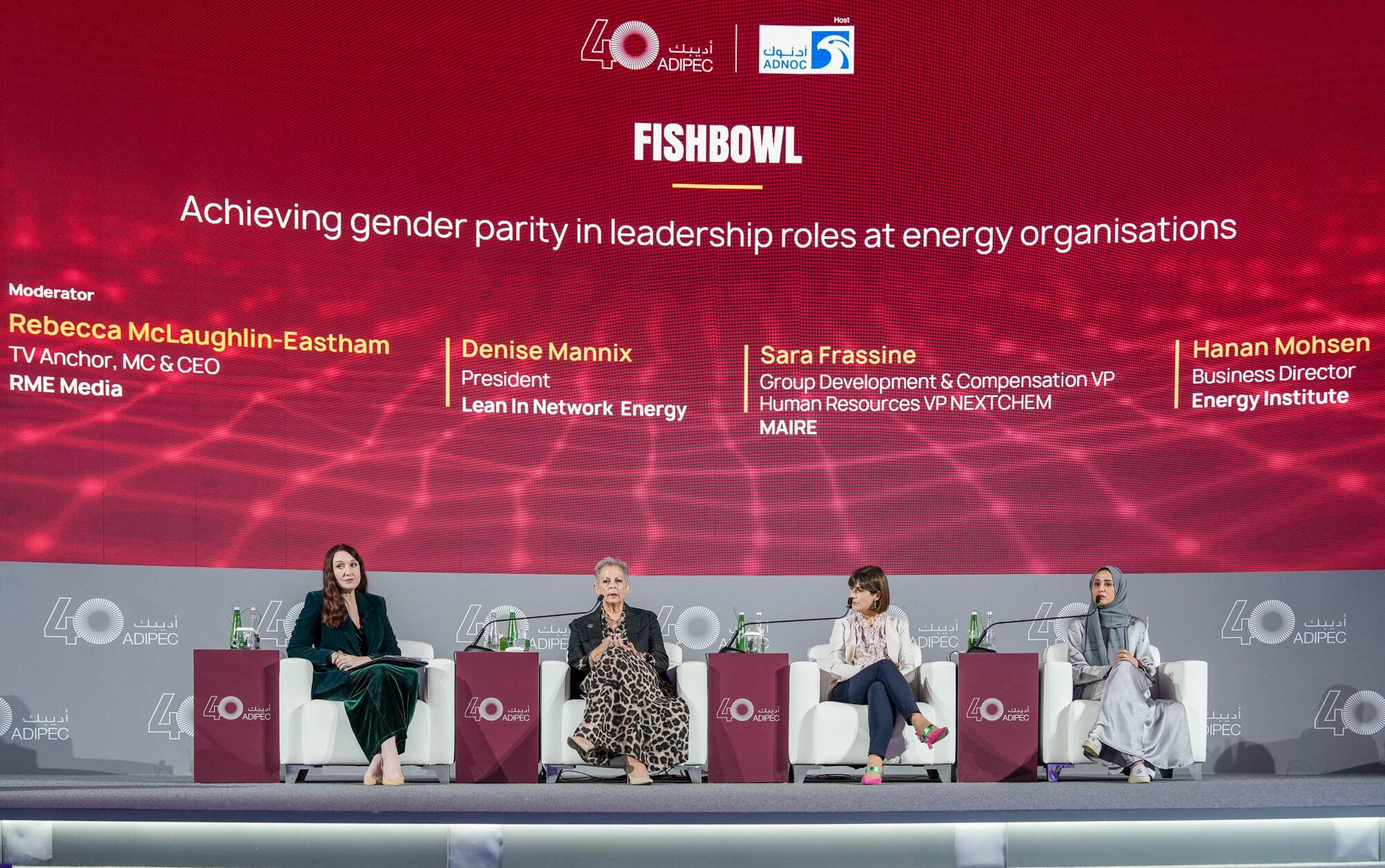
An all-women panel discusses gender parity in the energy sector at last year's Adipec
An all-women panel discusses gender parity in the energy sector at last year's Adipec
“Progress will come from focusing on opportunity and performance not box-checking,” Ms Determan said. “To attract and retain high-performing women, the industry must provide clear career progression, meaningful leadership opportunities and modern workplace policies that reflect how people actually work today.
“Expanding the talent pool and empowering the best people to lead, including women, is what will keep our industry resilient and ahead of global demand.”


 Built with Shorthand