
THE GRAND EXPOSITION
Building Expo 2020 Dubai from
inception to reality and beyond

Eight years ago, in a quiet corner of Dubai, a city within a city began to rise from the desert sands. The skeletons of futuristic buildings gradually came to dominate the area as visions of a new way of living were realised.
Today, the vast grounds of Expo 2020 Dubai are weeks from completion as the emirate prepares to welcome the world in 100 days.
At first glance, the towering glass and steel structures could be mistaken for the set of a big-budget science fiction film. This was on purpose: architects sought to transport visitors into another world from the moment they passed through any of its three six-storey carbon-fibre gateways.
The World Fair was delayed by a year by the Covid-19 pandemic but organisers promised visitors an even more engaging experience that would be worth the wait.
With the countdown to what is billed as the World’s Greatest Show under way, The National offers a behind-the-scenes glimpse into the making of its landmark buildings, which will last long after the Expo ends in March 2022.
Organisers, architects and designers share unseen sketches and time-lapse videos that show how ideas crystallised to create the first World Expo in the Middle East, Africa and South Asia, an event the UAE hopes will inspire change.
From steel discs that rotate with the sun to trees that capture moisture from the air, its exhibits will encourage visitors to dream big and imagine a greener, more connected future.
They will see incredible images from Mars, watch drones and robots in action, and hear blue whales sing as they communicate across entire oceans.
Organisers of the Expo tell of their own journeys and the exciting world visitors will explore from October this year.

Mobility
The daily drive to the Dubai South site is an emotional experience for Marjan Faraidooni.
The chief experience officer has been a member of the Expo core team, and oversees the development and operations of theme districts.
“How I feel when I drive in to work and see this pavilion from afar is a mixture of emotions. One of them is really this overwhelming emotion of being lucky to have been part of this whole journey of bringing this pavilion to life,” she told The National.
“When I drive in, it’s nothing short of being honoured to have been part of it, to see it come up and to shepherd it to what it is today.”
In 2015, a global search began for designers and architects to visualise signature buildings that would embody the spirit of the Expo.
Organisers sifted through dozens of drawings that would capture the imagination of millions of visitors.
The site was divided into three districts to represent the Expo’s key themes: Mobility, Sustainability and Opportunity, with dozens of country pavilions scattered among the petal-shaped zones.
Plans for the Mobility and Sustainability structures, which will remain after the Expo, began six years ago.
“We received brilliant proposals from all over the world,” said Ms Faraidooni.
“The sketch we received from Foster + Partners really stood out because of the shape of the building.
“It caught my attention because it indicated movement. The material they were going to use was reminiscent of a lot of elements that are related to mobility, such as planes and cars.
“I just see something that is infinite in its movement and really representative of this theme.”

The Mobility Pavilion was designed to capture surrounding images and movement of people
The Mobility Pavilion was designed to capture surrounding images and movement of people
Reflections in stainless-steel rims
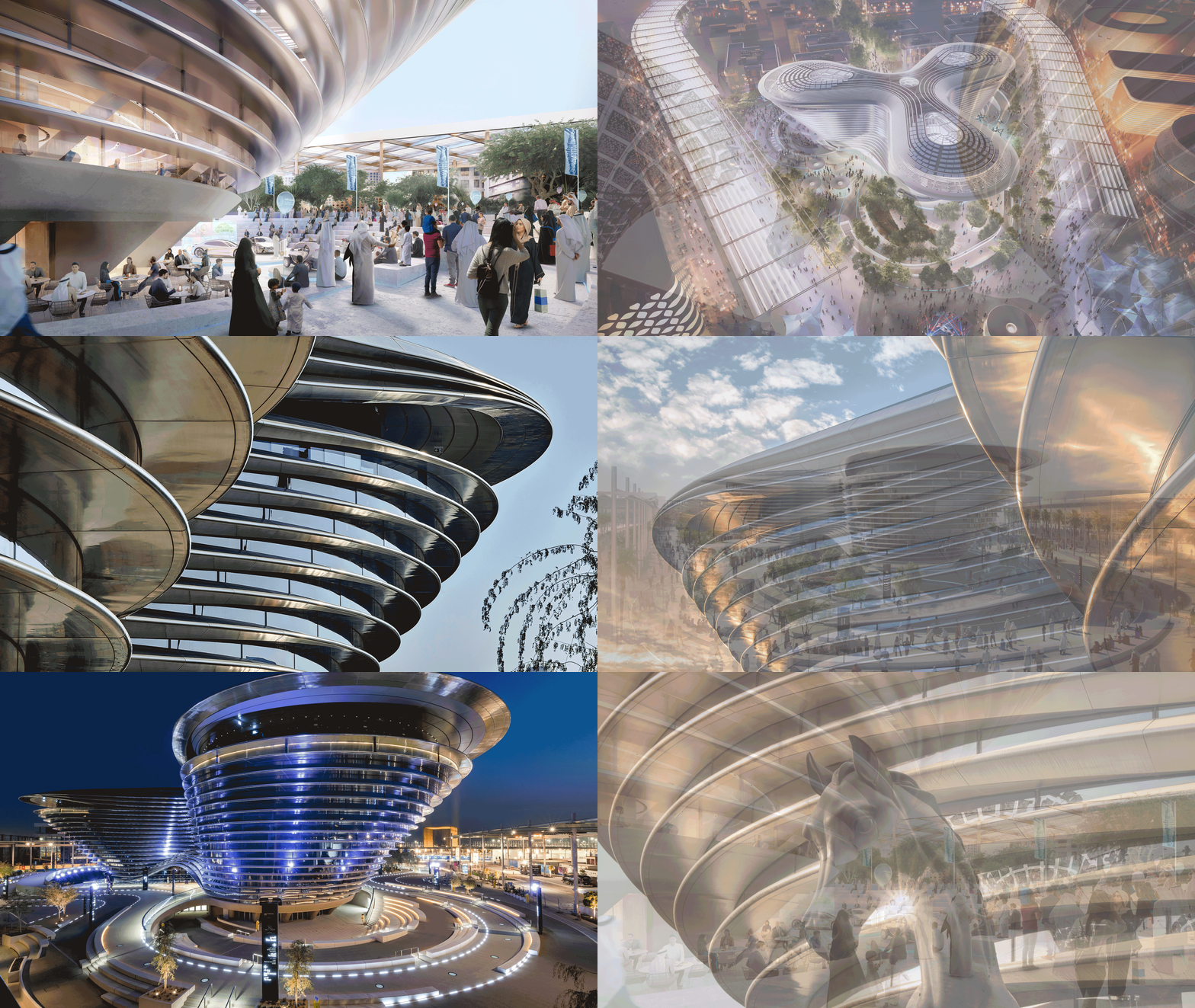
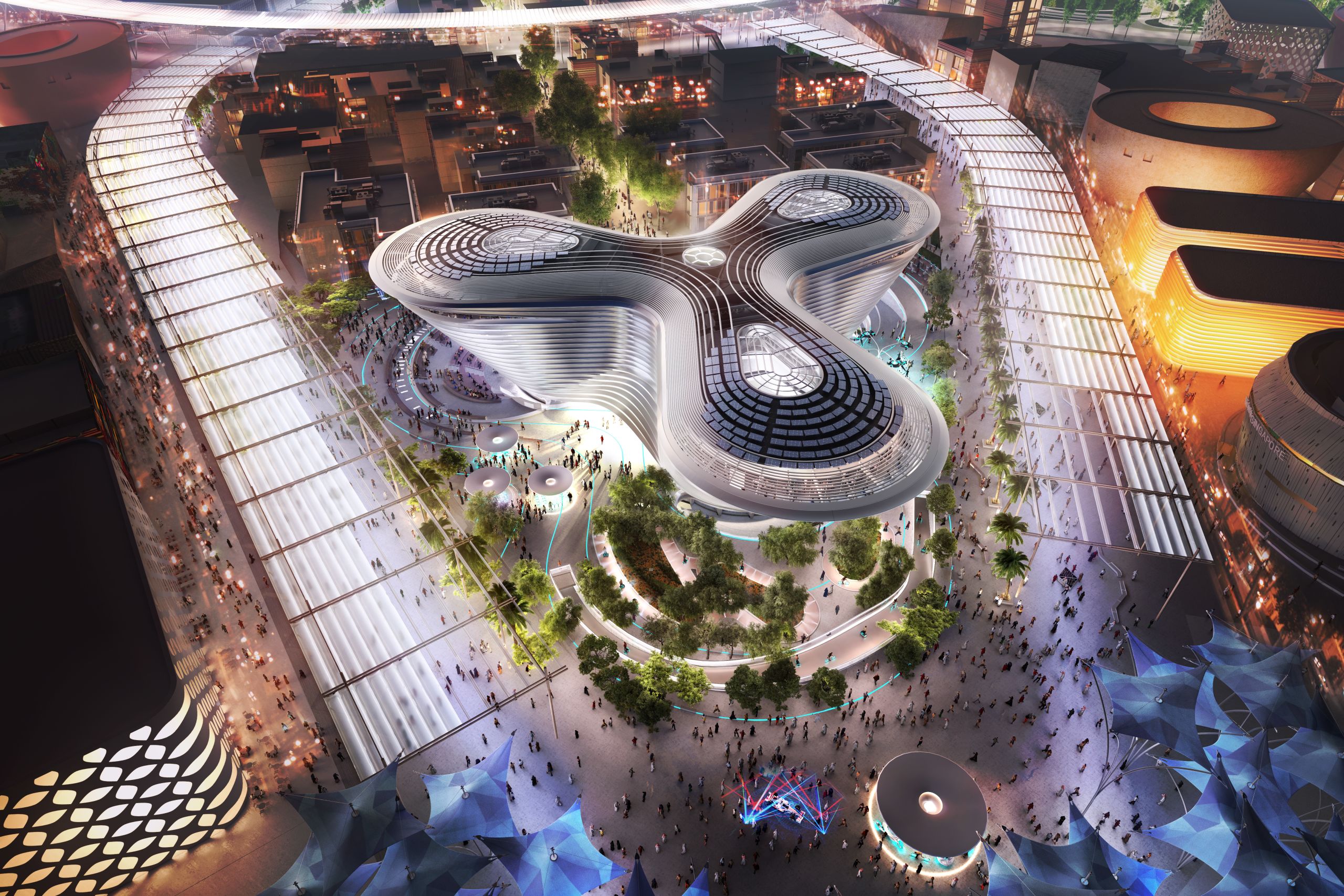
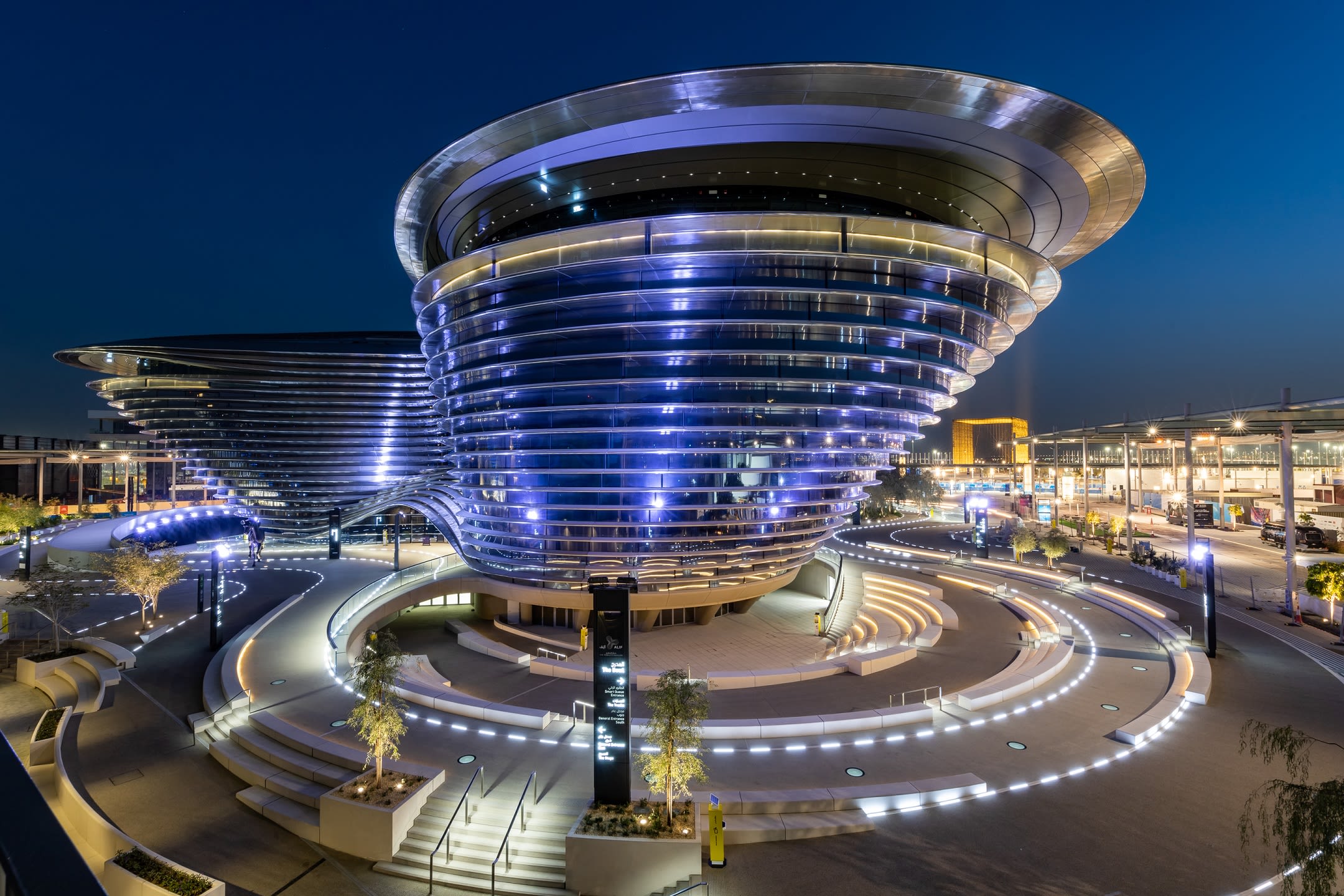
The ribbed shape of Alif, the Mobility Pavilion, resembles a giant fidget spinner.
Gerard Evenden, senior executive partner and head of studio at Foster + Partners, said the reflective steel frame was designed to capture surrounding images and movement of people.
“The material, we’re using polished stainless steel on the facade, runs around horizontally, evoking fenders of vehicles from the past and aircraft wings,” he said.
“What those mirrored elements do is that they will pick up the environment around them. They will pick up movement in that environment and mobility will be depicted in the facade of the building.”
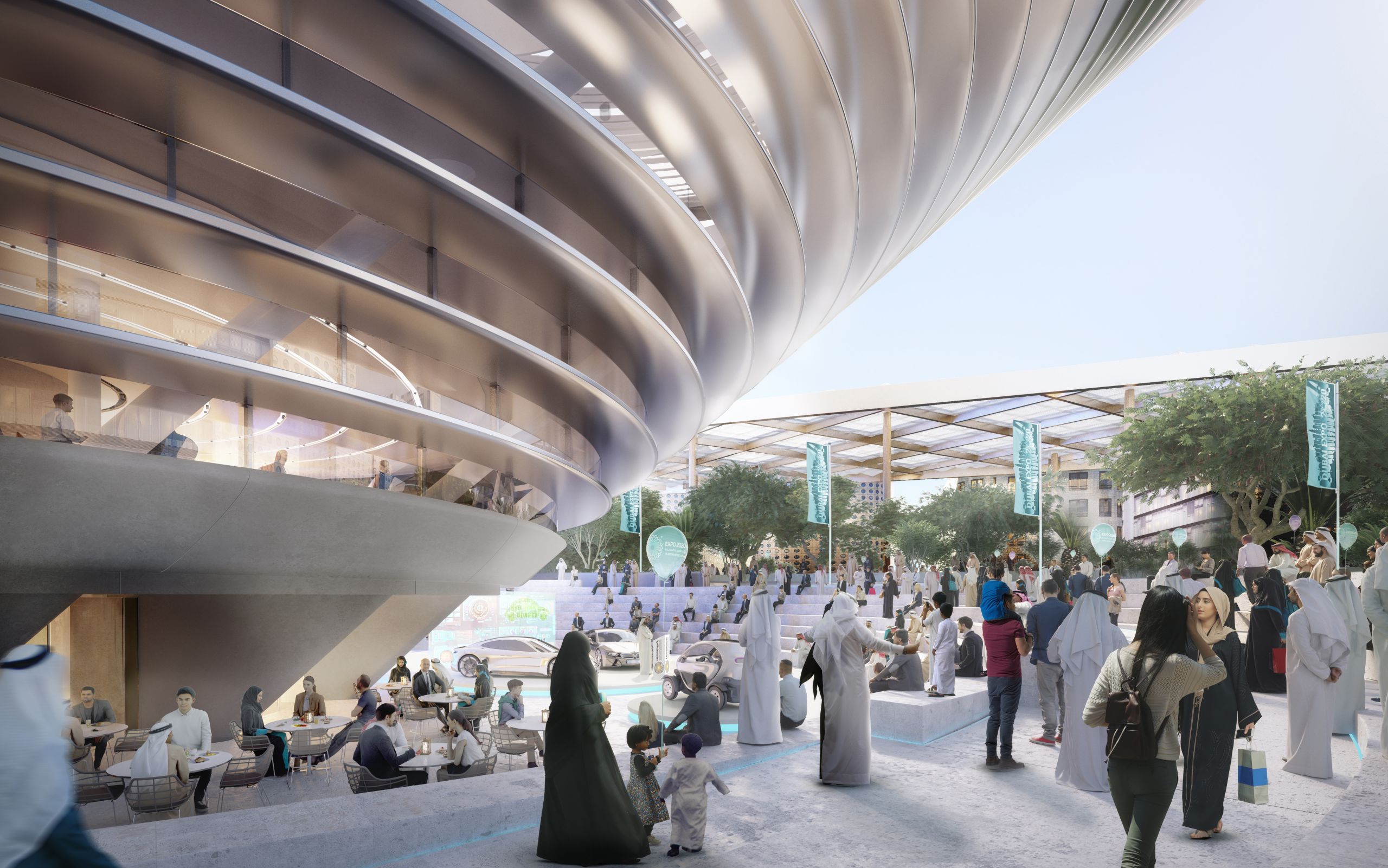
“For those people who don’t get in the building, there is an incredible experience on the outside. So even if you can only just walk past, you will get something from the Mobility Pavilion.”
Organisers have released little information about the building, wishing to keep the details of its interior under wraps until closer to the opening.

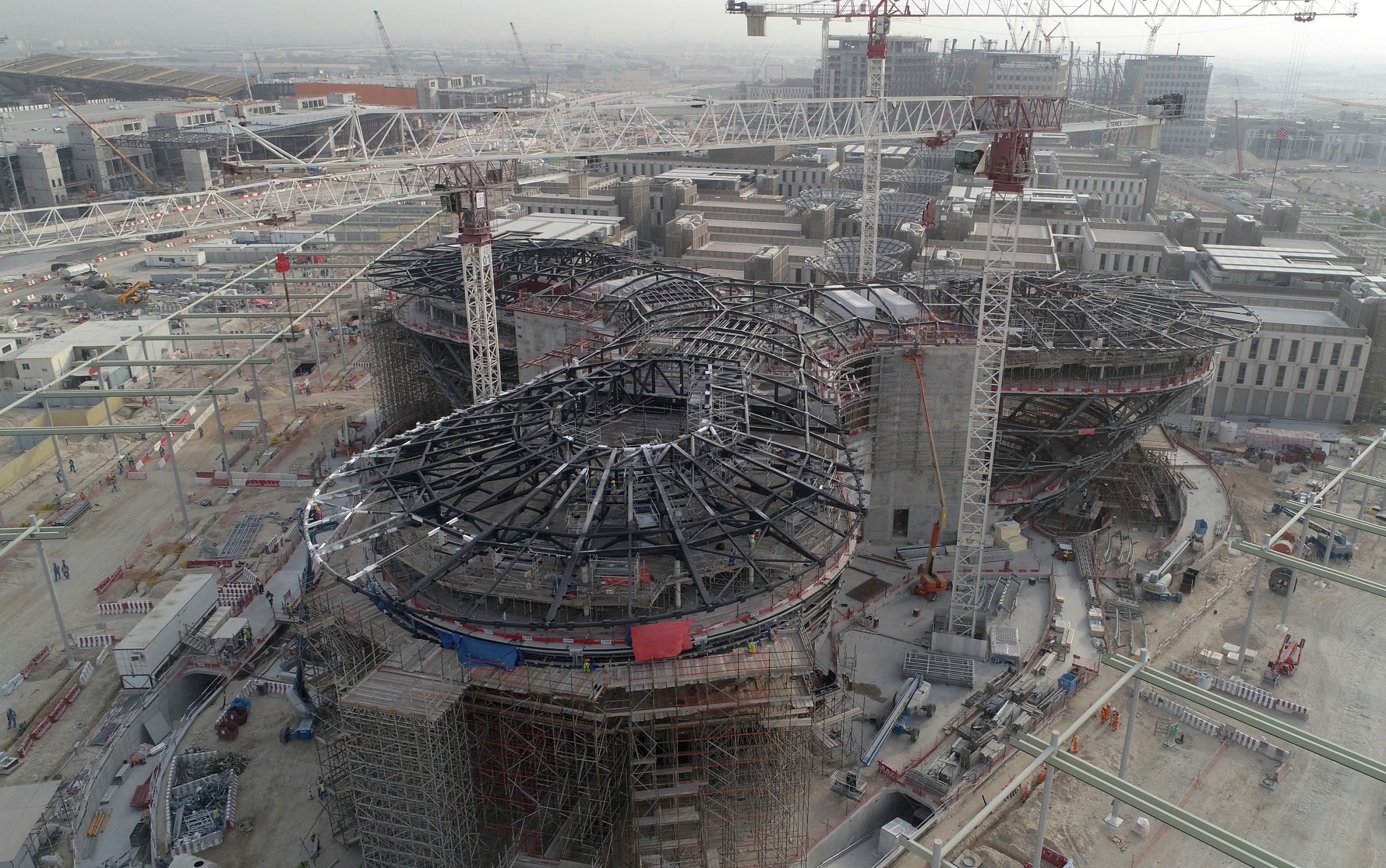
Alif, the Mobility Pavilion, under construction
Alif, the Mobility Pavilion, under construction


Messages from outer space
Ms Faraidooni gave only hints at what visitors could expect to see inside.
“This pavilion consists of many chapters and within that we have smaller chapters that take the visitors from one big room to another,” she said.
“There are three big rooms in this presentation. One of my favourites takes the visitor to the past and reminds them of a few giants of mobility. These are individuals who have played a big role in the sciences and the movement of human progress over the years.”
Visitors will see nine-metre-tall displays on these scientists and innovators, whose discoveries laid the foundation for many of today’s smart devices.
Demonstrations of hoverboards and jetpacks will be on display along a 330-metre track that snakes around the building and partially underground.
Visitors will also be given a glimpse of the UAE’s Mars Mission.
“One of my favourite areas in this pavilion ... is when we take visitors through the Mars corridor. This is a great testament to the Mars mission, of which we are very proud,” Ms Faraidooni said.
“People will learn more about what this mission is and also learn about Mars. They will also get information that we are receiving from the probe. I like the way it’s a life space that provides real-life data.”
The UAE made history in February this year after becoming the fifth space agency to reach the red planet when the Hope probe entered the orbit around Mars.
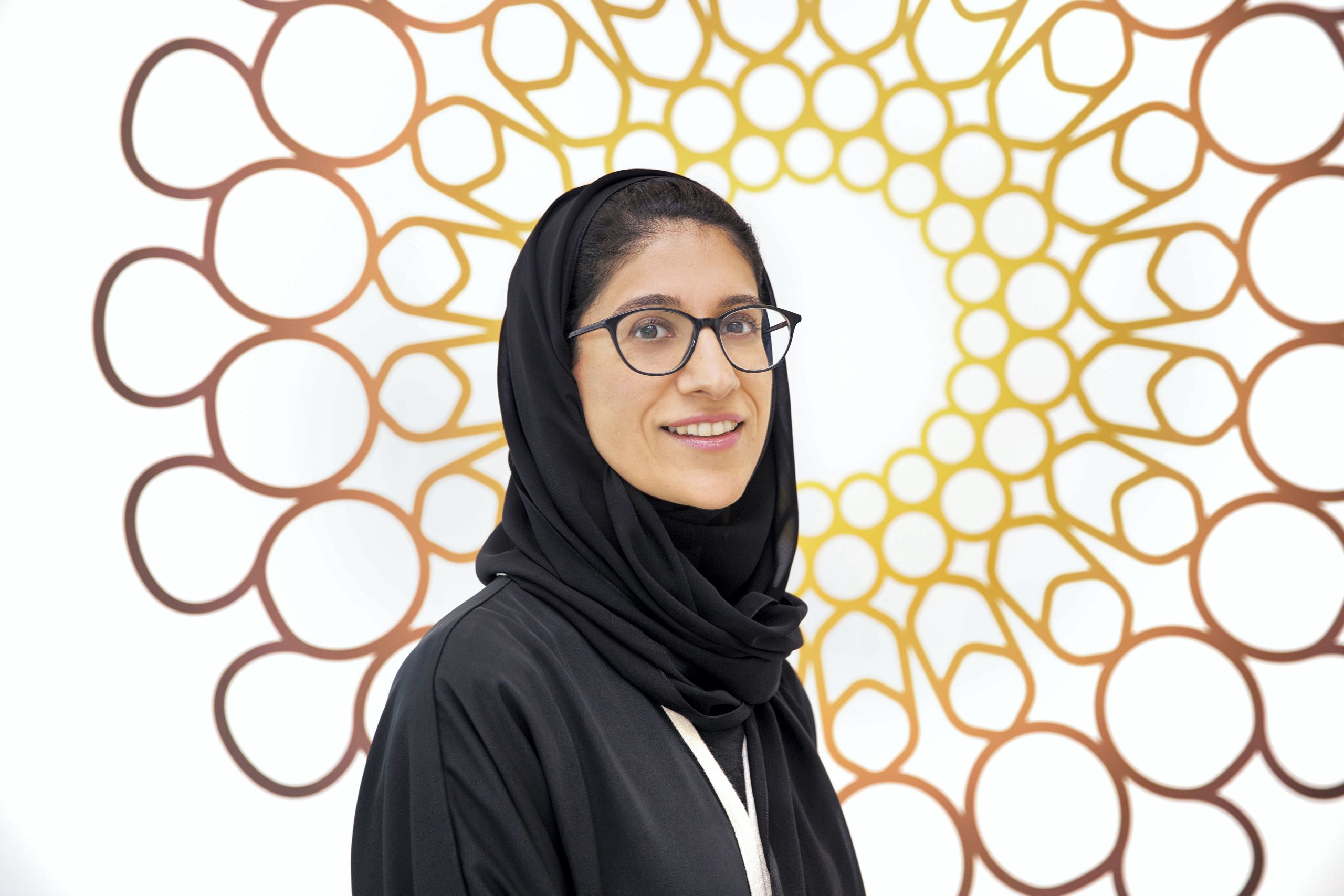
Marjan Faraidooni, chief experience officer for Dubai Expo 2020
Marjan Faraidooni, chief experience officer for Dubai Expo 2020
The probe has since sent a treasure trove of science data and hundreds of extraordinary images capturing ice caps and volcanoes.
The zone promises to be a dream come true for technology enthusiasts and students, who can draw up plans for a spaceship or understand how solar-powered tricycles will help developing countries.
Visitors will also learn how smart cities will be created through robotics, artificial intelligence and autonomous transport, all part of the Mobility experience.
Ms Faraidooni hopes the theme will encourage people to return to the Expo and inspire them to consider new perspectives.
“It is the beginning of the journey, to get people in that mindset. It’s not necessarily that you are going to learn about cars, airplanes and ships. It is much more than that. It is the movement of human beings, the infinite striving of humans to progress and reach for the stars. That’s what it represents to me.”


World’s largest passenger lift
Evenden, head of studio at Foster + Partners, had worked with the UAE on previous Expos. The British company designed a striking exhibit of sand dunes in Shanghai in 2010 and giant sand walls at the Milan Expo in 2015.
It also designed the earth-toned Masdar Institute in Abu Dhabi and the Middle East’s largest Apple store, in The Dubai Mall.
“What became clear from the beginning of Shanghai was a desire from the UAE to make their pavilions sustainable and to think about not wasting buildings,” he said.
“So to then be given one of the permanent pavilions in the Dubai Expo and to be told, the challenge this time is to design it so that it could be modified for legacy – that was the next step on the journey.”
He said the team had to source building materials that could handle the UAE’s harsh weather and design the building in a way that prevented visitors from having to queue.
“Allowing an easy flow of people through the building was paramount in our thinking,” he said.
The roof was fitted with solar panels.
The pavilion also houses the world’s largest passenger lift, which can transport more than 160 people at a time.
From the higher level, they can move down through a series of interconnected galleries.
Evenden said the UAE presented an incredible opportunity for designers.
“The country very clearly embraces technology. It’s a country that is looking at the future and not at the past,” he said.
“For designers, that opens up all sorts of opportunities for thinking and that is being reflected in the buildings and urban environments now being created.”
What happens after Expo ends?
Once the Expo ends in March 2022, the site will be transformed into a residential and commercial neighbourhood known as District 2020.
The Mobility pavilion will be used for exhibitions and as office space.
A portion of the site will be become a research and technology hub.

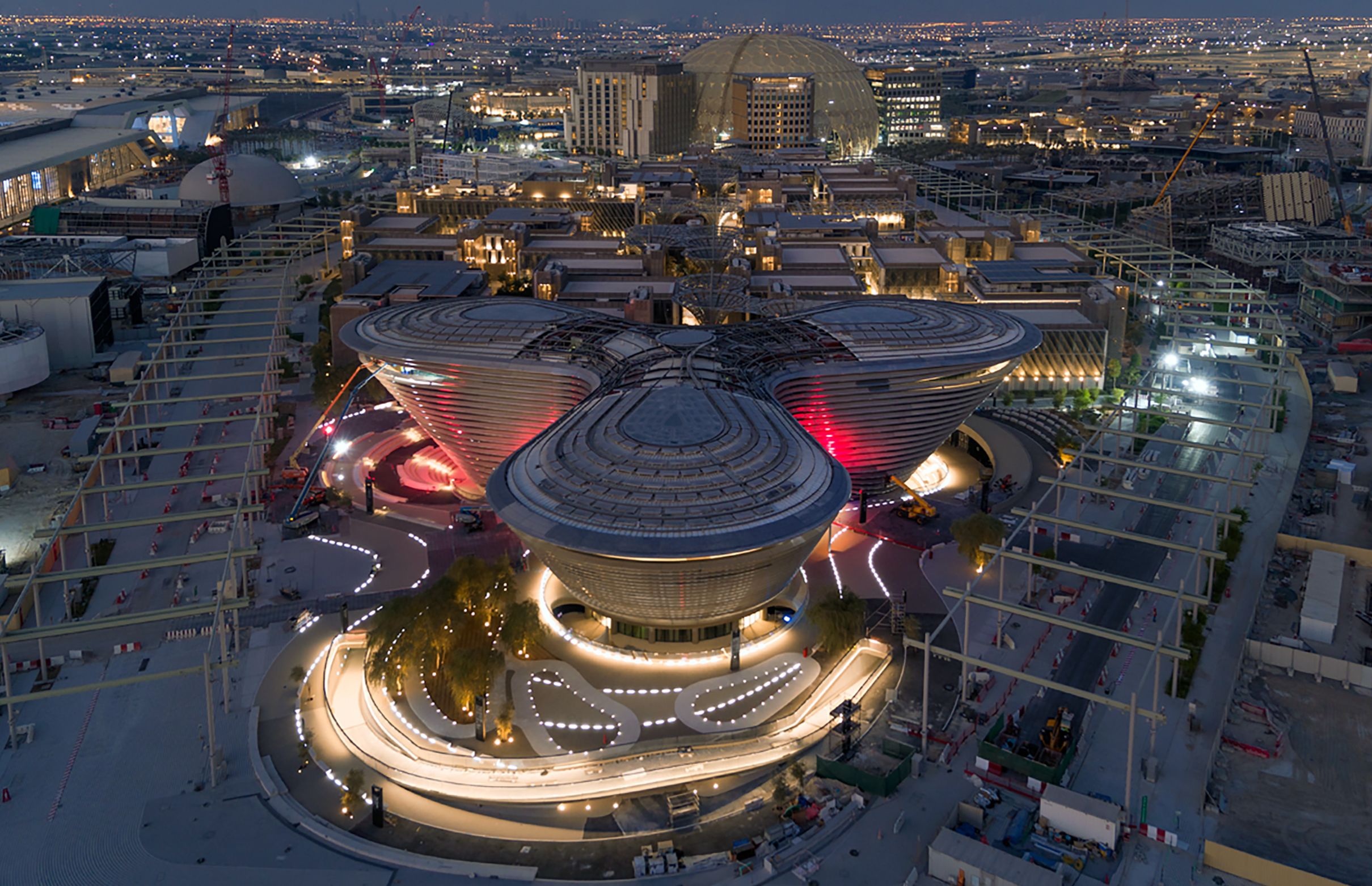
Hoverboard and jetpack demonstrations will be held on the 330-metre track surrounding the Mobility Pavilion
Hoverboard and jetpack demonstrations will be held on the 330-metre track surrounding the Mobility Pavilion
Unlike previous world fairs, Evenden said, the Expo’s legacy “has been thought of from day one”.
About 80 per cent of the infrastructure will live on after the six-month event, said Ms Faraidooni.
“When we thought about the buildings, we automatically thought about what these buildings would be doing after the event is over. For this particular one – Mobility – the legacy is very flexible. We have worked closely with the architects on a design that allows us to shift and repurpose it as a commercial office building,” she said.
“We will be keeping this building with its exhibition for many years after the Expo so that people can continue to visit it. We are also planning to complement it with potentially temporary exhibitions that would address the theme of mobility in the future.
“We plan to have it remain to be an inspirational space for visitors to continue to visit when they come to Dubai and the UAE.”

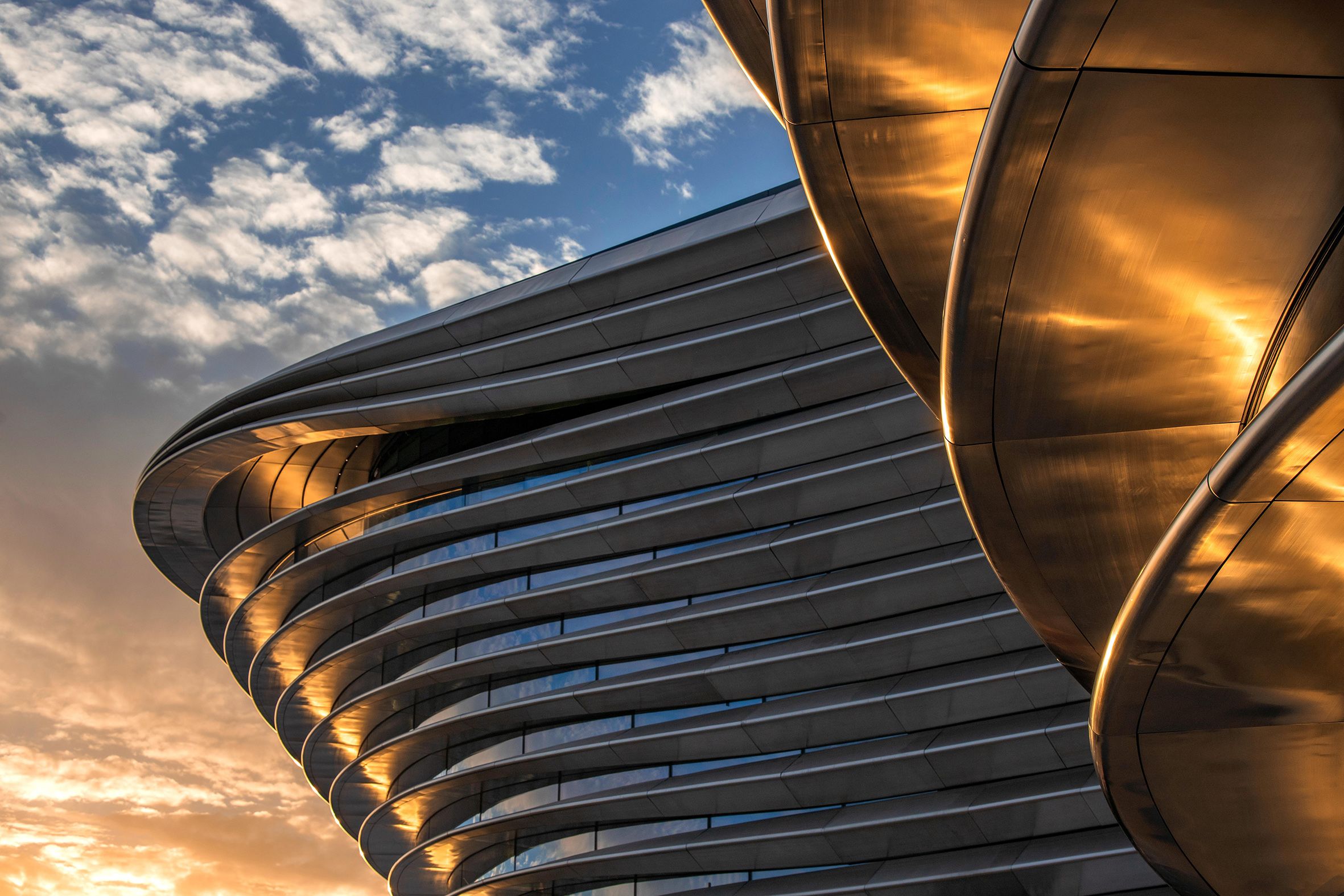
The Mobility Pavilion was made from reflective steel to give a feeling of movement as people walked by
The Mobility Pavilion was made from reflective steel to give a feeling of movement as people walked by

Sustainability
Six years ago, when architects put forward winning proposals for Terra – the Sustainability Pavilion – they had a mammoth task ahead of them.
The ambitious brief was to build a large structure, open to the public, that generated its own electricity and cooling in the middle of the desert.
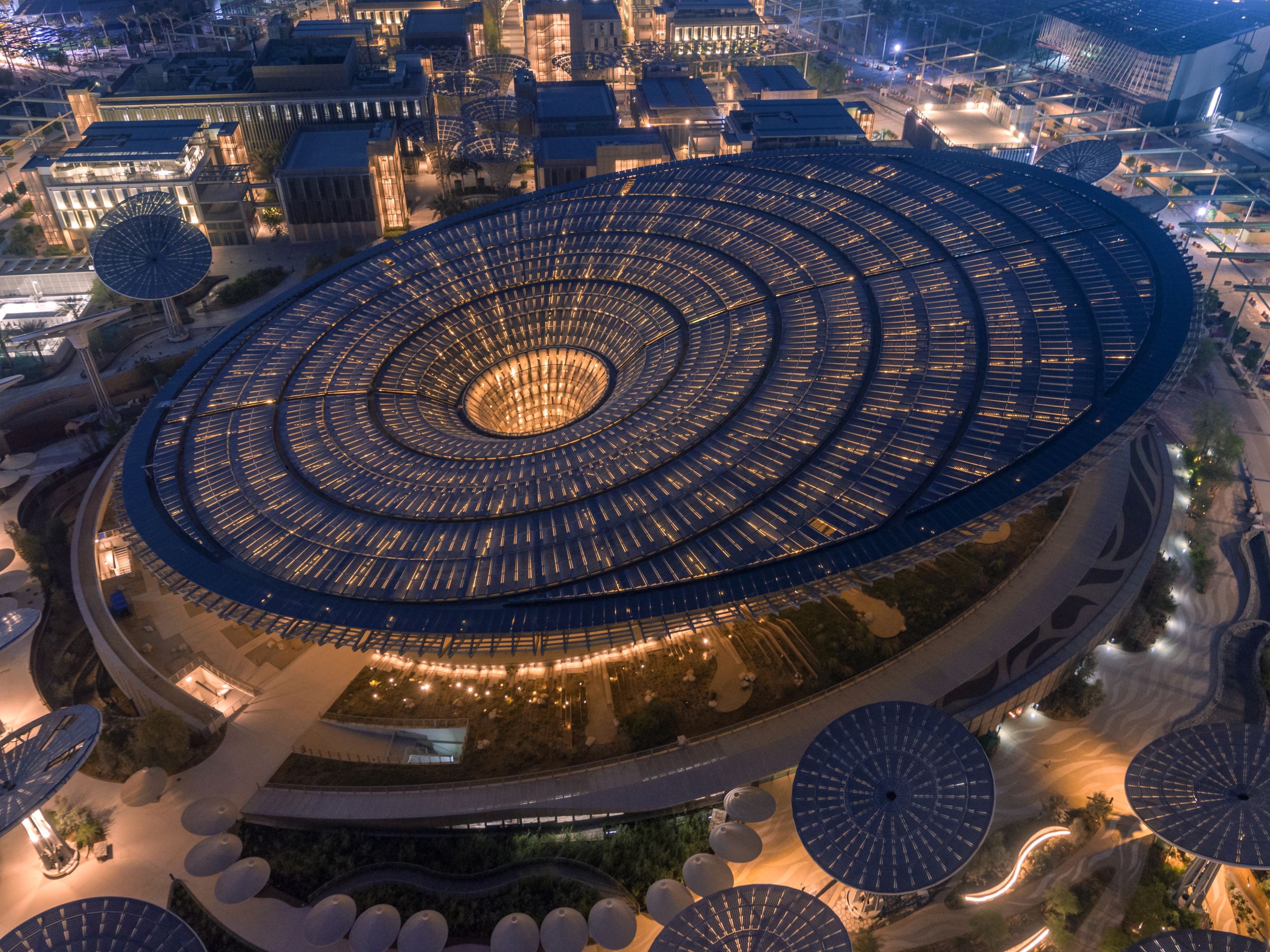
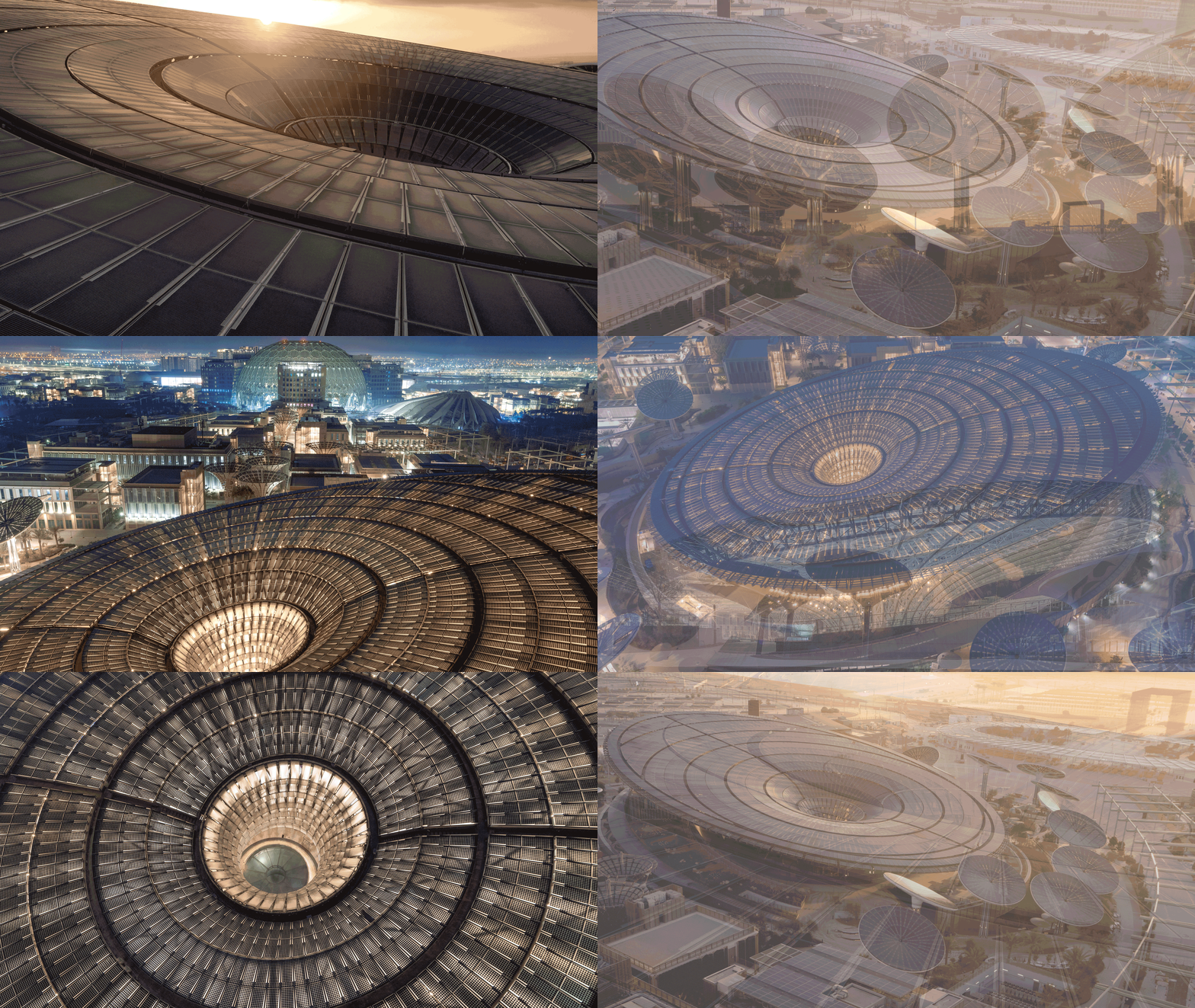
A striking spaceship-like edifice that doubles as a giant sunshade emerged from the first set of drawings.
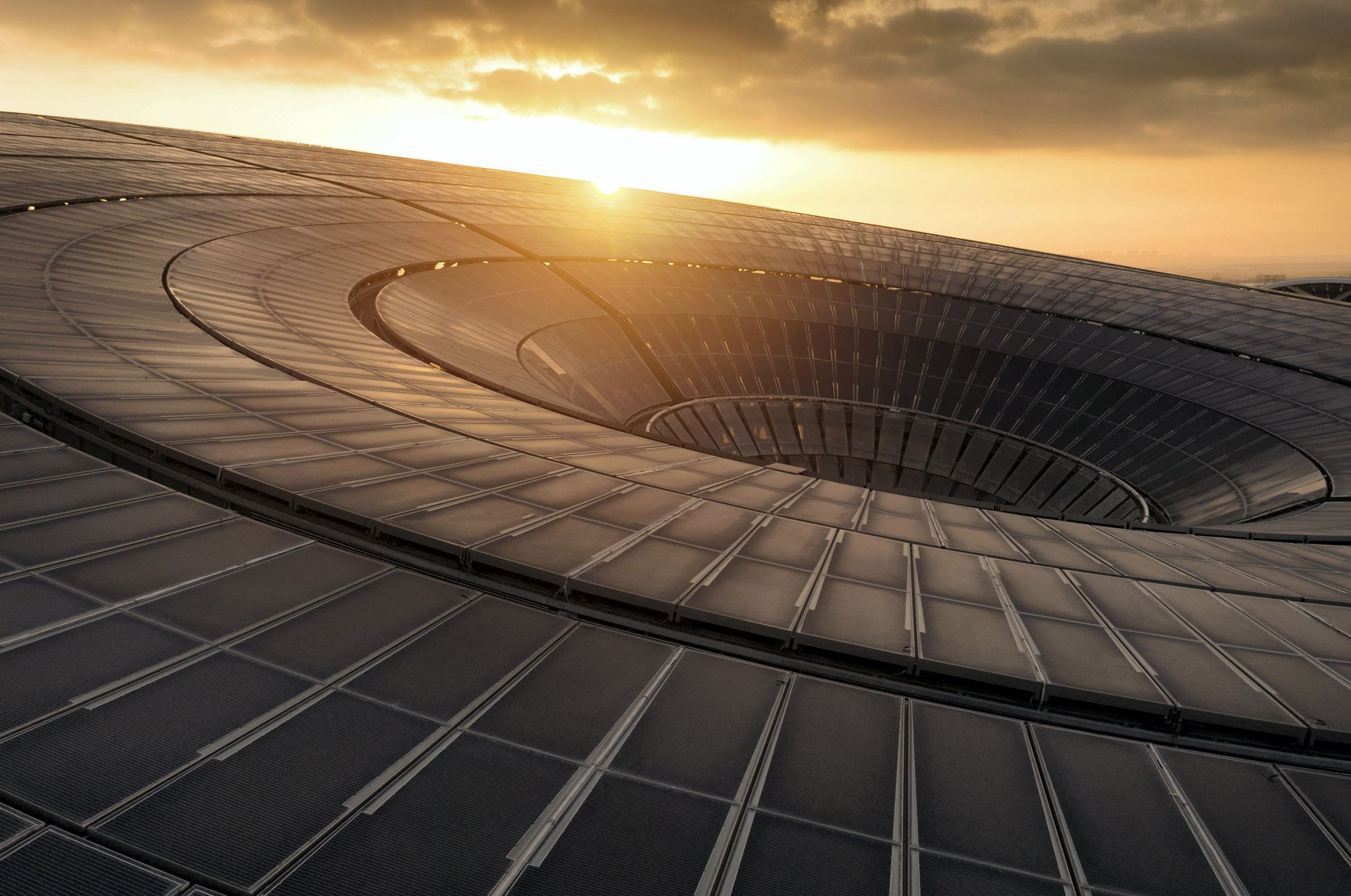
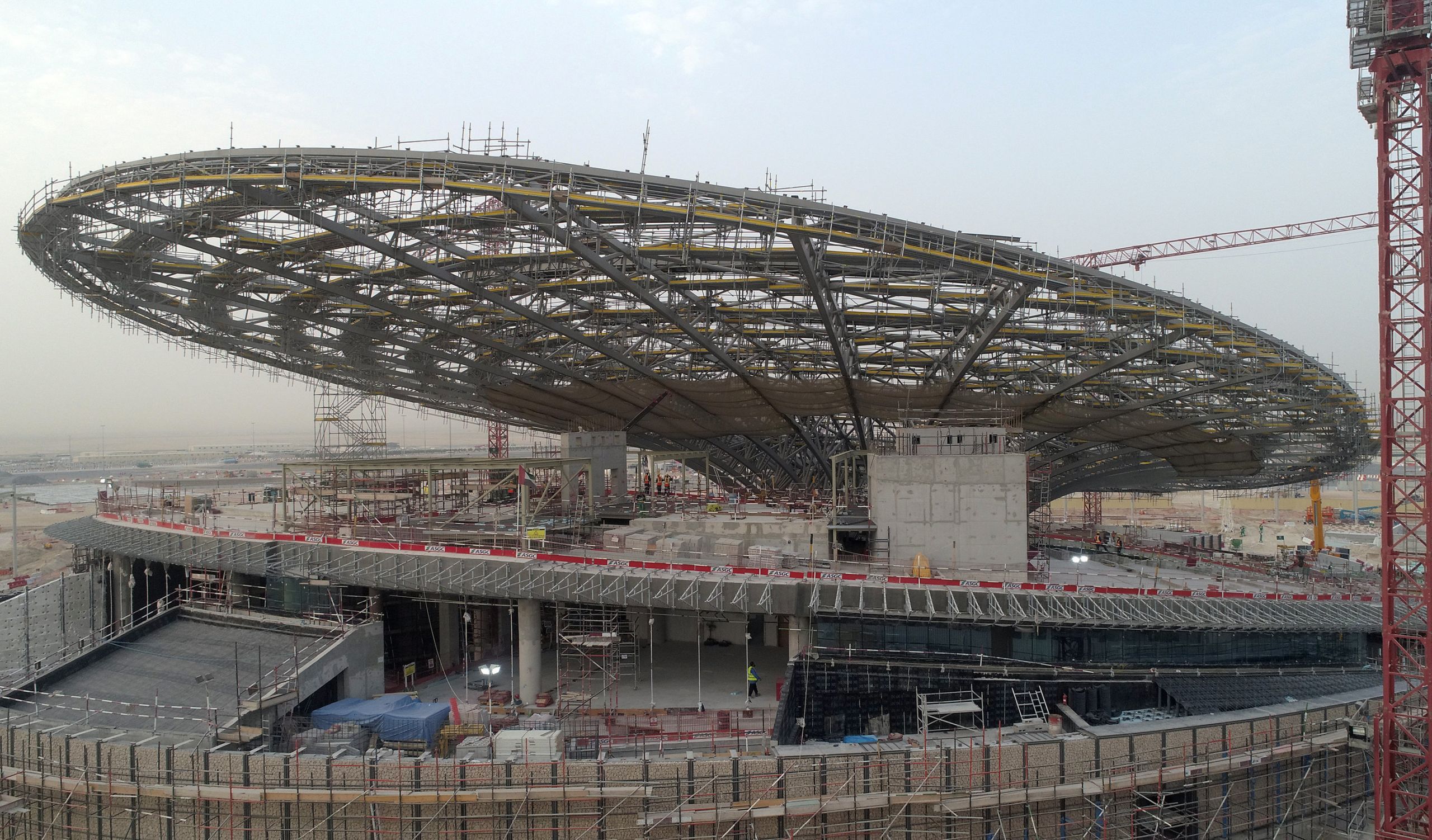
Hundreds of workers constructed the massive disc that now stretches across the entire pavilion and harvests sunlight with its photovoltaic skin.
Andrew Whalley, chairman of Grimshaw Architects, said the building was an opportunity to demonstrate a “truly self-sustaining pavilion on a world stage”.

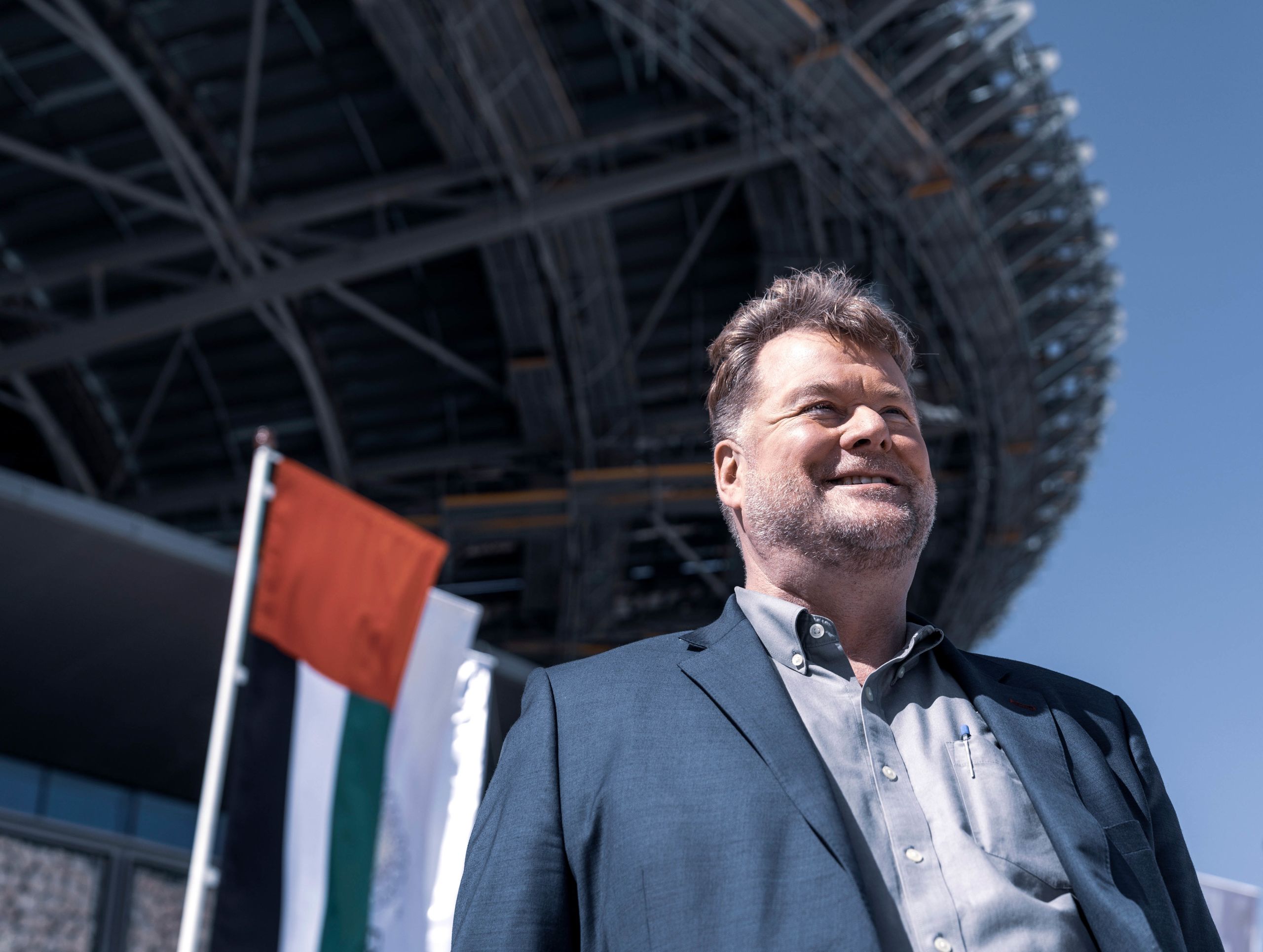
Andrew Whalley, chairman of Grimshaw Architects, the company that designed the Sustainability Pavilion
Andrew Whalley, chairman of Grimshaw Architects, the company that designed the Sustainability Pavilion
Engineers and architects used ingenuity and technology to build a 100 per cent sustainable building.
Cantilevers were built with recycled steel to extend the canopy beyond the main body of the pavilion and provide shade beneath. The long beams are fixed at one end, removing the need for supporting columns that obstruct the shaded area for pedestrians.
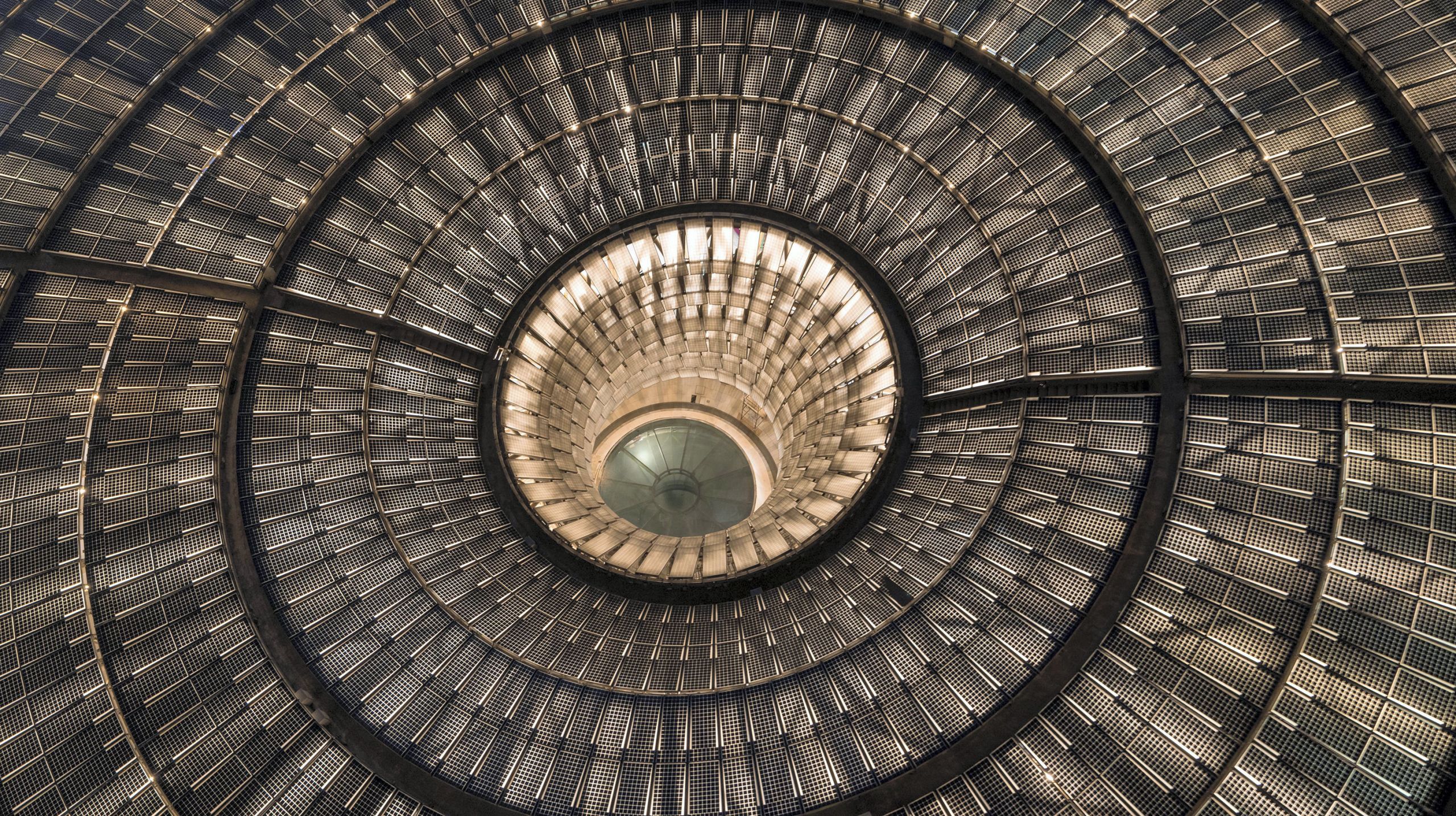
The canopy is covered with more than 1,000 solar panels laminated in glass that is clearly visible from below, allowing streaks of sunlight to pierce through to the lower level.
“The site was used as a natural insulator by sinking most of the exhibition space below ground, and then the remaining space sits under a very heavily insulated landscape roof,” said Mr Whalley.
“This, in turn, is wrapped with heavy masonry walls built out of reclaimed rocks. All of this provides an incredible insulated shield to the outside elements.”
Thick walls shield the exhibition space using a system called the “gabion scheme” where rocks held in wire mesh cages are used to stabilise the soil and prevent erosion.

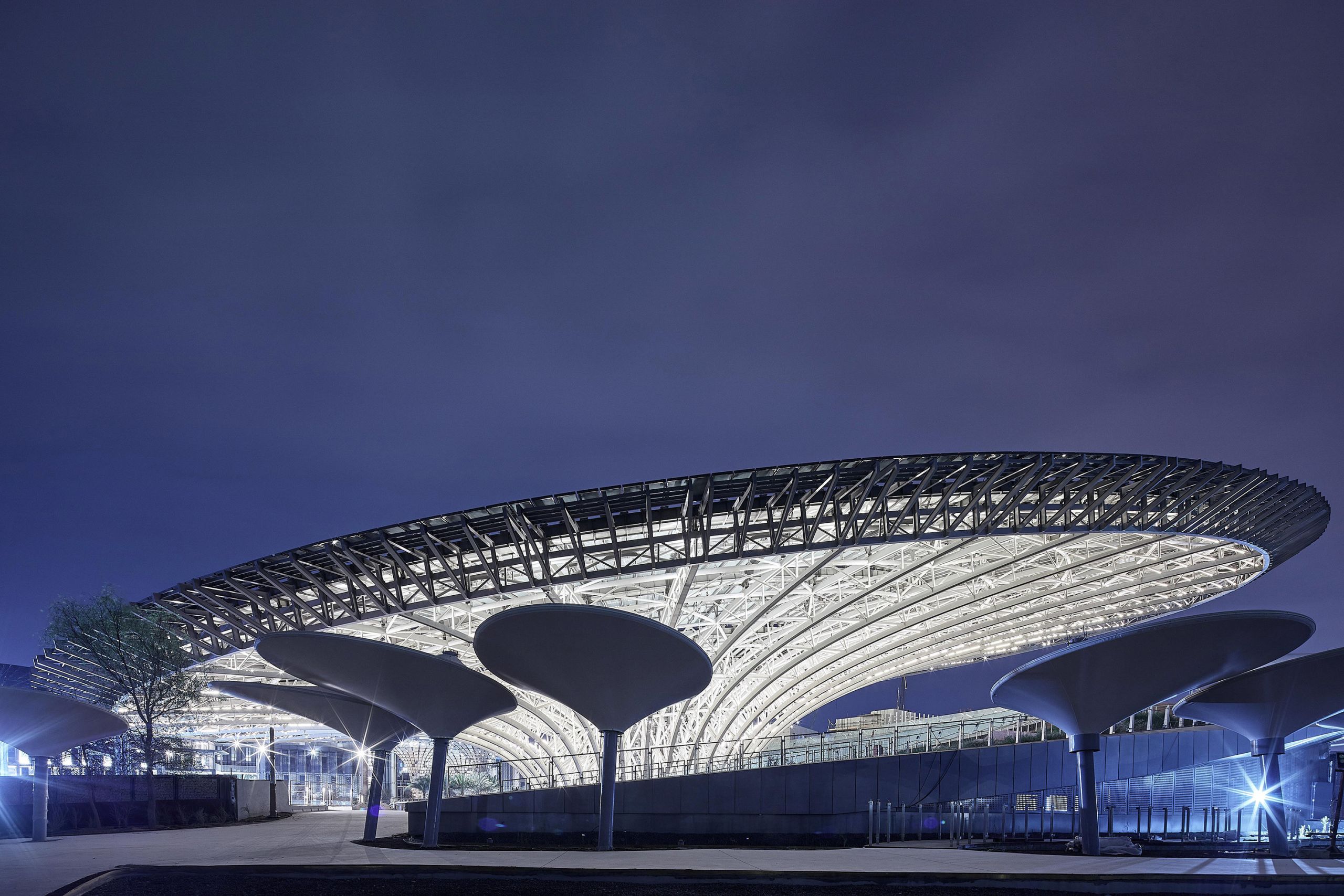

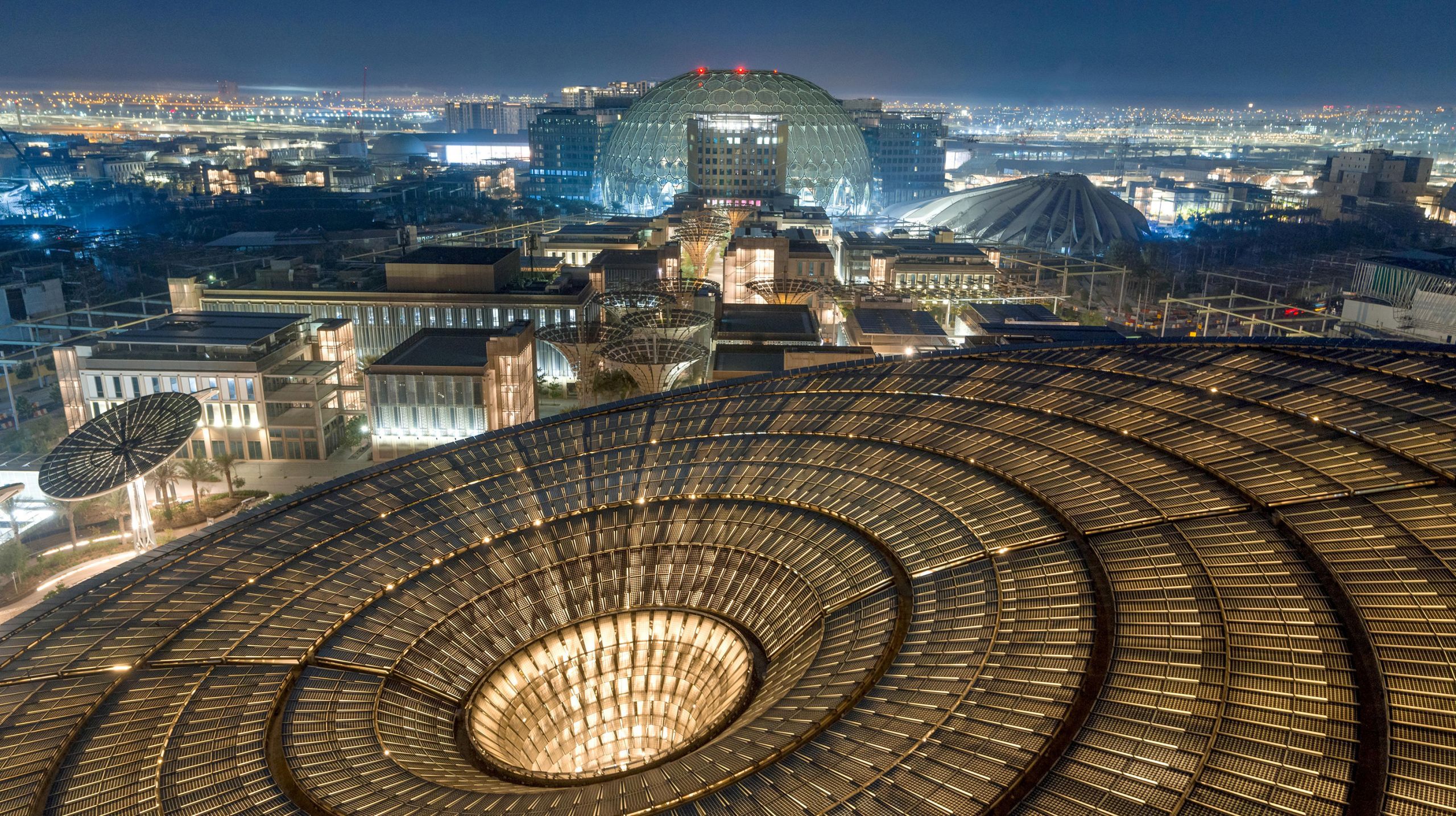

Ghaf trees inspire high-tech project
The futuristic design was inspired by the resilient ghaf, the UAE’s national tree, which remains evergreen in the desert.
“Our design work often draws inspiration from nature and here we were inspired by the majesty of the ghaf tree, with its deep tap root and the shade it provides,” Mr Whalley said.
To meet net-zero goals, the architects developed a new concept called the energy tree.

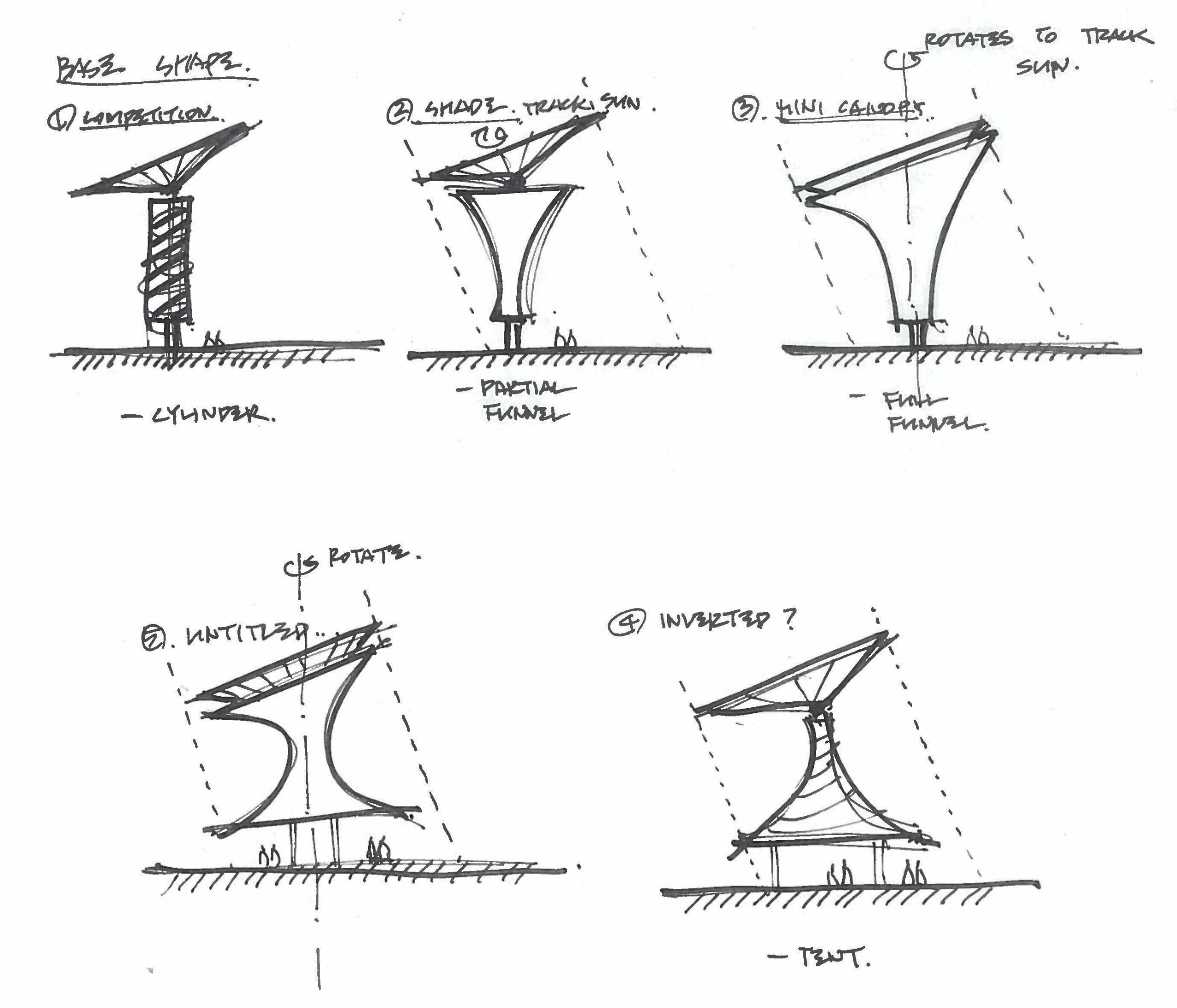
Early sketches of the Sustainability Pavilion
Early sketches of the Sustainability Pavilion

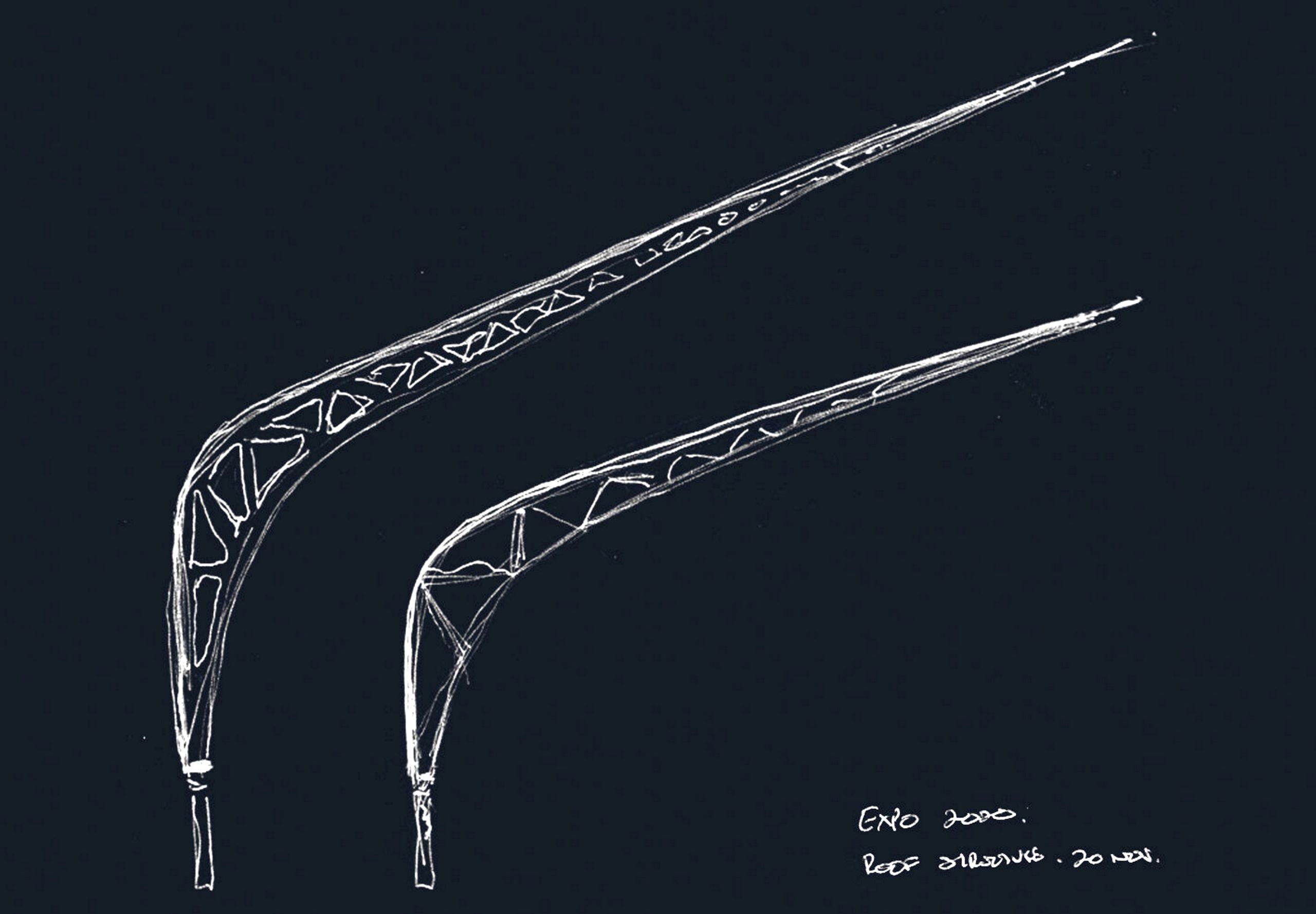
An architect's early sketch of the pieces that would comprise the top of the Sustainability Pavilion
An architect's early sketch of the pieces that would comprise the top of the Sustainability Pavilion
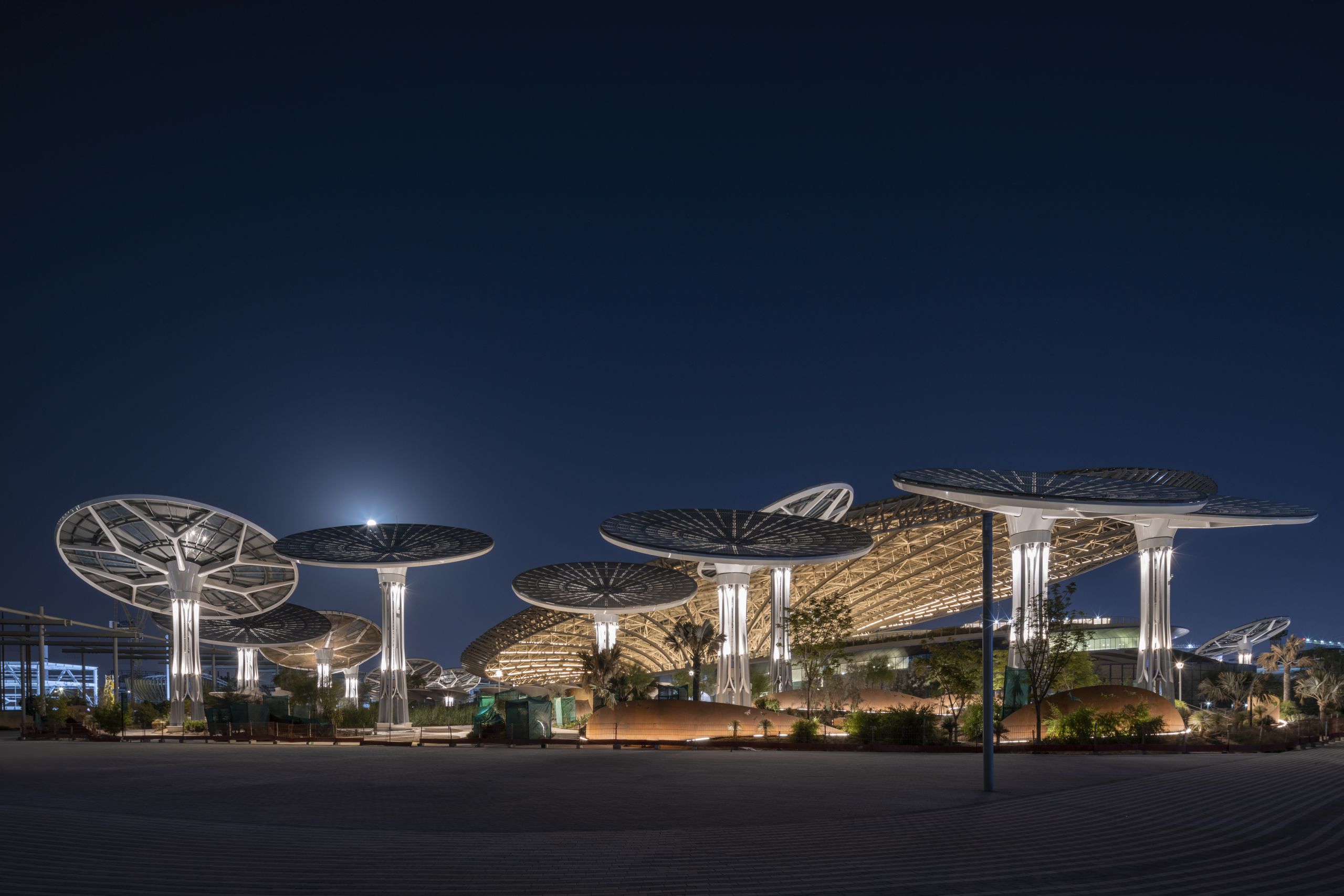
It was inspired by the dragon tree of Socotra. Each unit is fitted with a motorised pivot gadget allowing the panels to tilt as they track the sun through the day.
To keep the “trees” light, they were constructed from composite carbon fibre, a material typically used in the aerospace industry.
Between the outstretched canopy and the energy trees, the pavilion will harness more than 4 gigawatt hours per year of alternative energy, which could power a Nissan Leaf hatchback halfway to Mars.
The sophisticated canopy and advanced technology for the trees were manufactured in Dubai.
Of the 18 trees that capture energy from the sun, one uses humidity in the atmosphere to create water.
The structure is connected to Sheikh Mohammed bin Rashid Solar Park, to which excess energy is diverted to be used in the Expo site or outside the area.

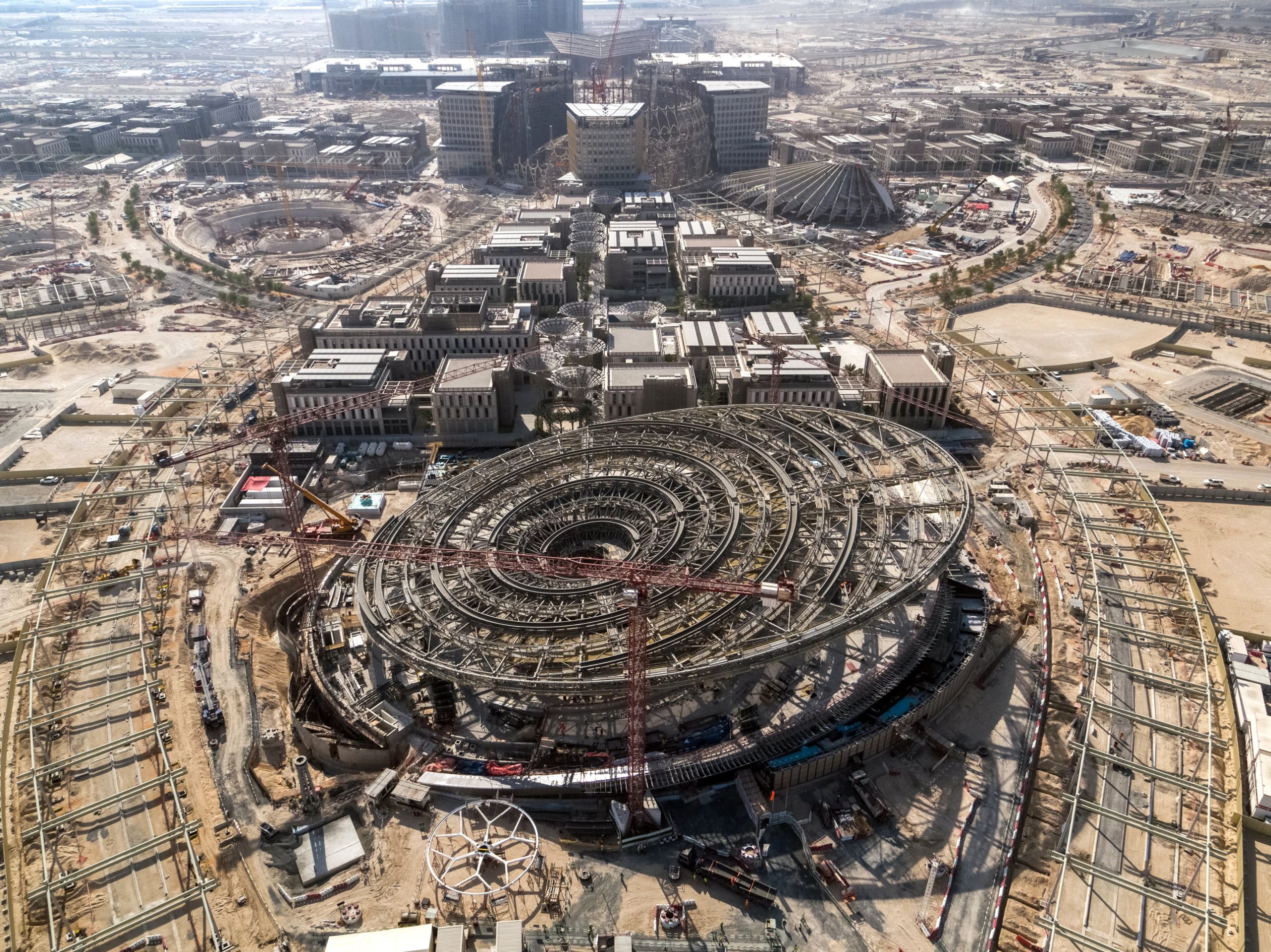
The Sustainability Pavilion under construction
The Sustainability Pavilion under construction
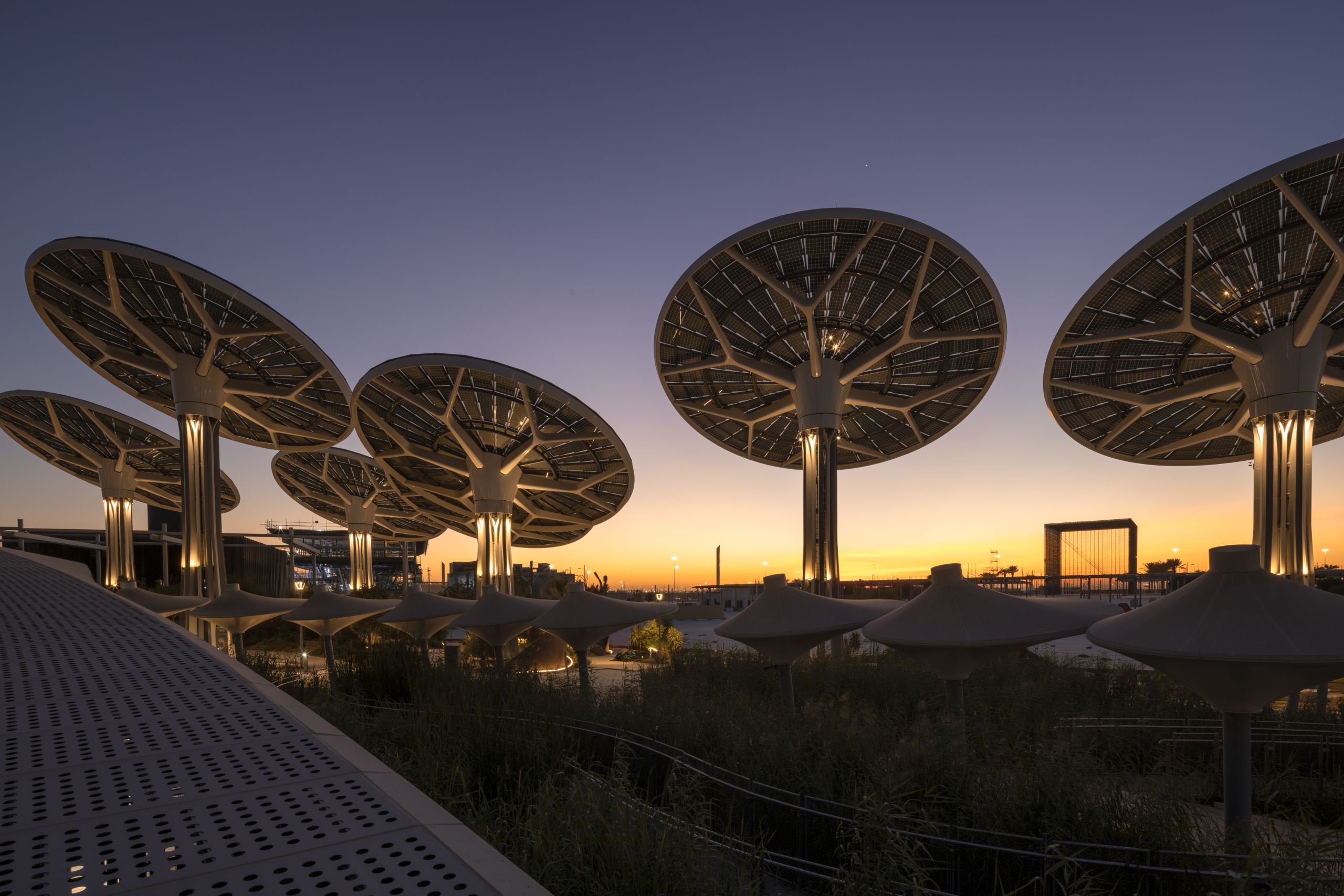
Energy trees, inspired by the dragon tree of Socotra, turn to face the sun as it sets
Energy trees, inspired by the dragon tree of Socotra, turn to face the sun as it sets
Children at the core of the Expo’s mission
Seeing Sustainability evolve from a sketch on a page to a solid structure was a source of great excitement for the Expo core team, said Ms Faraidooni, who would track its construction each day.
“Even the beams that hold the roof canopy structure, I remember counting on a daily basis. How many of them went up? How many of the solar panels were put up on the roof,” she said.

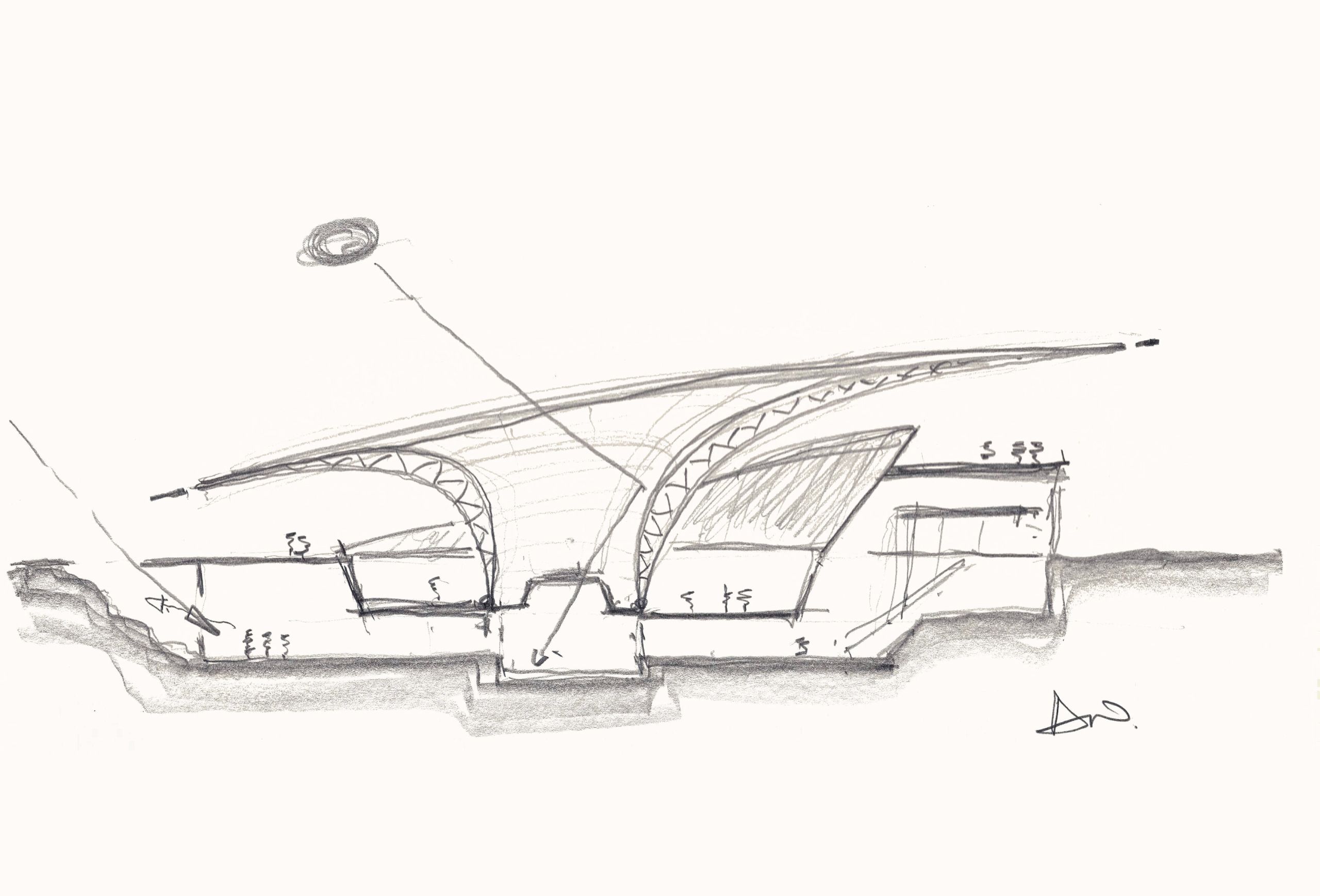
Architect’s sketch of the Sustainability Pavilion and how light would reflect within it
Architect’s sketch of the Sustainability Pavilion and how light would reflect within it
“This building has really pushed the envelope of innovation. I’m very proud of the people who have been part of building the structure.”
She said the purpose behind creating a “magnetic, magnificent structure that is connected to the grid” was to make people understand that the world’s limited resources were running out and encourage the public to take responsibility.
Once the Expo is over, the pavilion will serve as a science centre, where pupils will be welcome as part of the Expo’s mission to inspire the next generation.
“When we thought about the visitor experience, we designed it in a way that even a seven-year-old would understand the messaging behind it,” said Ms Faraidooni.
“We held workshops with children to ask what sustainability meant to them … a lot of what is in the pavilion is also a reaction to what we heard from children.”
More than 100,000 tourists and residents visited the pavilion when it opened for three months in January for a short preview.
Visitors entered through a wadi, or dry riverbed, that displayed sculptures and footprints of animals now extinct in the Arabian peninsula.
They descended through make-believe tangled roots into a forest or the ocean to remind them of the fragility of nature.
There, they entered chambers that echoed with the songs of whales, watched the beating heart of an oyster and saw a giant angler fish choked with plastic rubbish.
Organisers were energised after hearing positive feedback from the children.
“It has been very emotional because we have gone through a lot as an Expo team,” said Ms Faraidooni.
Winning the Expo bid in Paris
A collaborative group effort and the vision of two women laid the foundation for the theme projects, according to Tom Hennes, principal at Thinc Design, an American exhibition design company.
The first was Reem Al Hashimy, UAE Minister of State for International Co-operation and director general of Expo 2020 Dubai Bureau, who played an integral part in helping Dubai beat back competition from Russia, Turkey and Brazil to win the bid in Paris in 2013.
Once the announcement was made, on November 27, fireworks burst from Burj Khalifa, the world’s tallest building, and a national holiday for schools and universities was declared.
Marjan Faraidooni was the second, said Hennes.
She “had a vision for this pavilion that was transcendent. She urged us from the very beginning to create something that was magical for people; something that would truly change the way people see sustainability. This supported Reem Al Hashimy’s impassioned belief that this should be bold, inspiring and effective in reaching hearts and minds,” he said.
“We believed in the vision of these two extraordinary women and strive to effect in reality what they had dreamed.”

How to convince the masses to live more sustainably
Convincing people to change their habits in place for more sustainable practices is no easy feat.
To achieve this, content creators made sure to include relatable, emotional stories alongside information, all while bearing in mind that visitors would move quickly and visit several pavilions over the space of a few hours.
“The biggest challenge with sustainability is that it often comes off as dry and statistical. It’s a subject that is so important and yet, people tend to glaze over when you talk about the nuts and bolts,” said Hennes.
“What can I do that will really be useful to somebody with a half-hour visit, that it is going to change the way they see their place in the world?”

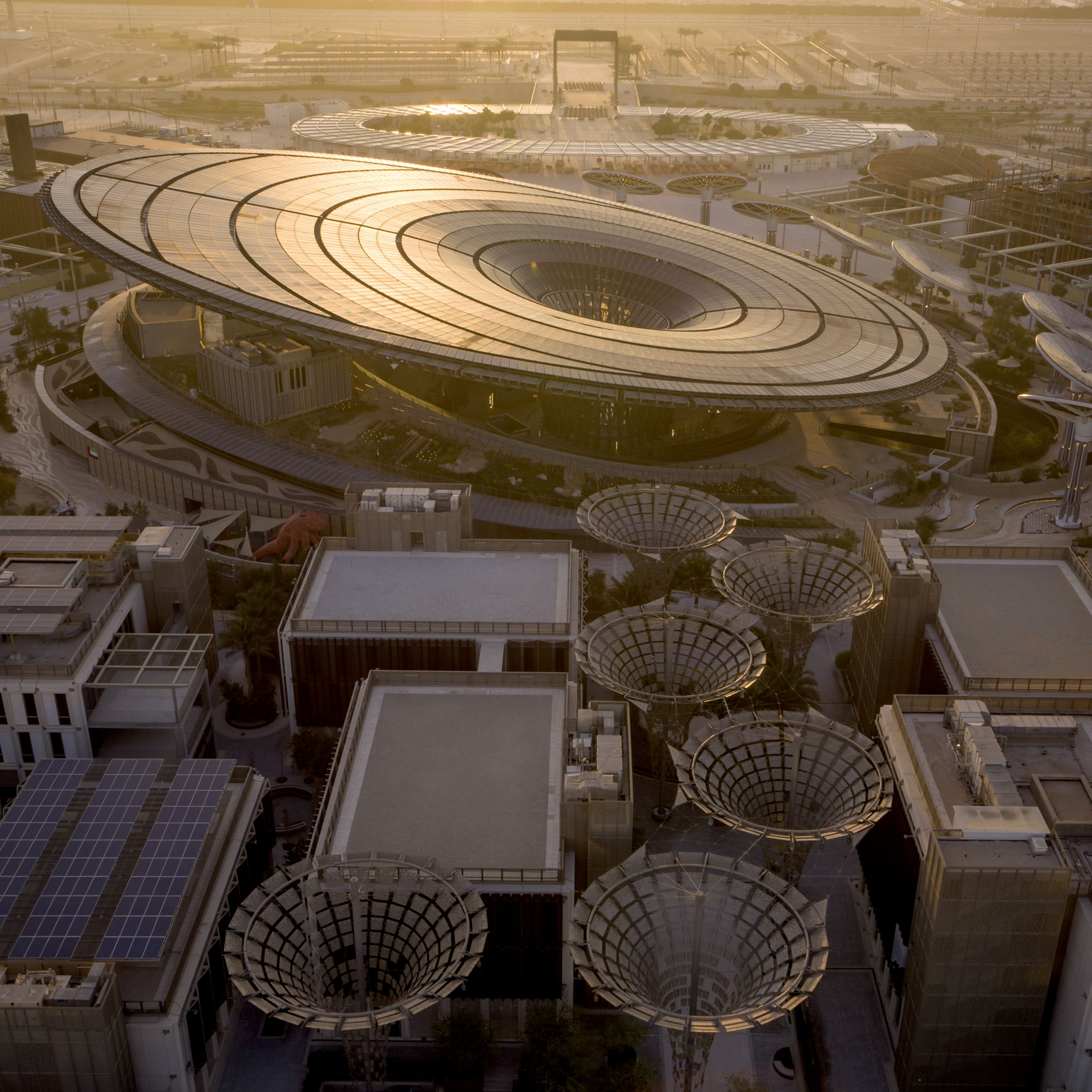
The Sustainability Pavilion and energy trees seen from above
The Sustainability Pavilion and energy trees seen from above
Expo will invite people to experience the world as it is, use their imagination, and prompt thinking points.
One zone will ask visitors questions, including ‘Would you rather live out your life in a job you don’t like that pays a lot of money? Or would you rather do something satisfying that does not pay a lot?’ or ‘Would you rather never eat meat again or never eat a vegetable again?’
Images of a burning house and flooded home encourage visitors to consider their priorities, asking them what they would save in such a scenario.
Answers from the public are displayed in stacks of drawers and show that family and memories were most chosen over objects of monetary value.
It is hoped exhibitions such as this will spark conversations that question a wasteful consumer culture.
“To solve the problem that sustainability can be academic, we chose to take people on a journey through their own emotions, their own relationship with the natural world, to explore the way we exploit nature,” Hennes said.
“It creates an emotionally driven environmental journey.”
Hope for the future
Ms Faraidooni said the Expo’s message of hope holds different meaning for different age groups and that the World Fair will have something for everyone.
“If you come during the day, you can see butterflies, you can hear bugs, caterpillars, all part of the natural environment of this pavilion. But you can also experience these really magnificent energy trees and see solar panels very close to you,” she said.
“So come on over if you can. And I guarantee, it would be, at minimum, an enjoyable time for you and your family. Hopefully, you will gain so much out of it and you will come out of it inspired to take action. More importantly, feel you are part of this beautiful planet and that you need to play your role to protect it.”

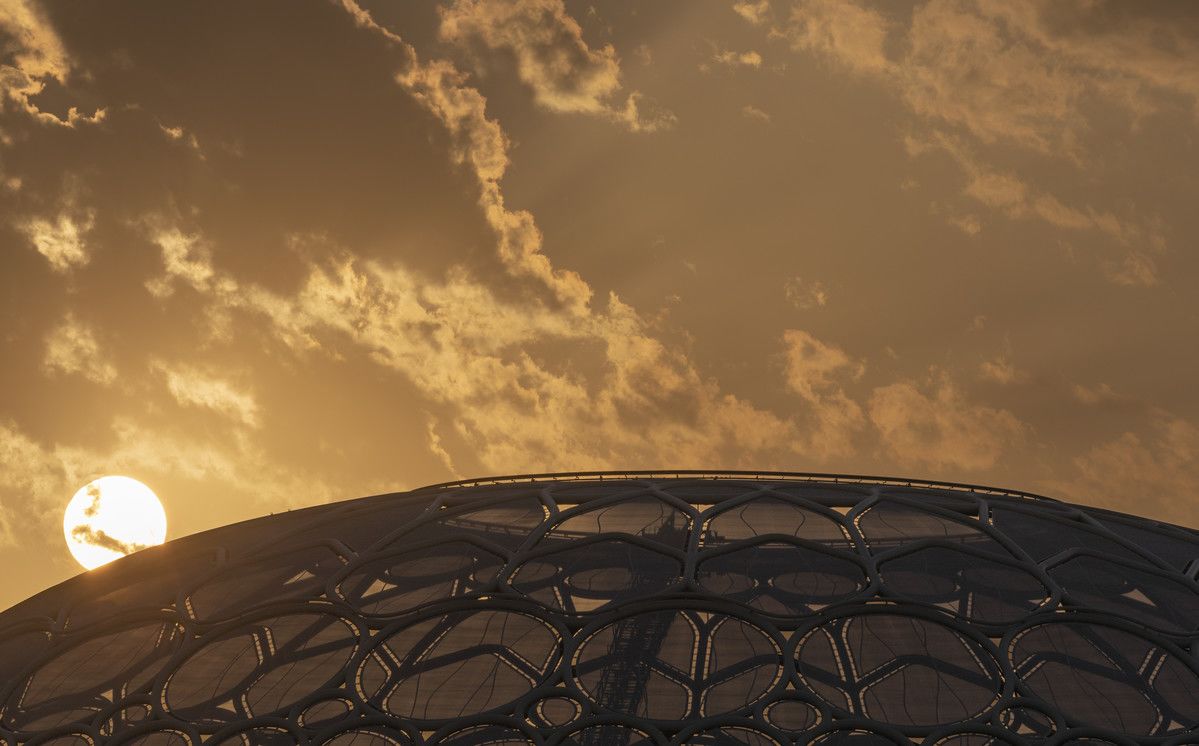
Al Wasl Plaza is the world's largest projection surface
Al Wasl Plaza is the world's largest projection surface

Words Ramola Talwar Badam
Editors Juman Jarallah
Picture editors James O'Hara, Olive Obina
Design Nick Donaldson
Video editor Erica Elkhershi
Sub editor Lauren Steadman
Photography and video: Courtesy Expo 2020 Dubai


 Built with Shorthand