
Broken road south
from Gaza city takes Palestinians past point of no return
Sadness and tears as people flee in cars, carts, lorries and on foot, resigned to losing their homes forever
By Nagham Mohanna
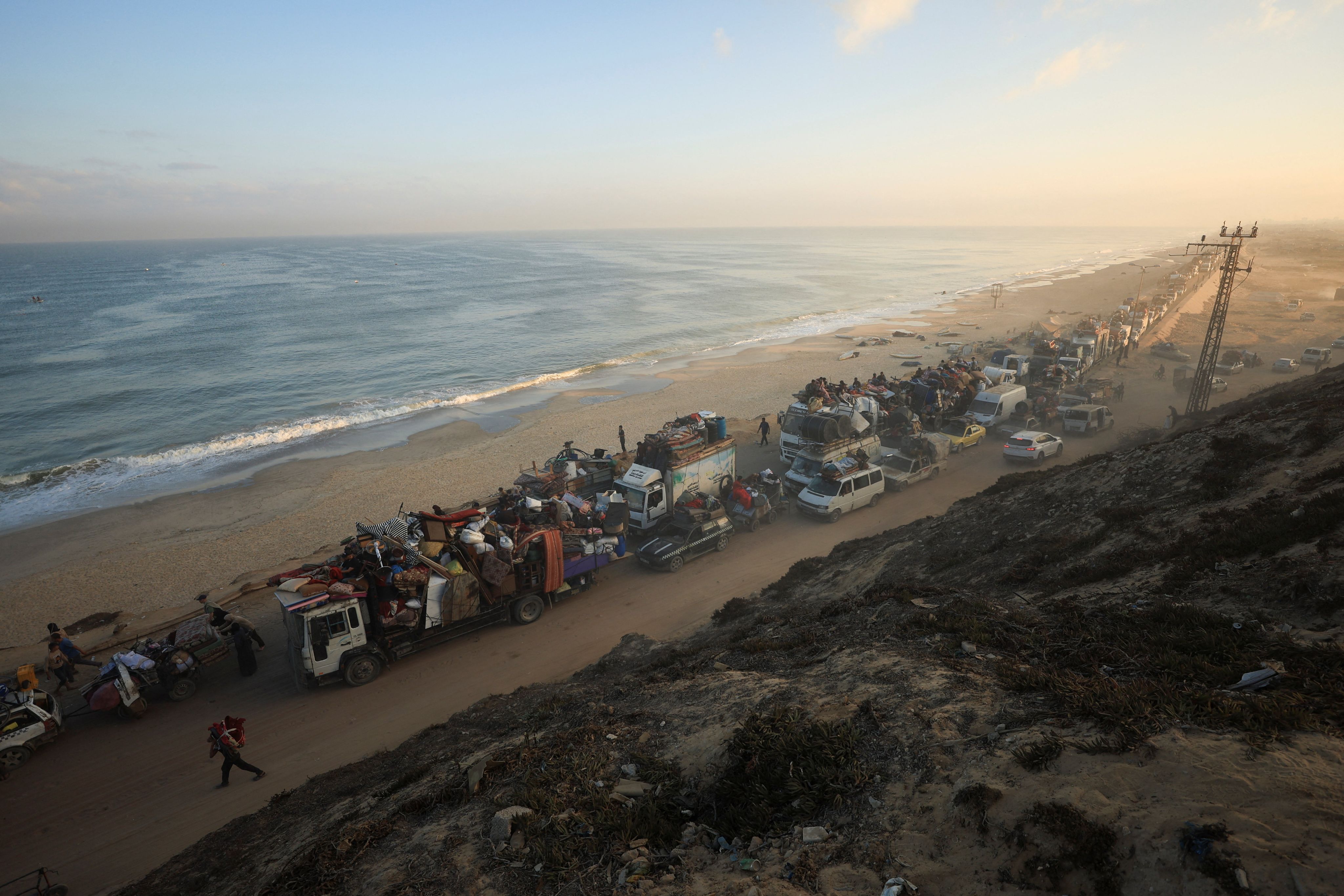

On a recent Monday evening, as darkness fell over Gaza city, tens of thousands of residents packed what belongings they could, whispered goodbyes to shattered streets and began leaving, casting what they knew could be the last glimpses of their homes.
With the Israeli military intensifying its attacks on the northern city, residents have been seeking any form of transport to carry them and their possessions south.

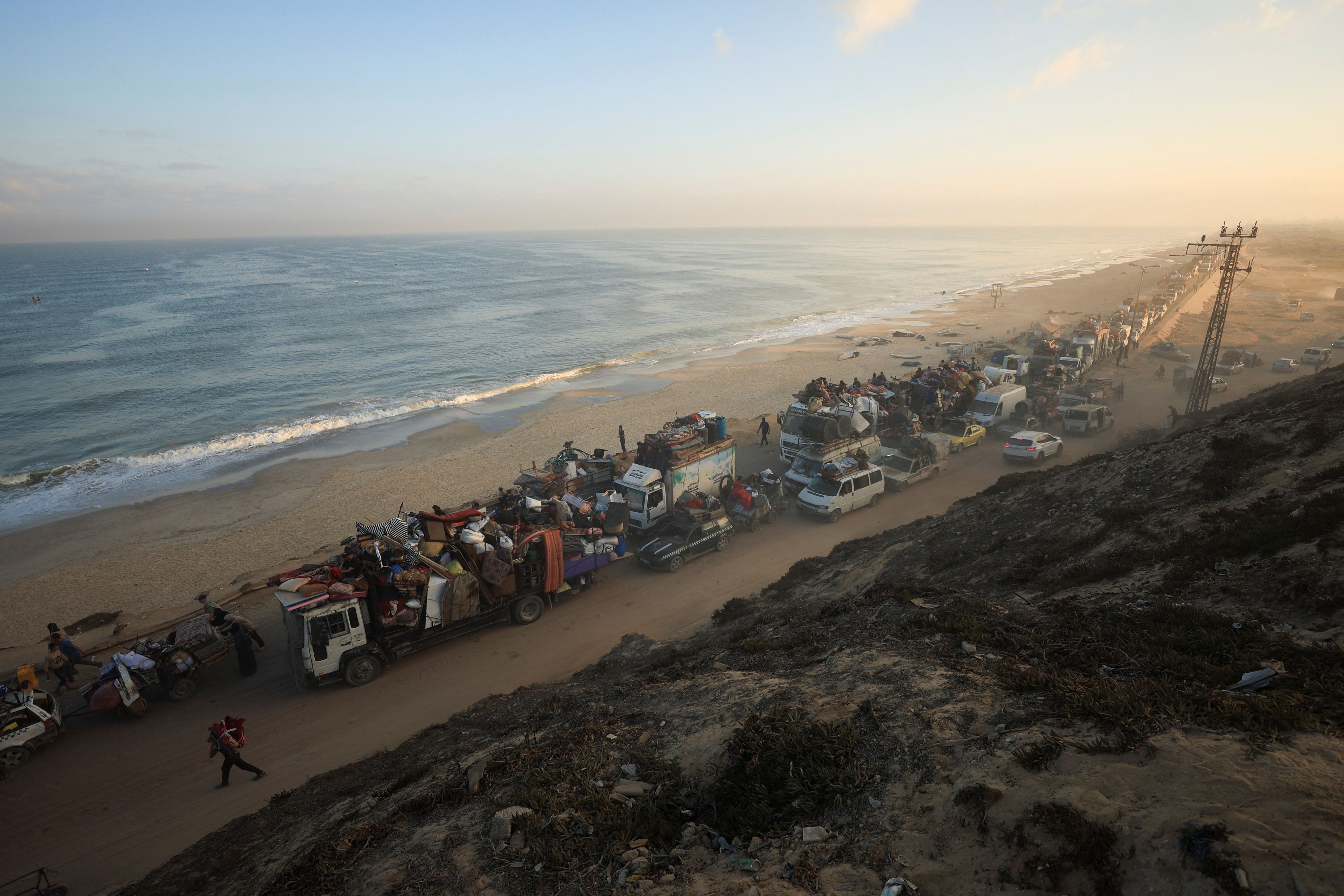
Al Rashid Street along Gaza's coast, the only route they were allowed to use until Tuesday, was crammed with cars, lorries, donkey-drawn carts and even cement mixers. Because of the war, Israeli restrictions and severe fuel shortages in Gaza, the journey is not only difficult but also extremely expensive, with some lorry drivers charging up to $1,000.

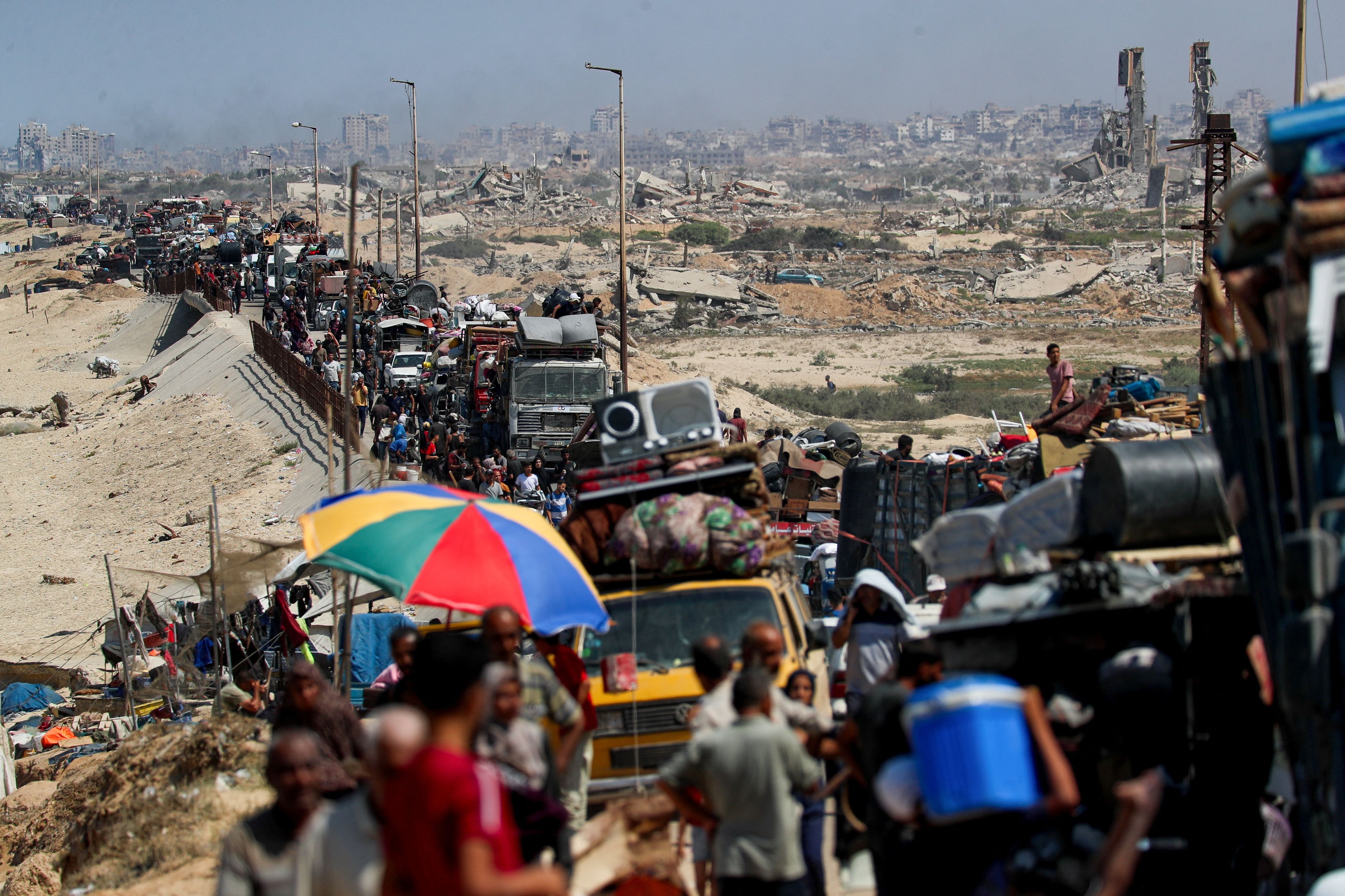
For Amani Abu Adghaem, 25, an English language graduate student, the decision to leave Tel Al Hawa district with her family was as much about survival as it was about despair.
“The first thing I can describe about the displacement journey is the sadness and tears on the faces of the displaced,” she told The National. “People knew it might be the last time they would see their city.”
What should have been a short trip to the central Gaza Strip turned into a 14-hour ordeal. Vehicles moved only a few metres every quarter of an hour. Pale faces peered out of windows of cars stacked with furniture, mattresses and makeshift shelters. “Without exaggeration, most were crying,” Ms Abu Adghaem said. “Crying over the city, over the people, over everything that was lost.”

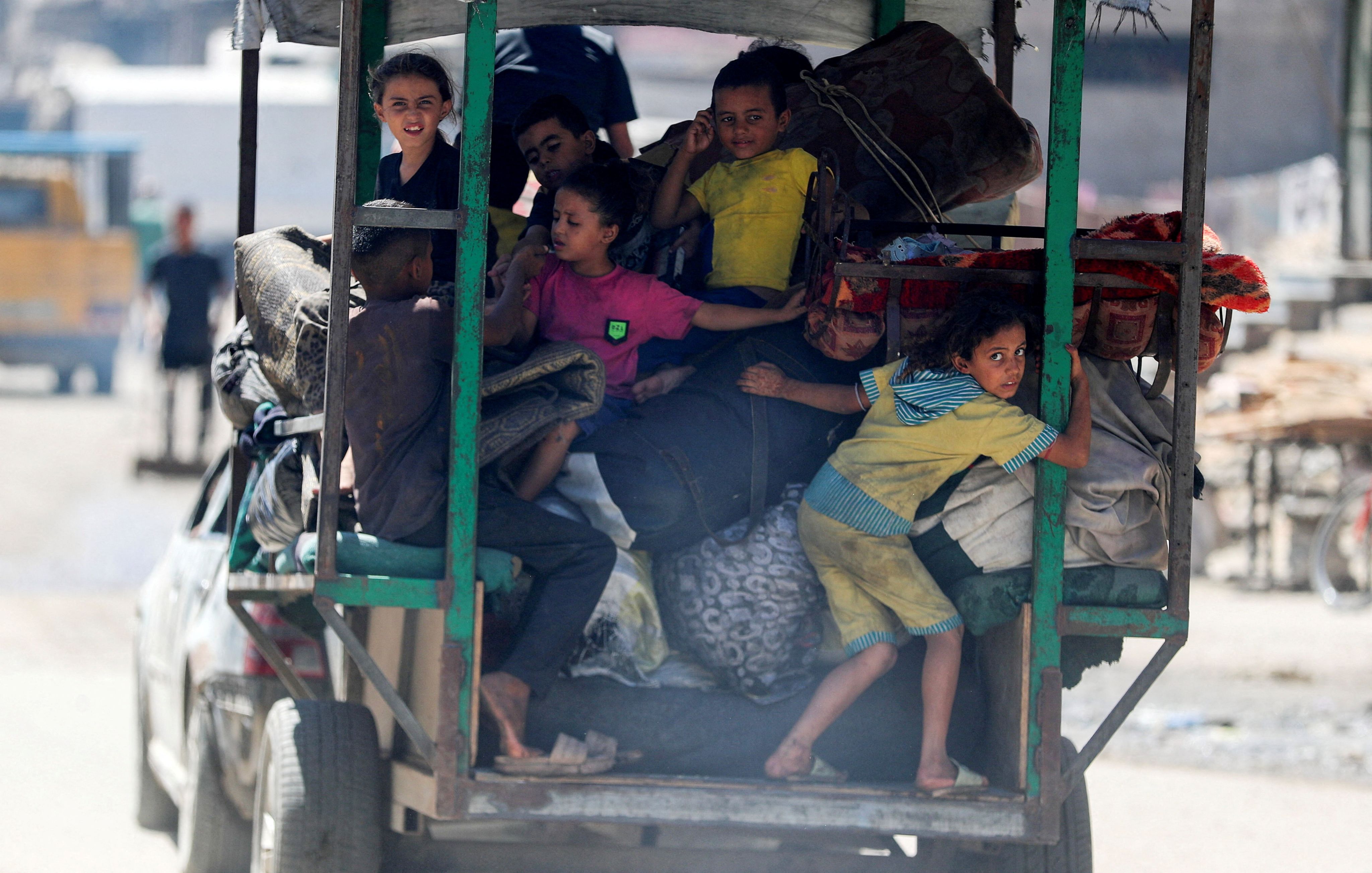
Palestinians flee south from Gaza city as the Israeli military expands its assault on the area. Reuters
Palestinians flee south from Gaza city as the Israeli military expands its assault on the area. Reuters
Alongside the endless rows of cars were families with no vehicles at all, trudging through the night on foot, some pushing the elderly and disabled on wheelchairs.
The only illumination came from the headlights of cars. The soundtrack of the night was the distant rumble of explosions and the crackle of Israeli gunfire near the Netzarim axis – an Israeli military line of control cutting off the north from the rest of Gaza.

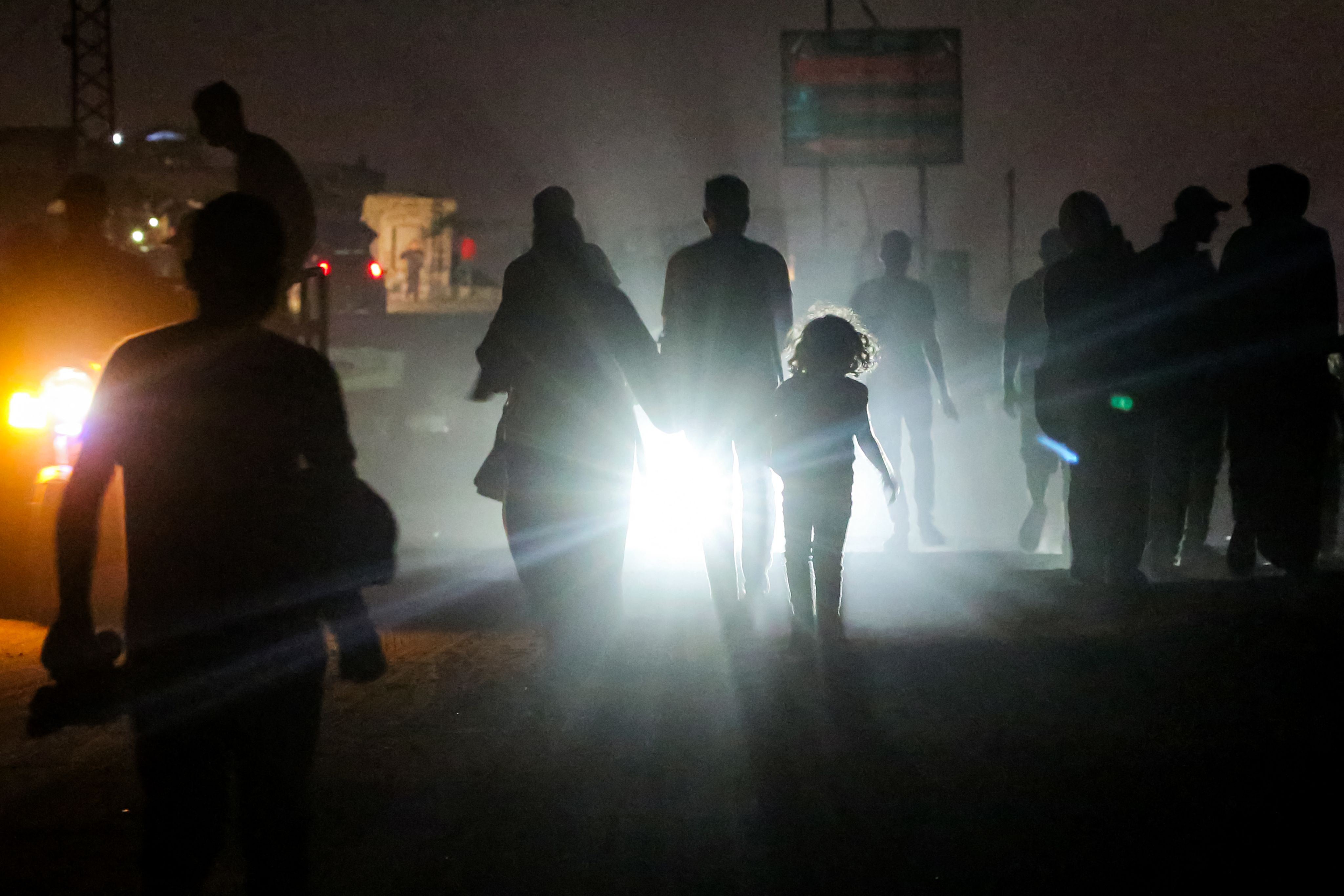
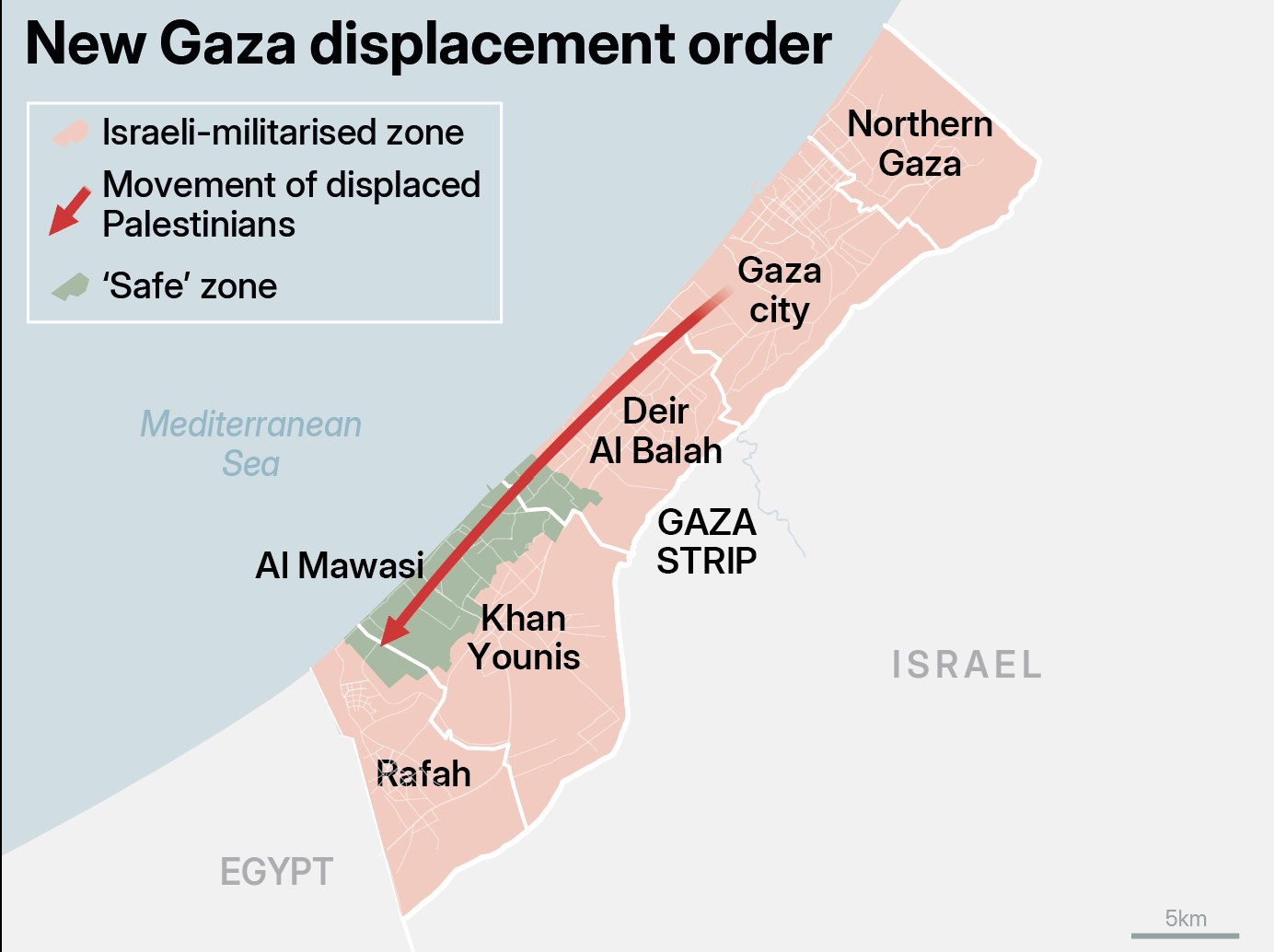
For Mohammad Ziyada, 38, the journey was not a crawl in traffic but a gruelling march. At 3pm, he and his family set out from Gaza city's Al Nasr neighbourhood, walking nearly 10km to reach Nuweiri Hill by 8pm, before continuing south to Al Mawasi area in Khan Younis.

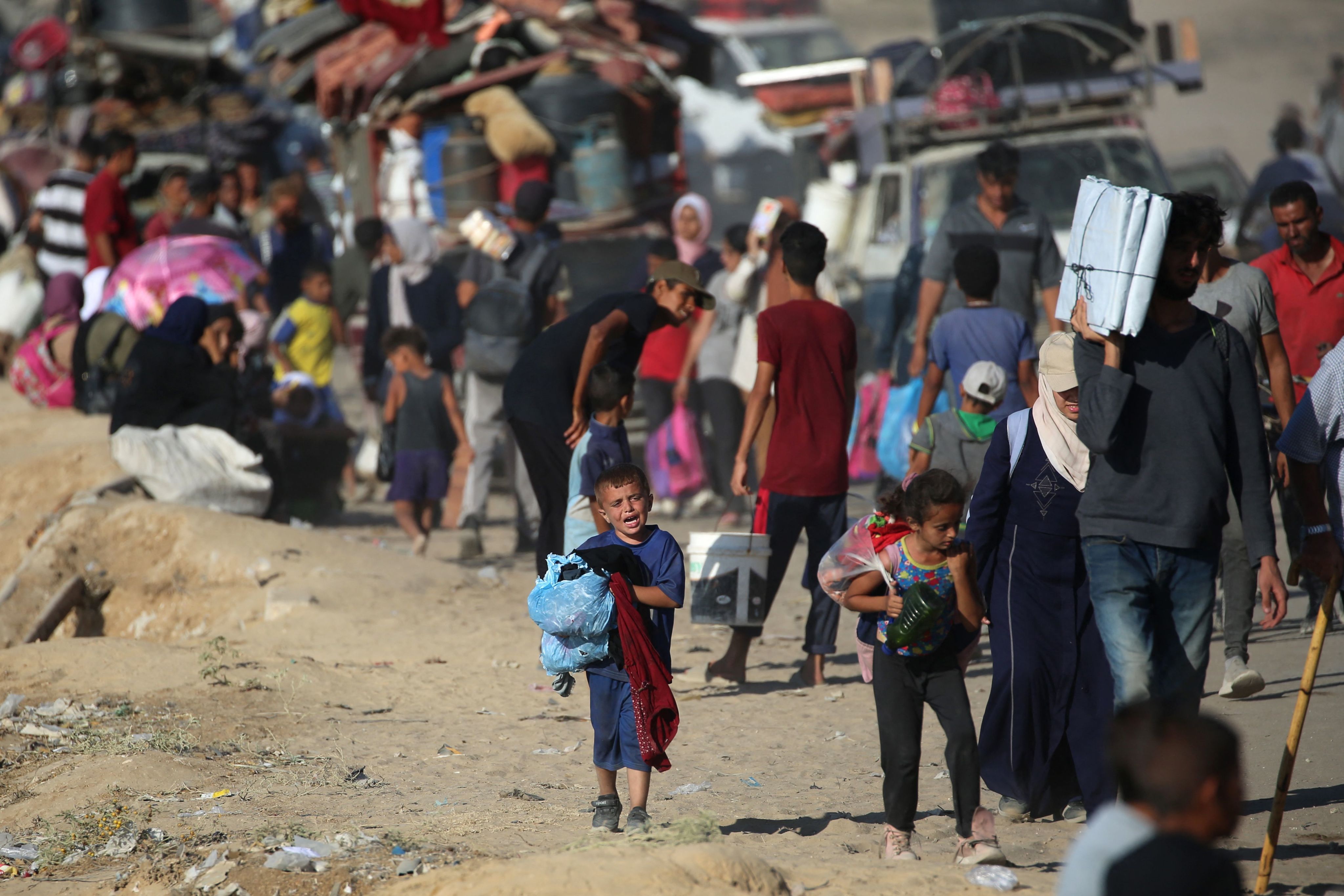
Many Gazans are travelling by foot as lorry drivers demand hundreds of dollars to take people south. AFP
Many Gazans are travelling by foot as lorry drivers demand hundreds of dollars to take people south. AFP
“There was no transportation,” he told The National. “We were forced to set out on foot, fleeing from death and bombardment.”
Mr Ziyada carried his two-year-old son, Hamed, in his arms, while balancing two heavy bags on his shoulders. His wife and three other children staggered under the weight of bags filled with clothes and important documents. “Every half-hour we stopped for a five-minute break,” he said. “But there was never a place to sit.”
The road was broken, covered in rubble, and lashed by the cold sea wind. Children cried from hunger and exhaustion, women carried infants in their arms, and the night sky offered only the menacing glow of planes overhead and the never-ending echo of shelling, he said.
“My wife desperately needed the bathroom, my children were crying, but there was nothing, no services, no water, no toilets. What is happening to the people of Gaza has never happened to anyone in history.”

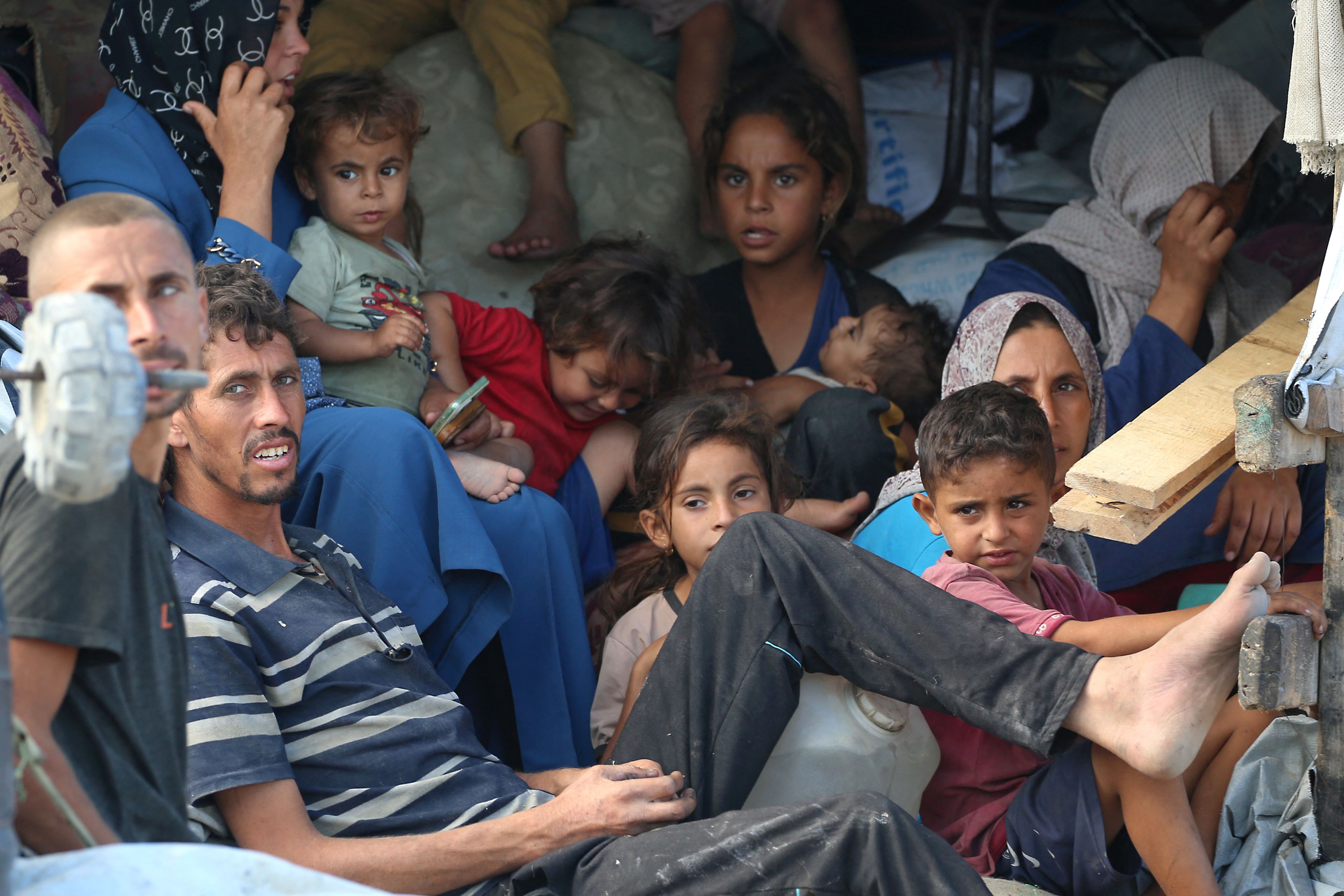
Anas Abu Al Atta, 28, travelled along Salah Al Din Road, which the Israeli military opened to fleeing Gaza residents on Wednesday. It was a road he had not been on since a few weeks of ceasefire in January and February, when residents of northern Gaza who had been forced to move south were allowed to return to their homes. He was stunned by what he saw this time.
“The destruction has only increased,” he told The National. “If there were still buildings standing then, the occupation has destroyed them now. Everything along the road is piles of rubble and ash.”
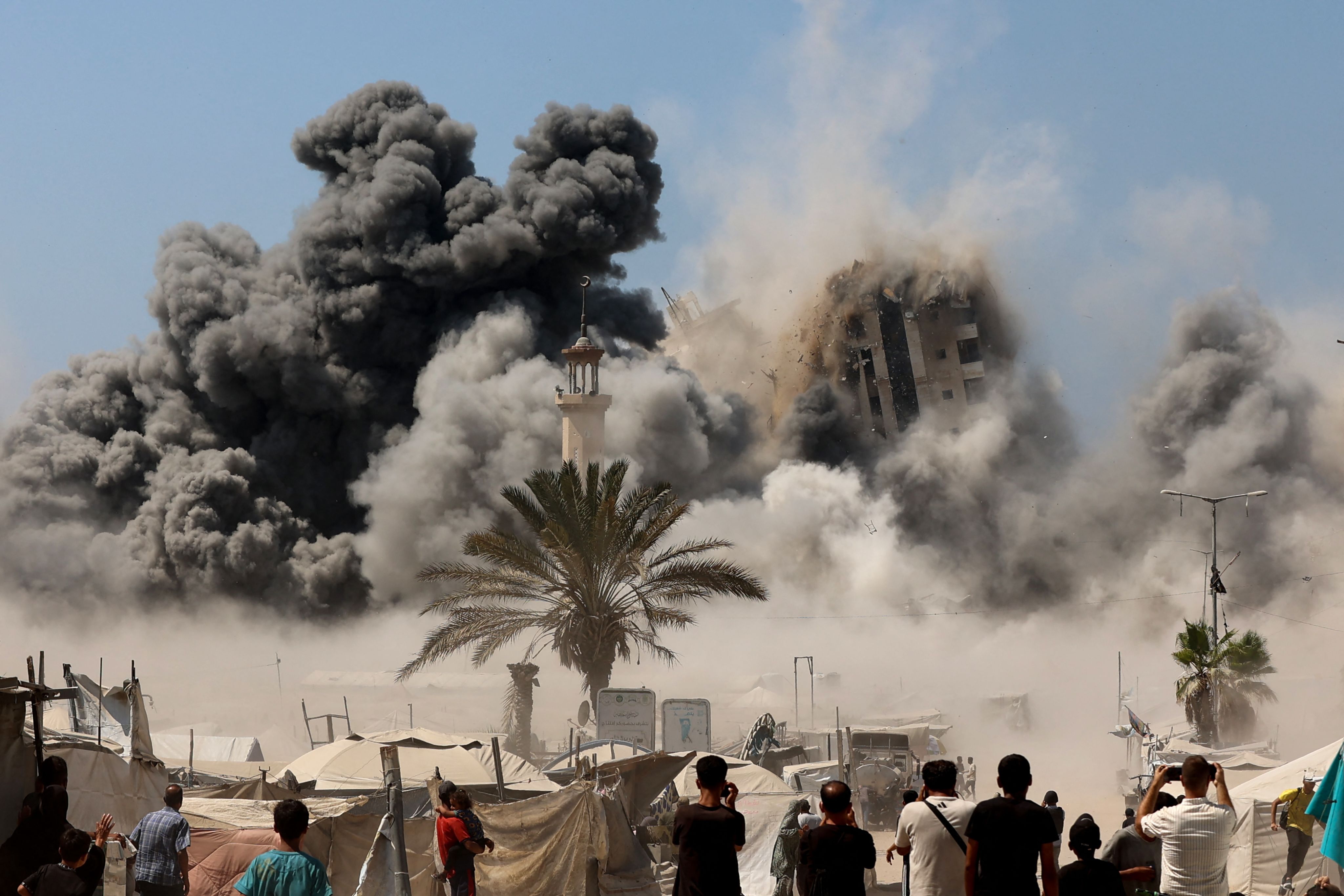
Mushtaha Tower is hit by a strike, as Israel pushes to destroy all remaining high-rise buildings in Gaza city. AFP
Mushtaha Tower is hit by a strike, as Israel pushes to destroy all remaining high-rise buildings in Gaza city. AFP
The route is congested with overloaded vehicles, turning a half-hour drive into a three or four-hour crawl, he said. With Israeli tanks visible near Netzarim but no checkpoints stopping travellers, the road remains technically open, but unforgiving.
“There are no services, no toilets, no water. If your car breaks down, you’re stuck. One car lost its wheel on the way, and there was no one to help," Mr Abu Al Atta said.
'The road is one-way only, with no return'
His group breathed a sigh of relief when they finally reached the Wadi Gaza Bridge, a halfway point between northern and southern Gaza, believing they had passed through the most dangerous stage of their journey.
“The whole way, we feared the army might bomb us, stop us, or search us. But it seems Israel is determined to speed up the evacuation of Gaza,” Mr Abu Al Atta said.
Whether crawling through traffic or punishing marches on foot, the mass displacement from Gaza city is not merely another forced relocation for residents of the coastal strip.
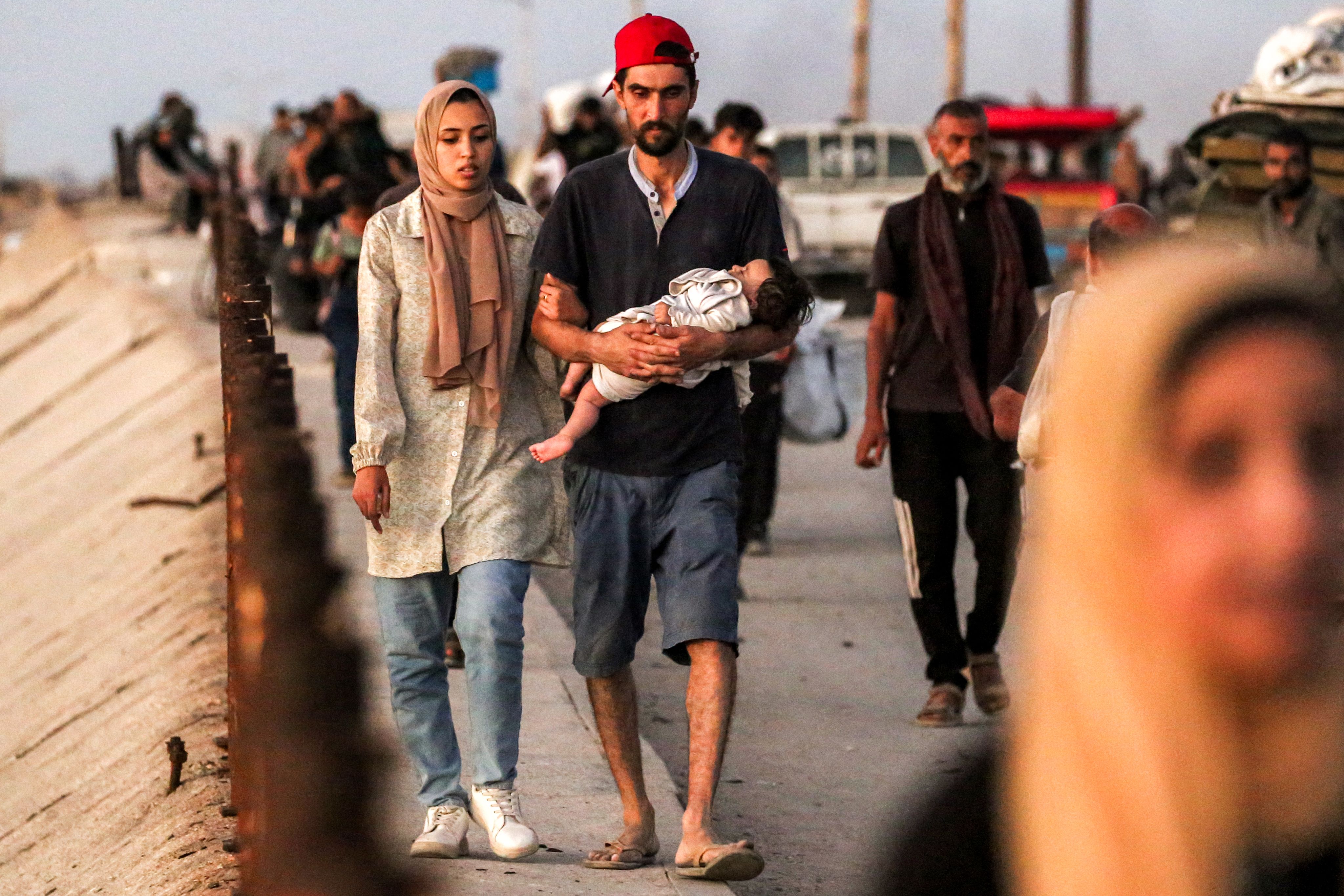
Families flee south from Gaza city using the coastal road in Nuseirat. AFP
Families flee south from Gaza city using the coastal road in Nuseirat. AFP
For families fleeing with only what they can carry, children crying from hunger and cold as they pass through the rubble of nearly two years of devastating war, to the sounds of further bombardment, the journey feels like the ultimate humiliation.
“It feels like dying while still alive,” said Mr Abu Al Atta.
Words Nagham Mohanna
Editor Russel Murray
Photo editor Scott Chasserot and Reena Ratan
Photos AFP, Reuters and Getty Images
Design Nick Donaldson
Graphics Roy Cooper
Sub editor Richard Chimbiri
Producer Juman Jarallah


 Built with Shorthand