
Luxury: The Fashion Issue
The lost summer; Lebanon's designers begin to rebuild; and Michael's Jordan's style legacy

'The urge to rebuild is primordial'
Lebanon's designers talk about their shattered dreams and hopes for the future. By Selina Denman, Sarah Maisey and Emma Day

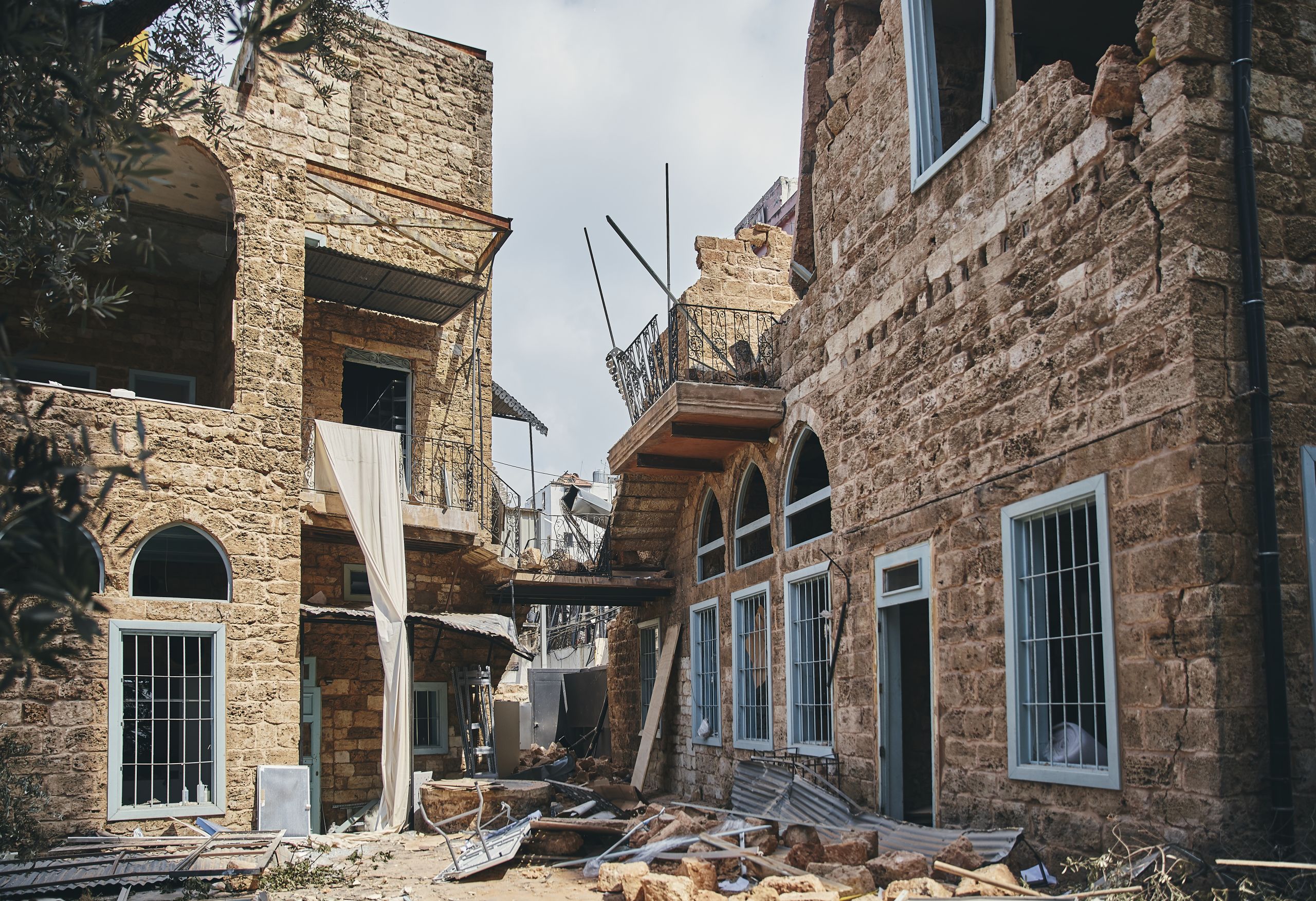
A tulle-fringed Andrea Wazen stiletto sits in the rubble, its heel bent at an unnatural angle, like a broken limb. A pretty pink armchair stands defiantly in the Azzi & Osta showroom, now incongruously open to the elements. And a colourful sketch by Nicolas Jebran, of the outfits proudly donned by Cardi B and Megan Thee Stallion for their WAP music video, is submerged under deadly looking shards of glass.

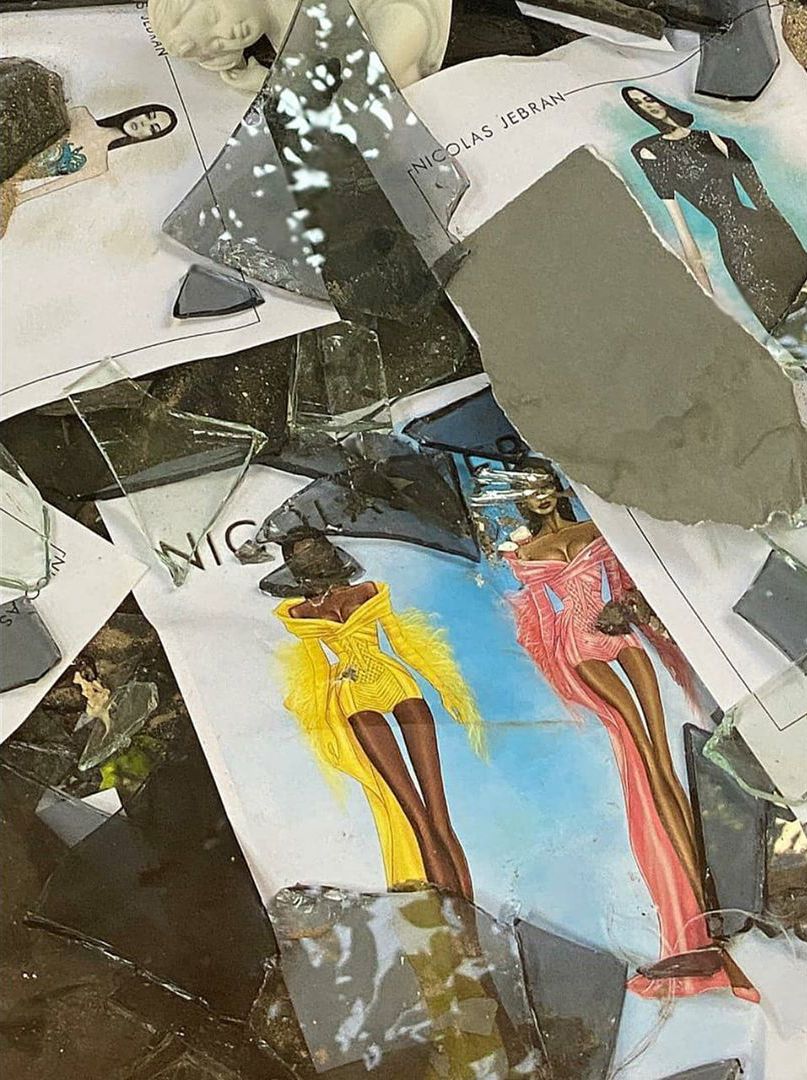
Nicolas Jebran's sketches for the outfits worn by Cardi B and Megan Thee Stallion. Courtesy Nicolas Jebran
Nicolas Jebran's sketches for the outfits worn by Cardi B and Megan Thee Stallion. Courtesy Nicolas Jebran
The scenes that emerged from the ateliers and boutiques of Beirut’s world-renowned fashion designers in the wake of the explosion on August 4 poignantly encapsulated the tragedy of Lebanon. A handful of searing images, showing objects of ethereal beauty juxtaposed against a backdrop of widespread destruction, told the story of a flourishing creative scene, of international success achieved against the odds, and of immense potential laid to waste within a matter of moments.
That sense of loss was reflected in the haunted look of master couturier Rabih Kayrouz, who posted a black-and-white picture of himself on Instagram in the days following the blast, announcing that he had suffered a small brain haemorrhage and two blood clots. In typical Lebanese fashion, his caption included a note of defiance, but also hinted at the joie de vivre that we have all come to expect from our Lebanese friends. “Words are not enough. We will not forget. We will judge. We will rebuild ... And we will dance!” he wrote.

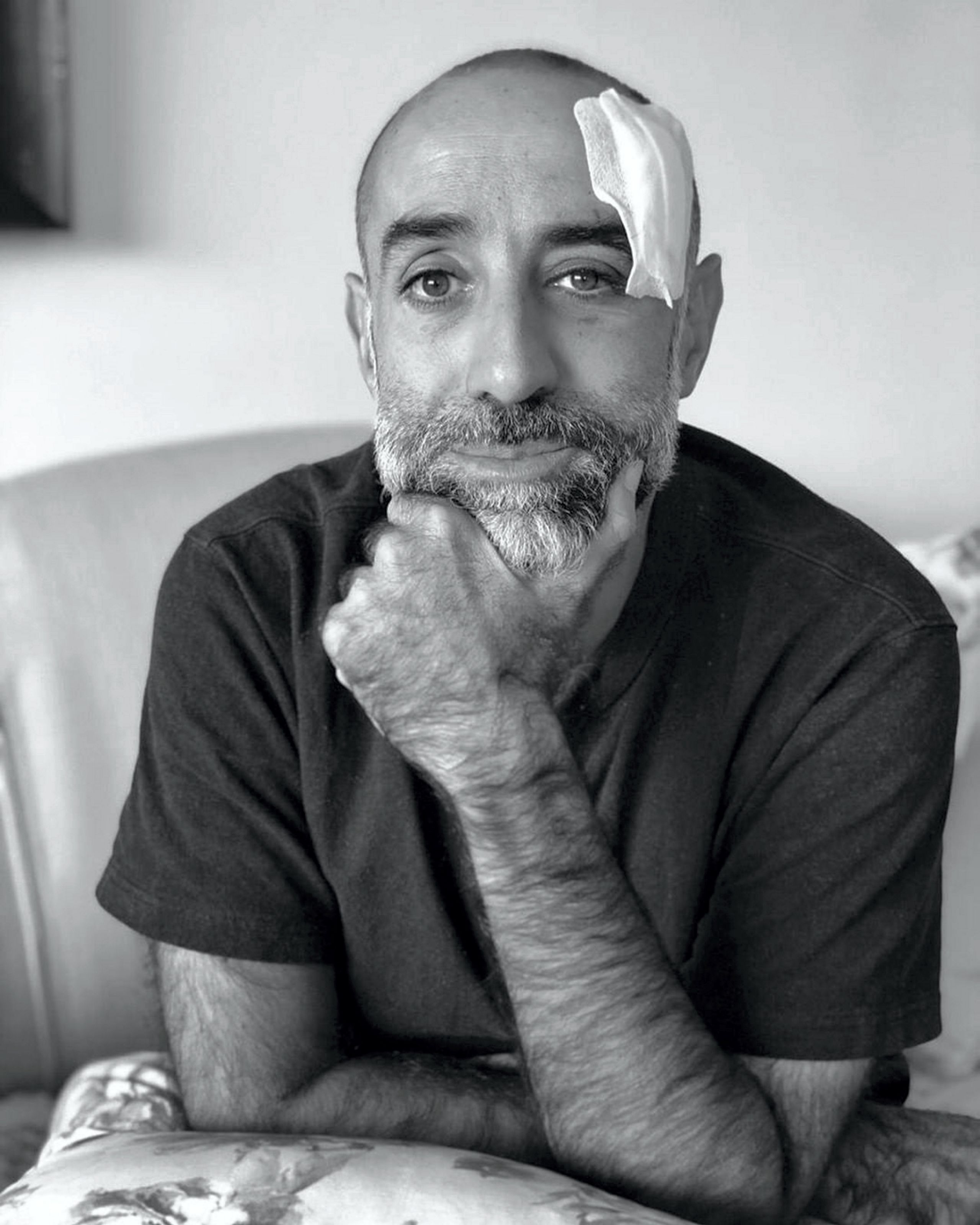
Rabih Kayrouz was injured in the blast. Courtesy Rabih Kayrouz
Rabih Kayrouz was injured in the blast. Courtesy Rabih Kayrouz
Dance they will – but first they must take stock. “We can’t plan, we’re all in survival mode,” Rami Kadi told Luxury in the week after the catastrophe. “The disaster affected me on a personal level as deeply as is possible – emotionally, mentally and financially. My showroom is completely destroyed, our gowns are shattered, our offices are damaged, our houses are affected by broken glass. Gratefully, the team had already left the premises.
Our atelier had no physical damage, but we did lose an employee. Tanios Mkhayel Murr. I say his name so we never forget
The losses are endless, and come in multiple forms. “How do you put into words the level of impact the explosion had? I honestly am not sure how I can do that,” says industry stalwart Georges Chakra. “Our atelier had no physical damage, but we did lose an employee. Tanios Mkhayel Murr. I say his name so we never forget. He had retired a couple years back after working for us for over 20 years. We are completely devastated, not just for Tony but for all of Beirut, for all its people.”
The three siblings behind the Mukhi Sisters jewellery brand, Maya, Meena and Zeenat Mukhi, sum up the feelings of many Lebanese in the starkest terms possible. “This explosion destroyed a part of Beirut and it killed our plans and our dreams with it. We don’t feel safe anymore. It is easy to fix broken glass, but how do you get the strength to wake up and build your life again?”
Lebanon was already on its knees before the explosion ricocheted outwards from Beirut’s port. Widespread corruption, a devalued currency, Covid-19 lockdowns and growing disillusionment with the government were converging to create an impossible environment for designers to operate in.
“Lebanon’s socio-economic and financial collapse earlier this year, aggravated by the global pandemic, was having a devastating impact on small and medium enterprises across a large number of sectors, in particular the luxury sector,” explains jewellery designer Gaelle Khouri.
“As a locally produced brand, we were dealing with a shortfall of imported raw materials, which were becoming, on one hand, less accessible due to imposed capital control restrictions, and on the other hand, more expensive due to the heavy devaluation of the Lebanese lira. In a context where Lebanon’s economy is highly import-dependent, many businesses were forced to stop their operations,” Khouri continues.
For some, there is little hope to be had at present. “Right now I have none,” says a deflated Ralph Masri, whose store and home were both close to the epicentre of the explosion and suffered extensive damage.“I’m not thinking about rebuilding yet as I am now rethinking my whole business strategy. You cannot run a business in such an incredibly unstable atmosphere.”
Even if the industry can rebuild – and Masri says that, in the short to medium-term, he is not optimistic – it may never regain its former clout. “It will be a smaller, weaker industry and not many will survive the current crisis,” he says.
The hope I have after this tragedy is that we, the young, can finally reclaim our country and build it the way we know it should be
Others are more optimistic, and think that Lebanon’s fashion community can rise from the ashes strengthened and improved, although it is impossible to put a timeline on any such recovery. “I feel that if any fashion house had a change to make, now is the perfect time,” says Chakra. “The industry is already going through changes, focusing more on sustainability, slow fashion and other initiatives. We are all starting from zero, and what better way than to rebuild with a new focus and mission.”
A desire for change is burning brightly across the country, particularly among the young – and this is mirrored in the fashion industry. “The hope I have after this tragedy is that we, the young, can finally reclaim our country and build it the way we know it should be,” says designer Roni Helou, whose layered, contradictory, artisanal creations reflect the city that he calls home.

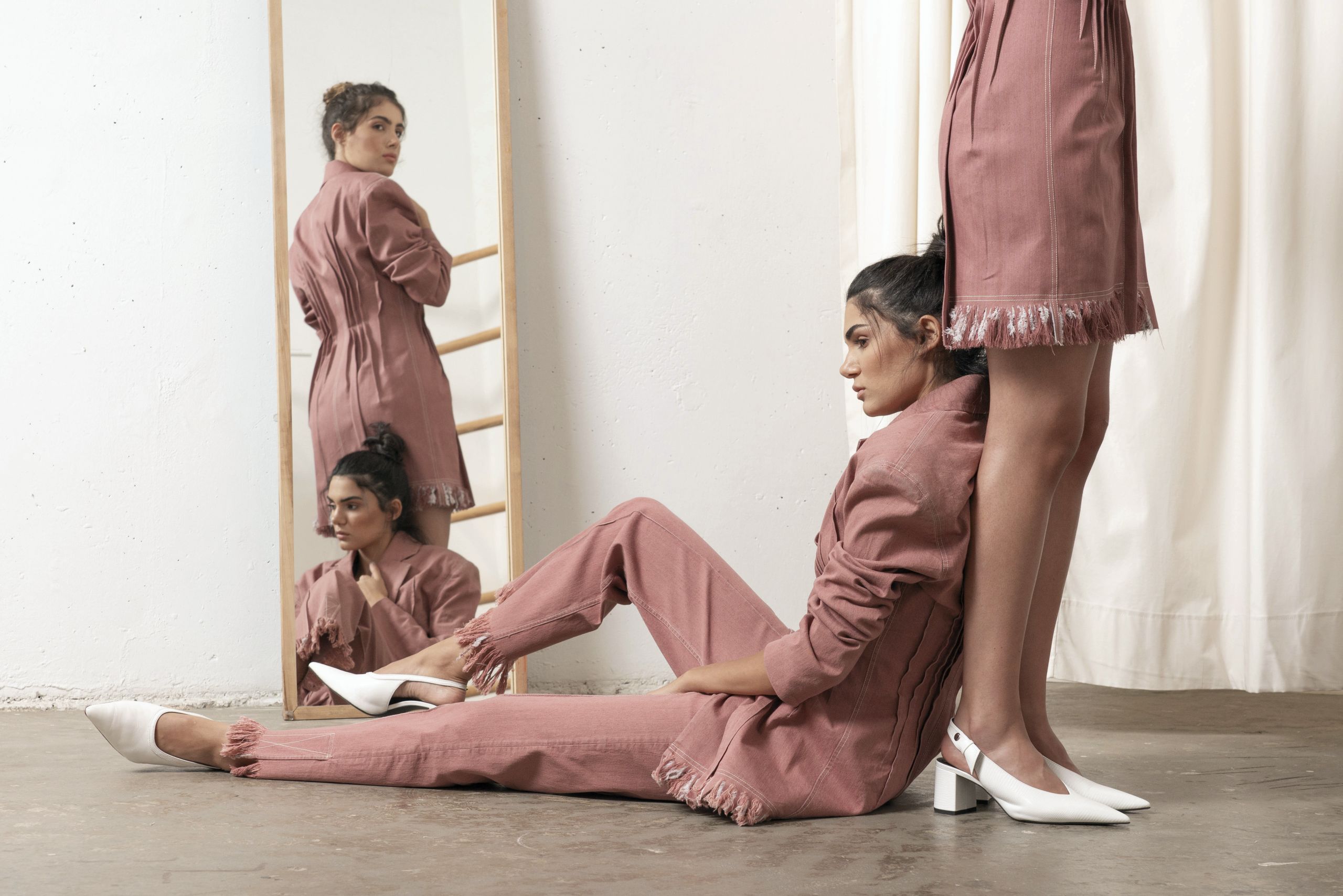
A look from Roni Helou's spring/summer 2020 collection. Courtesy Roni Helou
A look from Roni Helou's spring/summer 2020 collection. Courtesy Roni Helou
“Due to rampant corruption within governmental institutions, people have only civil society to turn to when looking for change. This is why the team and I, along with Starch Foundation, Bureau des Createurs, Maison Pyramide, Slow Factory and Faux Consultancy, have set up an online fund to support 40 creatives who were affected by the explosion,” he explains.
In the midst of his obvious despair, Rami Kadi points to the resilience of the Lebanese people and their ability to rally in the face of adversity, but also highlights the things that have been lost and will never be regained. “Fall down seven times, get up eight. Beirut was destroyed seven times and rebuilt; we will build it again. The Lebanese are so resilient.
“But the traditional traits of the destroyed buildings, the arcades, the architecture, the heritage will not be back, unfortunately. It will be polished, and it’ll lose its authenticity. But the memories are carved in our hearts forever,” says Kadi.

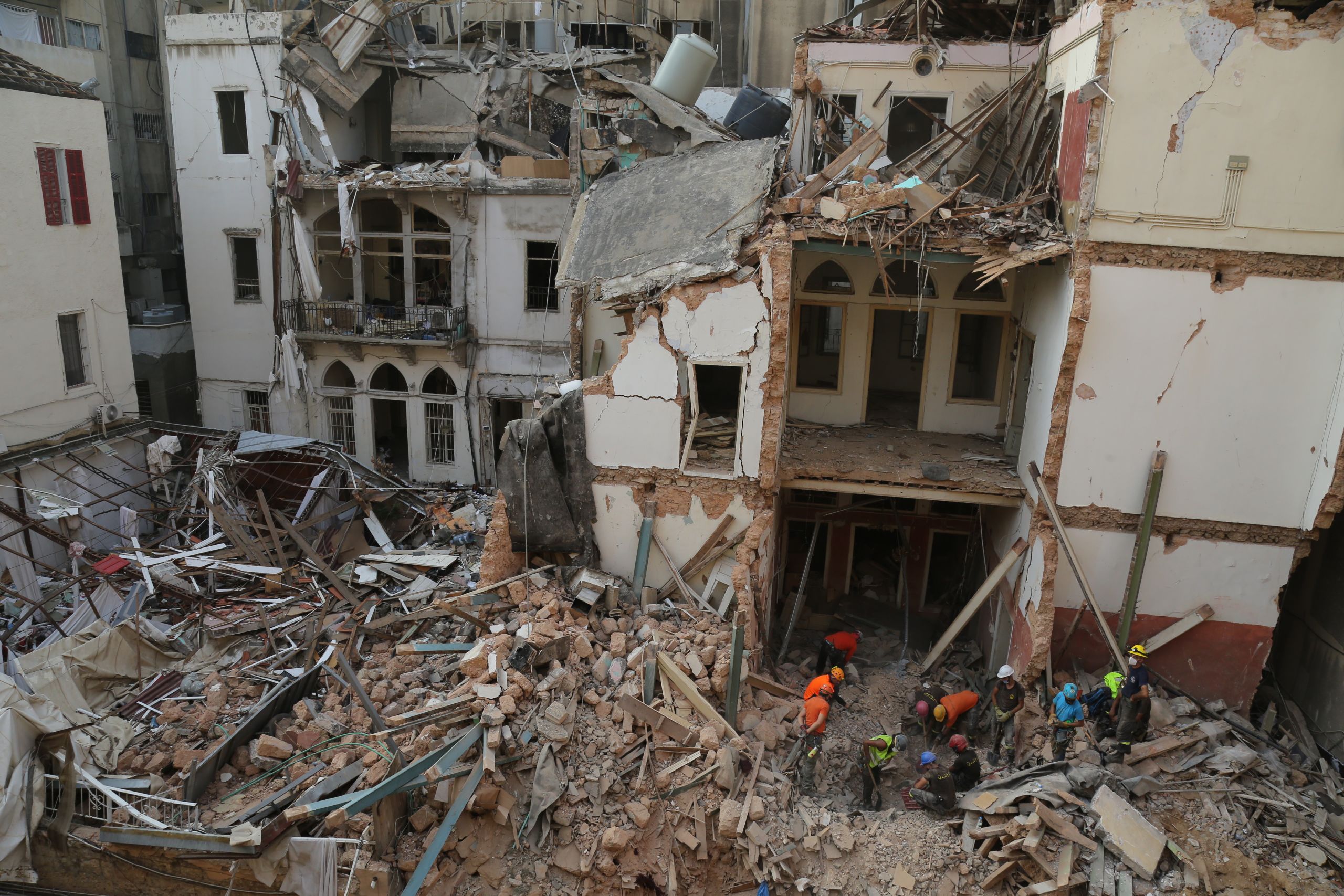
Beirut's Mar Mikhael neighbourhood, pictured on September 4
Beirut's Mar Mikhael neighbourhood, pictured on September 4
Gaelle Khouri categorises the explosion as a “crime against humanity”, and also highlights all the history, heritage and collective identity that were indiscriminately destroyed as the blast pummelled its way through the city’s streets.
“No words can describe the horror that shook the city or the aftermath that is being brought upon the Lebanese people,” she says. “The street of Mar Mikhael where I live and work on was transformed to an open space of widespread destruction and dead bodies.
“We are crying over our crumbling heritage architecture and our lost beautiful buildings dating back to the Ottoman Empire. The residential and commercial neighbourhoods of Gemmayzeh and Mar Mikhael that constitute the hub for art and creativity in Lebanon, with their little boutiques and art galleries, are reduced to ashes and shattered glass.
“The manufacturing area of Bourj Hammoud, where my workshop and other manufacturing workshops are located, has been severely impacted and the production equipment incurred great damages.”
In these dark times, the only consolation to be had is rooted in the sense of unity that prevailed in the aftermath of the explosion. Volunteers took to the streets to organise grassroots clean-up operations; tales of everyday heroism emerged; and communities around the globe rallied to show their support of the country. Lebanon’s design industry was no different.

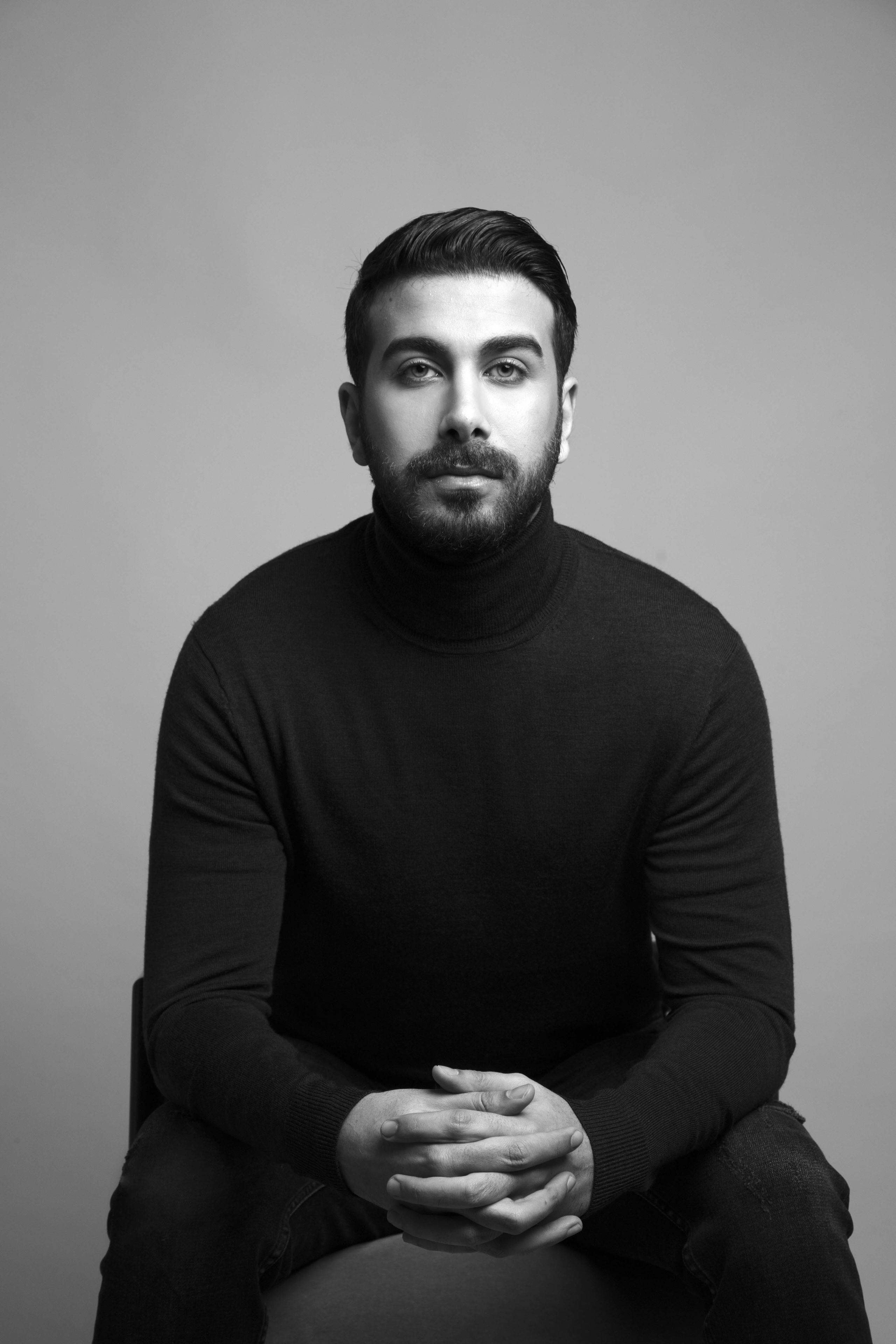
Designer Hussein Bazaza
Designer Hussein Bazaza
“I saw a beautiful unity amongst the fashion community,” says Hussein Bazaza, a young Beirut-born designer who has enjoyed meteoric success in recent years. “We as designers were calling each other and each offering help in cleaning and picking up the pieces from each other’s ateliers. I hope this unity will forever prevail amongst Lebanese people, especially in the fashion industry. I also hope we will all rise, rebuild better and stronger.”
This consolidated approach will be key to the resurgence of Beirut’s creative community, says Khouri, but first the focus must fall on addressing the immediate humanitarian crisis sweeping through Lebanon. “The urge to rebuild is primordial, but the most urgent matter that must be addressed today is the humanitarian crisis of the country. The only pressing need for every local community including the creative community is to work collectively to provide food and shelter for the 300,000 Lebanese who have lost their homes and livelihood, and to provide medical support to the thousands of wounded people.
“Once the humanitarian crisis is managed, the creative community should, in my opinion, work collectively and simultaneously to rebuild the crumbled workshops and boutiques that are located in the heart of Beirut – which will be only made possible through external donations and investment – and to channel their traumatising experience and awful pain through their work.
“That would help them on one hand, dissipate their agony, and on the other hand, convey the image of Lebanon to the global community as a country with a beautiful history and heritage architecture and as a home for skilled artisanship.”

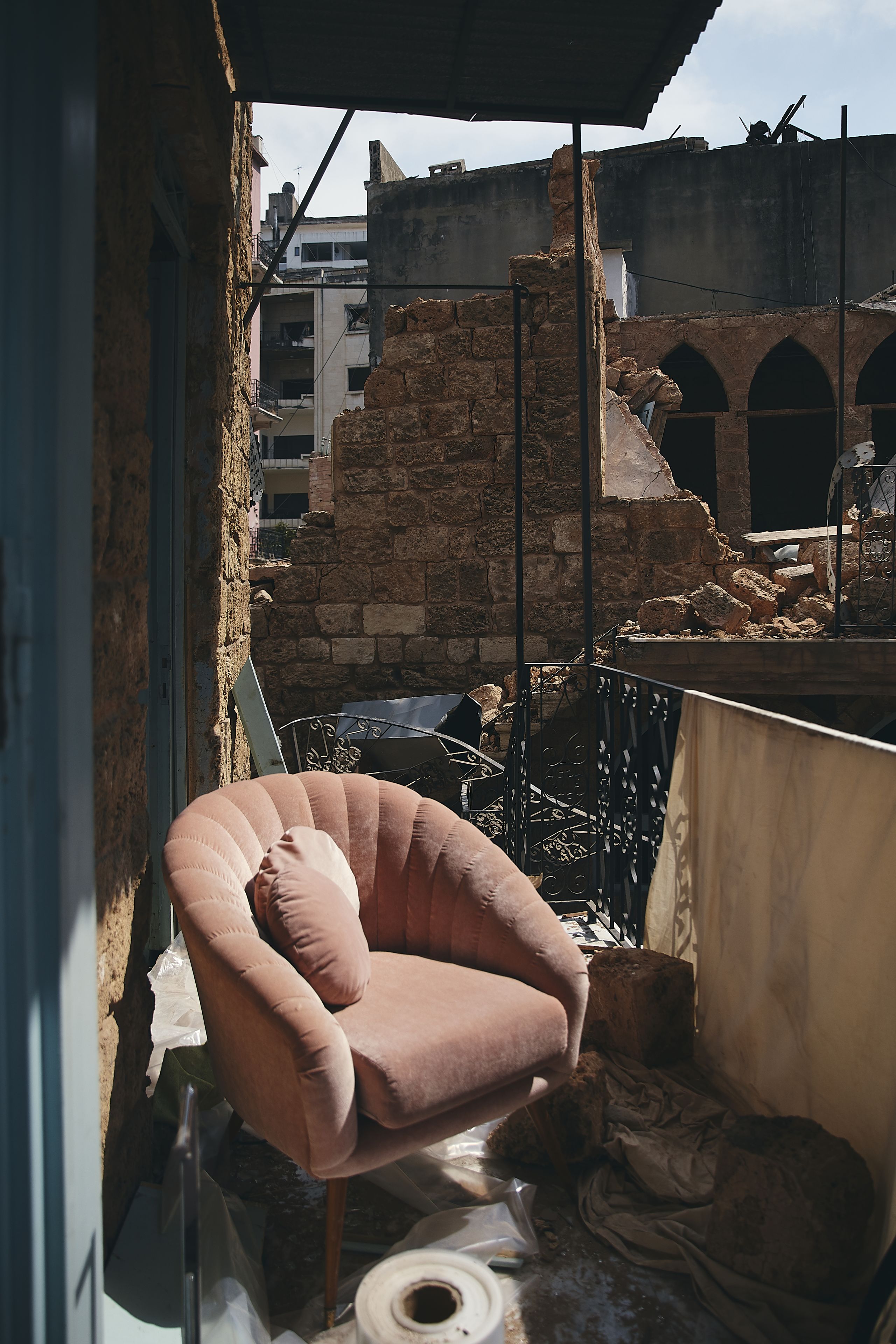
Azzi & Osta had moved into new premises shortly before the blast. Courtesy Azzi & Osta
Azzi & Osta had moved into new premises shortly before the blast. Courtesy Azzi & Osta
While some Lebanese designers had been playing with the idea of leaving the country for months before the explosion, for the most part, they now remain committed to staying in Beirut to support its recovery. For many Lebanese creatives, the question of whether to leave or stay is a fundamental, soul-deep dilemma: the country is their muse, an inextricable part of their creative drive. And muses cannot be so easily abandoned, even if they are troublesome, and even when obstacles feel insurmountable.
“Lebanon is everything for us. It’s always a source of our inspiration and we know that whatever we do going forward will be more and more an ode to Lebanon. We like to think that we create dreams and those dreams are made in Lebanon,” George Azzi and Assaad Osta, the design duo behind Azzi & Osta, say.

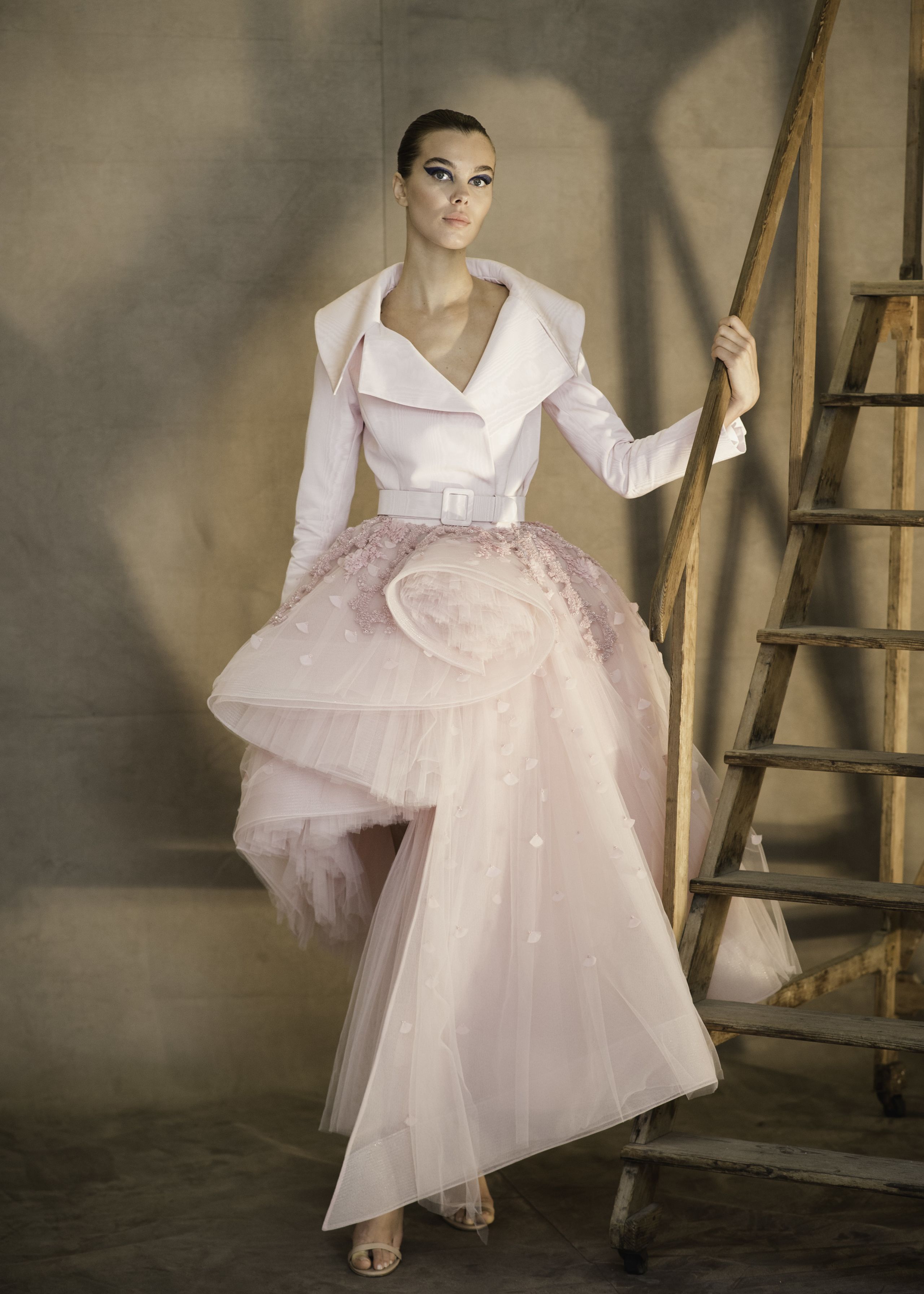
A look from Azzi & Osta's haute couture autumn/winter 2019-20 collection. Courtesy Azzi & Osta
A look from Azzi & Osta's haute couture autumn/winter 2019-20 collection. Courtesy Azzi & Osta
Nonetheless, practicalities say that many designers from Beirut will need to start setting up international outposts, to create some kind of safety net.
“Since the beginning of the crisis in Lebanon, we contemplated leaving, yet we said our roots are here. That was the reason we invested all into the new location we moved into. Now we feel strongly that we will rebuild and rise again for sure in Lebanon, but we will need to create bases outside Lebanon as well. We can’t keep seeing our hard work and dreams shattered,” say Azzi and Osta.
For young, up-and-coming, self-financed designers such as Hussein Bazaza, the future is particularly precarious. While he has so far been entirely auto-financed, and takes great pride in being self-made, he recognises that he will need an outside investor in order to carry on.
“I have already started with fixing my atelier, but the question is how will I rebuild the brand in the long run,” he says. “It’s not a matter of glass and windows being shattered, it’s a matter of being able to survive all the economic uncertainty we are facing. I am a purely auto-financed brand; all I generate I put back into my business, and with all what’s happening, I don’t know how much I can put in anymore.”
But even in the face of such challenges, Bazaza will not abandon his homeland. “Regarding leaving the country permanently, I don’t think so. Beirut is my home, it’s not a hotel I choose to leave because the service is bad. Beirut is my home and it’s so hard to leave home, especially when you see it suffering this much,” he says.
The streets of the Lebanese capital may be changed forever, and the physical and emotional scars of that fateful day in August may never heal completely, but some things remain constant.
“Beirut will never look the same, and that is something we are all having trouble processing because of the immense impact this controversial city has on us,” says Helou. “But I believe we will witness a new wave of expression and creativity in our collective future. Don’t worry, we’re not going anywhere.”
Up in the air
Selina Denman charts Michael Jordan's fashion legacy

“This is history. And it’s 100 per cent art, right up there with Picasso,” says Gerard Starkey.
He’s not talking about a painting or a sculpture; instead, he’s referring to a scuffed, 35-year-old pair of trainers with a piece of glass embedded in one of the soles.
Starkey is a leading Michael Jordan memorabilia collector, and the shoes he’s referring to were worn by the basketball superstar during a particularly memorable incident early on in his career. It was August 25, 1985, and Jordan was in Trieste, Italy, playing in a Nike-sponsored exhibition game. Sporting a pair of Air Jordan 1 High trainers, Jordan went in for a dunk, soaring through the air in his trademark style before slamming the ball into the hoop. Moments later, the backboard shattered, raining shards of glass down over the court.
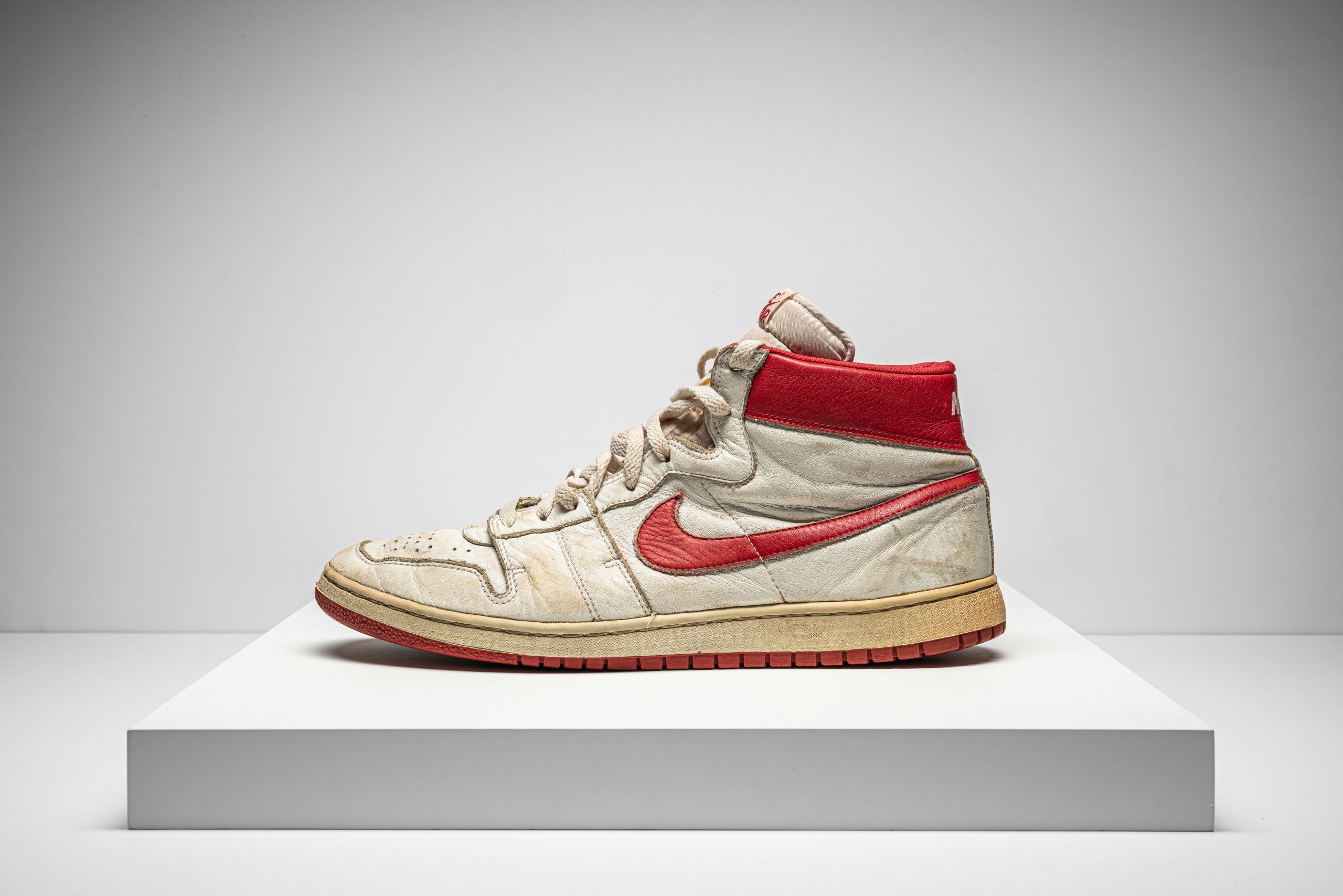
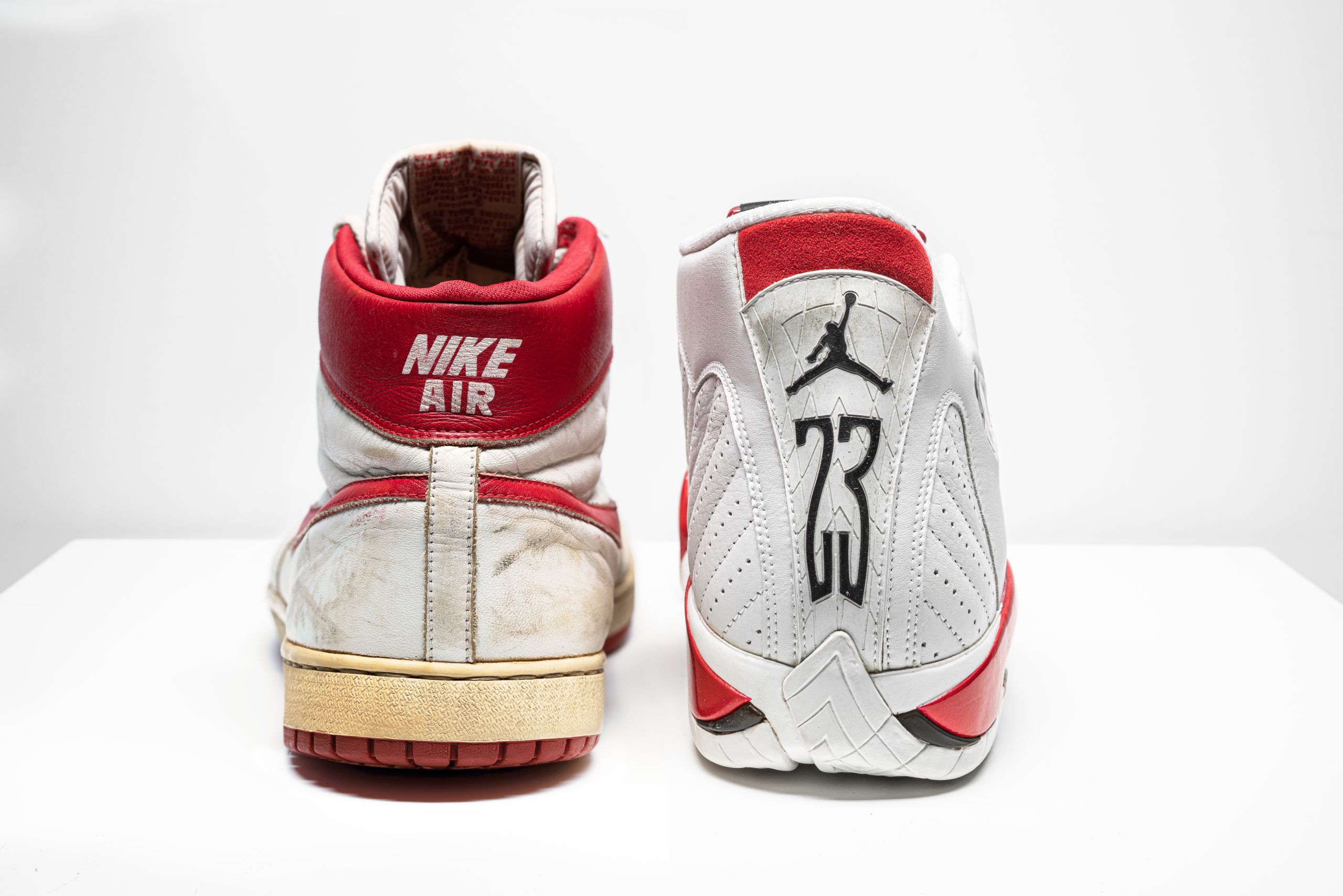
The incident was a striking symbol of Jordan’s power as a player, but also stands as a metaphor for how he would go on to shatter records, expectations and stereotypes over the course of his career. The shoes he was wearing at the time, dubbed the Air Jordan High “Shattered Backboard” Origin Story Sneakers, were one of 11 pairs of game-worn and player-exclusive Jordan shoes that featured in the first trainer auction by Christie’s last month.
Run in partnership with Stadium Goods, Original Air was a landmark sale that solidified streetwear’s standing at the very upper echelons of the luxury industry. But that’s not news to Ben Jacobs, brand director of Stadium Goods, a trainers and streetwear marketplace at the forefront of this rapidly expanding resale segment.
“Sneaker-collecting enthusiasm and sneakerheads have been around for a long time, but in the last plus or minus five years, you’ve had men on a larger scale accessorising and embracing sneakers as a style statement piece. And for women, it’s finally become more socially acceptable to just wear what is comfortable. I think that’s really helped contribute to the rise in interest in sneakers,” says Jacobs.
Trainers that actually belonged to and were worn by Jordan are the holy grail in this space. “You have people like myself, in their mid to late-thirties, who grew up with Michael Jordan, this god-like figure who wore various capes, or pairs of shoes, for his endless heroic athletic performances,” says Jacobs. “He embodied everything that was cool; he had this swagger and you wanted every version of every item that he wore with such grace and confidence.
“What we are doing with Christie’s is an extension of the passion and love and history and community that Stadium Goods has come from, and we are presenting true artefacts that have helped to shape and mould that culture that we are a part of.”
It is not an overstatement to call them artefacts. The shoes that featured in the Christie’s sale chart the history of basketball, the evolution of trainer design, the legend of Michael Jordan, and his influence on popular culture. And, as highlighted by the popularity of the 10-part docu-series The Last Dance, there is still plenty of residual interest in that legacy.
Russ Bengtson, former editor-in-chief of Slam magazine, and a keen Micheal Jordan historian and collector, makes no differentiation between collecting trainers of this calibre and collecting in more established luxury categories, such as watches.
“Some of the watches that I’m into are chronographs that were introduced in the 1960s, and those were developed as tools, whether it’s a TAG Heuer Carrera, or even a Rolex Daytona. They served a purpose. And basketball shoes, particularly ones designed for Michael Jordan, or in some cases by Michael Jordan, those were tools also, designed to help him do what he did, at the highest level.”
Original Air served up a whistle-stop tour of Jordan’s career – from the 1984 Air Ship worn in the earliest days of his rookie season, which were customised for the basktball star, with a lower cut and a more condensed sole that acted as a predecessor to the famed Air Jordan 1 (“This is them experimenting in real time on what would became the Air Jordan 1. This is Jordan wear-testing his own signature shoe,” says Bengtson); to the Air Jordan 10 Sample Baseball Cleat, produced for Jordan when he temporarily retired from the Chicago Bulls in 1995 to try his hand at baseball; to the Air Jordan 14 “Chicago”, worn during practice over the course of Jordan’s final season, as seen in The Last Dance.
Jordan’s continued appeal was reflected in the success of the online auction, which achieved total sales of $931,875 (Dh3.4 million) and attracted 90,000 unique visitors from 126 countries. Notably, 72 per cent of registered bidders were new to Christie’s.
Unsurprisingly, the “Shattered Backboard” trainers emerged as the top lot, selling for $615,000. One of the most remarkable things about this pair of shoes was the amount of evidence on hand to enable Starkey, who acted as an expert adviser for the Original Air sale, to verify them.
First, there is the distinct lacing. “Michael Jordan always laced his shoes up a certain way,” Starkey explains. “There are plenty of photos of him going through his process – preparing himself for battle, so to speak. When attributing a shoe to an athlete, you have to consider every single facet. The lacing of this shoe is quite tight and consistent with the photos.”
Then there is the wear and creasing, which can be precisely matched to photos of Jordan taken on that eventful day in 1985, a rarity themselves. “Taking photos of Michael Jordan in his rookie year was not that big a thing,” Starkey points out.
“But we can match these shoes to photos in 1985, when people weren’t even really concerned about sneakers. Players were not walking through the tunnels, holding up the sneakers they were going to wear, with photos being taken left, right and centre. The moment LeBron [James] or any of those players steps on court, the first thing people do is take a photo of their sneakers. That just wasn’t the case back then.”
Then there are the signatures, where Jordan’s name is spelt out in full – something he more or less stopped doing after his rookie season. And finally, there is that shard of glass, still embedded in the sole of the left shoe more than three decades later.
“I’ve collected for 23 years and I have personally never seen anything of this level in my entire career,” says Starkey. “This is the ultimate bit of nostalgia – and it has resonated through time.”
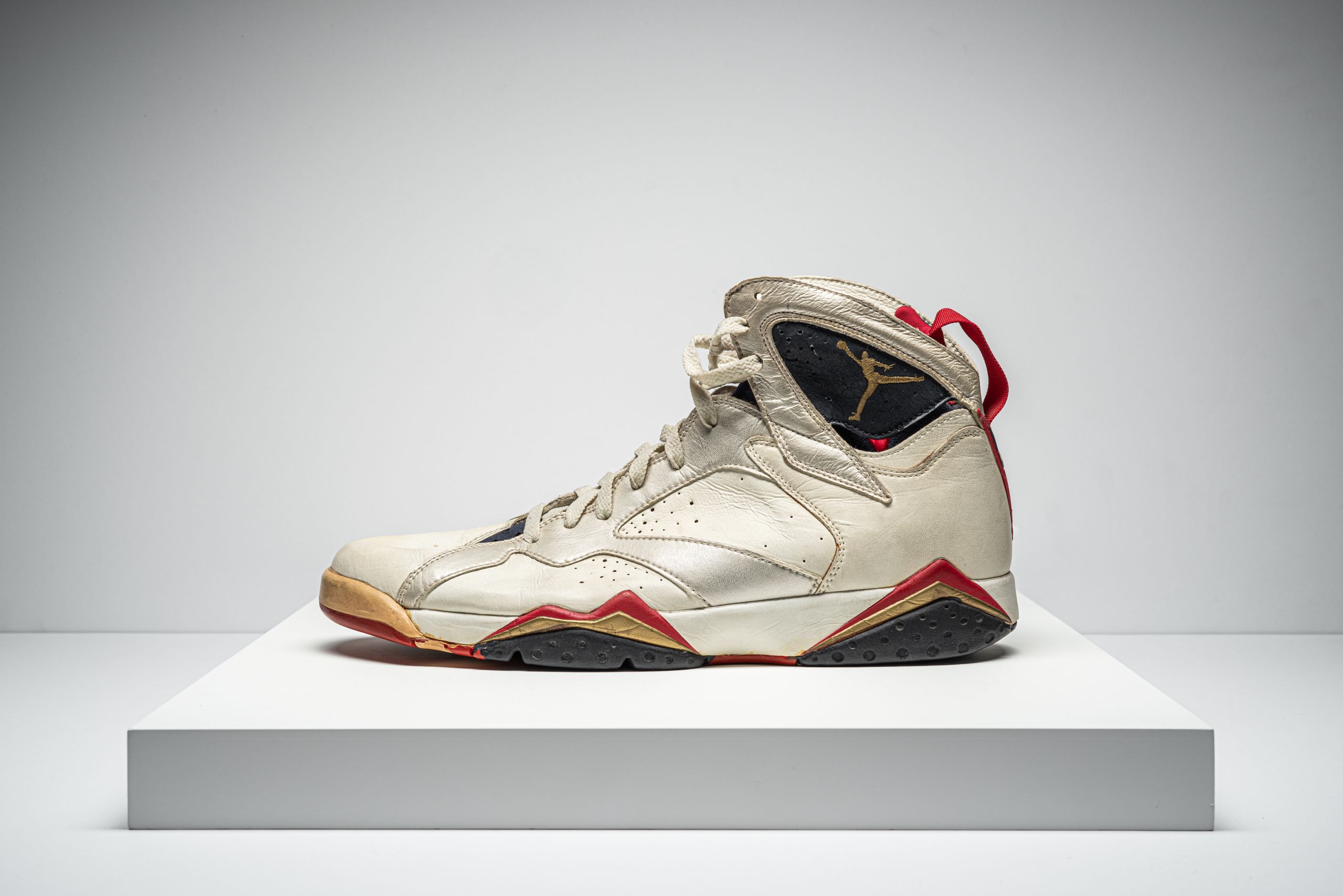
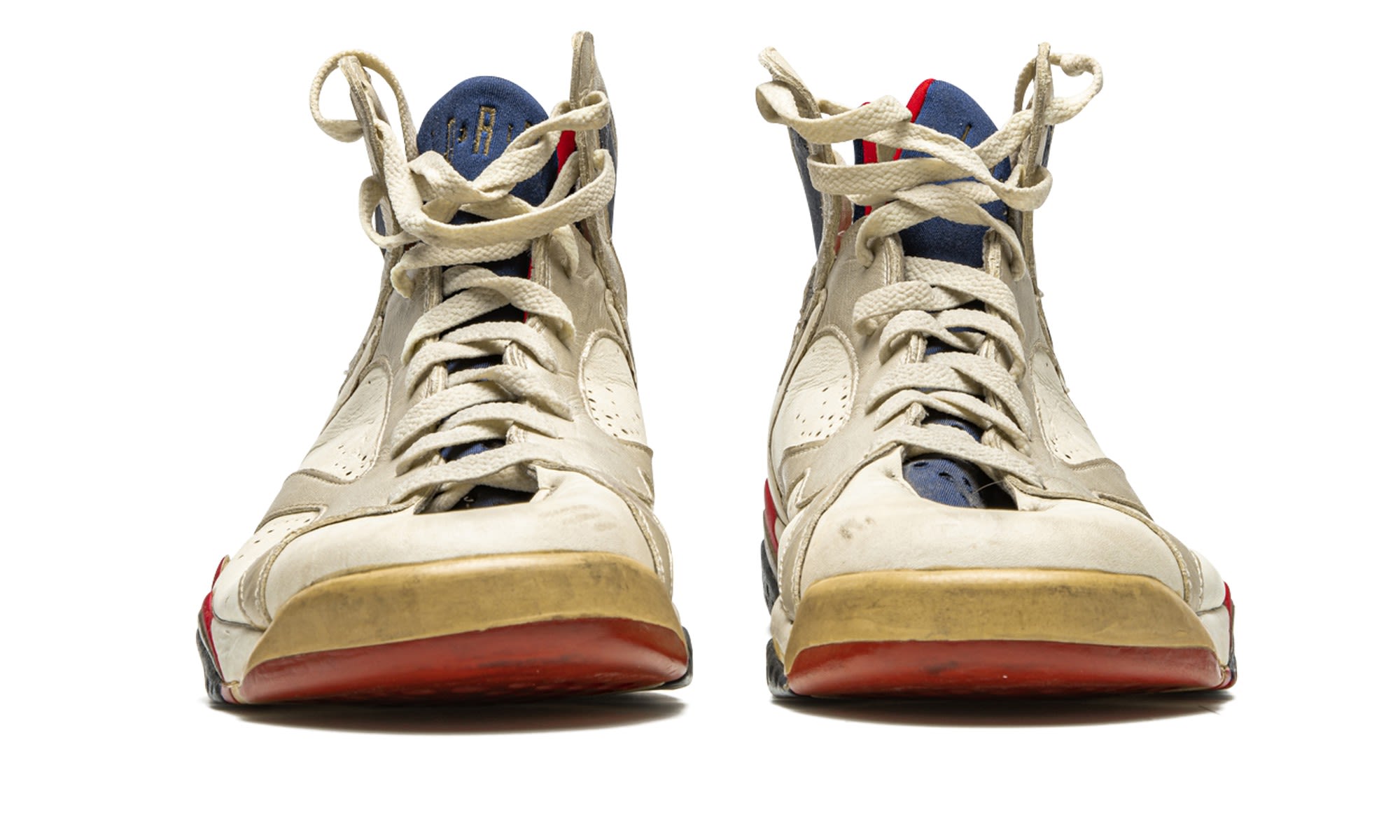
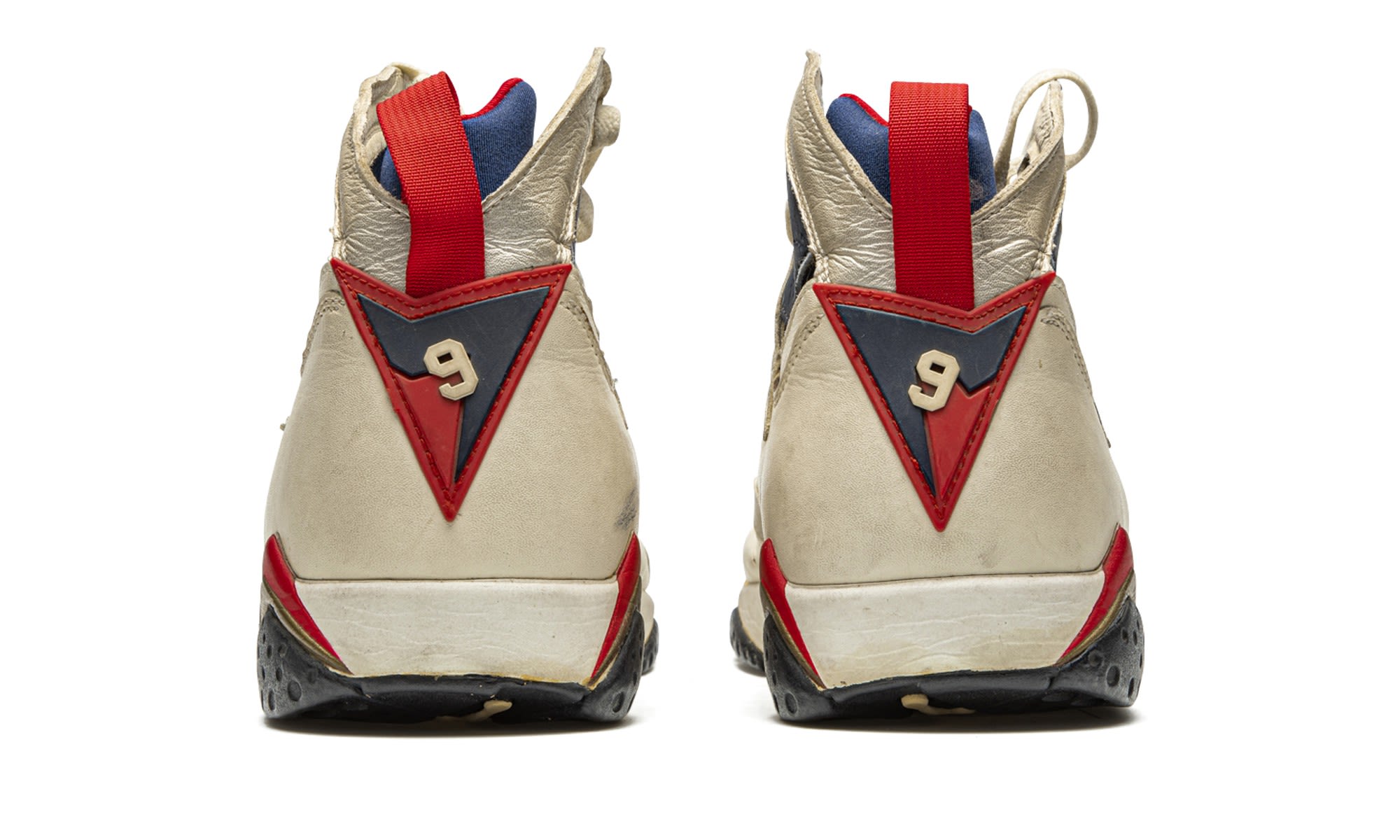
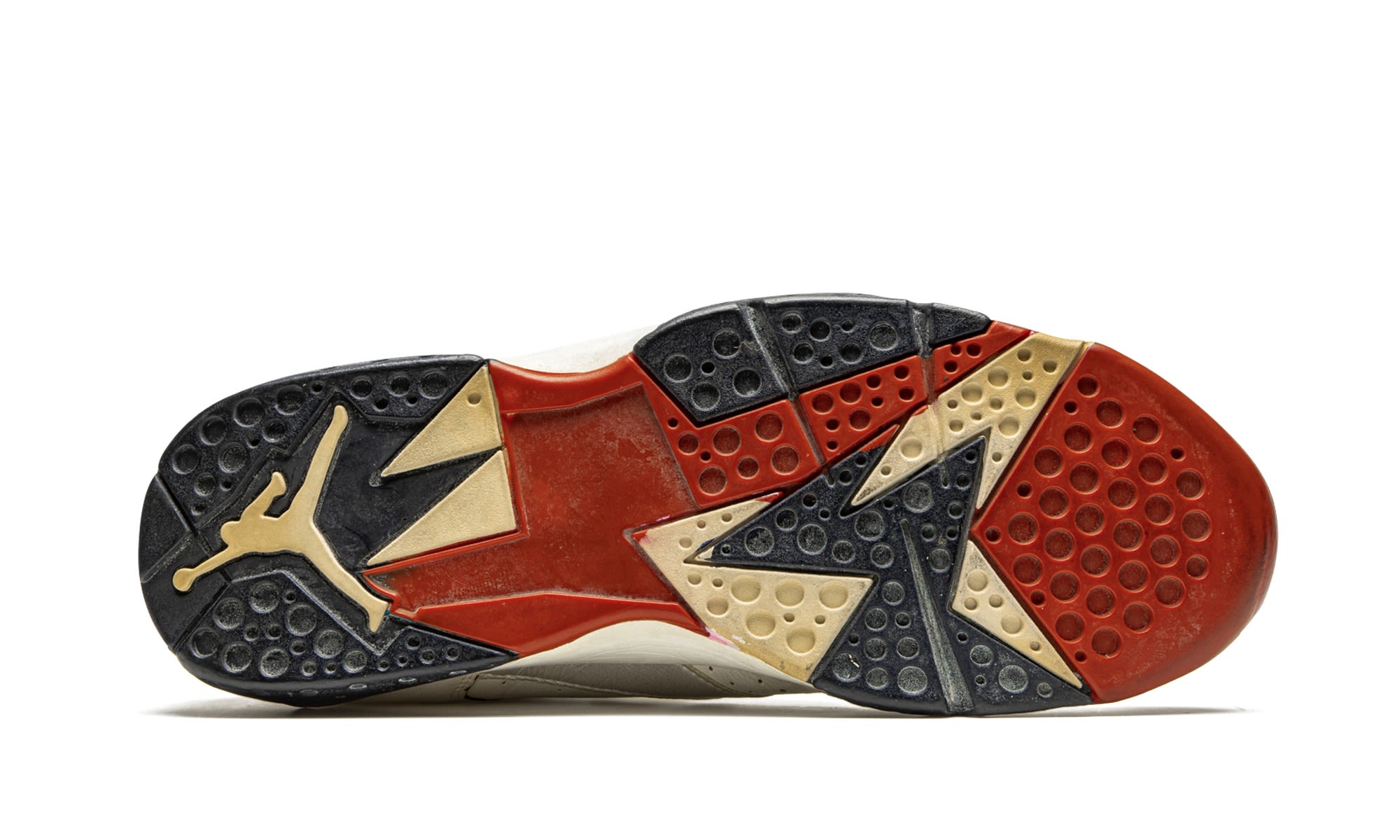
But the best anecdote from the sale comes, arguably, with the Air Jordan 7 “Olympic” trainers worn by Jordan when he achieved gold at the 1992 Olympics in Barcelona, as part of what is widely recognised as the greatest basketball team in living history.
“The ‘Dream Team’ stayed at the Ambassador hotel just off the Ramblas and the receptionist was a young Spanish man. His younger brother, who was 12 or 13 at the time, was allowed to hang around the hotel, and we’ve got their security IDs and payslips to prove they were there,” Starkey explains.
“Michael Jordan refers to it in The Last Dance– they talk about getting McDonald’s at night in their very luxury hotel, where security was like Fort Knox. So they used to send out this young man to go get that McDonald’s. In return for that loyalty and the fact that this kid had gone out numerous times to run errands for the entire Dream Team – we are talking about the greatest legends of basketball – Jordan and Magic Johnson come down to reception and speak to these boys and they give them a friends and family T-shirt and the shoes that Jordan was wearing when he came into the hotel, just after they had won the gold medal. And the reason the finals shoe had never surfaced is because it stayed in Barcelona; it stayed in the city that the Dream Team dominated in.
“The backstory and provenance and the handover is based purely on ultimate respect, so not Michael Jordan being bombarded by people asking him to give him their shoes or give them his jersey; it was given from Michael Jordan and Magic Johnson at the time, purely to say thank you. And I love that.”

Michael Jordan's Air Ship Nike from 1984. Courtesy Christie's
Michael Jordan's Air Ship Nike from 1984. Courtesy Christie's




This is WAAR
For Chadi Chamoun, inviting people to consider the true meaning of refugee is more than a matter of semantics. It’ll make us all more empathetic, he tells Selina Denman

What is a refugee?
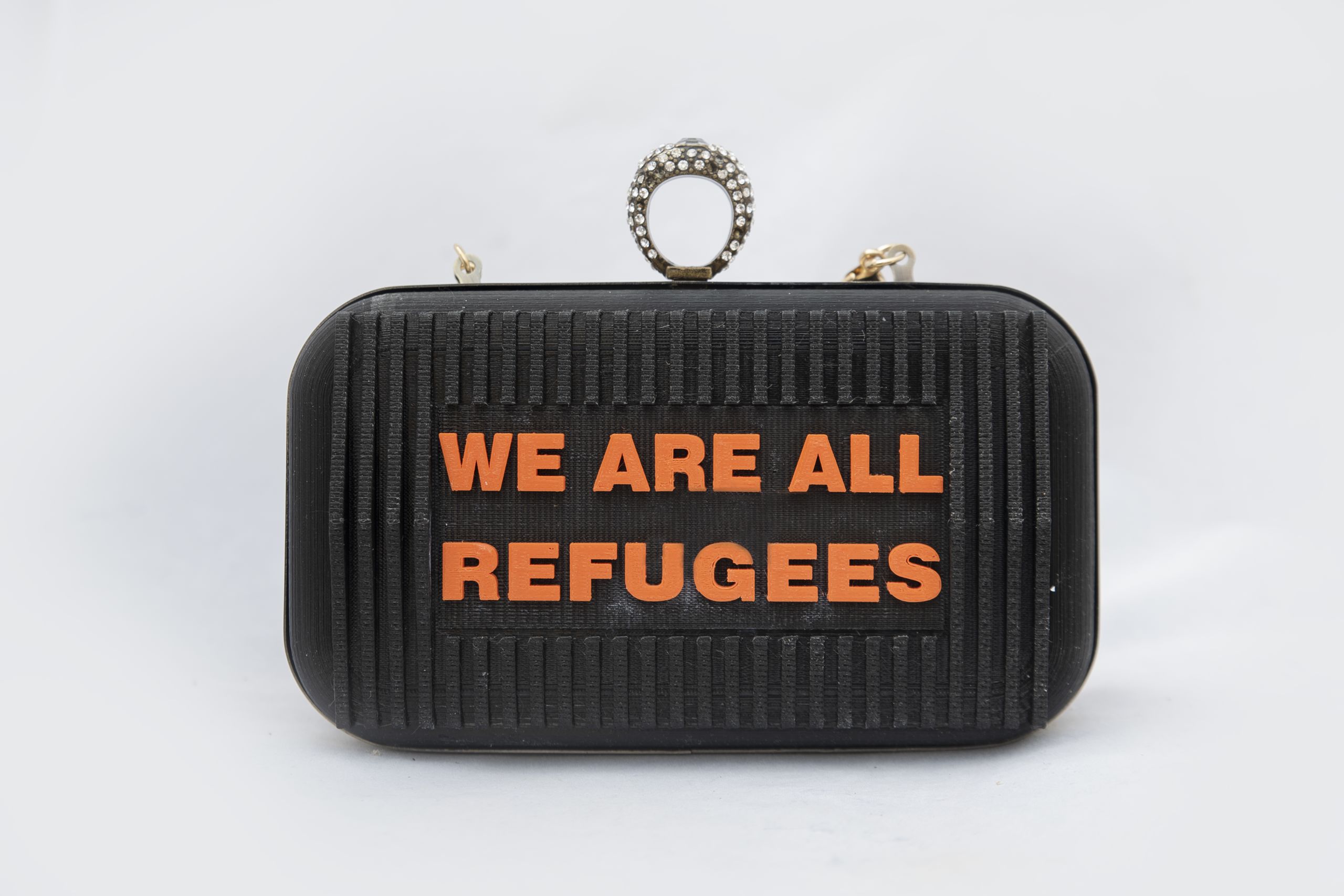
That’s the question that underlies a new initiative by Chadi Chamoun, dean of the College of Design at American University in the Emirates. Making his first official foray into fashion, the architect and academic has created a line of women’s clutch bags called WAAR, or We Are All Refugees.
“According to UNHCR, ‘at least 79.5 million people around the world have been forced to flee their homes. Among them are nearly 26 million refugees, around half of whom are under the age of 18’. Although these numbers are technically factual, the frightening fact is that they are much greater if we look at the broader definition of a ‘refugee’,” says Chamoun.
“We need to remember that anyone who has left their home for political, social, economic or any other crisis-driven situation that devalues the livelihood of a human, is principally a refugee – regardless of whether they or we are willing to admit it or not. This detachment of place and culture contributes to the refugee crisis today,” he adds.

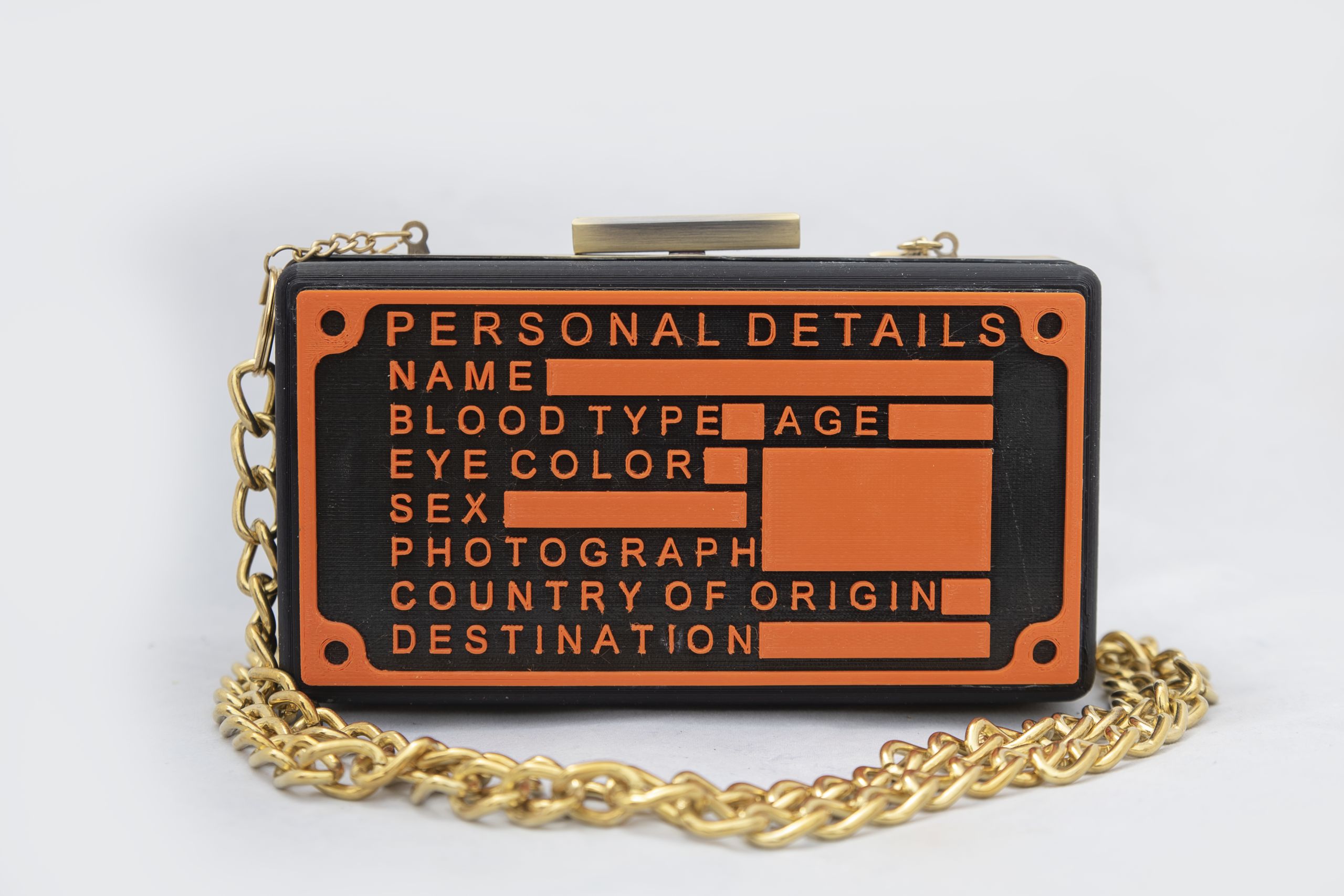
And so the clutch, a carrier device in condensed form, becomes a symbol of making do with the barest of necessities. WAAR’s utilitarian lines, no-nonsense forms and bold typography invite us all to consider what the term refugee actually means. “A great majority of people are in denial of their refugee condition,” suggests Chamoun.
“Many individuals feel that once they reach a certain level of financial or social independence and validation, they shed their refugee skin. The biggest misconception is that you are only a refugee if you are poor, have lived in a makeshift shelter and have been helped by an NGO.
"This could not be farther from the truth. To put it plainly, an immigrant is someone who leaves their homeland of their own will, whilst a refugee is someone who is forced to flee their homeland and has little or no say in the situation.”
Chamoun has no qualms about his own refugee status. “My parents and I were forced to leave Lebanon in 1978 and flee to America. It was not a choice and it was not an option. We could either leave or face dire consequences. Our passports were printed, visas issued and we were on a plane to JFK. My parents still like to think of it as immigration, but I can’t digest that. It is one thing that we won’t agree on.
“At the age of 3, NYC became my home. My parents literally had $50 [Dh183] in their pockets. They had to work such a myriad of jobs to keep us afloat that listing them would be a thesis. Amongst the chaos, my father became a successful interior designer in NYC and my mother a phenomenal real estate broker in Queens,” he says.

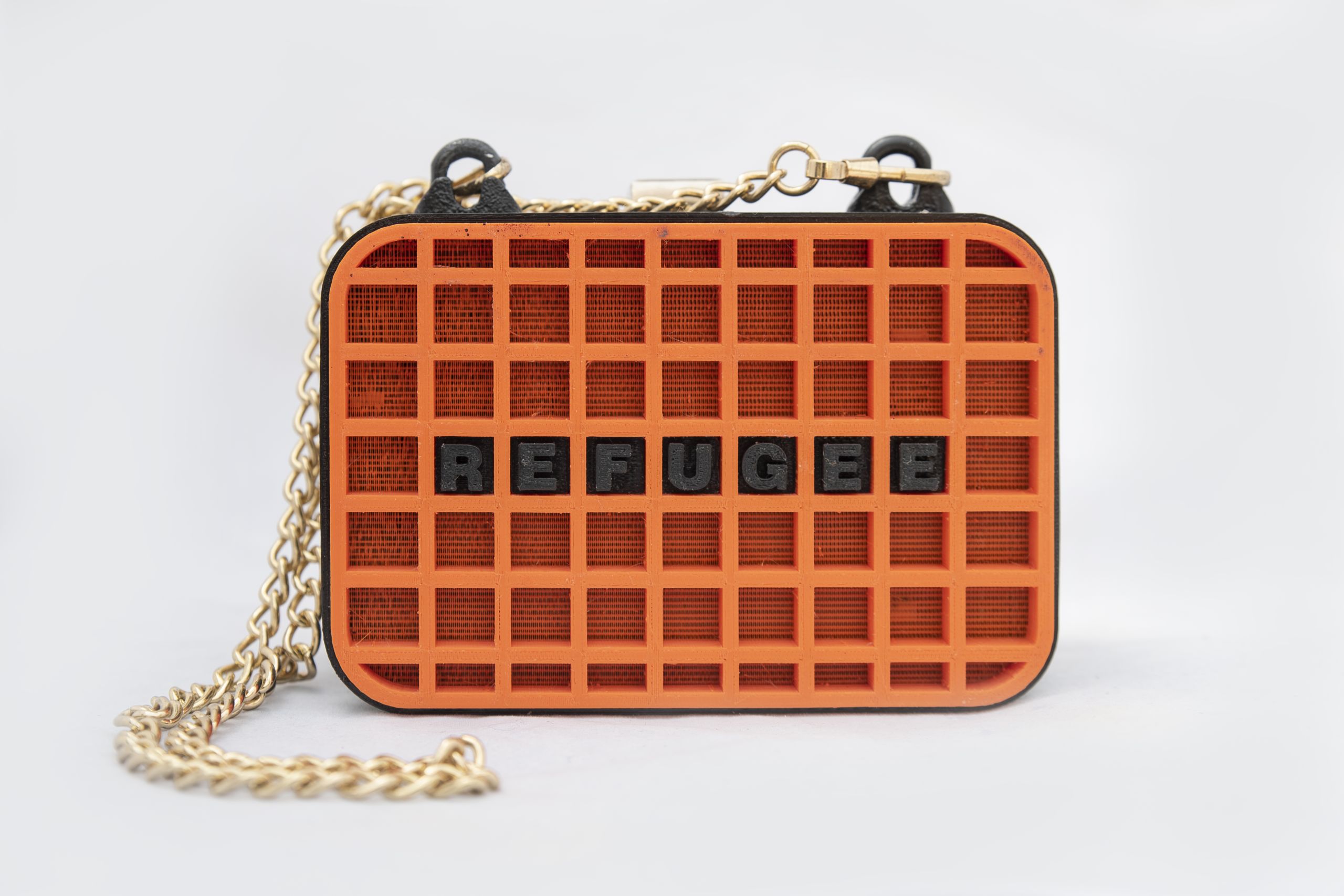
Chamoun had been developing WAAR before the pandemic struck, but now sees parallels between the refugee crisis and Covid-19-related lockdowns and restrictions surrounding movement and travel. “As a result of Covid-19, we have all become ‘refugees’ in our own homes, towns, cities,” he says. “We are all displaced and limited in movement and expression. The world has become a ‘refugee’ camp and we are all the occupants.”
And then, on August 4, disaster struck once again in Lebanon. “In a matter of 20 minutes, over 300,000 people lost their homes and became refugees in their own city.”
Although Chamoun holds a PhD in architectural design from University College London, served for eight years as a faculty member and as chairman at the American University in Dubai before taking on his current role, and has worked on a range of commercial design projects in the Emirates, he realised that, as a creative discipline, fashion could offer a more immediate and wide-reaching way of communicating his message.
“Fashion is an unbelievably fast medium of expression that connects to a far greater multitude of people in society. Architecture, interiors and products are not as accessible to all strata in society – they are expressive mediums that do not penetrate as quickly and effectively. A similar medium would be music, with similar penetrative qualities – but I can’t sing.”

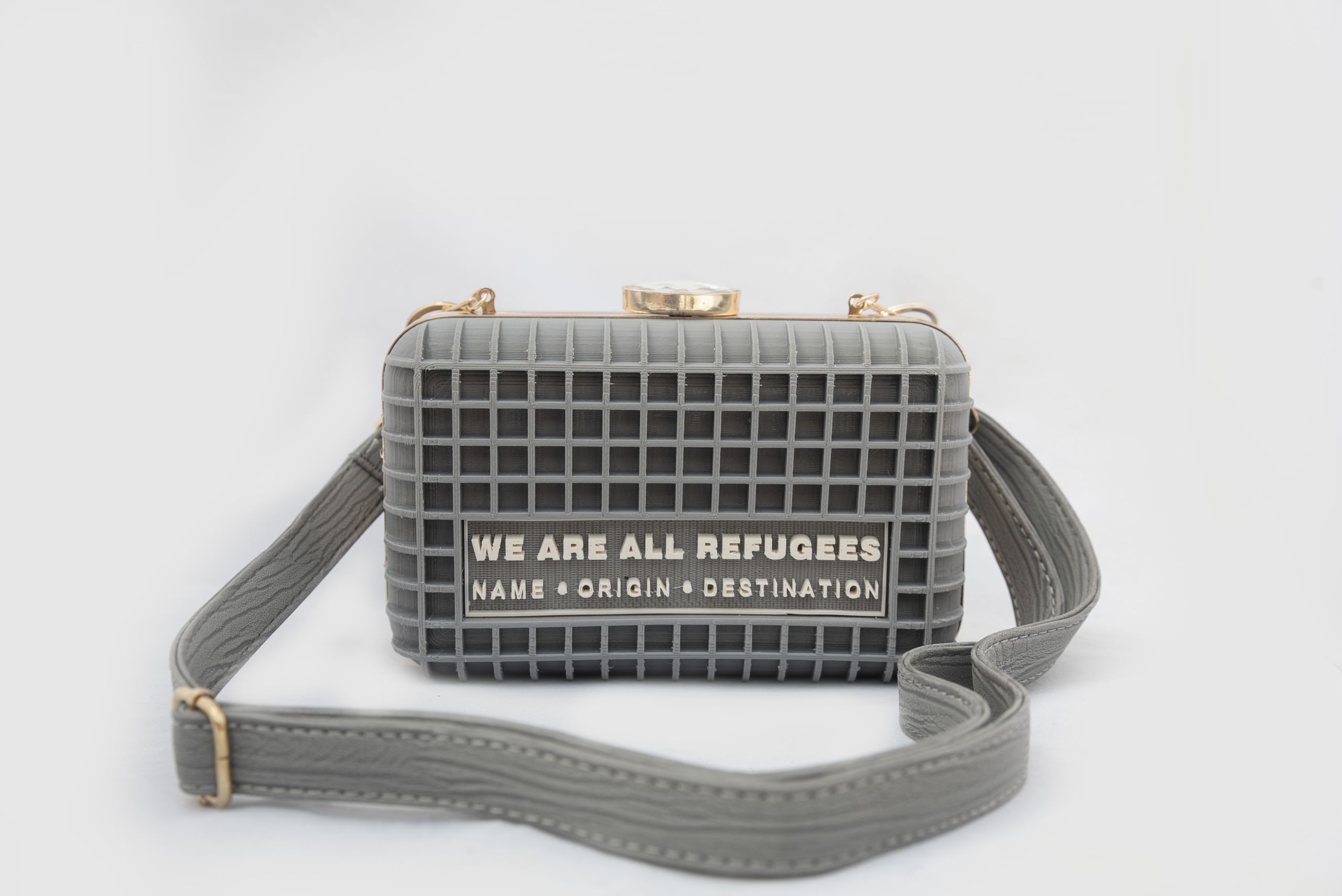
Still, Chamoun drew on his architectural background when creating the designs for the clutches, which are made in Dubai and currently available to buy via Instagram. They have a distinctly urban feel, inspired by “the grey patina of concrete, the black street grills that allow underground activities such as subways and tunnels to breathe, the patterns of streets and the patterns of pavement”.
And each bag's message is, at its heart, pretty simple, if maybe difficult to digest for some. “We all – and I mean humanity as a whole – need to come to the realisation that the refugee crisis will spare no one. It doesn’t matter if you're rich or poor, if you’re well-cultivated or a brute, displacement will spare no one – but this is not a bad thing. Our prophets were refugees, being forced to flee from town to town, city to city, and nation to nation.
“Once we realise that we are all in this together, and that we are all susceptible to this, we can start to care and support one another more consciously and effectively,” Chamoun concludes.
Standing strong
Bruno Pavlovsky, president of fashion at Chanel, talks to Sarah Maisey about navigating a post-Covid-19, post-Karl Lagerfeld world
As Chanel's president of fashion for more than 30 years, Bruno Pavlovsky is no stranger to the pre-fashion show build up. Or at least he was, until the pandemic hit.
Normally, the days leading up to a fashion show would have Pavlovsky bouncing between the designer, the press, celebrities and clients. But when we speak via Zoom ahead of the unveiling of Chanel’s autumn/winter 2020-21 haute couture collection – presented as a digital release of beautiful photographs by Mikael Jansson on July 7 – Pavlovsky admits things are a little different this year.
“I have nothing to do, compared to when we have a show,” he jokes. “I like the stress of a show and hopefully we will come back to that soon. The haute couture collection is fantastic, however the way to communicate it is different,” he says.
While many brands have replaced physical shows with virtual presentations over the course of this year, for haute couture, this poses a particular challenge. As the highest form of fashion, the beauty of couture lies in the immaculate fit of garments, and the cut and fall of the fabric, which is covered in handwork by specialist ateliers such as Lesage, Dreseus, Lemarié, Maison Michel and Vimar.

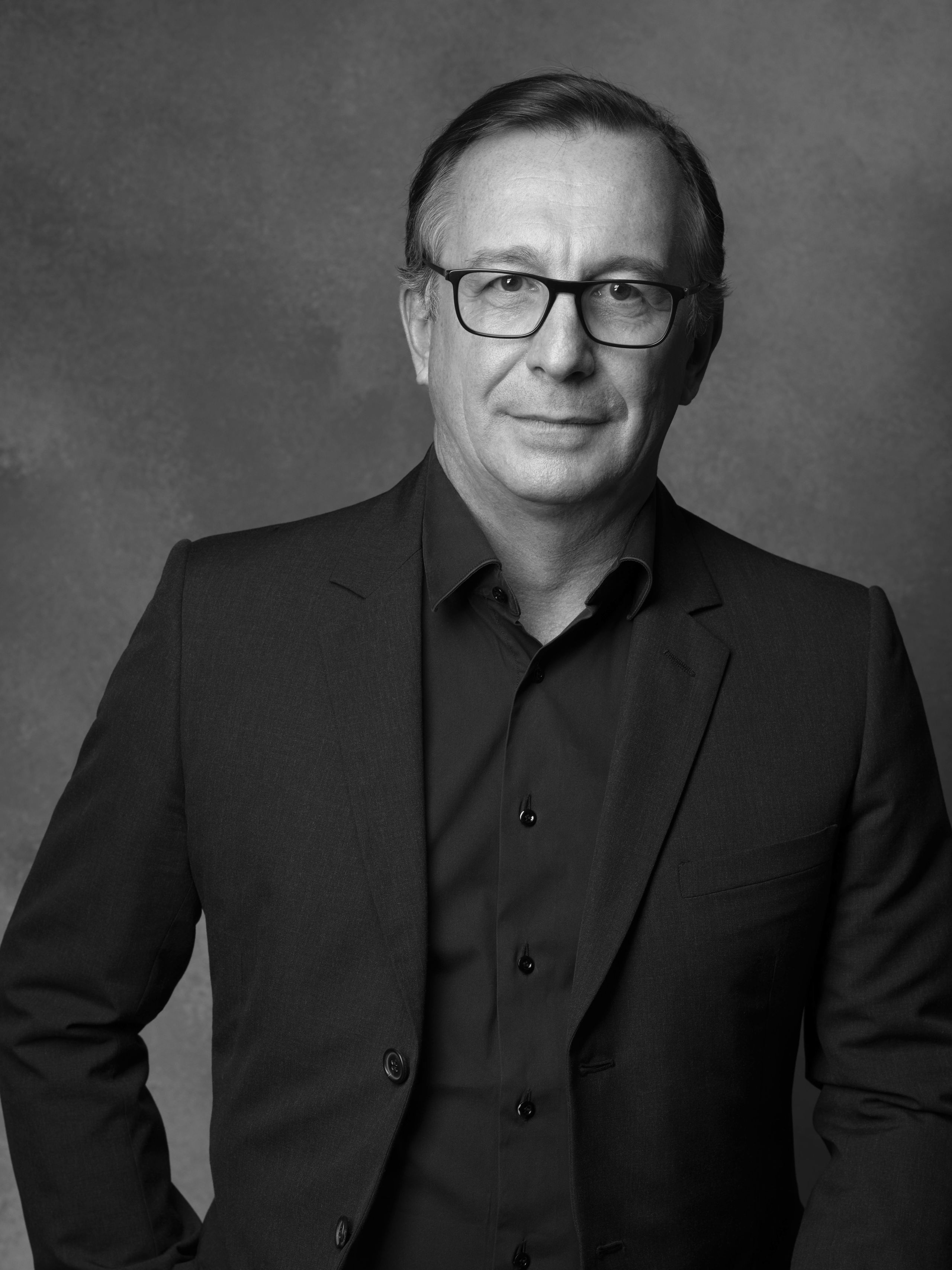
Bruno Pavlovsky, president of fashion at Chanel. Courtesy Chanel
Bruno Pavlovsky, president of fashion at Chanel. Courtesy Chanel
To make sure clients were able to get a sense of the minutiae, without the benefit of a live presentation, Chanel introduced a multipronged approach, Pavlovsky explains. “Firstly, the digital release of the photographs on July 7 was made available to everyone via the website, while the few clients already in Paris were invited by appointment to see and touch the collection at the flagship salon on Rue Cambon. Customers farther afield received a miniature couture ‘show in a box’.
“We developed a full kit of images, fabric swatches and sketches to give as much information as possible. It was a one-to-one presentation, not available to everyone. Within the next six months, I hope we will be able to organise a presentation of the collection in some of our key cities.
“It is a new approach, a new way of doing things. The main thing here is to give the best to our customers, so we try to imagine what they need and what they want from us.”
This rethink is only the latest challenge in what can be best described as an eventful 18 months for Pavlovsky. In February last year, Karl Lagerfeld, Chanel’s creative director for more than 30 years, died at the age of 85, pushing his second-in-command, Virginie Viard, into the limelight. As she was beginning to find her feet, Covid-19 hit, bringing the world to a screeching halt. Pavlovsky, however, remains sanguine.
“We had been working with Karl for the past 30 years, Virginie and myself,” he explains. And although it was never openly discussed, he says it was always clear that Viard would take over from Lagerfeld. “It was not said, but it was projected.
"I think Virginie is very talented. She is feeling more and more comfortable, because it is not easy to come after Karl. And it’s only been one year. I have to remind people that her first collection was cruise 2019, although with everything that has happened this year, it feels like 20 years.”
With the shadow of Lagerfeld hanging over her every move, the past year has certainly been a baptism of fire for Viard. And although she was at Lagerfeld’s side for decades, her vision for Chanel is different to his, and this shift is something that customers and company alike are having to adjust to.
With Karl we did these impressive shows and it was quite strong at times, while here perhaps it is more subtle. But it is a new era
“Lots of people try to express what is the difference with Virginie. She is a woman designing for women, and she has a sense of what is good today for our customers," he says. “The feedback we are getting is that they are very comfortable with what Virginie is doing. With Karl we did these impressive shows and it was quite strong at times, while here perhaps it is more subtle. But it is a new era.”
Lagerfeld’s runway shows were almost as hotly anticipated as his collections, and took place in a forest, a cruise liner and even a spaceship, which proceeded to take off for the finale. Viard, in contrast, is more low-key, preferring the relative simplicity of Parisian rooftops and a sedate library setting.
Another shift is Viard’s insistence on incorporating sustainability into her playbook, with 14 of the 50 looks from the cruise 2021 collection made using fabrics that are in adherence with the Global Organic Textile Standard.
“We have to adapt ourselves, and I think Virginie is doing an amazing job and has a strong vision for the brand. She is inspired by the changes of now, about sustainability, and our customer can feel this change.”
As well as upending fashion shows, the pandemic forced brands to shutter stores, and Chanel was no exception. Unlike other fashion houses that could double down on e-commerce, Chanel is famously anti-online shopping, preferring that its website direct visitors to the nearest boutique. With 75 per cent of all Chanel boutiques closed at the height of the pandemic, finding new lines of communication with customers became critical.
So Pavlovsky turned to the wealth of high-profile brand ambassadors at his disposal, which include Caroline de Maigret, Penélope Cruz, Keira Knightley, Kristen Stewart and Pharrell Williams. Some were invited to take part in the online Style Talk series, which began on April 3 with a virtual gig by singer Angèle, an ambassador for Chanel sunglasses.
“These have been very successful because it has been about the vision of these ambassadors of the brand, about tips and how to style, but also something free and authentic,” Pavlovsky explains.
Most importantly, thanks to Chanel’s existing network of in-store fashion advisors, business was able to continue, even with boutiques shuttered and no e-commerce platform in place. When the pandemic struck, this team, which is responsible for liasing directly with important clients, was able to swing into action, selecting Style Talk guests and tracking down coveted items for select customers, often flying them in from the other side of the world.
“You have seen a jacket in the spring/summer collection and you want to be sure to get it? We were able to organise that because we reopened the back office early to be able to help, and by chance, when we closed the last store [in Europe], we reopened the first in China.”
Pavlovsky is adamant, however, that this was not run-of-the-mill online shopping. “It was not e-commerce, it was not anonymous. It was more personal, with phone calls and WhatsApp messages, and a relationship with your fashion adviser. It is a one-to-one conversation, and not where you just click online and get the product. It is not available to everyone.”
In another offshoot of the Covid-19 crisis, designers and labels have used the enforced pause to call for a shake-up of the fashion calender, citing misalignment with the seasons, a glut of product and creative burnout. While fashion houses such as Gucci, Armani, Dries van Noten and Saint Laurent have all expressed unhappiness with the current schedule, Pavlovsky remains unconcerned. “Some brands have raised the question about this pace, and why not? Each brand can do whatever she wants.
“At Chanel, we have six collections a year for our boutique, plus two collections for haute couture. And this is the result of years of work, and listening to the customers and the boutiques. It is by choice. It’s working well, we are happy and we will continue.”
With many major houses aiming to develop new customers and revenue streams via big-name collaborations, our conversation turns to the tie-up in June between Dior Men and Air Jordan, which resulted in five million people trying to buy 8,000 pairs of shoes. Could this be a next step for Chanel? Pavlovsky is sceptical, but also non-committal.
“We could sell thousands and thousands of sneakers, but that’s not the objective of Chanel. I think the brand is much more demanding than that. It's about creation, craftmanship and having the best materials, but it’s also about all these people – the artisans – who we never see and who are so important.”
With the luxury industry not expected to fully recover from the impact of the pandemic until perhaps 2023, Pavlovsky is confident that success lies in building on the personal connections that Chanel established during the lockdown.
“The crisis is severe and it will not stop tomorrow,” he admits. “It is very difficult to travel, so more than ever we need to be focused on our local customers.
“In the past we had such success that people just came to the boutique day after day. Now, staff have to focus on each customer, and we have to organise ourselves to be able to do our best in each case. And that’s a good challenge. It’s not about quantity, it’s about the quality of the service.”

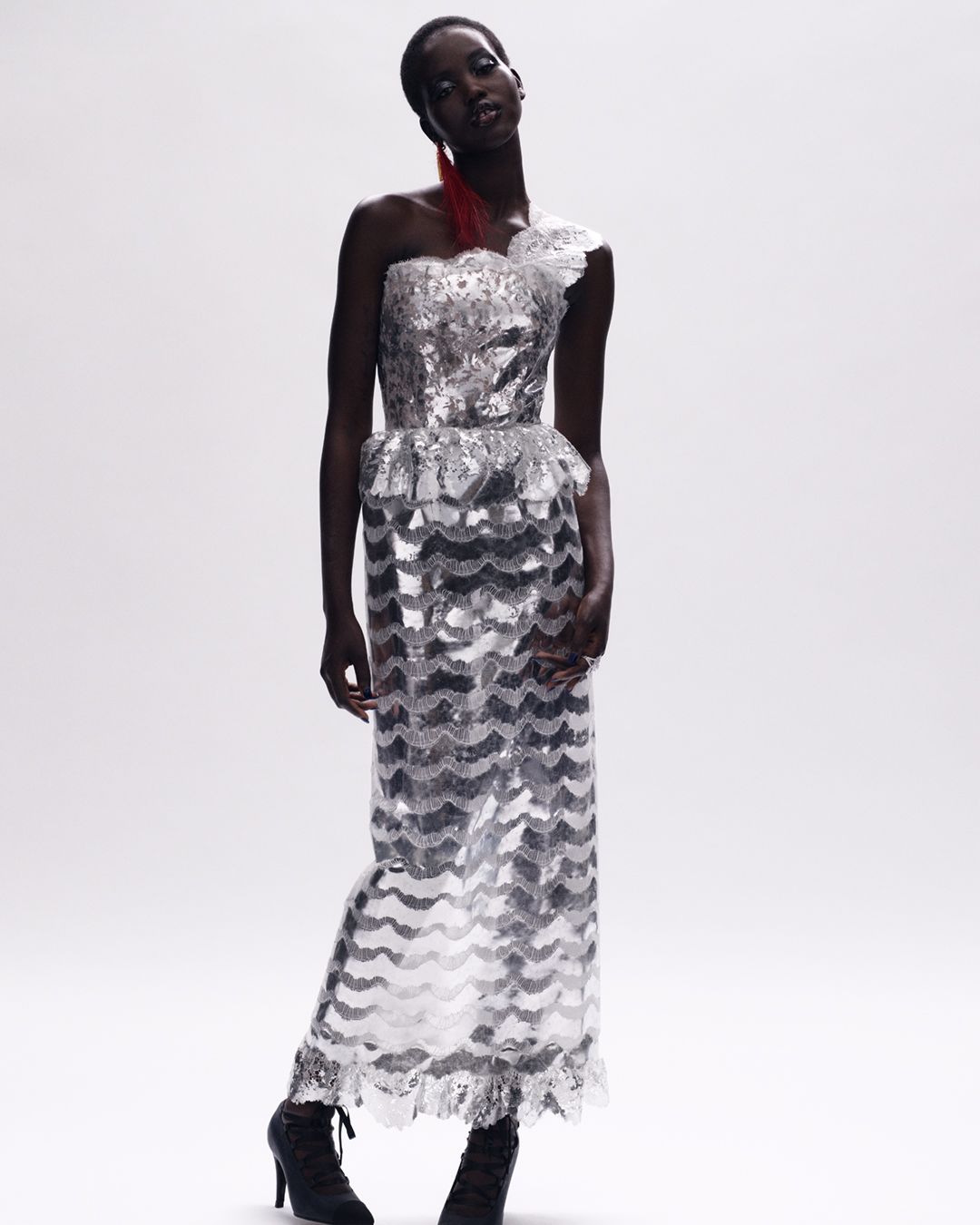
A look from Chanel's haute couture autumn/winter 2020-21. Courtesy Mikael Jansson
A look from Chanel's haute couture autumn/winter 2020-21. Courtesy Mikael Jansson

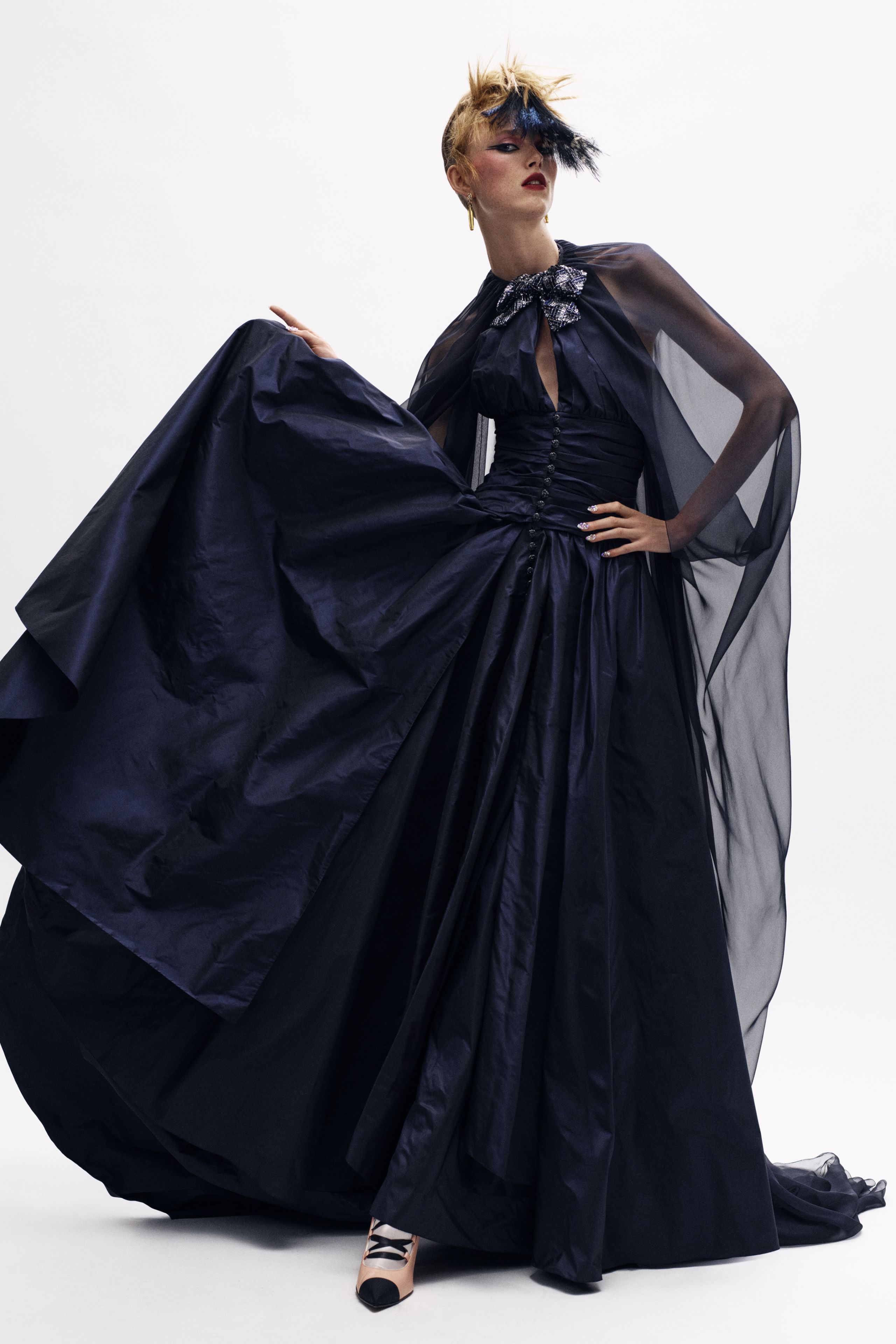
A look from Chanel's haute couture autumn/winter 2020-21. Courtesy Mikael Jansson
A look from Chanel's haute couture autumn/winter 2020-21. Courtesy Mikael Jansson

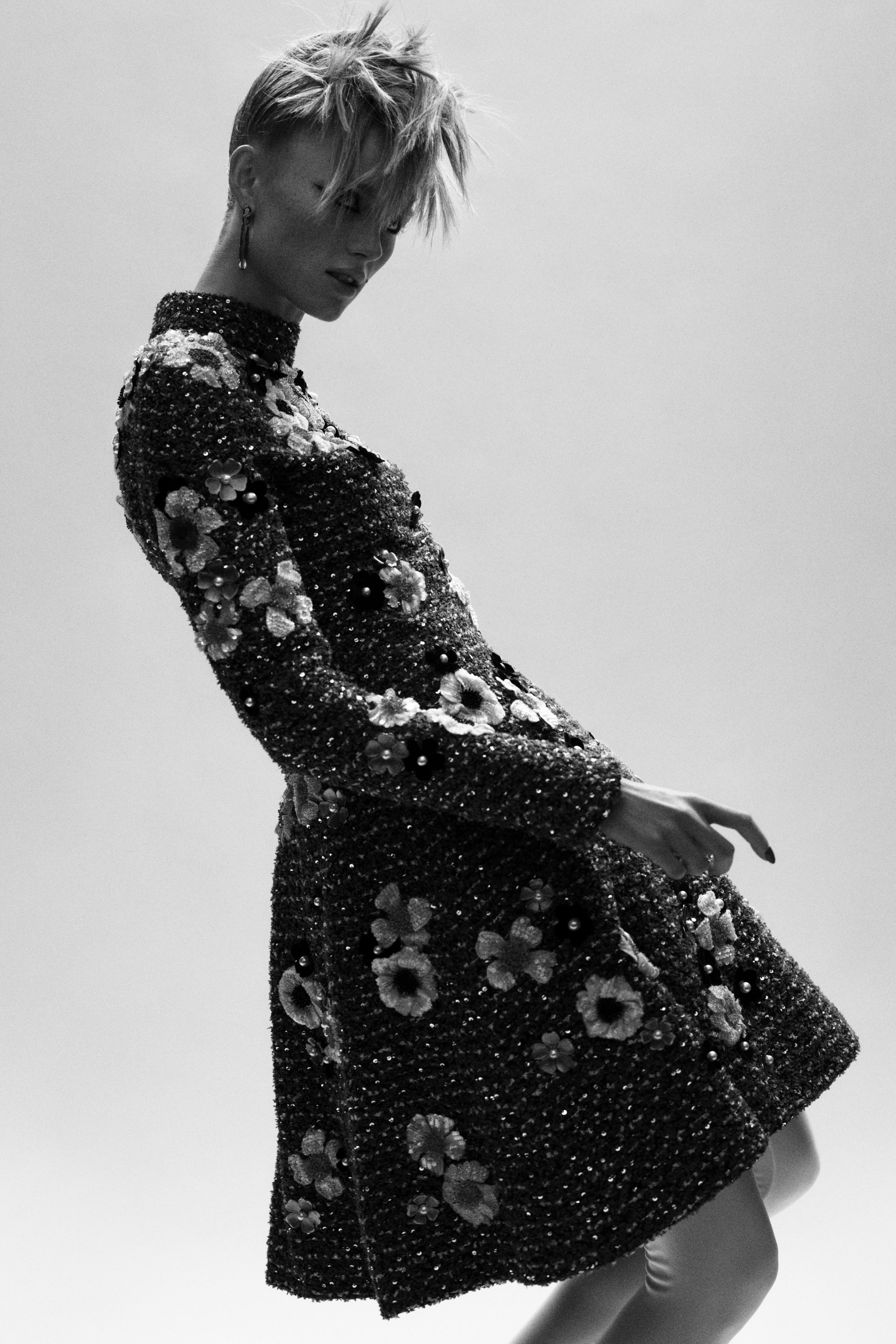
A look from Chanel's haute couture autumn/winter 2020-21. Courtesy Mikael Jansson
A look from Chanel's haute couture autumn/winter 2020-21. Courtesy Mikael Jansson

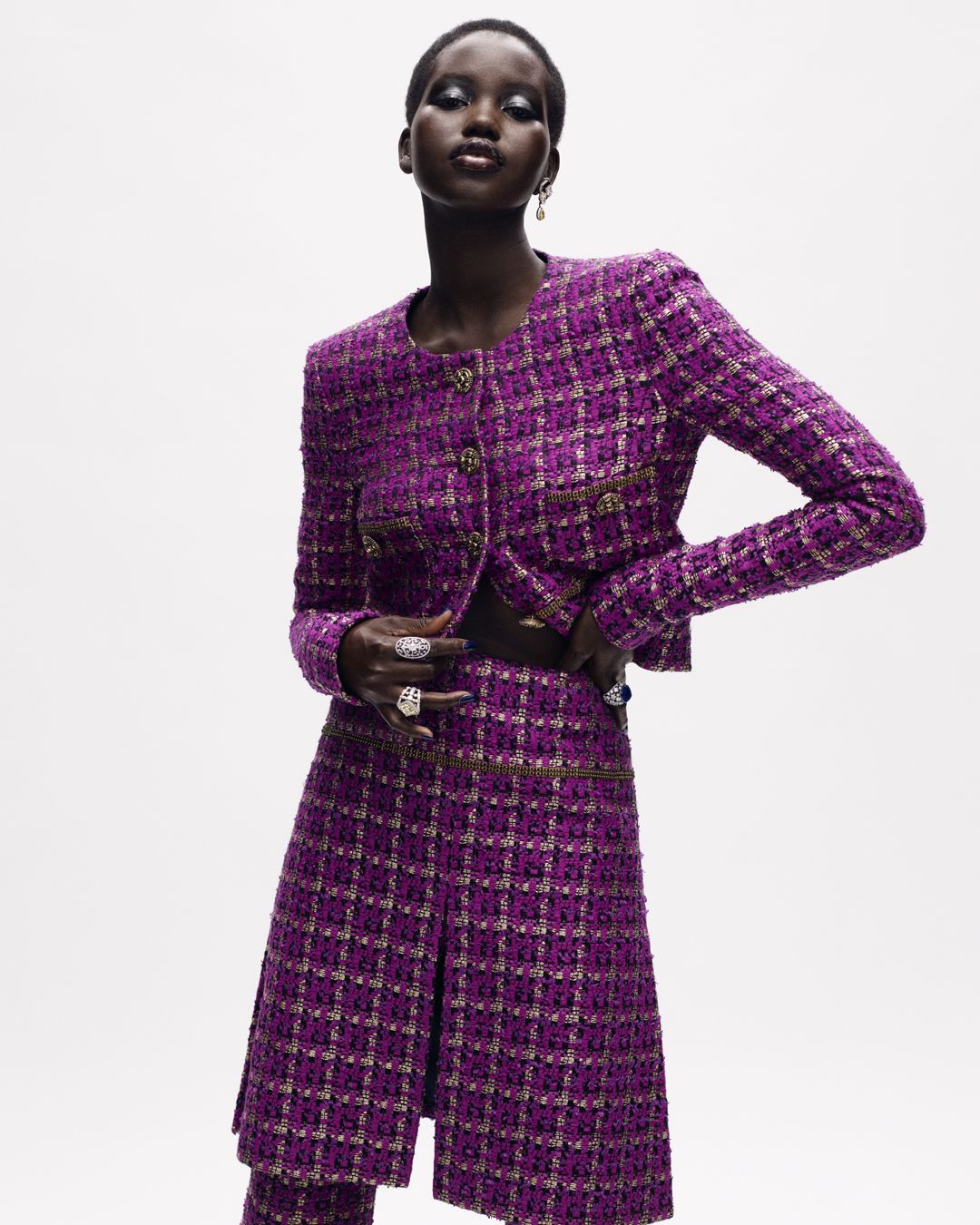
A look from Chanel's haute couture autumn/winter 2020-21. Courtesy Mikael Jansson
A look from Chanel's haute couture autumn/winter 2020-21. Courtesy Mikael Jansson
I know what you did last summer
Photography | Moez Achour
Fashion director | Sarah Maisey
Model | Ninoska at Bareface
Hair and make-up| Sharon Drugan

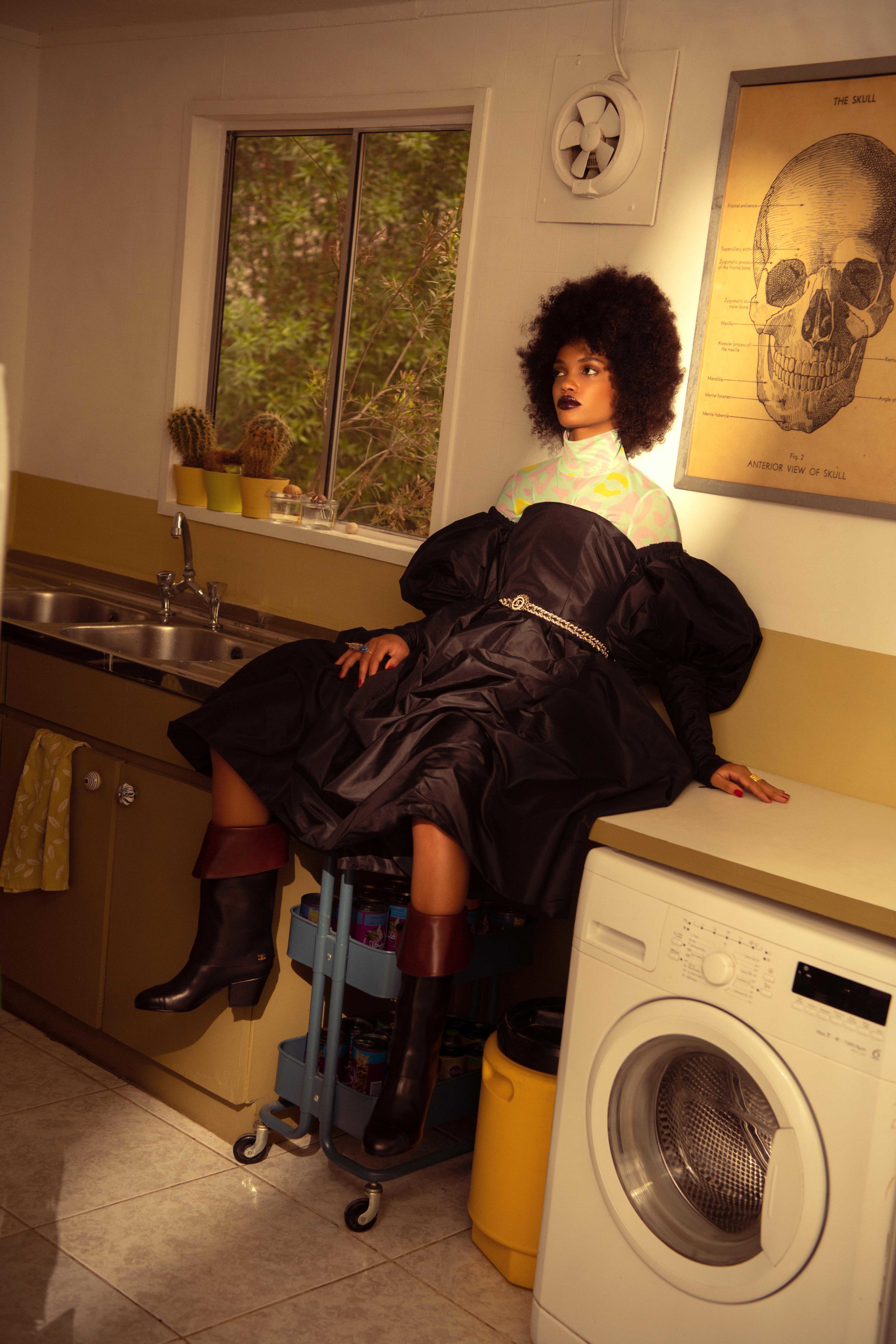
Dress; belt; and boots, price on request, all from Chanel. Top, Dh918, Ireneisgood at Shopbop. Stacked rings (on left hand), price on request, Bottega Veneta. Fish ring (on right hand), Dh2,450, Christian Dior
Dress; belt; and boots, price on request, all from Chanel. Top, Dh918, Ireneisgood at Shopbop. Stacked rings (on left hand), price on request, Bottega Veneta. Fish ring (on right hand), Dh2,450, Christian Dior

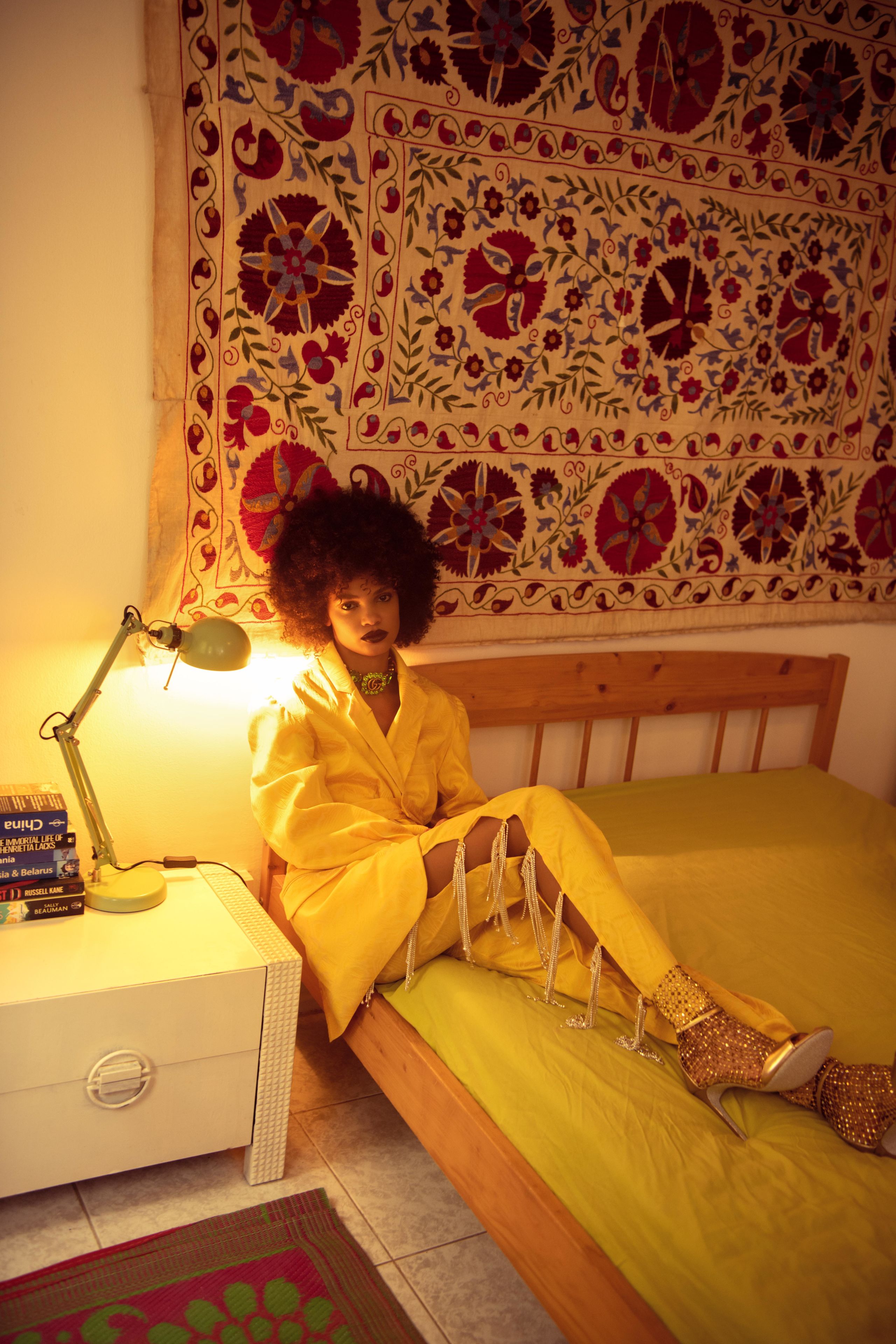
Jacket, Dh1,635; and trousers, Dh2,200, both from Madiyah Al Sharqi. Sandals, Dh5,350, Rene Caovilla. Necklace, Dh6,650, Gucci.
Jacket, Dh1,635; and trousers, Dh2,200, both from Madiyah Al Sharqi. Sandals, Dh5,350, Rene Caovilla. Necklace, Dh6,650, Gucci.

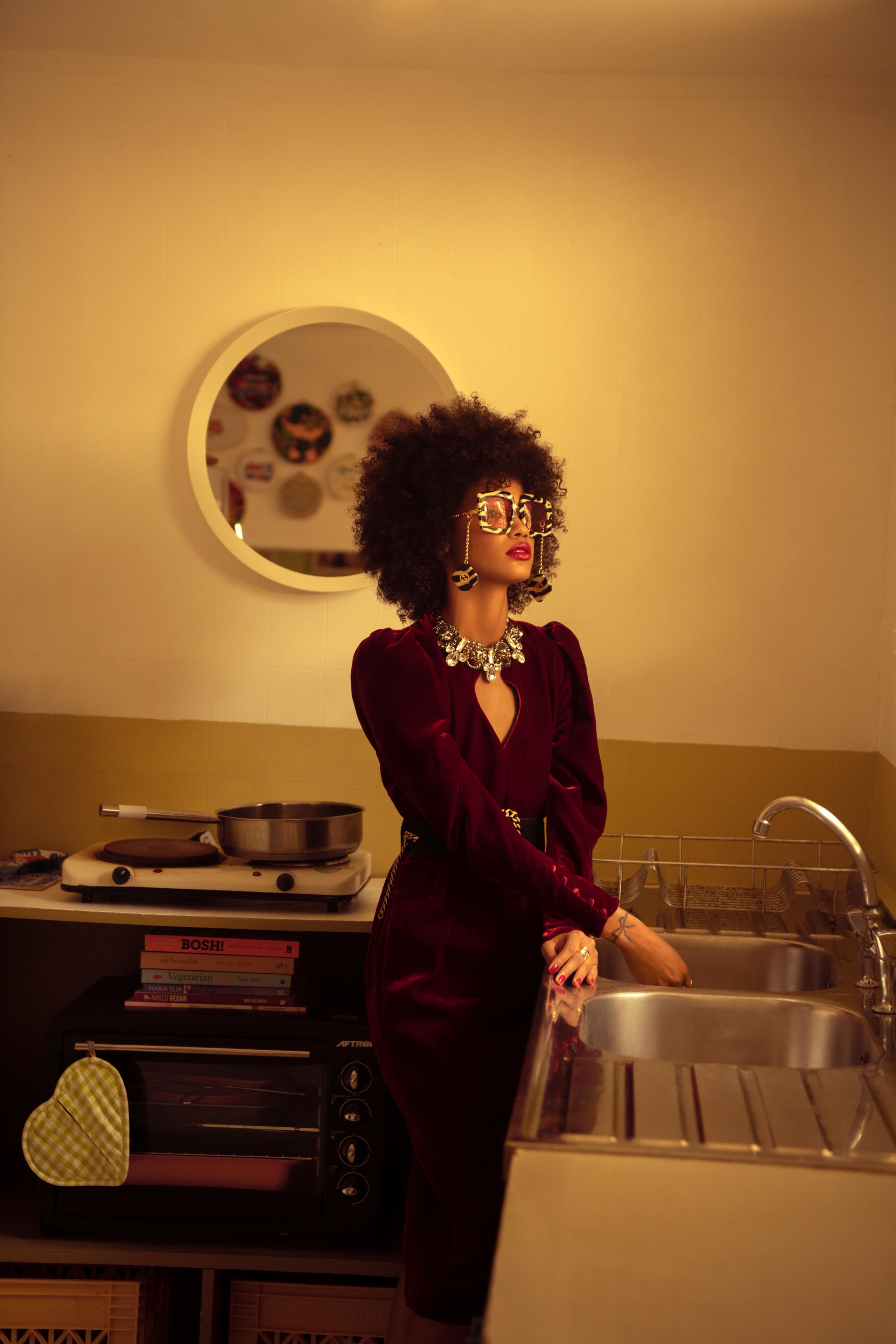
Dress, Dh11,550; and belt, Dh2,300, both from Saint Laurent. Sunglasses, Dh3,050; and necklace, Dh6,050, both from Gucci. Rings, as before
Dress, Dh11,550; and belt, Dh2,300, both from Saint Laurent. Sunglasses, Dh3,050; and necklace, Dh6,050, both from Gucci. Rings, as before

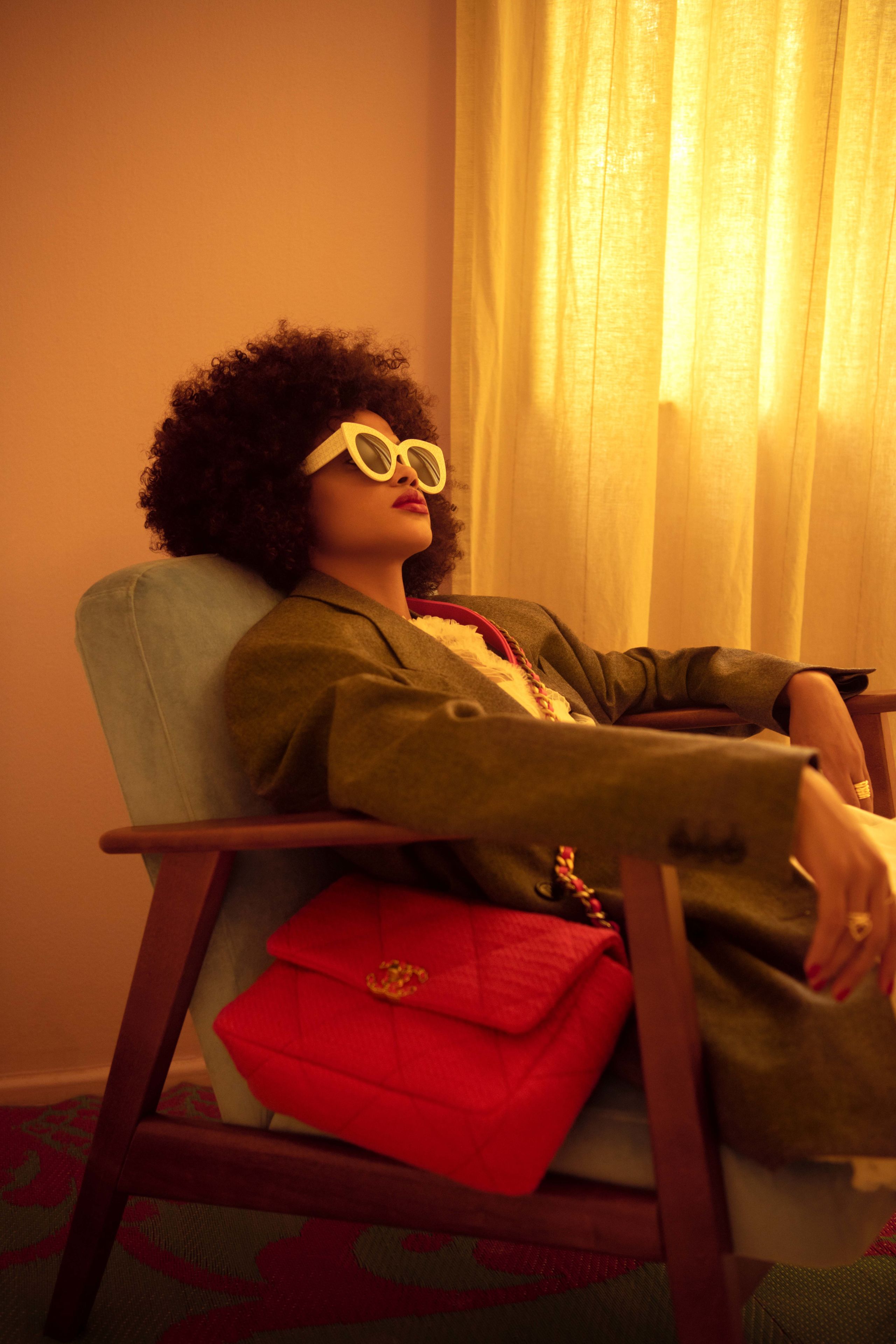
Jacket, Dh10,790; and dress, Dh17,300, both from Fendi. Sunglasses, Dh2,770, Alaia. Bag, price on request, Chanel. Rings (on right hand), from Dh2,200, MKS Jewellery. Rings (on left hand), as before
Jacket, Dh10,790; and dress, Dh17,300, both from Fendi. Sunglasses, Dh2,770, Alaia. Bag, price on request, Chanel. Rings (on right hand), from Dh2,200, MKS Jewellery. Rings (on left hand), as before

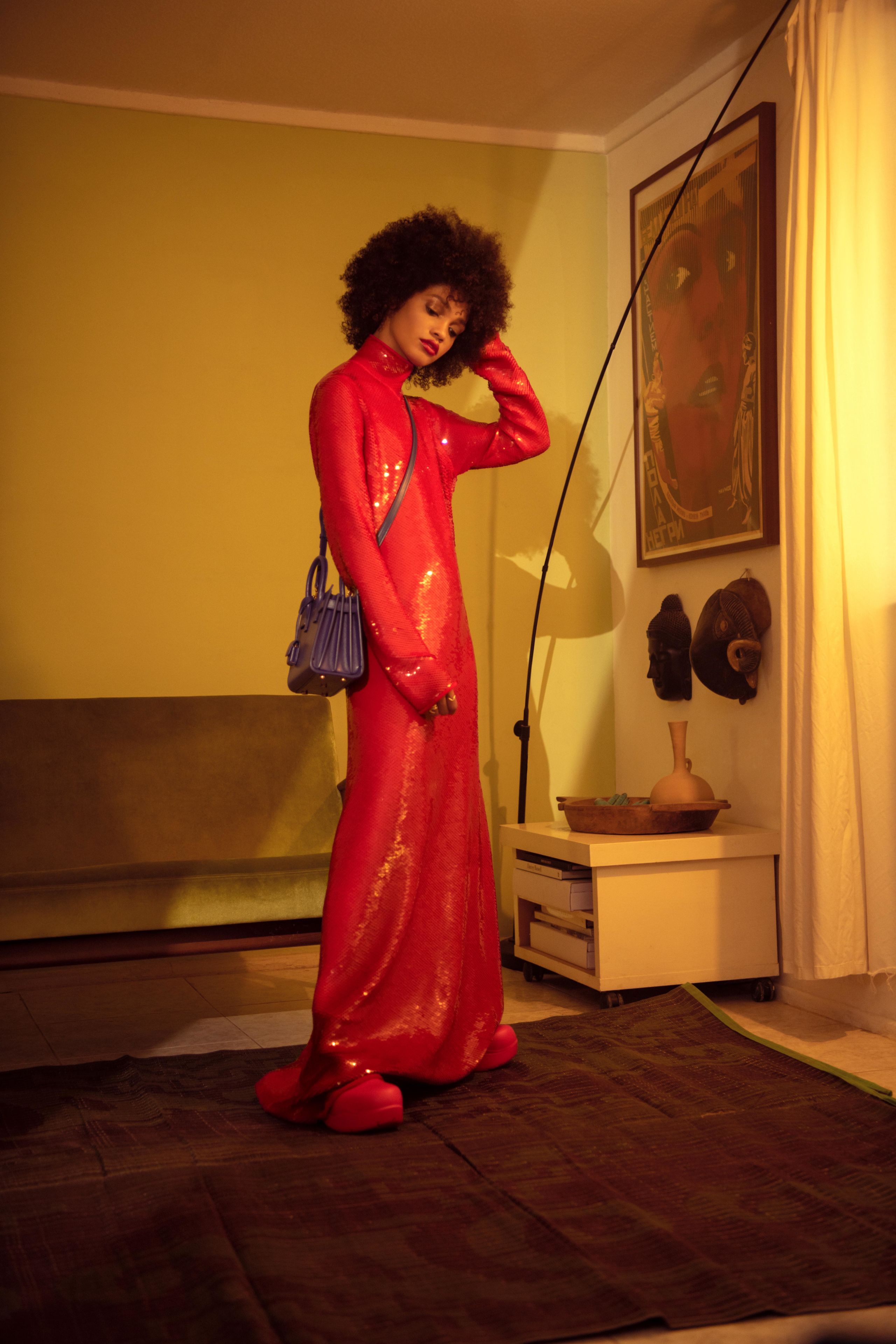
Dress, price on request; and boots Dh2,400, both from Bottega Veneta. Bag, Dh8,300, Saint Lauren
Dress, price on request; and boots Dh2,400, both from Bottega Veneta. Bag, Dh8,300, Saint Lauren

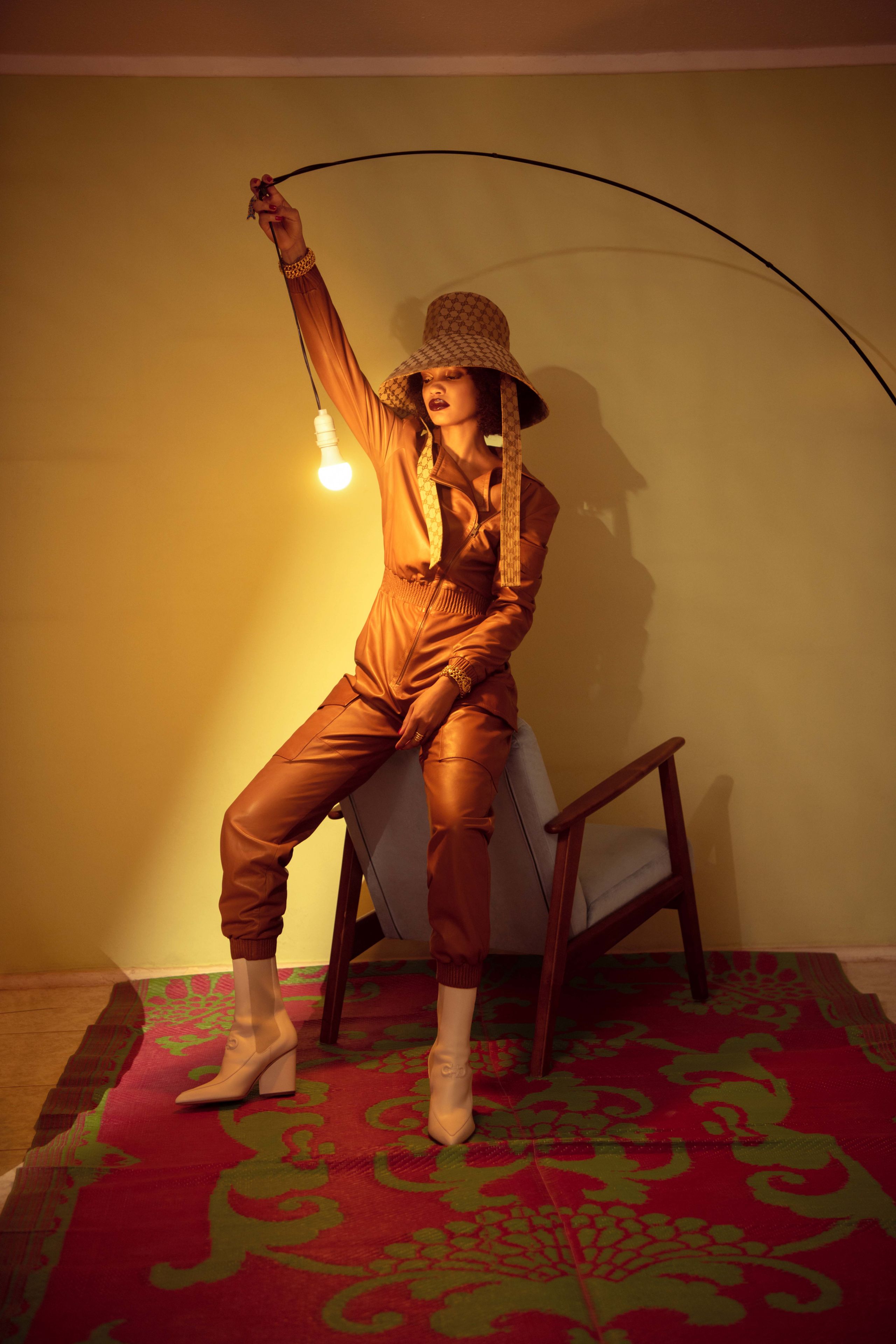
Jumpsuit, Dh7,900, Kristina Fidelskaya. Hat, Dh2,050, Gucci. Boots, Dh3,840, Salvatore Ferragamo. Bracelets, price on request, both from Chanel. Rings, as before
Jumpsuit, Dh7,900, Kristina Fidelskaya. Hat, Dh2,050, Gucci. Boots, Dh3,840, Salvatore Ferragamo. Bracelets, price on request, both from Chanel. Rings, as before

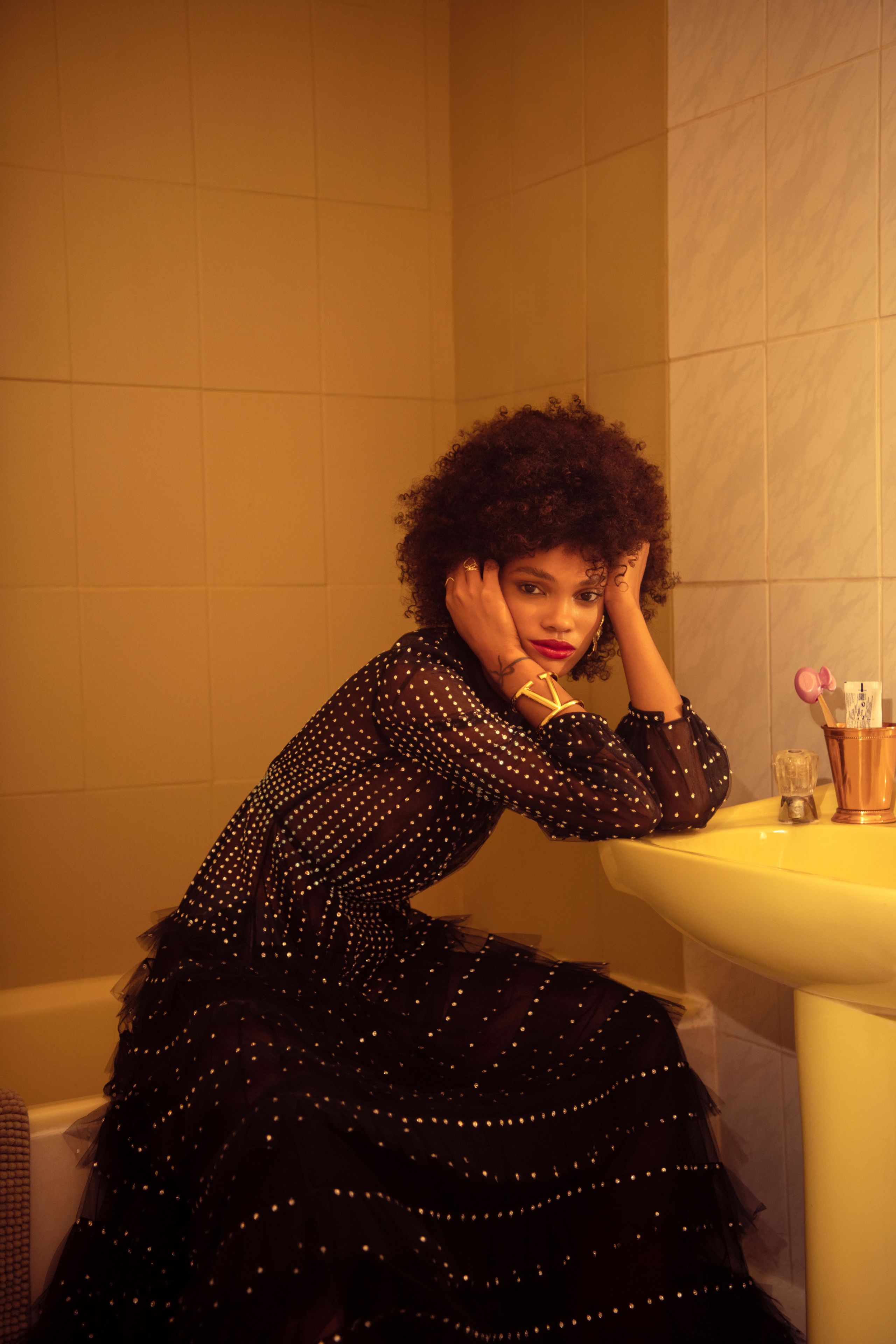
Gown, Dh54,000; and bracelet, Dh1,770; both from Valentino. Earrings, price on request, Saint Laurent. Rings, as before
Gown, Dh54,000; and bracelet, Dh1,770; both from Valentino. Earrings, price on request, Saint Laurent. Rings, as before

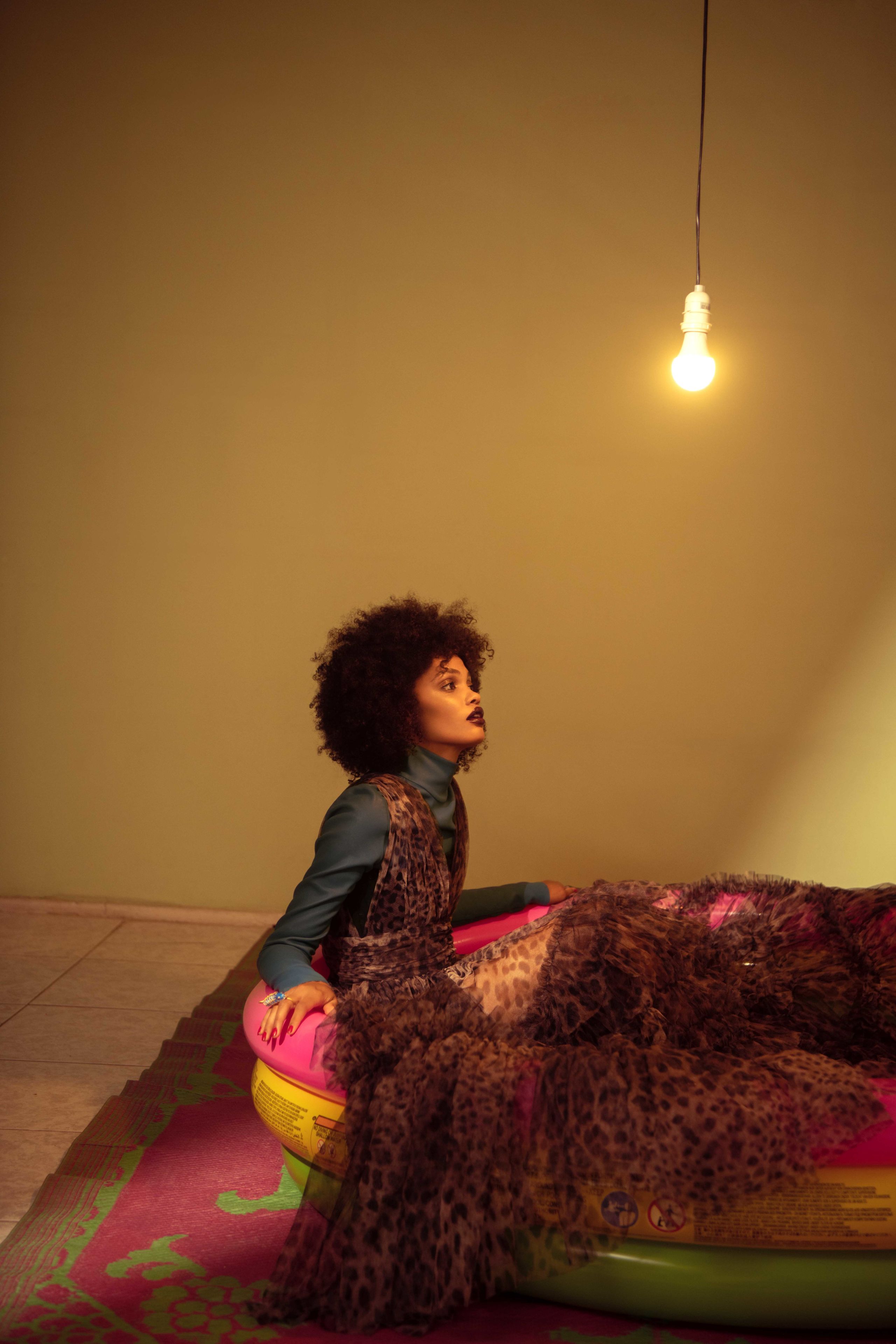
Top, Dh3,060, Kristina Fidelskaya. Dress, Dh30,000, Dolce & Gabbana. Ring, as before
Top, Dh3,060, Kristina Fidelskaya. Dress, Dh30,000, Dolce & Gabbana. Ring, as before

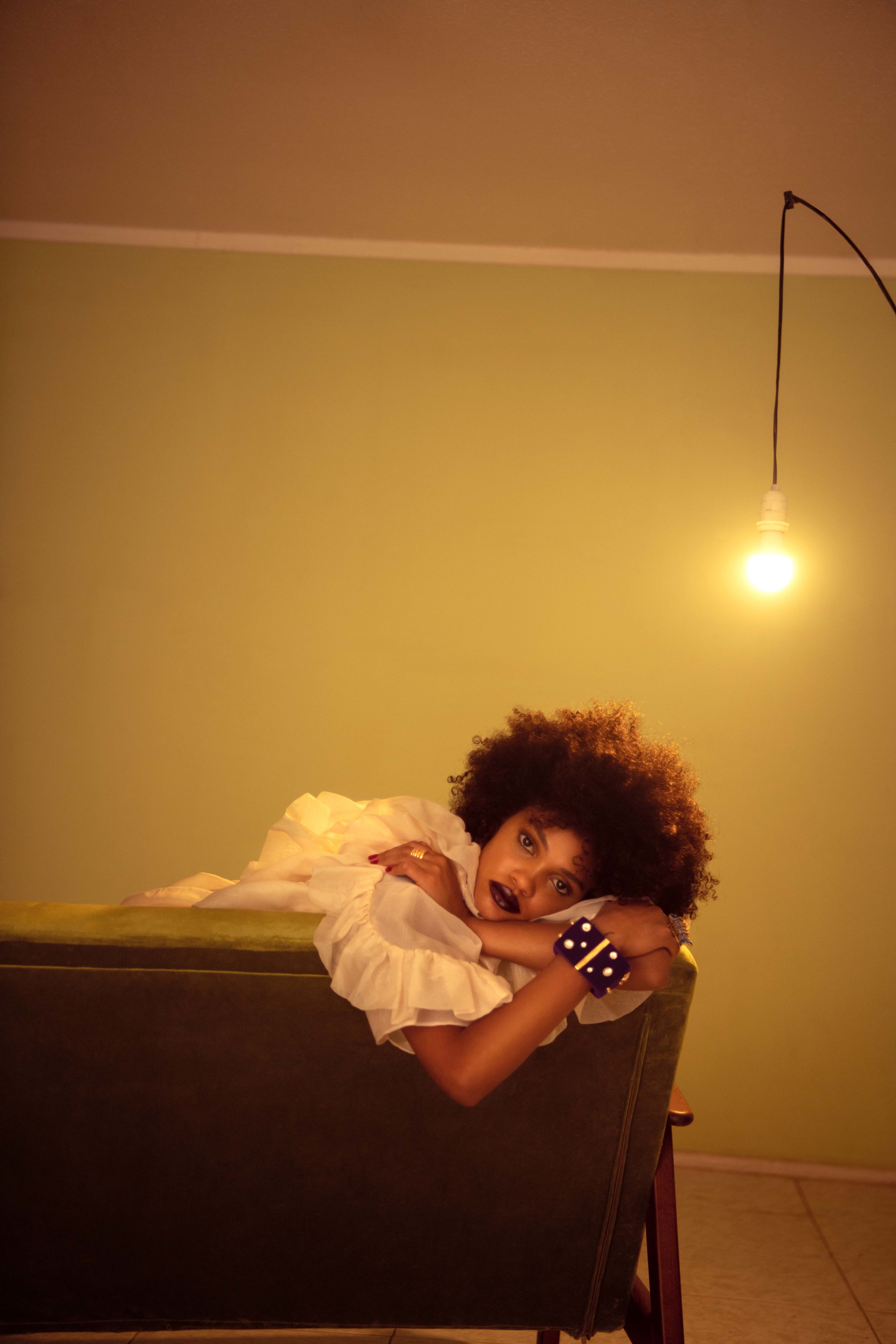
Dress, Dh5,760, Bazza Alzouman. Bracelet, Dh4,000, Gucci. Rings, as before
Dress, Dh5,760, Bazza Alzouman. Bracelet, Dh4,000, Gucci. Rings, as before

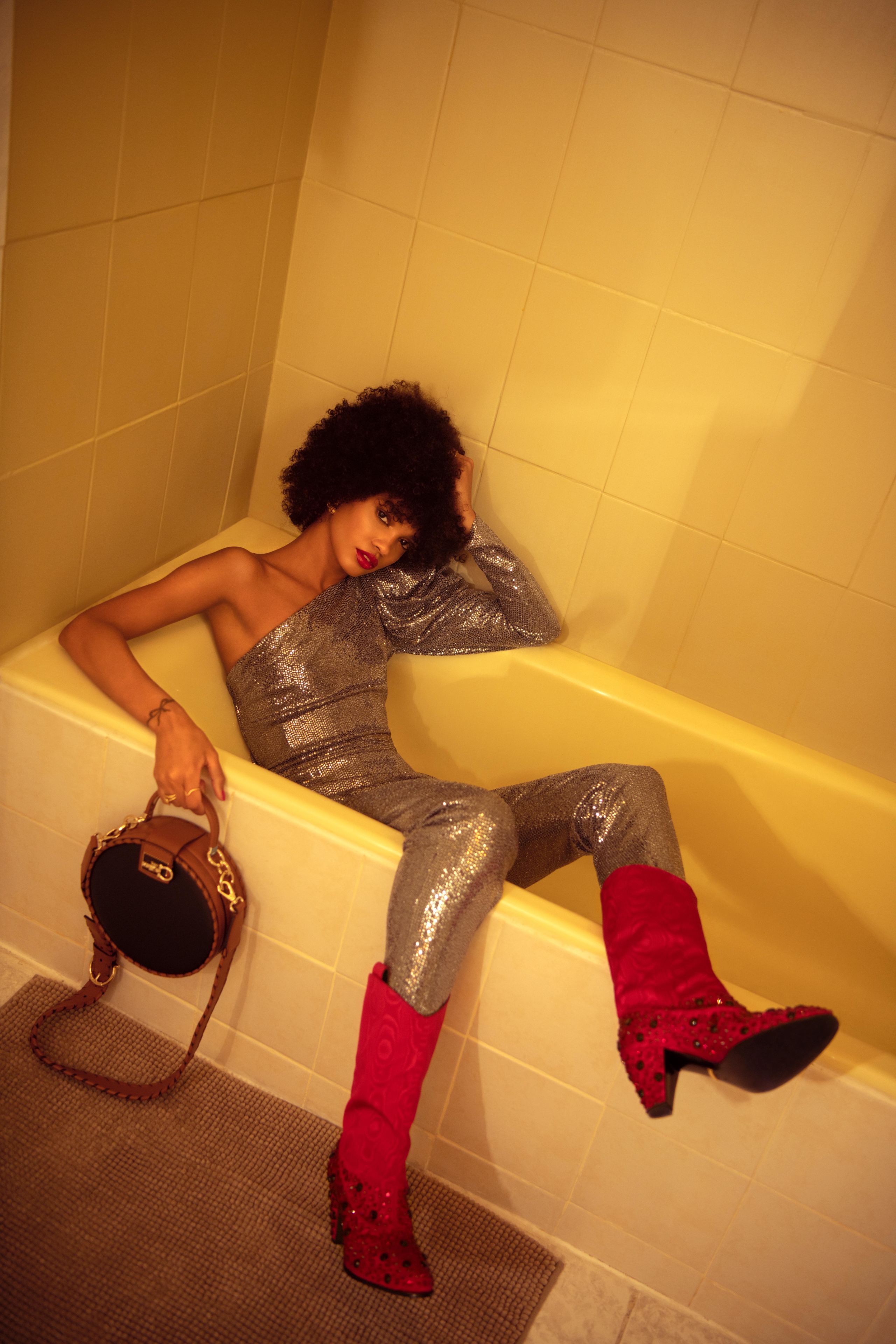
Jumpsuit, Dh5,438, SemSem. Boots, Dh6,250, Gucci. Bag Dh9,940, Salvatore Ferragamo. Rings, as before
Jumpsuit, Dh5,438, SemSem. Boots, Dh6,250, Gucci. Bag Dh9,940, Salvatore Ferragamo. Rings, as before
9 Ilkley, Cape Town, South Africa
South African design duo Kluk CGDT have translated their vibrant aesthetic into a pair of luxury ocean-view residences in Cape Town
“We are not scared of colour or pattern, we love unusual fabric and spend spare time on fabric safaris, seeking uniqueness,” say South African design duo Malcolm Kluk and Christiaan Gabriel Du Toit, the creative forces behind fashion label Kluk CGDT.
“We believe African fashion should be part of an international market with a local perspective. We do not believe in curio clothing, and we love Africa, so exploring 'what is African?' is a continual challenge and what makes us most excited when designing,” they add.

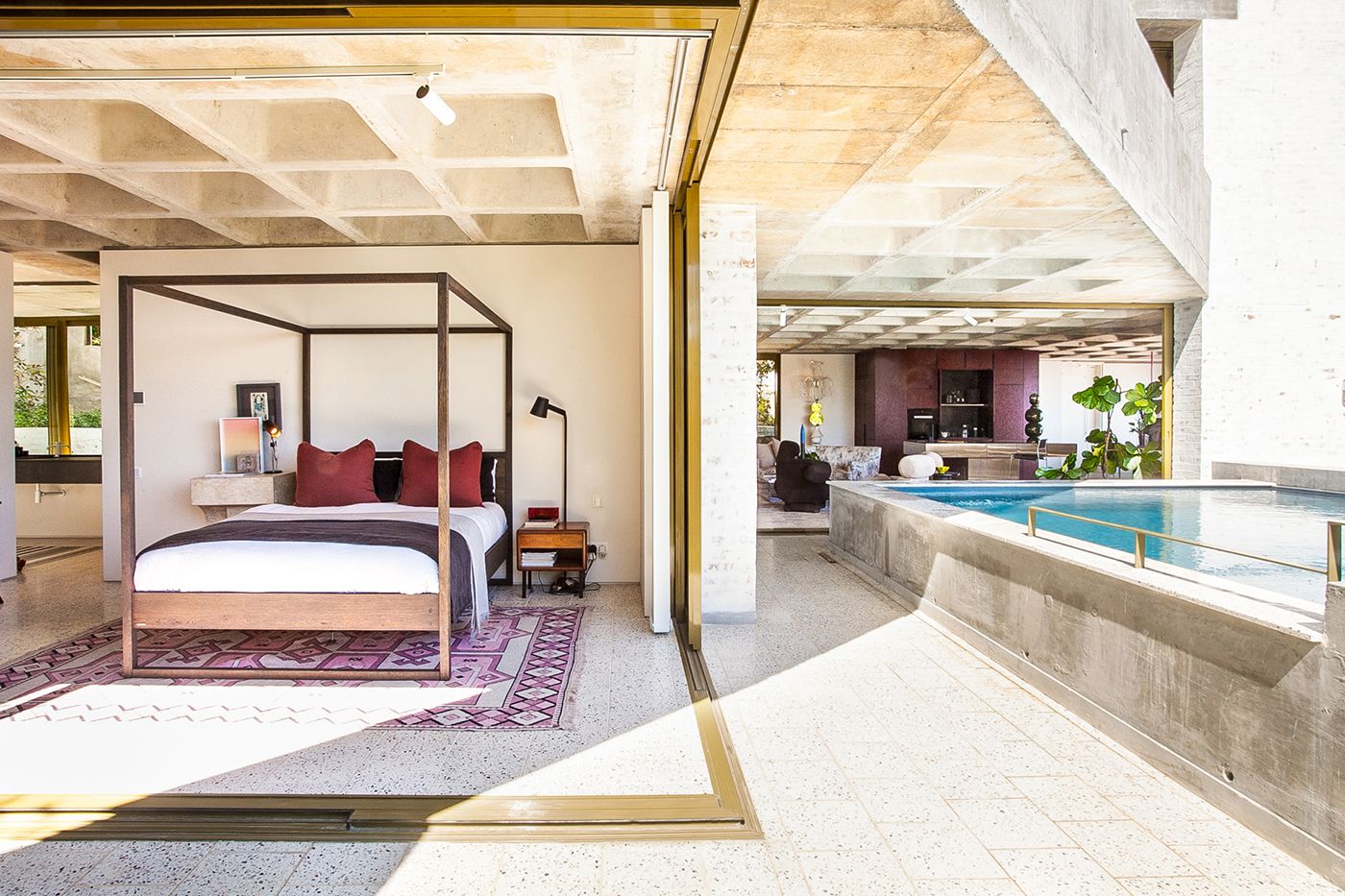
Kluk, who apprenticed under John Galliano, and du Toit have dressed the likes of Naomi Campbell, Beyonce, Shakira and Kate Moss, and have been named African Designers of the Year three times. Having achieved international acclaim with their ready-to-wear, red carpet and bridal creations, the pair extended their vibrant ethos to the design of residential properties, with their first official foray into bricks and mortar, Illkley, now on the market.
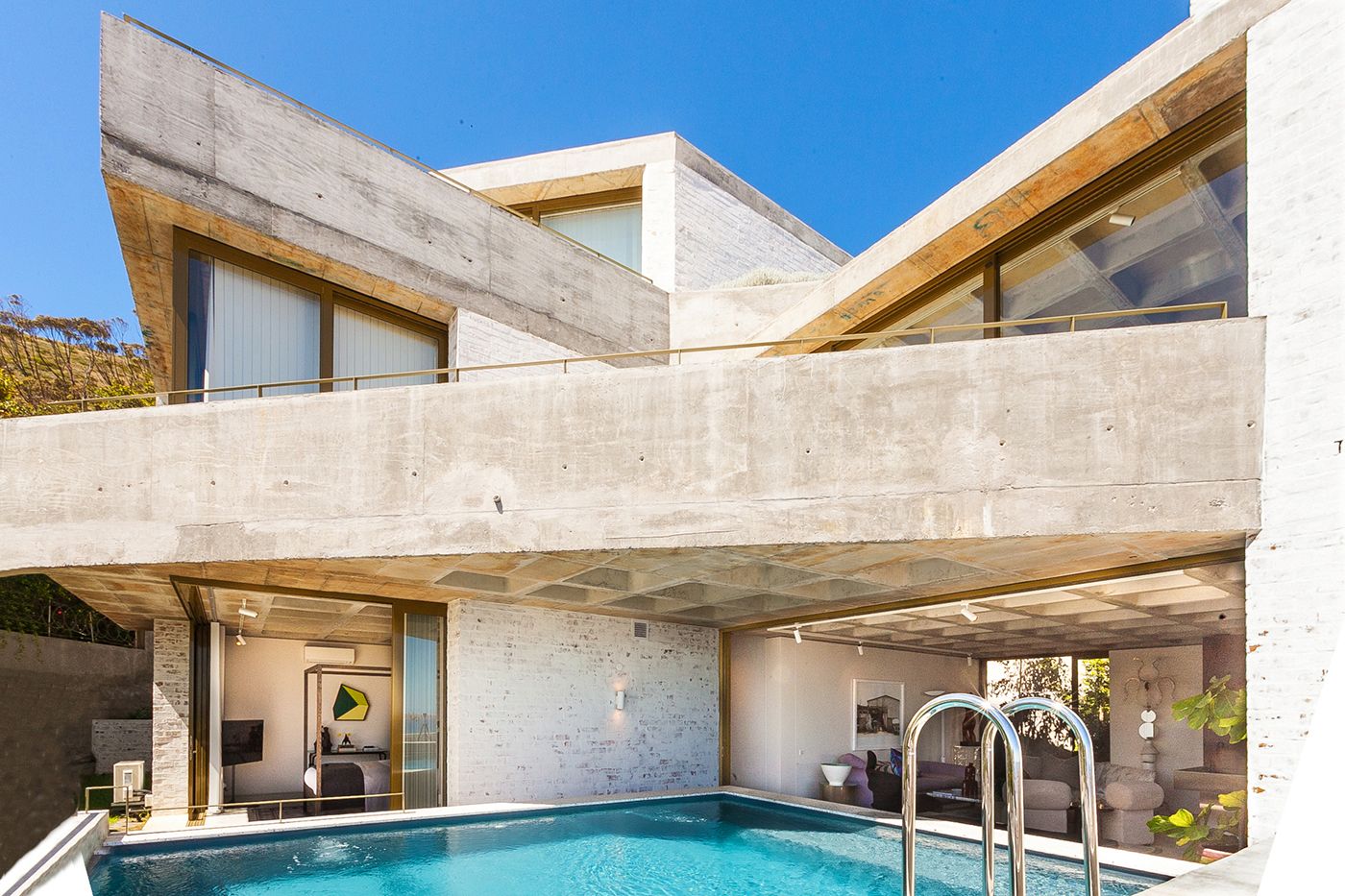
Situated in a quiet cul-de-sac at the foot of Signal Hill and the Table Mountain Nature Reserve, near the coast of Cape Town, Illkley consists of two three-bedroom luxury apartments, with panoramic views extending over both the Atlantic Ocean and Signal Hill. Available through London’s Montague Real Estate, the property is designed in modern, brutalist style, with an angular roof and terraces, stark white walls and terracotta tiles. While Kluk CGDT was responsible for the interiors, it partnered with South African firm Hours Clear on the bold architecture.

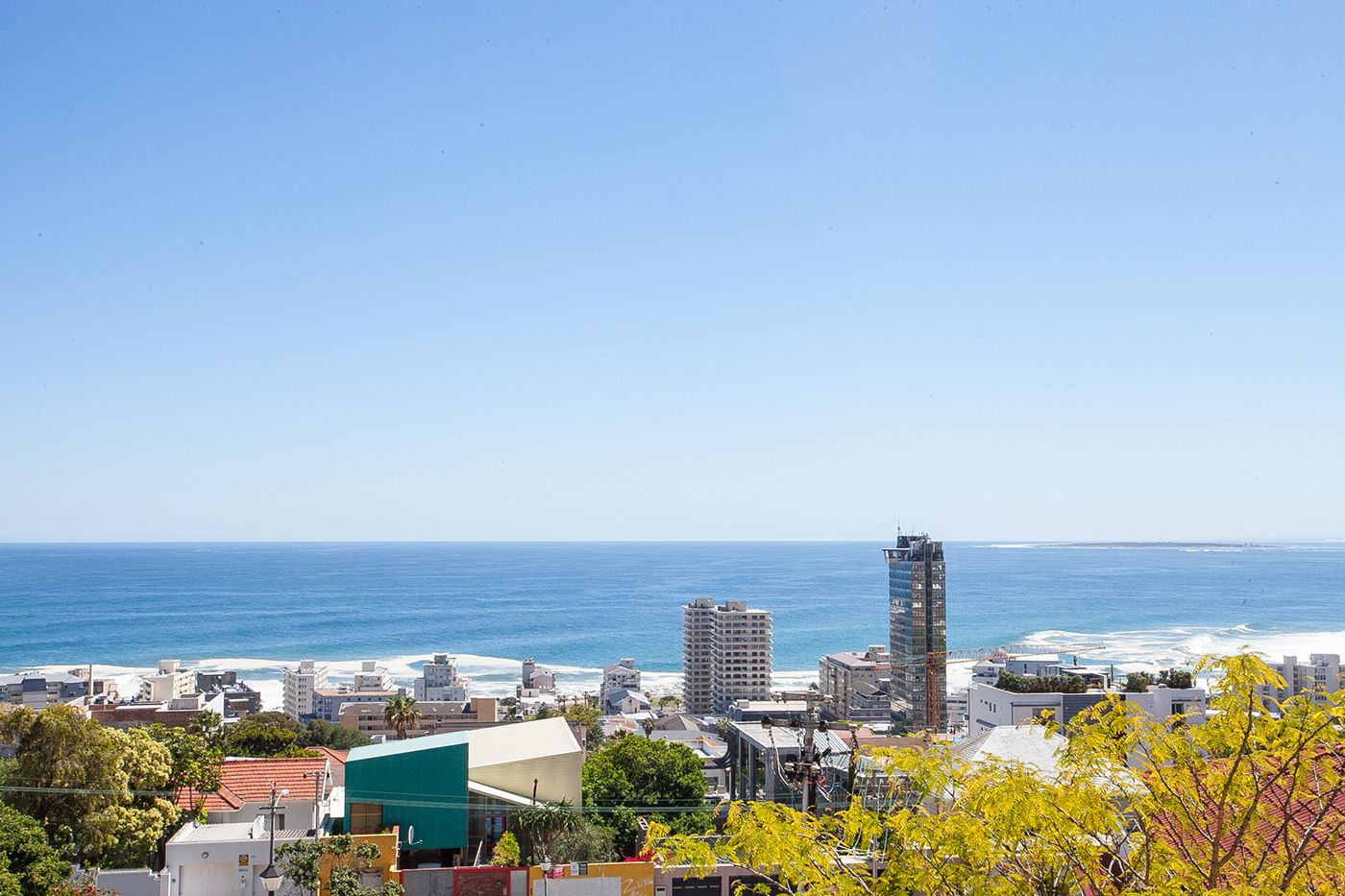
“These properties will offer a discerning buyer both style and substance, with the best that beautiful Cape Town has to offer,” says Kluk.
Located on the property’s second and third levels, the 363-square-metre Illkley 2 features three generously-sized en-suite rooms, a private garden, wood-burning fireplace, expansive terrace and swimming pool. The air-conditioned ocean-view main bedroom comes with a dressing room, private terrace, which also offers views of the sea, as well as an ensuite bathroom with a free-standing bath tub and separate shower and WC.
In the living areas, a seamless transition between the indoors and outdoors is created with large glass doors that tuck discreetly into the walls when opened. The entrance hall and dining room link to an outdoor “entrtainment terrace”, while a kitchen with a bespoke cooking station is complemented by a compact pantry area.

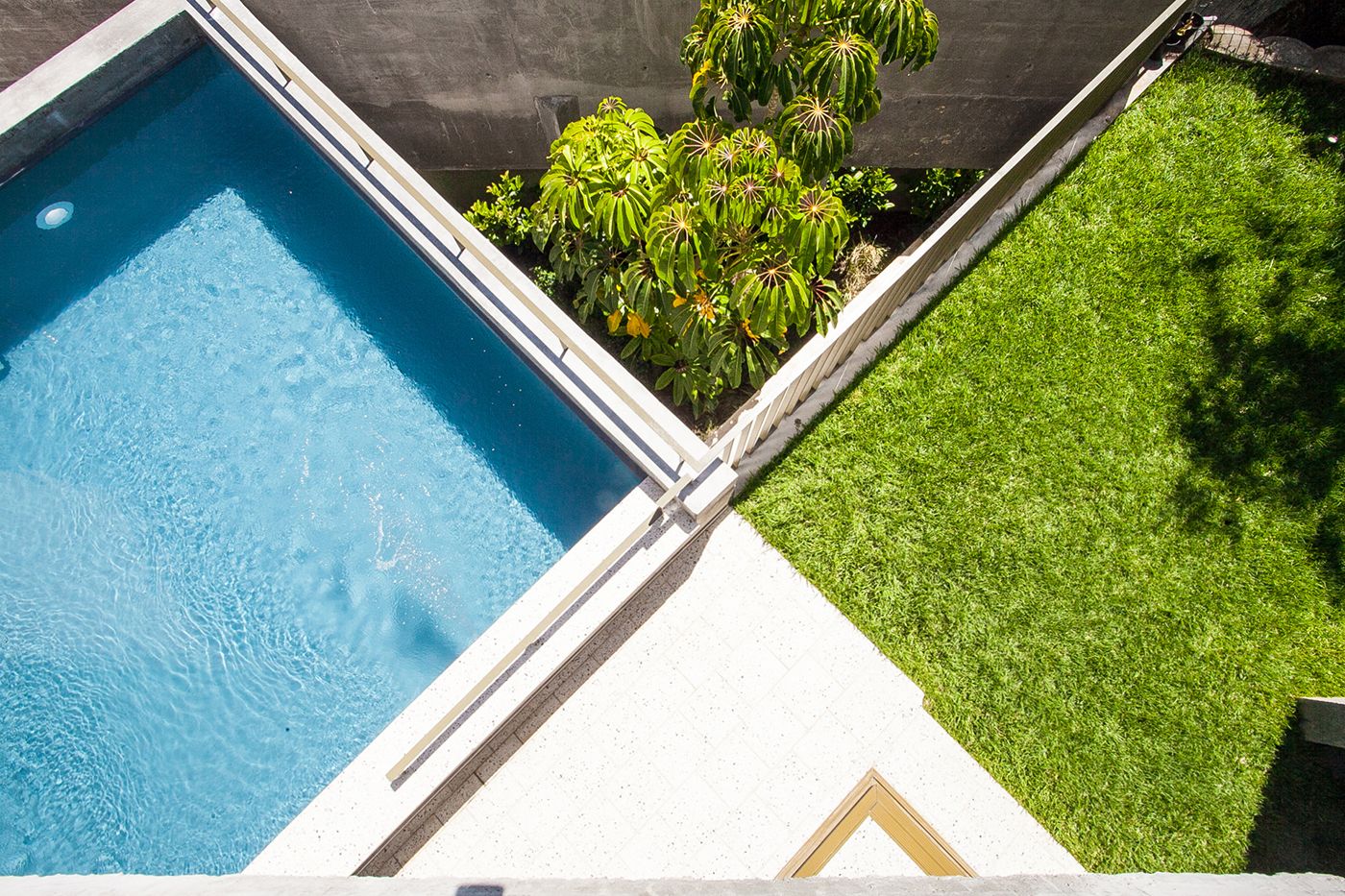
A plug-and-play home automation system integrates the intercom, security A/V and wifi, along with pre-programmed, customisable lighting settings.
The environmental impact of the apartments was a key consideration during the design process for Illkley. As a result, pools are equipped with chemical-free filtration systems and all LED lighting is automated. The orientation of the house is also designed to minimise heat loss in winter and provide shade in the summer, while the use of coffered slabs reduces the property’s carbon footprint by using less concrete in the build. Care was also taken to utilise locals materials in the construction of the property.

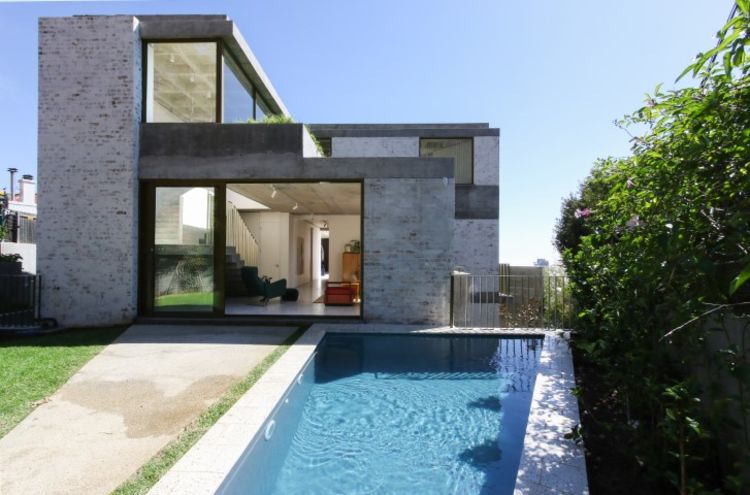
Each apartment unit comes with two secure, undercover, naturally ventilated off-street parking bays on the ground floor, which is also home to a private laundry room and an elevator leading to the building’s various levels. Video access control offers an aded layer of security.
“Opportunities to work with properties and designers of this pedigree are so rare, so we are naturally delighted to be able to facilitate the sale of what is Kluk CGDT’s iconic vision in property form,” says Thomas Balashev, founder and chief executive of Montague Real Estate.
Asking price: Dh4.5 million

Wearable technology
From next-generation earbuds to smart belts, Selina Denman rounds up some innovative accessories
Galaxy Buds Live

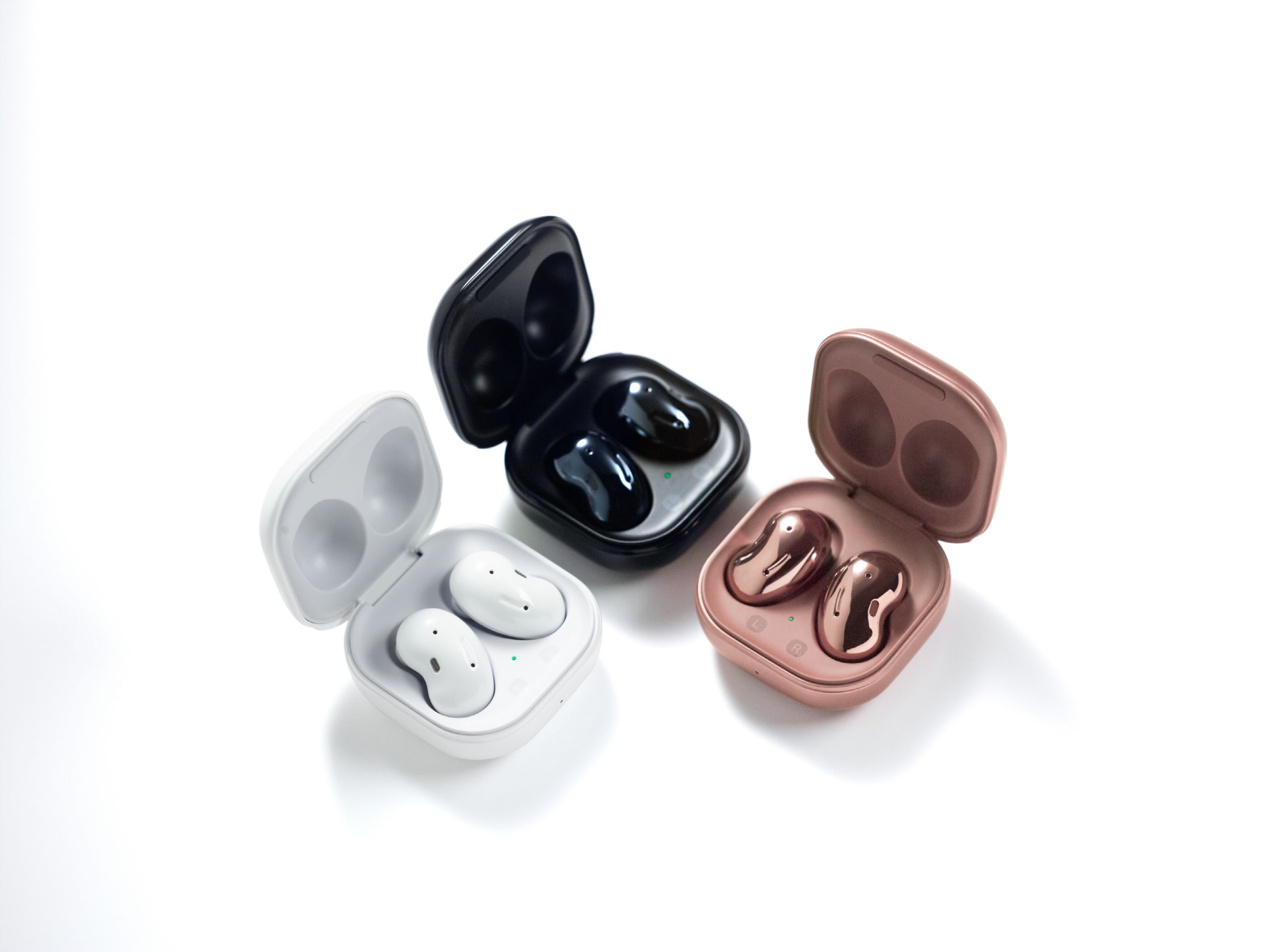
Samsung has released its Galaxy Buds Live, next-generation earbuds that also make a strong style statement. Samsung has turned traditional earbud design on its head, laying out internal components horizontally rather than vertically, so the sleek, glossy, kidney-shaped buds sit inside your ear, rather than protruding from it. The ergonomic, tip-less bud comes in bronze, white and black, and can be customised with two wingtip sizes.
A 12-millimetre speaker and bass duct deliver rich audio, while three microphones and a “Voice Pickup Unit” ensure you’ll come through loud and clear on the phone. The earbuds also feature Active Noise Cancellation (ANC) and will seamlessly switch between compatible devices – with no disconnecting and reconnecting required. They’ll also act as a wireless microphone when you’re recording audio for videos via the Galaxy Note20.
When fully charged, the Galaxy Buds can support up to six hours of playback, and the charging case offers an additional 15 hours over several charges.
Dh579, www.samsung.com
Welt Smart Belt

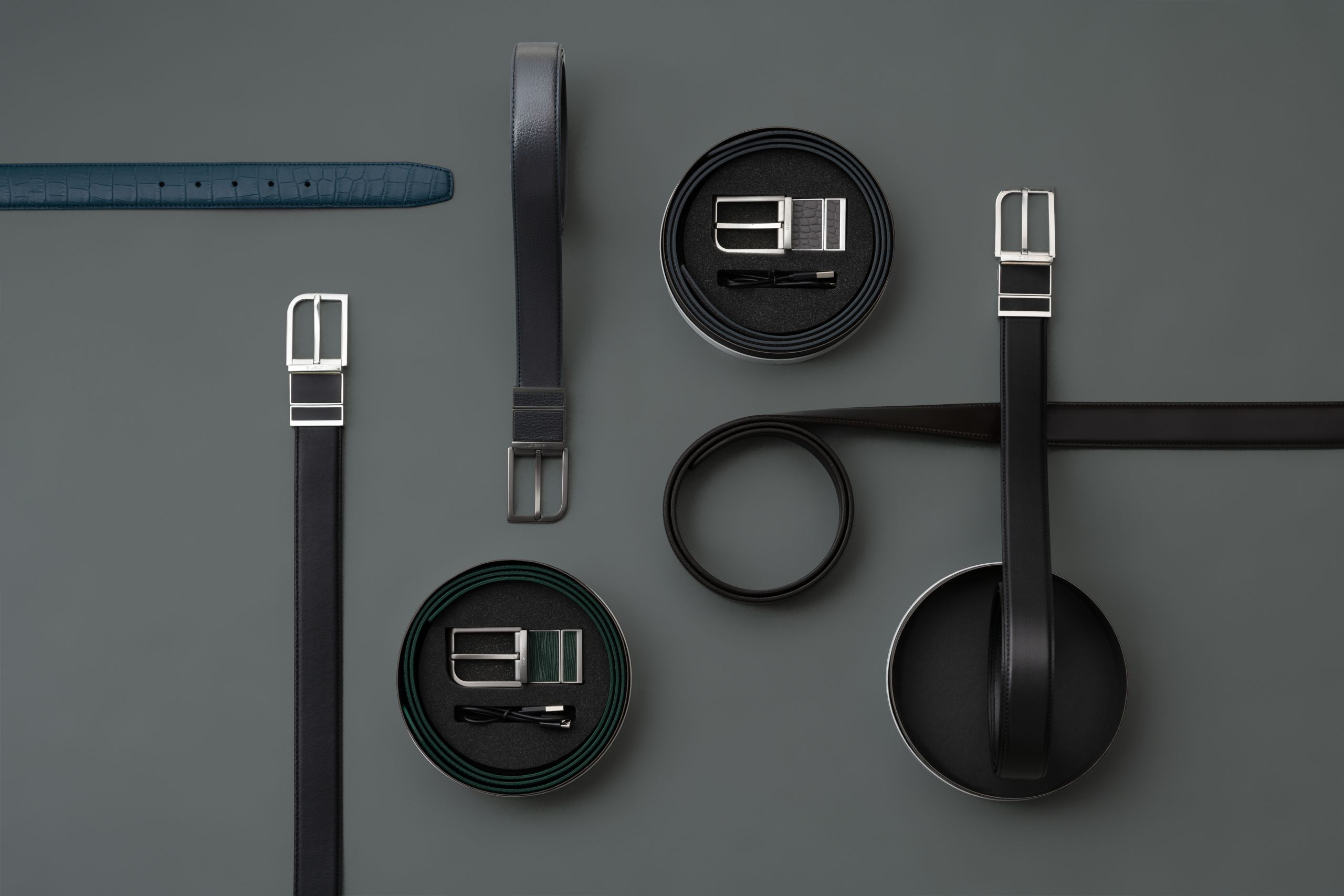
It may look like your average fashion accessory, but the Welt Smart Belt is actually quietly monitoring a range of health-related data – from a change in the size of your waist to the amount of time you spend sitting each day.
This information is translated into colour-coded prompts via an app that is available on iOS and Android. Based on your body type and calorie output, the Welt app will also provide recommendations regarding physical activity levels. A simple black or brown leather strap and silver buckle make it an unobtrusive addition to your health-monitoring routine, and a single charge should last you 50 days.
Welt is also launching an advanced version, the Smart Belt Pro, which is fitted with embedded sensors and algorithms that can accurately calculate the risk of its wearer falling, based on abnormal gait patterns. This is intended to be used by elderly customers, who are at a higher risk of falls resulting in serious injury. If a user shows an unstable gait pattern and a higher fall risk, they will receive a warning notification on their phone.
Welt Smart Belt, Dh599, www.weltcorp.ae
Reon Pocket

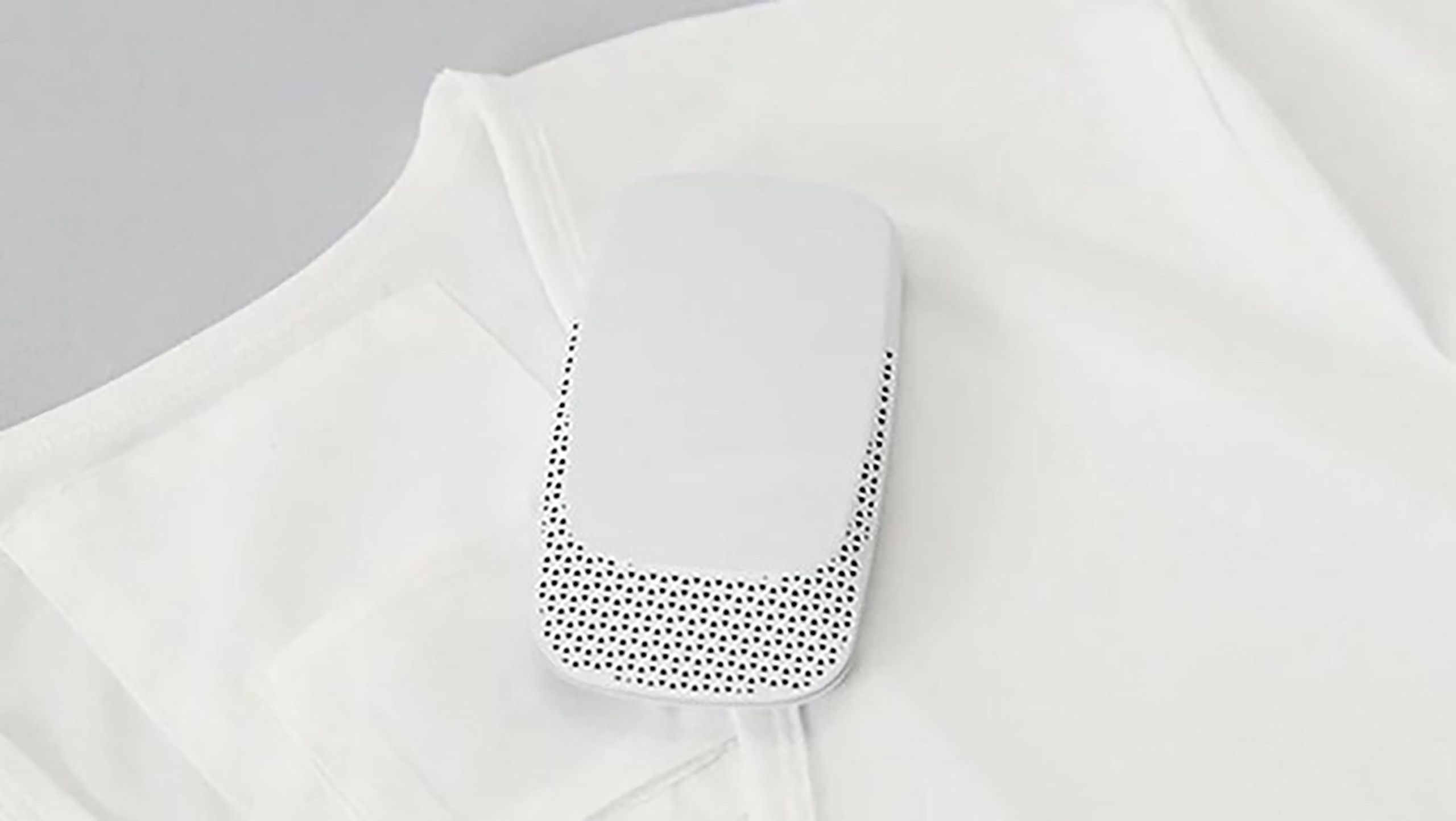
Originally scheduled for release in time for the Tokyo Olympics, the Reon Pocket is a concept delivered via Sony’s Japanese crowdfunding platform, First Flight. The personal air-conditioning device comes in a palm-sized, lightweight package and uses the Peltier effect to cool. It can connect to Android or iOS phones via Bluetooth, and promises to reduce your body surface temperature by up to 13°C. There is also an automatic mode that regulates temperature, using motion sensors that detect the user’s activity levels and then respond accordingly.
It can be used in isolation, but Sony is also selling a dedicated V-neck T-shirt with a special pocket tucked in between the shoulder blades. The device holds an internal battery that offers a two to four-hour running time, but it needs to be charged for two hours before use. While the device is currently only available in Japan, there appear to be plans to release it internationally.
Currently only available in Japan; www.sony.com
Beoplay E8 Sport On Edition

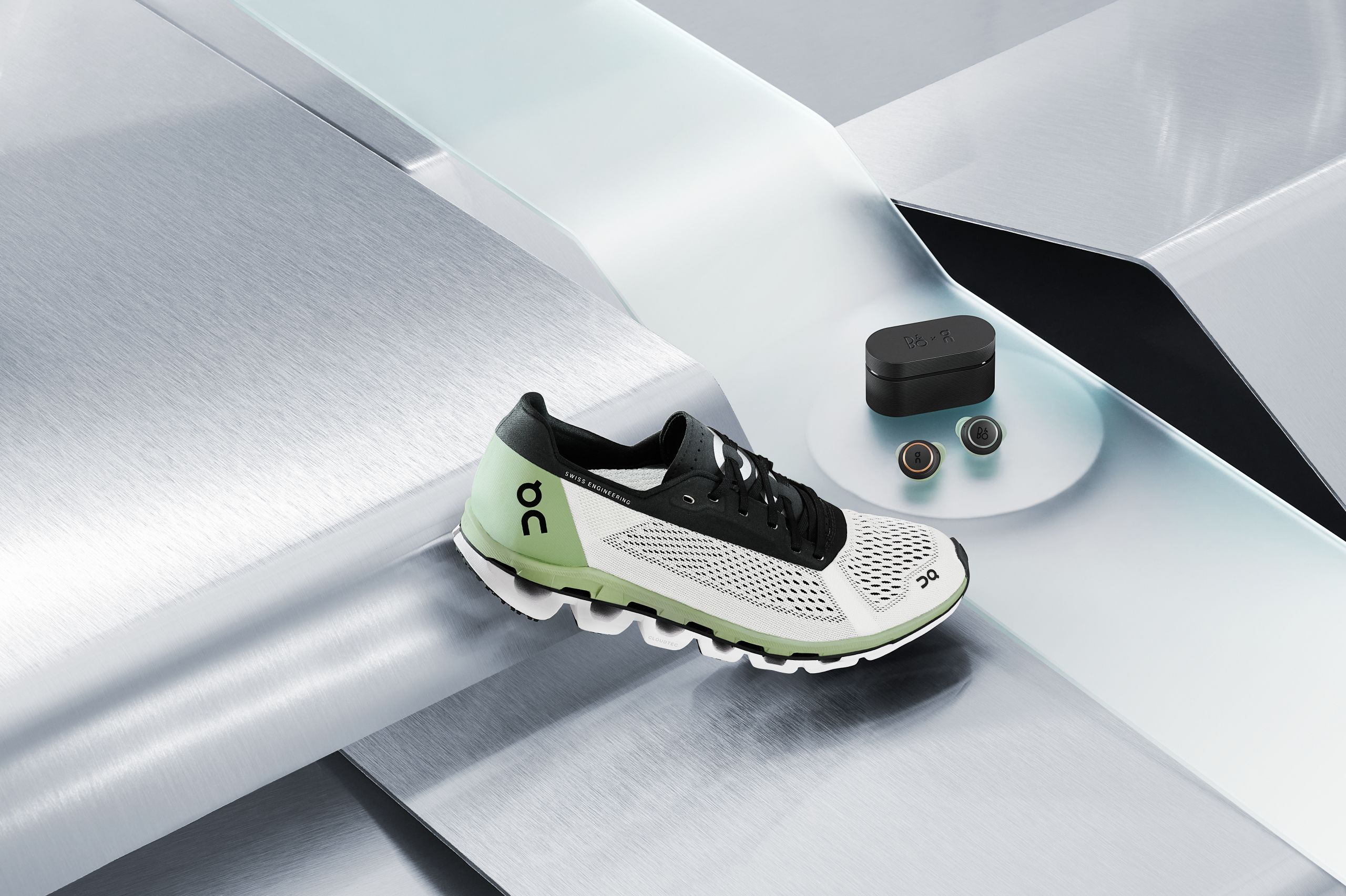
Bang & Olufsen has partnered with footwear brand On to release the ultimate running kit. On’s latest elite-level competition shoe, the Cloudboom, has been unveiled alongside a limited-edition of Bang & Olufsen’s wireless earphones, Beoplay E8 Sport On Edition.
The earphones feature ridged detailing that helps users adjust them even when fingers are sweaty, and the earphones can switch between tracks, take calls and activate Transparency Mode with a tap or swipe.
“We are excited to join forces with On Running to create the ultimate experience for runners," says Bang & Olufsen’s vice president of product management, Christoffer Poulsen. "Beoplay E8 Sport are Bang & Olufsen’s first dedicated sports earphones that combine what people are specifically looking for: a waterproof and customisable design that brings comfort to long runs and workouts, playtime that lasts way beyond the finish line and, most importantly, excellent sound quality ... nothing is more important than powerful music that can motivate, push you further and [help you] perform at your best.”
Beoplay E8 Sport On Edition, Dh1,590, www.on-running.com and www.bang-olufsen.com
Atmotube Pro

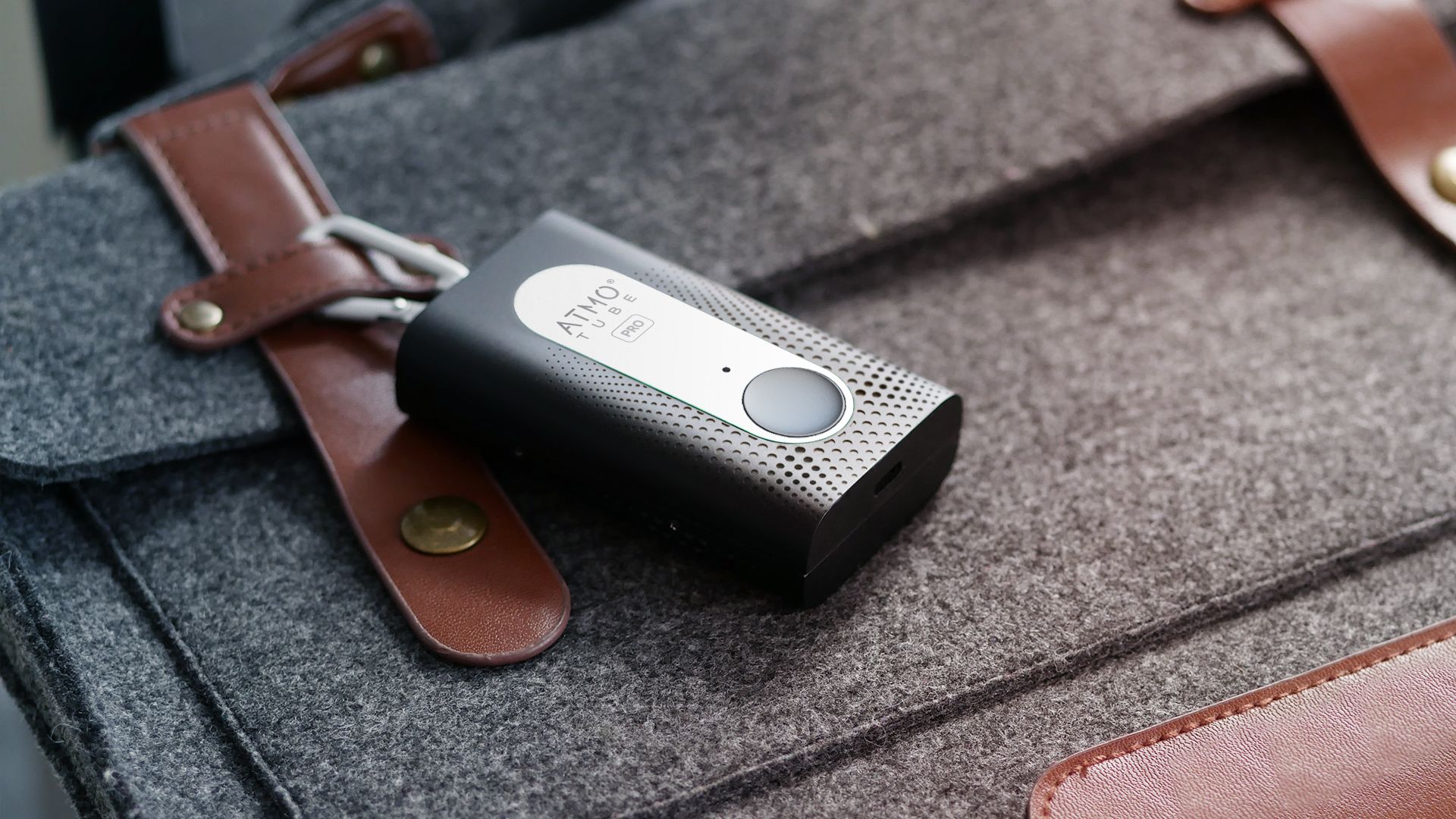
Atmotube is a line of portable air-quality monitors developed by NotAnotherOne, with the aim of making people more aware of pollution levels around them. The brand's founders would would visit Chinese factory sites regularly, which got them thinking about air pollution and whether there were ways for the average consumer to easily measure its levels. The idea for the Atmotube was was born. Last year, the company launched a second iteration, the Atmotube Pro, which has advanced sensors and detects particulate matter and volatile organic compounds on the go, and immediately alerts users to the presence of hazardous air. The nifty rectangular-shaped device is crafted from solid black graphite, with a grey aluminium tube at its centre.
Dh657, www.notanotherone.com
For the love of shoes
David Tusing takes a tour of Mohamed Al Safar's Burj Khalifa apartment, which houses one of the largest collections of rare trainers in the UAE
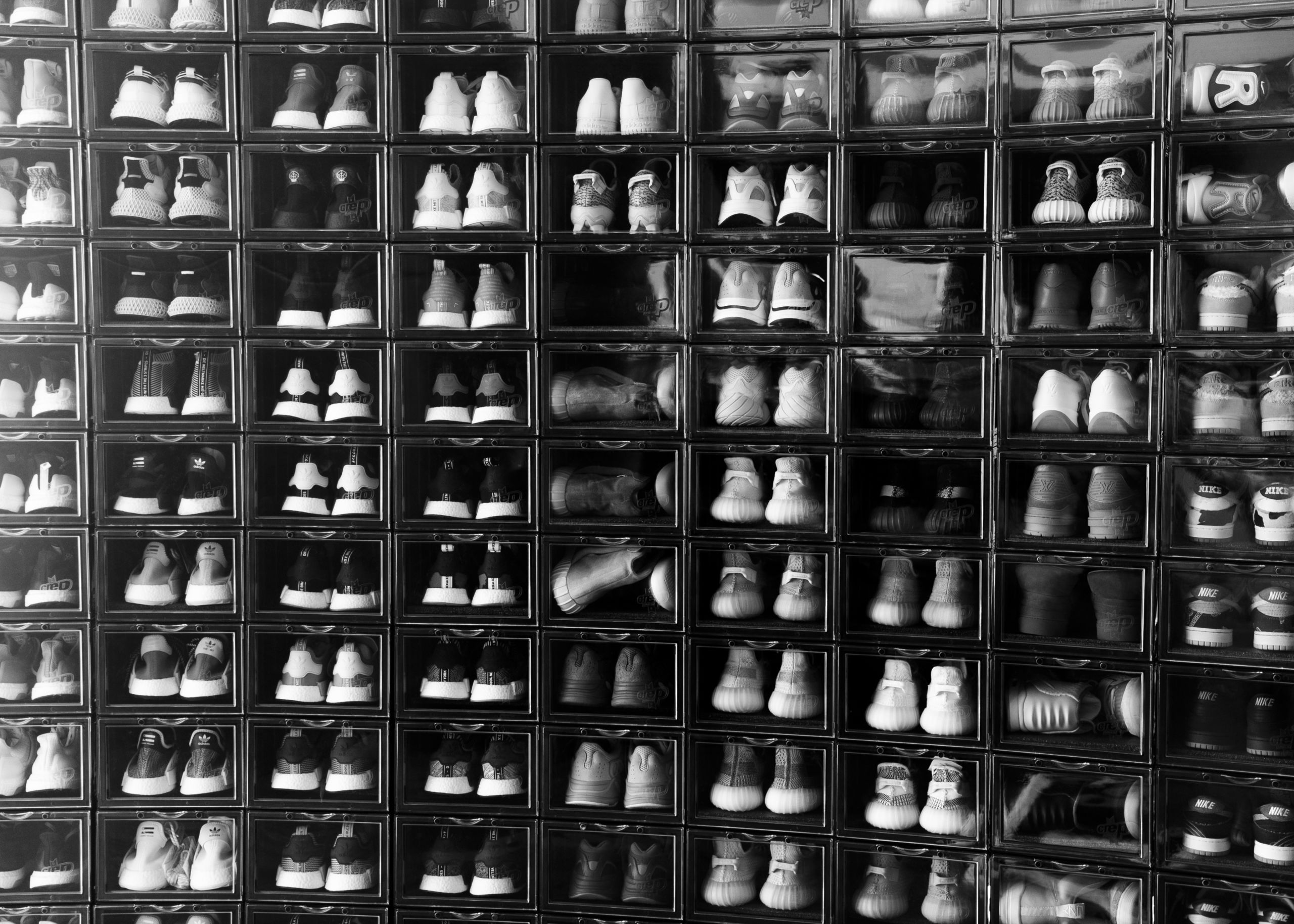
When Mohamed Al Safar, 31, a collector of trainers, ran out of space in his Dubai apartment for his 2,000-plus pairs of rare shoes worth an estimated $1million (Dh3.6m ), he chose the next best place to house them: a penthouse in the Burj Khalifa.
Here, in a luxurious apartment more than 100 floors up in the world’s tallest tower, Al Safar proudly displays his prized possessions in the living room, all neatly lined up in transparent boxes, shielded from dust and direct sunlight. The room temperature is always maintained at the optimum.
“This is just one third of my collection. The rest are in my home in California,” he says. “I usually spend half a year in the US, but since the Covid-19 situation, I haven’t been able to travel much.”

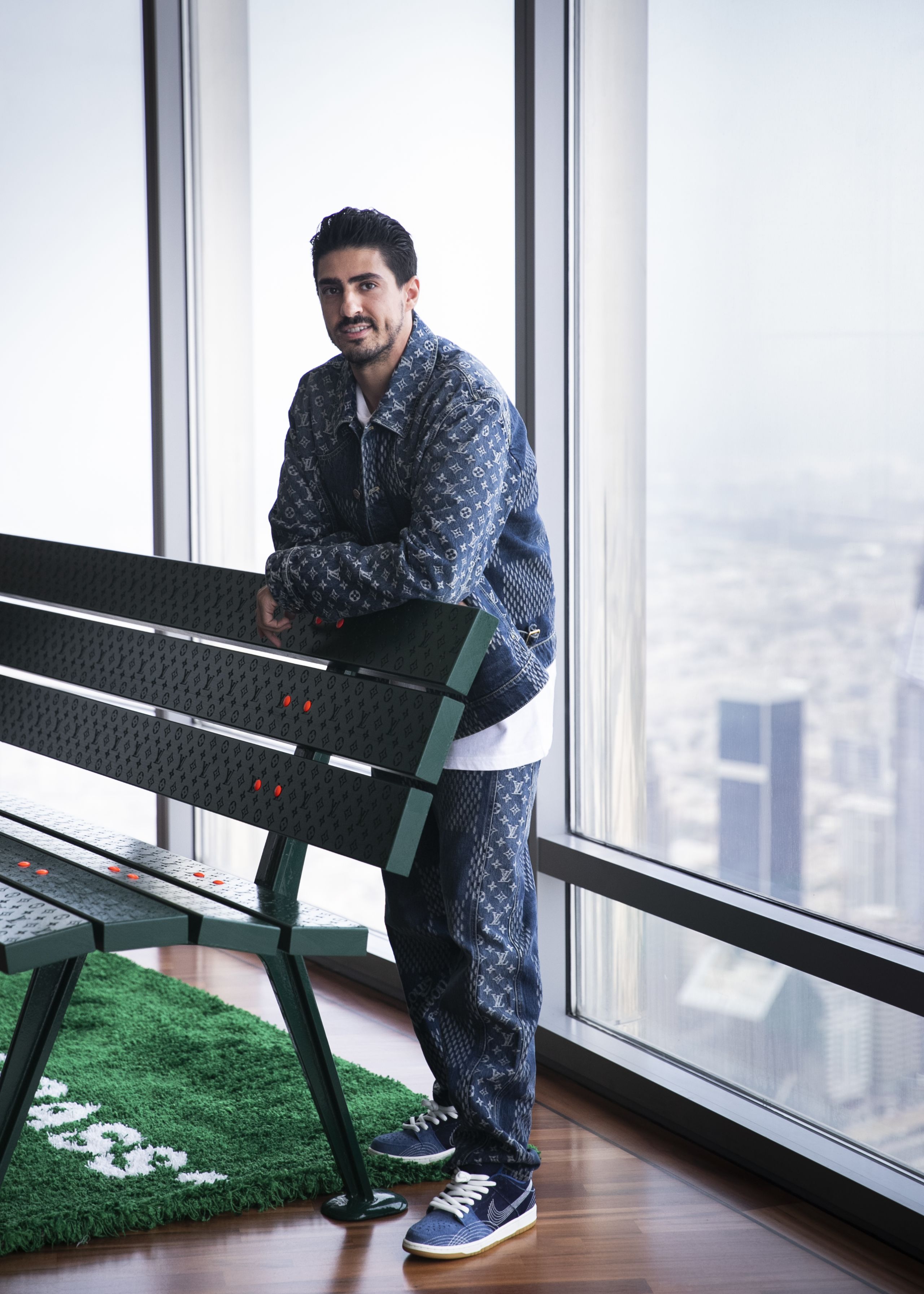
Mohamed Al Safar. Courtesy Reem Mohammed/The National
Mohamed Al Safar. Courtesy Reem Mohammed/The National
Al Safar, a Bahraini national, is probably one of the biggest collectors of rare trainers in the UAE. He is the director of his family-owned Al Safar Group, which has interests in education, hospitality, property and food retail, and has its headquarters in Bahrain. He splits his time between the US, the UAE and Bahrain.
Al Safar says his interest in trainers was sparked when he was in school in Bahrain. “We were all in uniform, but we were allowed to wear whatever footwear we wanted. So it became our only form of expression,” he recalls. “I’ve always liked collecting things even as a kid, so as my obsession with sneakers grew, my interest in owning the rare ones started.”

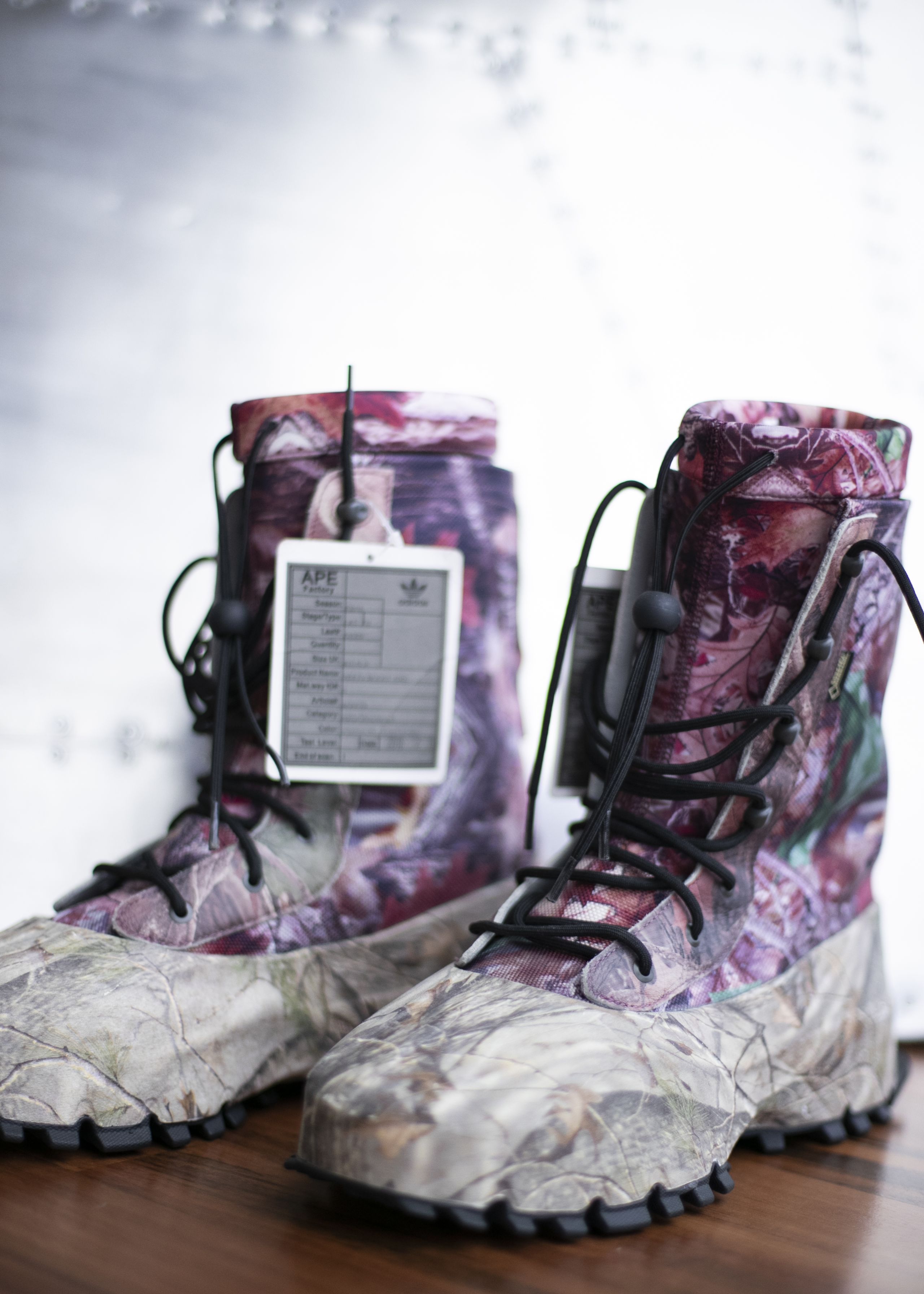
A pair of Yeezy 1050 samples belonging to Mohamed Al Safar. Courtesy Reem Mohammed/The National
A pair of Yeezy 1050 samples belonging to Mohamed Al Safar. Courtesy Reem Mohammed/The National
This passion was further fuelled when he went to study in the US. “I immersed myself in the sneaker culture there, and very soon made contact with insiders and collectors who’d get me the most in-demand pairs. And my collection just grew,” he says.
But unlike others, Al Safar has no plans to make money from his collection, which he estimates is now worth well over $1m. “There are two types of sneakerhead,” he says. “Those who will buy sneakers to rock and those who will buy them to make a profit. I only buy what I like. I am not interested in making money out of them.”
Sometimes his obsession gets the better of him, he jokes, sharing a story about how he once paid $35,000 to a collector in Chicago to personally deliver a pair of trainers to him in Dubai.
“It was a pair of Jordan 4 Undefeated and the seller told me the rapper Travis Scott was interested in them, too. So I made [the seller] an offer he couldn’t refuse –a free trip to Dubai with hotel stays and everything. That’s how I got the shoes.”
Among Al Safar’s favourite pairs in his collection are two variants of a Jordan 4 Retro Travis Scott (Friends and Family) model, now going for $30,000 each on leading trainers and streetwear reseller site StockX. A ‘Friends and Family’ model means it was given to affiliates of the person or company that made the sneaker and was not sold to the public.

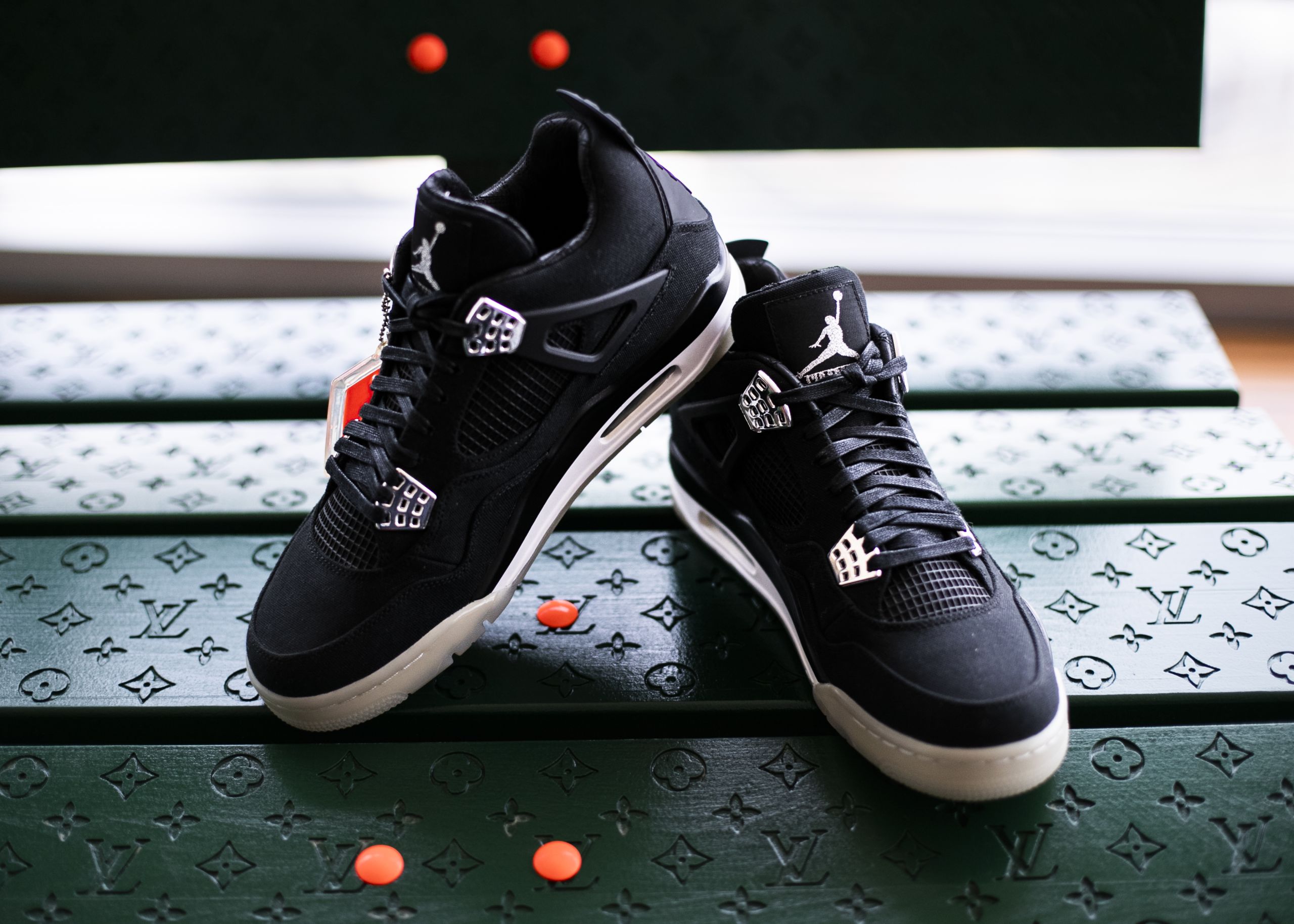
A pair of Eminem Jordan 4 trainers. Courtesy Reem Mohammed/The National
A pair of Eminem Jordan 4 trainers. Courtesy Reem Mohammed/The National
There’s also a Jordan 4 Eminem (Dh73,461) and Jordan 4 Wahlburgers (Dh91,826), created in collaboration with actor Mark Wahlberg. A previously unseen model that never made it to production by Yeezy, the brand from rapper Kanye West, is also proudly displayed.
Air Jordan, a collaboration between basketball star Michael Jordan and Nike, is one of the world’s most successful footwear brands, taking in $3.1 billion in wholesale revenue last year, according to Forbes. Nike has often highlighted Jordan as a driver of its growth.
But Al Safar’s obsession is not limited to shoes. Holding pride of place in his Burj Khalifa penthouse is a monogrammed 400-kilogram, 317-centimetre-long oversized park bench created by Louis Vuitton menswear designer Virgil Abloh for the fashion house’s spring/summer 2020 runway presentation in Paris last year.
The businessman, who considers himself a loyal fan of the French luxury brand, says he had to haggle a bit to obtain the piece of furniture, but it was well worth the $40,000 he spent on it, which included transportation costs.
“They know me very well, so I called them after the show and told them I really wanted it. They were a bit surprised, but said they would send it,” Al Safar explains. “It came to Dubai in one single piece but we had to make adjustments since it wouldn’t fit in the Burj Khalifa’s lifts.”
His apartment is also filled with rare collectibles, mostly from the fashion world. There’s a Kaws BFF Dior Plush figure, from a collaboration with Dior and American artist Kaws, now going for $18,000 on StockX; a range of skateboards, toys and accessories from cult brand Supreme; sold-out items from Louis Vuitton's collaboration with designer, DJ and entrepreneur Nigo, creator of Japanese streetwear brand A Bathing Ape (known as Bape); as well as rare bags, luggage and sunglasses from the French maison.

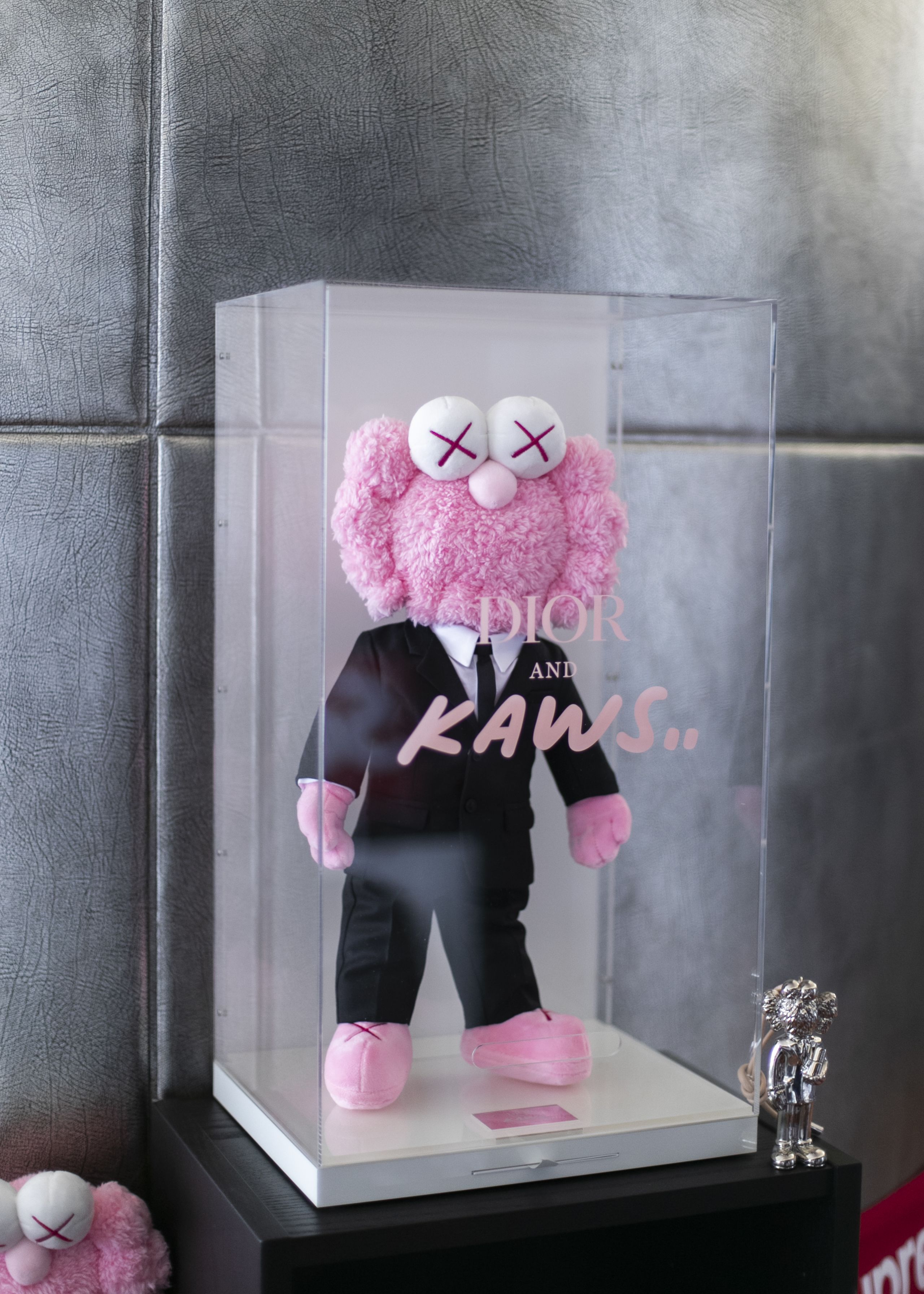
A Dior x Kaws figurine. Reem Mohammed/The National
A Dior x Kaws figurine. Reem Mohammed/The National
Al Safar gingerly removes each item from its box and carefully packs it up again. He says he cleans each item, including the shoes, himself. “I don’t trust anyone with them,” he says, with a laugh. “And I love to do it myself. It makes me happy.”
The father-of-two says his wife and parents fully support his obsession. “My parents actually encouraged my collections since I was a kid, and my wife gets every pair of sneakers I buy, so she doesn’t complain. She also has her own obsession with handbags,” he says.
On his shopping list is a pair of Jordan 4 Eminem Encore, released to celebrate the rapper’s album of the same name in 2004 – one website calls them "the rarest Jordan 4s to date".
“That’s the pair I’m dying to get,” he says. “Eminem is one of my favourite rappers of all time and I need this shoe to complete his Jordan set.”
StockX currently has the pair listed at $30,000.

Dh596,780...
… was the price paid at auction for this early work by Kaws. Here’s why the artist’s pieces are so sought-after


Untitled (Prima) by Kaws. Courtesy Christie's
Untitled (Prima) by Kaws. Courtesy Christie's
With three million Instagram followers and high-profile collaborations with brands such as Dior, Nike and Uniqlo under his belt, Kaws is one of the world’s most popular – and contentious – living artists.
Born in 1974 in New Jersey, Brian Donnelly, the man behind the moniker,started out as a street artist before getting a degree in illustration from the School of Visual Arts in New York. In the late 1990s, he began producing his “ad disruptions”. He would remove advertising posters from booths around New York City, take them home, add his own personal touches and then put them back again.
Advertisements for DKNY and Guess,and pictures of Christy Turlington touting Calvin Klein underwear, reappeared interwoven with colourful cartoon-like characters and Kaws’s signature skull-and-bones motif, as seen in this reworking of a Primamagazine cover from April 1999. Untitled (Prima) was sold last month in the online Christie’s auction, Trespassing, which featured the works of “20th century icons and modern visionaries”. While many of his original advertisements have since been lost or destroyed, Kaws released a series of collectible posters featuring this body of work in 1999.
That same year, he visited Japan after being approached by popular toy and streetwear brand Bounty Hunter,and went on to produce his first toy, Companion, which became a recurring theme in his subsequent work. He has since produced more than 130 varieties of toys, offered in limited – and unlimited – editions to fans and private collectors. They often sell out in seconds.
Today, Kaws counts Justin Bieber, Pharrell Williams, DJ Khaled and Larry Warsh among his collectors. In March last year, a 121-foot-long inflatable Companion was installed at Victoria Harbour in Hong Kong during Art Basel.
Aftersuccessfully launching his own fashion label, Original Fake,in the early 2000s, Kaws began working with a number of cult streetwear labels, including A Bathing Ape and Supreme. In 2008, he designed the cover for Kanye West’s album 808s & Heartbreak, and more recently developed his own pair of Nike Air Jordans.
While his mass appeal and commercial approach have garnered criticism from more staid corners of the art world, Kaws’s attitude can perhaps be summed up by his own account of his early days as a street artist. “When I was doing graffiti, my whole thought was: ‘I just want to exist’. I want to exist with this visual language in the world … It meant nothing to me to make paintings if I wasn’t reaching people.”
 Built with Shorthand