How oil-dependent Iraq can no longer pay the bills
The price of crude is down – meaning there’s not enough revenue to support a sprawling public sector. Can the next government (and the wait goes on) find the political courage to cut it down to size?

How oil-dependent Iraq can no longer pay the bills
The price of crude is down – meaning there’s not enough revenue to support a sprawling public sector. Can the next government (and the wait goes on) find the political courage to cut it down to size?
Between falling oil prices, bloated public spending and desperate government measures seeking to remedy the situation, Iraq’s officials and citizens fear the nation is heading towards complete economic collapse.
For decades, Iraq has been one of the world’s top oil-producing nations, relying on this output for almost all its revenue. But with a growing public sector reliant on social welfare and international oil prices fluctuating, the gap between revenue and spending is widening.

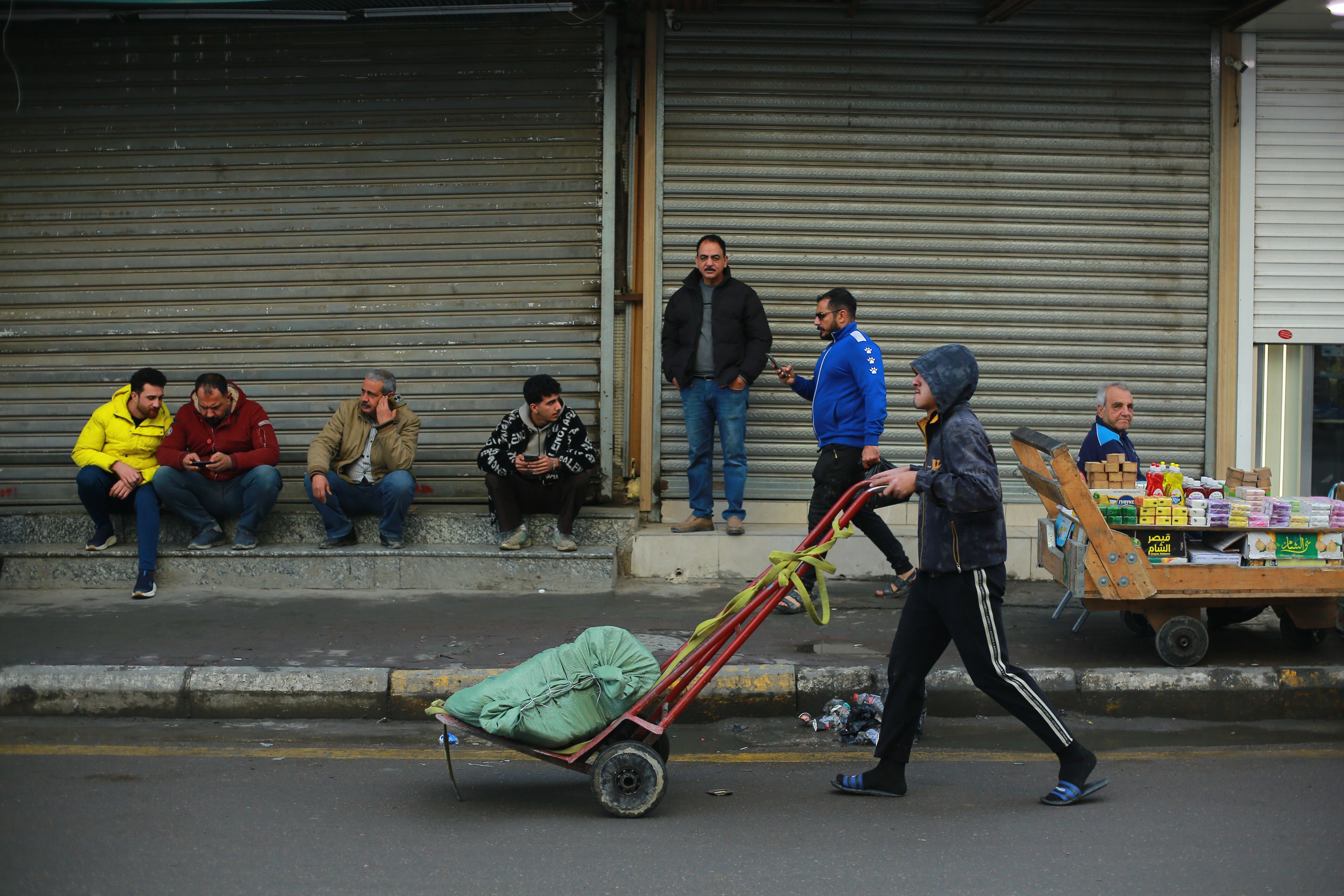
Shops along a street in Baghdad are closed in February as part of a nationwide strike against increased customs tariffs. Getty Images
Shops along a street in Baghdad are closed in February as part of a nationwide strike against increased customs tariffs. Getty Images
“We have a real deficit every month in regards to paying [government] salaries, so we need to address this,” Iraqi Foreign Minister Fuad Hussein, who also chairs the Ministerial Council for Economy, told local media in January.
Acknowledging the daunting mission, Mr Hussein said reforms were necessary but would need support from society as well as all political parties to “come together and adopt a unified stance".
“We need a surgery in the economic sphere,” he said, adding that unless action is taken, Iraq faces “a major financial and economic crisis”.
A budget built on oil
In November, Iraqis elected a new parliament, but three months later, the process of forming a government remains stalled, leaving urgent economic decisions in limbo.

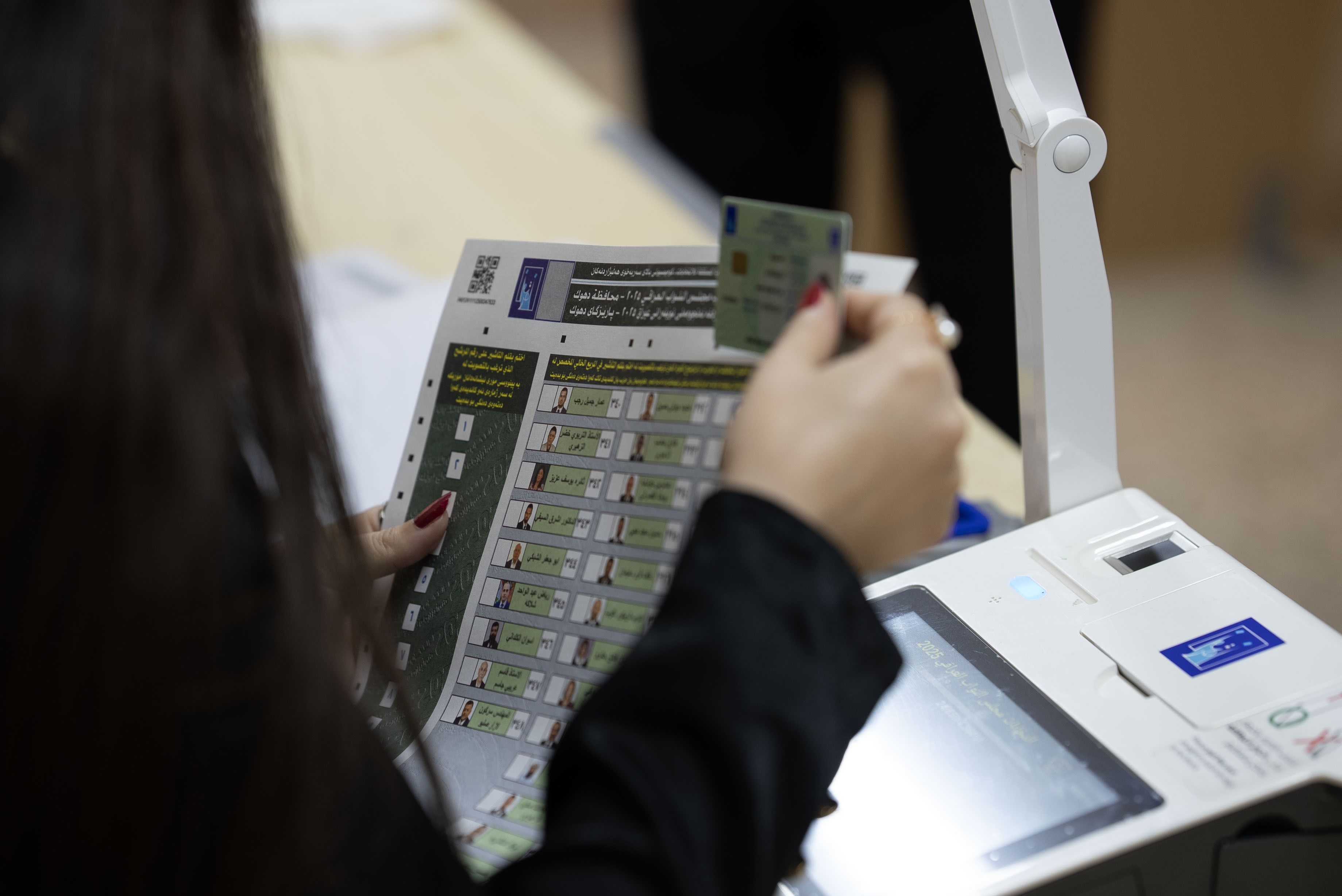
Iraqis go to the polls to elect a new parliament in November 2025. Getty Images
Iraqis go to the polls to elect a new parliament in November 2025. Getty Images
Before the elections, the current Prime Minister, Mohammed Shia Al Sudani, repeatedly denied that the country is struggling economically, insisting it is “in its best shape” - despite promising to reshape the economy if elected for a second term in November.
Once formed, the government will face a stark dilemma: delay reforms and risk a deeper fiscal crisis, or impose painful measures that could ignite public anger in a country where trust in institutions is fragile and living standards remain uneven.
International financial institutions, including the International Monetary Fund, have warned that Iraq’s current economic model is unsustainable. Public sector wages and pensions consume the bulk of spending, non-oil revenues are negligible, and diversification efforts have repeatedly stalled. Each delay narrows the government’s options and raises the eventual cost of reform.
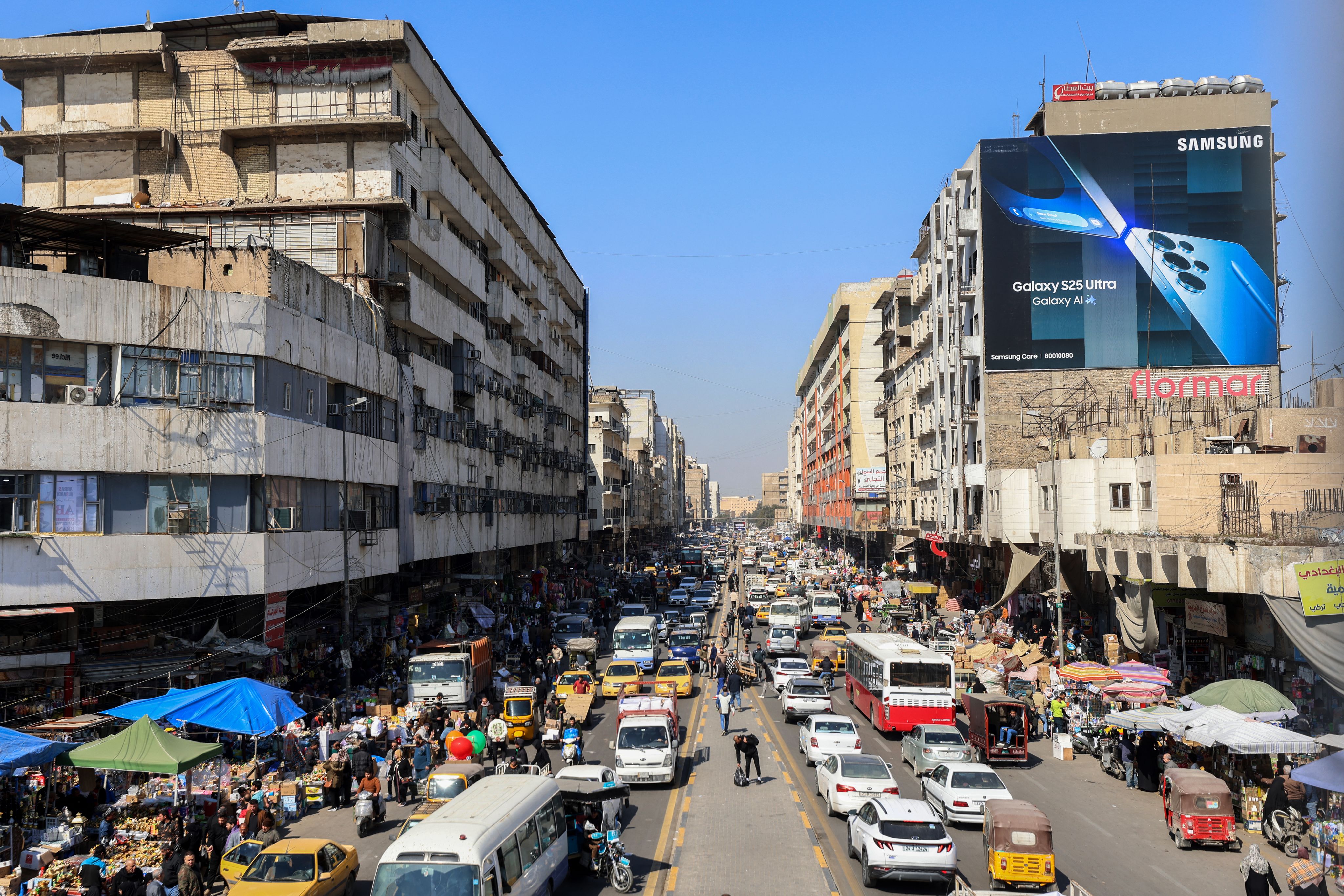
Shorja market in central Baghdad. Iraq's budget has been barely balanced with public spending eating up the majority of oil revenues. AFP
Shorja market in central Baghdad. Iraq's budget has been barely balanced with public spending eating up the majority of oil revenues. AFP
Iraq’s public sector has expanded over the years since the fall of Saddam Hussein’s regime because political parties use government jobs as patronage to maintain support. They also curry favour among Iraqis by providing high compensation and social benefits for the victims of Saddam’s policies.
Between 2003 and the end of last year, the number of government employees in Iraq swelled from one million to around 4.55 million. Separately, there are almost three million retired state workers and two million families entitled to the social protection network, according to the country's Ministry of Planning.
Last year, Iraq spent about $6.5bn each month on salaries, pensions and social welfare for those three categories of people - leaving just $500m from what it earned on average each month from oil ($7bn). The country earned $87.1bn in total over 11 months in 2025 - a decrease of 16 per cent from the same period in 2024, according to figures from the Ministry of Finance. Of that total, oil sales comprised $76.7bn.
Meanwhile, expenses for that same period in 2025 stood at $96.9bn, widening the deficit to $9.8bn from $800m the previous year.
“The reality is painful and the future is bleak,” a senior Finance Ministry official told The National, preferring not to give his name. “Oil proceeds are merely enough to pay salaries, pensions and social care,” he said.
Other significant financial commitments, he said, include fees for energy companies - although some are being paid in kind with crude oil in lieu of cash - purchases of natural gas and electricity from Iran, and unpaid state debts for bondholders and contractors.
Iraq is Opec’s second-largest producer after Saudi Arabia, pumping more than four million barrels per day and exporting about 3.38 million bpd, with oil revenues accounting for roughly 90 per cent of the budget.
Since last year, oil prices on the international market have been bearish for several reasons, including oversupply and Opec’s decision to maintain output levels.
The International Monetary Fund estimates Iraq requires an oil price of $84 a barrel to balance its budget. Prices are approaching $70 per barrel, up from around $60 per barrel at the end of last year. The rise is believed temporary due to geopolitical tensions and expected to fall once regional security conditions stabilise.
To mitigate their losses, Iraq is mulling asking Opec to reconsider its production and export quota, which stands at 4.25 million barrels per day, the official added. The target could be a gradual increase of 150,000 to 300,000 barrels a day "which doesn't threaten the market stability", he said, adding that could add between $4-10 billion a year, depending on prices.
“We desperately need to rethink our approach to find real solutions to the structural flaws in the economy that have plagued it for decades,” he said. “This doesn't come from politicians, many of whom only care about the loyalty they can buy, but from specialists and bureaucrats; they must give us the space to do so.”
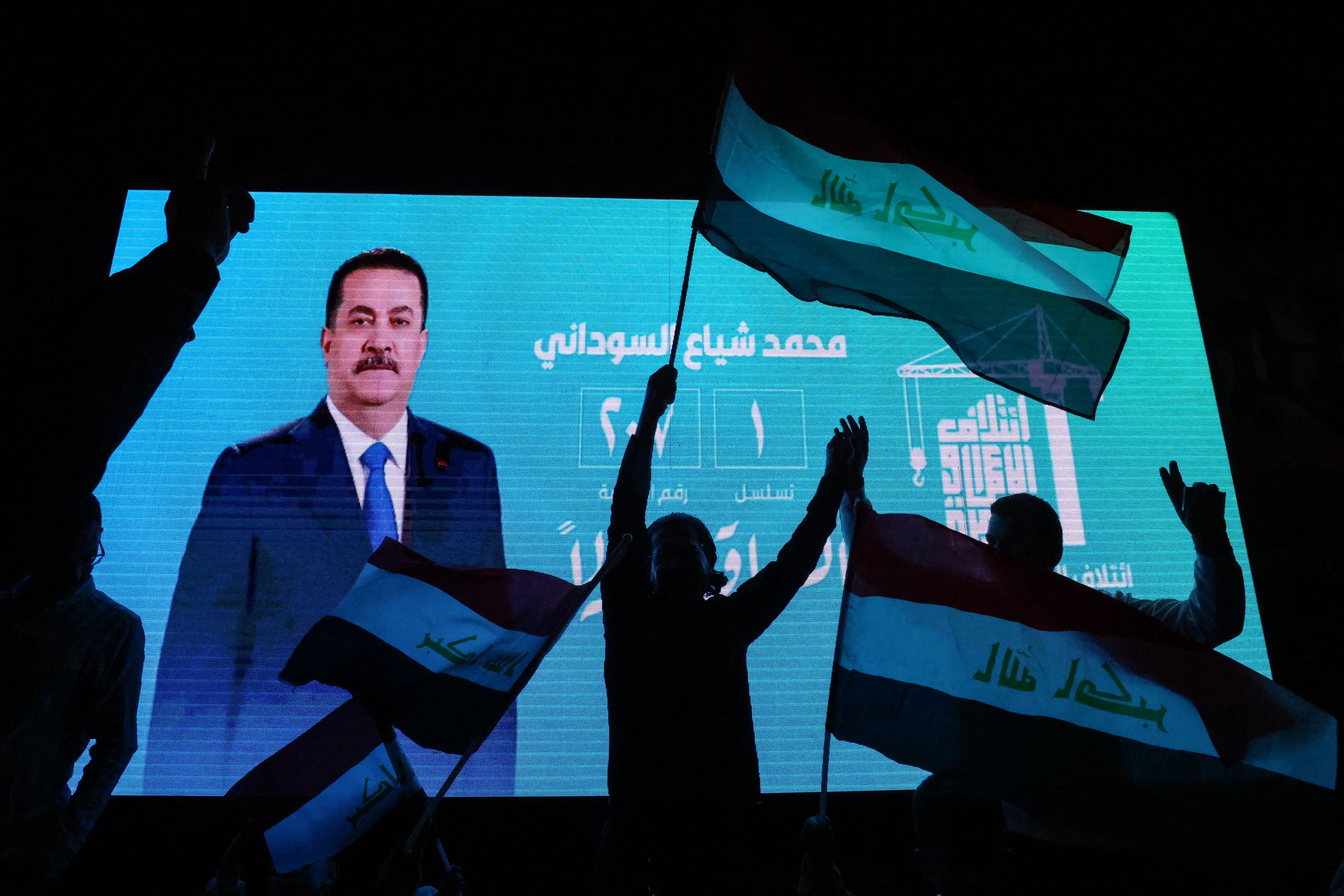
Iraqis celebrate the outcome of the November parliamentary elections. The newly-elected parliament is yet to form a government. AFP
Iraqis celebrate the outcome of the November parliamentary elections. The newly-elected parliament is yet to form a government. AFP
Political deadlock deepens the crisis
Economists warn that the next government will inherit little room for delay.
“Some of the issues the government needs to address are issues that have been waiting to be solved years ago,” Jihad Azour, director of the Middle East and Central Asia Department at the International Monetary Fund, said in a webinar organised by the Atlantic Council's Iraq Initiative in February.
At the heart of Iraq’s vulnerability lies its overwhelming dependence on oil, Mr Azour said. In 2026, oil prices could soften further after signs of weakening in 2025, placing additional pressure on public finances, he said.
Public spending has surged in recent years, leaving finances highly exposed to oil price volatility, he said. According to figures from the Ministry of Finance, public spending was about $76bn in 2021, rising to $117bn in 2025.
Regaining control over public finances and preserving macroeconomic stability must therefore be the first priority of the next government, said Mr Azour.
This will require addressing the rapid expansion of the state, both in size and in spending, while building fiscal buffers capable of absorbing future shocks.
“Building buffers, addressing structural issues that have crippled public finance over the past few years, is an important priority,” he said.
Iraq's reform efforts hinge on redefining the state's role in the economy. Currently, it is the main employer but it must instead encourage a dynamic private economy to emerge, said Mr Azour. Equally critical is reducing Iraq’s dependence on oil by strengthening non-oil revenues and rationalising poorly targeted subsidies that strain the budget and distort the economy.
Key reform pillars include "building corporate Iraq" through financial-sector reforms, developing a robust banking sector, and expanding capital markets, he said. Improving digital infrastructure and embracing digital transformation are also vital for economic diversification and competitiveness. Levelling the playing field for the private sector, reforming corporate governance, and supporting technological investment are necessary for a resilient economy.
Finally, he said Iraq's next government must craft a regional partnership framework to position the country as a central business hub, leveraging its connections with neighbours. "Iraq has huge potential and deep market strength," said Mr Azour, adding that harnessing this potential could transform the country into a regional economic hub.
For Mr Azour, 2026 is not simply another fiscal year - it is a decisive moment. “I see 2026 as a year where Iraq is at a crossroads,” he said. “[Reinventing the] economic model will be key.”
Ziad Daoud, chief emerging markets economist at Bloomberg, said the immediate goal is to ensure Iraq doesn't enter a crisis if oil prices decline.
“But you need to do the firefighting first before you can do the structural long-term stuff,” Mr Daoud, who’s also a Senior Fellow at the Harvard Kennedy School Middle East Initiative, told the webinar.
Over the past two decades, oil prices sharply declined three times - in 2008, 2014 and 2020 - and each time Iraq entered crisis with varying intensity, he said.
In 2008, the surplus became a deficit. In 2014 and 2016, Iraq asked the IMF for help, and in 2020 it had to devalue the currency. “So that's one reason why this goal is very important,” he said.
For this reason, Iraq needs to reduce dependence on oil and build savings, he said. “On both of these measures, Iraq has not delivered in the past four years.”
In 2020, the former government implemented a wide-ranging economic reform plan called the “White Paper”, which sought to stop the wasting of resources and tackle the deficit. It was the first comprehensive scheme proposed after the 2003 US-led invasion that toppled Saddam Hussein. It aimed for sustainable fiscal stability, macroeconomic reforms, infrastructure development, improved public services, and creation of an administrative and legal environment to boost growth. At its core was a reassessment of the public sector, with suggestions for revised hiring policies, salaries and allowances.
However, shortly after Mr Al Sudani took office in October 2022, that plan was shelved and the government added nearly one million employees to the public sector and maintained high spending practices.
Pressure shifts to the public
If oil prices continue to tumble, “we may not be able to pay salaries,” prominent Shiite cleric and politician Ammar Al Hakim told a group of community representatives and dignitaries in his office last month. He described what the country is going through as a “severe financial crisis” that could last for years.
“We must tighten our belts and be honest with our people and ourselves,” said Sayyid Al Hakim, warning that “we are heading into difficult months until God grants us relief”.
For many Iraqis, the crisis is already being felt in delayed payments and rising costs.

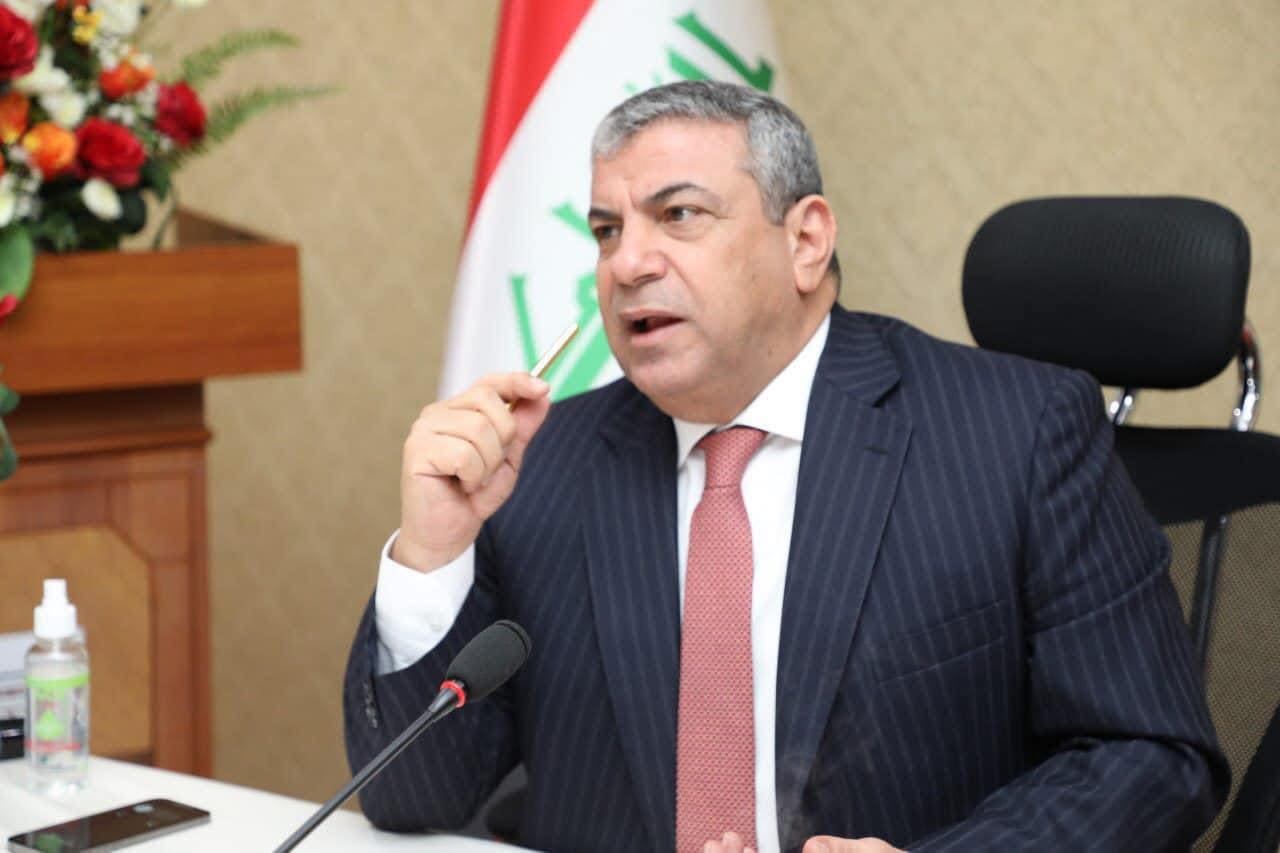
Ali Al Sanafi, head of the Iraqi Contractors Union, says dwindling revenues have caused delays in paying state debts to contractors. Photo: supplied
Ali Al Sanafi, head of the Iraqi Contractors Union, says dwindling revenues have caused delays in paying state debts to contractors. Photo: supplied
The state currently owes contractors around 30 trillion dinars ($22.9bn) in delayed payments, said Ali Al Sanafi, head of the Iraqi Contractors Union. Following weeks of protests in different cities across the country, the government agreed to pay just one trillion dinars ($764m), Mr Al Sanafi said.
The government has also been struggling to pay public sector salaries and pensions, having delayed January’s payments to the first week of February.
“It’s really tough,” Sabah Mohammed, a 72-year-old retiree, told The National as he waited in line at a salary disbursement outlet in Baghdad.
“I’ve been waiting for my pension for a week now, and it's really taking a toll on me,” he said. The retired maths teacher is a cancer patient with liver malfunction as well as other health issues, and his insurance doesn’t cover everything.
“I had to borrow money just to get some medicines and the basics for living, and it’s embarrassing to be honest,” he said.
In an effort to boost non-oil revenue and narrow the deficit, the government introduced new customs tariffs and taxes in January. These tariffs were initially approved in 2010 but were not implemented for 15 years to avoid public anger. The new duties increase customs tariffs by 1-5 per cent to 6-30 per cent. The General Authority of Customs in Iraq expects it will generate more than 10 trillion Iraqi dinars in 2026 alone - up from around 2.5 trillion dinars last year.
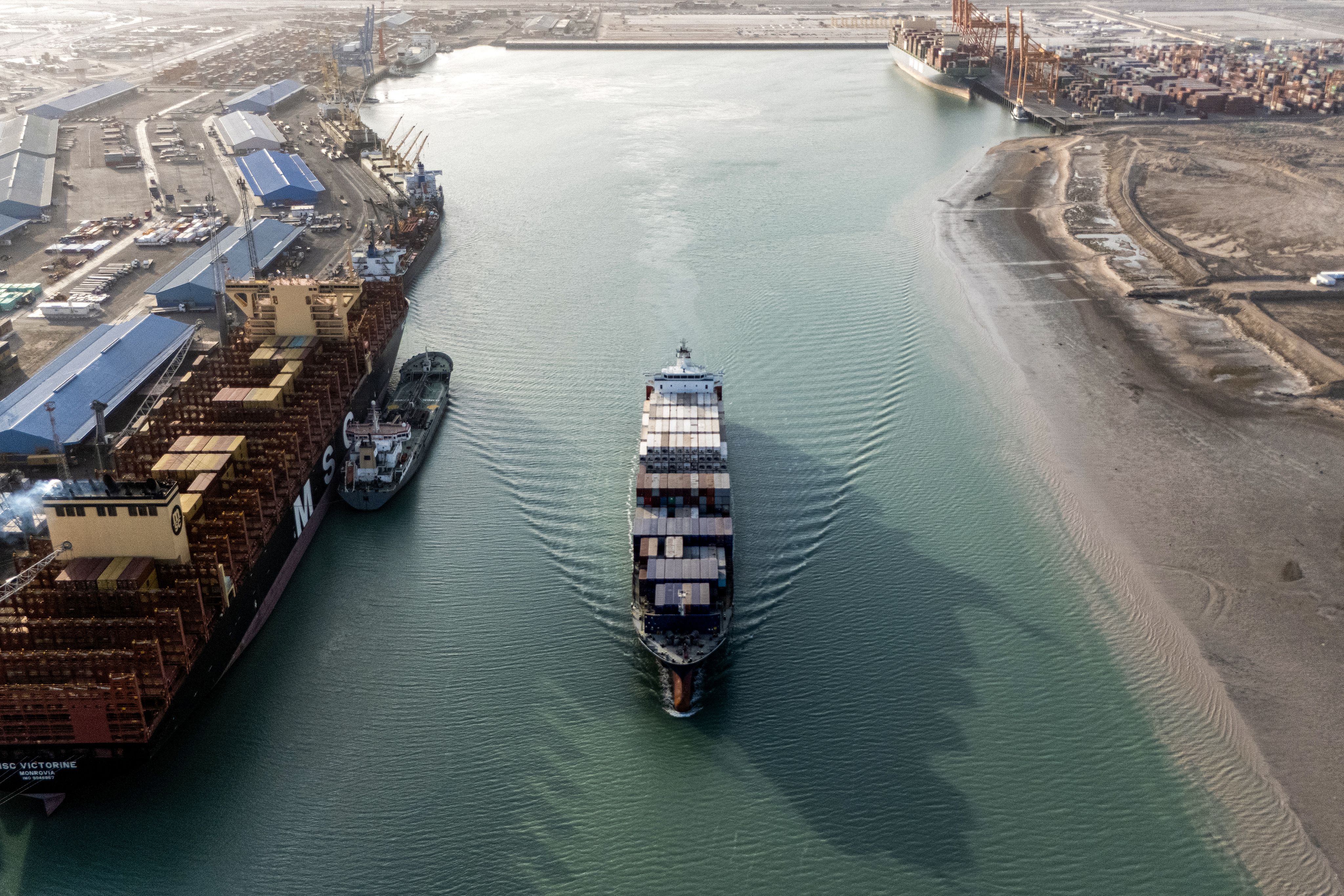
Shipping containers are stacking up at Iraq’s main port on the Gulf, Um Qasr, as traders cannot pay new customs duties. AFP
Shipping containers are stacking up at Iraq’s main port on the Gulf, Um Qasr, as traders cannot pay new customs duties. AFP
Iraq has also reinstated a 20 per cent sales tax on mobile phone and internet recharge cards, which was initially introduced in 2015 and stopped in 2022, and 15 per cent on hybrid cars.
The sudden levies sent shockwaves through Iraq's business community, prompting traders to stage almost daily demonstrations and scramble to adjust their plans.
Omar Farouk, a local businessman, is among the affected. The 30-year-old has owned a shop in Erbil, the capital of the Kurdistan Region in northern Iraq, for six years, where he sells clothes imported from China. At the end of last year, he expanded his business to Baghdad, opening a shop in the Iraqi capital. He spent around $50,000 to set up the space, pay for three months' rent in advance and buy stock - but the new tariffs mean he cannot afford to receive the clothes he ordered.
“We were surprised when they imposed the new tariffs,” he said. “It is as if I’ve thrown this money in the river."

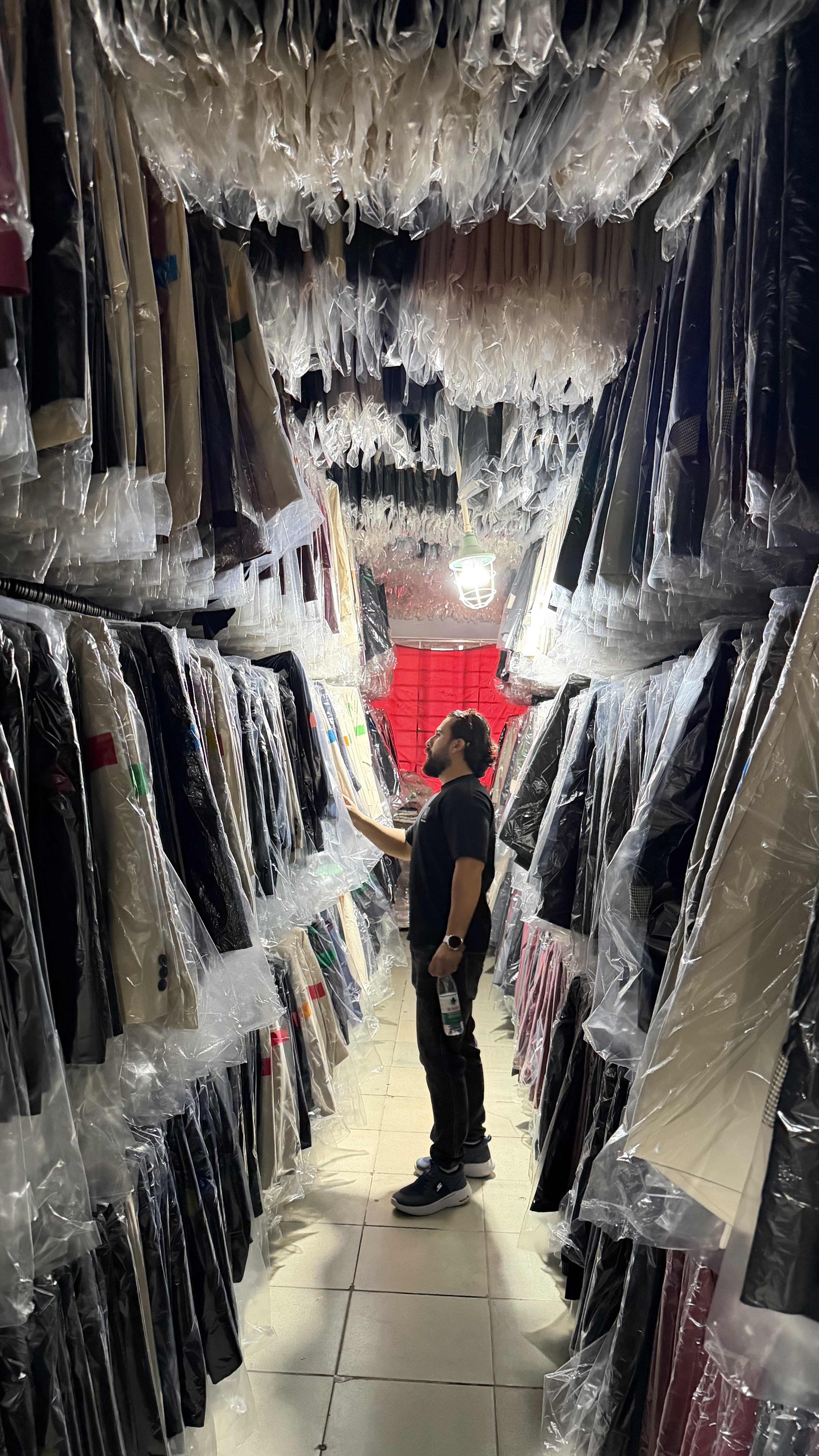
Omar Farouk browses goods in China. The merchant has been unable to pay for his imported goods following the increase in customs tariffs. Photo: supplied
Omar Farouk browses goods in China. The merchant has been unable to pay for his imported goods following the increase in customs tariffs. Photo: supplied
Tens of thousands of containers have been piled up at Iraq’s main port on the Gulf, Um Qasr, as traders cannot pay the hefty duties. Some say they are considering returning their goods to China or sending them to Jebel Ali port in the UAE.
“We don’t know what to do,” said Mr Farouk.
Given the short winter in Iraq, it has become hard for him to sell the coats and jackets he imported. “We already lost,” he said, visibly frustrated.
Stories like his can be heard across the business community, who are calling on the government to temporarily suspend the policy to clear their goods based on the previous tariffs before the new ones are imposed gradually.
In mid-February, several wholesale markets and retail shop owners went on strike to protest the duties.

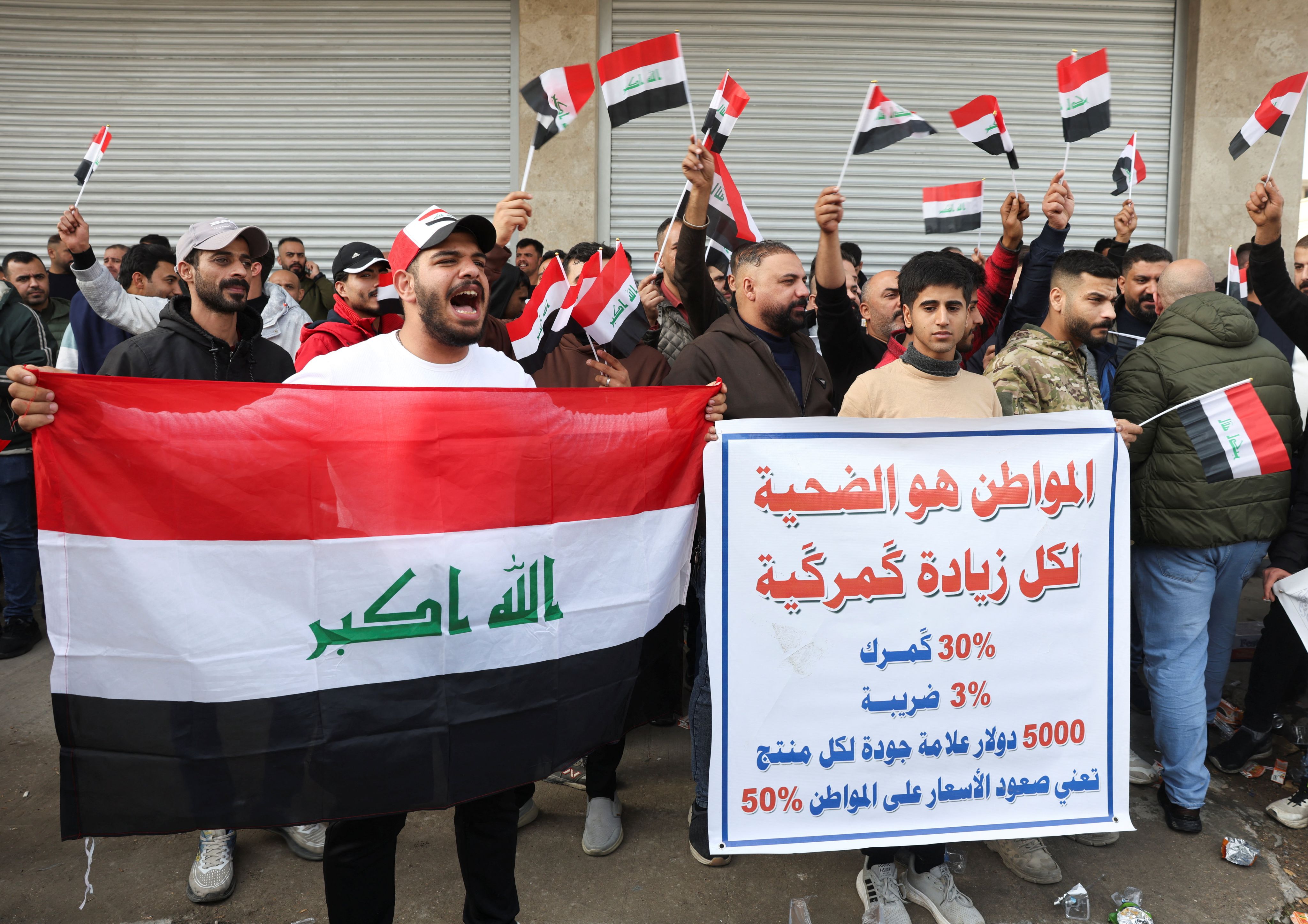
Iraqi's protest against the new customs tariffs introduced by the government in January
Iraqi's protest against the new customs tariffs introduced by the government in January
"After you've emptied the state treasury with your corruption and mismanagement, you're stretching your hands to our pockets to fill your bellies," a sign on a closed shop in Baghdad read.
Lawmaker Mohammed Al Khafaji argues that the current government is a caretaker one and therefore has no right to introduce such measures.
“The government is playing with fire” he said, describing the decisions as “provocations”. He called on the government to “regain its senses and return to the right path by cancelling these decisions”, warning against potential further unrest.
He filed a lawsuit at Iraq's Supreme Federal Court, challenging the decision, but it was promptly dismissed.
Despite the challenges Iraq faces, analysts and consultants say technical solutions exist - but the real challenge is whether or not they are politically viable.
“What really is difficult is to enforce or to push through measures that are unpopular either by the political elite or by the public because often the real difficult measures tend to be unpopular,” said Ali Al Mawlawi, director at Horizon Advisory Group.
“That is a huge challenge.”


 Built with Shorthand