
Targeting the rescuers: Inside Israel’s war on paramedics in Lebanon
Investigation finds repeated Israeli strikes on first responders and medical workers in southern Lebanon, with legal experts highlighting a pattern of deliberate attacks
Targeting the rescuers: Inside Israel’s war on paramedics in Lebanon
Investigation finds repeated Israeli strikes on first responders and medical workers in southern Lebanon, with legal experts highlighting a pattern of deliberate attacks
There was no hesitation. When paramedics Ahmed Nour and Hussein Jaber saw a wounded man hobbling toward the Lebanese Civil Defence centre in Nabatieh on May 12, shouting for help, they ran towards him.
They knew – as most first responders in southern Lebanon do – that fulfilling their duty to save the injured man would put them at great risk of becoming targets of follow-up strikes, also known as “double-tap attacks,” in which a second strike follows a first after drawing rescuers to the scene. The tactic, widely used by Israel in Gaza and now in its war on Lebanon, aims to maximise casualties.
“Ahmad ran and grabbed him here,” Hussein Dakdouk, head of the Nabatieh Civil Defence branch, said, pointing to a spot a few metres from the centre. “Then Hussein joined him and they started treating [the man’s] wound on his leg.”
Hussein Dakdouk, head of the Nabatieh Civil Defence branch. Benoit Durand for The National
Hussein Dakdouk, head of the Nabatieh Civil Defence branch. Benoit Durand for The National
Mr Dakdouk ran to an ambulance parked a few metres up the road to grab another medical kit. But he did not have time to bring it back.
“At that moment, the strike hit,” he said. “Everything happened in less than a minute.”
The attack instantly killed the two paramedics and the wounded man, identified as Mahdi Atweh. Rescuers and medics told The National that Atweh was a civilian who had worked as a delivery driver. He had survived an initial strike on his tuk-tuk a few minutes earlier, less than 500 metres from the Civil Defence centre, where he sought help.
Paramedic Hussein Jaber's blood-stained trousers are left in tatters after he was killed in an Israeli strike while trying to rescue an injured civilian in Nabatieh. Benoit Durand for The National
Paramedic Hussein Jaber's blood-stained trousers are left in tatters after he was killed in an Israeli strike while trying to rescue an injured civilian in Nabatieh. Benoit Durand for The National
“He came to us for protection. We couldn’t tell him to wait or take precautions. He was a civilian and it's our duty to serve civilians,” Mr Dakdouk said.
Deliberate targeting
Noura and Jaber are among more than 121 paramedics killed by Israel in Lebanon since March 2. The Lebanese Civil Defence, a state-run emergency service, operates under the Ministry of Interior nationwide and is not politically affiliated. Additionally, Israel has damaged 35 centres for first responders since March 2, Lebanese authorities say.
Israel has also attacked other emergency services, including the Lebanese Red Cross, the Islamic Risala Scout Association, the Hezbollah-affiliated Islamic Health Authority (IHA) and the Nabatieh Ambulance Association, a pattern that, legal experts told The National, appears “deliberate” and indicates “clear intent” to target paramedics.
Since the war between Israel and Lebanon resumed in March, The National has reported on at least a dozen cases of paramedics targeted in the line of duty. This investigation focuses on four cases: the killing of Jaber and Noura in Nabatieh as they attempted to save a wounded civilian; a quadruple-tap attack in Mayfadoun that killed four paramedics; the killing of two rescuers clearing a road in Kfar Sir; and two others who were killed while riding a scooter to distribute aid in Nabatieh.
The investigation is based on interviews with 17 paramedics and two doctors in southern Lebanon, survivor testimonies, embeds with the Lebanese Civil Defence and a review of video evidence.
The Israeli army told The National it “does not target medical teams as such, but only military objectives, in accordance with international law”. It also said Hezbollah “systematically exploits ambulances, medical personnel and medical facilities for military activity, and does not respect the special protection afforded to them.”
However, in each case, The National found all paramedics were clearly identified as rescuers and there was no indication of immediate military threats that would justify the strikes.
Four of the dozens of Lebanese first responders killed in Israeli air strikes while carrying out their duties. Photo: Social media
Four of the dozens of Lebanese first responders killed in Israeli air strikes while carrying out their duties. Photo: Social media
Three legal experts assessed The National’s findings and said the cases indicated deliberate targeting, or at a minimum, a failure to avoid civilian harm and to uphold the principle of proportionality under international humanitarian law.
Mr Nadim Houry, head of the Arab Reform Initiative and an international human rights lawyer by training, said: “In these cases, there is clear evidence that these are deliberate attacks, part of a pattern that has been going on for a long time and has only intensified.”
Evidence that Israel is committing war crimes is “overwhelming”, he added.
Hussein Jaber's family mourn at his grave. Benoit Durand for The National
Hussein Jaber's family mourn at his grave. Benoit Durand for The National
Israel told The National it operates “in accordance with all international law rules, aiming to minimise harm to civilians”.
But first responders and health care workers are being targeted and killed “at an even more startling pace” than the 2024 Israel-Hezbollah war, according to Kristine Beckerle, deputy regional director for the Middle East and North Africa at Amnesty International.
One paramedic association, the Islamic Health Authority, has recorded 15 double-tap attacks on ambulances and staff. The National has documented at least five additional double-tap attacks involving other paramedic associations.
Lebanese authorities have denounced attacks on medics as “flagrant violations of international humanitarian law”. But despite repeated calls from human rights groups, Lebanon has not given the International Criminal Court (ICC) jurisdiction to prosecute war crimes within its territory, and accountability for war crimes committed in Lebanon remains elusive.
The Lebanese government has documented every instance of Israeli attacks on paramedics, according to Dr Joseph Helou, who heads the Medical Care Directorate at the Ministry of Public Health. The ministry collects data, after which the Lebanese government can issue a formal complaint to the UN Security Council.
Despite the complaints, “attacks against [civilians] have come without consequence”, Dr Helou said. “We receive condemnations and statements, but without any real result. At this point, we are waiting for action from the international community, not just words.”
Meanwhile, “the enemy continues targeting paramedics and medical personnel”.
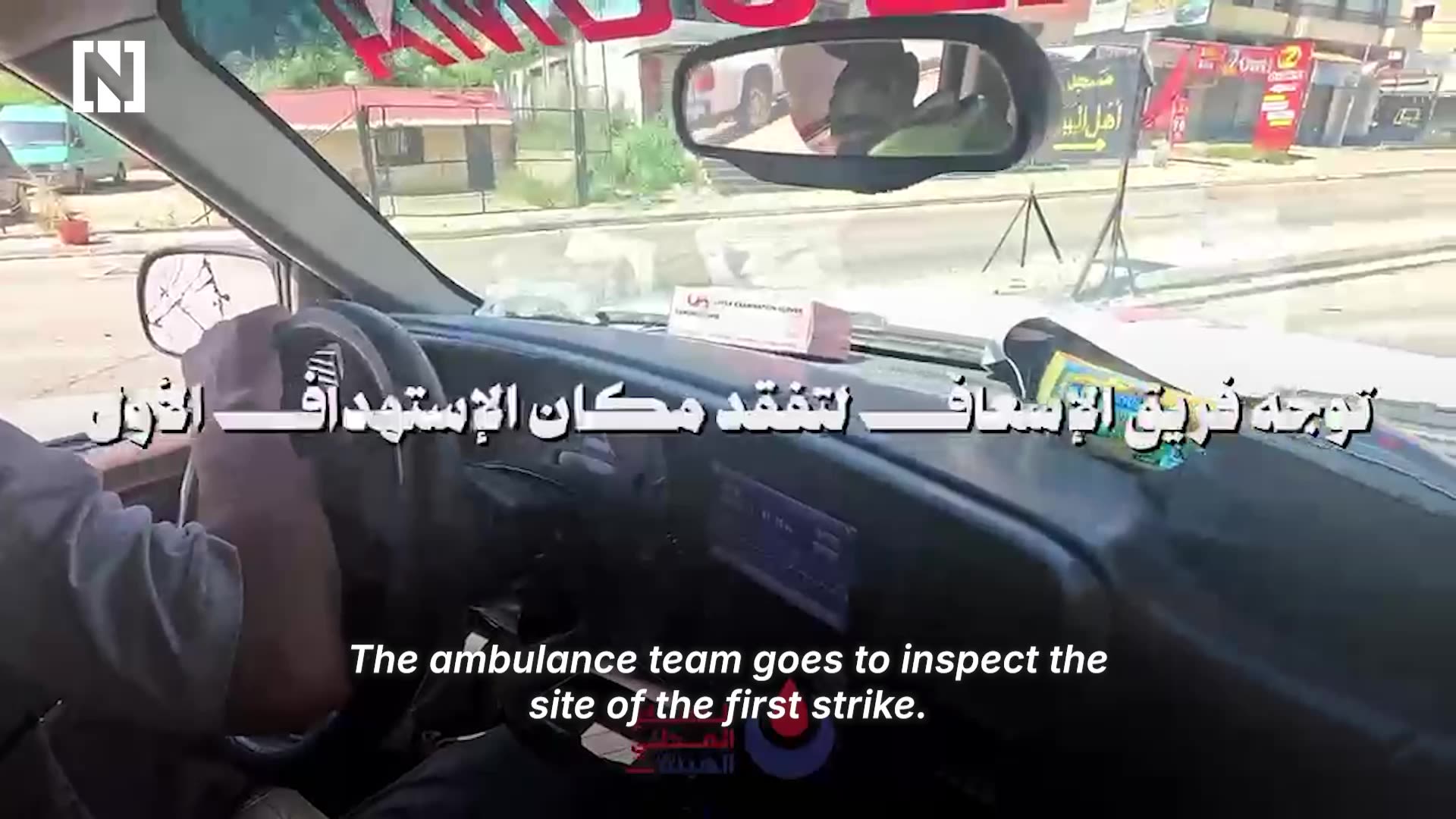
Bodycam footage from an IHA rescuer, who was targeted by an Israeli strike in Toul, southern Lebanon on May 7. Video: supplied
Bodycam footage from an IHA rescuer, who was targeted by an Israeli strike in Toul, southern Lebanon on May 7. Video: supplied
War broke out once again in Lebanon in early March when Iran-backed Hezbollah launched rockets into northern Israel following 15 months of daily ceasefire violations by Israel on Lebanese territory, after the US and Israel launched strikes on the Islamic Republic. Israel’s retaliation has since killed more than 3,100 people in Lebanon, by the Lebanese Health Ministry’s count, and displaced nearly a million from the south.
Despite a fragile truce announced on April 16, Israeli attacks have continued across Lebanon. Israeli troops have also intensified the demolition of border villages within a so-called yellow line, a belt of dozens of villages it occupies.

Two paramedics from the Islamic Al Risala Scouts are killed in an Israeli double-tap strike on Deir Qanoun En Nahr on May 22. Irish Eden Belleza / The National
Two paramedics from the Islamic Al Risala Scouts are killed in an Israeli double-tap strike on Deir Qanoun En Nahr on May 22. Irish Eden Belleza / The National
'Nowhere is safe'
The National visited the site of the strike on Jaber, Noura and Atweh four days after their deaths. Dark stains still coated the pavement: three splashes of blood, one for each man, formed a triangle around a small crater at its centre – consistent with a drone strike.
The entrance to the centre was still littered with shrapnel and human remains. Not far away, the blue tuk-tuk remained abandoned in the middle of the road where it had been targeted. Three rescuers and a doctor claimed that Atweh was not a Hezbollah fighter and they failed to understand how a small tuk-tuk could constitute a military threat.
The site where paramedics Hussein Jaber and Ahmed Noura were killed in front of the Civil Defence centre in Nabatieh. Benoit Durand for The National
The site where paramedics Hussein Jaber and Ahmed Noura were killed in front of the Civil Defence centre in Nabatieh. Benoit Durand for The National
It was not the first time Israel had hunted down civilians in drone strikes. At the Najed Hospital in Nabatieh, Dr Chafi Fouani told The National there had been “repeated” cases of survivors fleeing attacks, only to be struck again. “This shows intent to kill,” he said.
Even if Atweh were a Hezbollah fighter – there is no evidence of affiliation – the killing of an injured and disarmed person would still be unlawful. Wounded combatants are not considered legitimate military targets, international human rights lawyer Aaron Kearney explained. And first responders helping them are also protected.
“These protections are not lost simply by who they are helping or by their other associations,” Mr Kearney said.
Mahdi Atweh survived an initial Israeli strike on his tuk-tuk before being hit a second time as he arrived at the Civil Defence centre in Nabatieh. Benoit Durand for The National
Mahdi Atweh survived an initial Israeli strike on his tuk-tuk before being hit a second time as he arrived at the Civil Defence centre in Nabatieh. Benoit Durand for The National
The National conducted an extensive online search for Mahdi Atweh. In Lebanon, deceased fighters are often commemorated with public posters; however, no such poster was found for Atweh, a delivery driver known for running and working out at a local park, suggesting no known military affiliation.
Paramedics who attended the scene also told The National that the man was a civilian and that no weapons were found inside the tuk-tuk.
Shrapnel found at the site of an Israeli air strike on the Nabatieh Civil Defence centre that killed three men, including two paramedics. Benoit Durand for The National
Shrapnel found at the site of an Israeli air strike on the Nabatieh Civil Defence centre that killed three men, including two paramedics. Benoit Durand for The National
Questioned about the attack, the Israeli army said its objectives “were not achieved in the initial strike and therefore, the terrorist was struck again in order to remove the threat”. It claimed the strike was “directed solely at a terrorist and not towards rescue personnel”. It also said the strike happened in the “area of Mayfadoun” while The National had clearly geolocated the attack in Nabatieh city and shared the co-ordinates with the Israeli army. Mayfadoun is six kilometres south of the Civil Defence centre. When confronted about the discrepancy in location, the Israeli army doubled down on its response.
The National met Jaber and the Civil Defence on numerous occasions over the years.
In one of his last interviews with The National after surviving another attack that damaged the Civil Defence centre in March and injured 15 of his colleagues – at the same place where he was later killed – he said: “Honestly, I don’t feel safe. No one working in an ambulance or Civil Defence feels safe.”
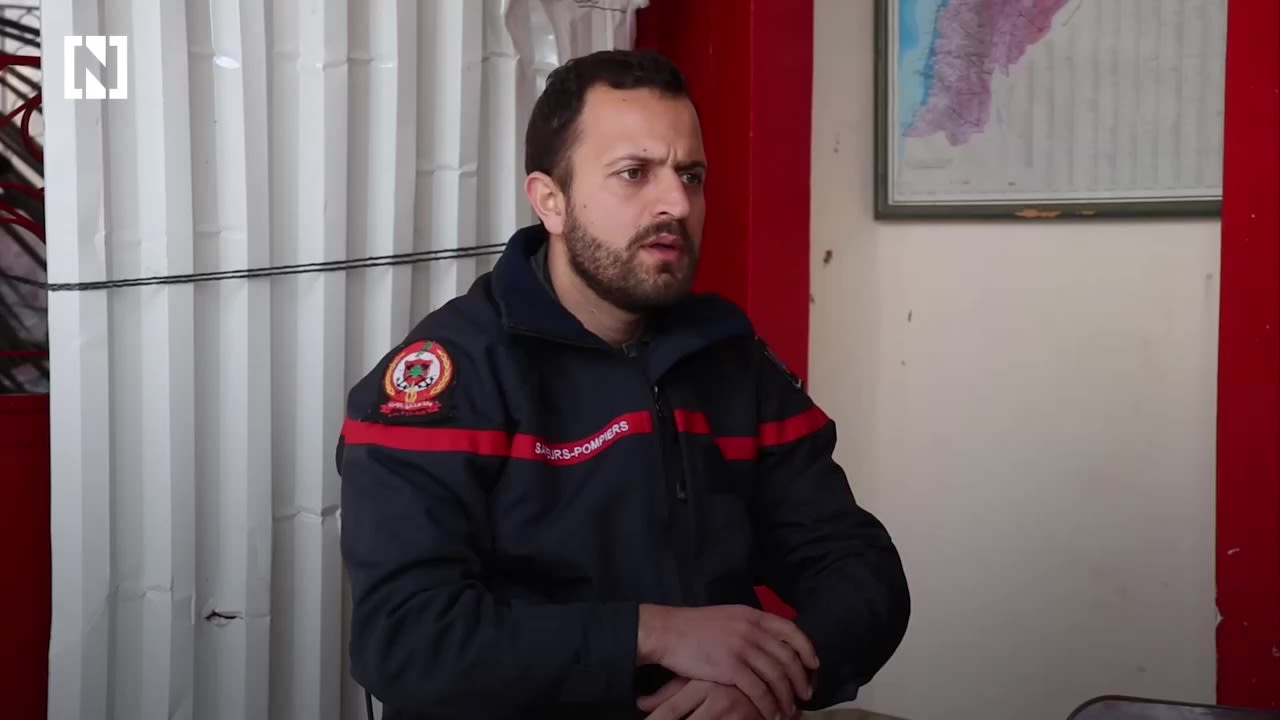
Huseein Jaber's last interview with The National before he was killed in an Israeli air strike. The National
Huseein Jaber's last interview with The National before he was killed in an Israeli air strike. The National
The Mayfadoun massacre
From his hospital bed, Gabi Zalghout, a paramedic with the IHA, told The National how a routine mission in Mayafadoun, an area in the southern district of Nabatieh, turned into a massacre of his colleagues. He recalled escaping half-conscious, his legs bleeding heavily, in a damaged ambulance filled with wounded paramedics – all while still under Israeli fire.
“Geneva Conventions? All talk. It doesn’t apply here,” Mr Zalghout said. He spoke with an eerie calm only a day after the incident. The attack in Mayfadoun was not Mr Zalghout’s first close call, nor the first time he had lost colleagues.
Based on the accounts of Mr Zalghout and two other survivors, The National was able to reconstruct how Israel killed four paramedics in a series of targeted strikes in Mayfadoun on April 15.
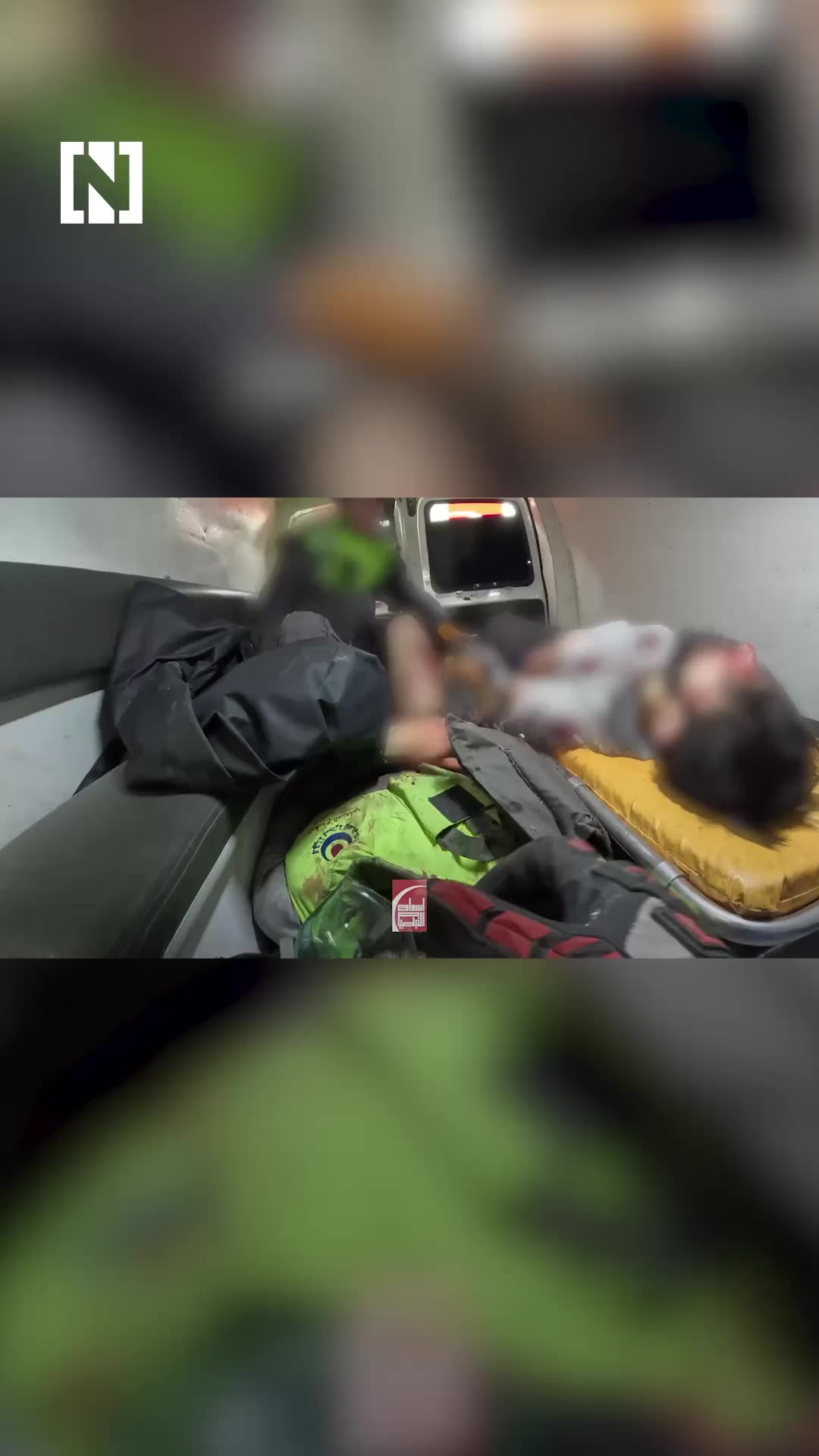
Four Lebanese paramedics were killed in Israeli quadruple-tap attack in Mayfadoun on April 15. Mutaz Salloum / The National
Four Lebanese paramedics were killed in Israeli quadruple-tap attack in Mayfadoun on April 15. Mutaz Salloum / The National
Around 12.30pm, three ambulances from the Islamic Risala Scout Association, a Lebanese youth and volunteer organisation affiliated with the Hezbollah-allied Amal Movement, and IHA were sent to retrieve a body after a previous strike. Mr Zalghout said when they arrived to bag the body, he and his colleagues were hit by a missile, sending them flying. “It landed right between us,” he said.
About five minutes later, as other rescuers on the ground gathered to help the wounded, a second strike hit, “directly on us”, Mr Zalghout recounted. With his legs injured and crawling on the ground, he began to look for survivors: “Anyone who might still be alive or breathing.”
“I found an ambulance that was damaged but still running,” he told The National from his hospital bed. He loaded four of his wounded colleagues into it – one of whom would later die of his injuries inside the ambulance – but was forced to leave two colleagues, already dead, behind.
After driving around 100 metres, he was met by a third rescue crew from the Nabatieh Ambulance Service. Mr Zalghout opened the ambulance door, fell out and lost consciousness. From there, the Nabatieh Service took over rescue duties.
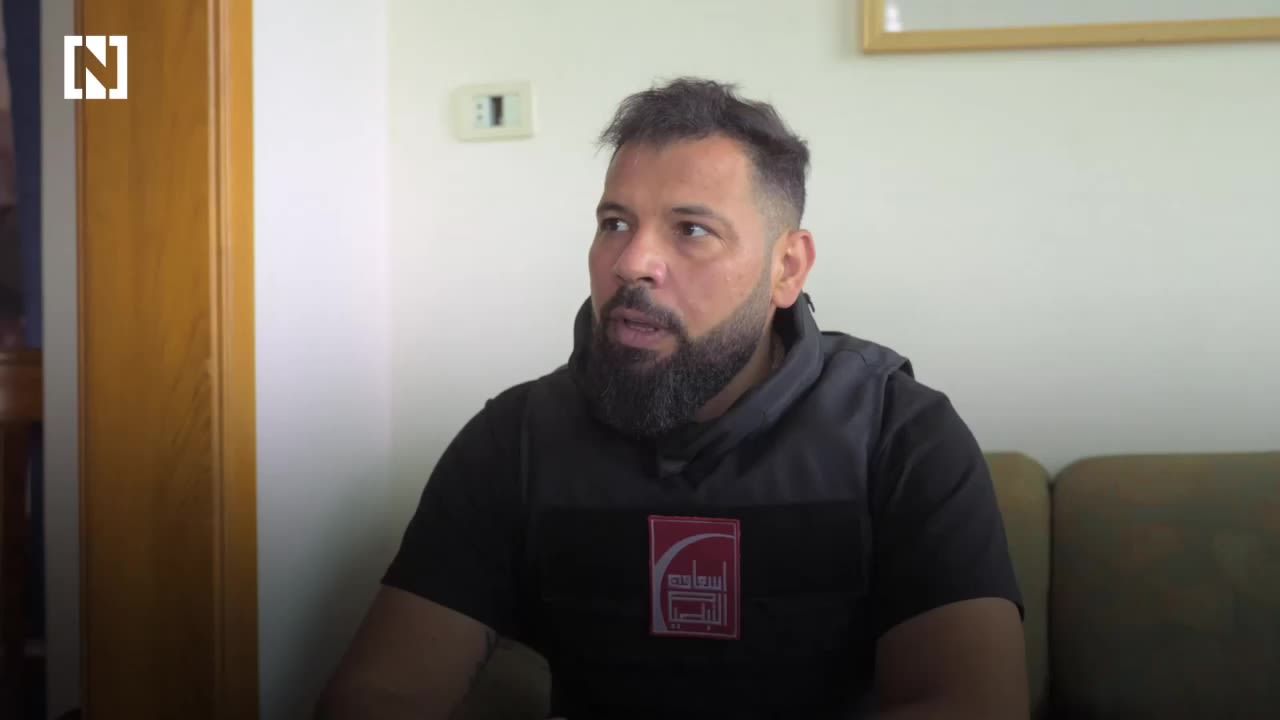
Paramedic Mahdi Salloum tells The National what happened on the day of the Israeli quadruple-strike on the first responders. The National
Paramedic Mahdi Salloum tells The National what happened on the day of the Israeli quadruple-strike on the first responders. The National
The following scene was captured on the paramedics’ body cameras as they began transferring victims from the damaged ambulance into two newly arrived vehicles.
Among the first responders sent to rescue Mr Zalghout and the others was Mahdi Salloum, a paramedic with Nabatieh Ambulance Association. He recalled opening the back of the damaged ambulance that Mr Zalghout had driven. “We saw bodies severely injured, some of them missing legs. It was horrible,” he said.
“It took less than five minutes,” Mr Salloum explained as he showed the bodycam footage to The National. “We had two vehicles on site. The video clearly shows that the vehicles were completely free of any military equipment, contrary to what Israel claims.”
Seconds later, as they were finishing transferring the wounded, a third missile struck near the second ambulance, killing a fourth paramedic, the driver, Mahdi Abou Zeid. Mr Salloum, with wounded paramedics loaded into his vehicle, was forced to drive away.
The footage clearly shows the impact, with injured paramedics inside the ambulance screaming as it is hit.
In total, four paramedics were killed in the quadruple-tap attack: Mahdi Abu Zeid, Fadl Sarhan, Ali Sabra and Said Haribi.
Paramedics mourn the killing of their colleagues in the Mayfadoun massacre. Reuters
Paramedics mourn the killing of their colleagues in the Mayfadoun massacre. Reuters
In the bodycam footage of the Mayfadoun attack, the ambulances are clearly marked, as are the paramedics, who were in full uniform.
The Israeli army said the Mayfadoun quadruple-tap attack targeted “Hezbollah terrorist infrastructure, and not an ambulance or rescue team”. But it did not respond when asked to clarify why the strikes appeared to have followed the paramedics and ambulances after they had departed the initial strike location. Nor did the army specify what infrastructure was targeted following the initial strike, after Mr Zalghout had driven away.
Human rights lawyers who reviewed the footage said there was no evidence of fighting around the ambulances at the time of the strikes.
“It is not one incidental strike. That’s basically a deliberate pattern,” said Mr Houry of the Arab Reform Initiative.
Rescuers told The National that drones were in the air above them throughout the entire ordeal.
“Israel has basically eyes in the skies; they know these are ambulances,” Mr Houry said. “If you want to attack a first responder, the burden is on [them] to show they were engaged in military activity – and they haven’t done that.”
The National pressed the Israeli army on all four cases presented in this report; no evidence was provided to substantiate its claims for any of them.
Israel has repeatedly accused Hezbollah members of using ambulances for military purposes. In its crosshairs is the IHA, a civilian emergency service affiliated with Hezbollah. The IHA has suffered the most from Israeli attacks. Under international law, paramedics are protected, regardless of their political affiliations.
“There hasn’t been a single incident where Israel has released footage showing that weapons were being transported in these ambulances,” Mr Houry said.
A deadly tactic: first responders become targets
The National has documented many instances of unlawful double-tap attacks carried out by Israel in Lebanon. On March 16, in Kfar Sir, just north of the Litani River, Israel struck a building that locals and rescuers said was a water storage facility for the village. As soon as paramedics arrived on the scene to clear the road, a second strike killed two from the IHA, Ali Halani and Mahdi Rihan, and the driver of an excavator.
The ambulance had waited 40 minutes after the strike before setting off on the mission – a precaution all Lebanese rescuers are now forced to take to avoid becoming the targets of follow-up strikes. But it was not enough.
As soon as the ambulance arrived at the site, a surviving paramedic from the IHA, who witnessed the strike but asked to remain anonymous, said Israel hit the same site a second time.
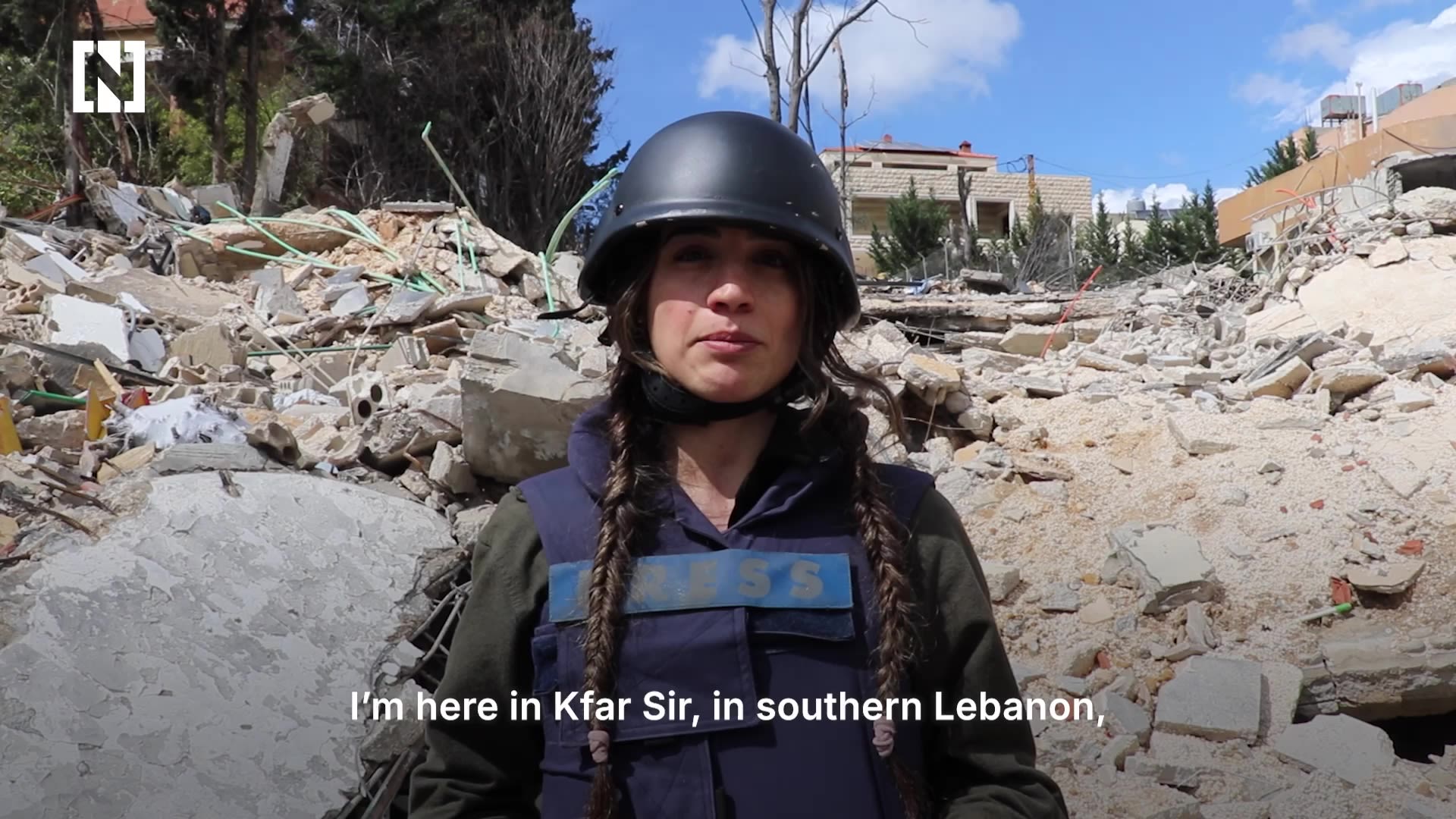
The National reports from the site of a double-tap attack in Kfar Sir that killed two paramedics and another man. The National
The National reports from the site of a double-tap attack in Kfar Sir that killed two paramedics and another man. The National
When questioned about the strike on Kafr Sir, the Israeli army said the “incident in Deir Siryan” targeted a Hezbollah “weapons depot”. The National reiterated to the Israeli army that it was requesting comment on the targeting of a water facility in Kafr Sir, not Deir Siryan, to which the Israeli army responded: “We mistakenly wrote Deir Siryan … we have no further comment beyond the response that was already provided”.
There was no indication that the water storage facility was a “significant ammunition storage site”, a weapons expert told The National, based on photos taken during a visit to the obliterated site on March 25. The military expert said there were “no signs of secondary explosions which would indicate a heavy weapons depot”.
“In cases of large ammunition stockpile blasts, you would typically see evidence such as mortar rounds, artillery shells, scattered bullets and burn marks on the walls,” he said.
An ambulance drives past a destroyed building in Kfar Sir, the site of a double-tap attack that killed two rescuers. Bilal Kashmar for The National
An ambulance drives past a destroyed building in Kfar Sir, the site of a double-tap attack that killed two rescuers. Bilal Kashmar for The National
There is little evidence that the building posed a threat to Israel, lawyer Aaron Kearney said. “The presence of protected persons at the site would make the second strike disproportional, unnecessary, inhumane, and failing to distinguish between an ongoing military threat and the threat to protected persons,” he said.
Double-tap attacks have not only killed paramedics but also civilians who had gone to rescue the wounded. Among these was Father Pierre Al Rahi, who was killed on March 9 as he was helping Clovis Boutros, who had been injured in an artillery attack on his home about 15 minutes earlier.
Residents of the Christian Lebanese border village of Qlayaa carry the coffin of the village's priest, Father Pierre Al Rahi, during his funeral on March 11, 2026. AFP
Residents of the Christian Lebanese border village of Qlayaa carry the coffin of the village's priest, Father Pierre Al Rahi, during his funeral on March 11, 2026. AFP
The targeted area, which is Christian, is close to Khiam – at the time the scene of fierce combat between Israel and Hezbollah. The Israeli army told The National its troops had identified “several armed terrorists” and fired at them to neutralise the “immediate and real threat”.
Three people at the scene told The National they had not seen any Hezbollah members.
'No coincidences'
On March 24, two young paramedics with the Nabatieh Ambulance Service were riding a motorcycle when they were killed in a direct Israeli air strike. Joud Suleiman, 16, and Ali Jaber, 23, had been distributing food aid to families across the city.
The next day, a sobbing Mohamed Suleiman, dressed in his own uniform emblazoned with a Nabatieh Ambulance Team badge, buried his son. An hour later, heartbroken, he returned to work.
Mohamed Suleiman, a veteran Lebanese paramedic and co-founder of the Nabatieh Ambulance Service, mourns at the grave of Ali Jaber. Getty Images
Mohamed Suleiman, a veteran Lebanese paramedic and co-founder of the Nabatieh Ambulance Service, mourns at the grave of Ali Jaber. Getty Images
The same uniform and helmet had not protected his son or colleague from being targeted. According to several witnesses who were at the scene, in addition to the clearly marked uniforms, the motorcycle was equipped with emergency lights and prominently displayed the ambulance team’s flag and logo.
When queried, the Israeli army gave contradictory accounts, saying the strike was “against terrorist operatives”, while also stating it was “directed at Hezbollah terrorist infrastructure, and not at an ambulance or rescue team”. It remains unclear whether the army is alleging that the ambulance or rescue team was affiliated with Hezbollah, or whether the motorcycle with the paramedics on it was not the intended target of the direct strike.
The destroyed motorcycle driven by Joud Suleiman and Ali Jaber as they delivered food aid in Nabatieh and were struck in an Israeli attack. Bilal Kashmar for The National
The destroyed motorcycle driven by Joud Suleiman and Ali Jaber as they delivered food aid in Nabatieh and were struck in an Israeli attack. Bilal Kashmar for The National
The Lebanese Civil Defence was first to arrive at the scene after the attack on the motorcycle, according to Hussein Faqih, head of the organisation in Nabatieh. He said the victims were clearly identified as first responders, corroborating the Nabatieh Ambulance Service’s account. “We found them in pieces,” said Mr Faqih.
The National observed the aftermath of what was clearly a direct strike on the two paramedics: the charred motorcycle frame remained on the road the day after they were targeted; a faded stream of blood was still visible on the pavement.
Israel has not explained why it killed the two clearly identified rescuers. These killings were part of a “pattern” linked to dozens of other incidents in Gaza and Lebanon, according to Mahdi Sadek, head of the Nabatieh Ambulance Service.
“Coincidences do not repeat,” Mr Sadek told The National, dismissing the notion that the Israeli army could have attacked the ambulance team unintentionally.
Mahdi Sadek, head of the Nabatieh Ambulance Service. Benoit Durand for The National
Mahdi Sadek, head of the Nabatieh Ambulance Service. Benoit Durand for The National
Mr Houry said the targeting of rescuers by Israel is part of a “deliberate strategy to empty out southern Lebanon”, where every wound, he added, is now a death sentence.
Today, the Civil Defence centre in front of which Jaber and Noura were killed while tending to Mahdi Atwi’s wounds no longer exists. On the night of May 23, a direct Israeli strike obliterated the centre, which had been evacuated after the two paramedics were killed. The Israeli army did not comment on the strike when asked. The day before, six medics were killed by Israel as they operated in south Lebanon.
But in Nabatieh, rescuers insist: they will not leave.
“Our colleagues’ sacrifice gives us strength to continue,” rescuer Mr Dakduk affirmed. “We will not abandon our duty.”
 Built with Shorthand