
No red lines: Israel's new tactics in its war on Lebanon - with pages taken from the Gaza playbook
After years of impunity in the Palestinian strip, Israel is deploying the same strategies in Lebanon: mass displacement orders, 'double-tap' strikes and attacks on civilian infrastructure
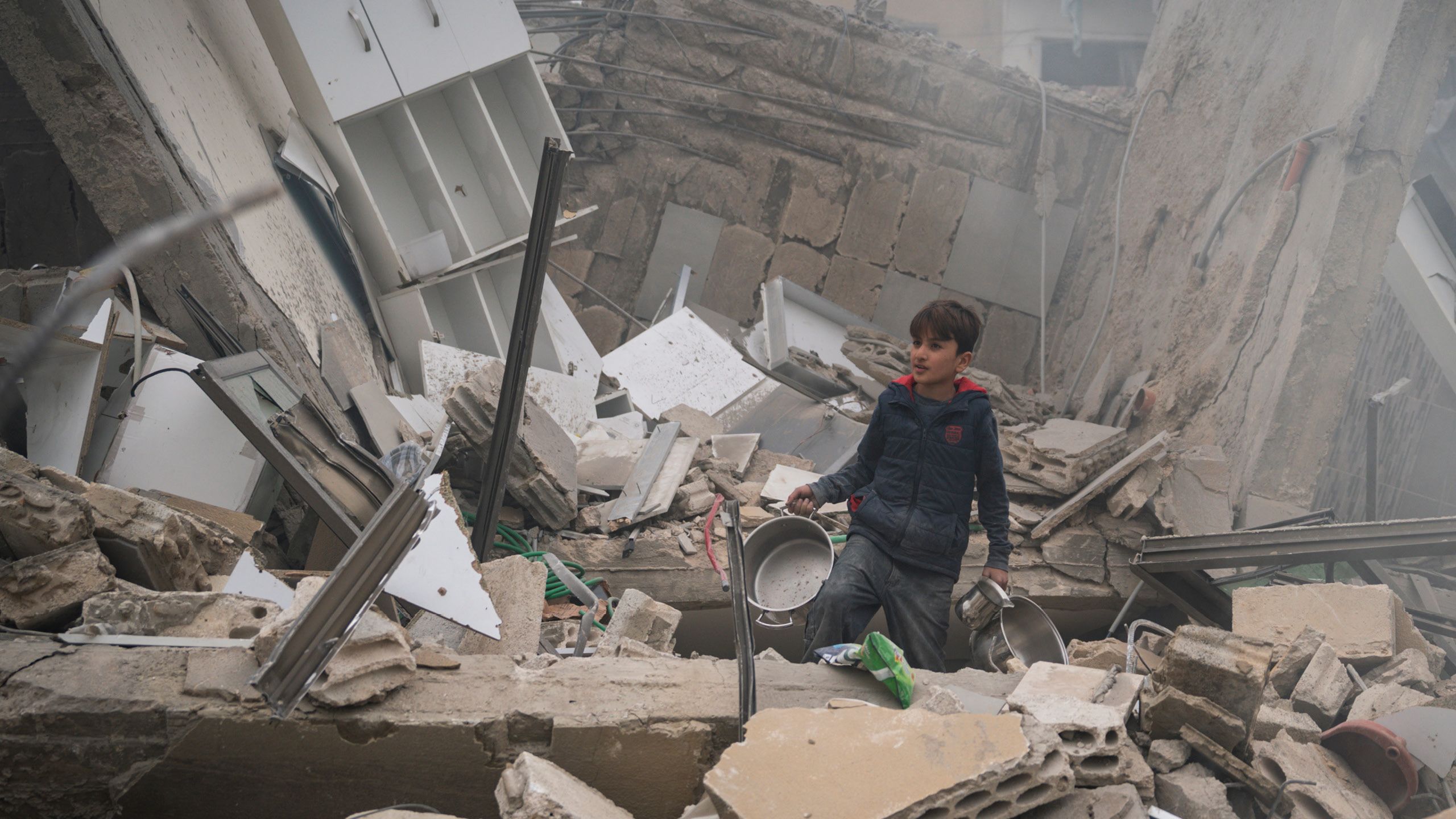

No red lines: Israel's new tactics in its war on Lebanon - with pages taken from the Gaza playbook
After years of impunity in the Palestinian strip, Israel is deploying the same strategies in Lebanon: mass displacement orders, 'double-tap' strikes and attacks on civilian infrastructure.
No rules of engagement. No red lines
After Israel got away with what UN experts have decried as genocide in Gaza, its military is now openly pulling pages out of the “Gaza playbook” in its war across Lebanon.
From 'double-tap' strikes to mass displacement orders, Lebanese civilians are paying the heaviest price in the conflict, which reignited on March 2 after Hezbollah fired missiles at Israel during a ceasefire that Israel violated on a near-daily basis since it came into effect on November 27, 2024, according to the UN.
The new displacement orders cover about 14 per cent of Lebanese territory, according to the UN, forcing one in five people from their homes. They include all towns and villages south of the Litani River – more than 150 – home to about 250,000 people, or 4 per cent of the population, according to municipality figures. Israel has also issued forced displacement orders in Beirut’s southern suburbs. Unlike previous wars, when warnings targeted individual buildings, entire neighbourhoods are now included. An estimated 800,000 residents – about 13 per cent of Lebanon's population – have been displaced from the capital’s southern suburbs alone.
More than one million people in total have been forced from their homes, many unsure if they will return. Lebanon’s Social Affairs Minister Haneen Sayyed said it was the most sudden wave of displacement in the country’s history.
The war has left a devastating trail of loss and grief. At least 1,318 people have been killed in Lebanon between March 2 to 31, 125 of whom are children, according to Lebanon’s Health Ministry. Unicef says Israel has killed or wounded the equivalent of a classroom of children every day since the war resumed.
While fighting between the two states is longstanding, the latest war features an escalation by Israel not previously seen on Lebanese territory. In one week, Israel killed more people in Lebanon than in the entirety of the 34-day war in 2006.
The conflict has also reignited fears of occupation, as Israeli officials call openly for redrawing the border up to the Litani River in the south, covering about 8 per cent of Lebanese territory. This marks Israel’s sixth attempted invasion of Lebanon in recent history, predating Hezbollah’s formation in 1982.
From the scale and nature of attacks to warning methods and broader strategy, here we unpack how Israel’s tactics have shifted – drawing clear lessons from its more than two-year campaign to destroy and occupy Gaza.
Expanded attacks sow seeds of mistrust

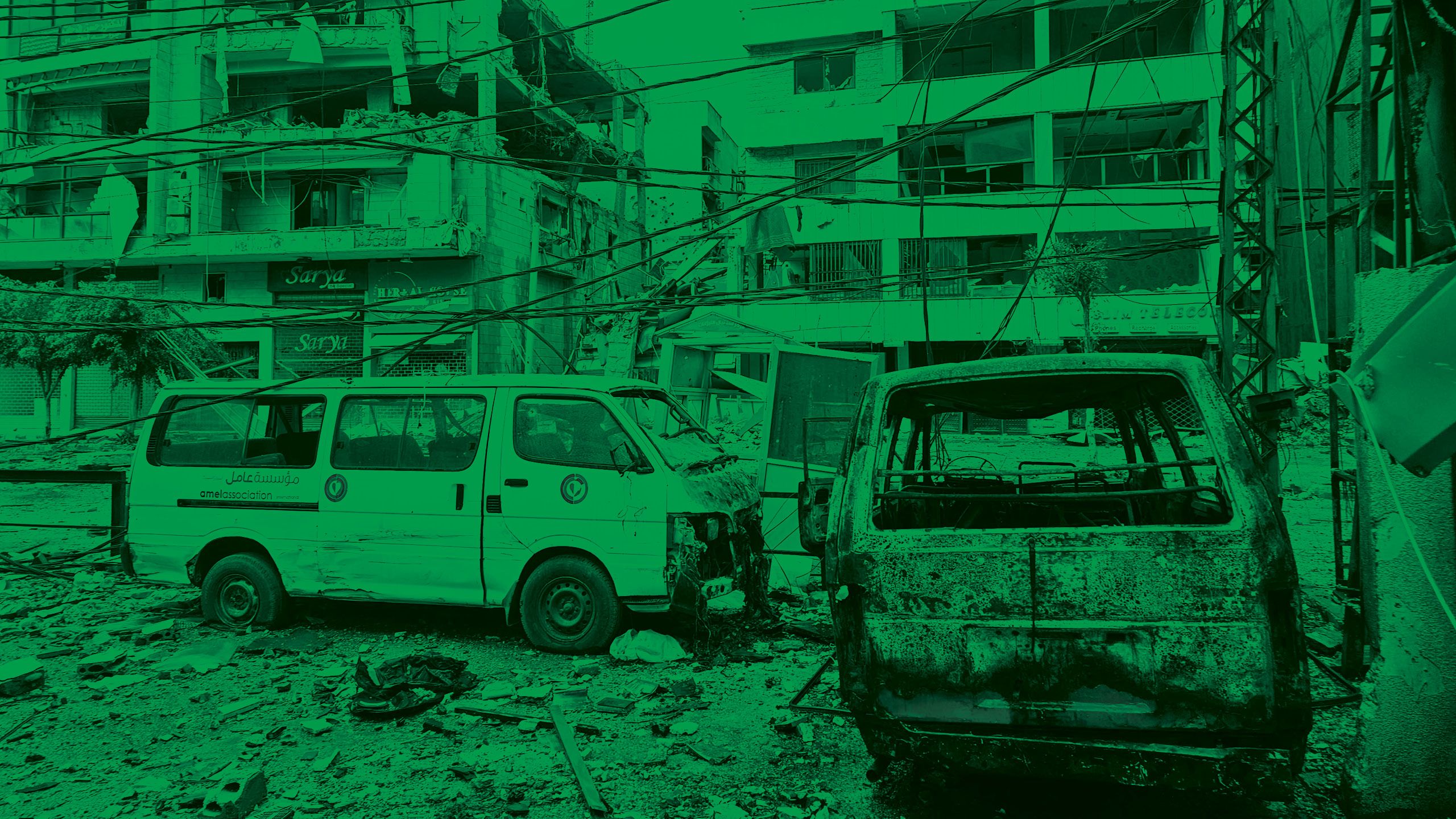
Contrary to previous wars, Israeli strikes have extended far beyond their traditional focus on south Lebanon, Beirut’s southern suburbs and parts of the Bekaa Valley, where Hezbollah is influential.
This time, Israel has struck central Beirut, as well as Christian and Druze areas north of the Litani, in what experts say is an attempt to stir sectarian strife. Attacks on non-Shiite areas – from where many Shiites have fled and where Hezbollah does not hold sway – follow a strategy of “collective punishment”, said Nadim Houry, head of the Arab Reform Initiative, a regional think tank.
“They want to punish the Shiite community and raise the cost of war on them,” while increasing pressure on the Lebanese government to act against Hezbollah, he said.
Israel has also widened its attacks into the heart of Beirut, including in Bachoura and Zokak El Blat, less than a kilometre from the Grand Serail and in the Christian-majority suburb of Hazmieh.
On March 12, it struck the Ramlet Al Bayda corniche in Beirut, where hundreds of displaced people were camping, in a 'double-tap' attack that killed 12.
“If they struck here, then nowhere is safe,” Aseel Dalleh, a survivor, told The National.
Observers say Israel aims to widen the social cost of the war and deepen anger at Hezbollah for drawing Lebanon into conflict. It used a similar approach in its two-month war with Hezbollah in 2025, with analysts and officials highlighting a deliberate effort to destabilise the country by targeting communities hosting displaced Shiites – inflaming existing sectarian tension.
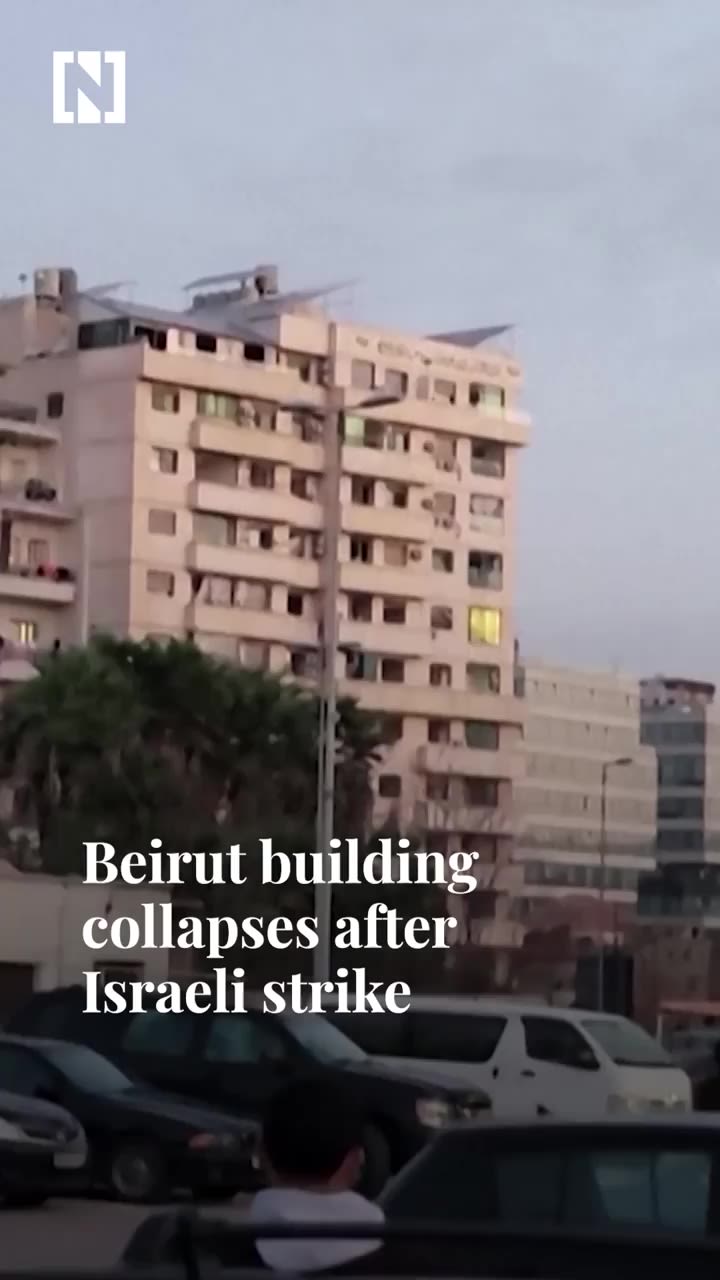
Repeated Israeli strikes on buildings housing displaced people in non-Shiite areas have fuelled fears that hosting displaced families could turn entire buildings into targets. The attacks have deepened divisions within Lebanese communities, with many displaced families unable to rent in non-Shiite areas. With shelters full and displaced families being refused access to some neighbourhoods, many are being forced to sleep on the streets.
Israel is behaving as “an agent of chaos”, Mr Houry said, to push Lebanese society against Hezbollah. “Even if that pressure ends up leading to more local tensions, they would take that as a win.”
Meanwhile, civilians are bearing the brunt of this strategy.

The National reports on the forced mass displacement of Lebanese from Beirut's southern suburbs on March 6, after the Israeli army ordered all residents to leave
The National reports on the forced mass displacement of Lebanese from Beirut's southern suburbs on March 6, after the Israeli army ordered all residents to leave
Lebanese photographer Mohamad Shehab, 37, and his daughter Taline, 4, were asleep in their home in Aramoun, a town overlooking Beirut, on March 12 when an Israeli strike killed them both and left his wife critically injured.
The strike on the residential neighbourhood, about 10km south of Beirut, came at around 2am, with no warning. Several missiles hit the building and upper floors collapsed on to Mohamad’s apartment, killing him and his daughter instantly.
“They were civilians, inside their home, at night,” his brother Ali Shehab told The National.
“We lost two members of our family at the same time – a father and his young daughter. We are still trying to process what happened."

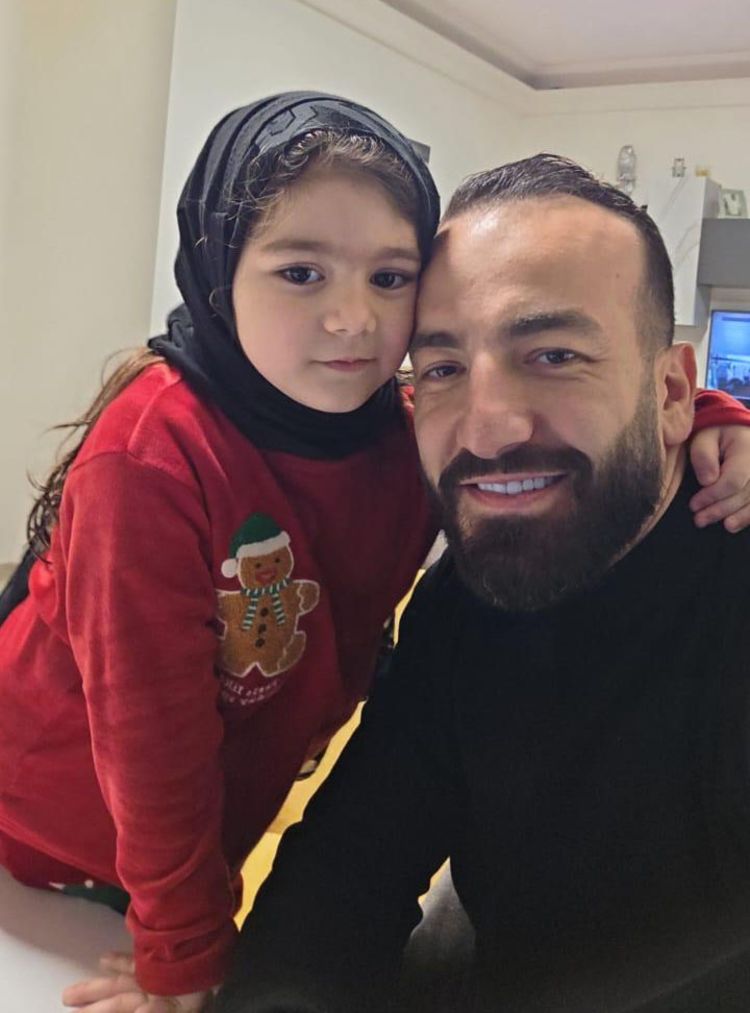
Mohamad Shehab and his daughter Taline were killed in an Israeli air strike on their home in Aramoun, near Beirut. Photo: family handout
Mohamad Shehab and his daughter Taline were killed in an Israeli air strike on their home in Aramoun, near Beirut. Photo: family handout
An Israeli statement said the strike targeted a “key commander in the communications unit of the Hezbollah terrorist organisation and in the Palestine Corps of the Iranian Quds Force”.
But for his wife, Natalie Shehab, who survived with critical injuries, the attack has shattered her “whole world”.
For days, she remained in an induced coma, Mohamad’s brother told The National.
“At one point, her heart stopped before doctors managed to revive her,” he said. After waking, she was told her husband and daughter had been killed, leaving her in shock.
In an Instagram post mourning her family, Natalie wrote: “Why did you leave me alone? How am I supposed to go on without you?”
The family said there had been no warning before the strike.
New patterns of strikes and strategy

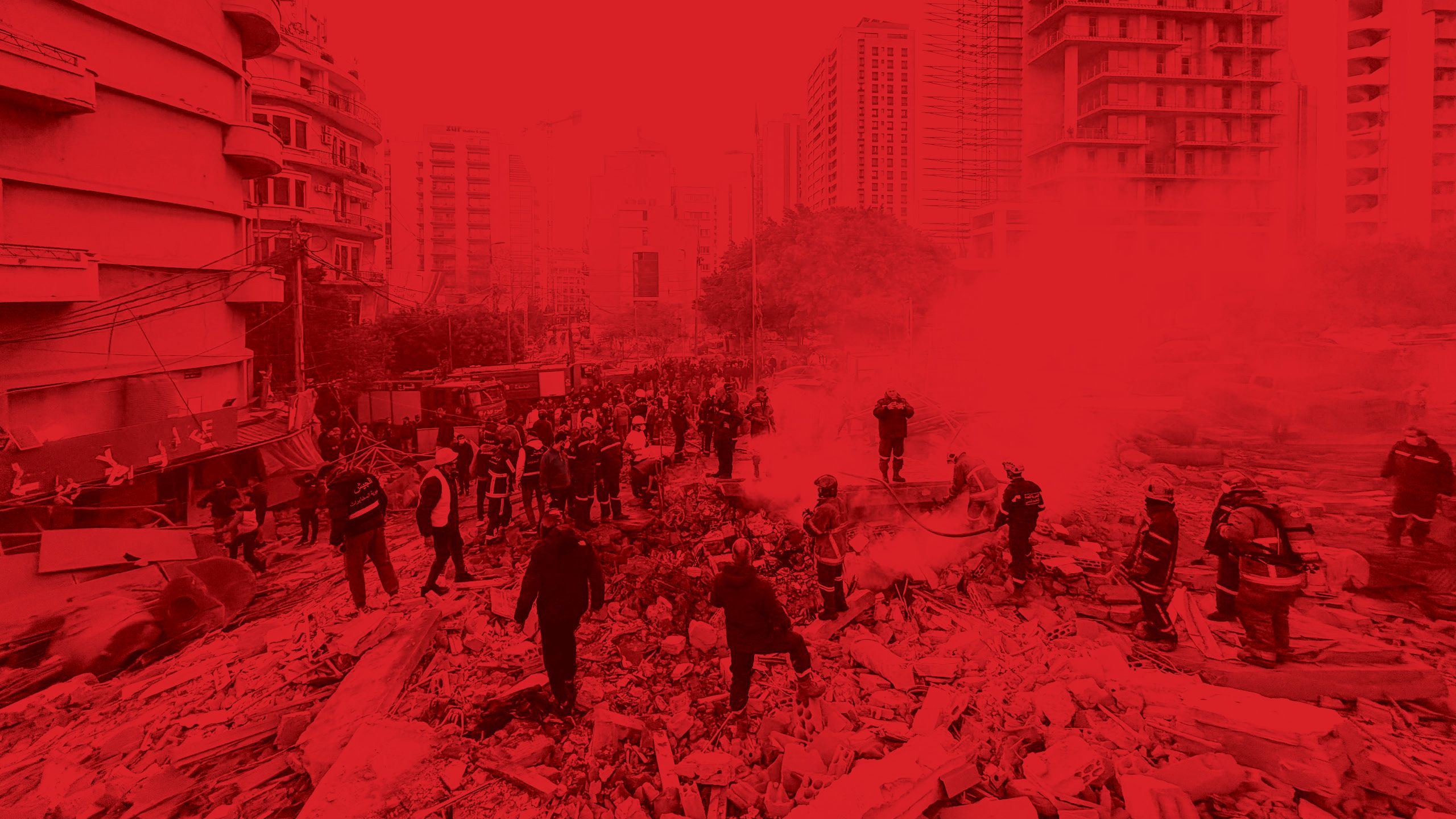
'Double-tap' attacks target rescuers
On March 9, Israel struck a residential building owned by an elderly couple, Therese and Clovis Boutros, in the southern town of Qlayaa. As residents rushed to help, Israel struck the area a second time, just 15 minutes later, killing Father Pierre Al Rahi.
The priest’s death shocked the Christian-majority village, which had – until then – largely been spared bombardment.
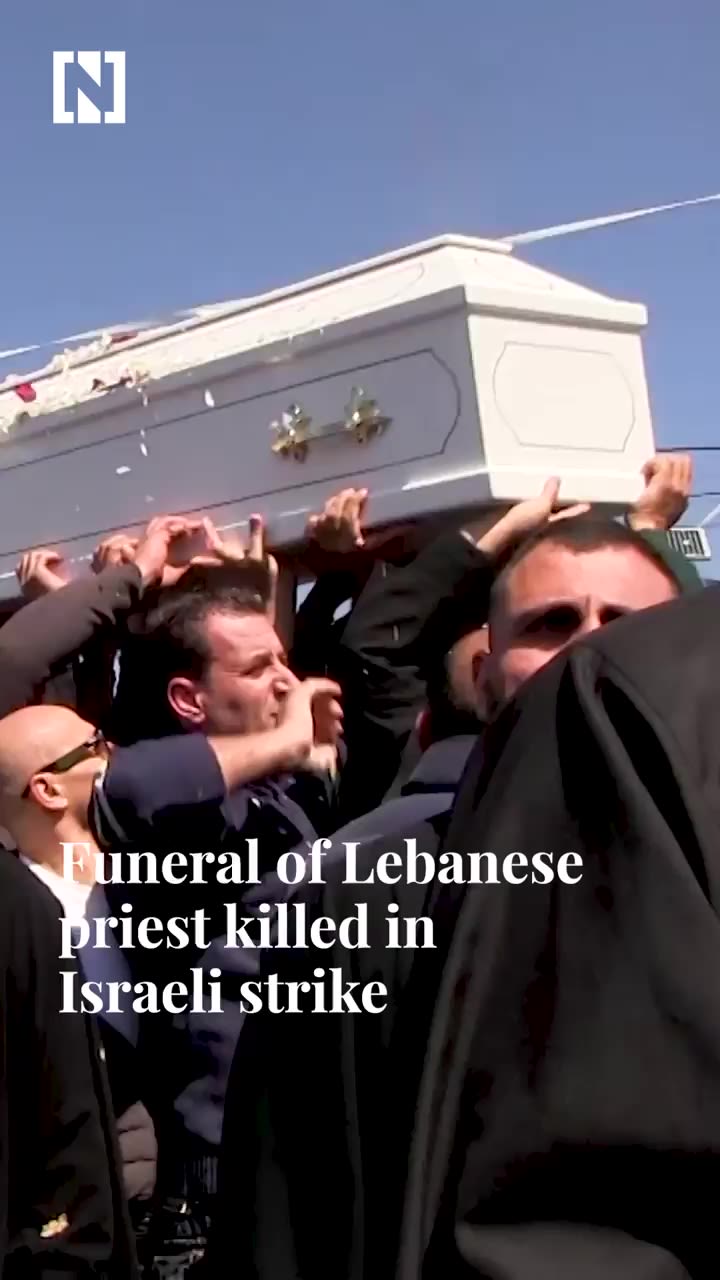
He had come to assist the wounded alongside rescuers and residents, Ms Boutros, who was injured in the first strike, told The National. When people gathered, Israel struck again, hitting the neighbouring building. The priest was severely injured and later died.
His death made international headlines, with the Pope paying tribute to a man who “rushed to help wounded parishioners without hesitation”.
For Israel, however, this was not an isolated case.
The priest was killed in what is known as a “double tap” – an initial attack followed by a second minutes or seconds later, after rescuers and civilians arrive. Widely used in Gaza, the tactic is now being seen in Lebanon.
Rights groups and UN officials have denounced it as a breach of international humanitarian law. When The National embedded with Nabatieh Civil Defence on March 25, medics on the ground said the changing strategy had changed how they operate.
“We wait before moving to the strike, as a precaution in case there is a second one,” said Hussein Jaber, a firefighter in Nabatieh. "In the past, we would go immediately and then we would get hit again."

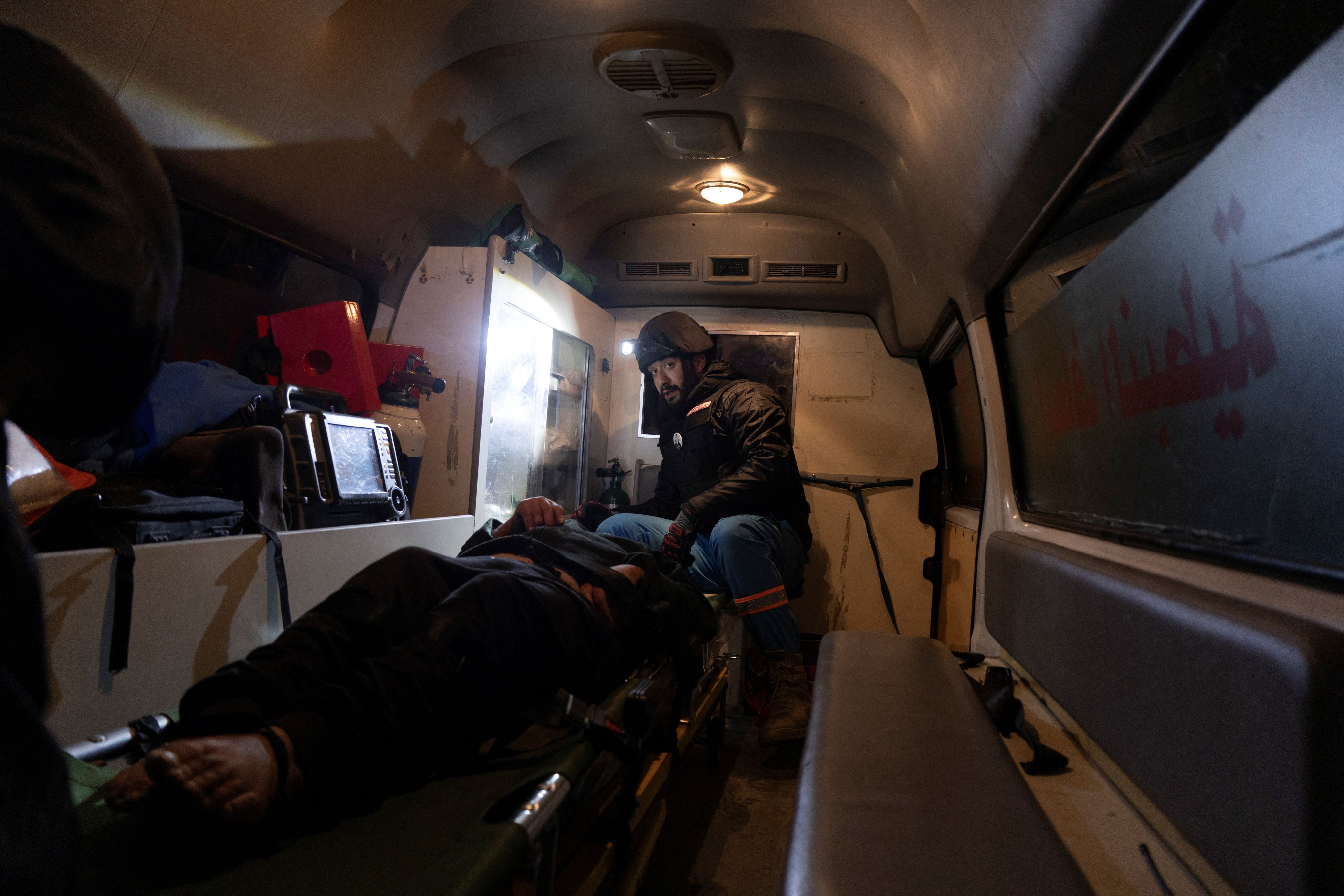
Members of Nabatieh Civil Defence transport an elderly disabled man, who was injured in an Israeli airstrike on his home, into an ambulance. Reuters
Members of Nabatieh Civil Defence transport an elderly disabled man, who was injured in an Israeli airstrike on his home, into an ambulance. Reuters
But precautions can only do so much.
“You are forced to respond and go see each strike, see the people, see their homes,” Mr Jaber said. And precautions have little effect when paramedics are the direct targets of Israeli strikes.
Blurring the lines between civilian and military infrastructure
While Israel says it is targeting Hezbollah infrastructure, it has also repeatedly struck medical workers, ambulances and health facilities – another tactic previously used in Gaza.
At least 53 healthcare and rescue workers have been killed since the war began, according to the Lebanese government. Among them was 16-year-old Jude Suleiman, who was killed alongside another paramedic in what appears to have been a targeted drone strike on the uniformed rescue workers as they travelled to deliver food in Nabatieh on a motorcycle that also identified them as paramedics.

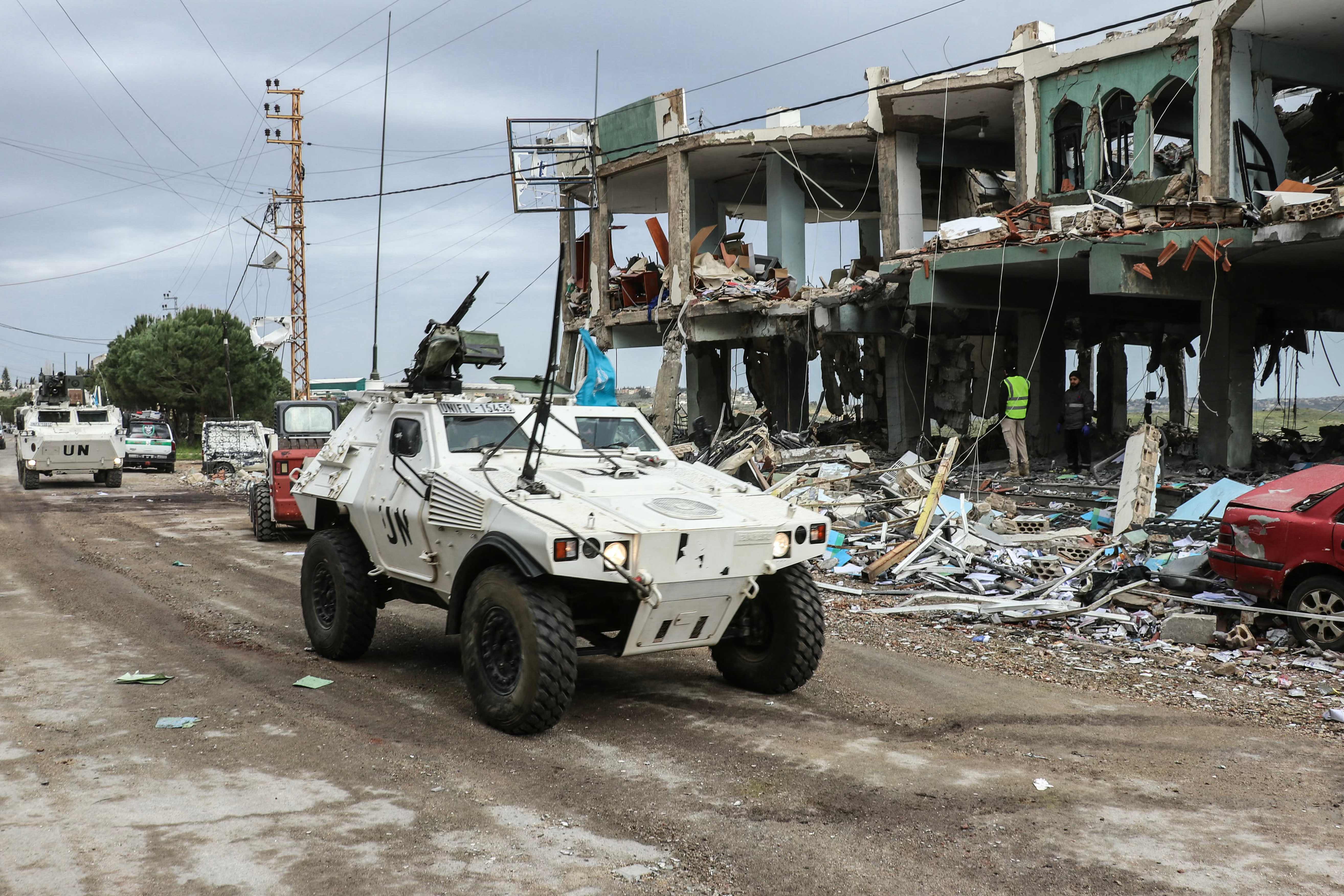
Unifil peacekeepers drive past a health centre in Burj Qalawiya that was destroyed in an Israeli air strike in March 2026. AFP
Unifil peacekeepers drive past a health centre in Burj Qalawiya that was destroyed in an Israeli air strike in March 2026. AFP
On March 16, The National visited the Islamic Health Authority centre, a civil defence and ambulance association affiliated with Hezbollah, in Burj Qalawiya, that had been hit days earlier in a strike that killed 12. The attack reduced the four-storey building to rubble, with bodies recovered over several days.
The Israeli army claimed that Hezbollah fighters were using ambulances and medical centres.
Paramedics are protected under international humanitarian law, regardless of affiliation. But Israeli strikes do not distinguish between Hezbollah’s military apparatus and its extended civilian infrastructure, blurring the line of what constitutes a legitimate target, in a bid to erode the group’s base. Hezbollah is a powerful militia as well as a Lebanese political party with MPs and ministers, offering a vast network of welfare services.

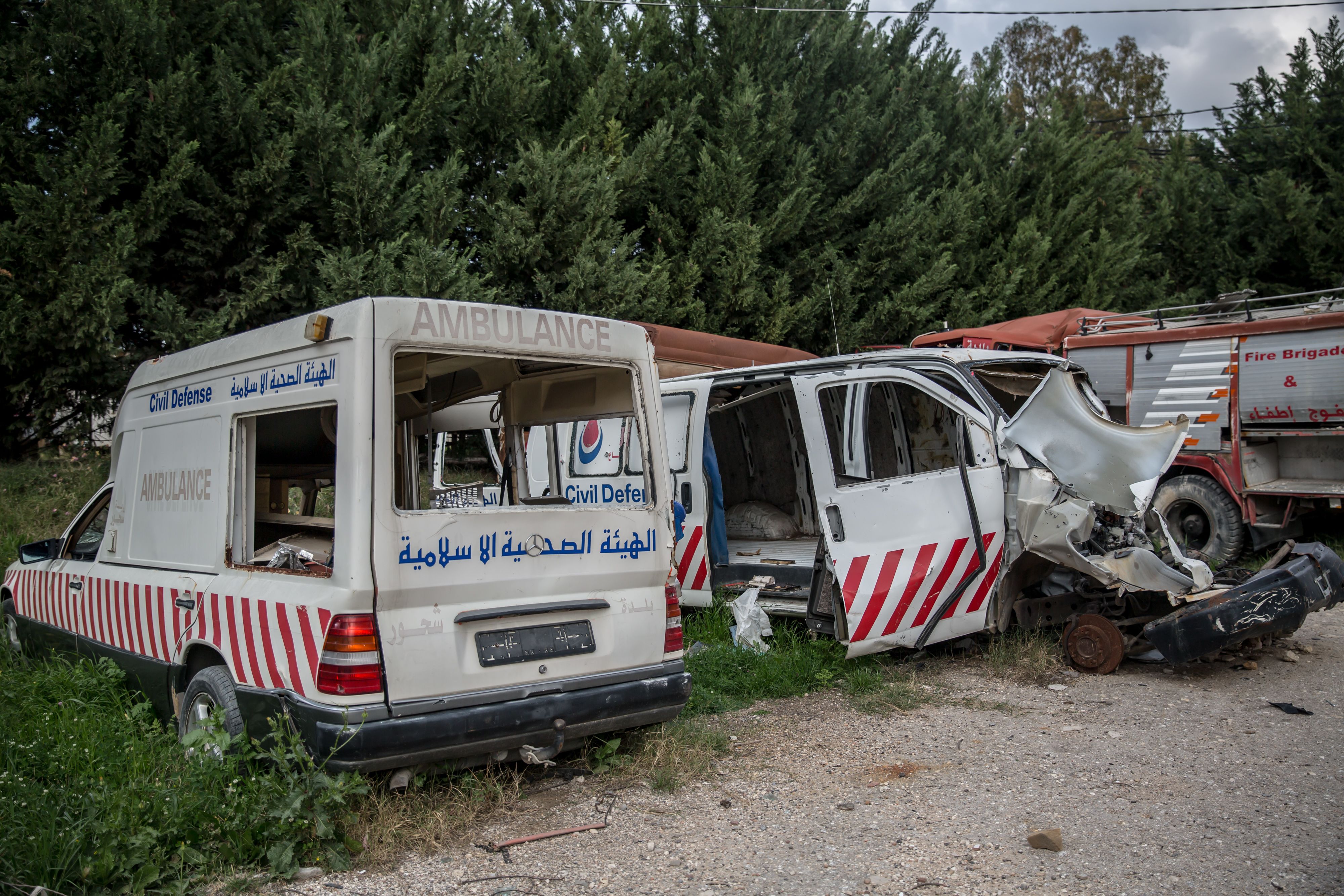
Ambulances destroyed by Israeli attacks in March 2026 are lined up in a car park in Tyre. Getty Images
Ambulances destroyed by Israeli attacks in March 2026 are lined up in a car park in Tyre. Getty Images
Applying similar logic, in contradiction of international humanitarian law, Israel has systematically destroyed branches of Al Qard Al Hassan, a Hezbollah-run financial institution that provides interest-free loans to many of Lebanon’s Shiite community.
The National visited a branch in Baalbek that was lightly damaged in 2024 then destroyed in the current war, signalling a clear escalation of attacks on Hezbollah-affiliated civilian infrastructure since the previous war.

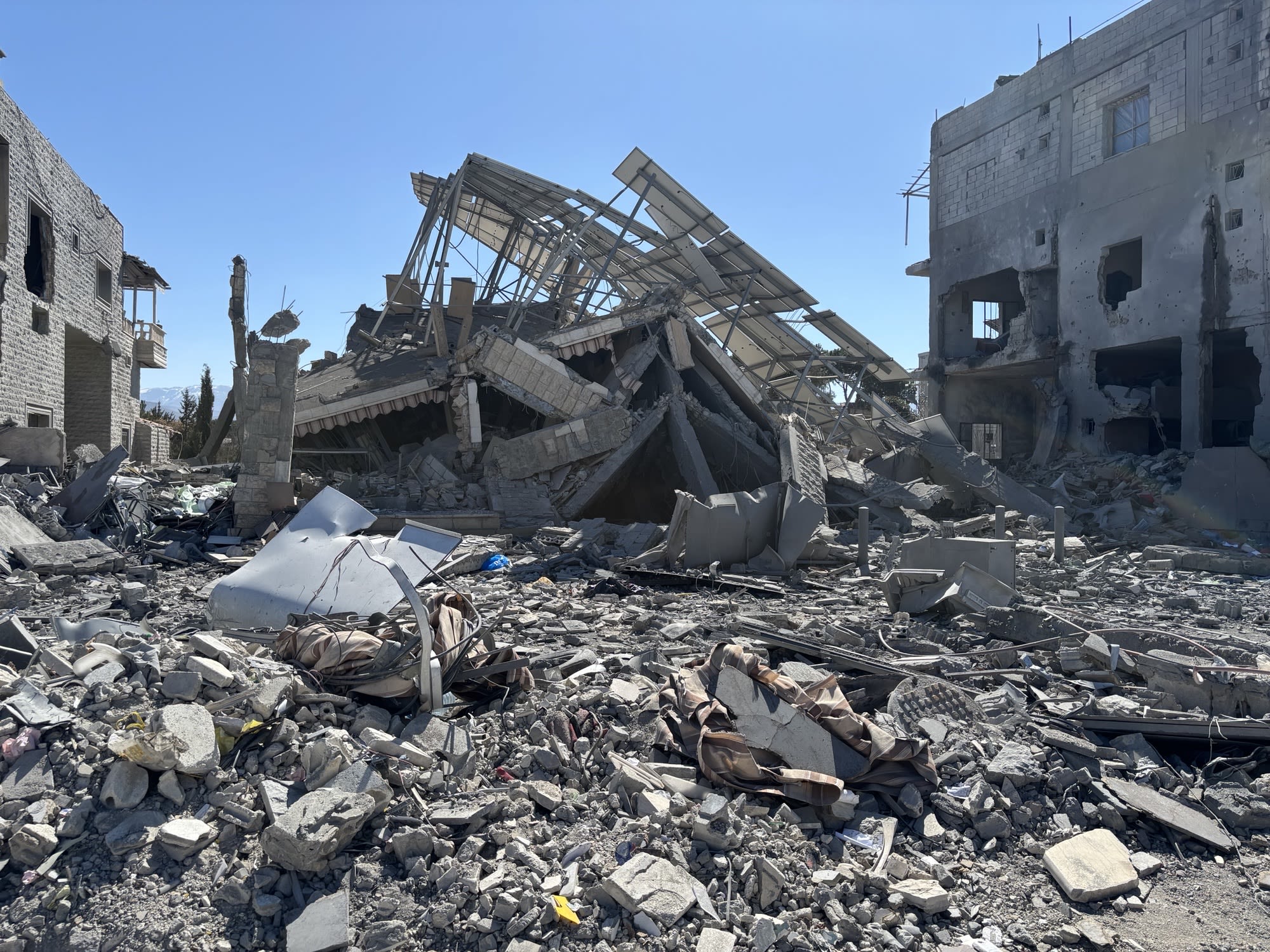
Al Qard Al Hassan branch building in Baalbek, destroyed in an Israeli air strike in March 2026. Jamie Prentis / The National
Al Qard Al Hassan branch building in Baalbek, destroyed in an Israeli air strike in March 2026. Jamie Prentis / The National
In another escalation, Israel has begun openly targeting Lebanese infrastructure – expanding its targets from Hezbollah-affiliated ones. The Israeli army first acknowledged striking Lebanese infrastructure when it hit the Zrariyeh bridge over the Litani River on March 13.
The National documented at least seven other crossings spanning the Litani, which have been damaged or destroyed in Israeli strikes. Its military has ordered the destruction of all bridges over the river allegedly used for “terrorist activity”, without providing evidence. But these are vital arteries connecting the south of the country to the north. They are not merely a means of transport for people, but also a lifeline providing humanitarian access, and a crucial link between family members and communities.
Their destruction has further isolated the south, in what Lebanese President Joseph Aoun has denounced as constituting a “prelude” to Israel’s ground invasion. Israel has made clear its intention to create a buffer zone south of the Litani, 30km from the existing border.

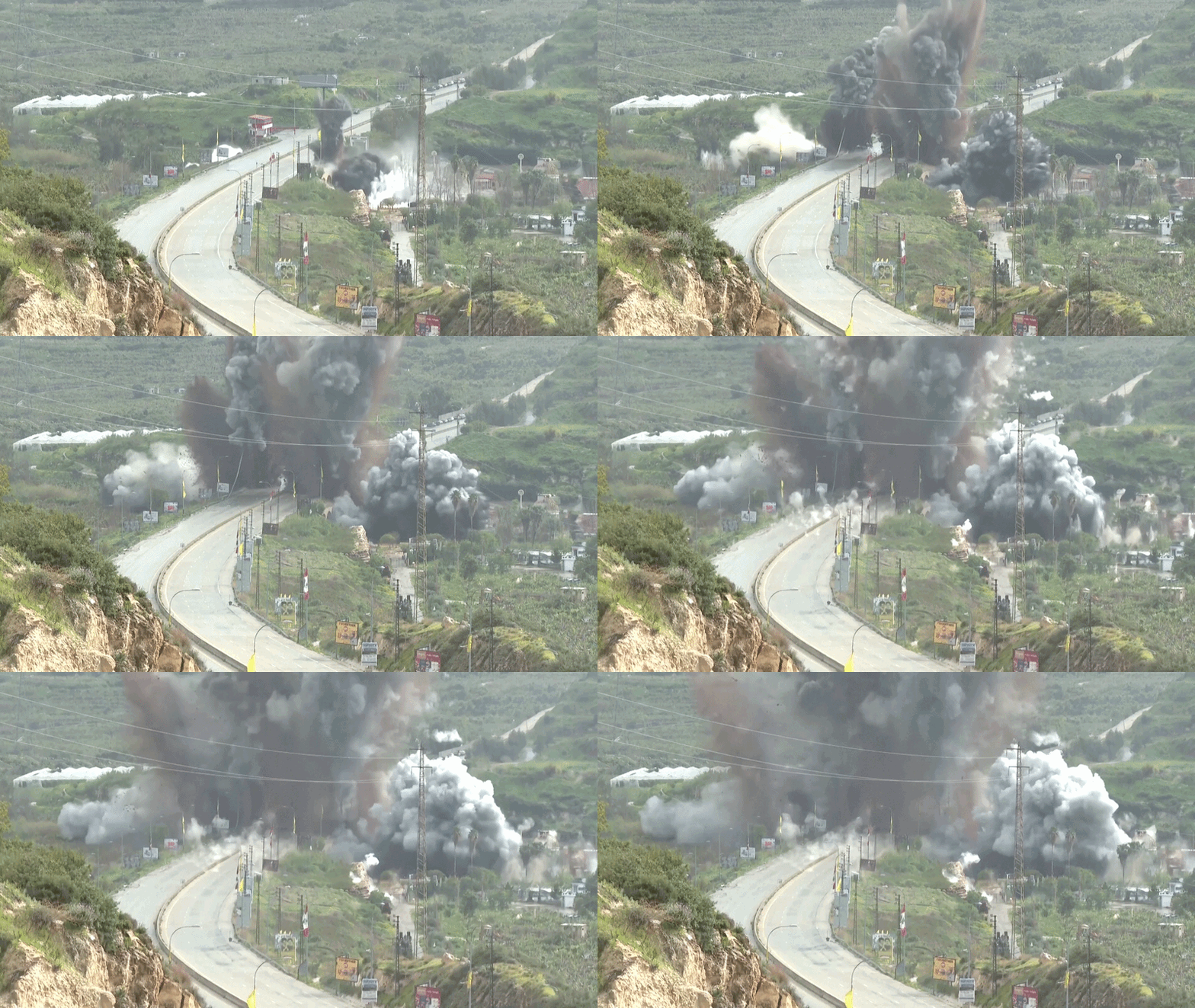
The Israeli army destroyed Qasmiyeh bridge in southern Lebanon in March 2026, a vital route over the Litani. Reuters
The Israeli army destroyed Qasmiyeh bridge in southern Lebanon in March 2026, a vital route over the Litani. Reuters
Despite bombardment and displacement orders, some residents of southern Lebanon told The National they refuse to leave and are stockpiling supplies in case Israel cuts all crossings to trap them in the south.
“Whatever happens to my land happens to me,” said Sami Baradhi from Tyre.
Psychological warfare
The Israeli military has issued sweeping displacement orders while maintaining constant drone presence, seen widely as a form of psychological warfare and Israeli occupation of the country.
The sound of drones overhead at night keeps many awake, adding to exhaustion and tension.
Recently, flyers dropped over West Beirut read: “You must disarm Hezbollah, Iran’s shield”, and “Lebanon is your decision, not someone else’s”.
These tactics mirror those used in Gaza and in Lebanon in the 2024 war.

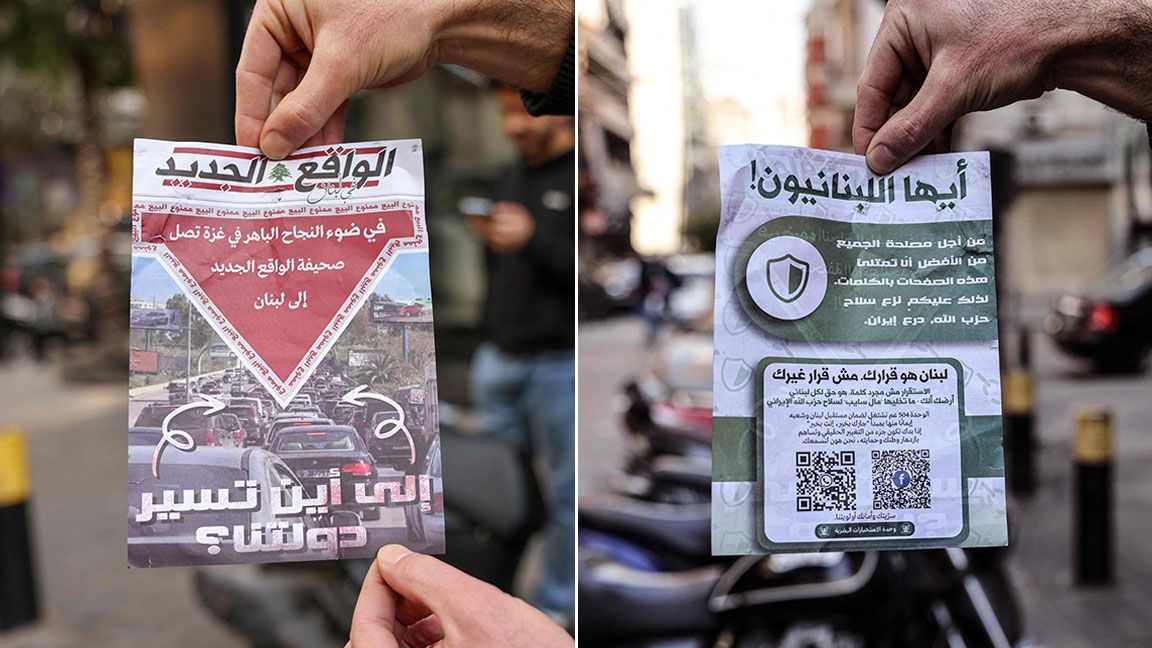
Leaflets dropped by the Israeli military in Beirut in March 2026, telling residents to take action against Hezbollah. AFP
Leaflets dropped by the Israeli military in Beirut in March 2026, telling residents to take action against Hezbollah. AFP
More precise, more lethal weaponry

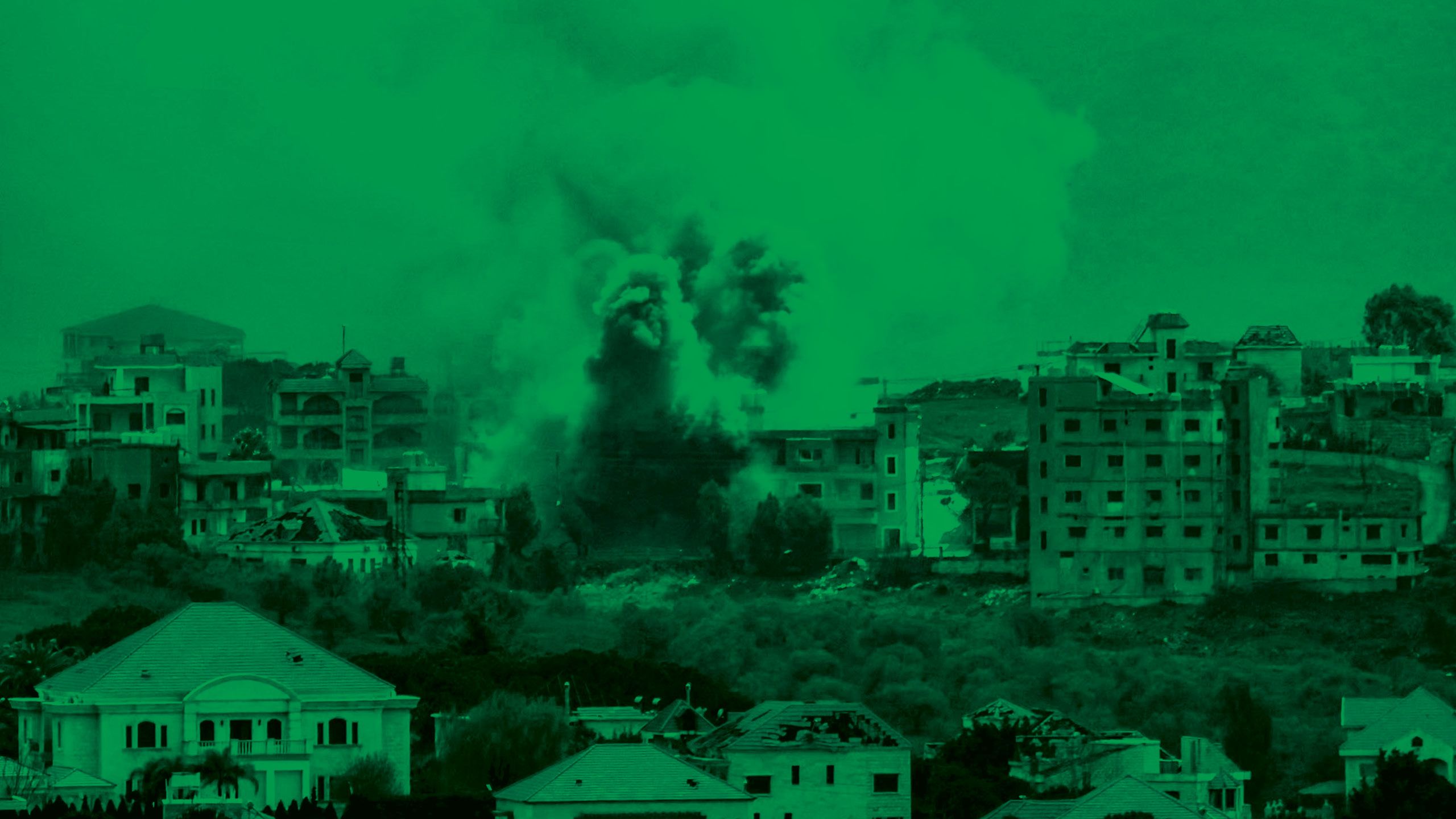
A complex combination of ever-present drones, fighter jets, bunker-busting bombs and demolition charges are all part of the evolving tactics Israel’s military has gained from previous combat in Gaza and Lebanon. Once identified, targets have little chance of survival.
Drones play a central role, including kamikaze models and hybrid surveillance-strike systems.
Sarit Zehavi, a former Israeli intelligence officer, said the military’s approach has “evolved and developed” during the wars on Lebanon and Gaza and that “many tactics in different ways have been updated”.

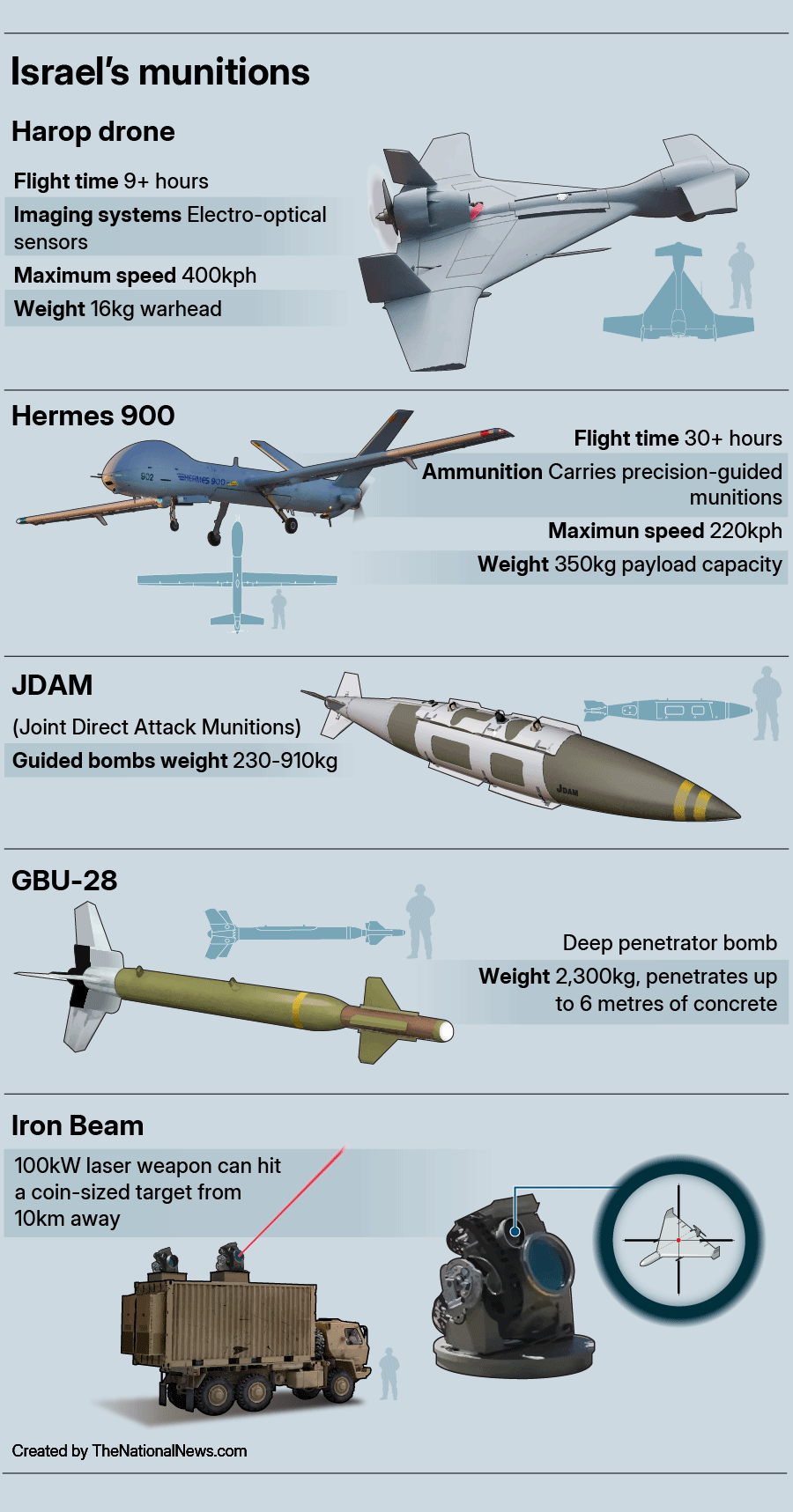
The army’s drone operations have been significantly honed by the war on Gaza and, when combined with AI targeting systems like Lavendar and Gospel, have increased in precision and lethality.
A relatively new weapon is the Harop kamikaze drone, which can loiter for more than nine hours before diving down to strike. It can travel at more than 400kph to hit targets with its 16kg warhead.
Another key surveillance and strike drone being used is the Hermes 900 drone, which can remain airborne for more than 30 hours and carry precision-guided munitions, often co-ordinating with air force strikes.

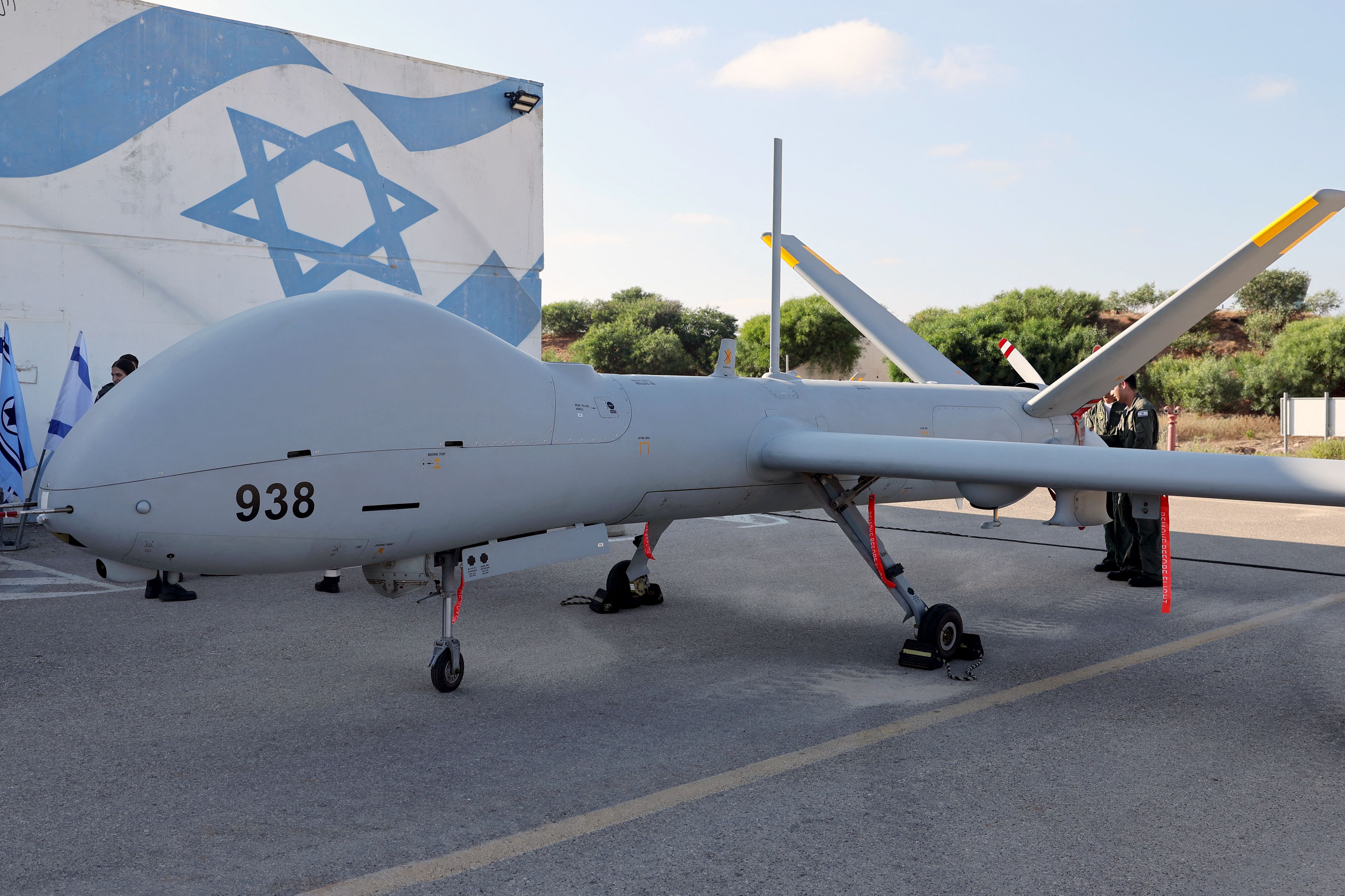
Elbit's Hermes 900 UAV used in Israel's war on Lebanon. AFP
Elbit's Hermes 900 UAV used in Israel's war on Lebanon. AFP
The backbone of Israeli air strikes remains the JDAM (Joint Direct Attack Munitions) guided bombs, weighing between 230kg and 910kg, used on tunnels, fortified buildings and stockpiles.
Heavier munitions, such as the 2,300kg GBU-28, are used to penetrate deep underground bunkers, sometimes in rapid succession strikes. Newer variants like the BLU-137 may also be in use.
Israel has also employed “demolition warfare”, using explosives to destroy bridges or entire villages – as it did in many areas of Gaza – to create a buffer zone in southern Lebanon.
The army’s aerial defence systems have also evolved significantly since the 2024 invasion. The Iron Beam energy rays, enhanced by Civan Laser's “dynamic beam” technology, is believed to intercept targets as small as a coin up to 10km away.

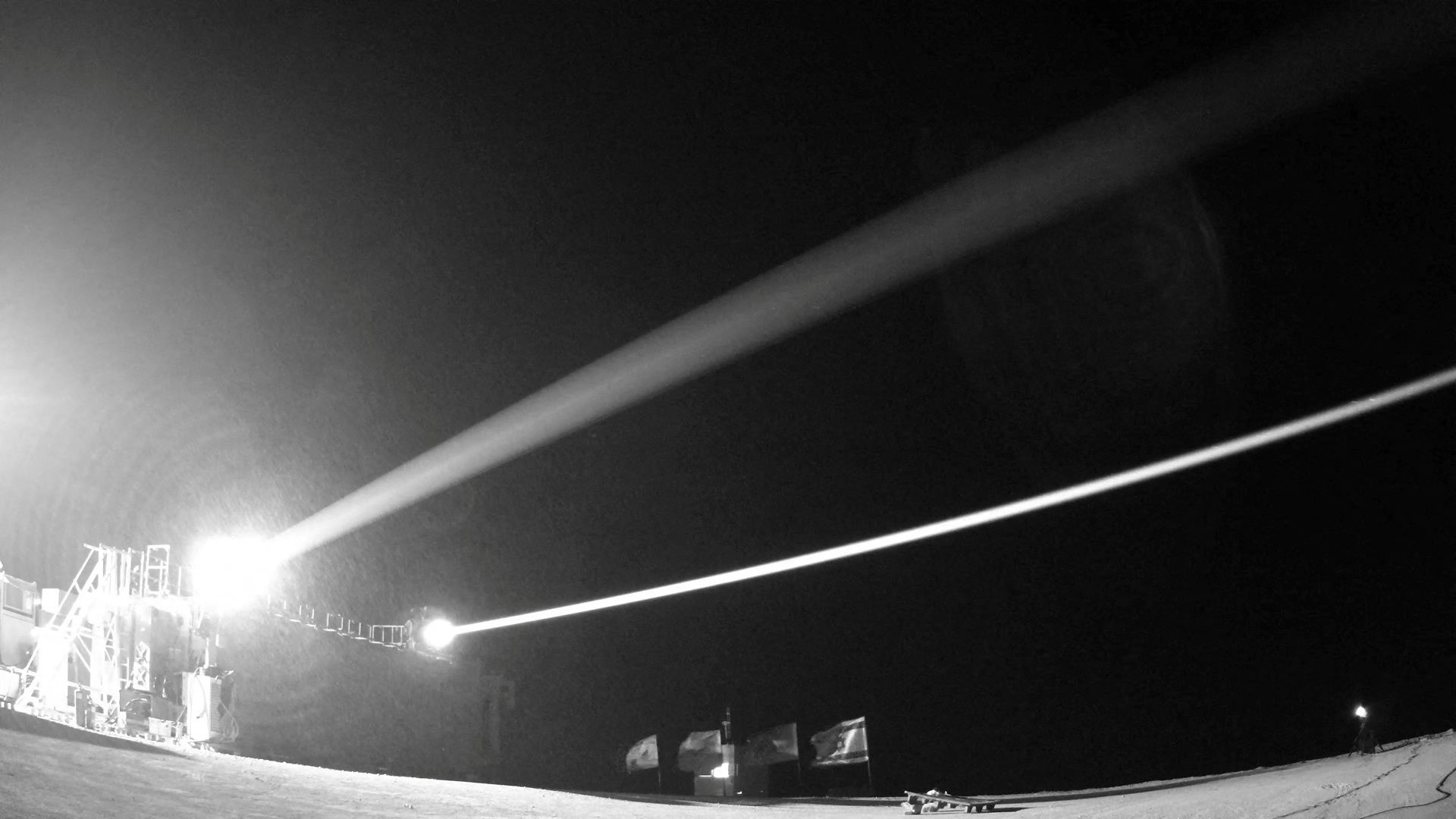
Israel uses the Iron Beam laser for missile interception. Reuters
Israel uses the Iron Beam laser for missile interception. Reuters
“I would definitely say that the drones are being intercepted or shot down now much closer to the border now and much less damage is being caused, with lasers possibly playing a big role,” Ms Zehavi said.
There are also unconfirmed reports of white phosphorus and cluster munitions used by Israel in a “fire belt” tactic saturating large areas with bombs.

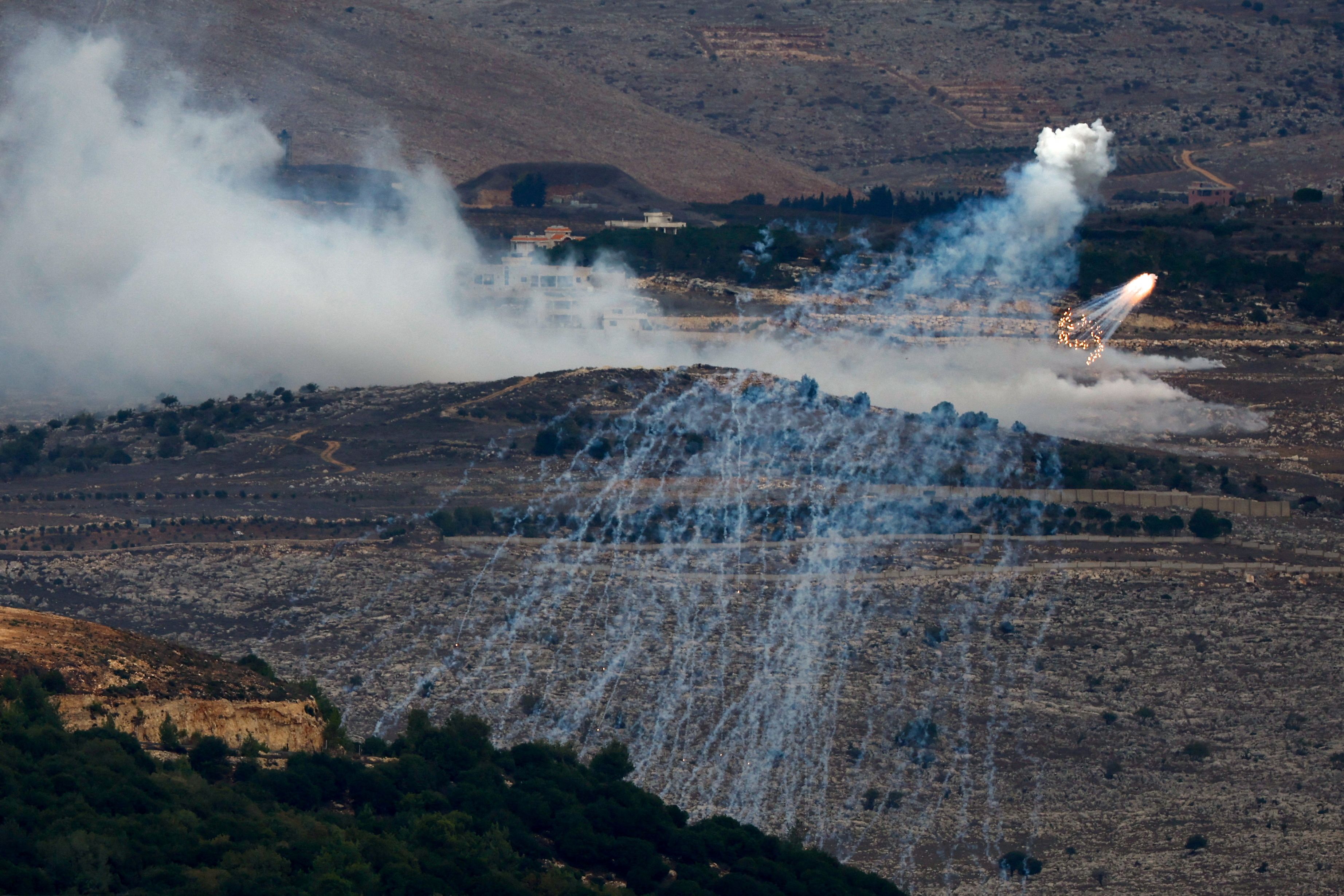
White phosphorus reportedly fired by the Israeli army in southern Lebanon creates a smoke screen. Using it as a weapon is illegal under international law. Reuters
White phosphorus reportedly fired by the Israeli army in southern Lebanon creates a smoke screen. Using it as a weapon is illegal under international law. Reuters
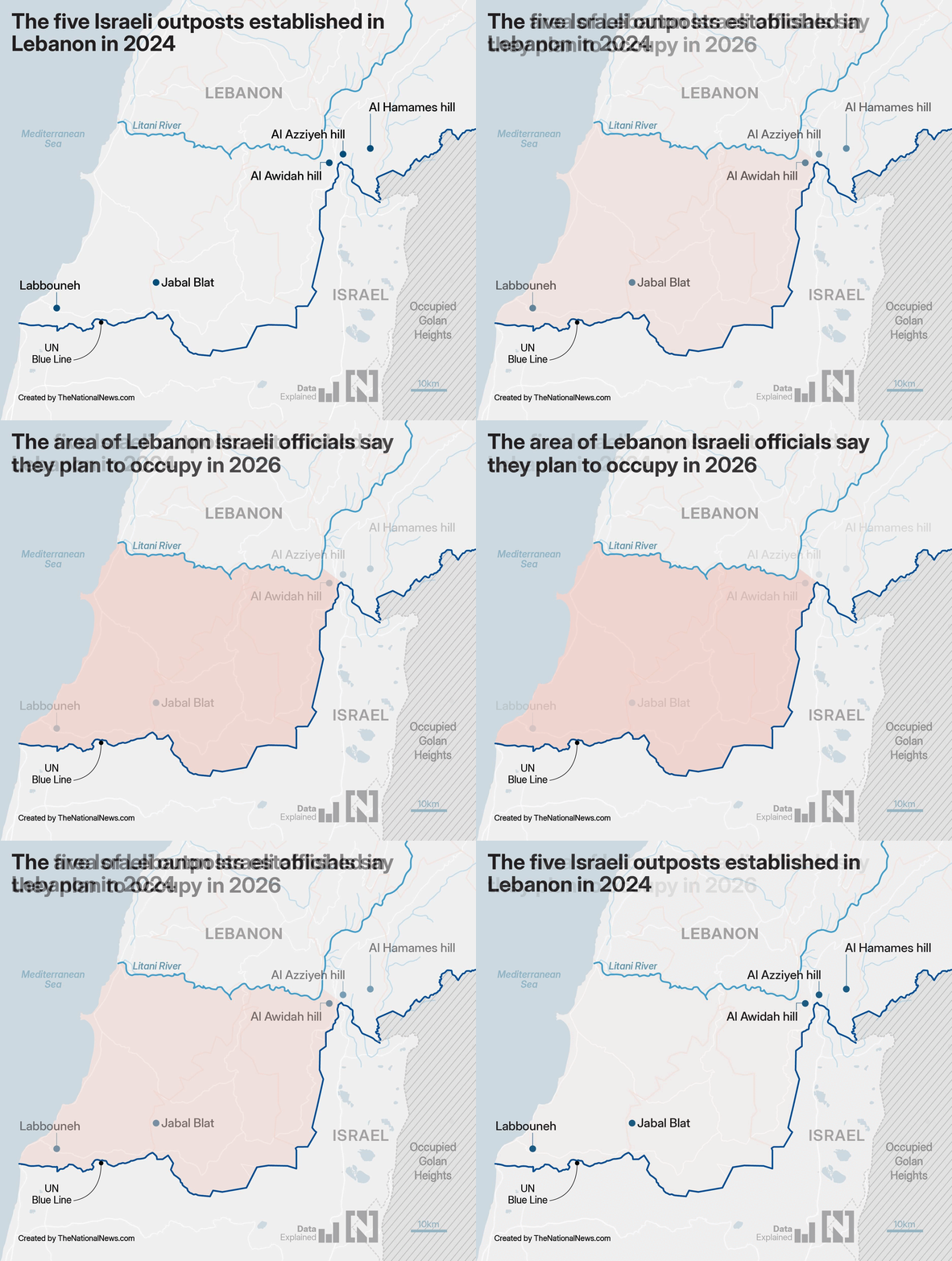
Ground operations appear to be launching from five Israeli bases seized illegally in Lebanon during the 2024 war, and from which Israel's military was meant to withdrawn as part of the ceasefire, with further escalation possible.
“Lots of soldiers are ready to go in and increase the operation in its depth but the Israeli government has yet to make a decision just how deep and intense they're going to go in and then remain,” an Israeli security source said.
Israel seeks permanent occupation

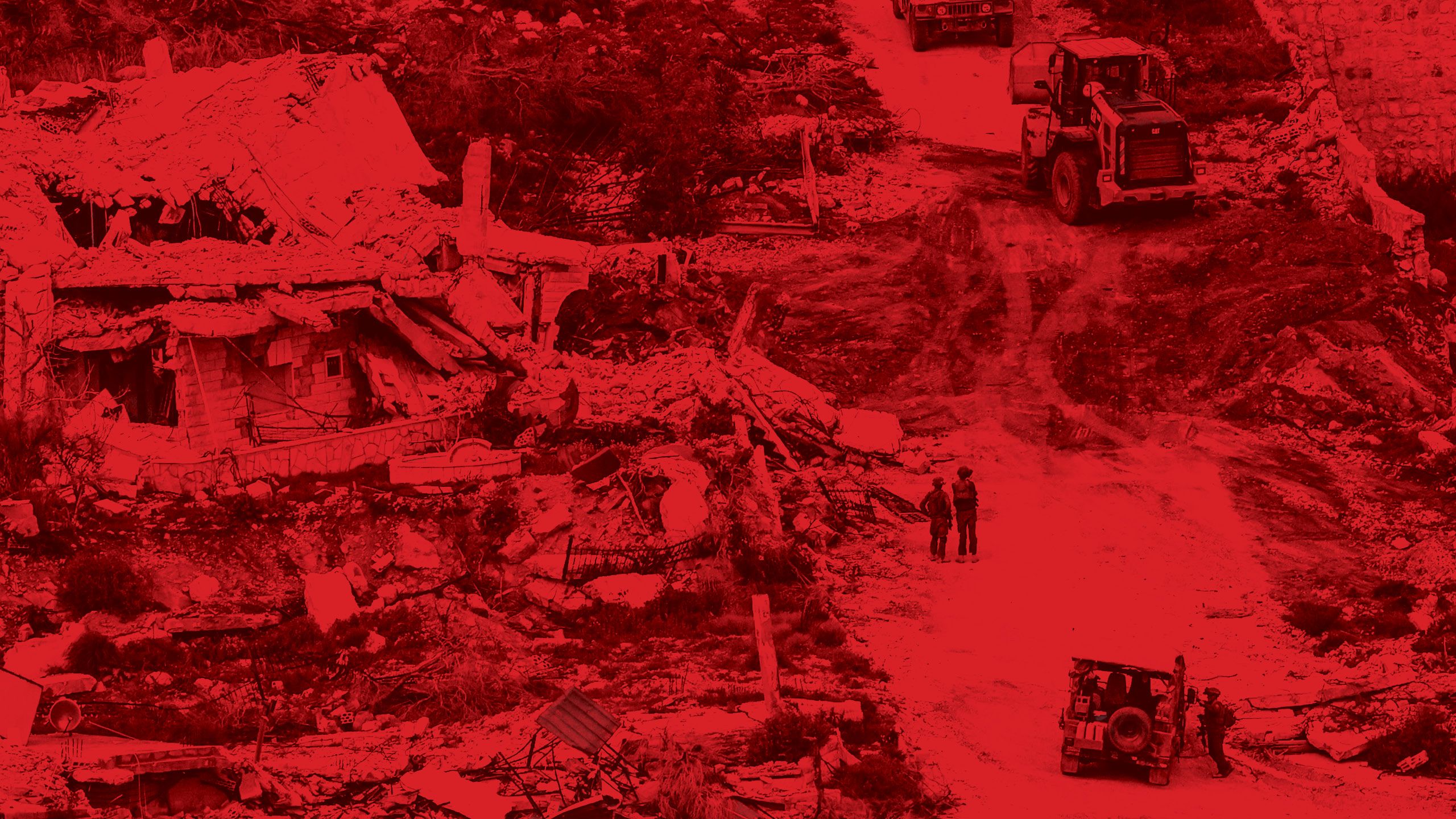
The frontline villages in south Lebanon dotting the border with Israel were already in a state of near destruction before the conflict reignited.
The National traversed these villages many times in recent months to assess the damage.
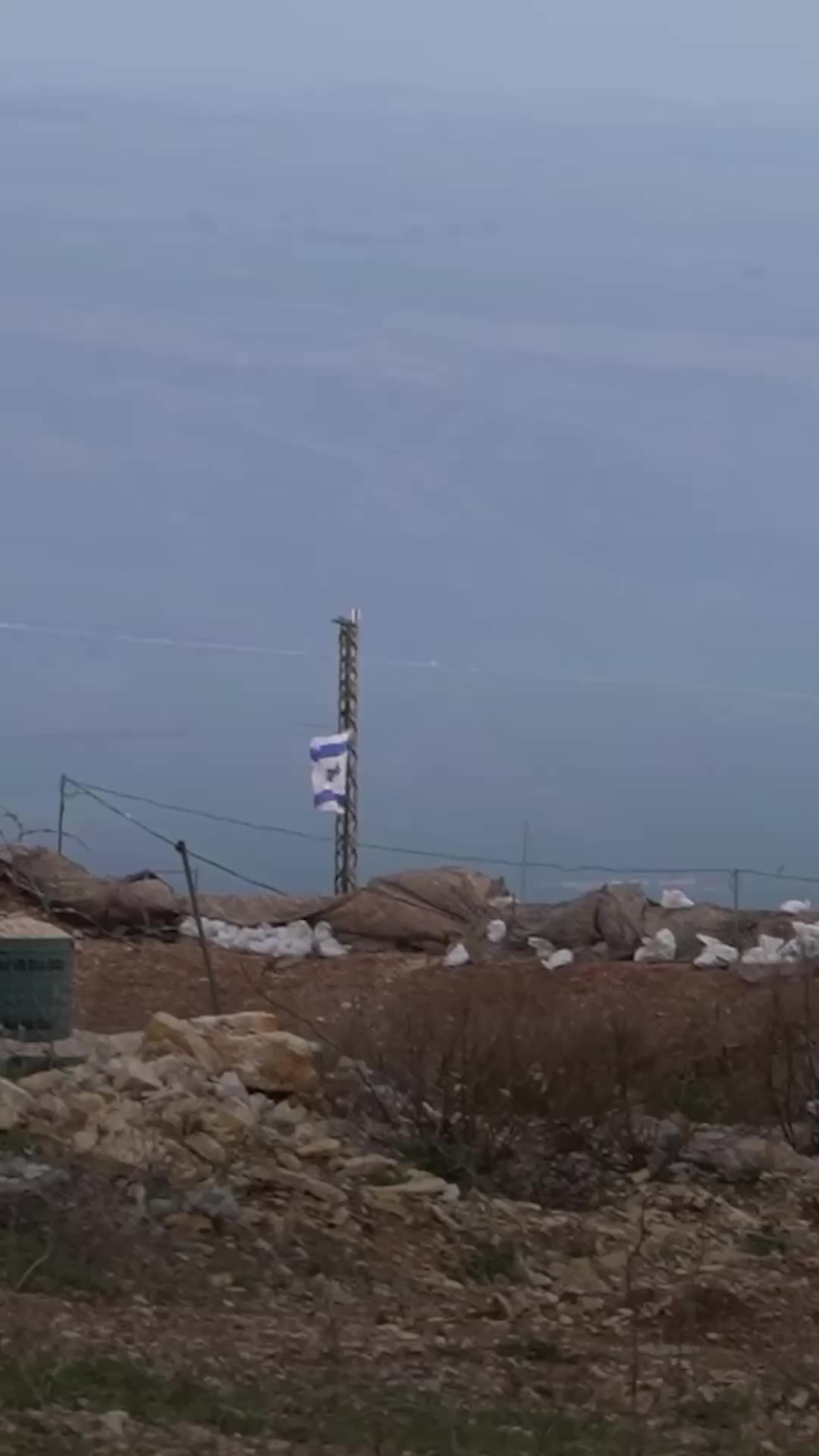
The National visits southern Lebanon, where Israel had occupied five areas by creating military outposts, five weeks before the war reignited
The National visits southern Lebanon, where Israel had occupied five areas by creating military outposts, five weeks before the war reignited
Much of the destruction in towns like Houla had occurred after the ceasefire of November 2024, not during the conflict - while postwar reconstruction has been deliberately obstructed by Israel.
Lebanese officials and human rights experts told The National that Israel has been systematically targeting reconstruction efforts since the ceasefire was agreed, in an effort to carve out a buffer zone in southern Lebanon.
The Israeli military repeatedly carried out attacks on infrastructure needed for rebuilding, such as diggers and bulldozers, as well as construction workers and engineers, The National found.
At most, rubble had been cleared from some of the roads to make the route passable.

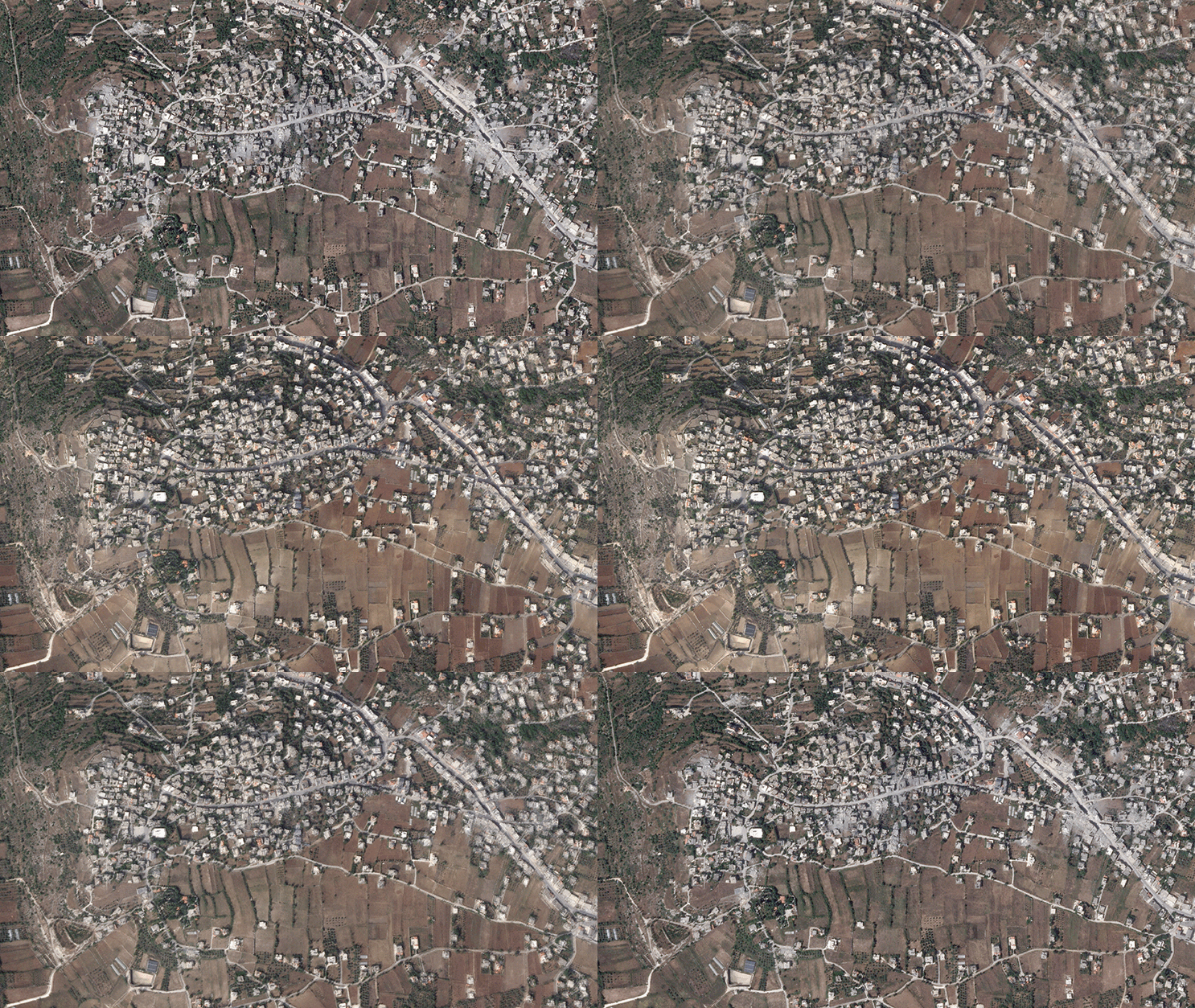
Satellite images taken in October 2023 and again in June 2024 show damage caused by Israeli incursions and air strikes to the Lebanese village of Aita Al Shaab near the border. Photos: 2024 Planet Labs Inc
Satellite images taken in October 2023 and again in June 2024 show damage caused by Israeli incursions and air strikes to the Lebanese village of Aita Al Shaab near the border. Photos: 2024 Planet Labs Inc
Today, many fear a similar fate for the wider south, up to the city of Tyre.
As Israeli forces invade deeper into Lebanon, Israeli politicians have made clear their plans to fully occupy all Lebanese territory up to the Litani – about 8 per cent of Lebanon – to create a buffer zone.
Israeli officials have said as much. Defence Minister Israel Katz said on March 31 that Israel would seize control “of the entire area up to the Litani”.
“In addition, the return south of the Litani of over 600,000 residents of southern Lebanon who evacuated north will be completely prohibited until the safety and security of the residents of the north [of Israel] is ensured,” he added.
Mr Katz also said “all houses in the villages near the border in Lebanon will be demolished, in accordance with the Rafah and Beit Hanoun models in Gaza", referring to two neighbourhoods in the enclave that were razed during the Gaza war.

Those caught in the conflict are facing a prospect many are afraid to say out loud. If they leave their villages and cities now, they may never be able to return.
Experts say Israel’s campaign in Lebanon mirrors its “yellow line” doctrine in Gaza, where entire villages and towns were cleared to form a buffer zone. In doing so, Israel occupied more than half of the Gaza Strip, pushing nearly all Palestinian residents inside the line.
“They [Israel] are not just emptying the land, they’re going in and they’re demolishing everything that allows life in those areas – from ecocide to intentional demolitions,” said Mr Houry.
What was once feared is now being declared openly: permanent occupation up to the Litani. With villages emptied, infrastructure destroyed and the south severed from the rest of Lebanon, many fear the Israeli invasion will permanently reshape Lebanon’s borders.

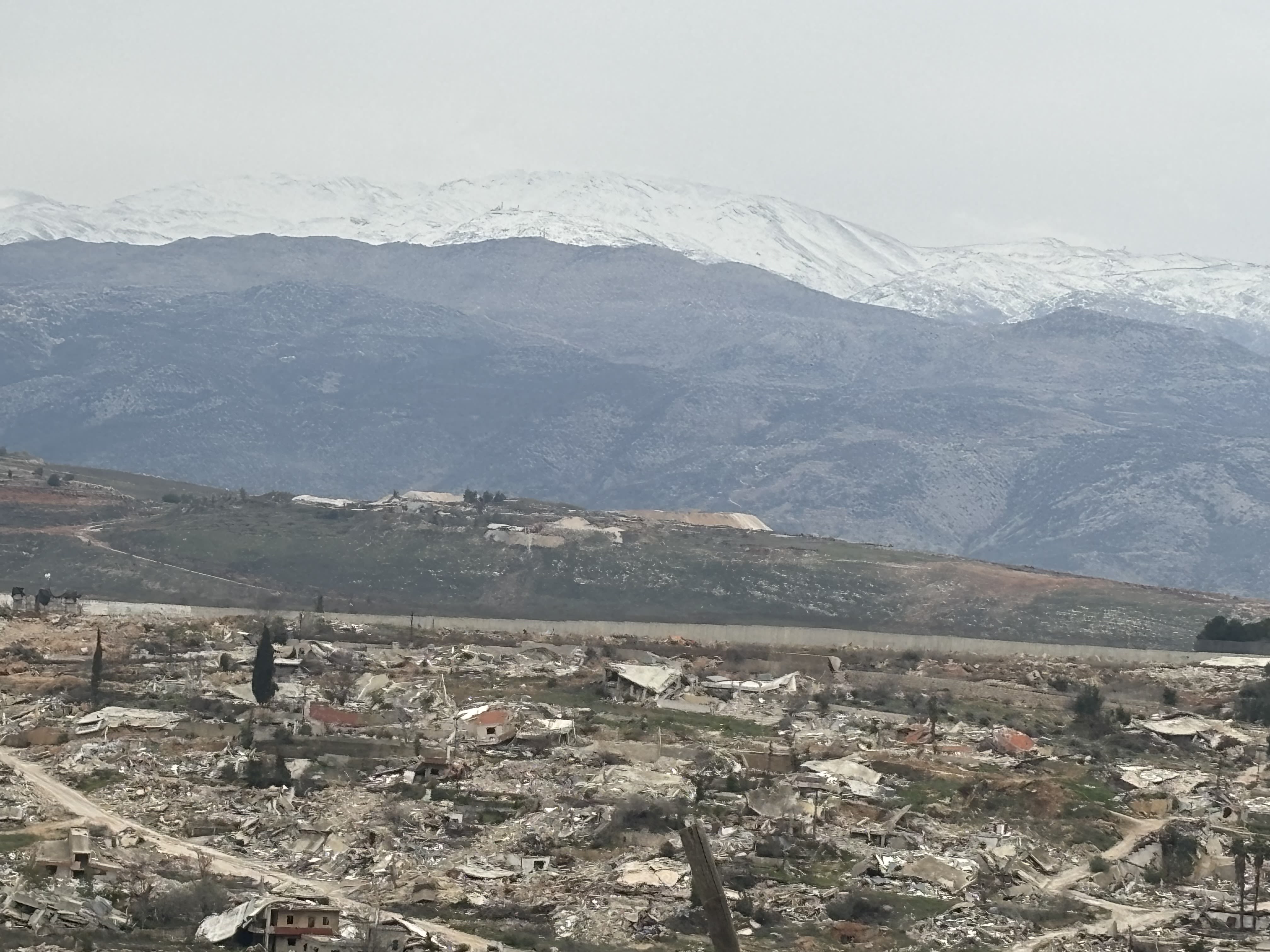
The destroyed village of Kfar Kila, overlooking the border wall built by Israel during its invasion of southern Lebanon in 2024. Pictured in January 2026. Jamie Prentis / The National
The destroyed village of Kfar Kila, overlooking the border wall built by Israel during its invasion of southern Lebanon in 2024. Pictured in January 2026. Jamie Prentis / The National
No residents remain in Alma Al Chaab, Blida, Dhayra or any of the countless other villages south of the Litani. Tyre city is nearly a ghost town, with only about 32,000 people remaining – many staying out of fear they may never return if they leave.
“I’m still here,” said Ossama. “I’m not doing anything wrong by existing on my own land. I’m loyal to my city.”
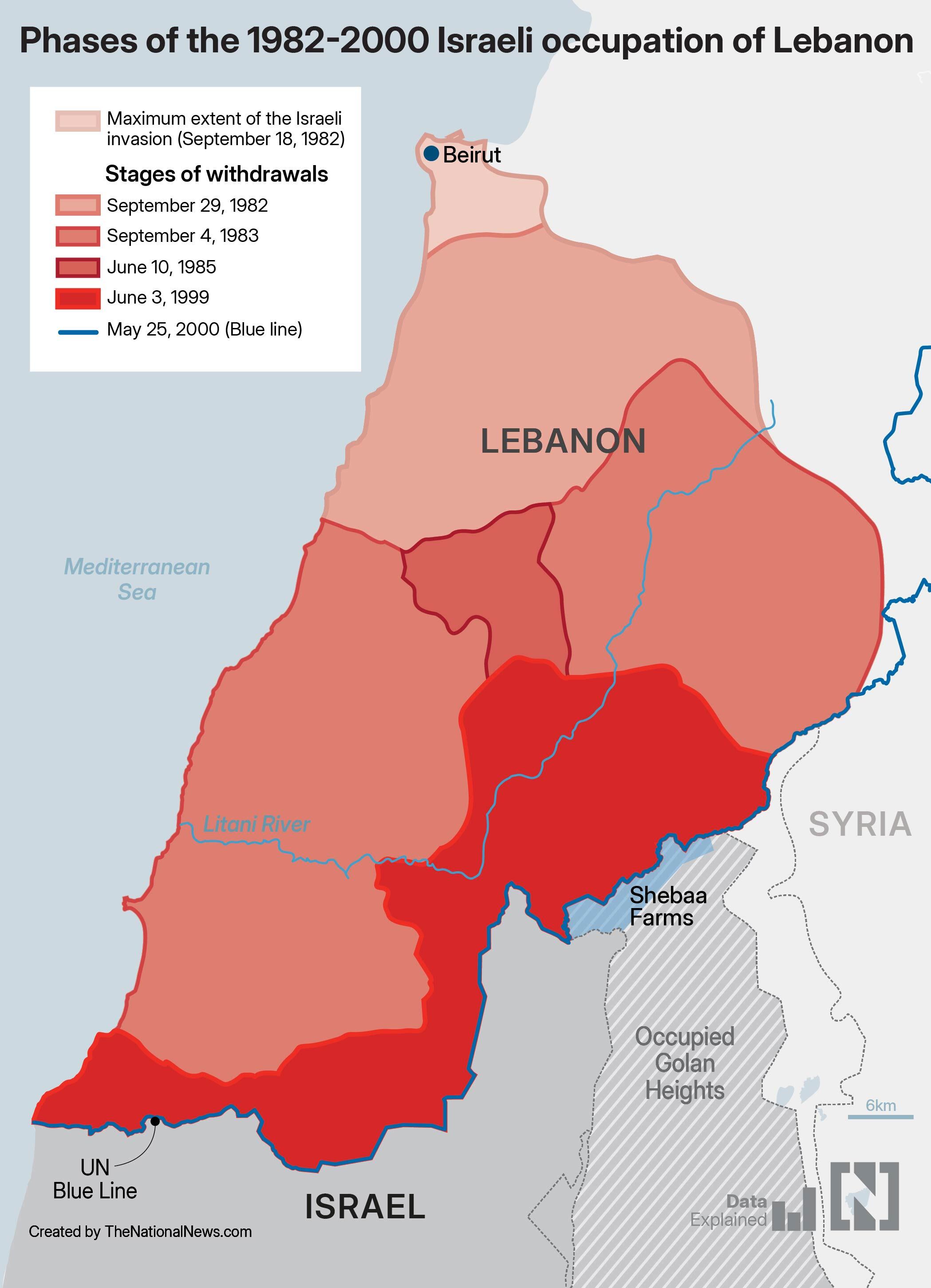
His sentiment and "loyalty" to his land are echoed by many Lebanese who fear a repeat of Israel's brutal 18-year occupation of the south.

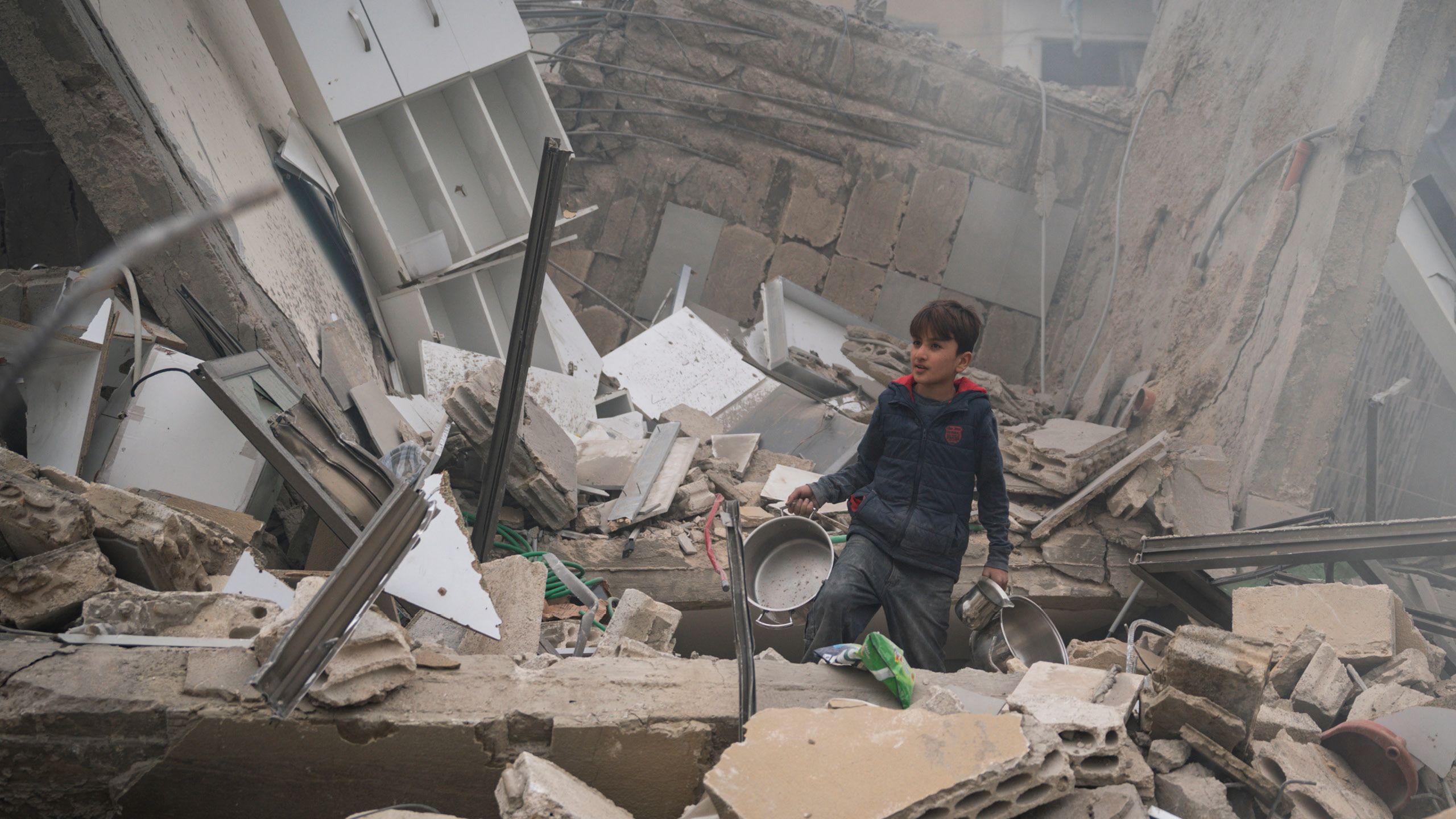
Ossama, in his 30s, said he is a civilian, not a fighter or affiliated with Hezbollah, but was willing to defend his city from Israeli forces regardless to avoid a repeat of history. He knows he remains in Tyre at risk of death.
"I hope it doesn’t happen – but in case I have to defend my city from the Israelis... I’d be dying in my own land,” he said.
Words Nada Atallah, Nada Homsi and Jamie Prentis in Beirut, Fatima Al Mahmoud in Abu Dhabi, and Thomas Harding in London
Editor Juman Jarallah and Fatima Al Mahmoud
Data Fadah Jassem, Isaac Arroyo and Roy Cooper
Photo editor Reena Ratan
Design Nick Donaldson
Sub editor Neil Macdonald


 Built with Shorthand