
A second Ramadan in ruins
Israel's war on Gaza has taken families, homes and traditions. But those left behind hope for a better future – even as attacks resume
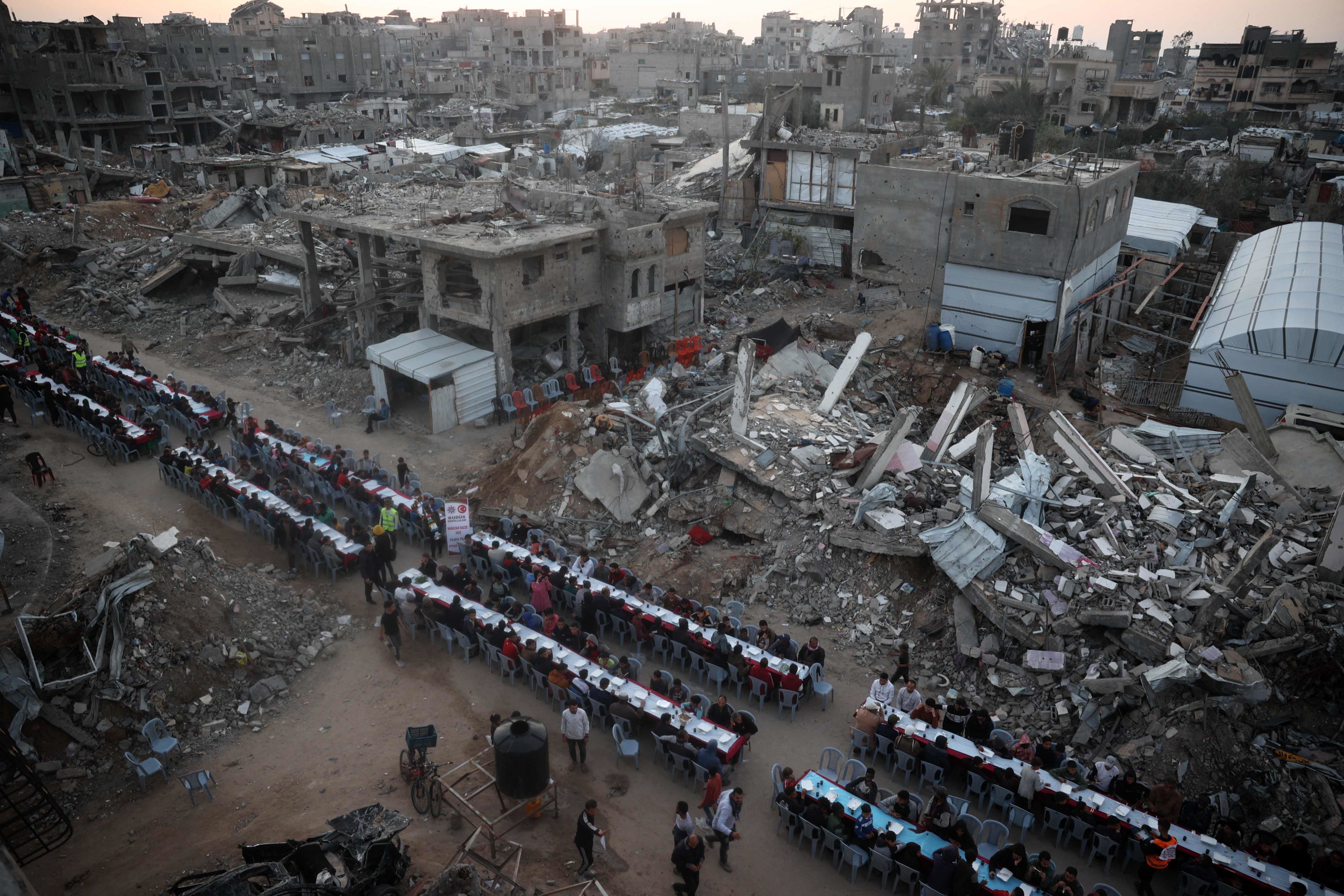

A second Ramadan in ruins
Israel's war on Gaza has taken homes, families and traditions but those left behind hope for a better future – even as war resumes
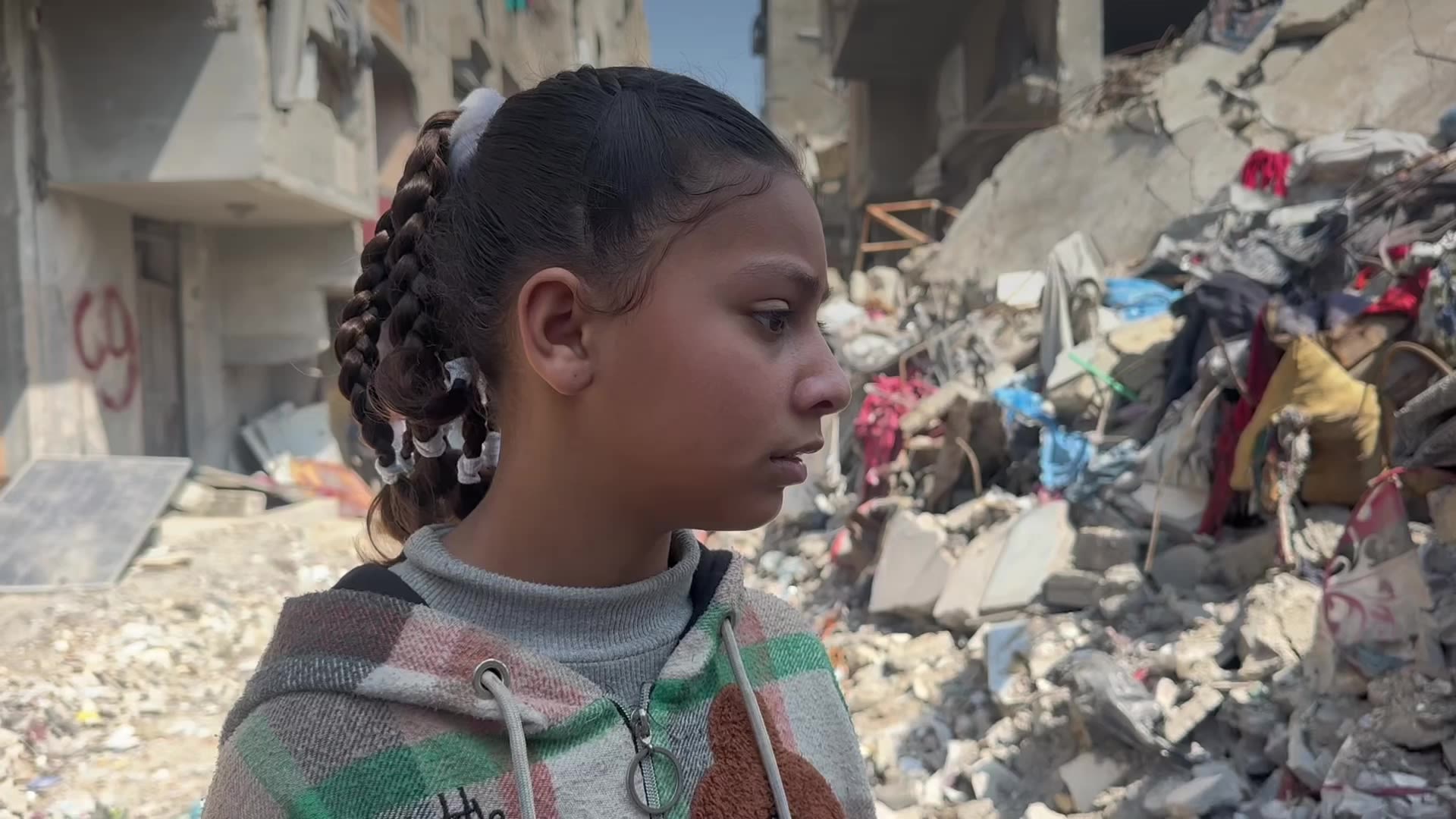

“My little bear.”
These three words are stitched on to the jacket of 11-year-old Rama Al Baraqoni, who, at first glance, looks like any other girl. But dressed in her too-short jeans, and a pair of white, pink and blue shoes while ambling over the rubble of her childhood home – it's clear she has been through more than any girl her age should ever experience.

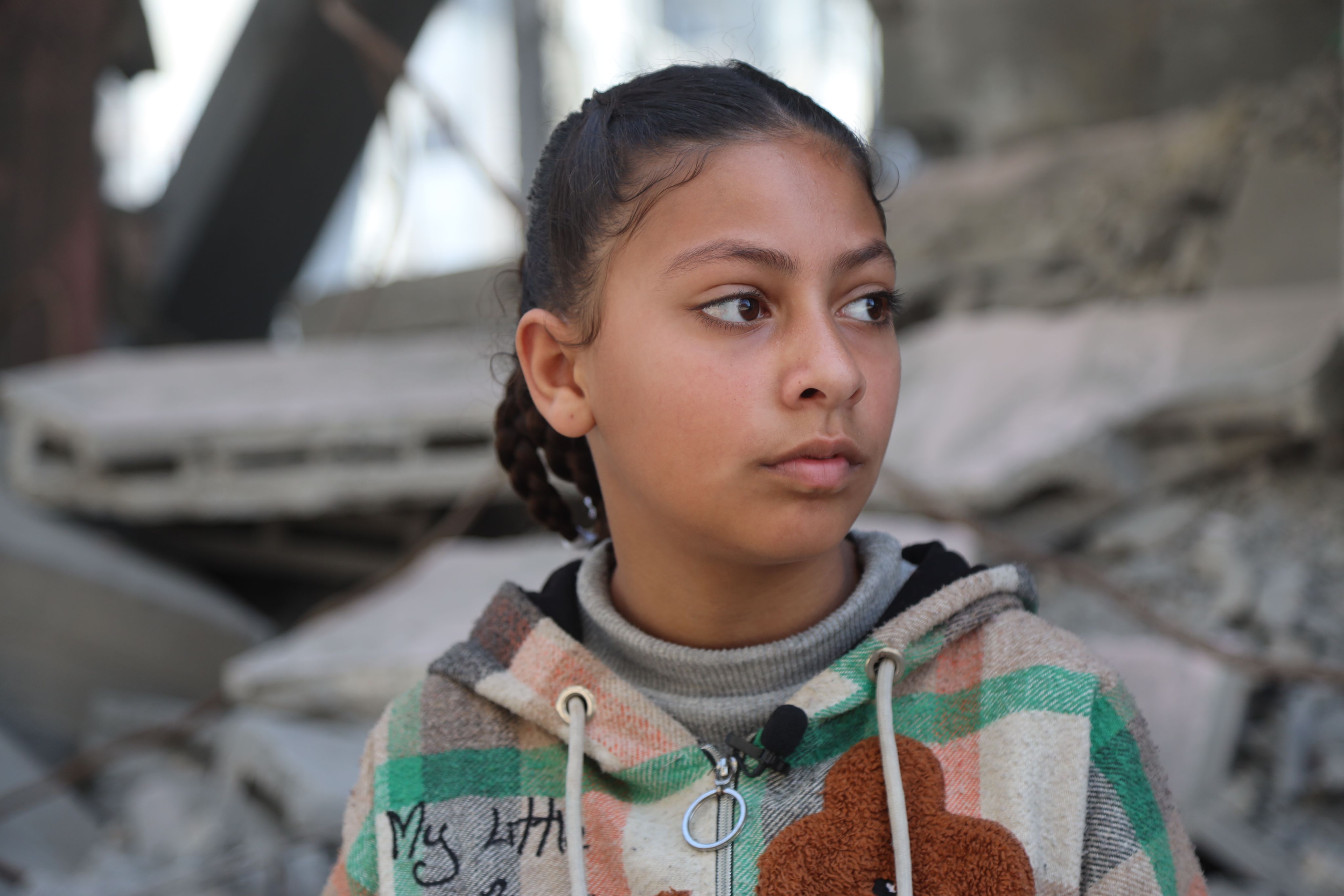
Rama Al Baraqoni among the rubble of her home in Gaza city. Rakan Abed El Rahman / The National
Rama Al Baraqoni among the rubble of her home in Gaza city. Rakan Abed El Rahman / The National
In most other countries in the world, Rama would be an exception but, here in Gaza, her story is the norm.
It is Ramadan and ordinarily Rama and her family would have decorated their home with colourful lanterns and crescent moons, gathered to break their fast on her favourite foods at sunset, and gone out for ice creams with her father for an evening treat. But the past two Ramadans have seen her family and Gaza’s population of 2.3m ravaged by war and stripped of basic necessities, like clean water and consistent access to food, making their previous traditions a distant luxury.
“There is no Ramadan atmosphere this year,” says Rama while sitting on the ruins of her family home.
This is her second interview with The National. We first spoke to her during Ramadan last year – along with seven other people from five families who told us of their experience during the holy month under constant bombardment from Israel.
The families lived in cramped, makeshift tents in camps in Rafah and Khan Younis, in southern Gaza, and the central city of Deir Al Balah, surviving off paltry meals from charity kitchens and what little aid they could access.
This year, we searched for them again, but many were gone. After some weeks, our correspondent was able to track down three people from two families who had returned to their destroyed homes in Gaza city, in the north, preferring to live among the rubble than to stay in a tent, away from what they knew. The status and whereabouts of the five other people we spoke to last year remains unknown.

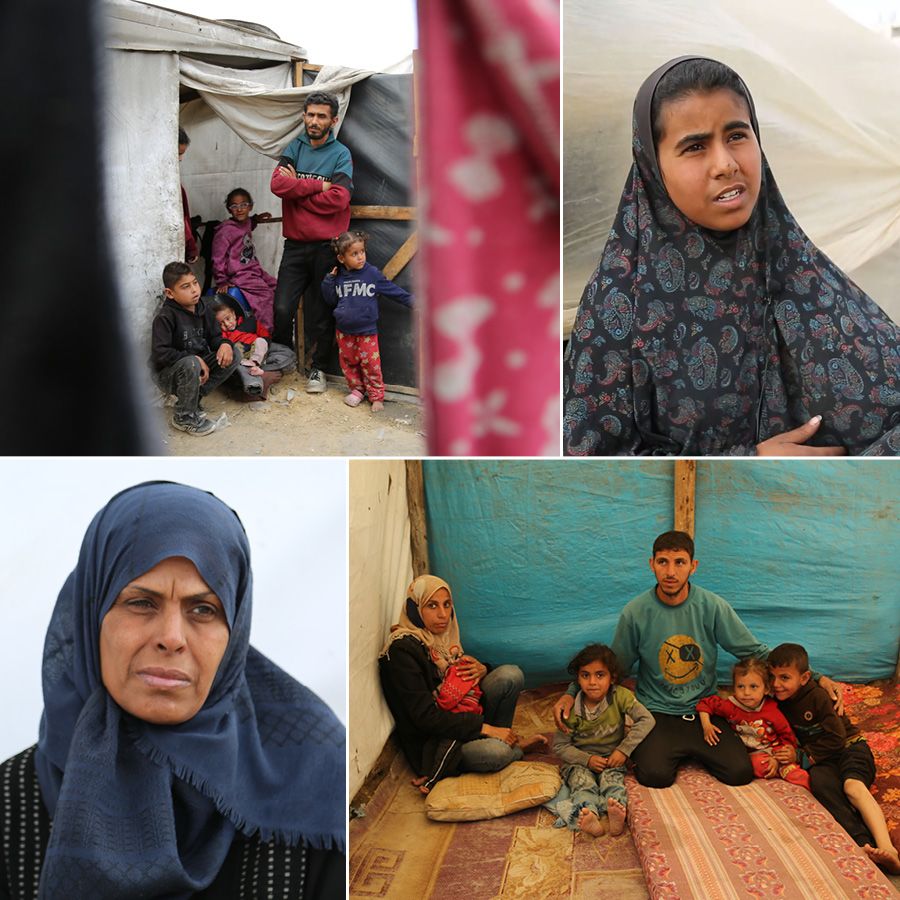
Clockwise from top left, members of the Abdelsalam family, Lama Al Masry, the Ashor family and Salwa Al Masry, pictured when they were interviewed last year during Ramadan. This year, The National could not trace them. Rakan Abel El Rahman / The National
Clockwise from top left, members of the Abdelsalam family, Lama Al Masry, the Ashor family and Salwa Al Masry, pictured when they were interviewed last year during Ramadan. This year, The National could not trace them. Rakan Abel El Rahman / The National
The National spoke to the families during the first two weeks of March, while the ceasefire – that began on January 19 – was still in effect. But on March 18, Israel launched air strikes across Gaza, killing more than 400 Palestinians in a single day, and resumed its ground offensive, seizing control of the Netzarim Corridor that bisects the strip.
Rama’s first interview was conducted six months after she turned 10 – the day she fled her home in Gaza city to escape Israeli strikes for the first time. Since then, she has been displaced four more times, before moving for the sixth time in 17 months to return to Gaza city.
Today, Rama is noticeably older, but she has also aged. The wear and tear of the war, displacement, hunger and longing for the life she had are more visible on her face. But she speaks of her hardship the way a young and diligent student would while making a presentation to their class.
The short-lived ceasefire, which was supposed to bring a lasting sense of peace to Gaza, had provided an opportunity for some 500,000 displaced people to return to their homes in the north.
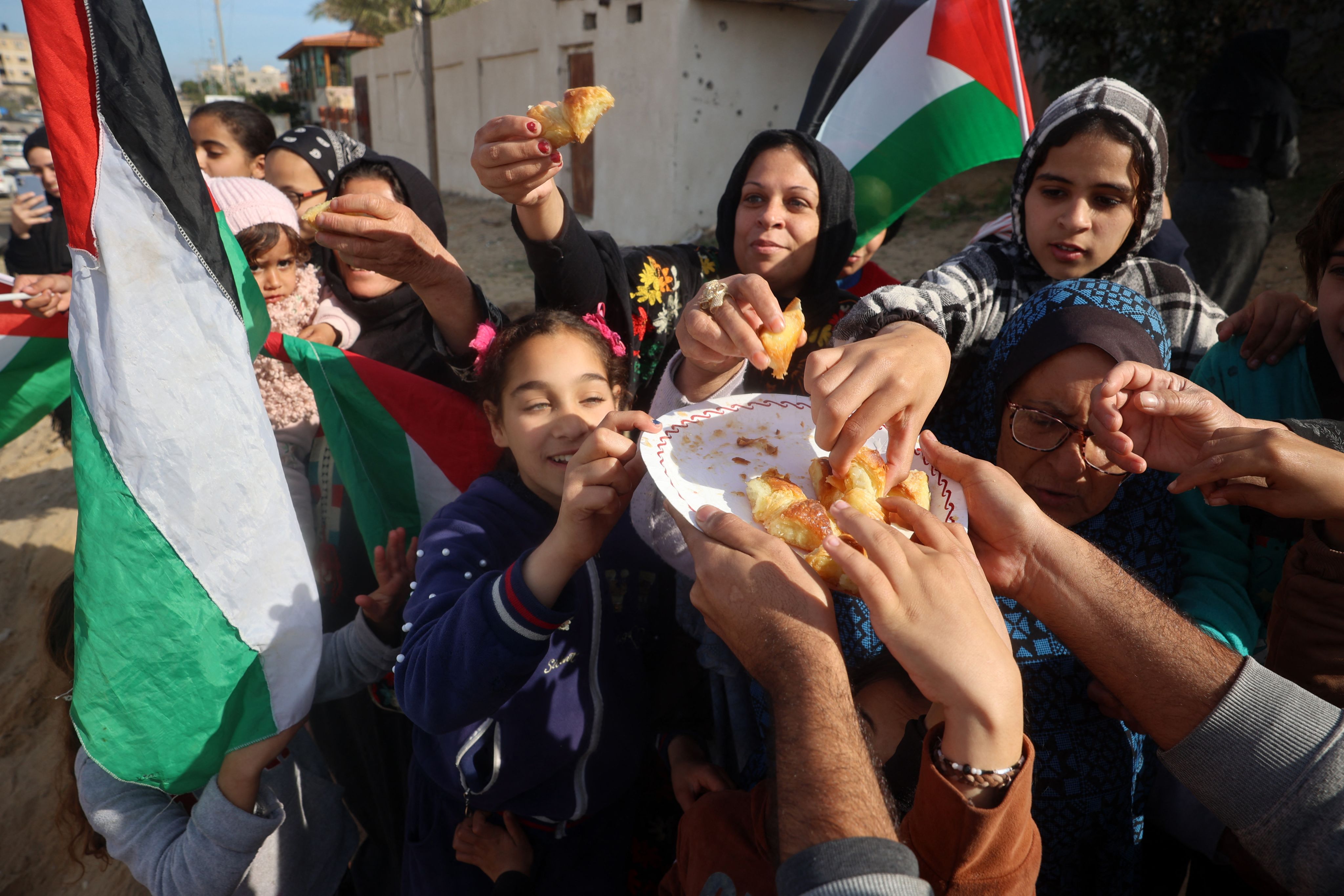
Palestinians celebrate the start of the ceasefire on January 19 with sweets. AFP
Palestinians celebrate the start of the ceasefire on January 19 with sweets. AFP
For Rama, this only brought more heartache.
“We came back to our house in Gaza city from Deir Al Balah expecting it to be standing, but it was destroyed,” she says.
Only broken stone intertwined with brightly coloured fabric, pieces of wood, a plastic laundry basket and other items that might seem unfamiliar to someone who hadn't once lived there, remind Rama of everything she lost.
She tours the remnants of her home with her father, pointing to things they recognise.

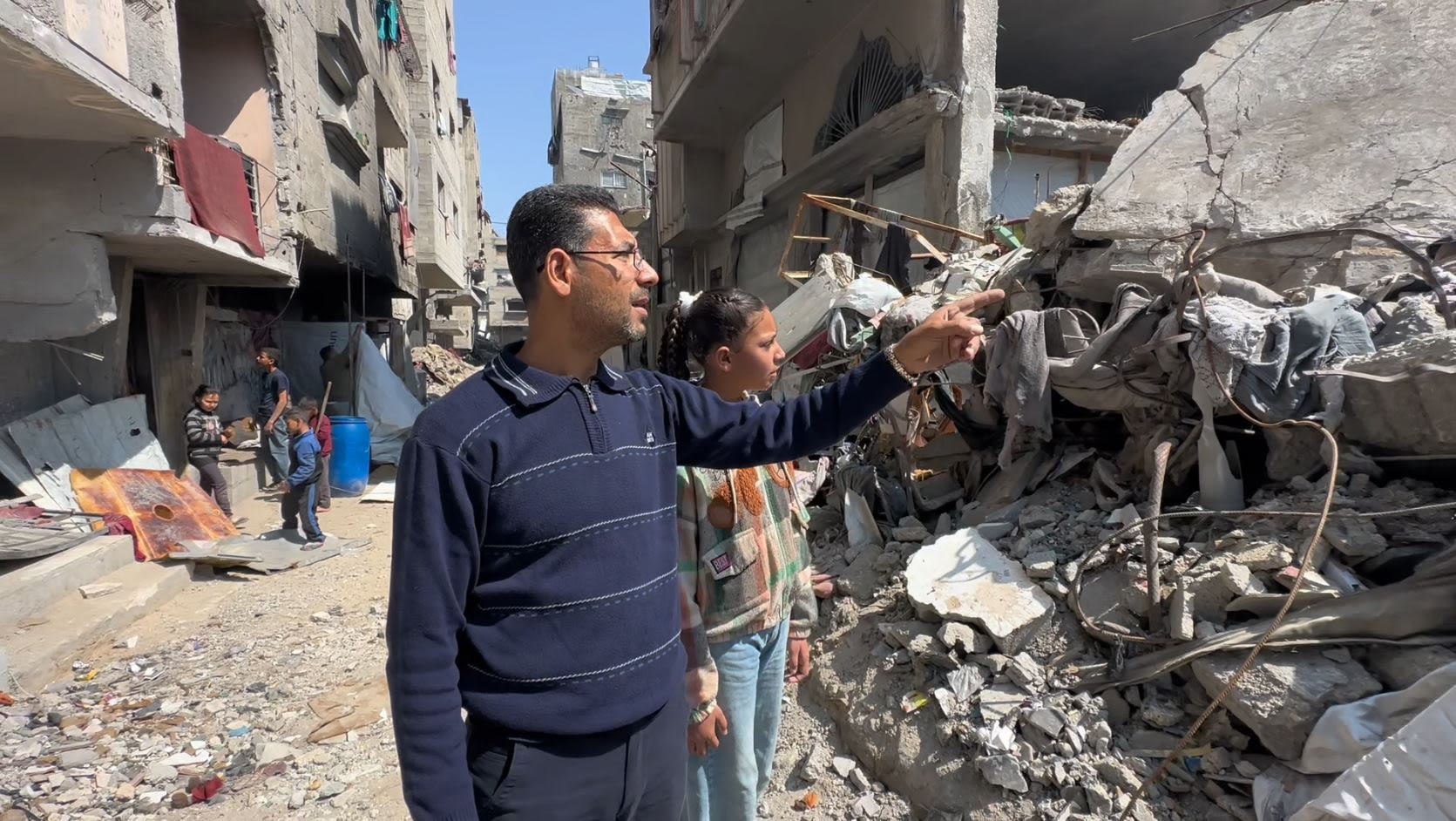
Rama Al Baraqoni and her father Majdi look at the ruins of their Gaza city home, which was destroyed in an Israeli air strike. Rakan Abed El Rahman / The National
Rama Al Baraqoni and her father Majdi look at the ruins of their Gaza city home, which was destroyed in an Israeli air strike. Rakan Abed El Rahman / The National
Now, Rama, her three siblings and parents live in one room. It’s an upgrade from the tent they shared with three other families in Deir Al Balah, but a far cry from any semblance of comfort, she says.
“We are a burden to the people we live with. Every day my father goes out looking for an apartment – but the rents are too high.”
Even fetching water is a struggle. On the second day of Ramadan, Israel reimposed a complete ban on aid, including fuel, cutting off electricity to Gaza’s southern desalination plant that provided clean water to 600,000 Gazans.
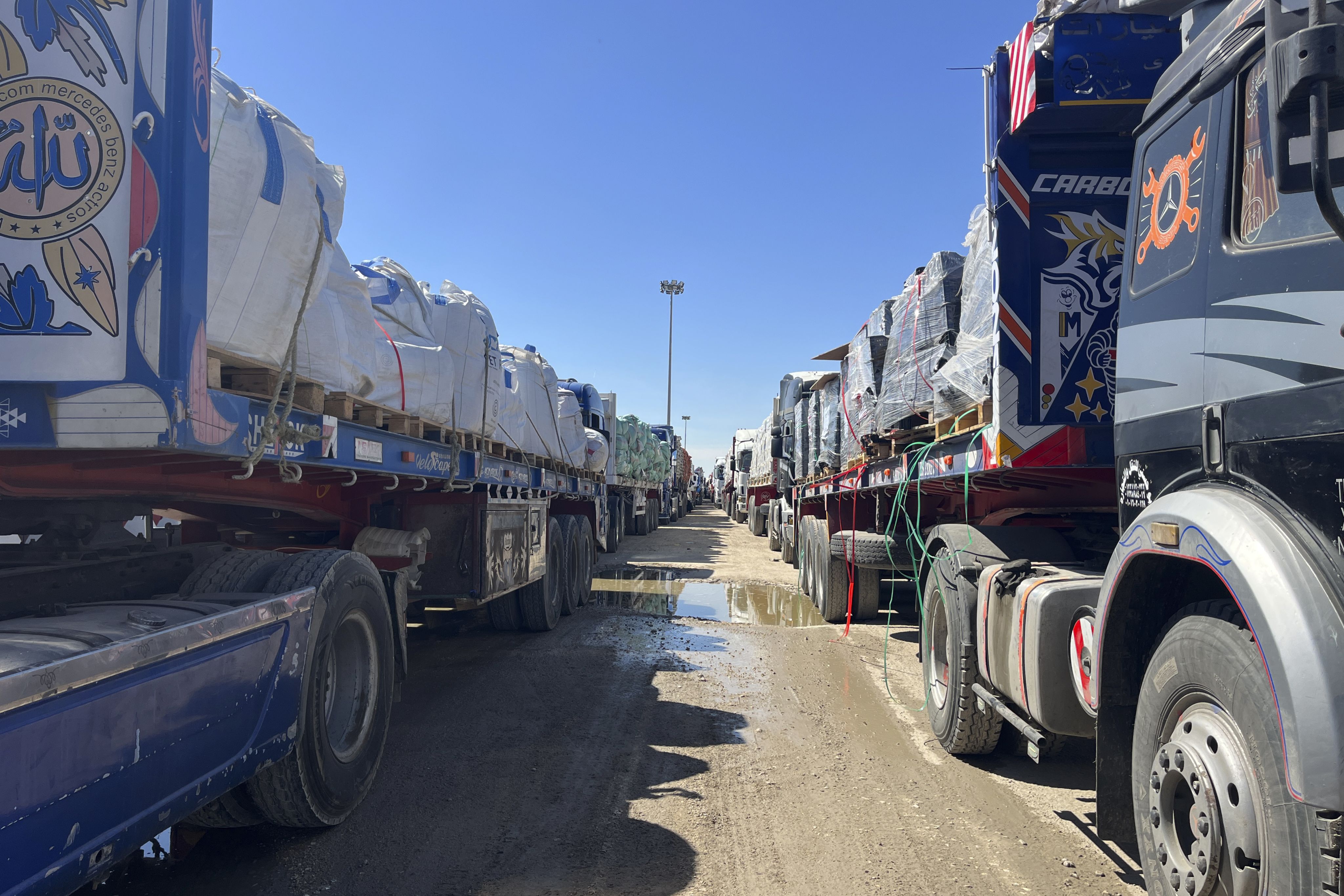
Lorries filled with supplies queue on the Egyptian side of the Rafah border crossing, after Israel banned the entry of aid and fuel to Gaza on March 2. AP Photo
Lorries filled with supplies queue on the Egyptian side of the Rafah border crossing, after Israel banned the entry of aid and fuel to Gaza on March 2. AP Photo
The reverberations of Israel’s severance of all that is required to sustain life in Gaza are felt every day by children like Rama.
Seeing her two children's worries transform from trying to do well in school to the fear of being killed or running out of food, 30-year-old Halla Al Khor has spent a year telling them to stay patient, while her heart breaks over what she is unable to provide.
Over the past year or so, she has had to beg for shelter, water and coupons of food.
“The water would be fresh at times, and sometimes it would be salty. My son keeps telling me that he is thirsty,” she says.
“Instead of studying and going to school, my children now talk about whether the water has arrived or not.”
When the ceasefire was announced, Halla, like many, longed to return to a stable home and resume the life she had. Hoping against hope that her hardships had finally come to an end, she began walking north from Rafah to Tel Al Hawa, in southern Gaza city. Over rubble, past abandoned ordnance and through ditches, with all they could carry on their backs, the journey home took the family six hours. But on arrival, nothing was the same as before.
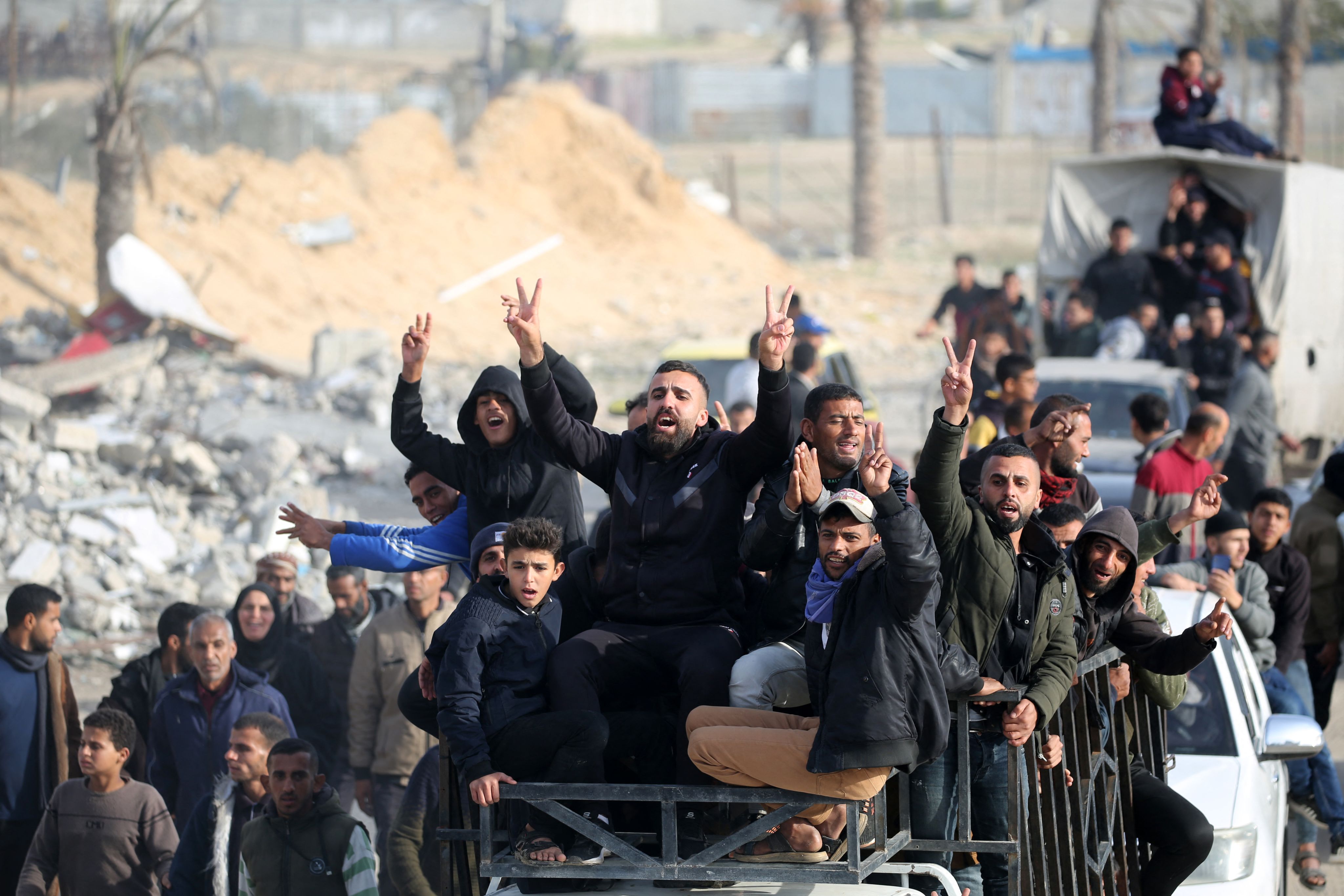
Palestinians cheer as they return to their homes in Rafah, southern Gaza, after the ceasefire came into effect on January 19. AFP
Palestinians cheer as they return to their homes in Rafah, southern Gaza, after the ceasefire came into effect on January 19. AFP
Her partly destroyed home now provides a little more privacy than she had under the tarpaulin and fabric of her tent in the south, but the rest of her family was not as lucky, resorting to setting up tents in Halla's house.
To keep her children’s requests for foods usually eaten during Ramadan – like qatayef stuffed pancakes and sambosas – at bay, Halla simply tells them to pray.
“Sometimes the neighbour sends food with my son when he asks. But until when? This is not right. This is not a life.”

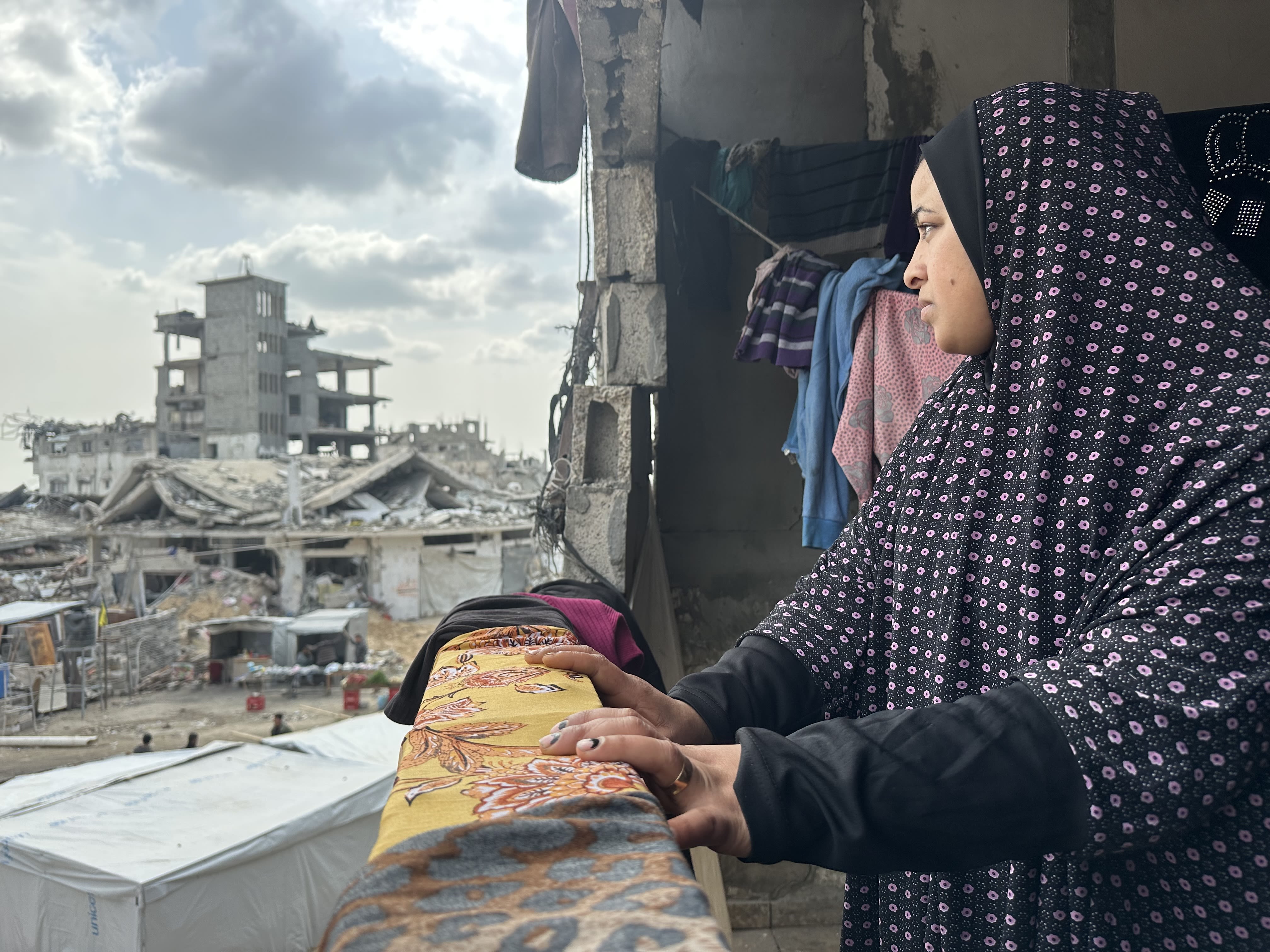
Halla Al Khor looks out at the ruins of Tel Al Hawa, in Gaza city. Rakan Abed El Rahman / The National
Halla Al Khor looks out at the ruins of Tel Al Hawa, in Gaza city. Rakan Abed El Rahman / The National
Halla says all she wants is for her children to have what others have. But this Ramadan, there is only a shadow of what there once was.
“The neighbourhood used to be lovely. Each building would have decorations. There would be an atmosphere of Ramadan. But today, there are no homes, no life, no mosques to pray in. Even the man who used to wake us up for suhoor doesn’t drum anymore.”

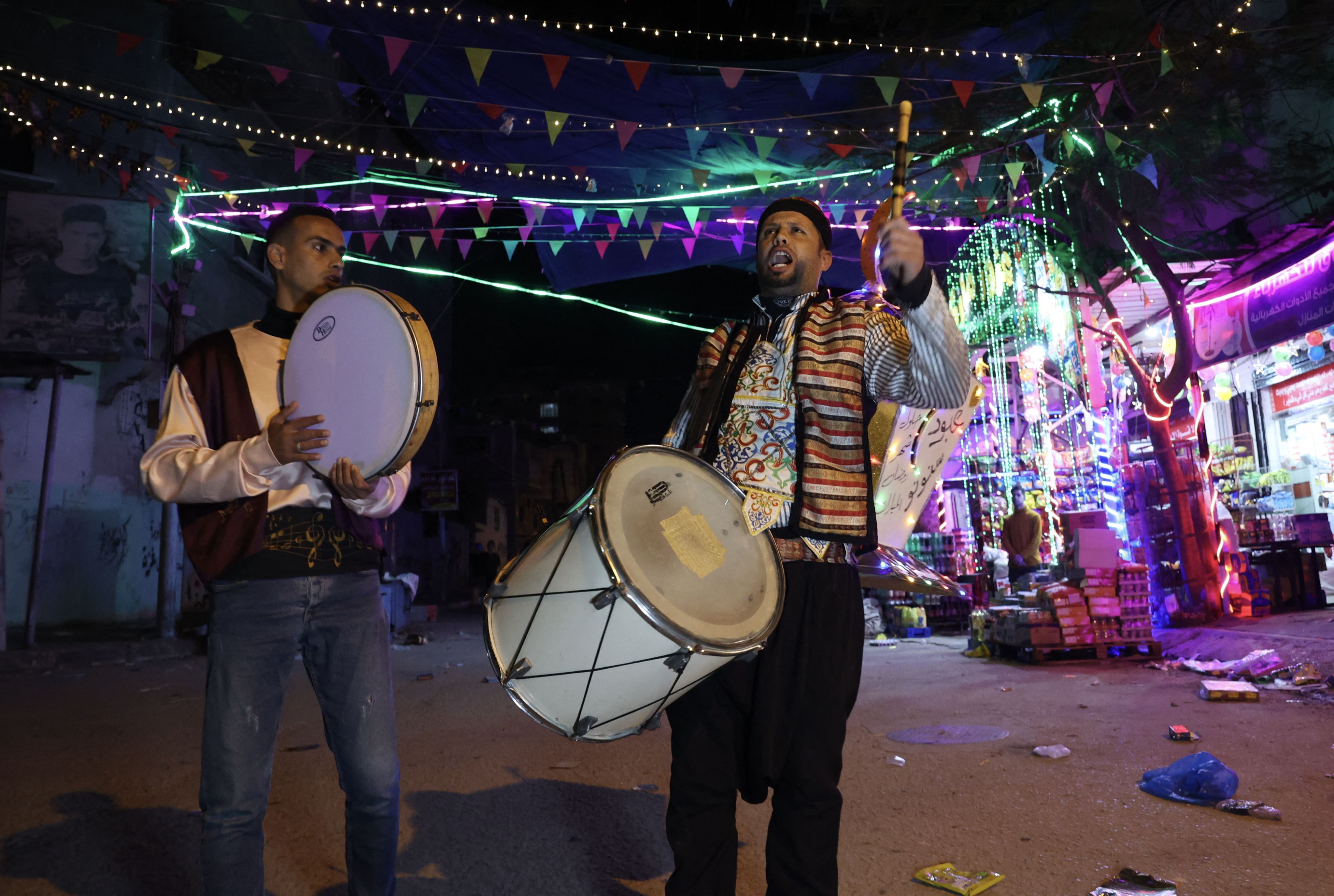
Two Musaharatis bang their drums to wake Rafah residents for their suhoor pre-dawn meal, during Ramadan in March 2023. AFP
Two Musaharatis bang their drums to wake Rafah residents for their suhoor pre-dawn meal, during Ramadan in March 2023. AFP
Seeing other people suffering from equally significant loss – in home, family and safety – may help in alleviating some of their own tragedy, some mental health experts have said.
Halla’s aunt, Noha Al Khor, is a living example of this, despite having to learn what it was like to become homeless at the age of 47 and seeing her family struggle to feed their newborn babies.
“I did not know how to build a tent because my husband is dead,” she says.
Noha and her family had been displaced three times before The National spoke to her during Ramadan last year. Thirty members of her family, from Tel Al Hawa, were living in a tent in Rafah for months, until Israeli forces began their ground assault in Gaza’s southernmost city in May 2024. She and her family fled to Al Zawayda in central Gaza, to a tented area that had been recently set up to accommodate displaced Palestinians.
Those in charge initially refused to let her enter the camp, but later took pity on the family when they saw an eight month-old infant among them.
“We lived there for eight months. They had water and a tikieh [community charity kitchen] and without it we wouldn’t have survived because flour cost 1,000 shekels ($272). We ate rice and pasta. We were better off than others.”
When she learned of the ceasefire, Noha’s first thought was to return to the place she once called home – even though she was certain it had been destroyed.
“Even if we would set up a tent near our home, we would go back. We were happy where we were, but we know that wasn’t our place or our land.”
The six-hour trek to Gaza city was arduous but Noha’s hope and faith in God kept her going.
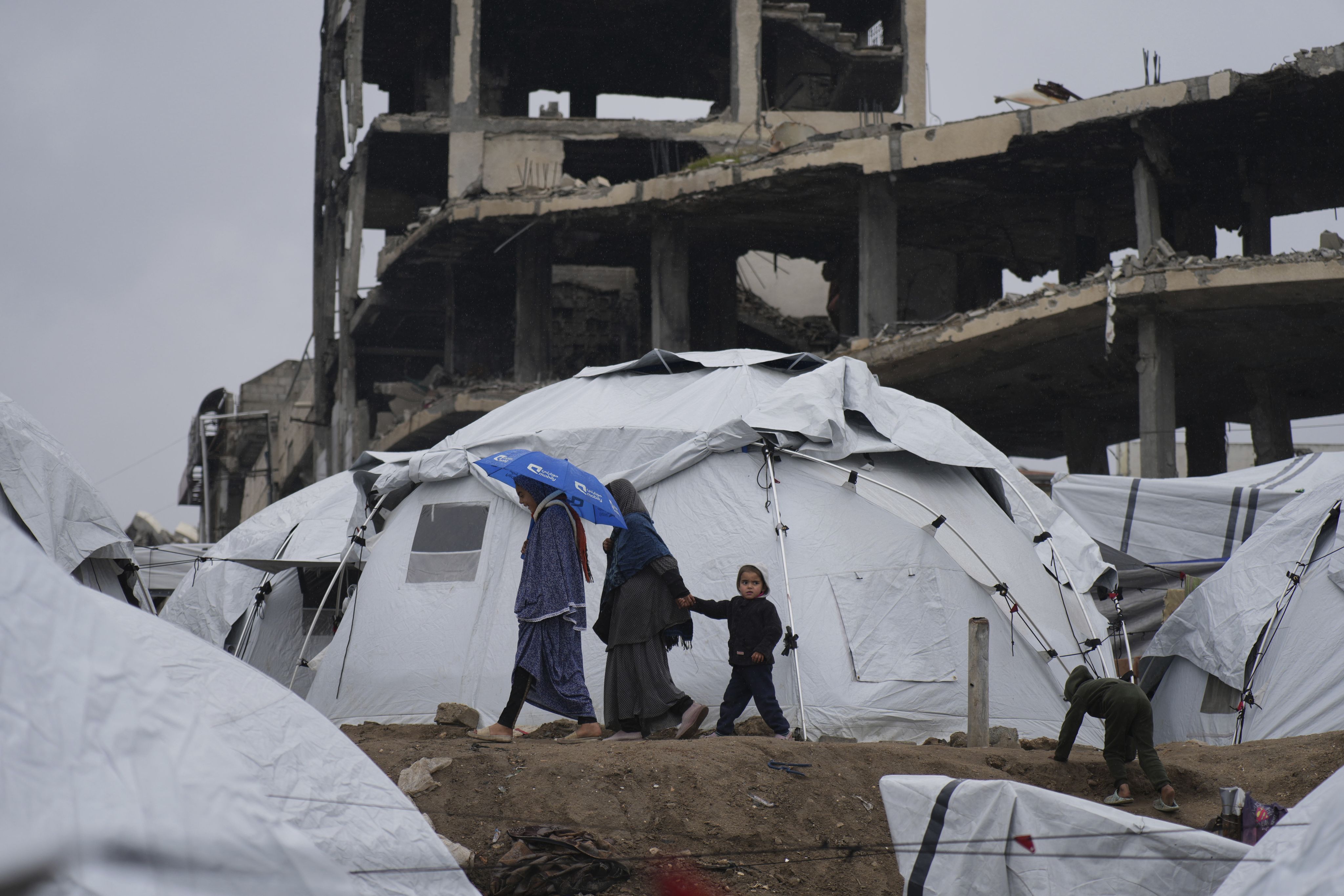
A family walks among tents next to destroyed homes and other buildings in Gaza city, on the first day of Ramadan. AP Photo
A family walks among tents next to destroyed homes and other buildings in Gaza city, on the first day of Ramadan. AP Photo
“We grabbed our children’s hands and thought: just as God had helped us in the south, he will help us now. He doesn’t forget about anyone.”
Taking only what was necessary, they began to walk.
Although expecting to see her home gutted by war, Noha remained focused on seeing one of her daughters for the first time since they had been separated at the start of the war.
“She had spent six years unable to conceive, and finally gave birth while I was away.”
At least 33 members of Noha's family have been killed in the war but she remains grateful for her grandchildren who have survived.
Rubble meant the remains of 18 family members – siblings and their wives and children – could not be retrieved without heavy machinery; unburied and out of reach. And some of those whose remains were pulled out have not been unidentified.
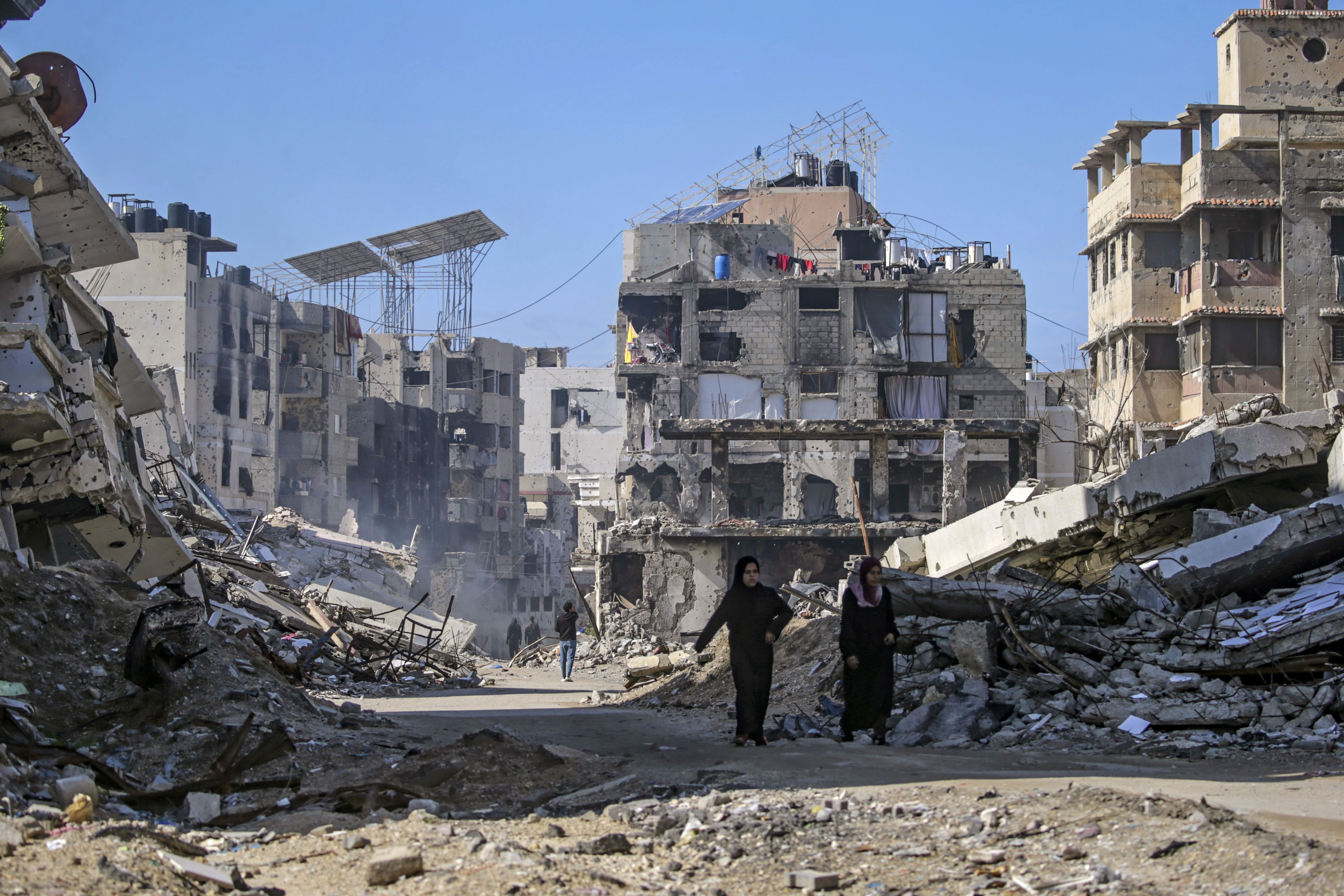
Palestinians walk between destroyed buildings in Gaza city in mid-February, while the ceasefire was still in place. EPA
Palestinians walk between destroyed buildings in Gaza city in mid-February, while the ceasefire was still in place. EPA
“They were burned and in pieces. So, we don’t know who among them are still there.” The only ones recognisable were Noha’s brother and his daughter. They appear to have been standing on the balcony when their home was struck, as their bodies were flung outwards and found lying on the street.
With memories like this hanging over Noha and her family, she clings on to every bittersweet reminder of the people she lost.
She proudly shows a mug that her father-in-law brought from the occupied West Bank when his son – Noha’s late husband – was born. It has survived the devastating Israeli attack on her home, though Noha’s husband died before the war.
“When I saw it, I began to cry. This cup is older than my husband,” she says.

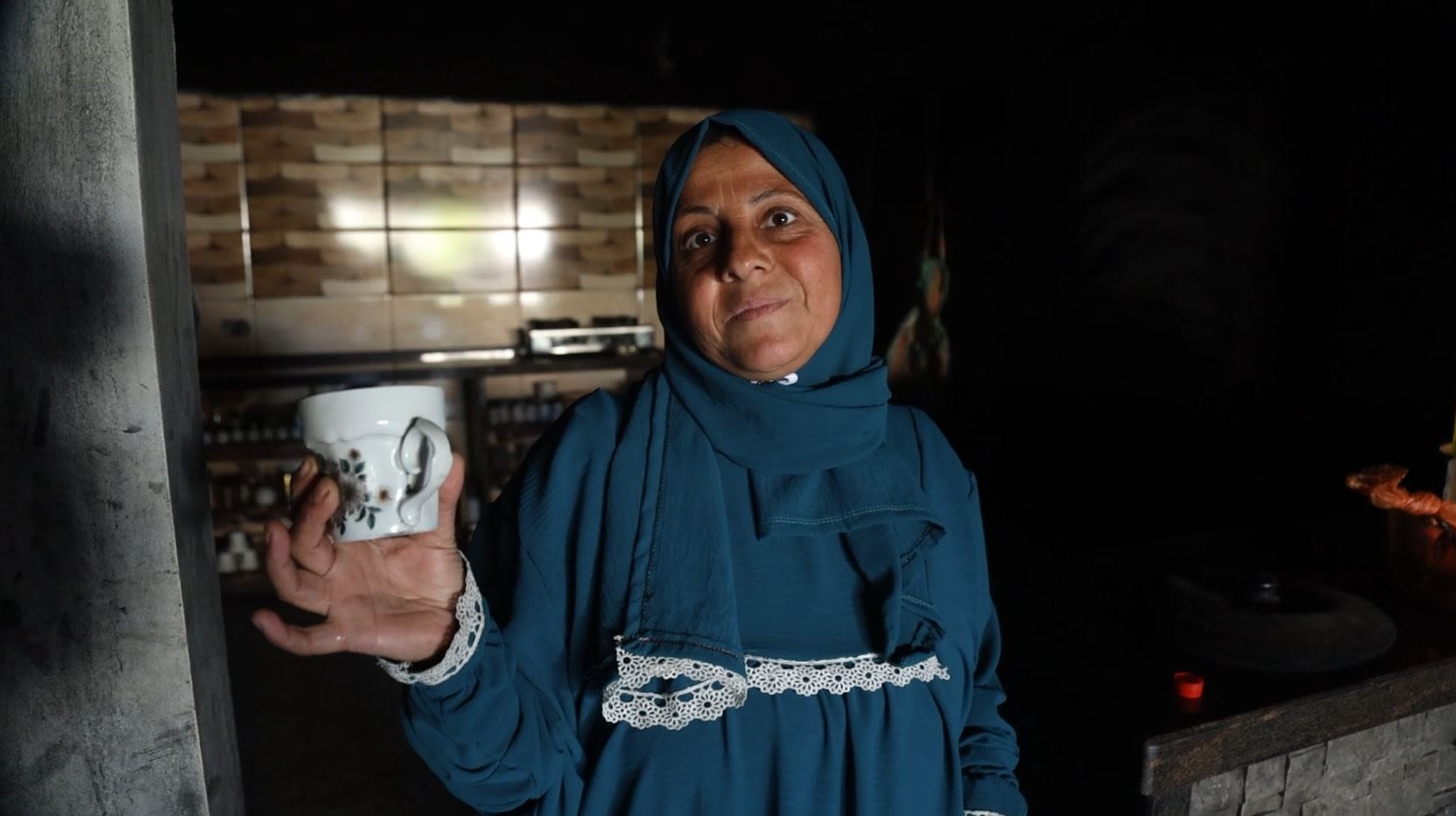
Noha Al Khor holds the cup bought when her late husband was born, by his father. It has now outlasted him. Rakan Abed El Rahman / The National
Noha Al Khor holds the cup bought when her late husband was born, by his father. It has now outlasted him. Rakan Abed El Rahman / The National
As bombs rain down once more on the enclave, and with Israeli Prime Minister Benjamin Netanyahu promising this escalation is “only the beginning”, dreams of peace are quickly fading for the people of Gaza.
In the meantime, a phrase that rings true for many across the enclave who have lost so much can be seen graffitied on the rubble, the backdrop of their misery. It reads: “The survivors have died and the dead have survived.”

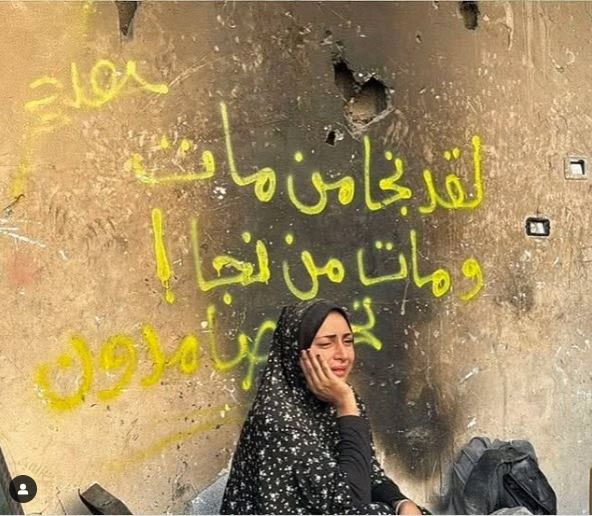
Graffiti behind a bereaved woman in Gaza reads: ‘Those who died survived and those who survived died.’ Photo: Amr Tabash / Instagram
Graffiti behind a bereaved woman in Gaza reads: ‘Those who died survived and those who survived died.’ Photo: Amr Tabash / Instagram
Words Nada AlTaher
Video Rakan Abed El Rahman
Editor Juman Jarallah
Video editor Wajod Khamis
Photo editor Olive Obina
Design Nick Donaldson
Sub editor Donald MacPhail


 Built with Shorthand