
Back to the future: Nasa sends humans to circle the Moon
The crew of Artemis II will repeat Apollo 8's 'Earthrise' mission of 1968

Back to the future: Nasa sends humans to circle the Moon
The crew of Artemis II will repeat Apollo 8's 'Earthrise' mission of 1968

As his spacecraft orbited the Moon, US astronaut William Anders noticed a small blue and white orb rising above the lunar horizon. “Wow, that’s pretty,” Anders said as he grabbed his Hasselblad camera and took a colour photograph.

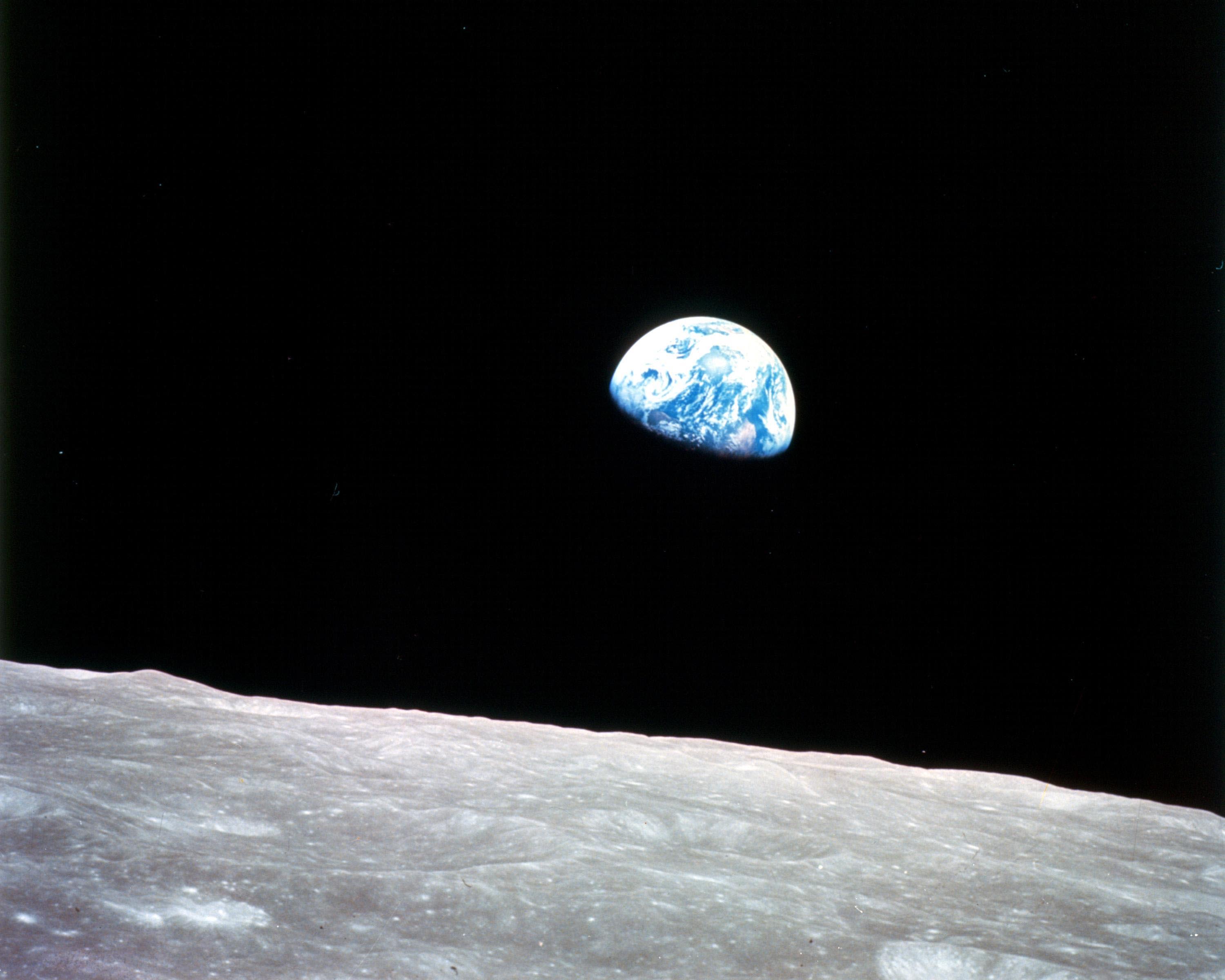
The Earth pictured from Apollo 8, the first manned mission to orbit the Moon, as it entered lunar orbit on December 24, 1968. Photo: Nasa
The Earth pictured from Apollo 8, the first manned mission to orbit the Moon, as it entered lunar orbit on December 24, 1968. Photo: Nasa
The image of our planet viewed from more than 380km away would quickly become famous as Earthrise, which has been reproduced countless times as a symbol of the Earth’s beauty and fragility in the vastness of space.
Anders and his two Nasa colleagues were the crew of Apollo 8, the first manned mission to travel around the Moon - at that stage the furthest humans had travelled from Earth. Seven months later, Neil Armstrong would be the first man to walk on the Moon.

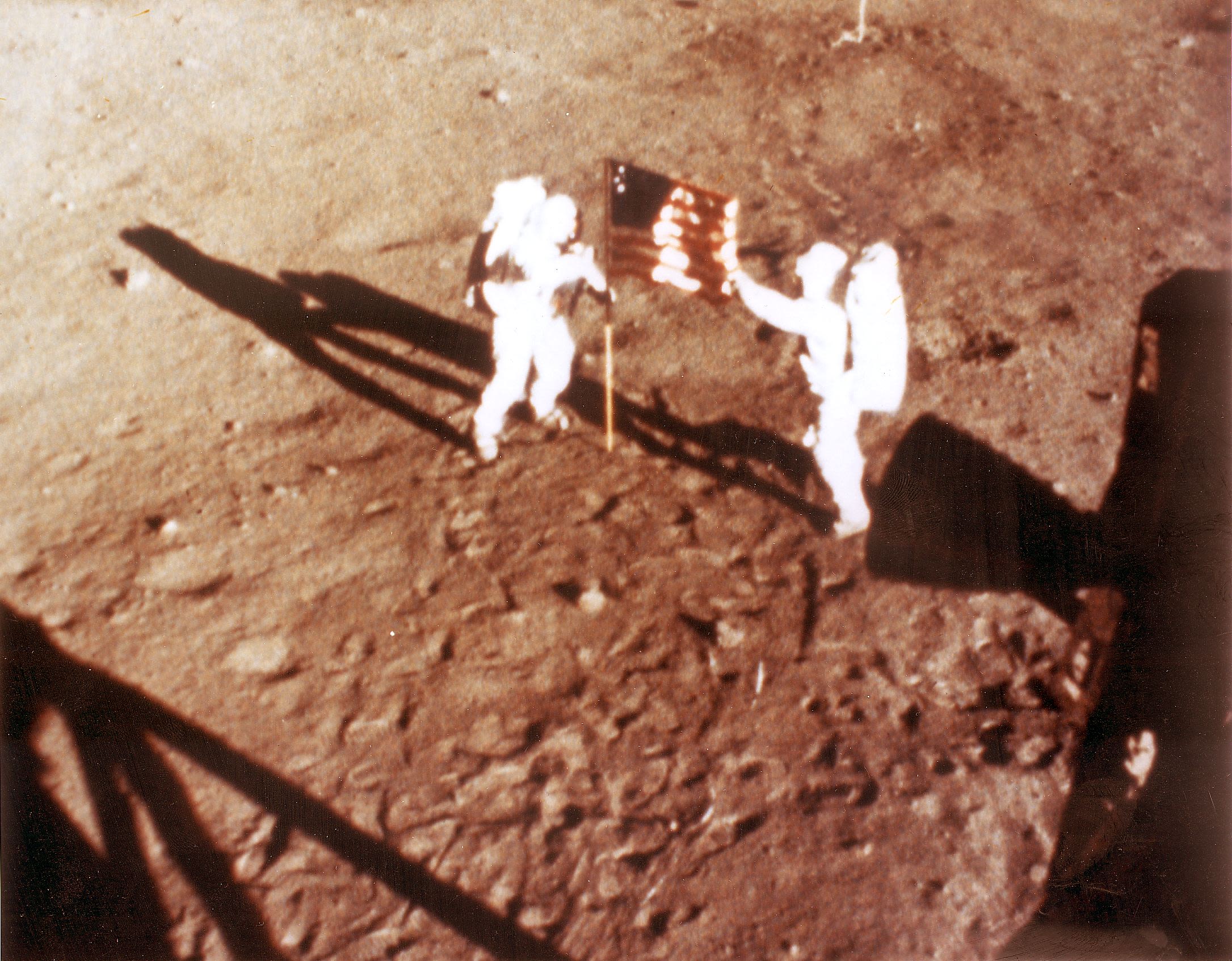
On July 20, 1969, Apollo 11 astronauts Neil Armstrong and Edwin 'Buzz' Aldrin with the US flag on the lunar surface. Photo: Nasa
On July 20, 1969, Apollo 11 astronauts Neil Armstrong and Edwin 'Buzz' Aldrin with the US flag on the lunar surface. Photo: Nasa
Next month, a new team of American astronauts is expected to follow Apollo 8’s journey of December 1968. It is 57 years since Anders' photo was taken and 53 years since Apollo 17 astronauts became the last humans to walk on the Moon.
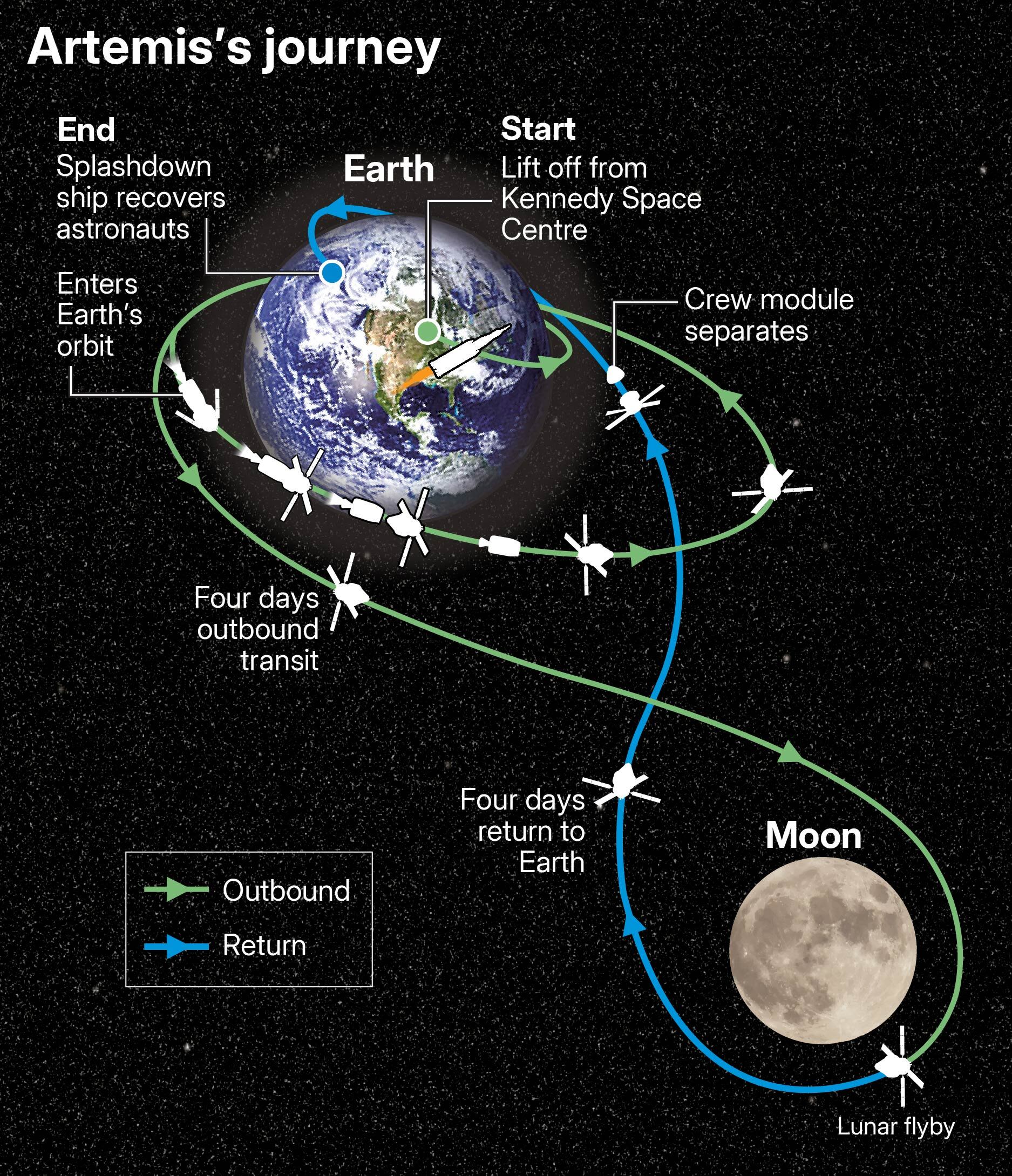
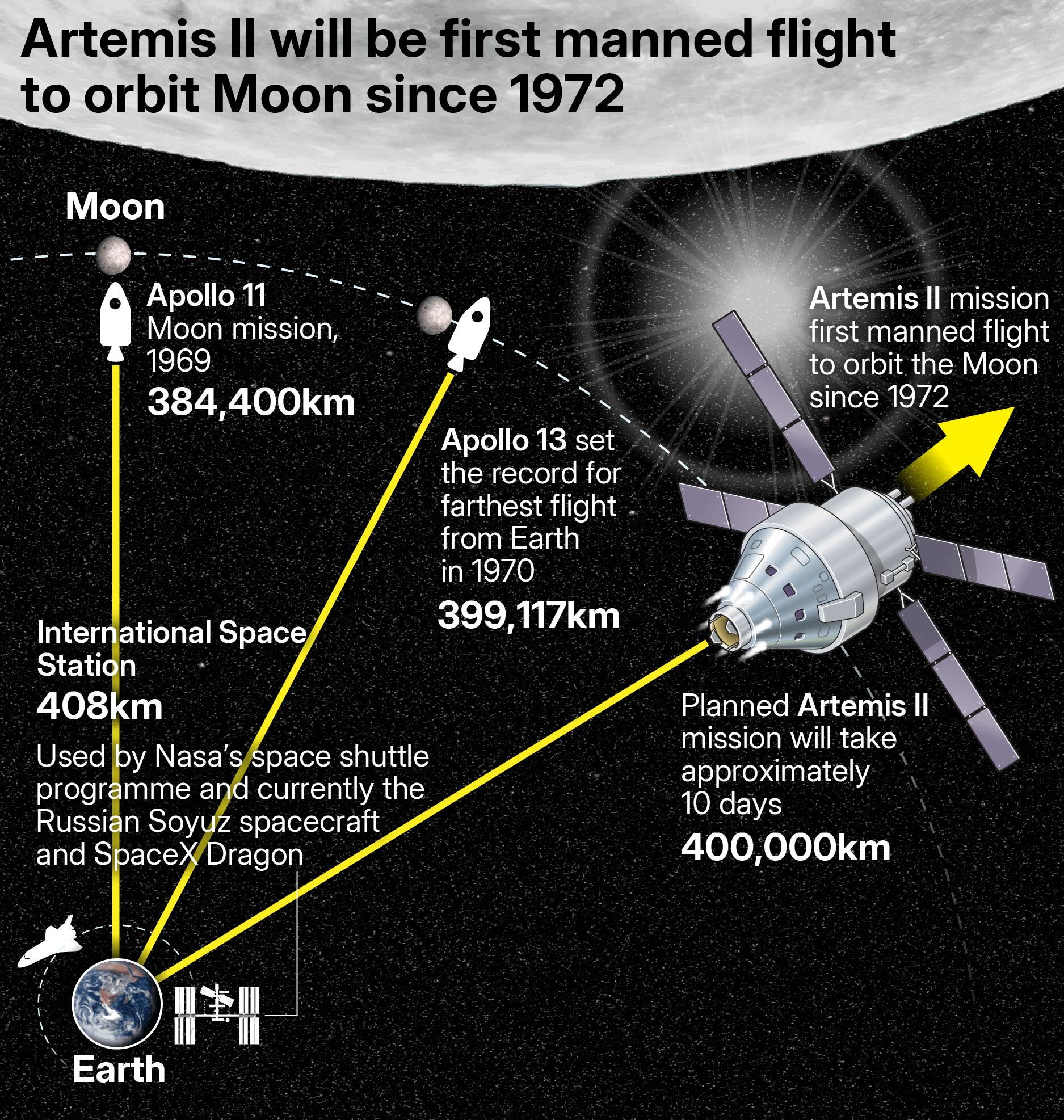
With a launch window that opens on February 6, Artemis II is the prelude to a return to the Moon itself, which Nasa says will happen no earlier than 2027. The crew of four – Reid Wiseman, Victor Glover, Christina Koch and Jeremy Hansen – will set a record for the furthest humans have travelled in space, at more than 400,000 miles or 643,000km. The main goal of the mission is to test the performance and readiness of the crew module Orion, the space launch system and all other operations - including the life-support system aboard Orion - needed for astronauts to survive safely in lunar orbit before attempting to land on the Moon in a future mission.

Out of this world
Of the nearly 700 people who have been in space since Yuri Gagarin in April 1961, the vast majority have been in low Earth orbit, including half of them to the International Space Station (ISS). Just 24 have ventured more than 400,000km from the Earth on the eight Apollo missions. Anders died in 2024 at the age of 90. Of the 12 men who have walked on the Moon, four are living, including Buzz Aldrin, from Apollo 11, who is 95.

All that is about to change. The Artemis II crew will include the first woman to orbit the Moon and the first African American. Hansen, a Canadian, will be the first non-American to make the journey. If all goes well, future lunar exploration will be carried out by astronauts from many races and nationalities.

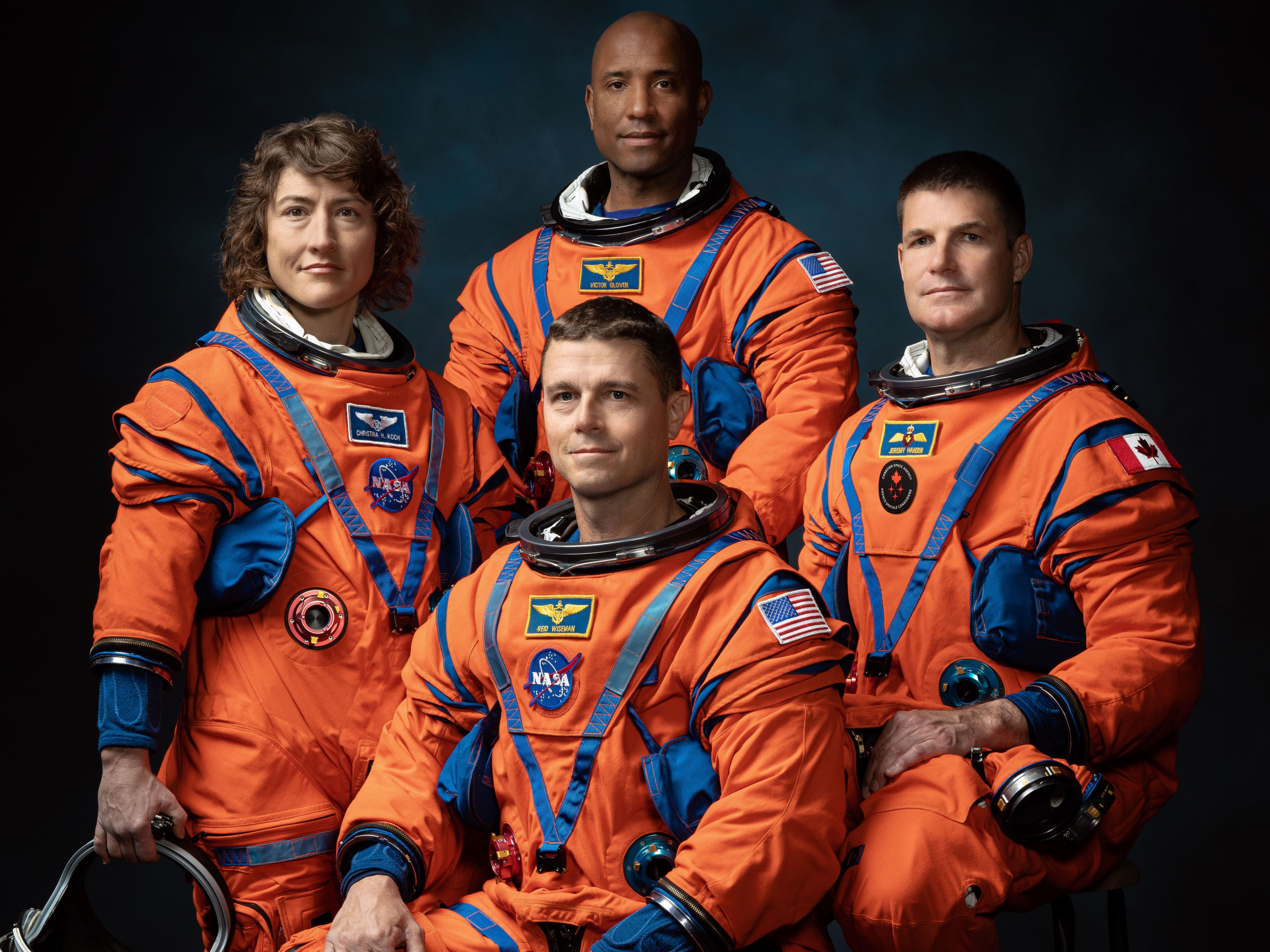
Official crew portrait for Artemis II, from left: Nasa astronauts Christina Koch, Victor Glover, Reid Wiseman and Canadian Space Agency astronaut Jeremy Hansen. Photo: Nasa
Official crew portrait for Artemis II, from left: Nasa astronauts Christina Koch, Victor Glover, Reid Wiseman and Canadian Space Agency astronaut Jeremy Hansen. Photo: Nasa
Yet on the surface not much seems to have changed, despite the march of progress since the 1970s. Like Apollo, Artemis II is a small cone-shaped capsule that sits on top of a gigantic rocket that uses its great power to escape Earth’s gravity. Returning home, it survives the furnace of re-entry with a heat shield and then descends to the surface by parachutes.

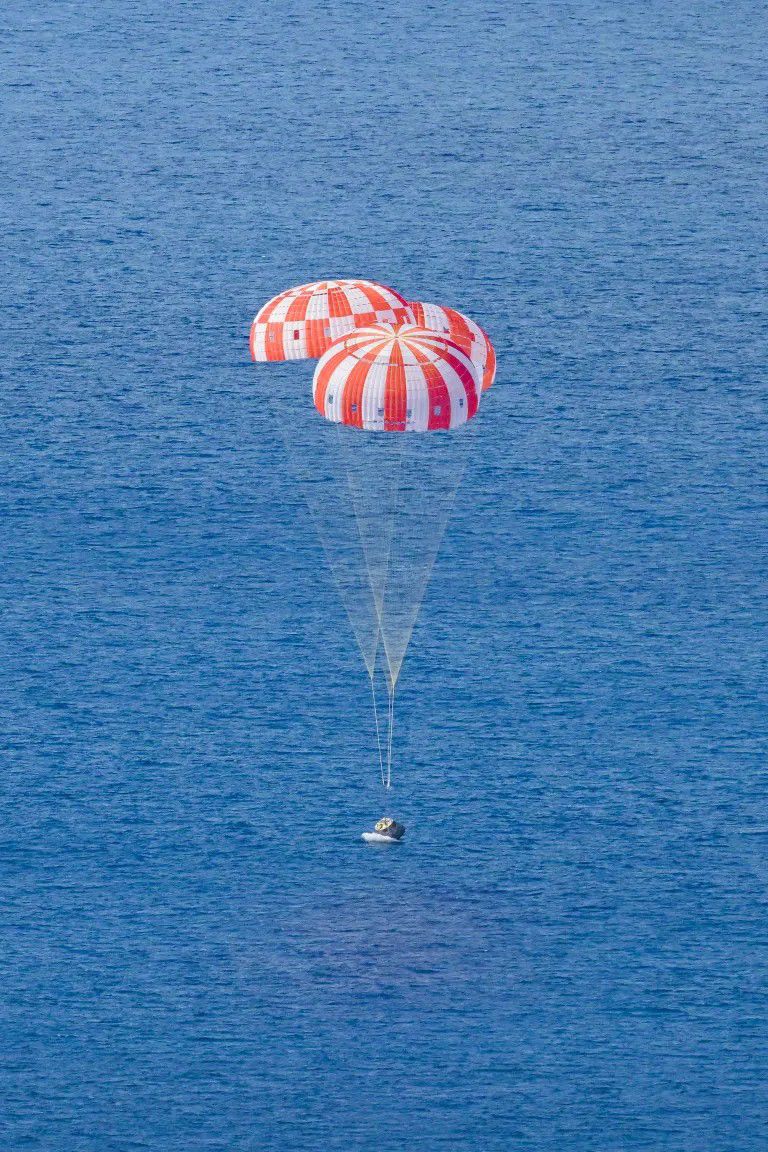
Orion splashes down in the Pacific Ocean off the coast of California in December 2022 after performing two lunar flybys. Photo: Nasa
Orion splashes down in the Pacific Ocean off the coast of California in December 2022 after performing two lunar flybys. Photo: Nasa
The reality is that Artemis, named after the Greek goddess who was Apollo’s twin sister, resembles its predecessor as much as a Formula One racing car of the 1970s looks like an F1 car of 2026. There would be no contest. “It might be hard to imagine a rocket even more powerful than the Saturn V that launched men to the Moon, but Nasa’s SLS (space launch system) will be,” read a recent blog from Nasa’s Space Centre Houston.
Weight of the mission
When it was launched in 1967, the Saturn 5 rocket was the most powerful seen, standing 111 metres high and capable of carrying a payload of 140,000kg. The SLS, which will lift Artemis II into Earth orbit, is about 65 metres tall but can generate 8.8 million pounds of thrust compared to the 7.5 million pounds of the Saturn 5.

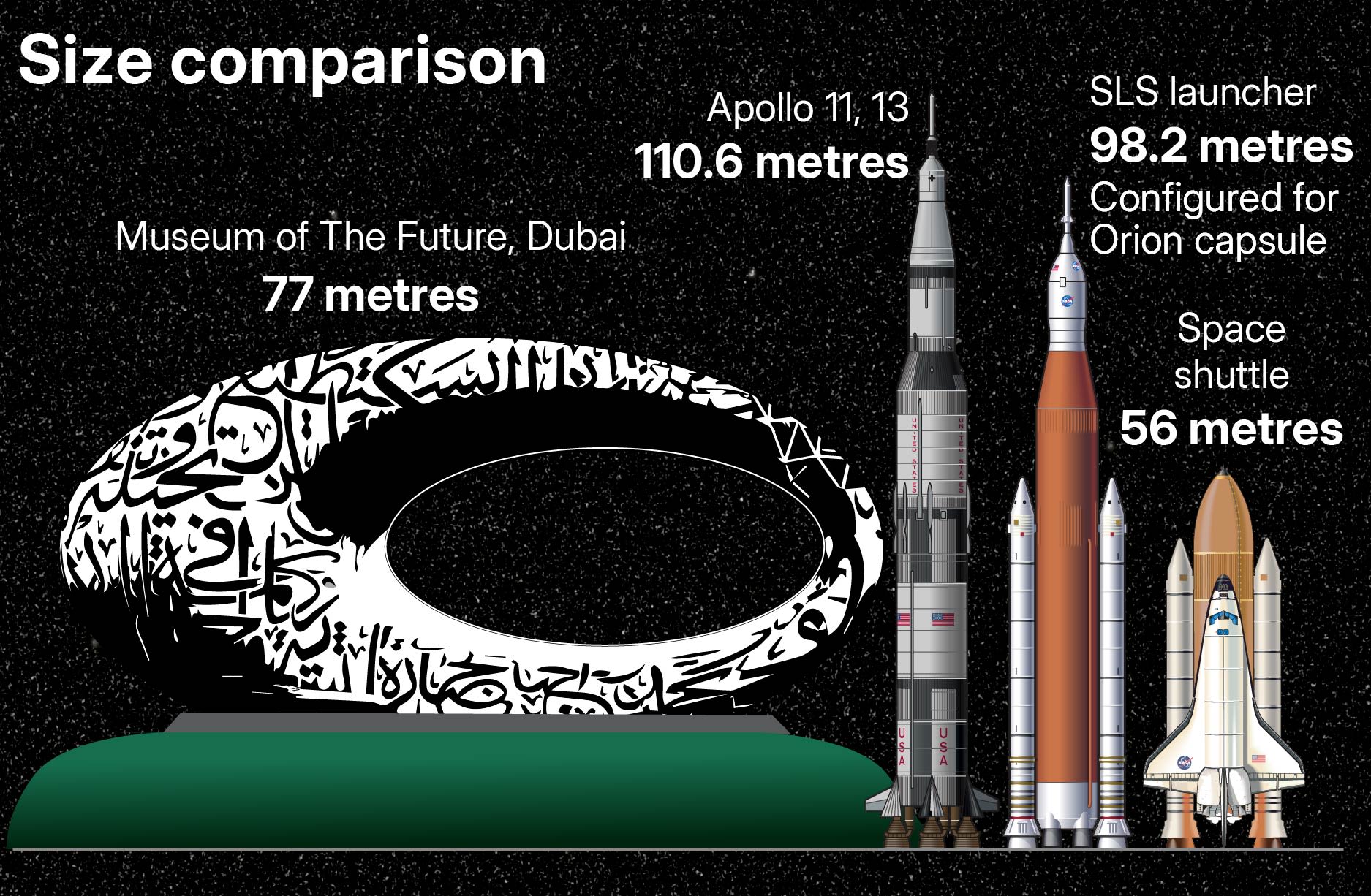
Sitting on top is the Orion command module, which will travel to the Moon and back. The 1960s Apollo spacecraft was powered by a single guidance computer with a processing power eclipsed many times over by a modern smartphone, weighed more than 30kg and was the size of a suitcase.
“Orion has two simultaneously operating redundant flight computers,” says Nasa. “Each of these includes two redundant computer modules, giving it a total of four redundant systems.
“In addition, one of Orion’s redundant computers is only three-quarters the weight of the sole computer aboard Apollo. One Orion computer also has 128,000 times more memory and is 20,000 times faster.”

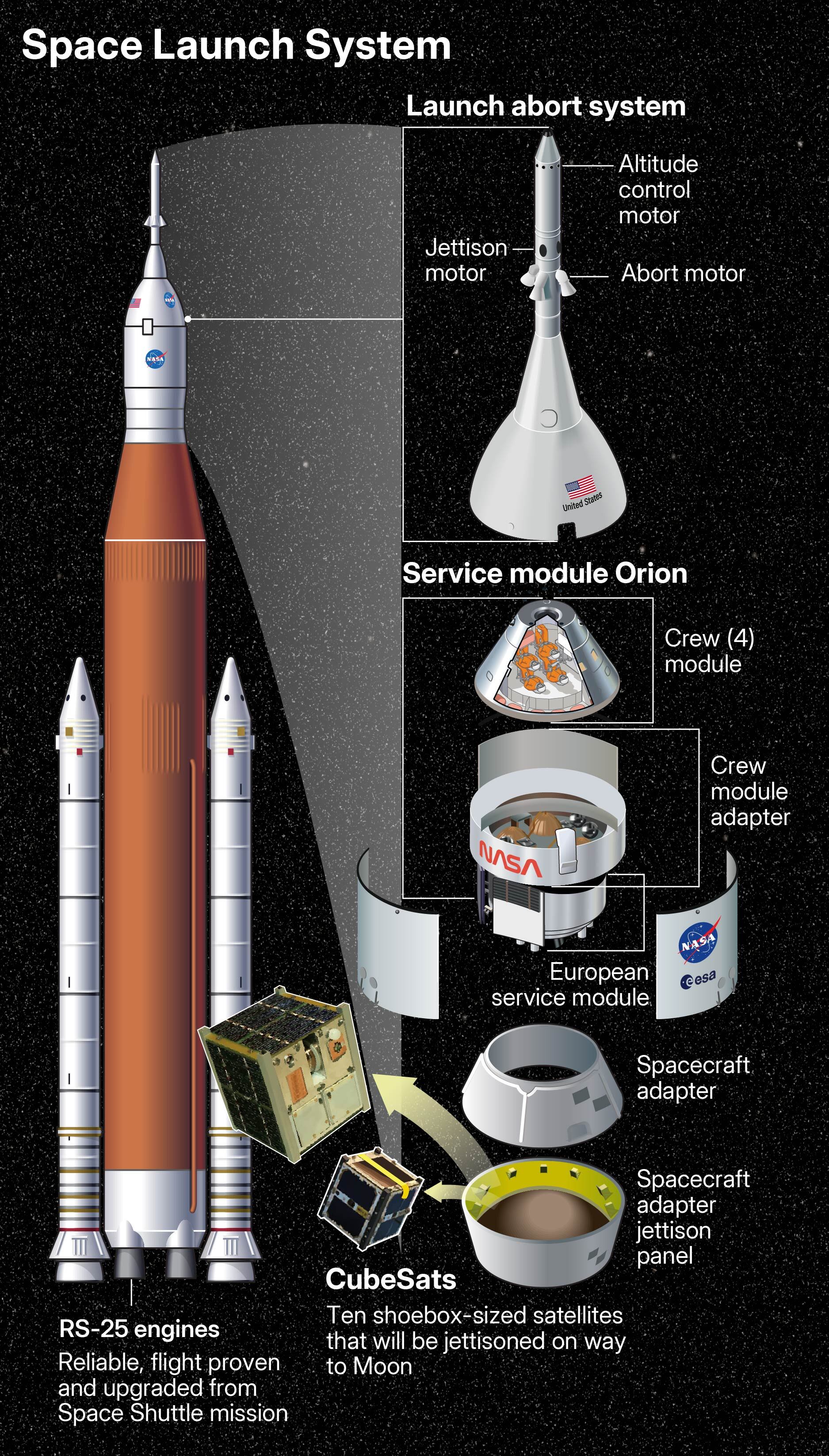
While a similar shape, the Orion crew capsule is 30 per cent larger than its Apollo counterpart, meaning it has a galley to prepare food, an exercise machine and what Nasa describes as a “functioning waste management system”. The three Apollo astronauts had only adult nappies, or what the space agency called a "maximum absorbency garment”.

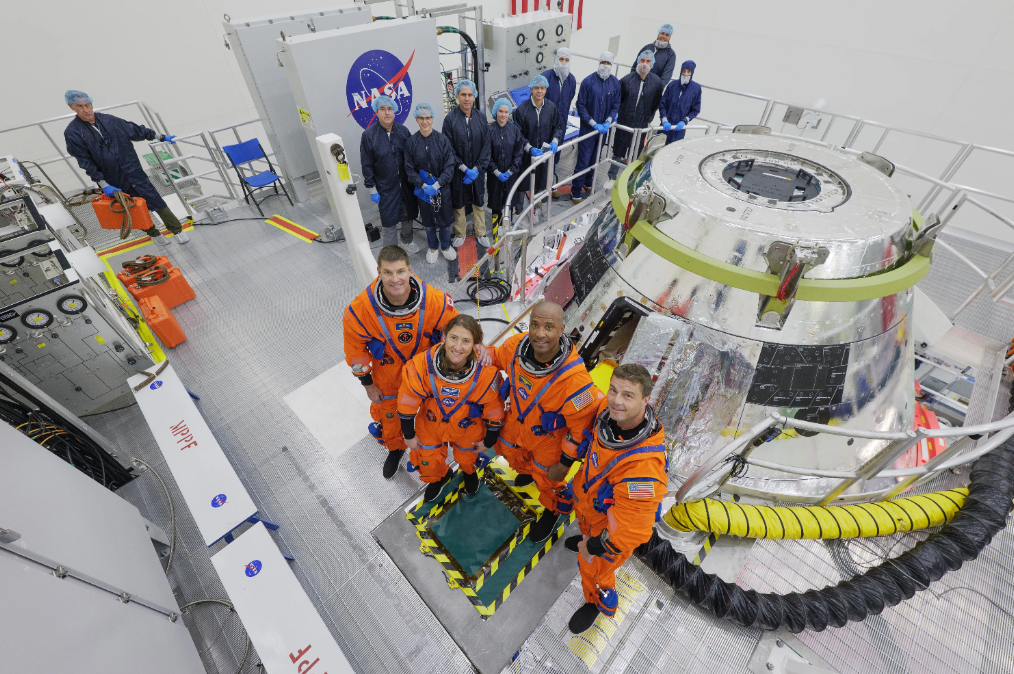
The Artemis II crew with the Orion spacecraft they will return to Earth in at the Kennedy Space Centre in Florida. Photo: Nasa
The Artemis II crew with the Orion spacecraft they will return to Earth in at the Kennedy Space Centre in Florida. Photo: Nasa
To the stars
Beneath the Orion capsule is the European Space Module (ESM) built for Nasa by the European Space Agency and Airbus, which houses the engine for the flight to the Moon as well as water and oxygen. Unlike the Apollo Command Module, which provided power to the ship using fuel cells, the ESM deploys four seven-metre solar wings. These generate much more power than Apollo’s Command Module but must align with the Sun to be effective.

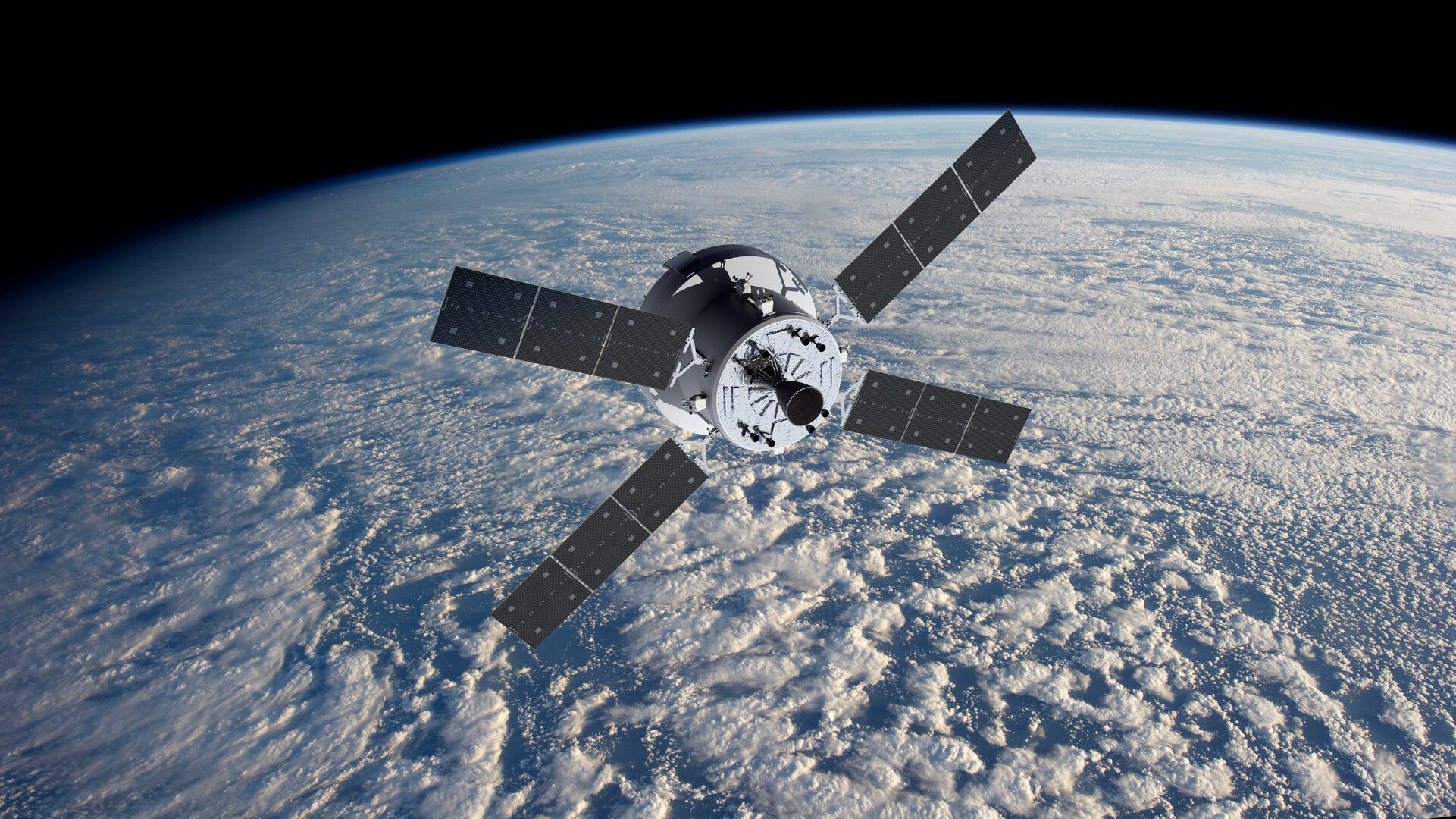
A rendering of Orion and the European Service Module, which serves as the primary power and propulsion unit of Orion and is discarded at the end of each mission. Photo: Nasa
A rendering of Orion and the European Service Module, which serves as the primary power and propulsion unit of Orion and is discarded at the end of each mission. Photo: Nasa
While in high Earth orbit, the mission will also launch five small CubeSat satellites from Nasa’s partners, including one from the Saudi Space Agency which will measure space weather such as solar radiation, magnetic fields and solar X-rays.
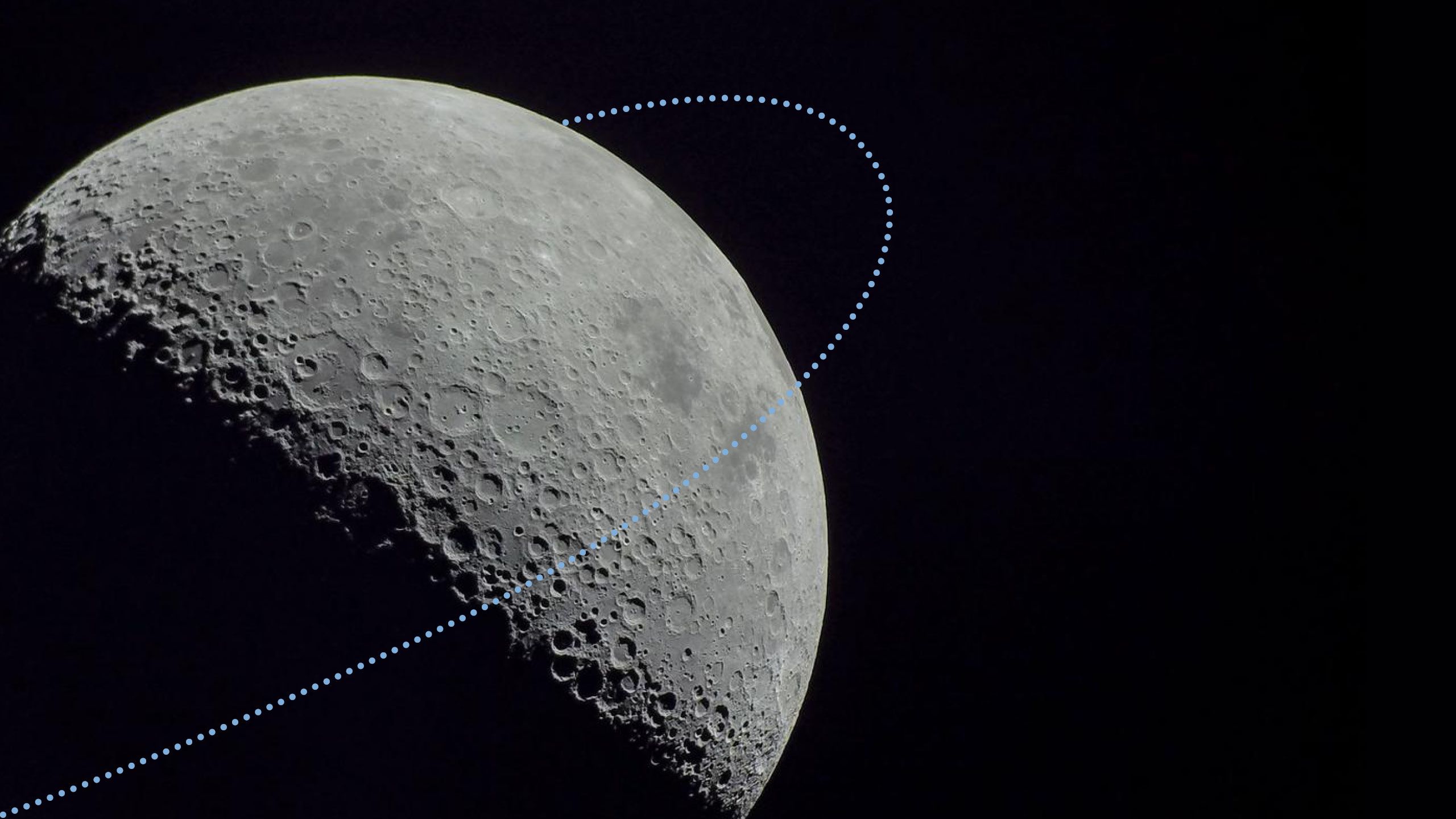
Apollo 8 completed its mission in a little over six days. Artemis II will take a more leisurely 10 days, orbiting the Moon at distance of 6,500km.
All being well, both the Apollo 8 and Artemis II missions will end the same way. A fiery re-entry to the Earth’s atmosphere followed by a descent on parachutes and a splashdown in the Pacific and recovery by the US Navy.
Words James Langton
Editor Patrick Ryan
Graphics Roy Cooper
Design Nick Donaldson
Sub editor Kit MacDonald & Alan McCrorie
Producer Juman Jarallah


 Built with Shorthand