
From exile to rebuilding: the Syrians choosing to return home
After the fall of the Assad regime, a small but determined group from Europe and Turkey are going back to help shape Syria's fragile recovery

From exile to rebuilding: the Syrians choosing to return home
After the fall of the Assad regime, a small but determined group from Europe and Turkey are going back to help shape Syria's fragile recovery

Syrians who were driven out of their country by the Assad family’s brutal 50-year rule are returning home, hoping they can play a part in rebuilding the nation.
From business and trade to human rights and governance, their contributions have an impact as the new government seeks expertise from the Syrian diaspora for the country’s recovery.
But they are a minority – driven by optimism and the right personal circumstances that allow them to return.

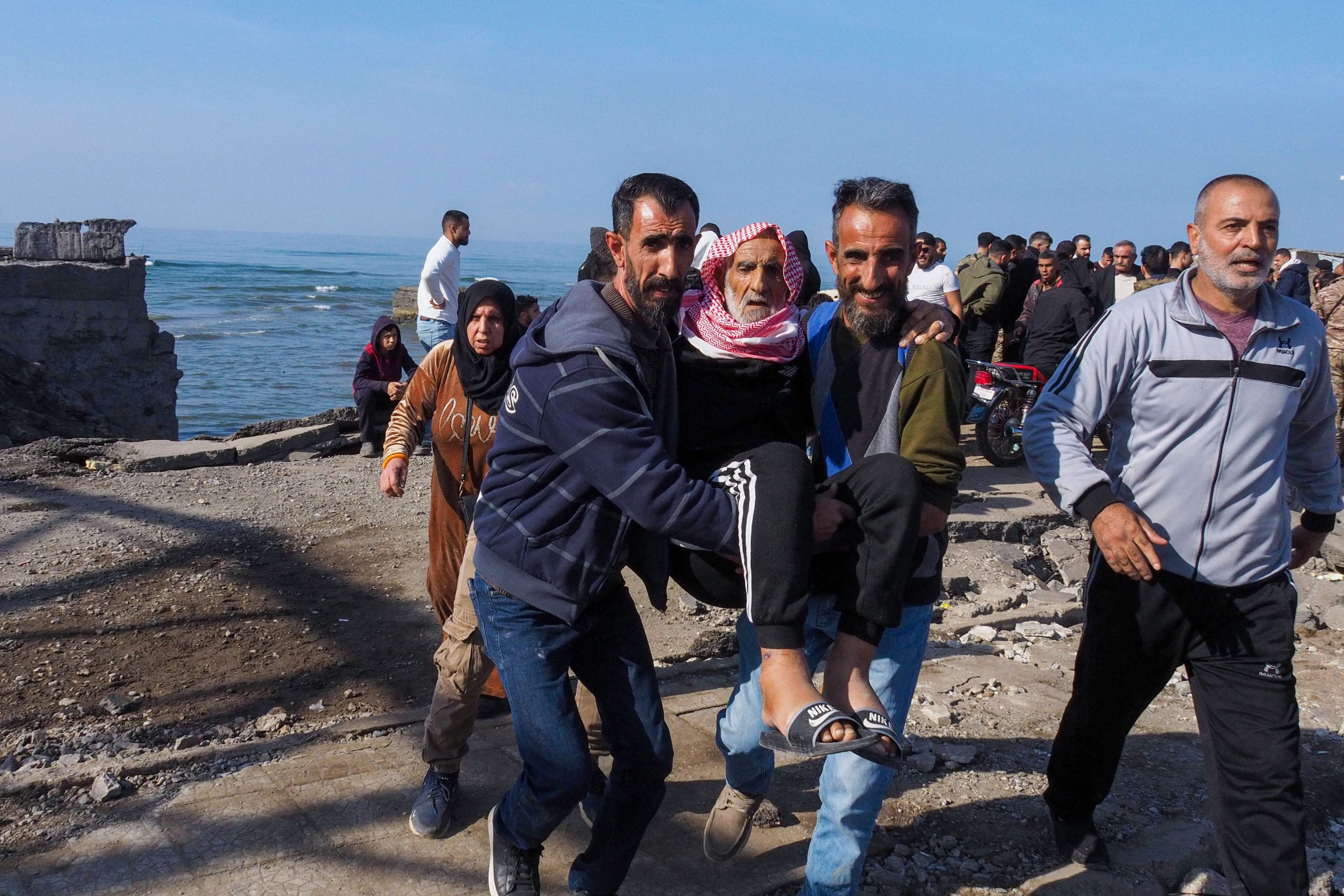
Syrian refugees, who were living in Lebanon, cross the border in Al Arida to return to their homeland after the fall of Bashar Al Assad's regime. AFP
Syrian refugees, who were living in Lebanon, cross the border in Al Arida to return to their homeland after the fall of Bashar Al Assad's regime. AFP
Many of the high-profile returned have been women. Hind Kabawat was appointed Minister for Social Affairs and Labour and British-Syrian Razan Saffour is an adviser to the Ministry of Foreign Affairs.
Most Syrians have no home to return to – between the destruction caused by the Assad regime and ISIS – while growing immigration restrictions in Europe prevent Syrian refugees from returning temporarily without losing their claim to asylum.
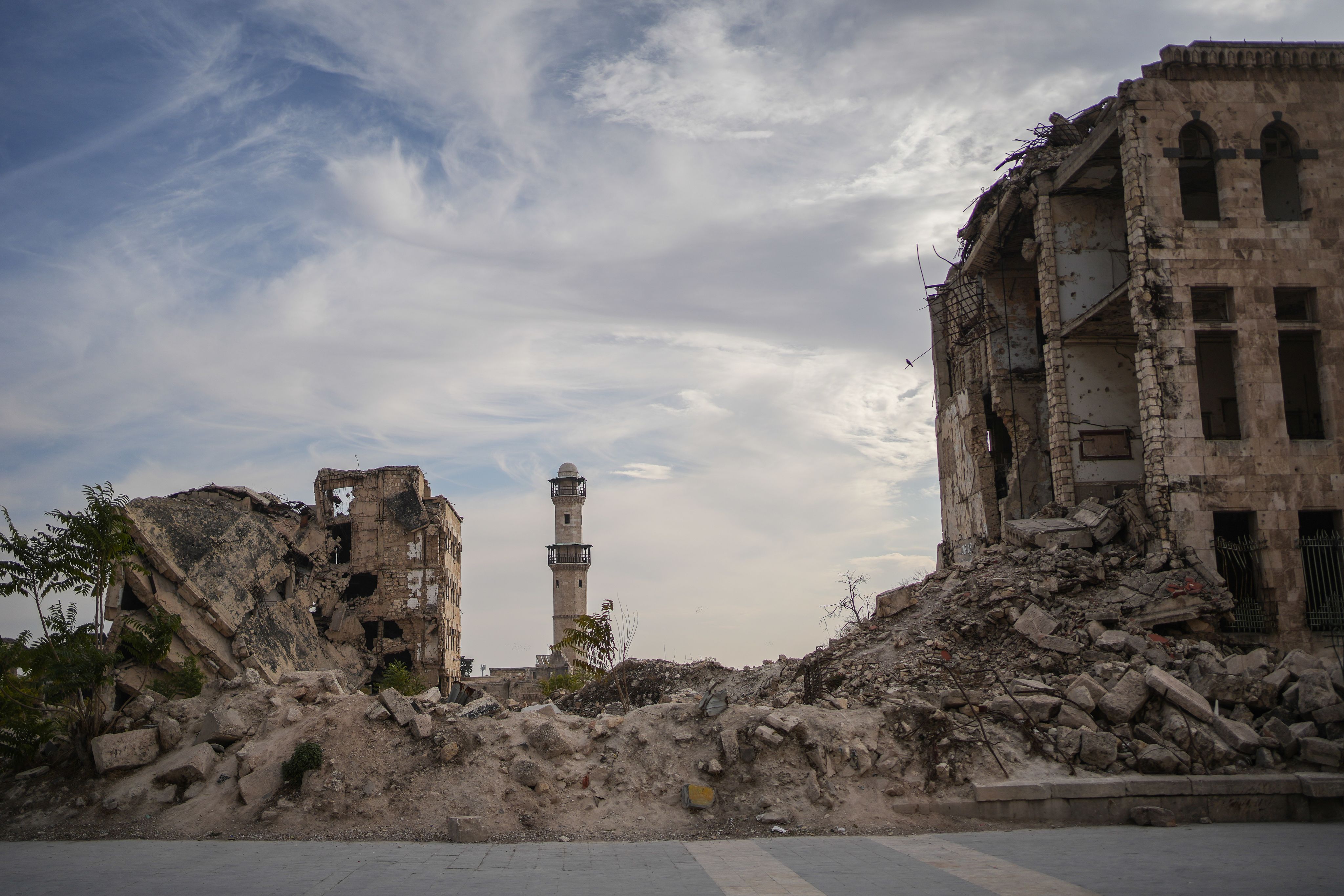
Destruction in Aleppo near the city's citadel. Moaiwa Atrash for The National
Destruction in Aleppo near the city's citadel. Moaiwa Atrash for The National
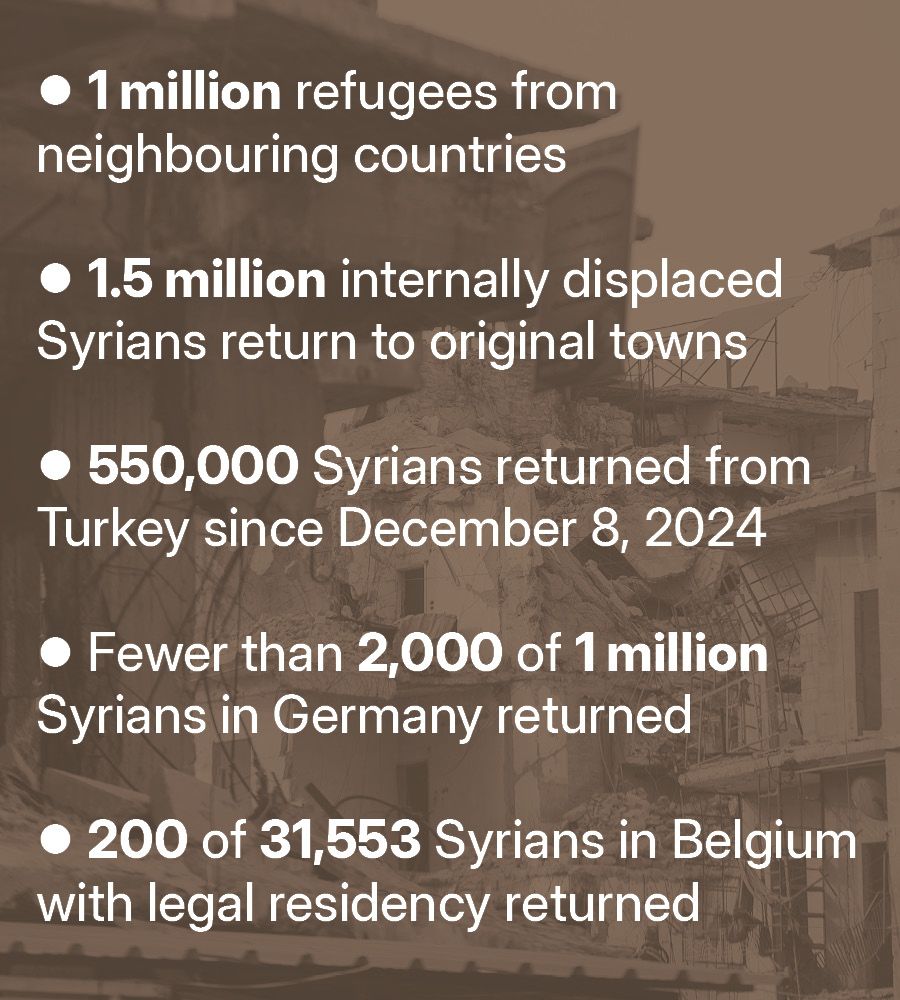
The Syrian government estimates that about one million refugees have returned from neighbouring countries and 1.5 million internally displaced people have moved back to their original towns. But they face enormous challenges in trying to rebuild their lives.
The National spoke to four Syrians from across Europe and Turkey, who are taking the risky step of returning to their native land after years or decades in exile.
The Syrian-born French diplomat who took a chance on life back home
Iyad Jaber, 38, left his dream job as a French diplomat to set up a new life in Damascus after the fall of president Bashar Al Assad's regime. As a member of the diaspora with close ties to Syria, who integrated into France’s most elite diplomatic circles as an Arabic speaker in 2011 – right at the start of the Arab Uprisings – the toppling of Bashar Al Assad was comparable to the fall of the Berlin Wall.
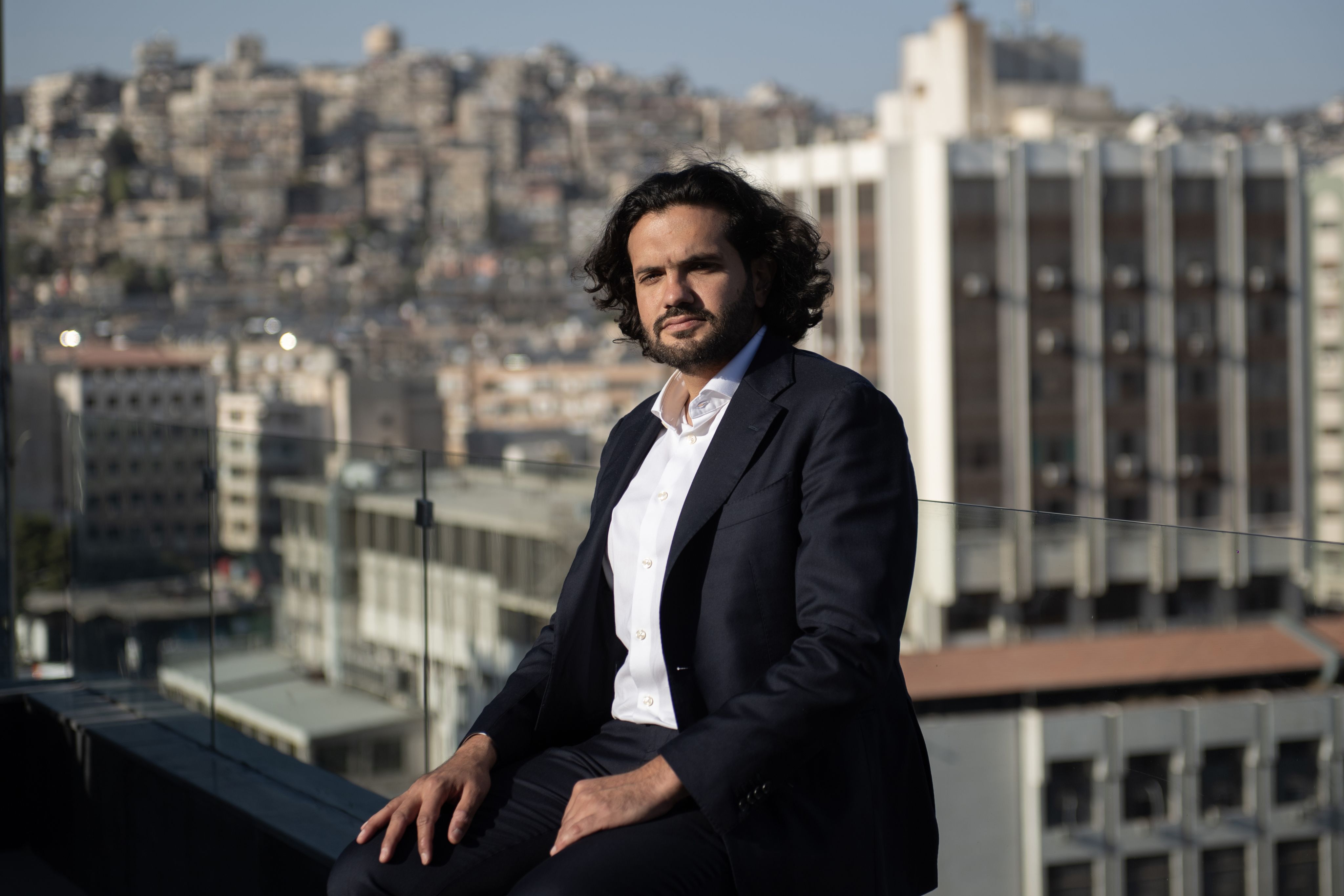
Iyad Jaber moved to Damascus after the fall of the Assad regime. Hasan Belal for The National
Iyad Jaber moved to Damascus after the fall of the Assad regime. Hasan Belal for The National
After his first visit to Syria in 16 years earlier this year, he took personal leave to try his luck living in Damascus as a consultant. He has up to five years to decide whether he wants to be a diplomat again.
“The country’s history is moving ahead at breakneck speed. I want to be part of it and act like a bridge between two cultures,” he told The National.
Born in Syria, Mr Jaber was moved to France as a baby and obtained French citizenship at the age of 17, with the rest of his family. As a child, he spoke Arabic at home and studied classical Arabic after school hours, returning to Damascus and Homs for holidays. The family is originally from Hama and carries the traumatic memory of the brutal state repression against a 1982 uprising, which killed tens of thousands of people. It was later described as a template for the government’s reaction to the 2011 peaceful protests. Half a million people died in Syria’s civil war.

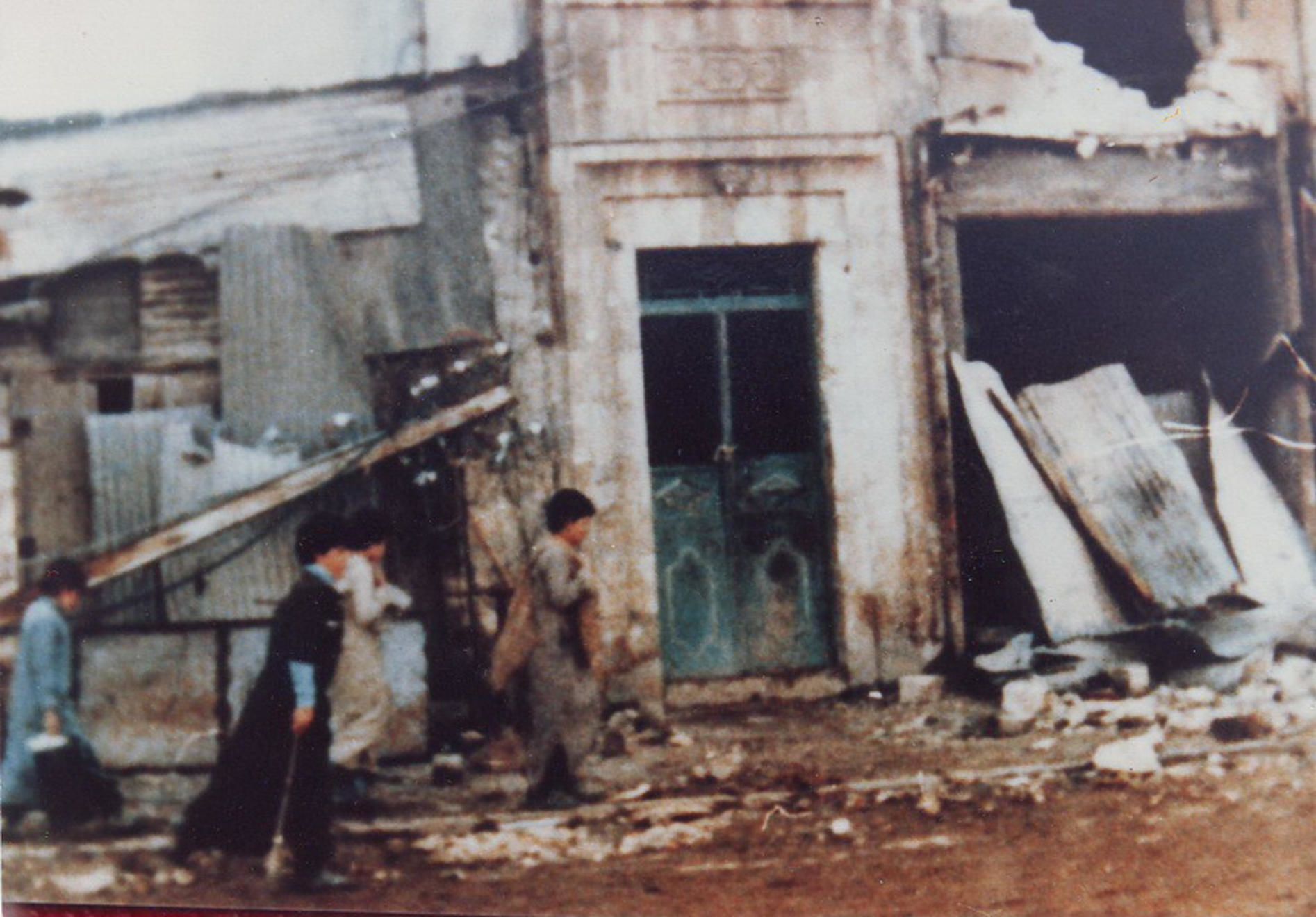
Thousands were killed in the Hama massacre of 1982. The aftermath saw significant political and social upheaval in the region. Alamy
Thousands were killed in the Hama massacre of 1982. The aftermath saw significant political and social upheaval in the region. Alamy
At 25 years old, Mr Jaber became a diplomat after passing a highly competitive exam that is typically sat by only a handful of people every year out of hundreds of applicants. In 13 years of experience, he was posted as deputy ambassador to Libya and also negotiated on behalf of France at the UN’s Human Rights Council in Geneva.
“It was never an abstract exercise for me, as someone of Syrian origin with family members who were killed, tortured or disappeared. I have put this rich and painful heritage at the service of French diplomacy and the common good,” he said. “As an immigrant who arrived in France at the age of one, I am deeply proud to have served my country.”

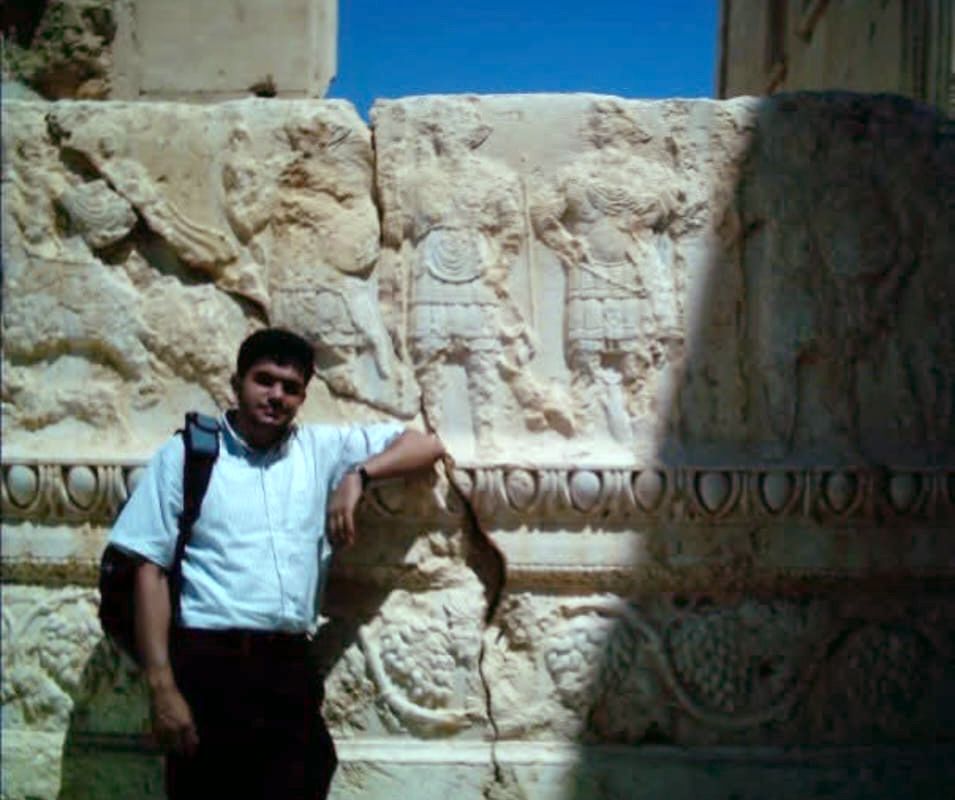
Mr Jaber visits Palmyra in 2007. Large parts of the ancient Syrian city were destroyed by ISIS in 2015
Mr Jaber visits Palmyra in 2007. Large parts of the ancient Syrian city were destroyed by ISIS in 2015
Today, Mr Jaber is the Damascus-based Middle East director at consultancy company, Timios and Co, which was founded by other former French civil servants. The company specialises in advising companies and states working in the region on how to fight terrorism financing and money laundering.
“Today, political change in Syria means hope, and I wish to put this institutional experience to good use by contributing, even in a very modest way, to the country’s reconstruction,” he said. "Despite the many challenges due to 13 years of revolution and civil war, Syrian civil society enjoys a genuine unprecedented space of freedom, one that must be preserved."
The woman who refused to become a refugee
Lina Ghoutouk, 35, remembers vividly the moment she decided she would not be a refugee. It was May 9 and she was sitting in a Dutch-language classroom in Belgium. Six months earlier, the government paused asylum procedures for Syrians after the Assad regime was toppled. The uncertainty was a humiliating experience.

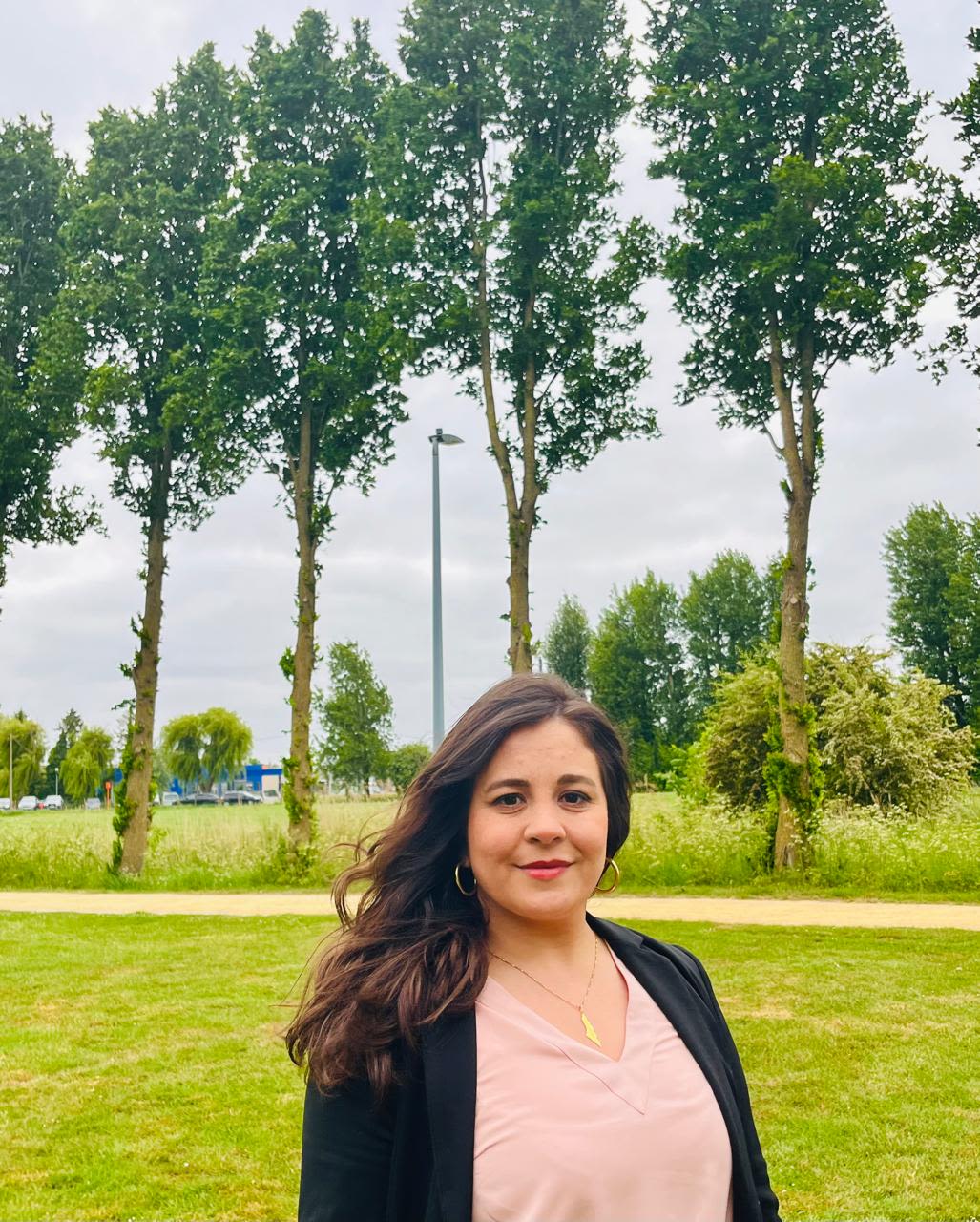
Lina Ghoutouk travelled to Belgium from Lebanon, where she was living, for a course in the summer of 2024
Lina Ghoutouk travelled to Belgium from Lebanon, where she was living, for a course in the summer of 2024
“It was extremely insulting to have your fate put on hold for an unlimited time,” she said. “I suddenly felt: what am I doing with my life? Why am I learning Dutch?” She left the school and never returned. That day, she decided she would return to Syria.
Ms Ghoutouk, a human rights researcher, had been attending a summer course in Belgium in the summer of 2024 and staying with family there when Israel started began its assault on Lebanon. She was in fragile health at the time and feared for her safety if she returned to Beirut, where she had lived since 2013. She also couldn’t return to Syria, where she was at risk of arrest under the Assad regime, so she filed for asylum in Belgium, a procedure that can take months or years.

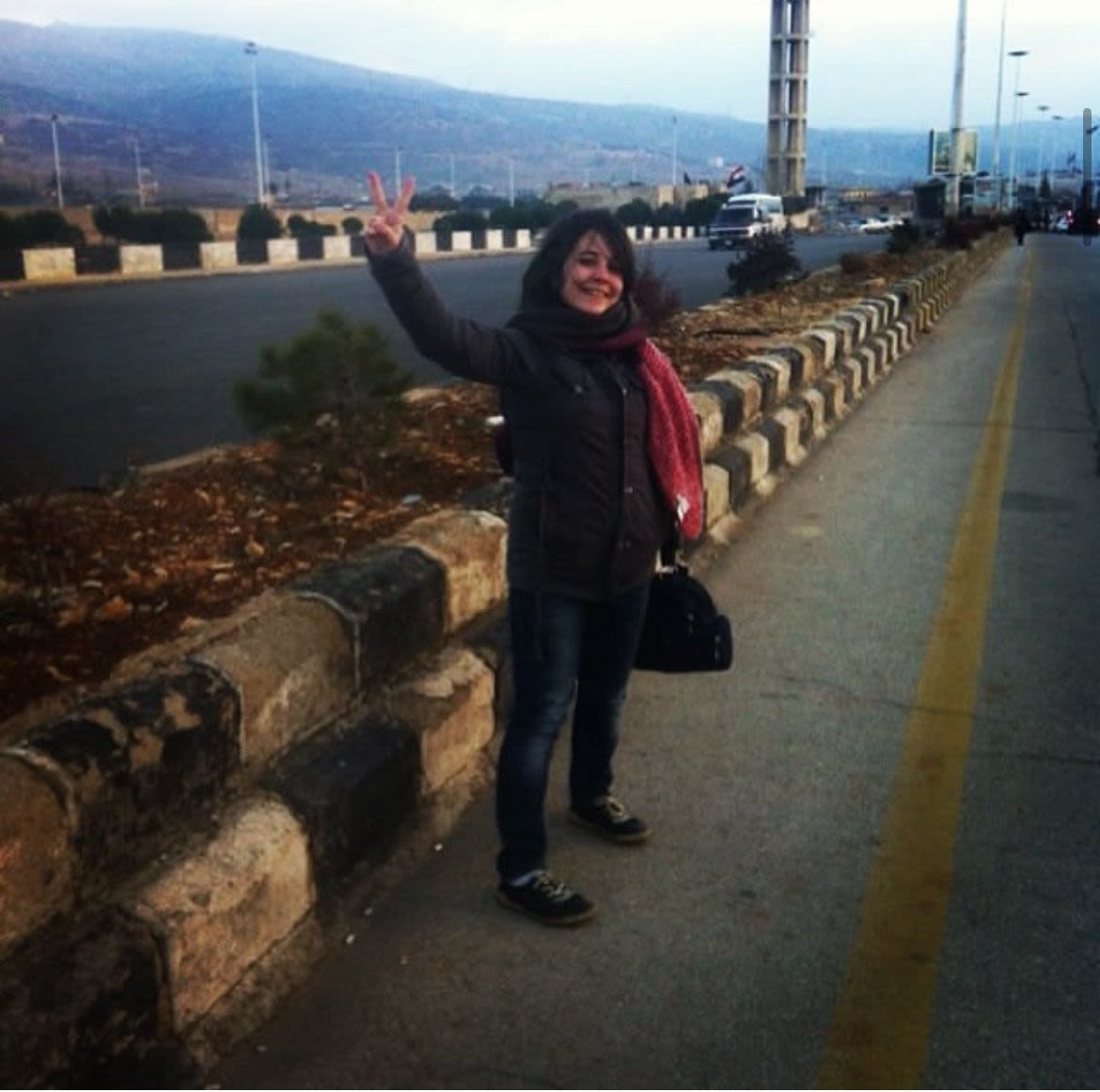
Ms Ghoutouk at the Masnaa border between Syria and Lebanon on the day she left her home country in 2013
Ms Ghoutouk at the Masnaa border between Syria and Lebanon on the day she left her home country in 2013
Her decision to return to Syria this year filled her with trepidation. As a secular Syrian, she worried about the new government’s extremist past as well as insecurity after the first mass sectarian killings took place on the coast in March. Nevertheless, she cancelled her asylum procedure in Belgium, also motivated by being close to her husband again, who works between Syria and Lebanon.
In September, she landed in Damascus and began working at an international charity, focusing on resuming health and education services. It will cost $216 billion to rebuild Syria, the World Bank estimates. “In Damascus's countryside, you can drive for hours and hours and all you see is destruction. Empty buildings without windows, without doors, without anything, without even the metal inside. It’s like a movie,” she said.
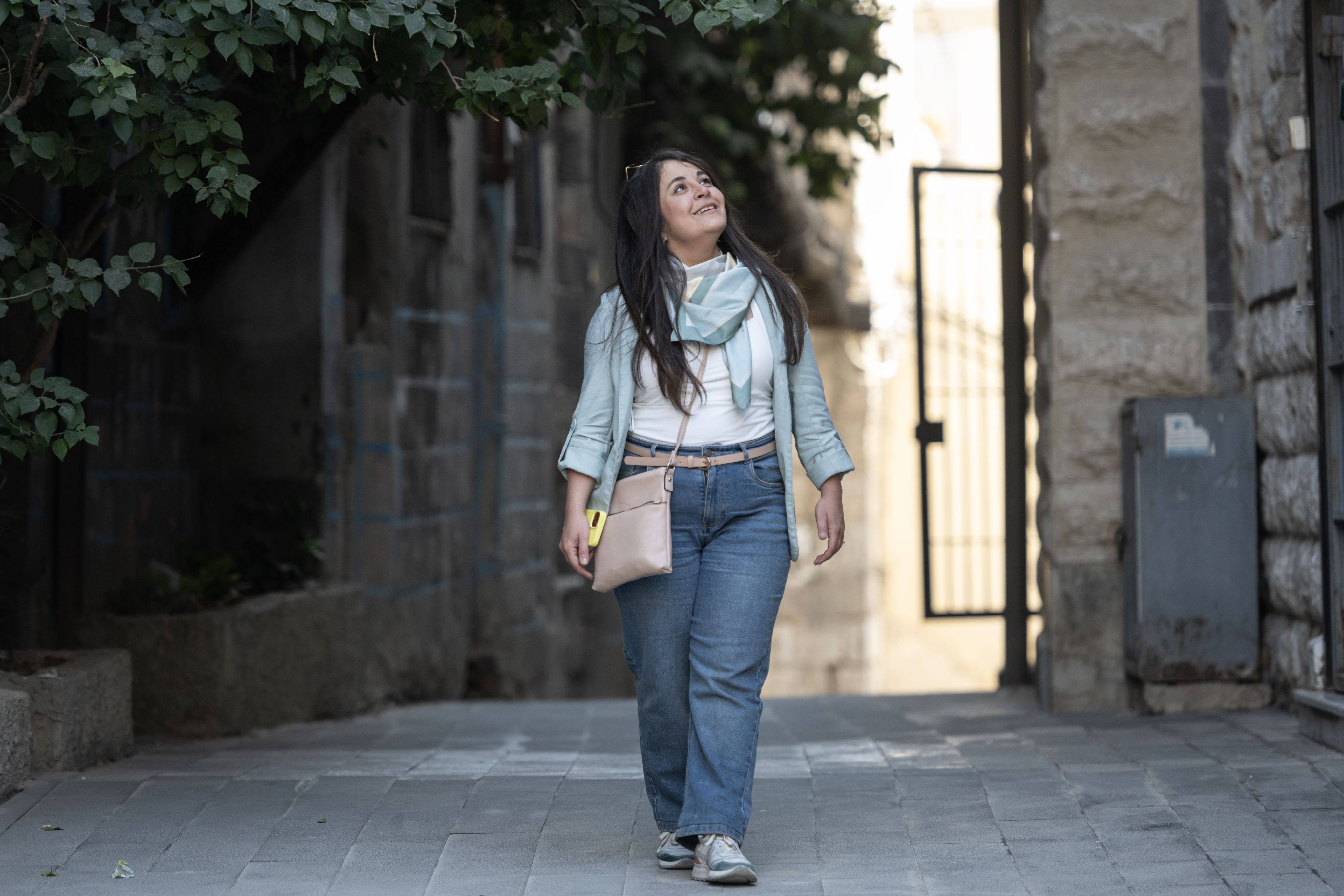
Ms Ghoutouk wanders the streets of old Damascus. Hasan Belal for The National
Ms Ghoutouk wanders the streets of old Damascus. Hasan Belal for The National
Living prices have also soared. Like many Damascenes, Ms Ghoutouk paid to install solar panels to cope with long power shortages. Security is now also a worry amid revenge killings. She carefully plans her trips, doesn’t travel by car at night, and warily eyes men carrying guns around the city.
Another new phenomenon, she said, is the appearance of beggars and homeless people in the streets. “They have very strange eyes – like homeless people in underground trains in Europe who suffer from drug addictions or mental health problems. I had never seen eyes like that in Syria or Lebanon,” she said. “The level of violence that people experienced in Syria is huge. You see it in their faces.”
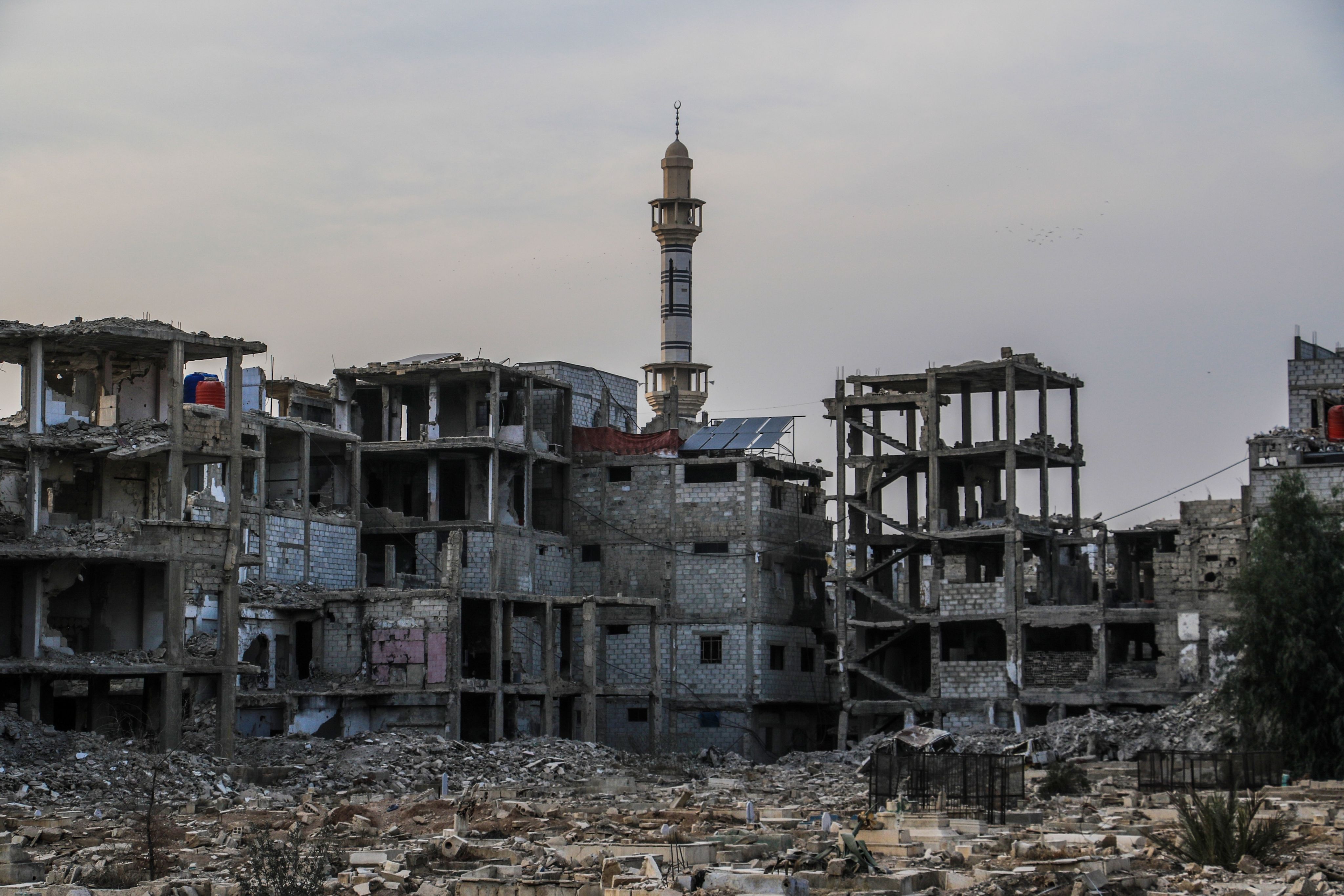
Families struggle to survive in parts of Damascus, such as Yarmouk Camp, which remain damaged from years of war. Reuters
Families struggle to survive in parts of Damascus, such as Yarmouk Camp, which remain damaged from years of war. Reuters
It is no surprise to Ms Ghoutouk that few Syrians are choosing to return, despite encouragement by European states. “Migration stories are very personal,” she said. “I’m surrounded by a huge support system. But what about people with kids who feel pressured into returning? It costs a lot to set yourself up again in Syria. There’s no electricity. There’s no schools. I really think Syrians should return, especially those who have something to give to the country. But the worst thing is for vulnerable people to feel pressured into making unsafe decisions.”
How many Syrians have returned - and from where?

More than a decade after the Syrian conflict pushed millions from their homes, a patchwork of return movements is emerging – driven less by coherent policy and more by shifting pressure from host countries.
Far greater proportions of Syrians have returned from neighbouring countries, including Turkey, Lebanon and Jordan, than from European nations. Since December 8 last year, about 550,000 Syrians have returned from Turkey alone.
Some European countries have tightened up on asylum claims from Syrians and have not guaranteed decent living conditions for them all. Nonetheless, many who have already spent years in such countries have secured legal status, stable employment and the ability to plan for their families’ futures.
“At least many European countries, for many Syrians, provide the minimum they need to survive today and provide some realistic pathway towards a future,” Alex Simon, co-founder of Synaps, a Beirut-based research organisation, told The National. This stability makes voluntary return a far less likely choice.
Mr Simon said conversations about return are happening in a context where refugee-hosting countries across Europe and the Middle East face a “mix of contradictory impulses that add up to a kind of flailing rather than an actual policy.”
The former detainee who left his life in Turkey to give Syria a second chance
It took years for Emad Al Khalil and his family to settle in Turkey. At 36, he worked in real estate development, spending time in Istanbul and the south-eastern province of Antakya, slowly building up precious savings and gaining Turkish citizenship – allowing them all greater travel freedom and security in their adopted country.
But when the Assad regime fell, Mr Al Khalil, along with his wife, two children and his entire extended family of about 40 people, decided to go home. On January 10, after 10 years in Turkey, they returned to Syria.
Life in Turkey, where inflation was near 60 per cent in 2024, had become much more expensive. The family had damaged but not entirely destroyed properties in Aleppo to which they could return.
“We said, 'let’s go back from the beginning. It’s better than going back late',” Mr Al Khalil told The National.
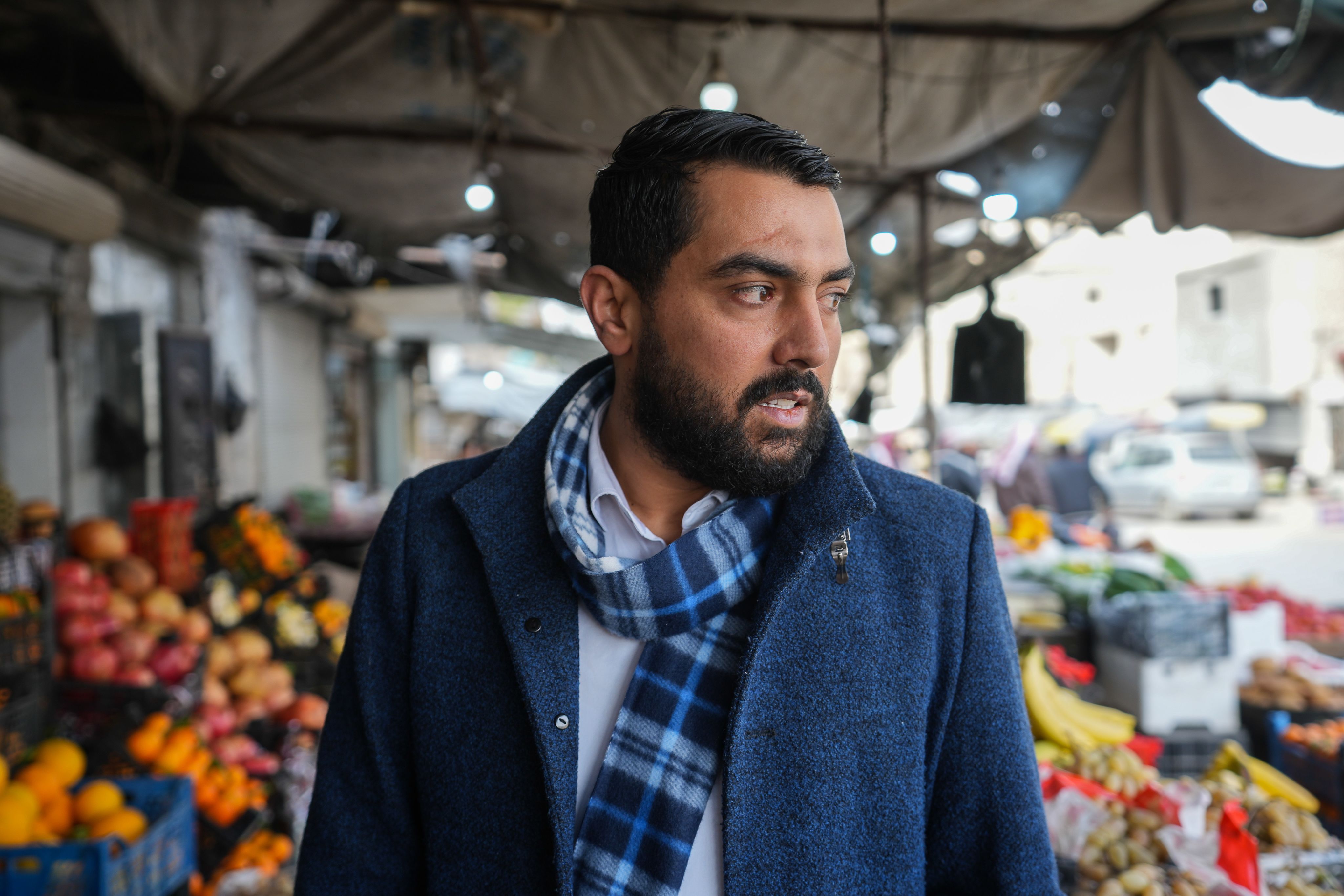
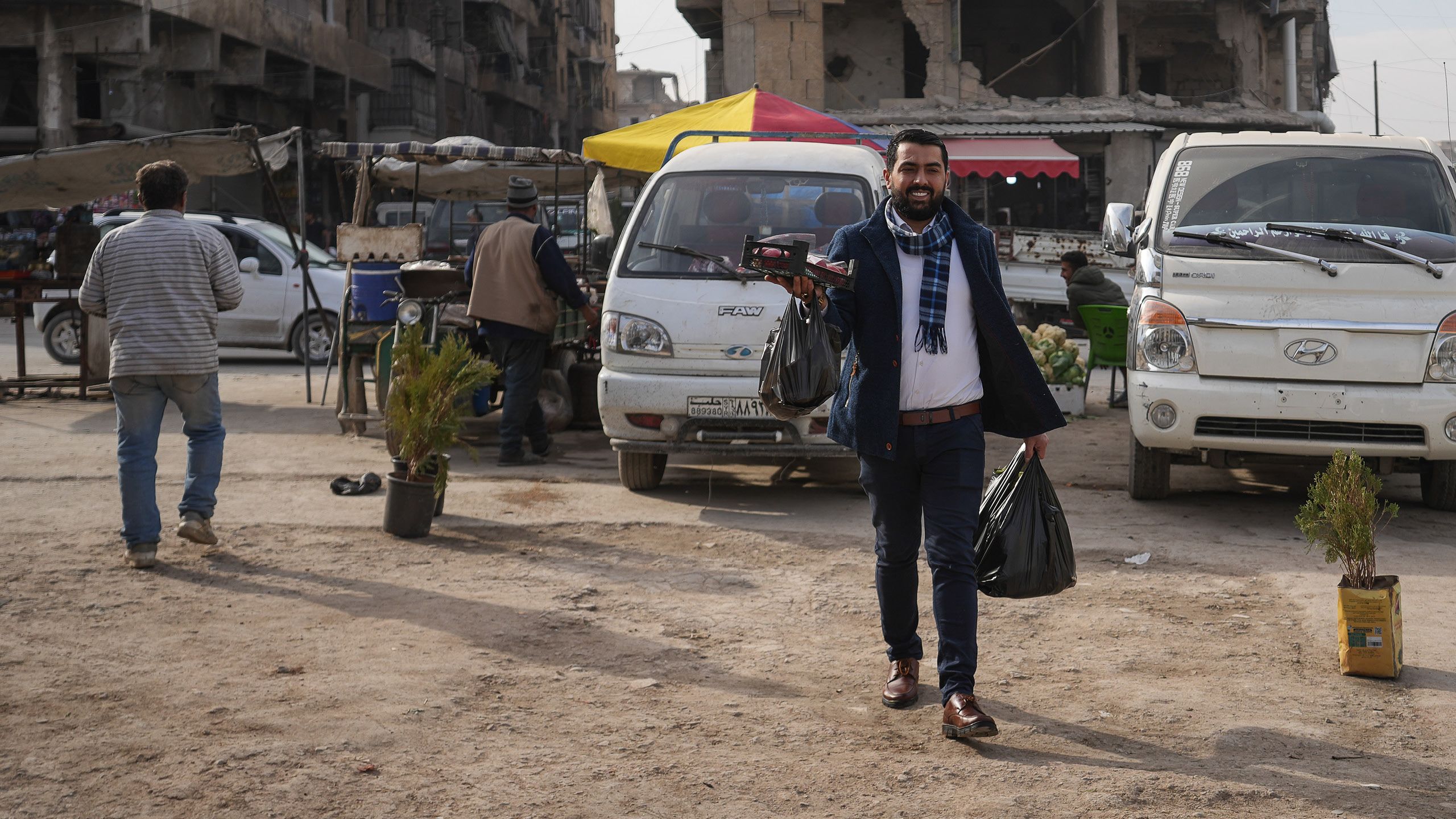
Emad Al Khalil walks through a market in the Halawaniyya area of Aleppo. Moawia Atrash for The National
Emad Al Khalil walks through a market in the Halawaniyya area of Aleppo. Moawia Atrash for The National
But life back home has had its ups and downs. Electricity supply has increased from initially just two to four hours a day to uninterrupted power this month. Authorities have removed the rubble from thousands of buildings damaged in the fighting and improved services such as rubbish collection, making Syria's second city and industrial capital a cleaner place to live, he said.
“You used to see rubbish tips surrounded by huge quantities of rubbish. That’s been gone for the past three or four months now,” he said.
But as in Turkey, prices have increased in Syria, making life in Aleppo about as expensive as across the border, Mr Al Khalil reckons. Although the family flats were not destroyed, he had to spend $6,000 on repairs to fix the damp, repaint, and install solar panels.
He can’t find work and has been living off their savings – of which only about a quarter remain. Mr Al Khalil had hoped to start a real estate development project in Aleppo but has struggled to attract investors.
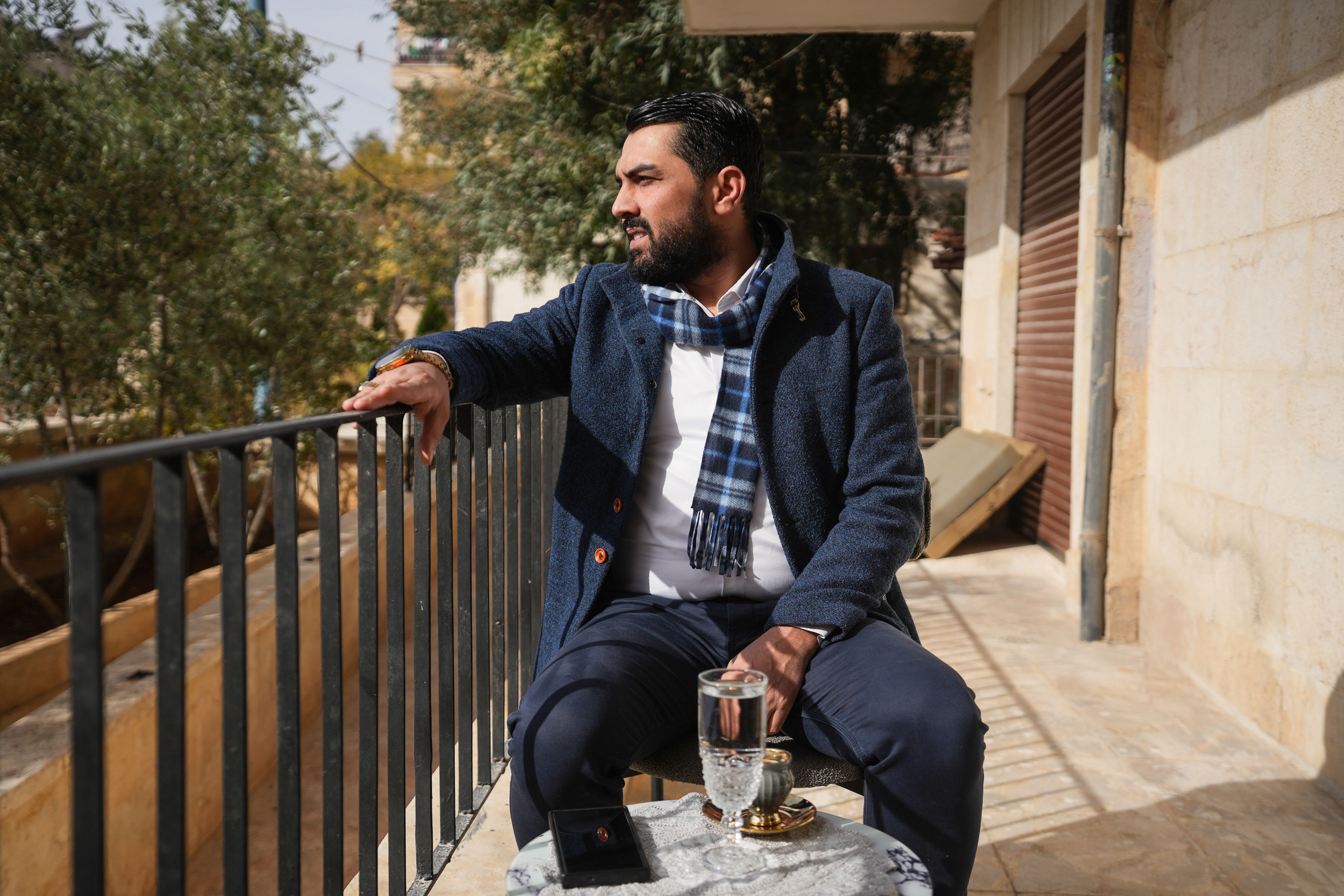
Mr Al Khalil at his home in Aleppo. The apartment was damaged during the war and needed repairs. Moawia Atrash for The National
Mr Al Khalil at his home in Aleppo. The apartment was damaged during the war and needed repairs. Moawia Atrash for The National
“All the governance is going really well. But the thing is that people are upset because of the living costs,” he said. “Aside from that, there is continuous progress.”
He is also concerned about limits on political participation – particularly for former detainees. Before fleeing Syria, Mr Al Khalil spent more than three years in jail, including in the notorious Sednaya Prison, where tens of thousands of people were killed, for taking part in protests, helping soldiers defect and "conspiring against the state". He has called for two or three MPs from a list of 70 politicians to be nominated to parliament by President Ahmad Al Shara, including two or three names from a group of former Sednaya prisoners, but said officials stifled the request.
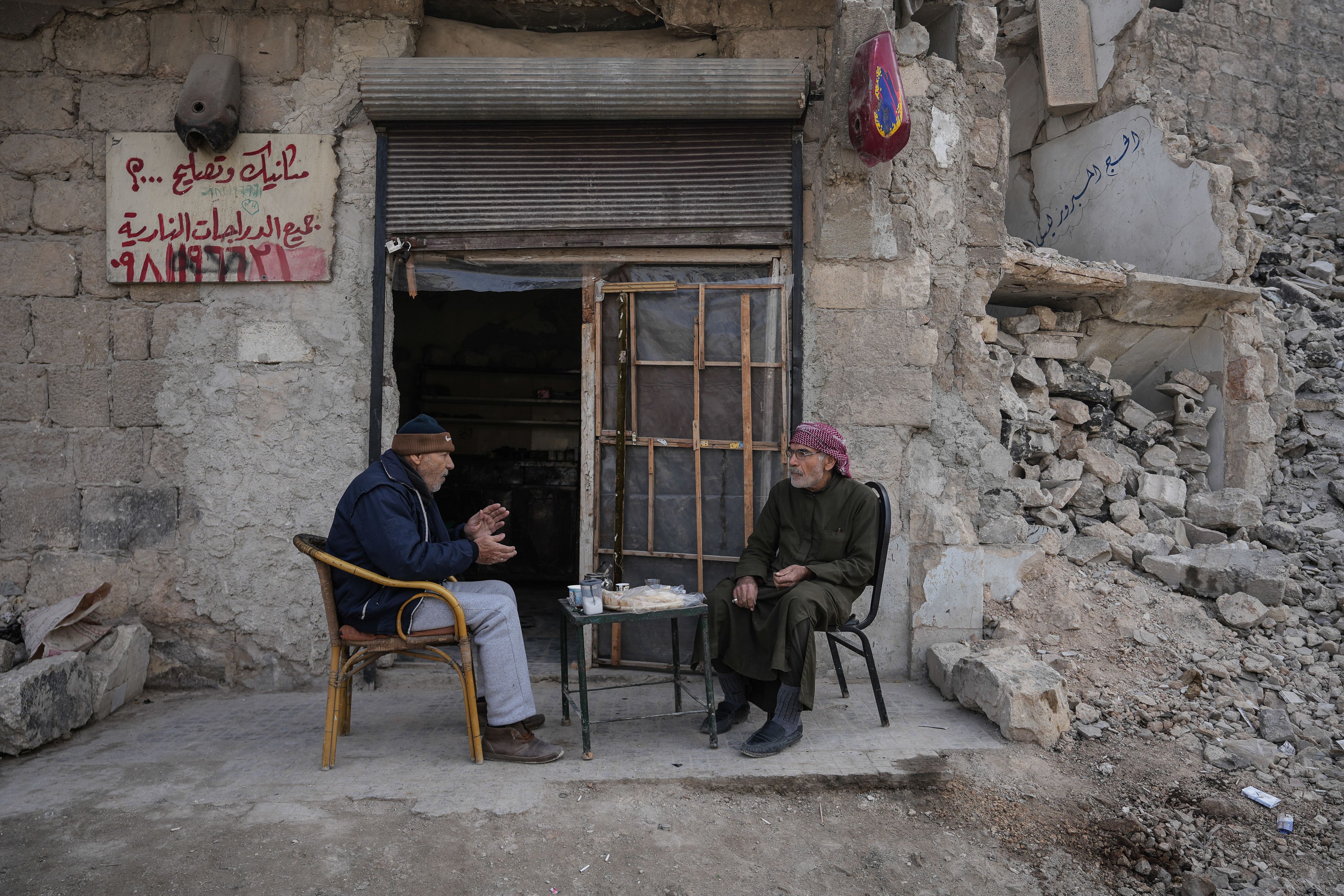
The Halawaniyya area of Aleppo is heavily damaged from years of war. Moawia Atrash for The National
The Halawaniyya area of Aleppo is heavily damaged from years of war. Moawia Atrash for The National
“We have been marginalised, excluded and alienated in a way we find really strange,” he said.
Moving to Syria was not without emotional difficulties as they had to leave behind the graves of 62 family members killed in the devastating earthquakes in 2023 and buried in Hatay province.
“It was really tough to come here from Turkey and leave the graves,” he said. “We left whole families buried there and we came here.”
The restaurateur who sees great potential for investment in the new Syria
British restaurateur Anas Zein wasn’t sure he’d be allowed back into Damascus in January, when he caught the third flight to Syria’s capital after the Assad regime’s collapse.
Armed with only his father’s Syrian ID card issued in 1974, and none of his own documents, he was told by a Syrian officer on landing that there were three red flags to his name.

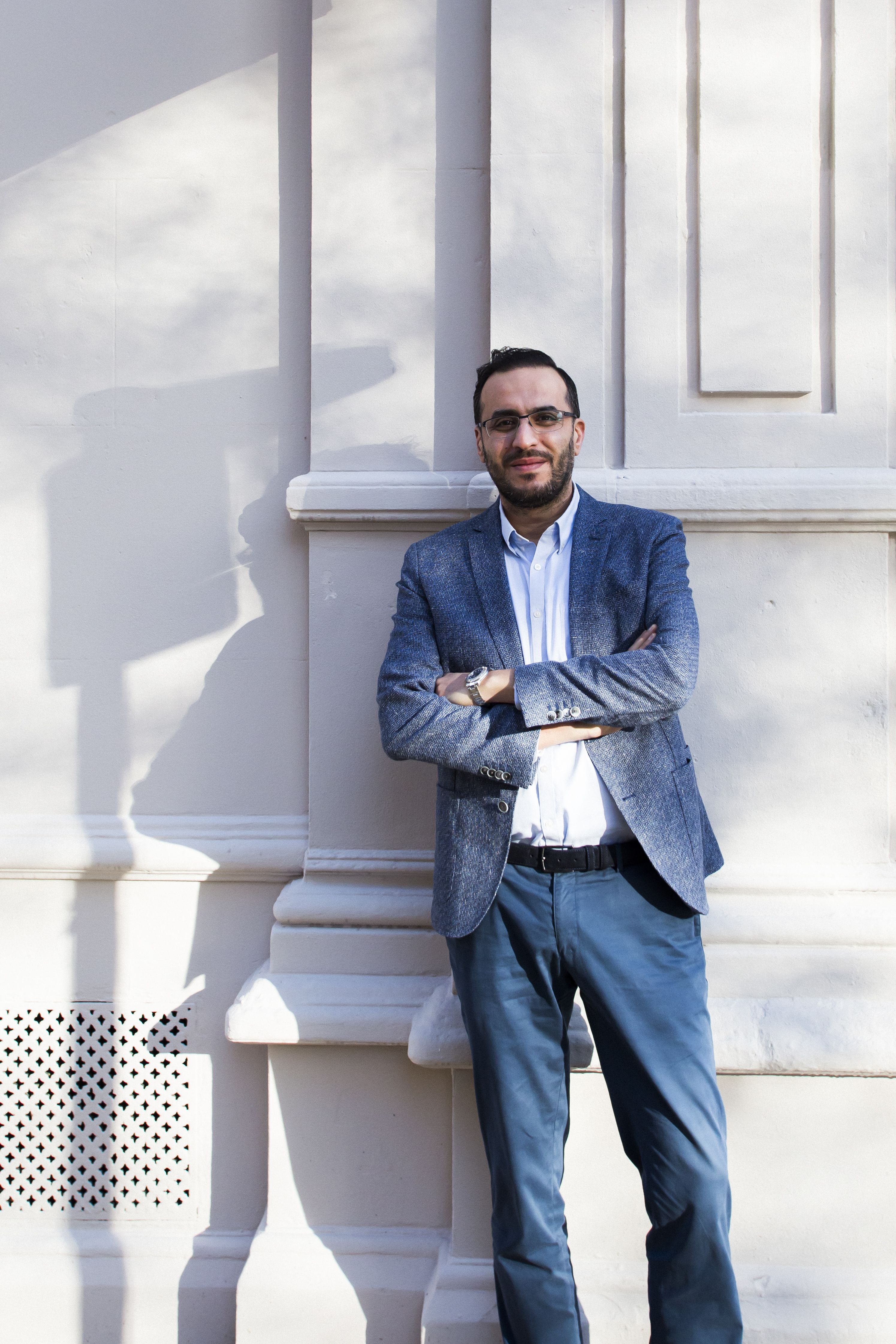
Anas Zein owns a Syrian restaurant in Birmingham. Rob Greig for The National
Anas Zein owns a Syrian restaurant in Birmingham. Rob Greig for The National
On his last attempt to enter in 2007, he was detained at the airport and interrogated for a week before being sent back to the UK. He hoped things would be different this time, now that the regime that drove his family out of Syria 40 years ago was gone.
“We’re going to turn [the flags] back to green,” the border officer laughed, letting Mr Zein through. The relief and euphoria of liberation from dictator Bashar Al Assad was palpable.
Mr Zein, 41, felt like he belonged to the country he was born in for the first time. “That was the most amazing feeling. The sense of identity that you suddenly feel,” he said.
Since then, he has been back to Damascus and his family’s hometown in the southern province of Deraa four times on extended trips. He wants to be part of the country’s recovery by doing what he does best: setting up businesses.
Using his father’s assets in Syria he bought a piece of land and is working out ways to invest in the country when international sanctions are lifted.
“I've waited 40 years to reconnect with Syria. What’s a better way to reconnect than to invest – so that it's not just words, you’re actually there investing in local communities, employment and the national economy … shaping its next chapter,” he said.

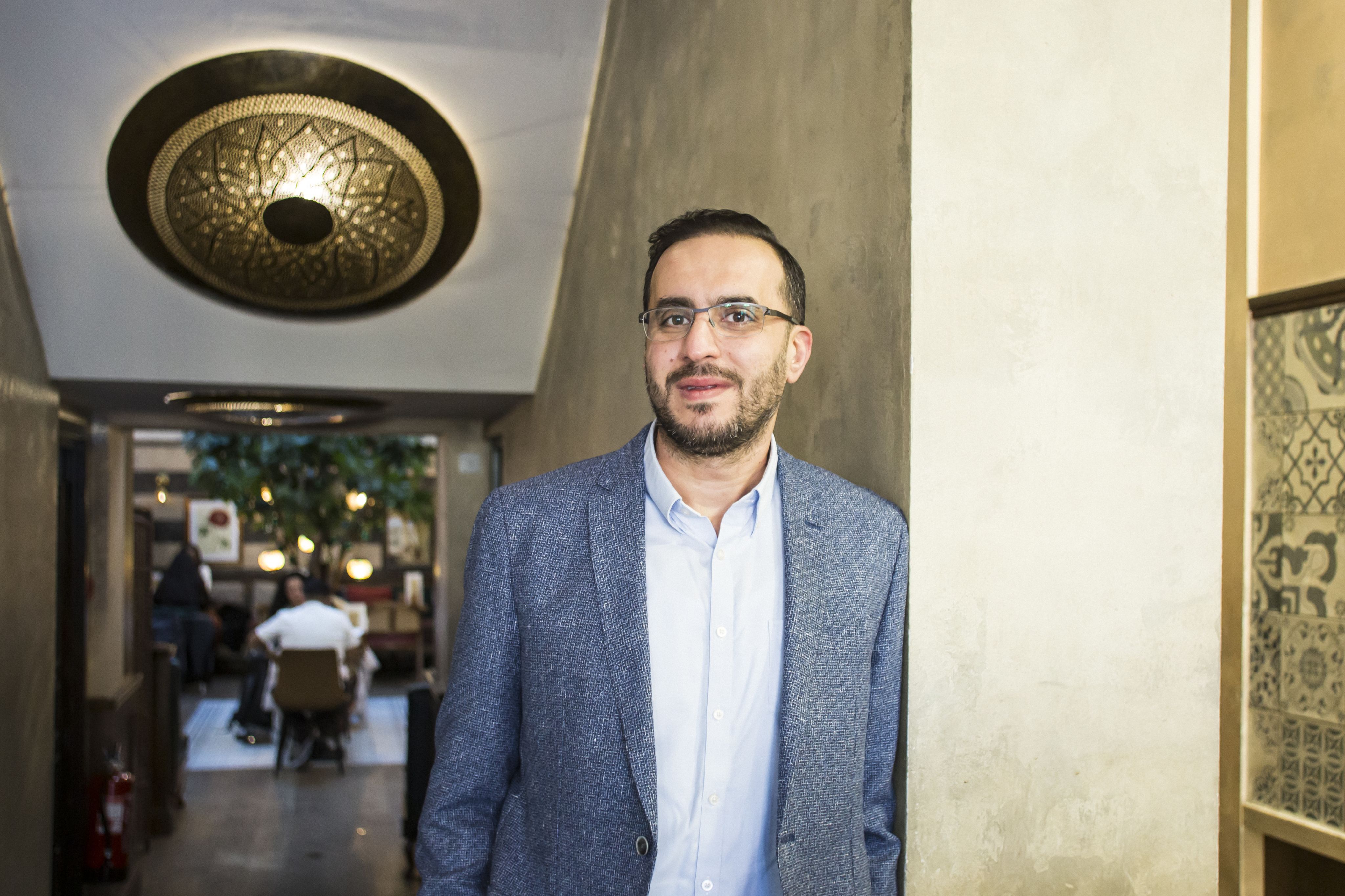
Mr Zein believes there are great opportunities for investment in Syria. Rob Greig for The National
Mr Zein believes there are great opportunities for investment in Syria. Rob Greig for The National
Birmingham-based Mr Zein runs a chain of restaurants, Damascena, which has six branches in the UK and Portugal, with another expected to open in Europe soon. He sold his first import-export business in 2011, while still in his 20s.
Among his new ideas is to set up high-quality dairy farms supplying milk across Syria. “I love milk, myself. I'm a heavy coffee drinker. But every time I had milk in Syria, I got ill,” he said.
Mr Zein can only start investing once the US Caesar Act sanctions are lifted and international banking with Syria resumes. Yet he has noticed people’s lives improving each time he returns. “I can see the economic revival. It's real,” he said.
But he is also aware of the risks and challenges. The peace that has reigned since Mr Al Assad’s departure is fragile, with bursts of sectarian violence. Israel’s continued air strikes in Syria in the name of protecting the Druze and destroying former regime sites also creates uncertainty that will deter development.

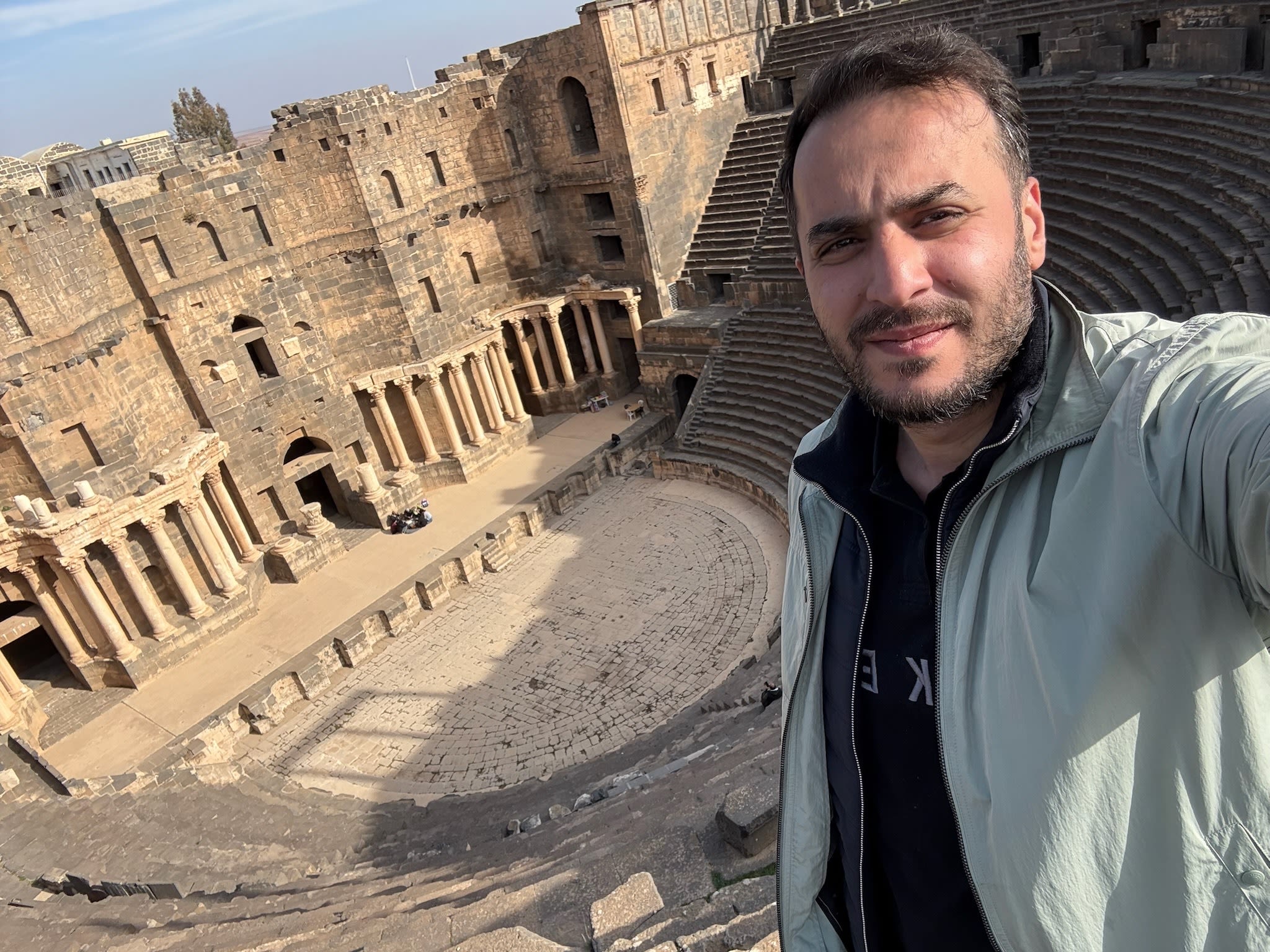
Anas Zein visits the Roman Theatre in Bosra, southern Syria, during one of his recent trips to the country
Anas Zein visits the Roman Theatre in Bosra, southern Syria, during one of his recent trips to the country
Mr Zein always felt a strong attachment for Syria but also “really hated” the country after being detained and turned away in 2007.
Now, he is more “more optimistic than anybody” about its future. “I have a country now. I have my identity back after 41 years. It's the most extraordinary feeling you can imagine. I can't really describe it,” he said.
Words Sunniva Rose, Lizzie Porter and Lemma Shehadi
Editor Juman Jarallah
Photo editor Scott Chasserot
Design Nick Donaldson



 Built with Shorthand