
Turkey wants its people to have more children but they either aren't convinced - or can't afford them
With the rising cost of living, limited childcare options and a general sense of insecurity, can Ankara's incentives to encourage larger families bear fruit?


Turkey wants its people to have more children but they either aren’t convinced – or can’t afford them
With the rising cost of living, limited childcare options and a general sense of insecurity, can Ankara’s incentives to encourage larger families bear fruit?


Baris Uzel, 49, feels like he is being chased by a bear. The father of three quit his job in the textiles industry earlier this year to open a small cafe in Tarlabasi, a poor district in central Istanbul. He hoped it would provide him with a better income to support his wife, three children and ailing father.
But he cannot escape the sharply rising cost of living.
“I saw this picture of a mountain biker, pedaling frantically, being chased by a bear,” Mr Uzel says, sitting in the bright cafe in a historic building that is painted dandelion yellow. “Right now, the expenses for the children, the rent, all our costs, are chasing us just like that bear. If we stop for a moment, it will bite us. That’s how we can summarise our struggle right now.”

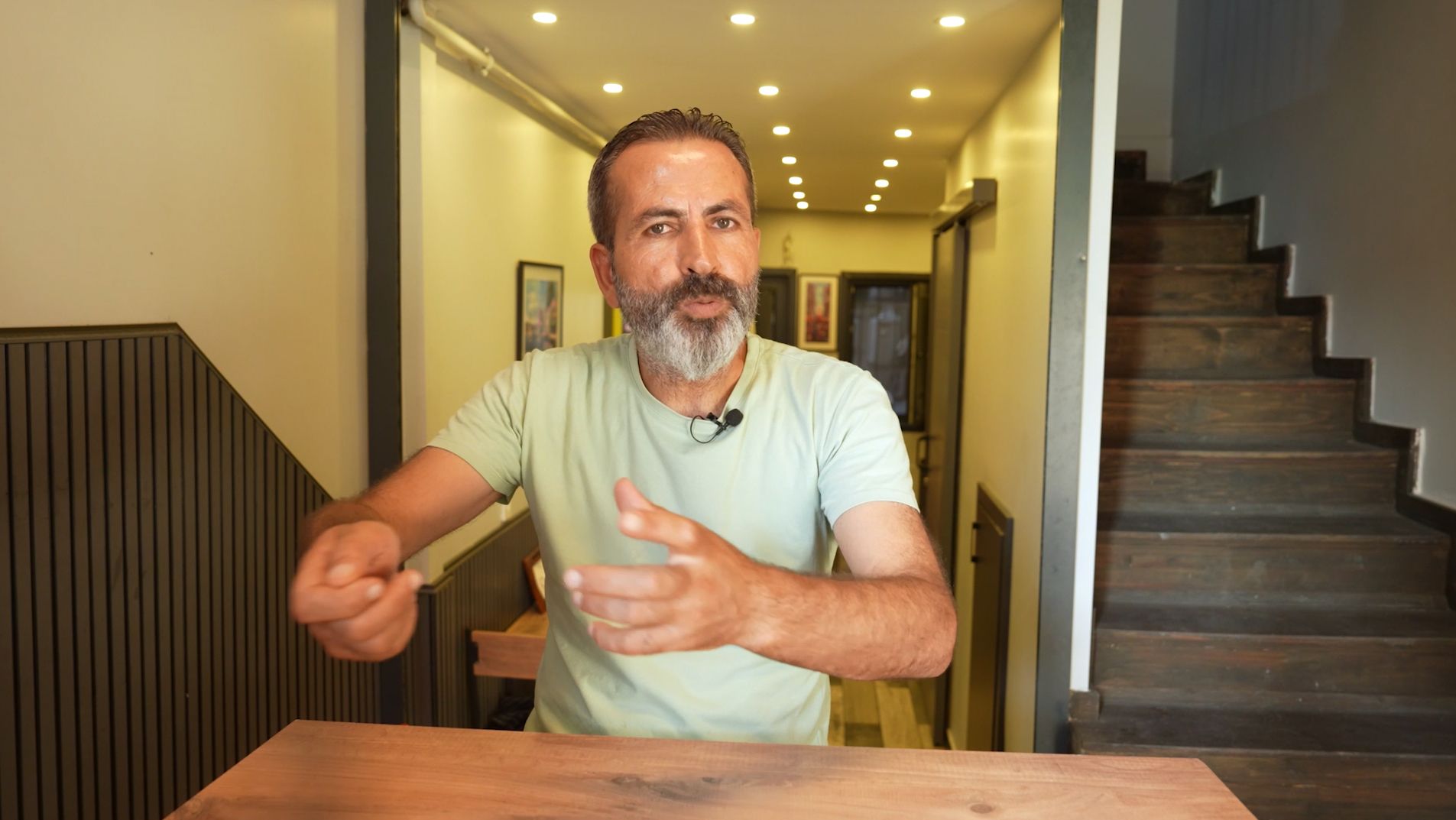
Baris Uzel in his cafe in Tarlabasi, Istanbul. Halil Taskin for The National
Baris Uzel in his cafe in Tarlabasi, Istanbul. Halil Taskin for The National
One of 12 siblings, Mr Uzel would, in theory, like more children. But financial realities mean more brothers or sisters for Mira, 13, Nasuh, who is 10, and Mirali, 8, are unlikely.
“We’re barely making it to the end of the month,” he says. “Sometimes, I even fall short. We borrow from friends and relatives to make ends meet.”
Walking the crowded streets of Istanbul, you’d be mistaken for thinking that Turkey has a booming population. In the thronging metropolis of nearly 16 million residents, pavements and ferry ports are packed. Children hang out of car windows, and play with the city’s many street cats. The din of humanity is everywhere.


Istiklal Street in Istanbul - a city with a population of nearly 16 million. Getty Images
Istiklal Street in Istanbul - a city with a population of nearly 16 million. Getty Images
But the numbers tell a different story. Turkey’s fertility rate - the average number of children a woman births in her lifetime - is in sharp decline. For the past eight years, it has dropped to less than 2.1 - the replacement rate at which a population is stable.
The trend is not unique to Turkey. In the Middle East, North Africa, Afghanistan and Pakistan, fertility rates have more than halved from 6.9 in 1960 to 3 in 2023, according to World Bank data. Around the globe, governments are enacting pro-natalist policies, such as providing child subsidies, improved maternity and paternity leave and providing one-time payments for parents for having a child - all out of fear of ageing populations and stunted economic growth. The trend is supported by right-wing politicians keen to promote what they see as traditional family values.
In recent years, Hungary’s conservative government has spent more than five per cent of its gross domestic product on policies aiming to boost the birth rate. In the US, the Trump administration has considered a $5,000 “baby bonus” to tempt Americans into having more children. Vice-president JD Vance has long been vocal about wanting to encourage the birth of more children.
He once said, “Our people aren’t having enough children to replace themselves. That should bother us.” This is remarkably similar to a statement from Turkish President Recep Tayyip Erdogan. He has long called on Turks to have at least three children, once calling women who reject motherhood "deficient" and "incomplete". He blames consumer culture and gender identity issues for putting people off marriage and parenthood.
“To put it bluntly, this situation is alarming. It is an existential threat to Turkey,” Mr Erdogan said earlier this year, referring to the decline in fertility rates. “We are once again seeing how important it is to call for at least three children at every opportunity.”


President Recep Tayyip Erdogan and his wife Emine attend a children's day celebration in Ankara in April 2025. Getty Images
President Recep Tayyip Erdogan and his wife Emine attend a children's day celebration in Ankara in April 2025. Getty Images
Even compared to the decreasing number of babies born in its neighbours, Turkey’s fertility decline is dramatic. Of the eight surrounding countries, only Iran’s fertility rate has decreased more sharply, per The National’s calculations using World Bank data. In 1990, the average Turkish woman had three children. By 2023, that figure had dropped to 1.5. There are large regional disparities: the fertility rate in Sanliurfa, a relatively poor province in south-eastern Turkey, is nearly three times that in the areas where women have fewest babies.
According to Turkey’s statistics agency, the population is likely to increase until 2050, before falling from the current level of 85 million to 77 million by 2100. But should rapid declines in the fertility rate accelerate, the population will drop by 30 million people in the next 75 years.
Bolstering baby numbers
In an effort to reverse the trend, the Turkish government has called 2025 the Year of the Family. Ankara has introduced a series of financial incentives to encourage couples to have children - and more of them. They include a one-off payment of 5,000 Turkish liras (about $125) for a couple’s first child, and 1,500 lira in child benefit every month for a second offspring until he or she reaches the age of five. The payments increase sharply to 5,000 lira a month for those having three or more babies.
The government is also cheering on marriage, which is seen as a prerequisite to starting a family in Turkey. It is offering an interest-free loan of up to 150,000 lira ($3,730) for young couples planning to wed. There are even discounts on white goods and furniture to help people set up home, and “psychological and social support”, according to the Family and Social Services Ministry.

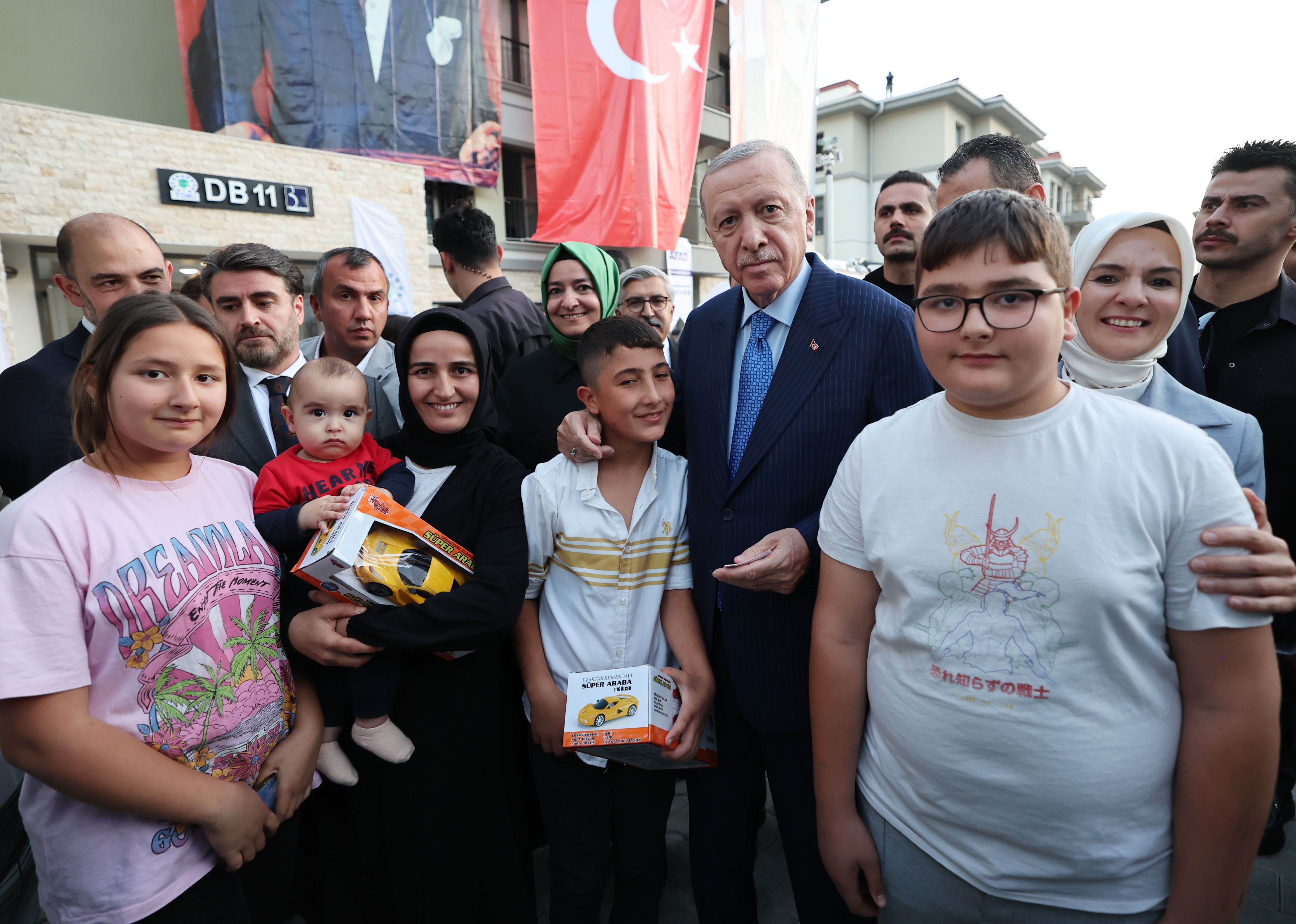
Mr Erdogan, and Minister of Family and Social Services Mahinur Ozdemir Goktas visit a family given a new home after their house was destroyed in an earthquake, in October 2024. Getty Images
Mr Erdogan, and Minister of Family and Social Services Mahinur Ozdemir Goktas visit a family given a new home after their house was destroyed in an earthquake, in October 2024. Getty Images
Proponents of the government's schemes frame childbirth as a national duty.
“Protecting and strengthening the family is our constitutional responsibility,” Minister of Family and Social Services Mahinur Ozdemir Goktas said earlier this year as she announced the incentives.
Some civil society organisations have welcomed the measures, especially the larger payments for three or more babies.
“We believe that the increased financial incentives for families with a third child carry strategic significance in terms of Turkey's long-term demographic goals,” Canan Sari, chairwoman of Kadem, a women’s rights organisation, tells The National. “We believe that such support can have a facilitating effect on families' decisions to have children.”

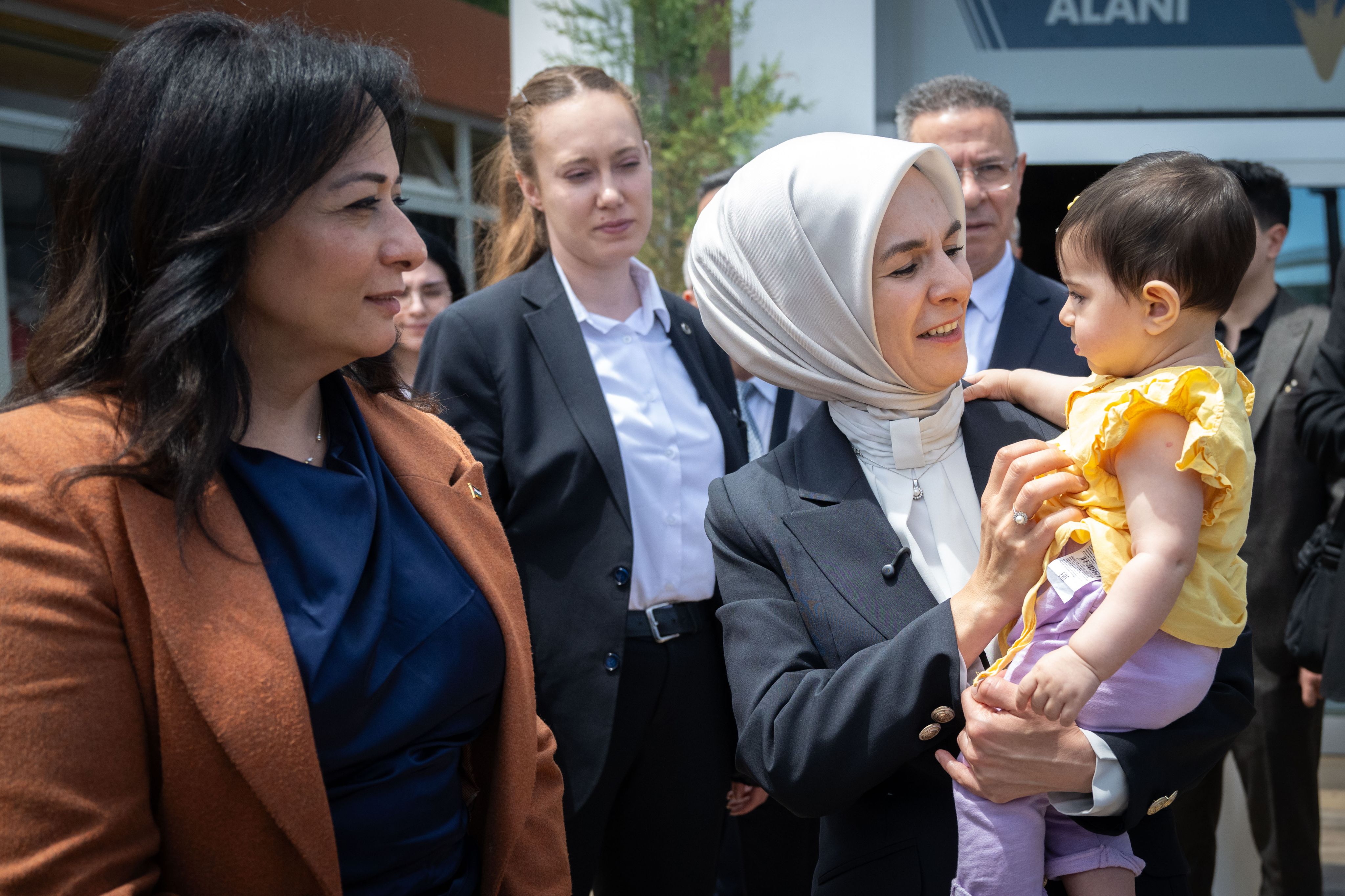
Turkish Minister of Family and Social Services Mahinur Ozdemir Goktas in May 2025. Getty Images
Turkish Minister of Family and Social Services Mahinur Ozdemir Goktas in May 2025. Getty Images
In late July, Ms Goktas said 1,750,000,000 lira ($43 million) had been paid out in the new child benefits to the bank accounts of more than 220,000 women. Tens of thousands of couples have so far benefited from marriage services and counselling, she added.
The ministry did not respond to requests for comment or interviews, or say how the benefits were being funded. The National also contacted officials and MPs from the ruling Justice and Development Party (AKP) but did not receive responses.
Money isn’t enough
To its critics, the scheme is limited, and does not address core reasons for couples choosing to have fewer, or no, children.
In an interview with The National, Aylin Nazliaka, Shadow Minister for Family and Social Services, described the financial incentives as “temporary and superficial” solutions.
“It is not that women do not want children; they do not want to have children without being able to build a stable life or secure a future,” says Ms Nazliaka, from Turkey’s main opposition party, the Republican People’s Party (CHP). “Having children is no longer seen as a right, but as a luxury.”

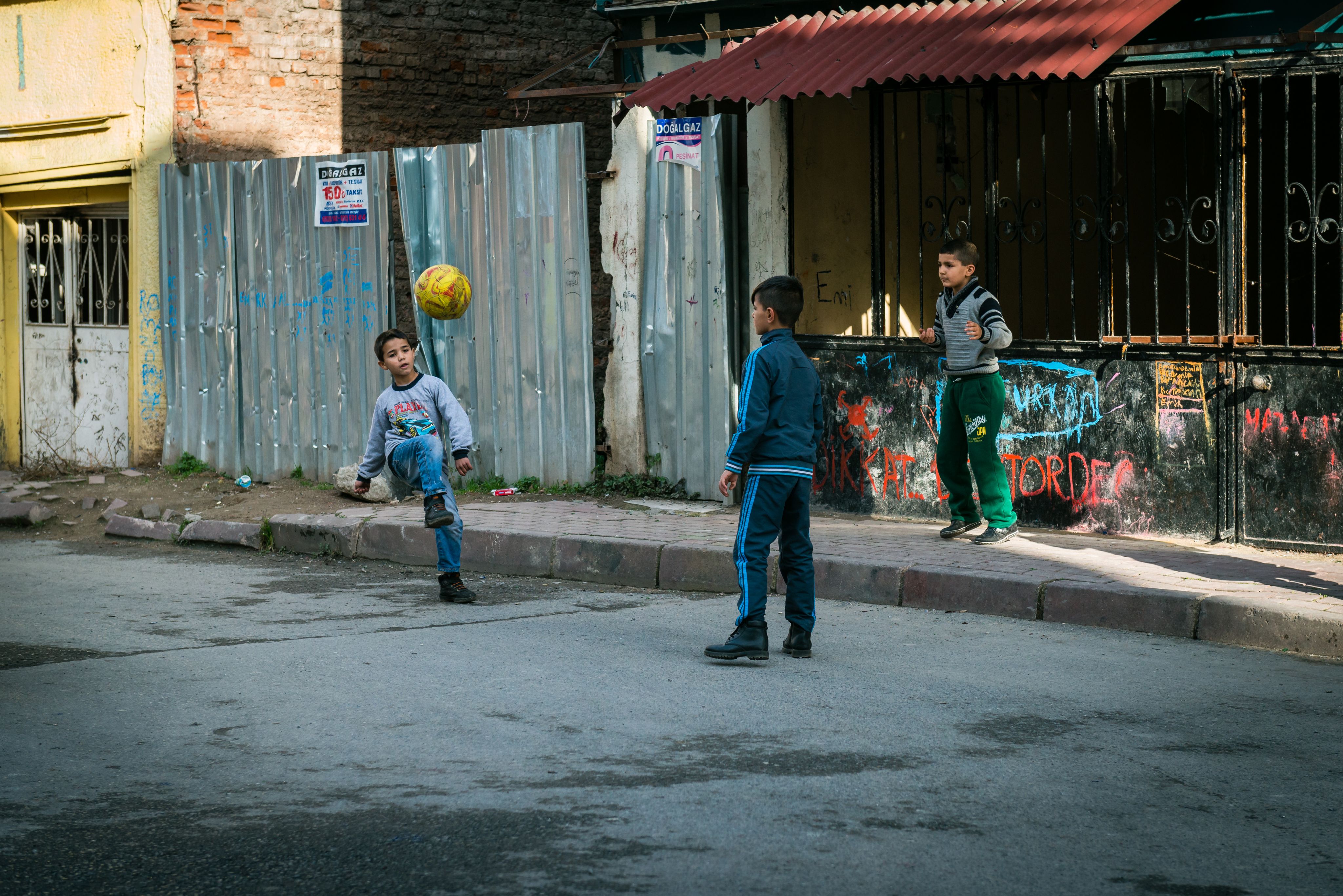
Children play in the streets of Istanbul. Getty Images
Children play in the streets of Istanbul. Getty Images
Similarly, the incentives only apply to new births from 2025, meaning that families struggling to provide for the children they have, like Baris and Zeynep Uzel, do not benefit. With inflation at 35 per cent, the amounts on offer are not enough to persuade them to have a fourth child.
“It's better than nothing, of course,” says Mr Uzel. “It's good, but it's insufficient.”
He also pointed out that some of the most expensive years of childhood are not covered by the scheme, which ends when a child reaches five.


Baris Uzel shows a photo of his family. He says he would like to have more children but cannot afford them. Halil Taskin for The National
Baris Uzel shows a photo of his family. He says he would like to have more children but cannot afford them. Halil Taskin for The National
“After the age of 5, the child wants a phone, a tablet, games, courses, education, and so on,” Mr Uzel adds. “They need clothes, and they look at their friends and say, ‘I want clothes, too,’ ‘I want shoes, too.’”
Research has long shown that financial incentives alone are not enough to encourage people to have more babies. In 2021, academics found that South Korea’s pro-natalist policies would have had to give out benefits 15 times greater than those distributed to bring the country’s fertility rate back to desired levels. Despite Hungary’s strict pro-natalist policies, the fertility rate has risen only 0.2 to 1.5 since 1999 - still far below replacement rate.
In the most deprived districts of Istanbul such as Tarlabasi, volunteer Mehmet Yeralan says families he helps with in-kind and cash donations struggle to feed their children.

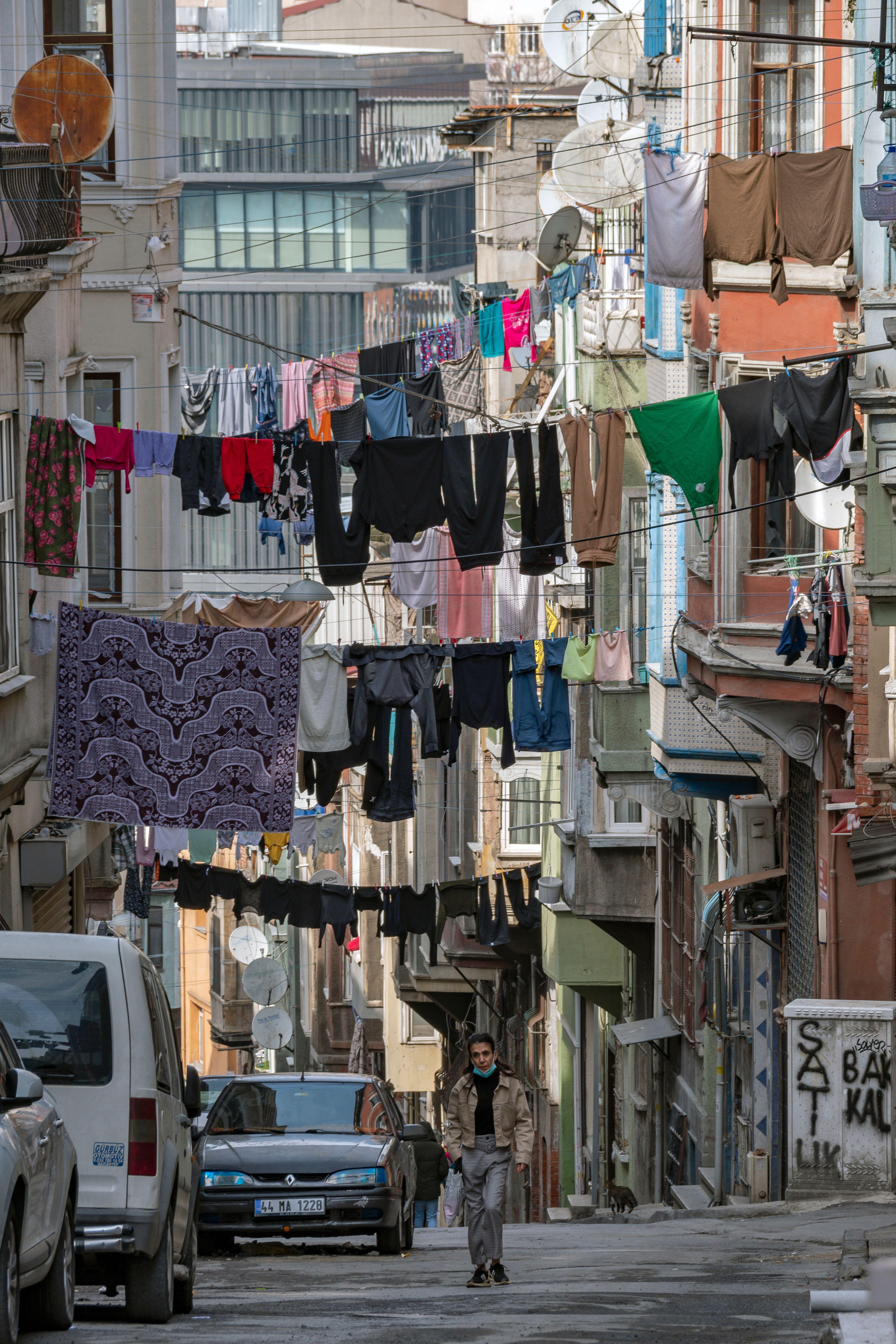
The streets of Tarlabasi, a lower income neighbourhood in Istanbul. Alamy
The streets of Tarlabasi, a lower income neighbourhood in Istanbul. Alamy
“My opinion is: we can’t even take care of the children we already have, and yet we’re asking people for more,” says Mr Yeralan, who says he is not affiliated to any political party.
Like many others interviewed by The National, he regards the monthly stipends as insufficient to encourage people to have more children. Turkey’s economic woes have been going on for years, squeezing quality of life and causing the cost of basics to soar. The situation would worsen, Mr Yeralan predicts, when schools return after the summer holidays and families would not be able to cover the costs of stationery, uniforms and food.
“A piece of cheese is 500 liras, olives are 400 to 500 liras,” he says. “You can’t even afford to feed your child breakfast and send them to school.”
Mr Yeralan began helping underprivileged families and migrant communities in Tarlabasi many years ago. Anecdotally, he says he has seen a rise in child labour in recent years as families’ economic troubles increase.
“I just can’t think positively,” he says. “There is no such thing as ‘the year of the family.’ Families have fallen apart.”
For Mihran, a 28-year-old from Istanbul with two children, the issues go beyond costs. She believes having children is harder for modern parents because they are growing up in a riskier world.
“For our children, it's not like it used to be in the past - you can't just leave them in the garden while you do your work at home,” she tells The National, as she gripped a buggy carrying one of her children. Like many voicing criticism of government policies in Turkey, she did not give her surname. “Now you have to constantly watch over them, protect them. There's all kinds of evil. In this situation, the financial support they provide doesn't help.”
Apartments are also not big enough to accommodate a family, she also believes. In cities like Istanbul, the housing stock is gradually being knocked down to make way for buildings that comply with modern earthquake regulations.


Children play in the residential neighbourhood of Balat, Istanbul. Getty Images
Children play in the residential neighbourhood of Balat, Istanbul. Getty Images
“I don't understand why the government allows [apartments] to be so small,” she says. “What is anyone going to do with a one-bedroom house? They tell people to get married, but then they build one-bedroom houses. This seems very absurd to me.”
Even organisations such as Kadem, whose trustees’ board is chaired by Sumeyye Erdogan, one of the Turkish president’s four children, believe that the government needs to introduce broader family-friendly policies beyond financial incentives. Measures could include more free or low-cost nurseries, extended paid paternity leave, and regulations to prevent employers penalising workers who choose to have children.

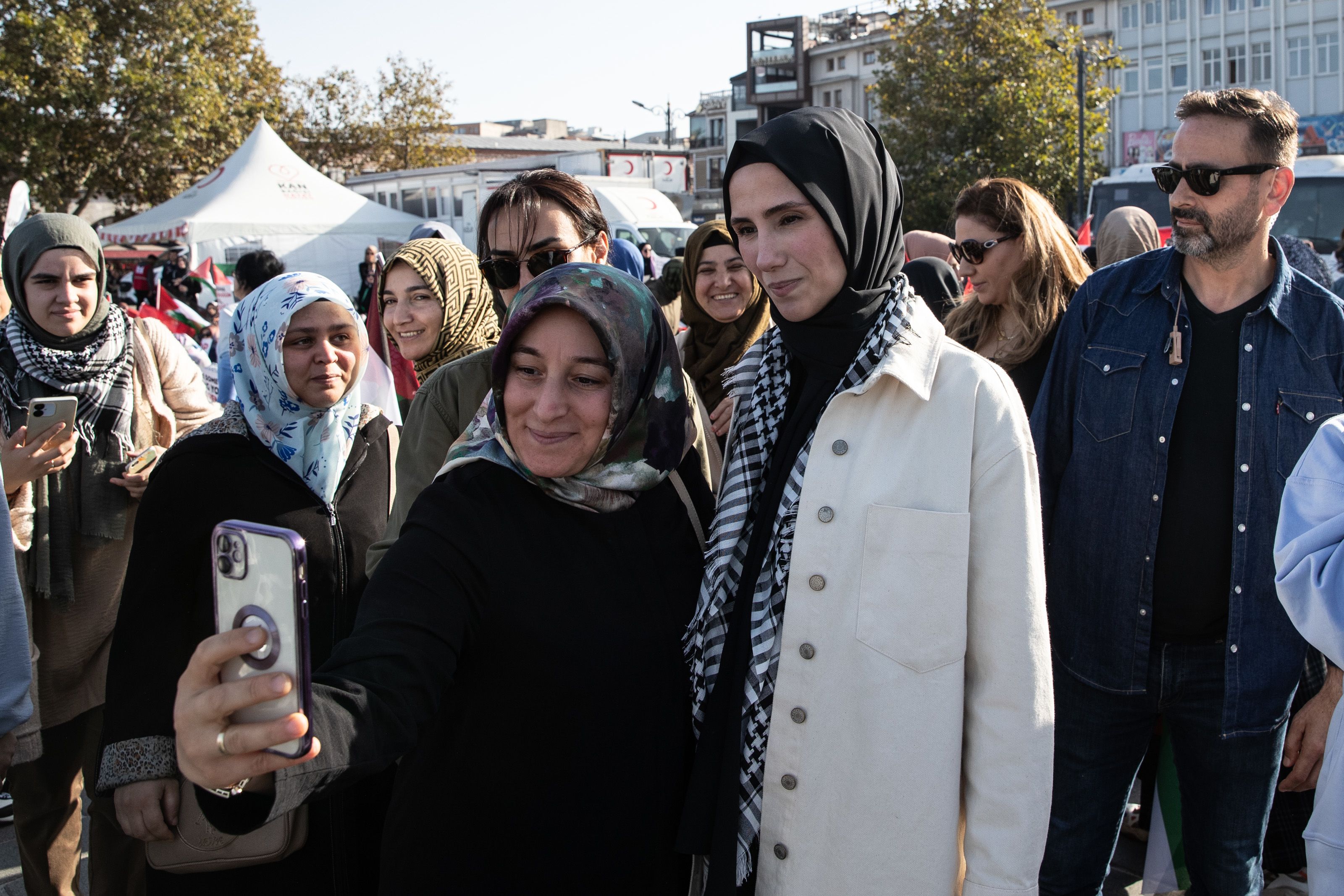
Sumeyye Erdogan is chairwoman of the board of trustees for Kadem - an organisation that says more family-friendly policies are needed to encourage citizens to have more children. Getty Images
Sumeyye Erdogan is chairwoman of the board of trustees for Kadem - an organisation that says more family-friendly policies are needed to encourage citizens to have more children. Getty Images
“We cannot define women solely by their role as mothers, nor can we determine their value based on whether or not they are mothers,” Dr Sari says. “What determines women's life choices are not social impositions, but rather their personal characteristics, free will, preferences, and consent.”
In July, the Turkish government introduced flexible working policies for state employees, offering both men and women the opportunity to work part-time until their child starts school. But working part-time means an employee’s salary will drop by 50 per cent, making the benefit less attractive.
The allowance risks stifling women’s professional development further because childcare is still seen as women’s work in Turkey, says Ms Nazilaka.
“The family member who will work part-time will mostly be women,” she tells The National. “As a result, women will be deprived of economic security, social life, and professional development.”
Beyond practical issues discouraging childbirth, critics voice concerns about the pro-natalist programme. They believe it is tied up with policies and positions that reinforce traditional gender roles, tied up in conservative frameworks.

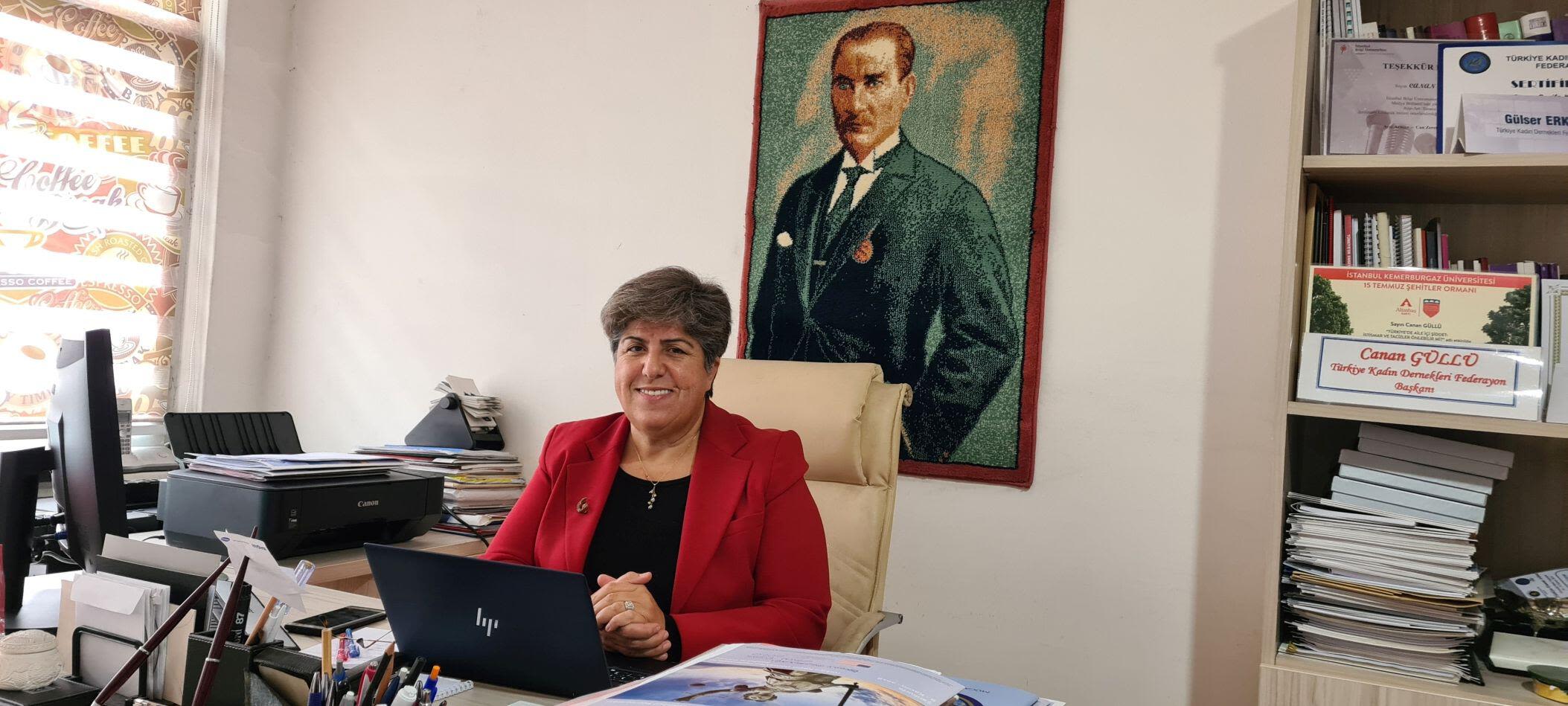
Canan Gullu, President of the Federation of Women Associations of Turkey, believes the push for birth rates to increase infringes on women's personal freedoms. Alamy
Canan Gullu, President of the Federation of Women Associations of Turkey, believes the push for birth rates to increase infringes on women's personal freedoms. Alamy
“The issue is worldwide, with conservative rights groups becoming closer to the governments and making sudden decisions without involving any other parties, and making decisions about women,” Canan Gullu, president of the Federation of Women Associations of Turkey, tells The National. “This is happening, not only in Turkey or in America, but also in Europe and Russia, to diminish women's rights.”
Personal freedoms and women’s rights
Many take umbrage at the state dictating over how many children a woman should bear, and want to be able to determine how to live their lives, with or without children.
For Melina, a 43-year-old mother of one, she sees parenthood as, “entirely an individual’s choice”. While some of her friends and relatives have three children, she decided she did not want any more.


Melina, a mother of one, believes some Turkish citizens may not wish to have children because they're disappointed in their country. Halil Taskin for The National
Melina, a mother of one, believes some Turkish citizens may not wish to have children because they're disappointed in their country. Halil Taskin for The National
Some Turks feel disheartened at the state of their country and global instability, dissuading them from starting a family, she believes. In the past two decades, Turkey has in some ways developed vastly. Infrastructure has improved, more people are going to university, and life expectancy has crept up to 77 (the UAE’s is 83 and the USA’s is 79, per UN data). Despite economic turmoil, national output has grown to $1.3 trillion, making Turkey one of the world’s 20 largest economies.
But human rights observers have warned of the erosion of civil and political freedoms, and creeping authoritarianism. Overall, many want a society where they know there will be stability for their children, should they choose to have them.
“They don't feel safe enough in the country for that [parenthood],” Melina adds. “I think people are discouraged, especially those in their 20s and 30s who are trying to build their new lives right now, because they're deeply disappointed with the country.”
Conscious of the huge responsibilities of raising children, some young people are open to the prospect. But they feel uncertain as to whether their future circumstances will allow it.
“It depends a lot on my ability to provide for them - on my financial circumstances, on my lifestyle,” says Şule, a 22-year-old resident of Istanbul, as she stood by a ferry pier on the city’s Asian shore in the upper-class Kadikoy district. “So, I can't figure out what I should do.”
Some go further, accusing the government of focusing on childbirths while failing to address women’s rights more widely. While women’s access to education and jobs has increased in Turkey, the number of women in the workforce still lags far behind men.
Ms Gullu, of the Women Associations of Turkey Federation, sees domestic abuse, early marriages and femicides as issues that the government needs to tackle before encouraging more babies. Last year, campaigners recorded 394 femicides, in which women were often killed by male relatives, or their current or former partners. Mr Erdogan - whose government condemns such murders - has blamed domestic abuse on alcohol addiction. Meanwhile, campaign groups cite economic difficulties and lax implementation of laws protecting girls and women.

A demonstration against femicide and domestic violence, in Istanbul in August 2020. Reuters
A demonstration against femicide and domestic violence, in Istanbul in August 2020. Reuters
Ms Gullu is also calling for better child care networks, and, because women are in the main responsible for looking after older relatives, more support for the elderly.
“After all these problems are solved,” she says, “then they can declare a year of the family.”
Mr Uzel believes the focus needs to be on raising well-rounded children, who can contribute meaningfully to society. He wants to replace the bear with a boomerang, and believes that investing in individuals who will make good citizens will pay dividends.
“If the government throws kindness to its citizens today, it will see it,” he says. But if it gives a little and then stops, tomorrow there will be trouble.”
Words Lizzie Porter
Editor Juman Jarallah
Data Fadah Jassem and Isaac Arroyo
Photo editor Jake Badger
Video Diyab Basheer
Design Nick Donaldson
Sub editor Alan McCrorie
*Additional reporting by Halil Taskin



 Built with Shorthand