
From desert beginnings to missile defence: the rise of the UAE Armed Forces
The 1976 unification created a military that has since expanded in scale, capability and commitment to humanitarian missions
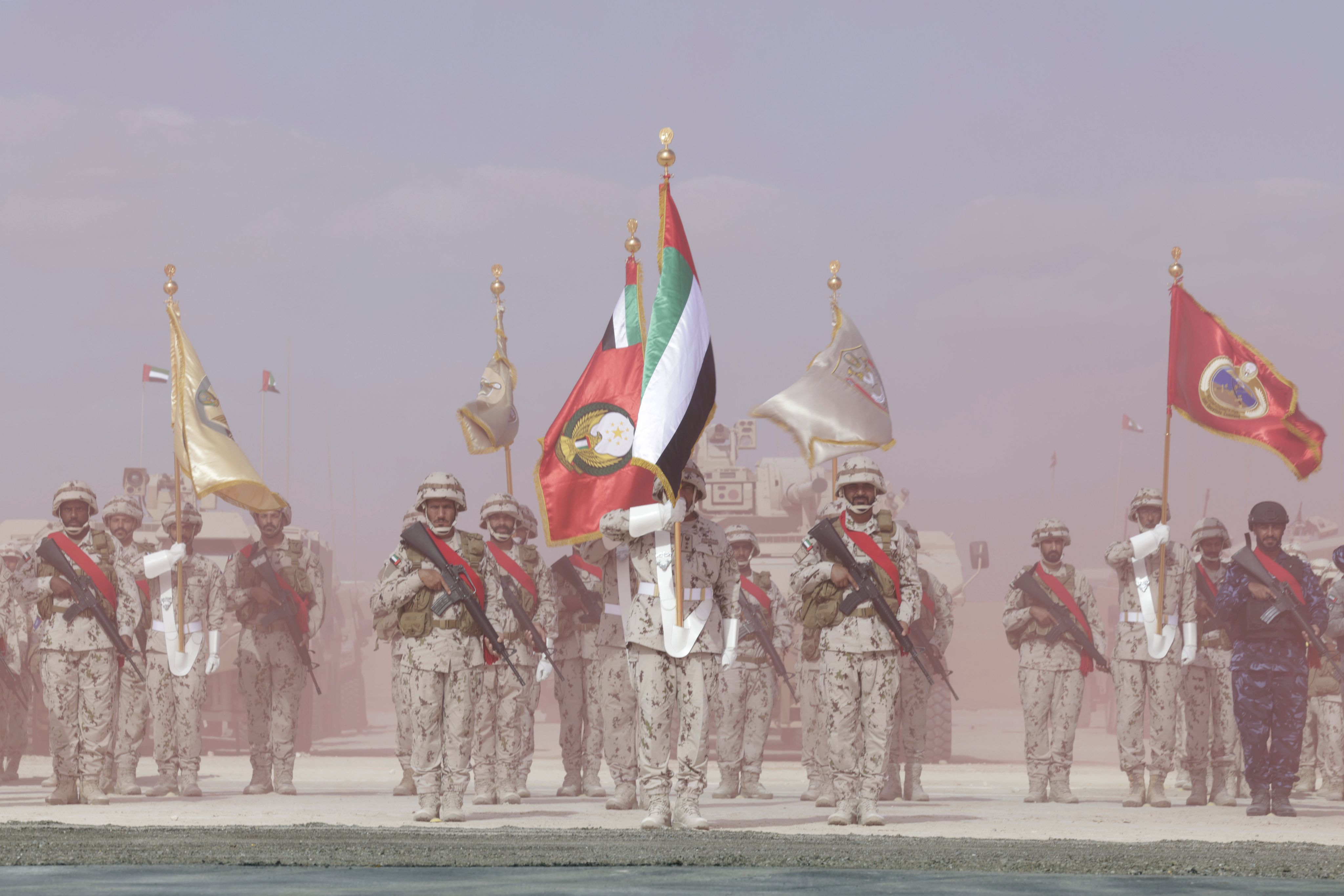

It was on February 28 this year that the UAE Armed Forces faced one of its most serious tests. In response to Iranian missile and drone attacks, the UAE activated its air defence systems as hostile projectiles entered its airspace.
The threat was severe. But Emirati defences intercepted attack after attack, underscoring how the UAE Armed Forces has become one of the most capable Arab military.
Hard to believe, then, that when the UAE was formed on December 2, 1971, a unified army did not exist. Several years later, the country was able to field a fleet of supersonic air defence aircraft and ground-based air defence guns.

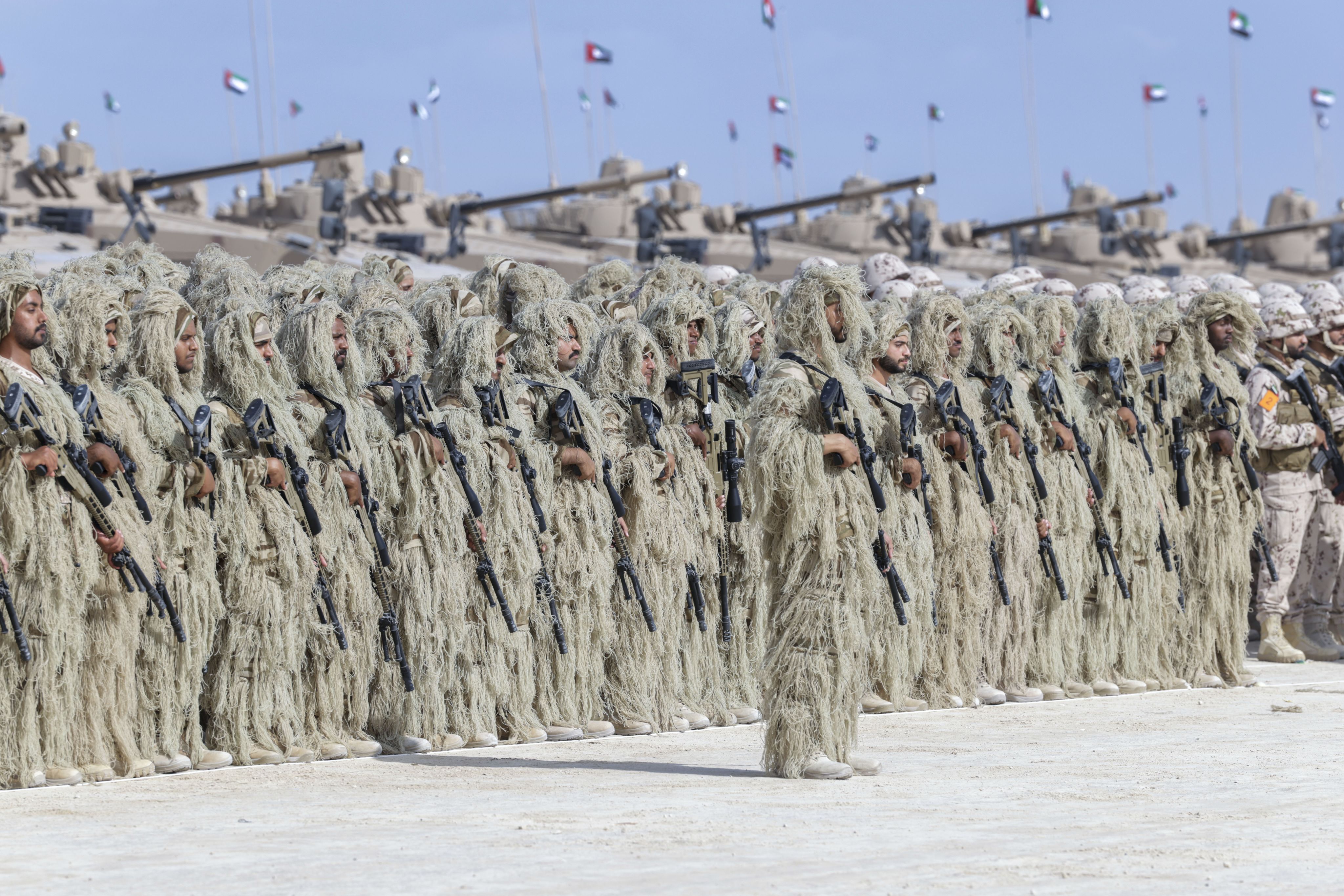
A ceremony marking 10 years since the introduction of national service in Al Sameeh, Abu Dhabi, in December 2024. Wam
A ceremony marking 10 years since the introduction of national service in Al Sameeh, Abu Dhabi, in December 2024. Wam
Today, the UAE Armed Forces marks 50 years since its unification, a milestone officials say reflects decades of strategic vision and military development.
The anniversary is “not merely a celebration, but a symbol of strength and unity", Col Staff Maya Al Mazrouei, spokeswoman for the Ministry of Defence, exclusively told The National.

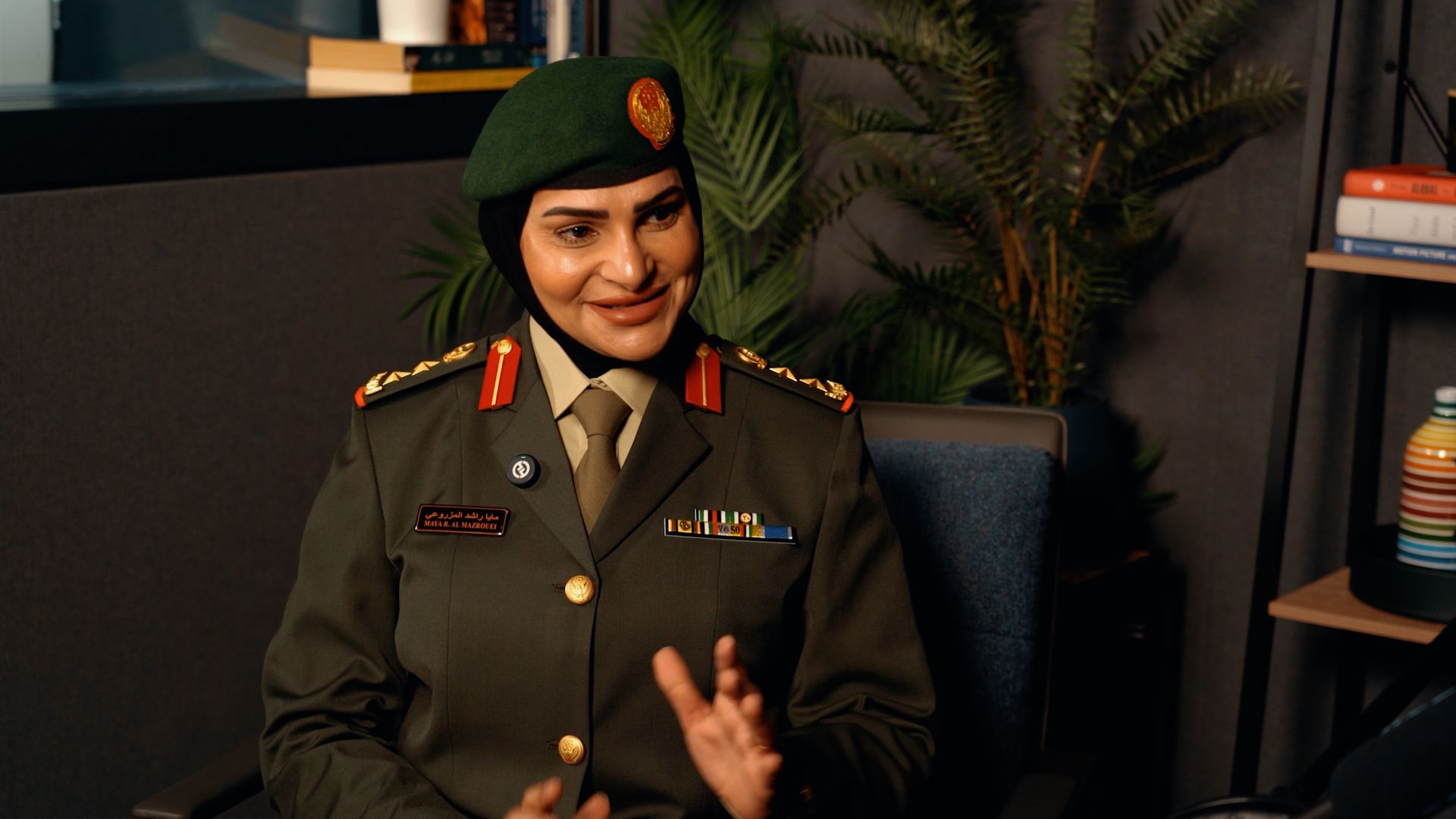
Col Staff Maya Al Mazrouei, spokeswoman for the UAE Armed Forces. Wajod Khamis / The National
Col Staff Maya Al Mazrouei, spokeswoman for the UAE Armed Forces. Wajod Khamis / The National
“It is a symbol of the power of the Union, which has made the UAE a global model to be emulated in security, stability and development,” she said.
Fragmented forces form a unified command

To go from creating a country to unifying the army and fielding such aircraft in a matter of years was a major achievement.
“Probably no other country in the world has done this,” Dr Athol Yates, co-author of The Military and Police Forces of the Gulf States Volume 1: Trucial States and United Arab Emirates, 1951 to 1980, told The National in 2019. “Especially while it was transitioning to full independence.”
Col Al Mazrouei said of the milestone: “[It] was a historic decision that reflected the vision of the [UAE] Founding Father, the late Sheikh Zayed bin Sultan Al Nahyan, who laid the foundations for building a unified and advanced military force.”

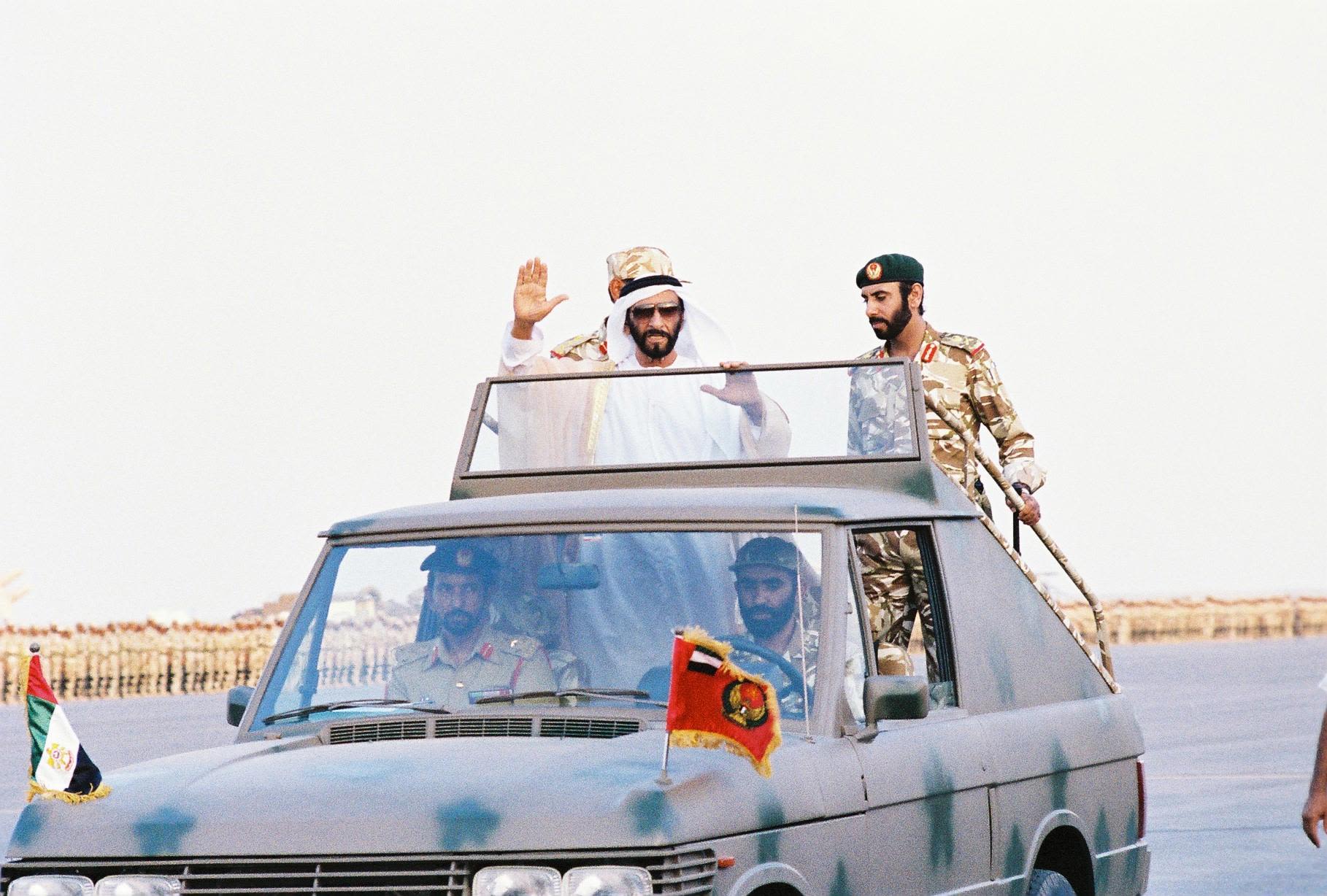
Sheikh Zayed inspects the UAE Armed Forces before they were sent to Kuwait to help defend against the Iraqi invasion in 1990. Photo: Alittihad
Sheikh Zayed inspects the UAE Armed Forces before they were sent to Kuwait to help defend against the Iraqi invasion in 1990. Photo: Alittihad
Over the past five decades, the Armed Forces have undergone “qualitative and comprehensive development at all levels”, she said.
At the heart of the UAE Armed Forces is its investment in people. From initial rigorous selection to continuous training, “the human element is the cornerstone of success in any defence mission", said Col Al Mazrouei.
Training programmes have helped prepare “highly qualified professional cadres capable of operating in all operational environments”, with the UAE now “reaping the results” through well-trained national personnel.

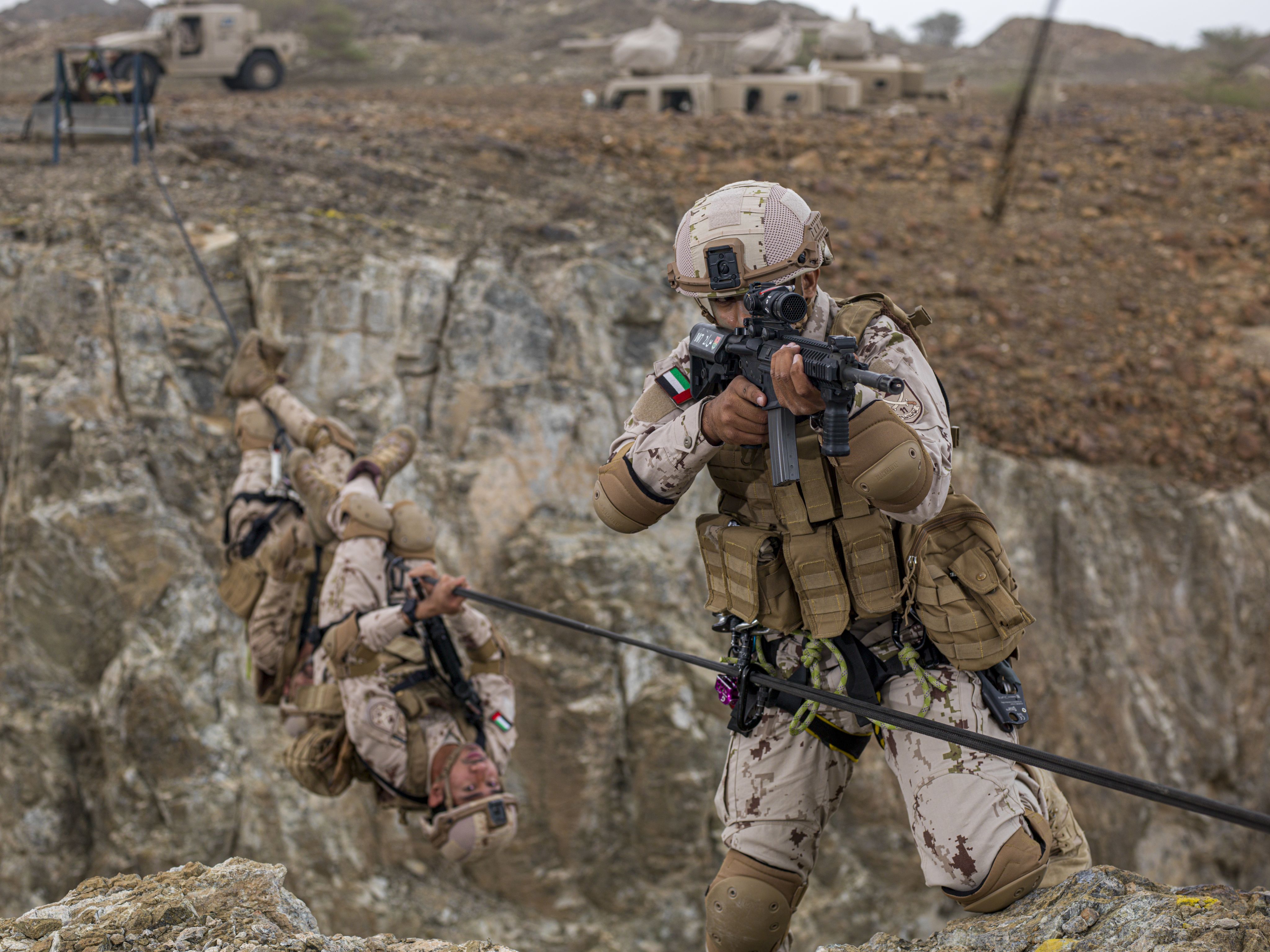
Members of the UAE Armed Forces participate in a mountain training exercise in 2022. Photo: Ministry of Defence
Members of the UAE Armed Forces participate in a mountain training exercise in 2022. Photo: Ministry of Defence
“At the level of human resources, there has been genuine investment in national talent, as it is considered a fundamental pillar in the success of any defence system,” she said.
This includes women, whose role in the military has only grown since the early 1990s. Col Al Mazrouei described this as “one of the most prominent success stories”.
“Empowering women reflects the leadership’s vision of investing in national talent,” she said.
“This transformation was not a coincidence, but the result of a clear national vision, supported by leadership and the continued encouragement of the Mother of the Nation, Sheikha Fatima bint Mubarak.”

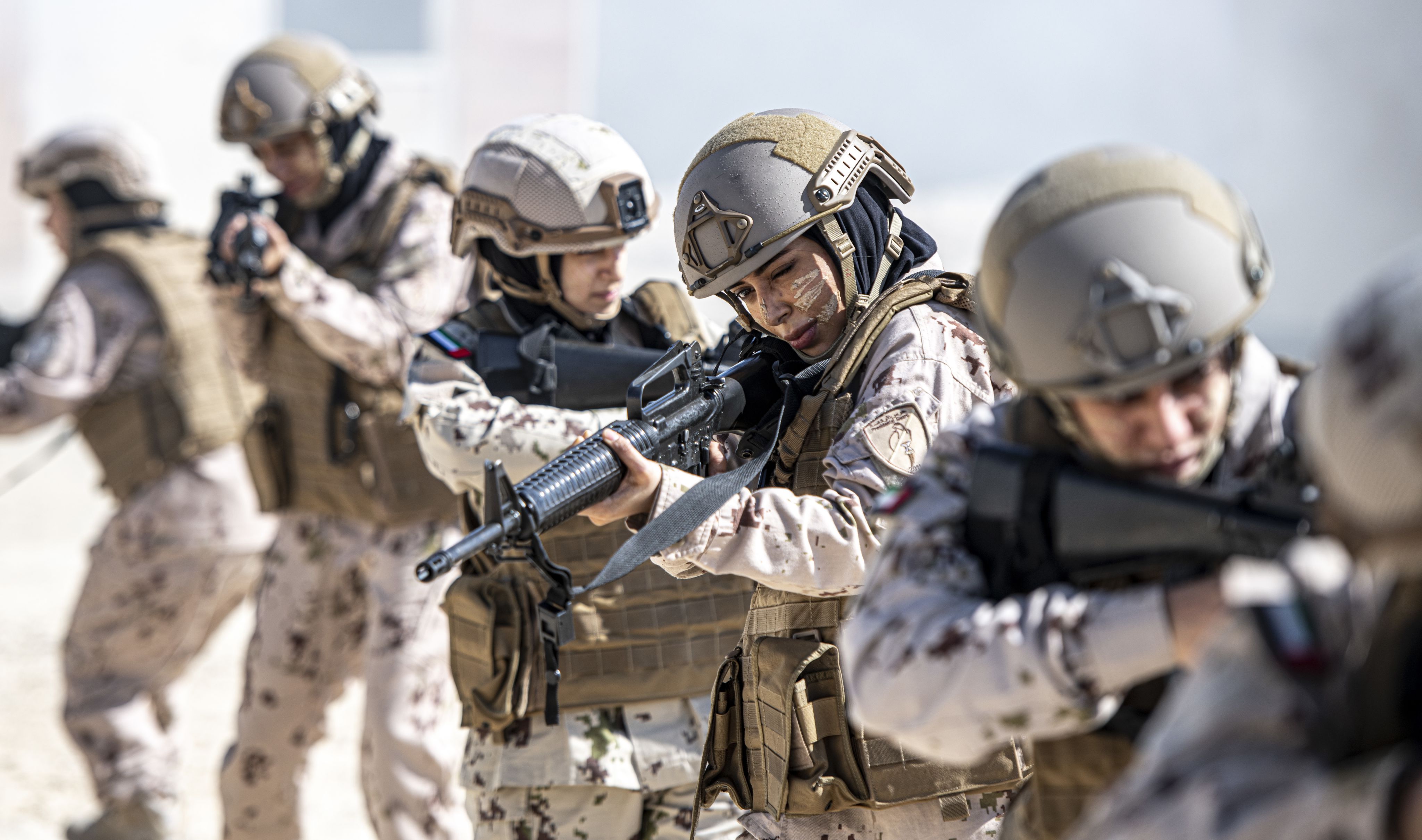
Female recruits undergo military training. Photo: Ministry of Defence
Female recruits undergo military training. Photo: Ministry of Defence
Women are contributing in advanced areas shaped by technological change.
“Female personnel are playing an active role in enhancing military capabilities, particularly in light of rapid transformations in operational environments,” she said. “Modern operations now rely heavily on advanced technologies, smart systems, and artificial intelligence.”
The military has also invested in its arsenal.
“At the level of the defence system itself, the Armed Forces have seen remarkable progress in armament and equipment, in line with the highest international standards,” said Col Al Mazrouei.

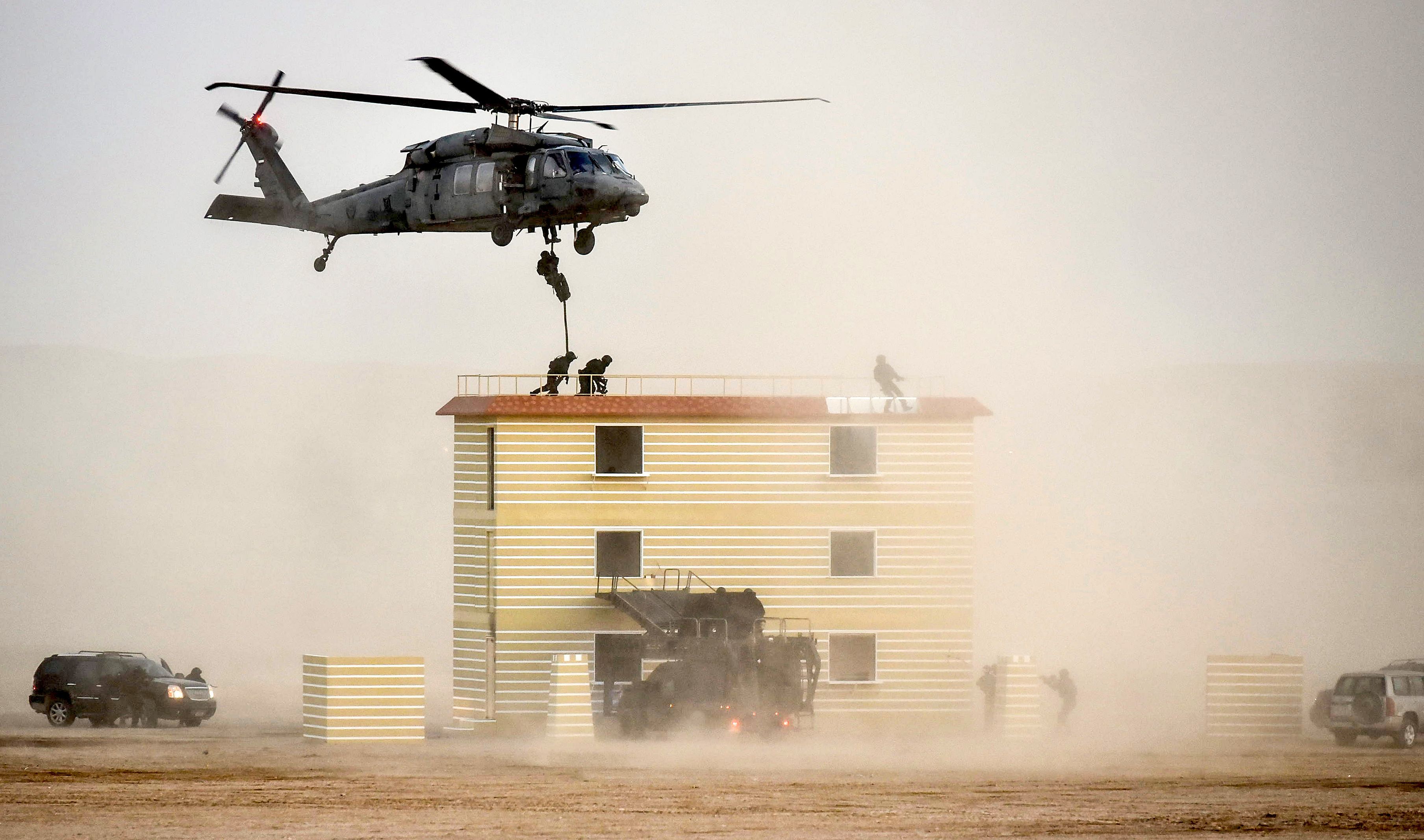
UAE Armed Forces take part in a military parade in Al Ain in December 2018. Wam
UAE Armed Forces take part in a military parade in Al Ain in December 2018. Wam
From desert settlements to modern defence power

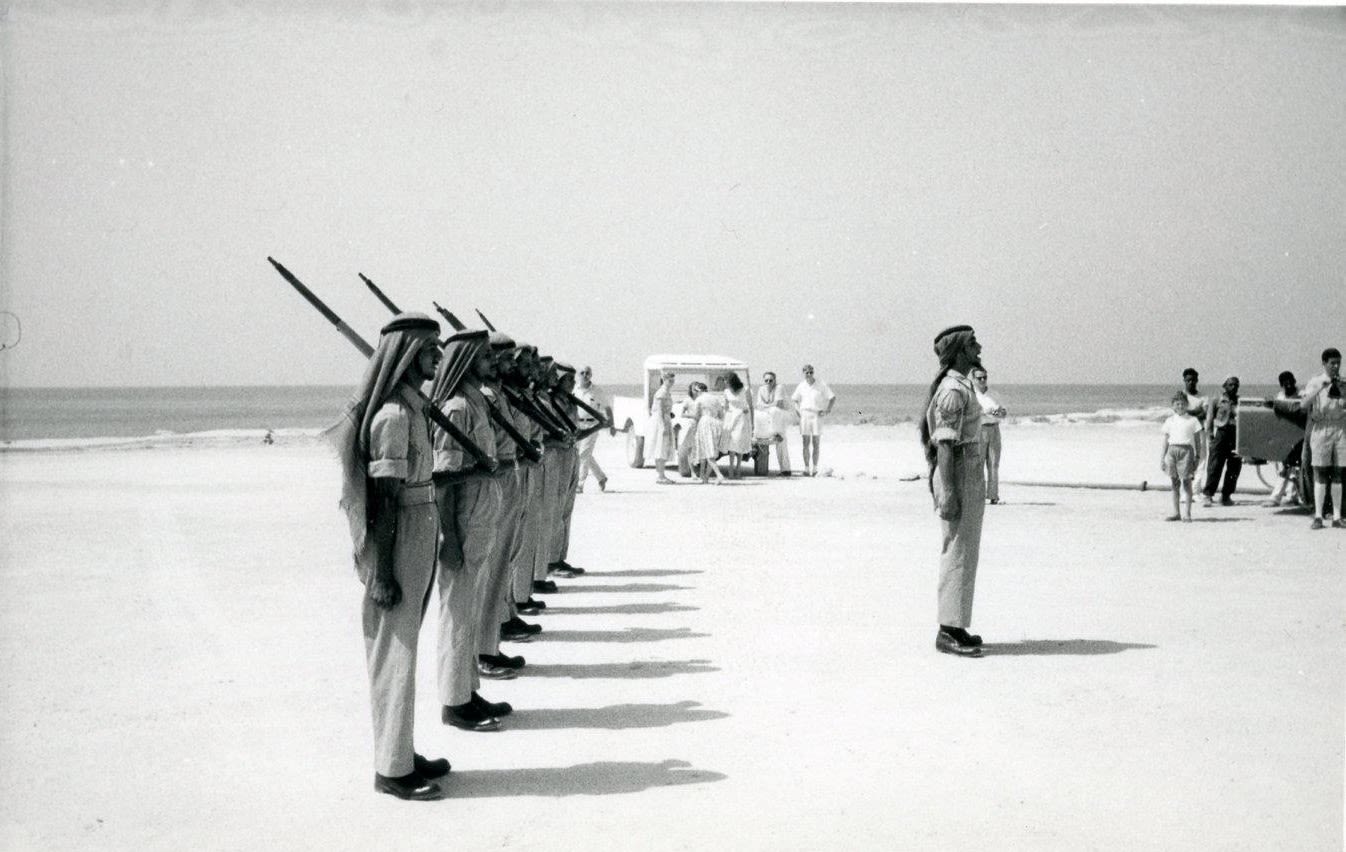
To understand just how remarkable the development of Armed Forces has been over 50 years, it is necessary to return to the early 1960s, when much of what is now the UAE consisted of small settlements along the coast and interior along with Bedouin tribes.
Abu Dhabi, for example, was centred around Qasr Al Hosn, with livelihoods based largely on fishing and pearling. Security in the hinterland was the main responsibility of the British-led Trucial Oman Scouts and in the coastal towns it was the ruler’s guards.
“I’ve always described the force as [like a] UN force,” the late David Neild, a former officer with the Trucial Oman Scouts, previously told The National.
“We were trying to keep the peace and be neutral. In 20 years, we managed to create sufficient stability for the birth of the UAE.”

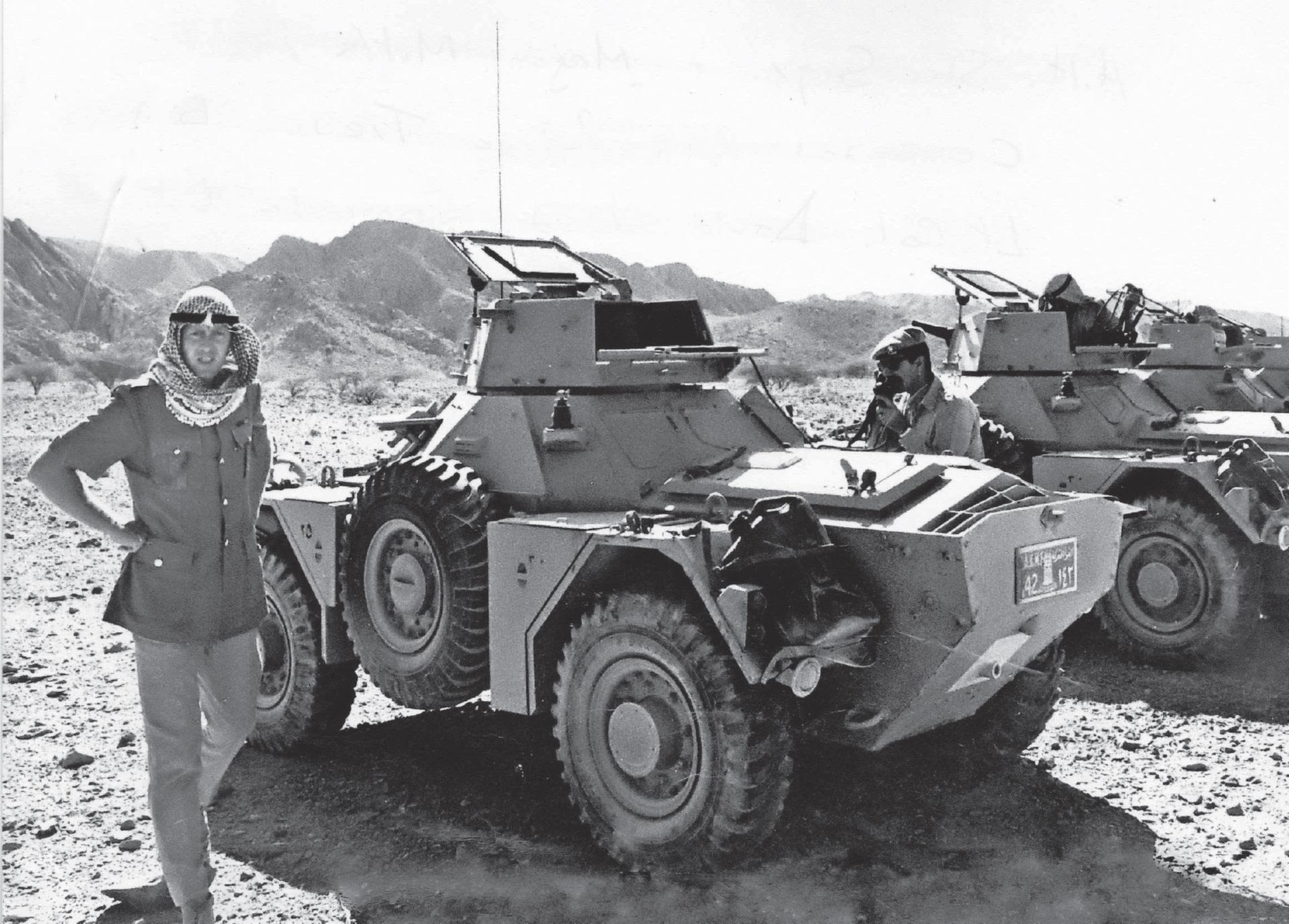
Lt Col David Neild on a training exercise in Ras Al Khaimah in 1970, a year before the unification of the UAE. Photo: Medina Publishing
Lt Col David Neild on a training exercise in Ras Al Khaimah in 1970, a year before the unification of the UAE. Photo: Medina Publishing
The discovery of oil in Abu Dhabi in 1958 accelerated economic and social change, creating demand for more formal local security structures. The Abu Dhabi Defence Force was established in 1965, initially focused on protecting key infrastructure such as the Maqta Causeway, the crossing from the mainland to the island where Al Maqta Bridge stands today, and also protecting the ruling establishment. Before long, it took over the role of the Trucial Oman Scouts across the emirate.
Other emirates soon established their own defence forces as the winds of change blew through the Gulf with the British leaving in 1971. It was a period of tension that saw Iran occupy the islands of Greater and Lesser Tunb and Abu Musa just before the UAE was formed.
By the mid-1970s, several military and police forces existed across the newly-formed federation. Something had to be done. Led by Sheikh Zayed, all the different parts of the forces were unified into a single command – the UAE Armed Forces – on May 6, 1976.

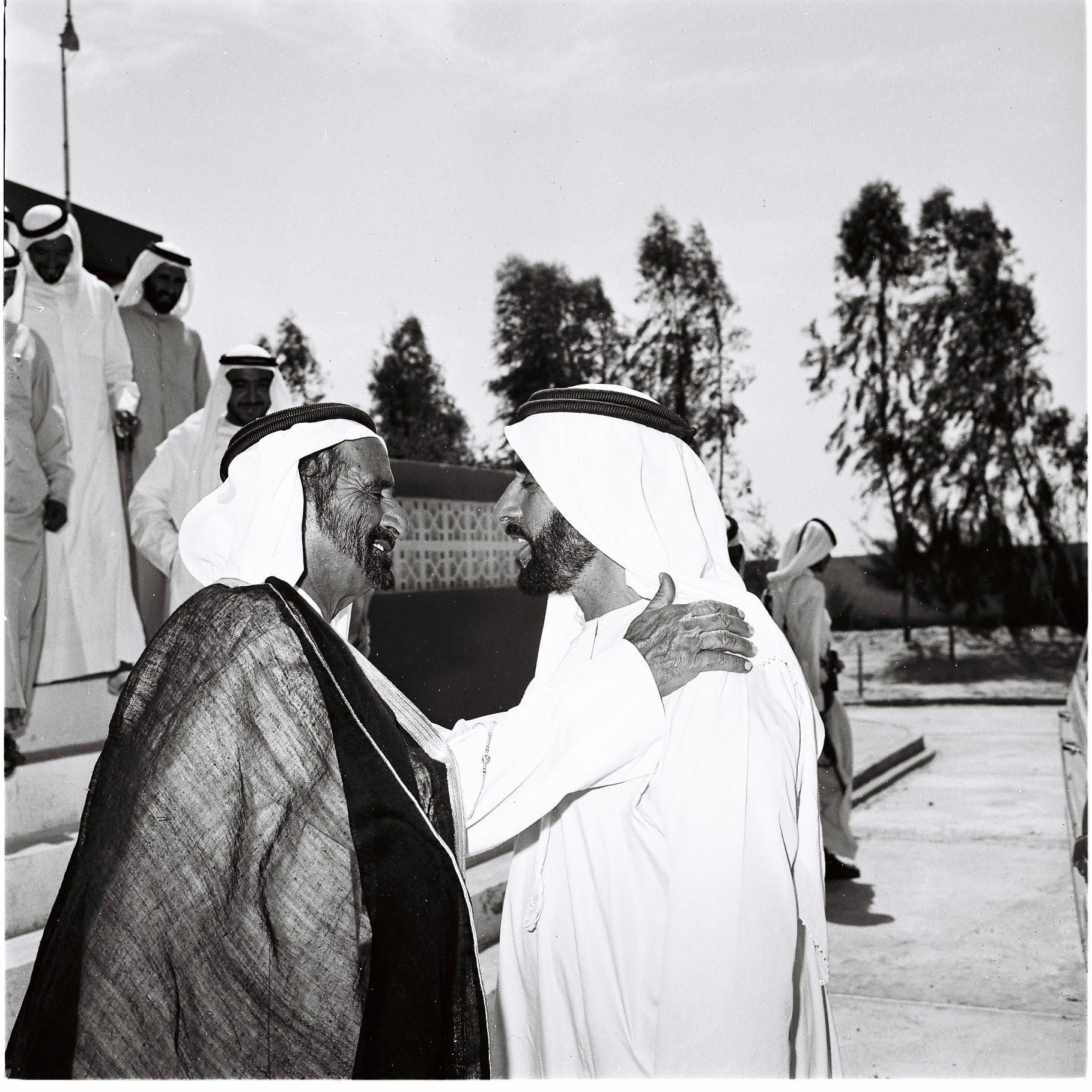
Sheikh Zayed and Sheikh Rashid, then Ruler of Dubai, immediately after signing the agreemeent to unify the UAE Armed Forces on May 6, 1976. Photo: Ministry of Defence
Sheikh Zayed and Sheikh Rashid, then Ruler of Dubai, immediately after signing the agreemeent to unify the UAE Armed Forces on May 6, 1976. Photo: Ministry of Defence
A legacy shaped by regional and global missions

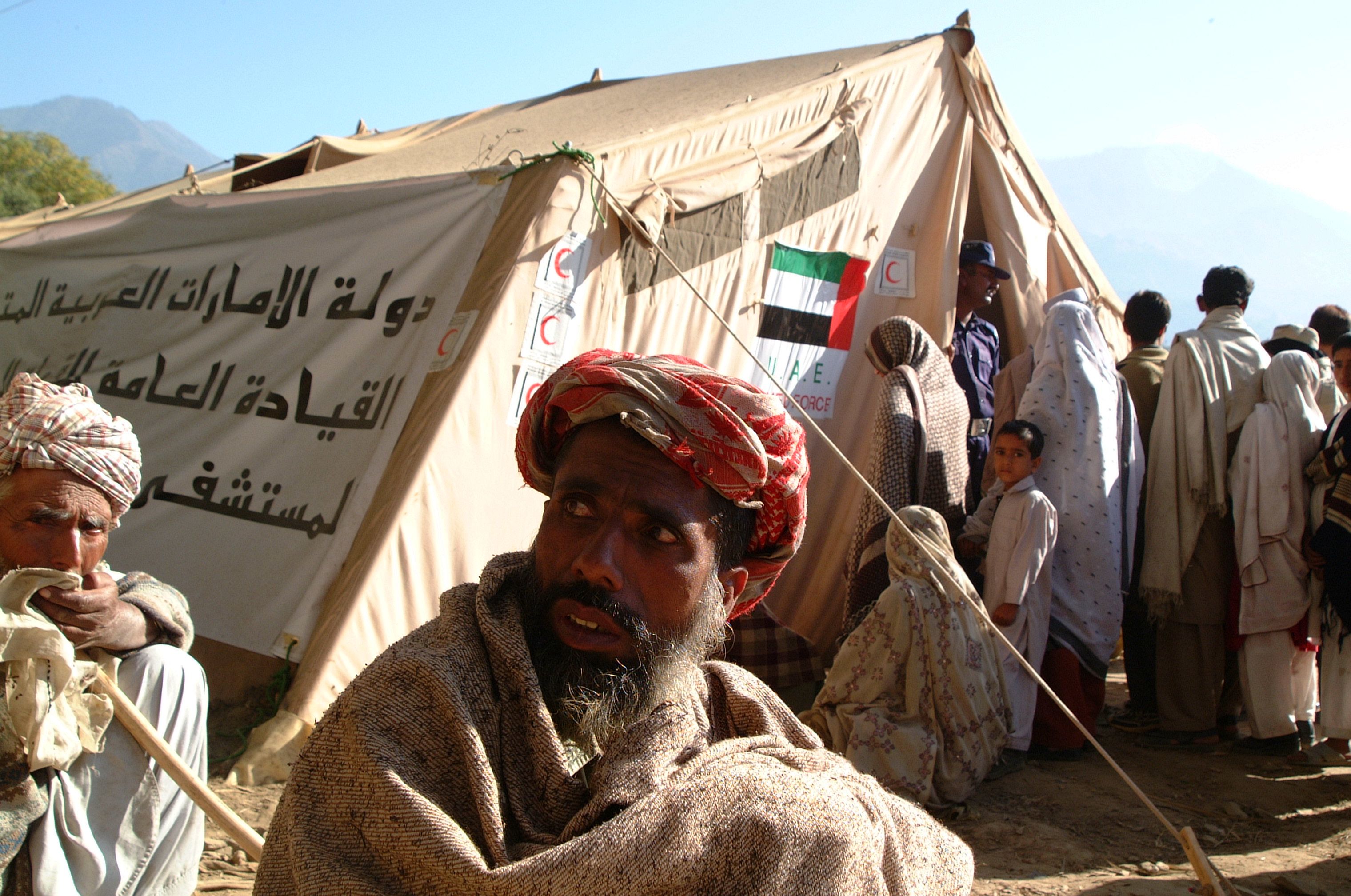
Soon after the unification, the first national officer training school opened and by the mid-1970s the UAE had produced its first locally-trained pilot.
That same year, the UAE also sent personnel to Lebanon in a peacekeeping role, marking an early example of its participation in international operations.

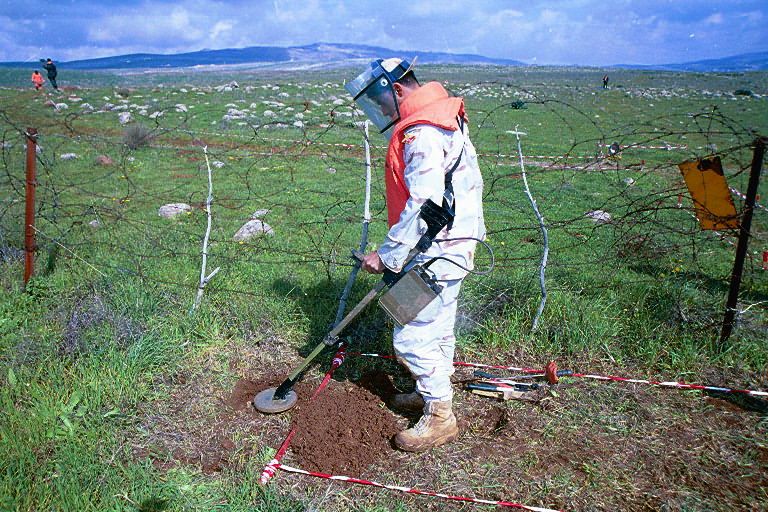
UAE forces carry out a mine clearance operation as part of their peacekeeping mission in Lebanon in 1976. Photo: Ministry of Defence
UAE forces carry out a mine clearance operation as part of their peacekeeping mission in Lebanon in 1976. Photo: Ministry of Defence
In later decades, UAE forces took part in missions in Kosovo, Somalia, and during the 1990 to 1991 Gulf War, including humanitarian and logistical support roles. In Kosovo, Emirati personnel helped establish camps for displaced civilians, assisting thousands of refugees.
Col Yousef Al Harmoudi, who led a medical unit in Kosovo, later described the mission in The National as being guided by humanitarianism. Every day, the team would hold a conference to update journalists and UN officials.
“One journalist asked us why we had come. ‘Is it because you are Muslims’? she asked.
“We said it wasn’t because we were Muslims but for humanity,” Col Al Harmoudi said. “We showed her how our first patient was a Serb who was tortured by the Serbian forces.

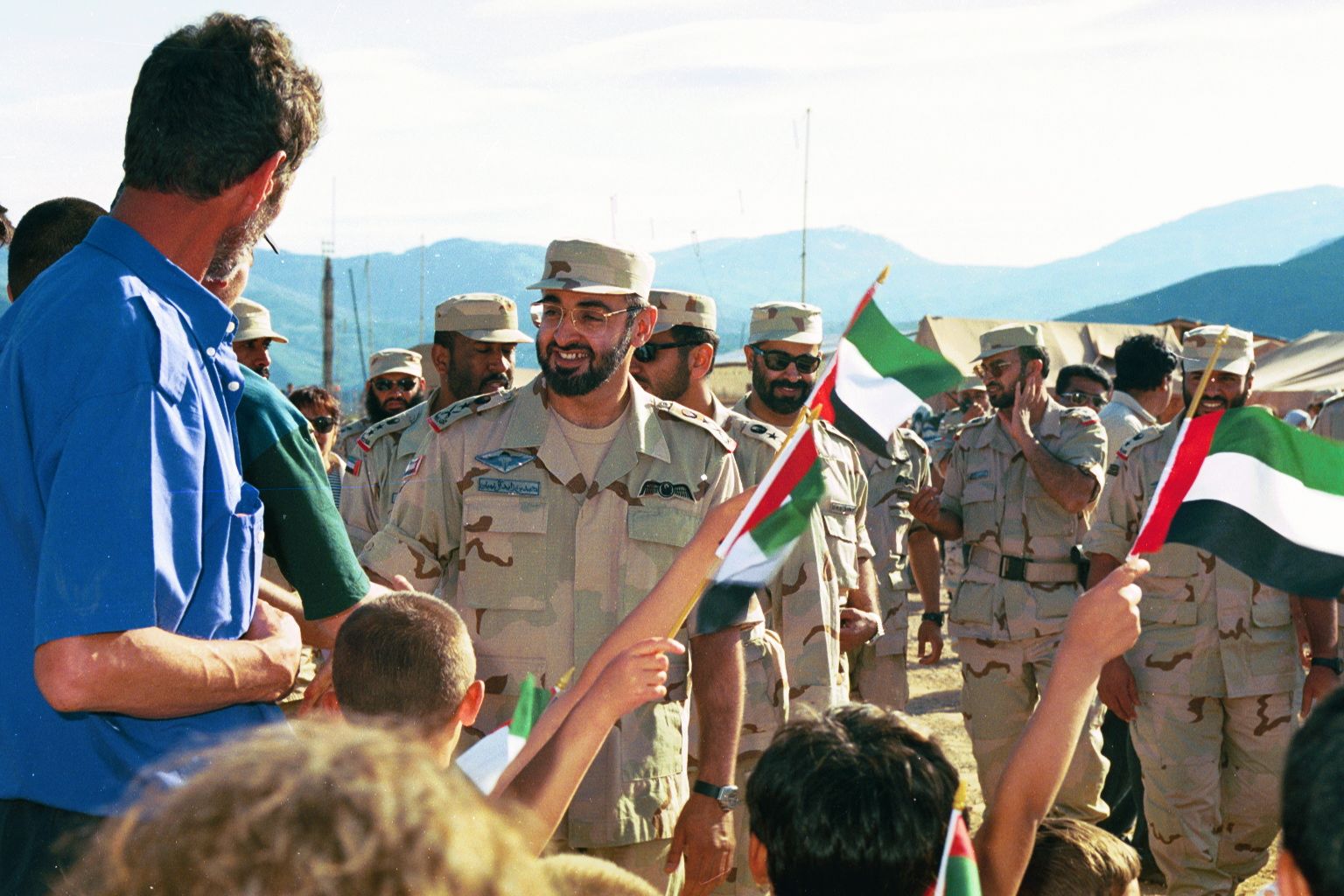
President Sheikh Mohamed, then Chief of Staff of the UAE Armed Forces, visits a UAE-established field hospital in Kukes, Albania, on the border of Kosovo, in 1999. Photo: Ministry of Defence
President Sheikh Mohamed, then Chief of Staff of the UAE Armed Forces, visits a UAE-established field hospital in Kukes, Albania, on the border of Kosovo, in 1999. Photo: Ministry of Defence
“We are the children of Zayed and this is his legacy that he left for us – to love everyone and support everyone and anyone in need.”
Other humanitarian missions included in Somalia and during the liberation of Kuwait in the 1990 to 1991 Gulf War. In addition to military operations, the country has played an active role in disaster relief and humanitarian assistance worldwide.
“Participation in military co-operation with brotherly and friendly countries, as well as in peacekeeping and humanitarian operations, has refined the Armed Forces’ expertise and strengthened their capabilities,” said Col Al Mazrouei, pointing to one of the military’s most recent missions in Gaza.

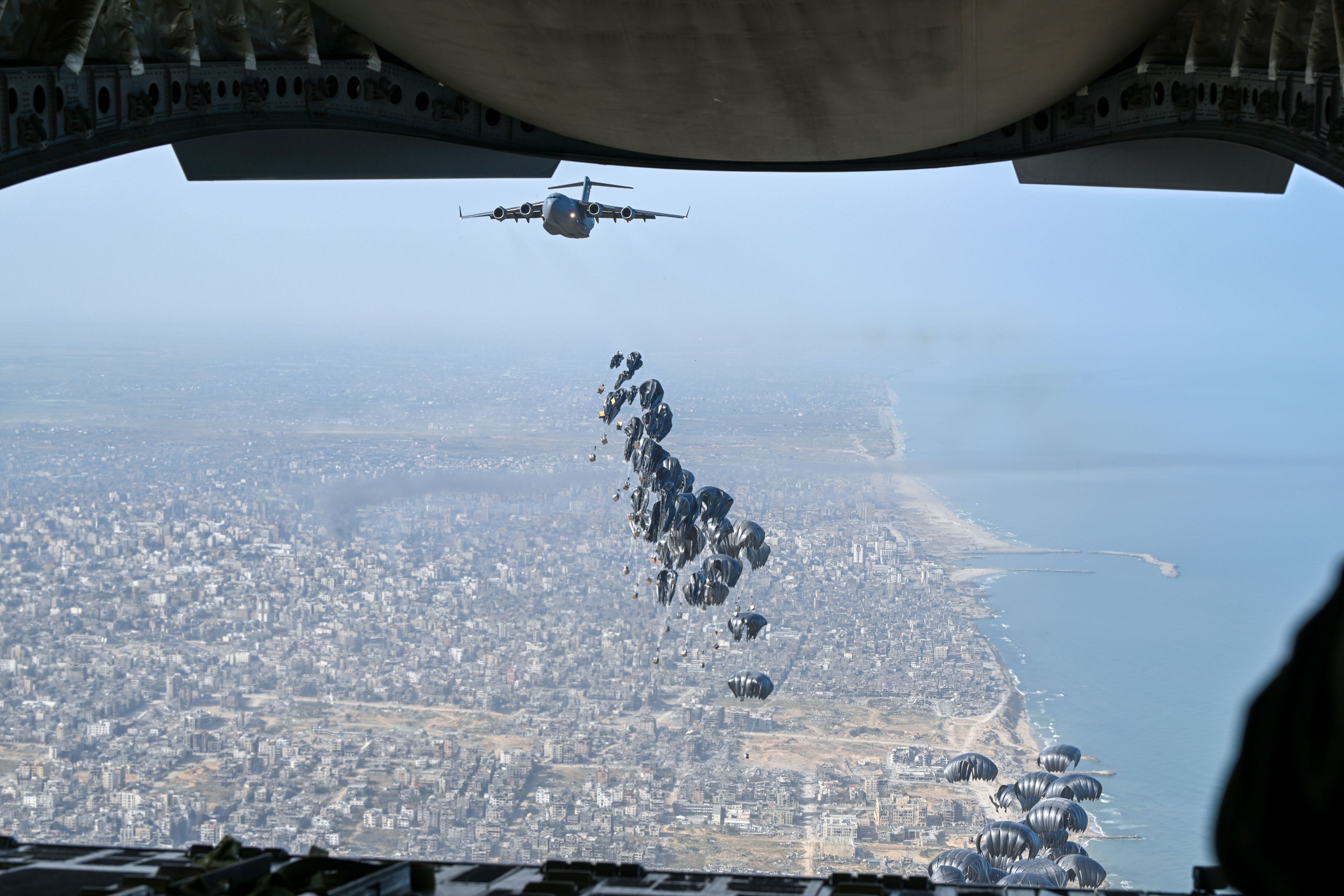
The UAE drops supplies over Gaza as part of Operation Gallant Knight 3, during the Israeli war on the strip in 2024. Photo: Ministry of Defence
The UAE drops supplies over Gaza as part of Operation Gallant Knight 3, during the Israeli war on the strip in 2024. Photo: Ministry of Defence
During Operation Gallant Knight 3, the UAE delivered thousands of tonnes of food and humanitarian aid to Gaza amid the Israeli bombardment of the strip as well as setting up a field hospital to treat tens of thousands of injured Palestinians.
Sacrifice, service and national memory

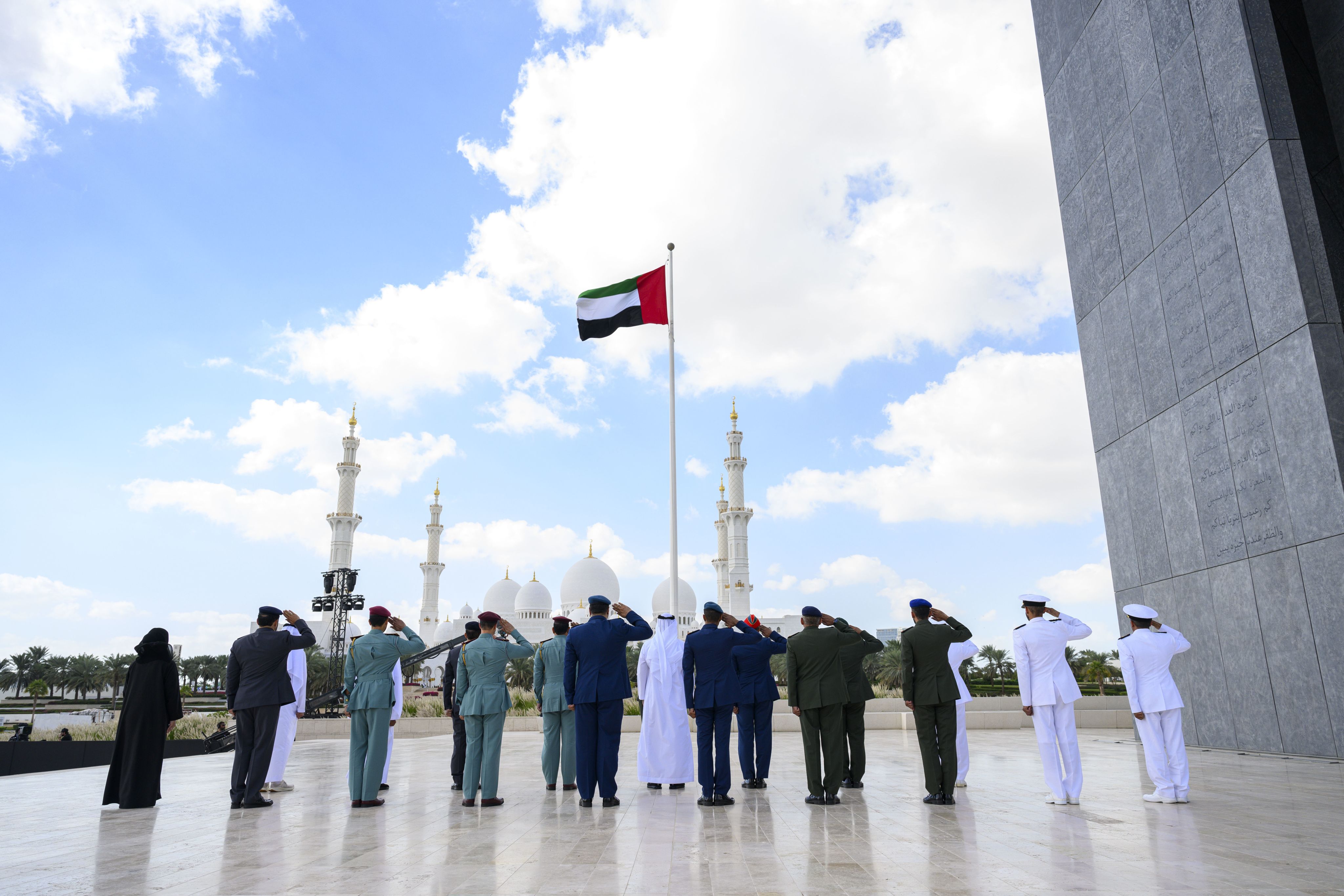
UAE personnel have also paid the ultimate sacrifice. On September 4, 2015, an explosion caused by a Houthi missile killed Emirati soldiers in Yemen.
“Our sons have made the ultimate sacrifice; they’re true patriots who demonstrated utmost love and loyalty to their country and nation," said Sheikh Mohamed, who at the time was Crown Prince of Abu Dhabi and Deputy Supreme Commander of the UAE Armed Forces. "Our martyrs of duty are true models in our history.”
Martyrs Day, first commemorated in November 2015, is an opportunity to remember those who paid the ultimate sacrifice.
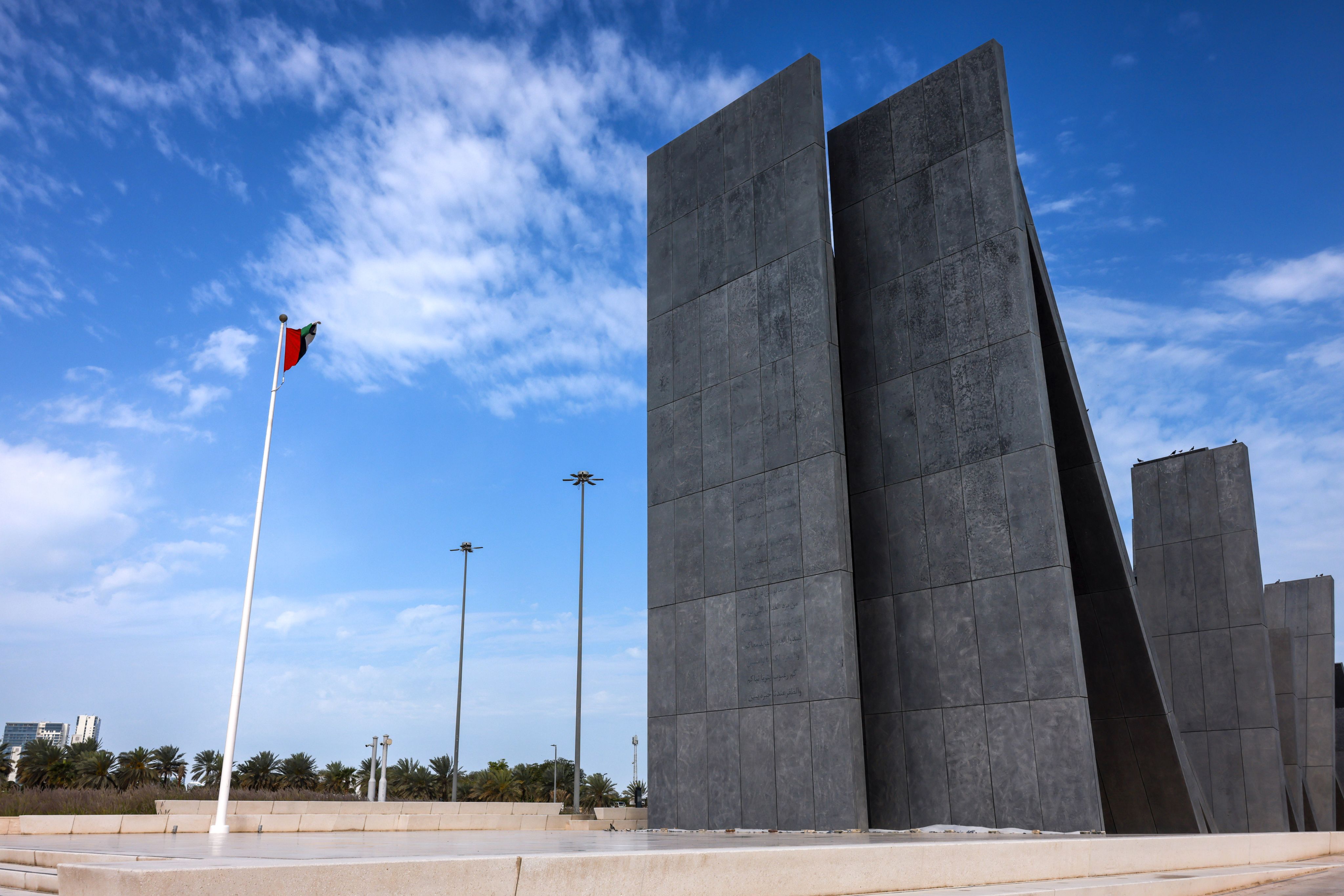
Wahat Al Karama, a monument to the UAE's fallen servicemen, in Abu Dhabi. Victor Besa / The National
Wahat Al Karama, a monument to the UAE's fallen servicemen, in Abu Dhabi. Victor Besa / The National
The names of all those who have fallen are also inscribed at the Wahat Al Karama monument in Abu Dhabi, which was unveiled a year later.
The events that started on February 28 underline how far that transformation has gone.
A unified force that did not exist at the time of the UAE’s formation today stands on alert as a “modern, advanced, and influential military force", Col Al Mazrouei said, capable of responding to attacks against the country and helping to maintain stability and security in the region.
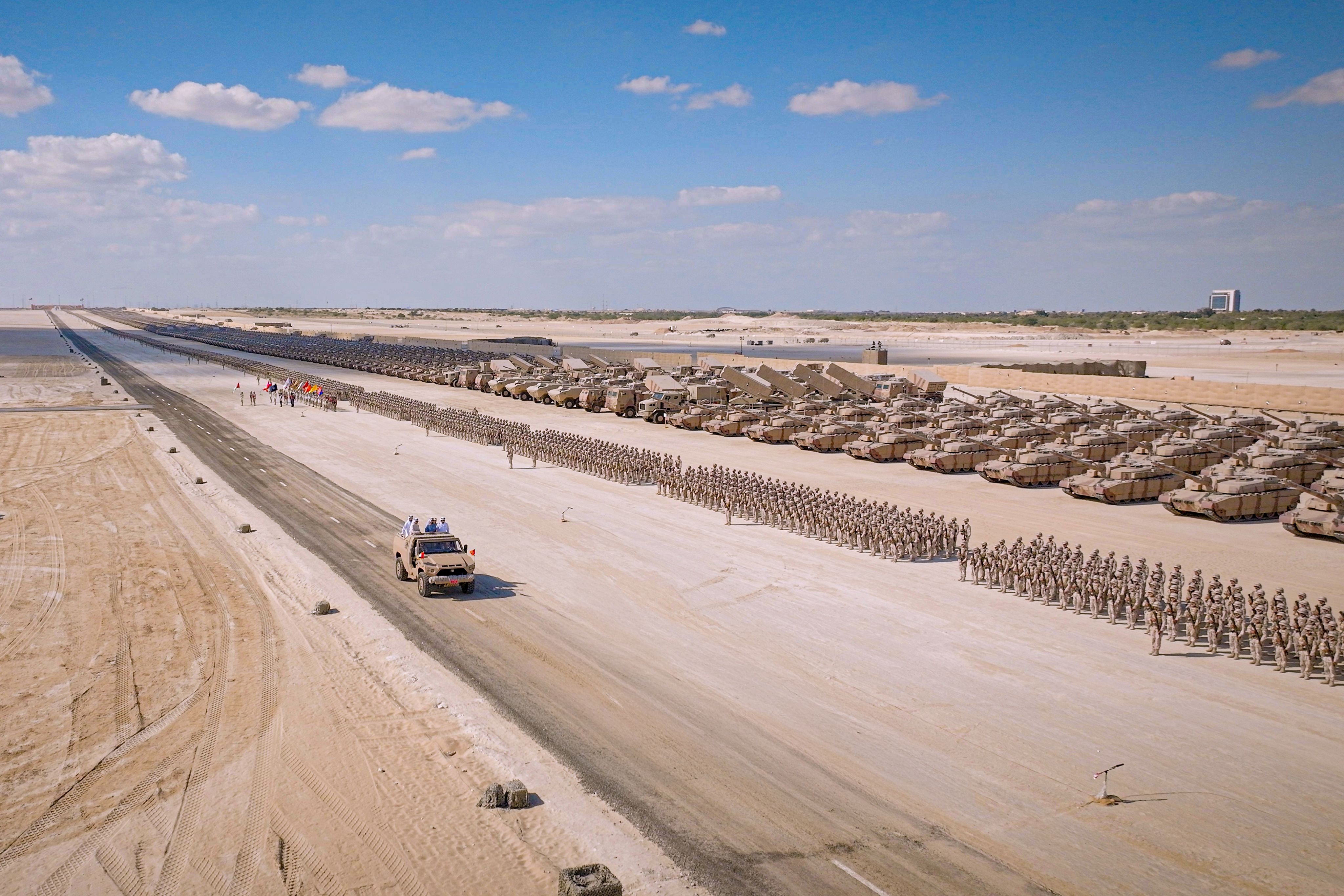
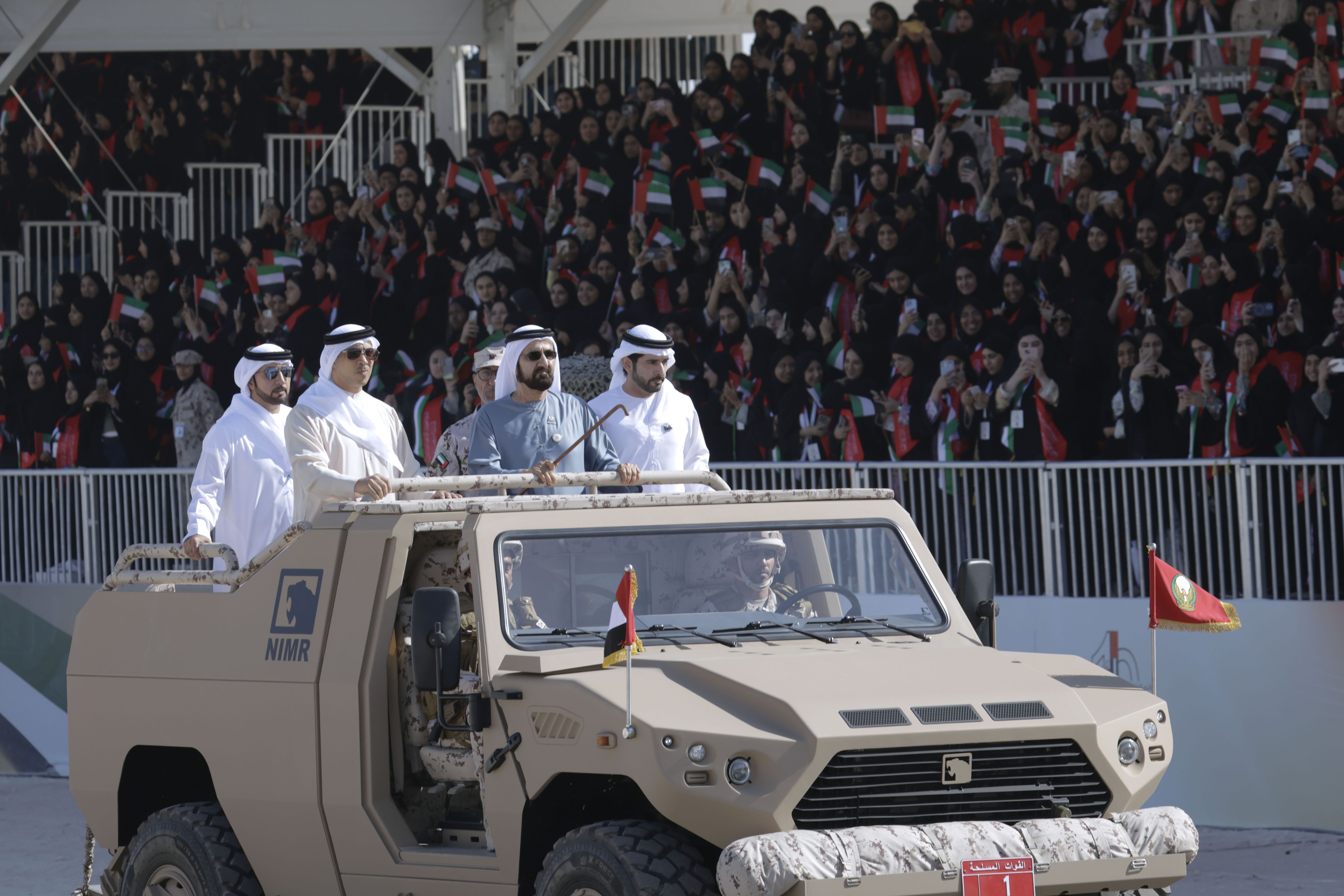
Sheikh Mohammed bin Rashid, Vice President and Ruler of Dubai, attends a ceremony to mark 10 years since the introduction of national service, in Al Sameeh, Abu Dhabi in December 2024. Wam
Sheikh Mohammed bin Rashid, Vice President and Ruler of Dubai, attends a ceremony to mark 10 years since the introduction of national service, in Al Sameeh, Abu Dhabi in December 2024. Wam
Today, the force is “highly efficient and fully prepared”, with “the capability to operate across all operational environments”, reflecting “a long-term strategic vision that has combined military strength with technological superiority".
Looking to the future, Col Al Mazrouei said the Armed Forces remains committed to “building a modern and advanced military force that reflects the aspirations of our leadership, protects the nation, safeguards its achievements, and preserves its sovereignty".
For more in-depth features like this one that tell the story of the UAE and its people, sign up for the Emirati newsletter.
To stay updated on all the latest news from the Emirates, sign up to receive The UAE Today newsletter.
Words Shireena Al Nowais and John Dennehy
Editor Juman Jarallah
Photo editor Scott Chasserot and Olive Obina
Design Nick Donaldson
Sub editor Gareth Butler



Words Shireena Al Nowais and John Dennehy
Editor Juman Jarallah
Photo editor Scott Chasserot and Olive Obina
Design Nick Donaldson
Sub editor Gareth Butler
 Built with Shorthand